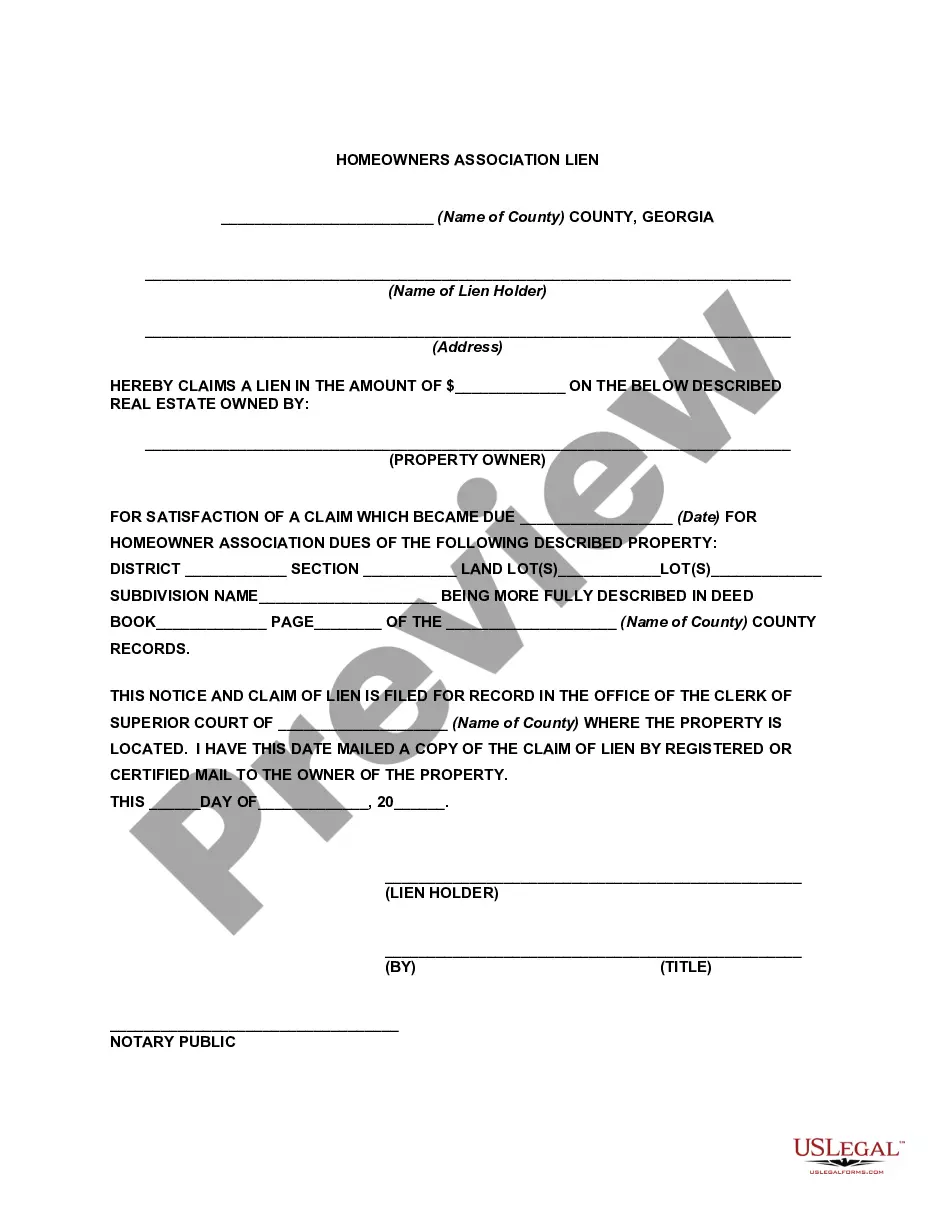
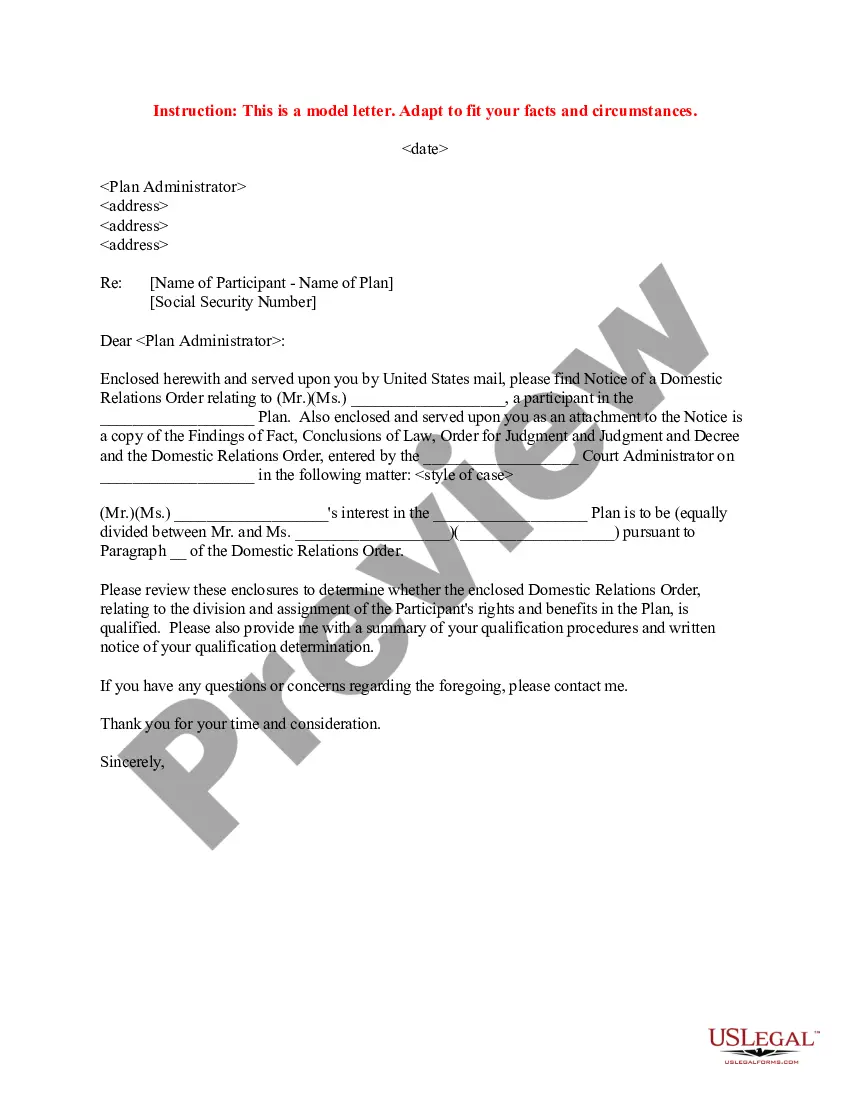
Sample Letter to Pension Plan Administrator regarding Division of Plan Proceeds per Court Order
Understanding this form
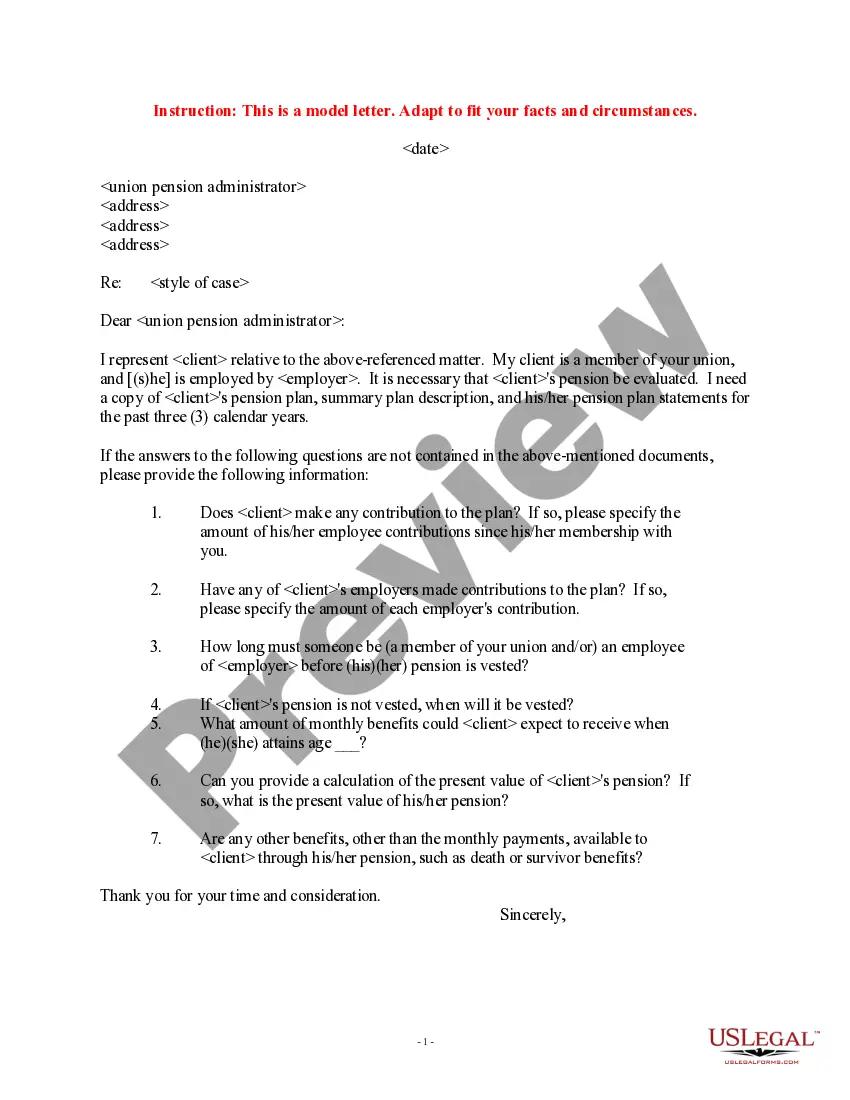
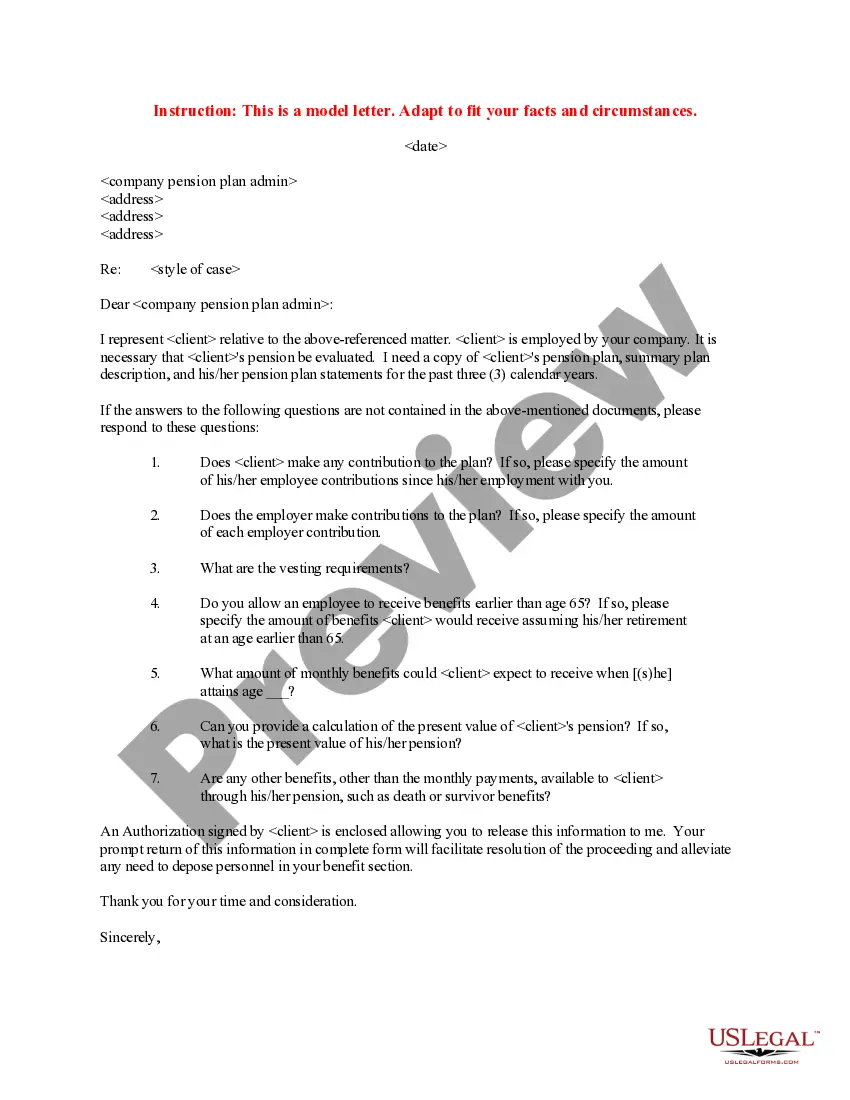
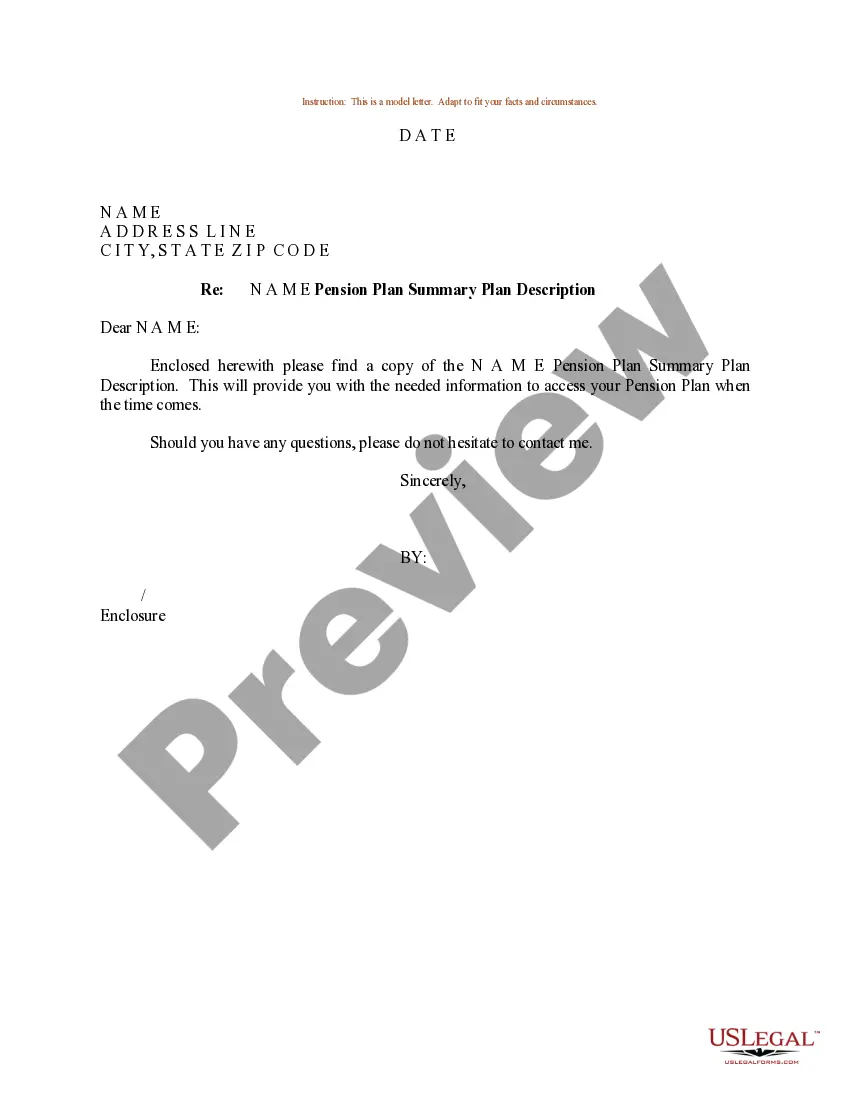
This Sample Letter to Pension Plan Administrator serves as a formal communication regarding the division of pension plan proceeds according to a court order. This document is essential for individuals seeking to enforce a domestic relations order, ensuring that pension benefits are properly allocated between parties in divorce or separation cases. It is designed specifically to be used in conjunction with relevant legal documents and differs from more general letters or notices by focusing explicitly on pension benefits and compliance with court directives.
Main sections of this form
- Date of the letter
- Name and address of the Plan Administrator
- Name of the participant and their pension plan
- Social Security number of the participant
- Details of the domestic relations order
- A request for qualification determination and summary of procedures
When to use this document
This form is useful when a court has issued a domestic relations order that impacts the pension benefits of a participant. It's commonly used in divorce proceedings where one spouse is entitled to a portion of the other's pension plan. Use this letter to formally notify the pension plan administrator about the order and to seek confirmation of how the proceeds will be divided.
Who can use this document
- Individuals involved in divorce or separation cases
- Attorneys representing clients with pension division issues
- Any party seeking to ensure compliance with a domestic relations order
How to complete this form
- Enter the date at the top of the letter.
- Fill in the name and address of the Plan Administrator.
- Insert the participant's name and the name of their pension plan.
- Provide the social security number of the participant.
- Clearly state the details of the domestic relations order and how benefits should be divided.
- Sign the letter and include any necessary enclosures such as the domestic relations order and court documents.
Notarization requirements for this form
In most cases, this form does not require notarization. However, some jurisdictions or signing circumstances might. US Legal Forms offers online notarization powered by Notarize, accessible 24/7 for a quick, remote process.
Get your form ready online
Our built-in tools help you complete, sign, share, and store your documents in one place.
Make edits, fill in missing information, and update formatting in US Legal Forms—just like you would in MS Word.
Download a copy, print it, send it by email, or mail it via USPS—whatever works best for your next step.
Sign and collect signatures with our SignNow integration. Send to multiple recipients, set reminders, and more. Go Premium to unlock E-Sign.
If this form requires notarization, complete it online through a secure video call—no need to meet a notary in person or wait for an appointment.
We protect your documents and personal data by following strict security and privacy standards.

Make edits, fill in missing information, and update formatting in US Legal Forms—just like you would in MS Word.

Download a copy, print it, send it by email, or mail it via USPS—whatever works best for your next step.

Sign and collect signatures with our SignNow integration. Send to multiple recipients, set reminders, and more. Go Premium to unlock E-Sign.

If this form requires notarization, complete it online through a secure video call—no need to meet a notary in person or wait for an appointment.

We protect your documents and personal data by following strict security and privacy standards.
Mistakes to watch out for
- Failing to include the correct name of the pension plan administrator.
- Omitting critical documentation needed for qualification determination.
- Not providing accurate participant details, such as the social security number.
- Neglecting to follow up if there is no response from the pension plan administrator.
Benefits of using this form online
- Convenience of immediate access and downloading from anywhere.
- Editability to tailor the form to suit specific legal requirements.
- Reliability since the forms are created by licensed attorneys.
- More efficient organization of documents related to legal processes.
Looking for another form?
Form popularity
FAQ
Step 1 Gathering Information. Step 2 Drafting your QDRO. Step 3 Approval By the Other Party. Step 4 Approval by Plan as Draft. Step 5 Signature of QDRO by Judge of the State Divorce Court. Step 6 Obtain a Certified Copy of the QDRO.
Who determines whether an order is a QDRO? Under Federal law, the administrator of the retirement plan that provides the benefits affected by an order is the individual (or entity) initially responsible for determining whether a domestic relations order is a QDRO.
The name and mailing address of the participant and alternate payee. The name of the retirement plan. The dollar amount or percentage of the assets that the payee will receive. The number of payments and the payment time period.
At a minimum, all QDROs must include: the name and last known mailing address of the participant and alternate payee(s) the dollar amount or percentage of the participant's benefits that will be paid to the alternate payee(s) (Note: A QDRO can't award an amount or form of benefit that's not available under the plan.)
It is critical to check with the plan administrator for each plan and QDRO, which is done by a QDRO preparer . Attorneys do not typically prepare QDROs, as they are prepared by actuaries and companies specializing in QDROs.
A QDRO distribution that is paid to a child or other dependent is taxed to the plan participant. An individual may be able to roll over tax-free all or part of a distribution from a qualified retirement plan that he or she received under a QDRO.
A QDRO will instruct the plan administrator on how to pay the non-employee spouse's share of the plan benefits. A QDRO allows the funds in a retirement account to be separated and withdrawn without penalty and deposited into the non-employee spouse's retirement account (typically an IRA).
The document must be signed by both parties, and any attorneys on record. If the Respondent has not appeared in the case (filed a response and become an active party) their signature will need to be notarized. This is a court requirement to make sure the signatures are in fact those of the parties.