North Carolina Acknowledgment of Will Already Executed and Attested
Understanding this form
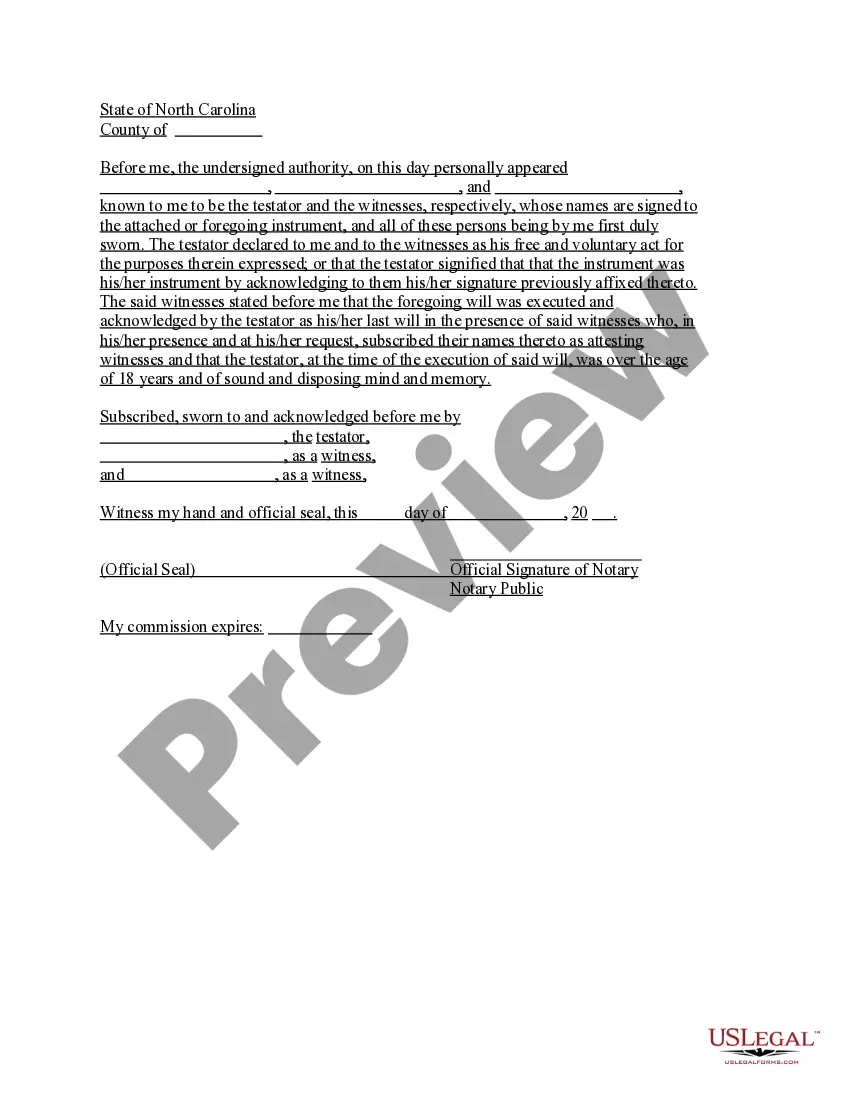
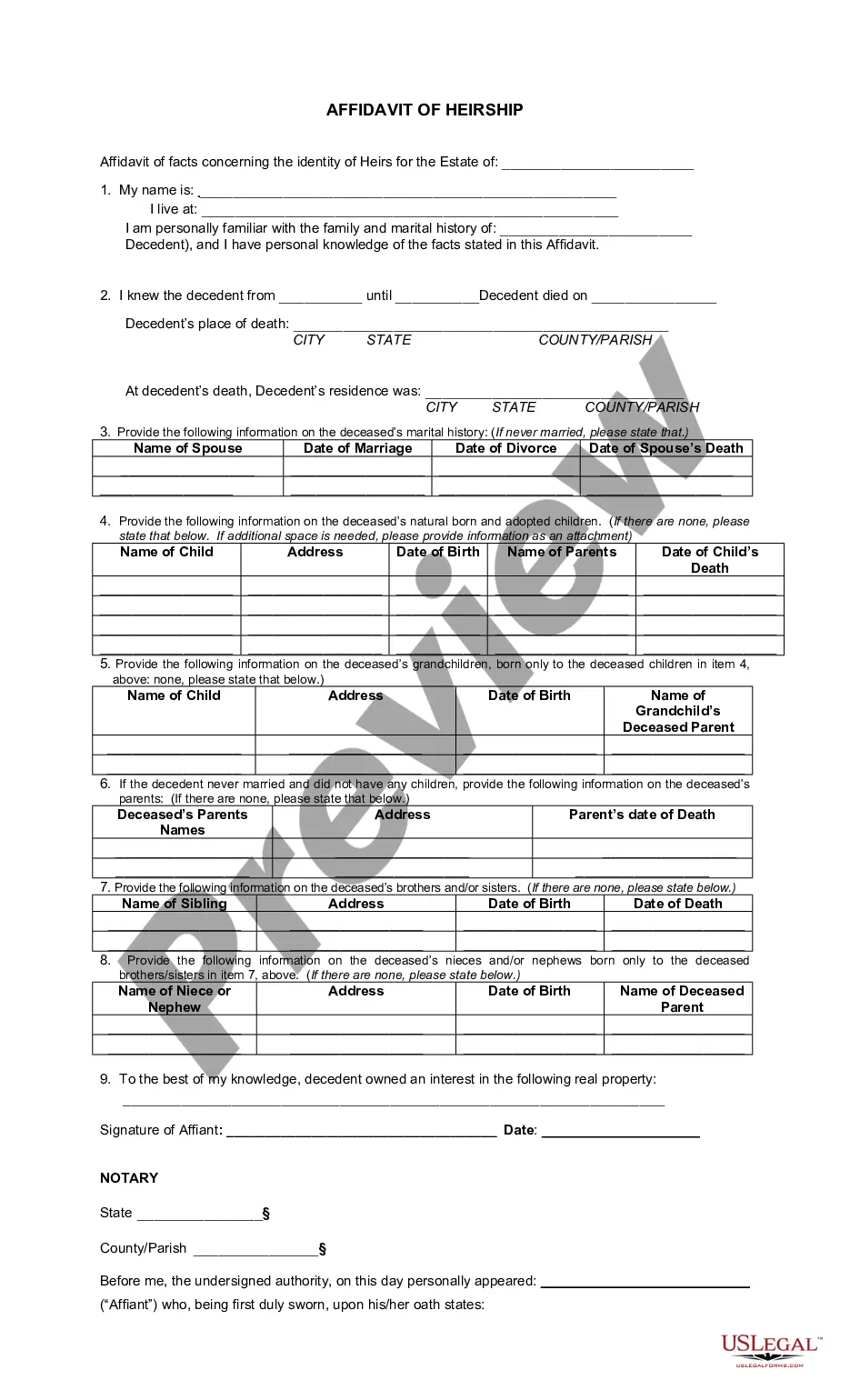
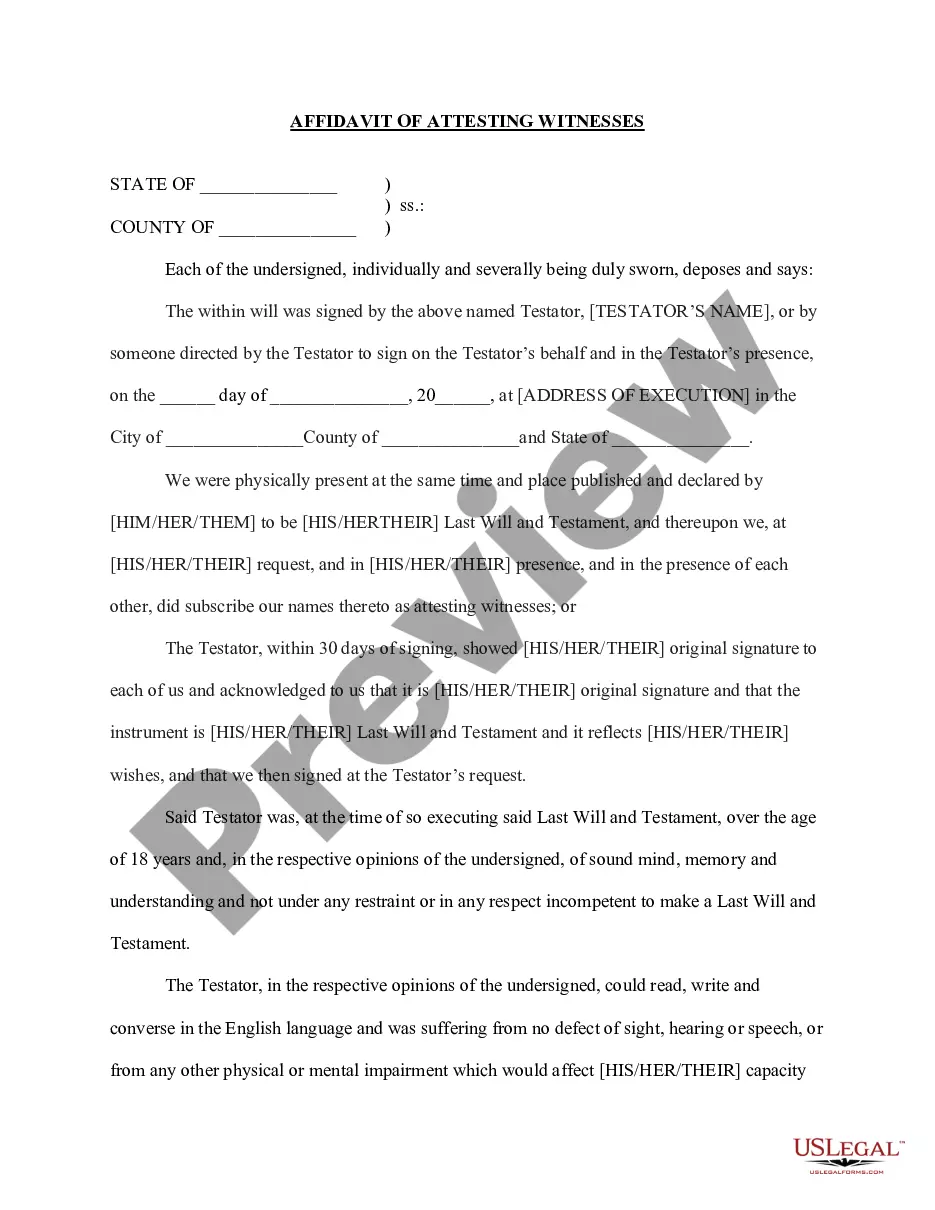
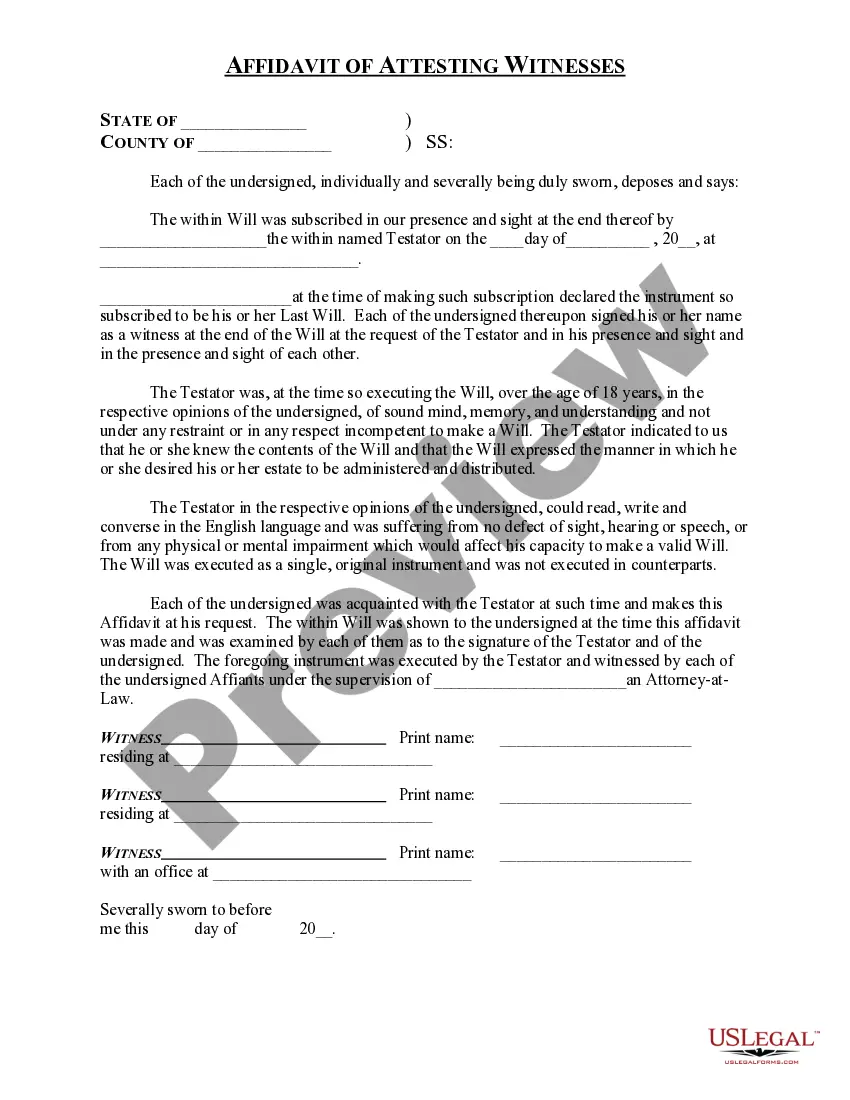
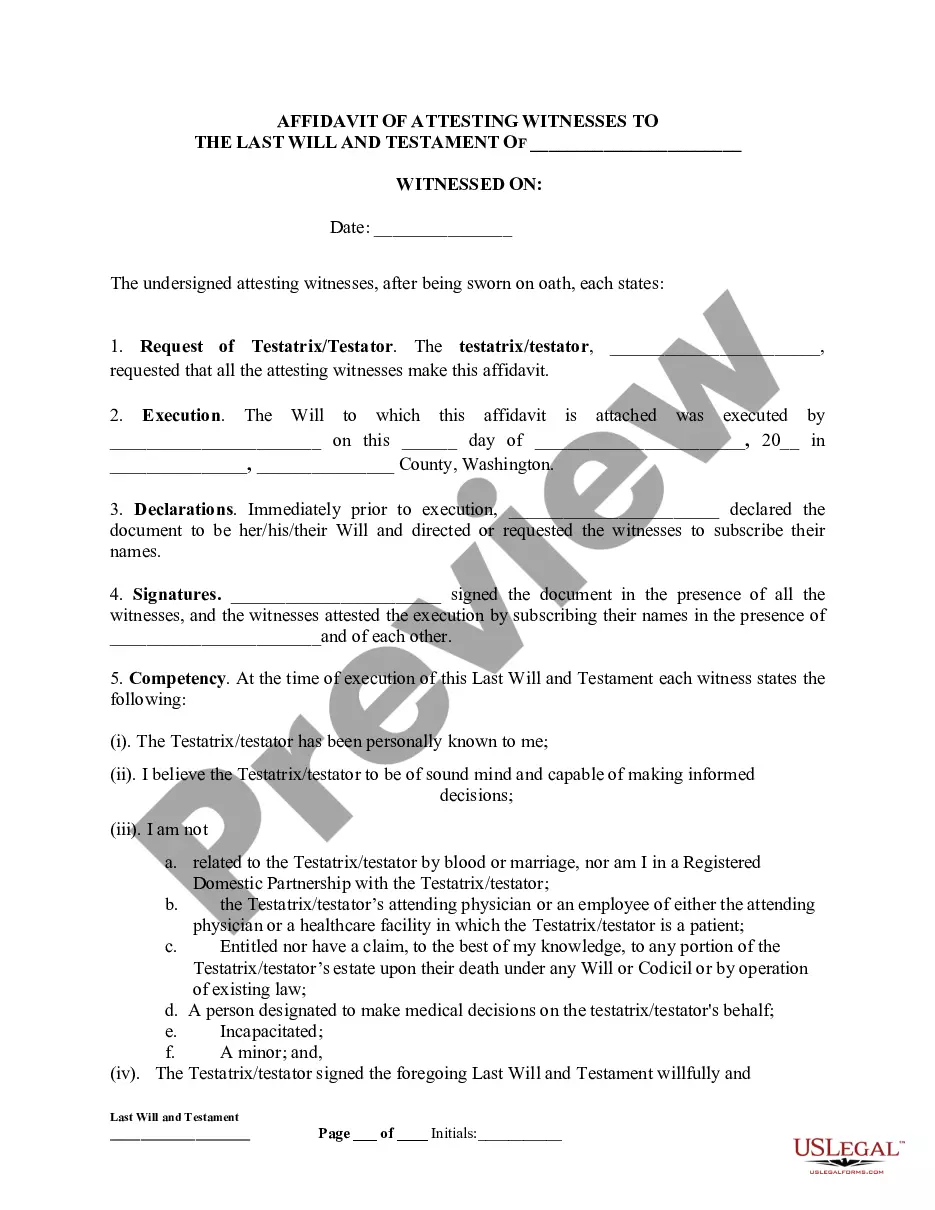
The Acknowledgment of Will Already Executed and Attested is a legal document used to confirm the execution and validity of a will that has already been signed and properly witnessed. This form is an essential step in the probate process, ensuring that the will can be recognized and enforced according to the wishes of the deceased. It differs from other forms related to wills, as it specifically addresses the acknowledgment of already executed documents rather than the creation of a new will or amendments.
Key components of this form
- The names of the testator and witnesses involved in the execution of the will.
- A declaration by the testator affirming the will as a voluntary act.
- Attestation by witnesses who confirm they saw the testator sign the will.
- A statement regarding the testator's mental capacity and age at the time of execution.
- Signature of the notary public, if applicable, along with their official seal.

When to use this document
This form is used when a will has been executed, and there is a need to formally acknowledge it for probate purposes. It is essential in situations where:
- Family members or executors want to validate the deceased's wishes outlined in the will.
- A third party needs assurance regarding the authenticity of the will.
- Legal proceedings surrounding estate distribution are imminent, requiring official recognition of the will.
Intended users of this form
- Executors appointed in a will.
- Family members of the deceased who need clarity on the will's status.
- Lawyers handling the estate of the deceased.
Steps to complete this form
- Identify the full names of all parties involved: the testator and the witnesses.
- Ensure that the testator acknowledges their signature in front of the witnesses and maintains mental capacity.
- Gather the witnesses to sign the acknowledgment, showing they were present during the execution of the will.
- Include the date of acknowledgment to establish a timeline of events.
- Obtain a notary's signature to formalize the document, if required.
Does this document require notarization?
To make this form legally binding, it must be notarized. Our online notarization service, powered by Notarize, lets you verify and sign documents remotely through an encrypted video session.
Get your form ready online
Our built-in tools help you complete, sign, share, and store your documents in one place.
Make edits, fill in missing information, and update formatting in US Legal Forms—just like you would in MS Word.
Download a copy, print it, send it by email, or mail it via USPS—whatever works best for your next step.
Sign and collect signatures with our SignNow integration. Send to multiple recipients, set reminders, and more. Go Premium to unlock E-Sign.
If this form requires notarization, complete it online through a secure video call—no need to meet a notary in person or wait for an appointment.
We protect your documents and personal data by following strict security and privacy standards.

Make edits, fill in missing information, and update formatting in US Legal Forms—just like you would in MS Word.

Download a copy, print it, send it by email, or mail it via USPS—whatever works best for your next step.

Sign and collect signatures with our SignNow integration. Send to multiple recipients, set reminders, and more. Go Premium to unlock E-Sign.

If this form requires notarization, complete it online through a secure video call—no need to meet a notary in person or wait for an appointment.

We protect your documents and personal data by following strict security and privacy standards.
Common mistakes to avoid
- Failing to have all required signatures, including those of witnesses and the notary.
- Not accurately stating the mental capacity of the testator at the time of the will's execution.
- Using this form without proper consultation if the will has significant complications or disputes.
Advantages of online completion
- Convenience of immediate access and download.
- Editability to tailor the document to specific needs before finalizing.
- Reliable format drafted by licensed attorneys to ensure legal compliance.
Key takeaways
- The Acknowledgment of Will Already Executed and Attested is vital for validating an executed will.
- This form requires clear identification of all parties and their signatures.
- It must be notarized to be legally effective, especially in North Carolina.
Looking for another form?
Form popularity
FAQ
In such cases, you should refuse to notarize, citing the blank space as a reason. Remember that you may only complete information in the notarial certificate wording. Any blanks in the main text must be completed by the signer or another individual authorized to do so before the notarization may proceed.
In NC, notary publics cannot attest that something is a true copy, the most they can do is attest that you acknowledge or swear the document is a true copy.North Carolina notaries cannot certify that a copy is a true copy.
Require Personal Appearance. Review The Document. Screen The Signer And Verify The Facts. Record The Notarization. Complete The Notarization.
When you see (here insert the name and character of the officer) next to a blank as shown below, it means you should insert Your name, Notary Public in the blank.
The purpose of an acknowledgment is for a signer, whose identity has been verified, to declare to a Notary or notarial officer that he or she has willingly signed a document.The signer may either sign the document before appearing before you, or in your presence.
If the document has already been signed, the signer can sign his or her name again above or next to the first signature. You can then proceed with the notarization. You may want to notate in your journal that the signer was instructed to sign again in your presence.
Step 1: Require Personal Appearance. Step 2: Check Over The Document. Step 3: Carefully Identify The Signer. Step 4: Record Your Journal Entry. Step 5: Complete The Notarial Certificate. A Last Note: Never Give Advice.
Use an appropriate heading. You can write the letter in any format you choose but make certain to mention an appropriate heading. Insert a case caption. Add the address. Give details about the affiant. Include your name. Leave a space for the signature of the notary public.
It depends. You may notarize a document that does not have pre-printed notarial wording as long as the signer tells you what type of notarization is needed.As nonattorneys, Notaries cannot decide the type of notarization to perform on a document because the choice can have important legal ramifications.