Hazard Communication Training Checklist for Individual Employees
Overview of this form
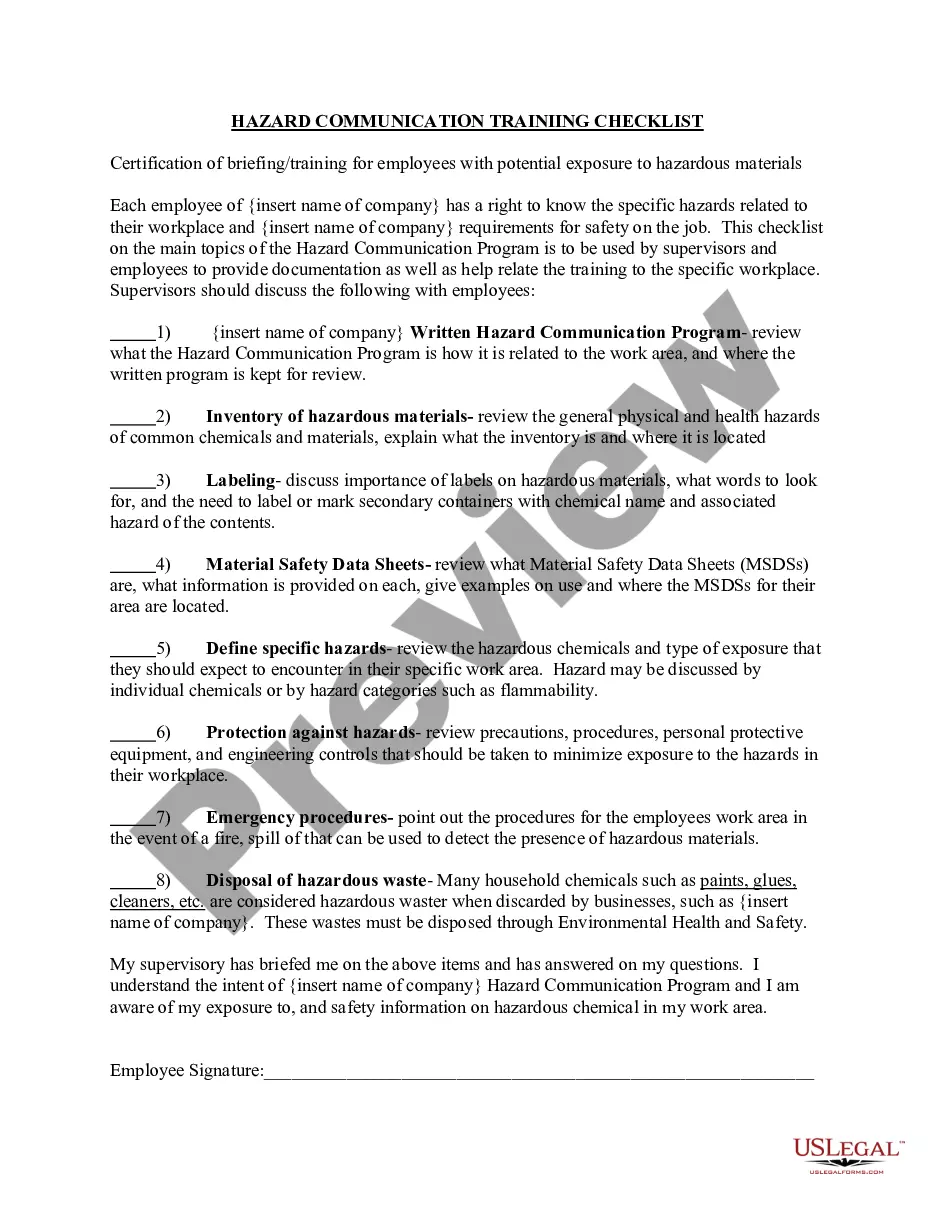
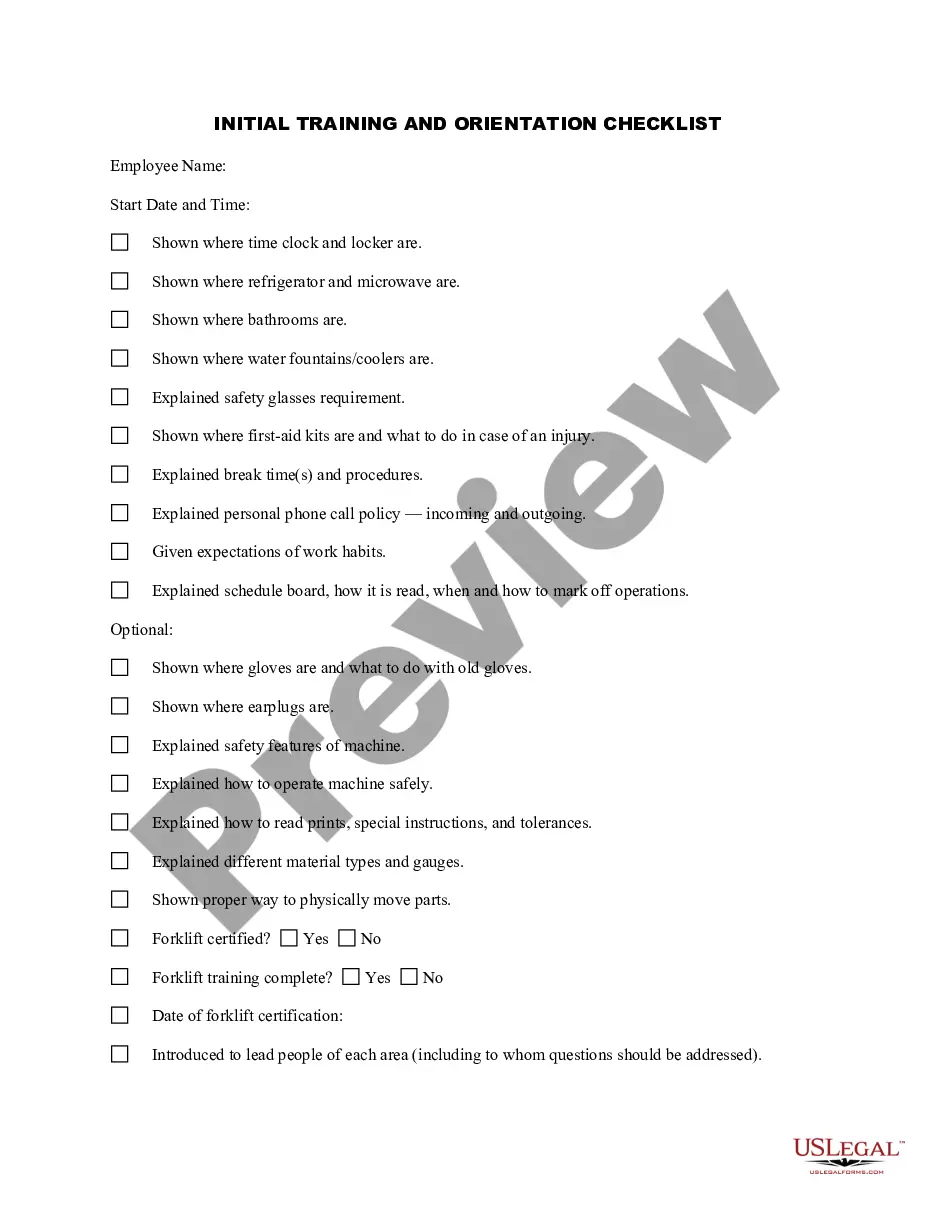
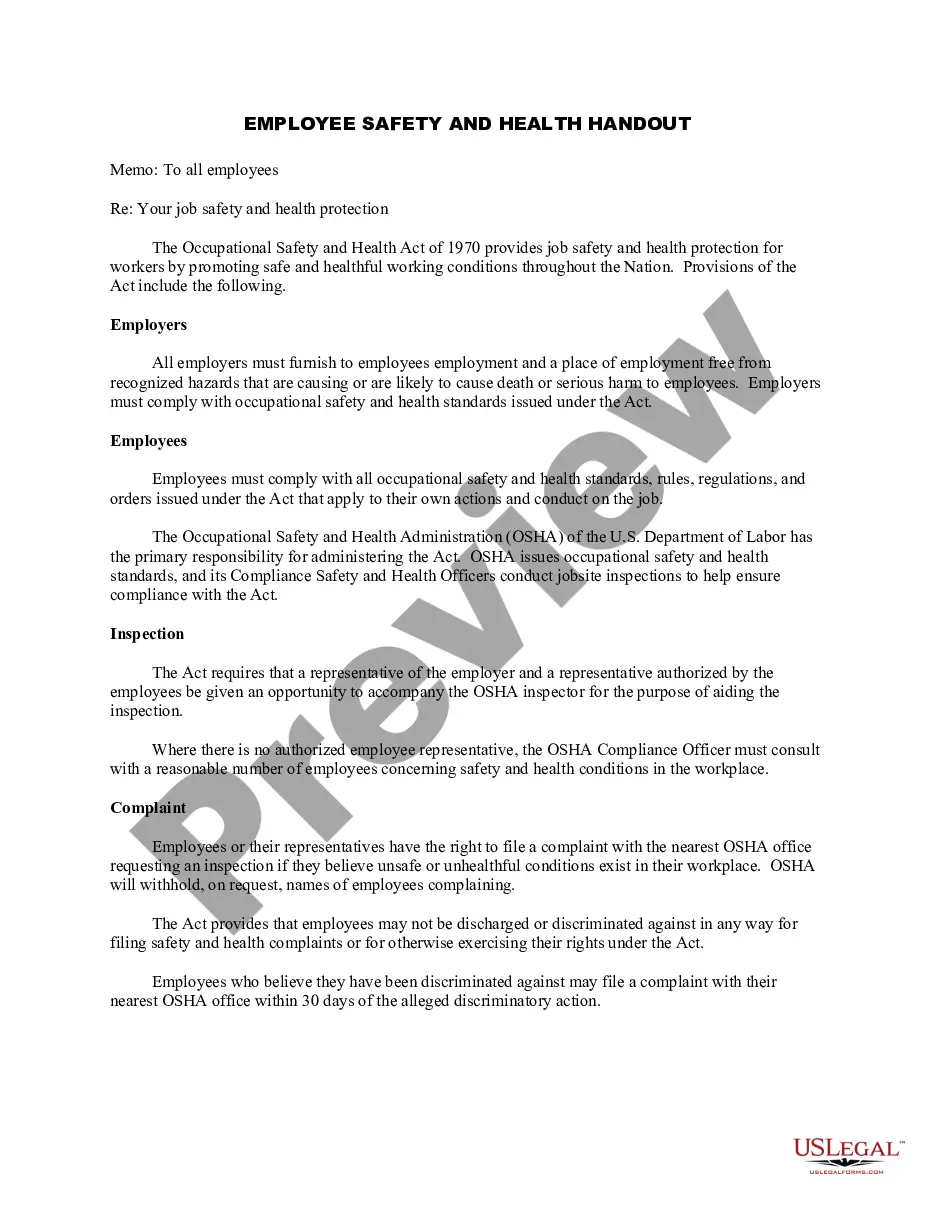
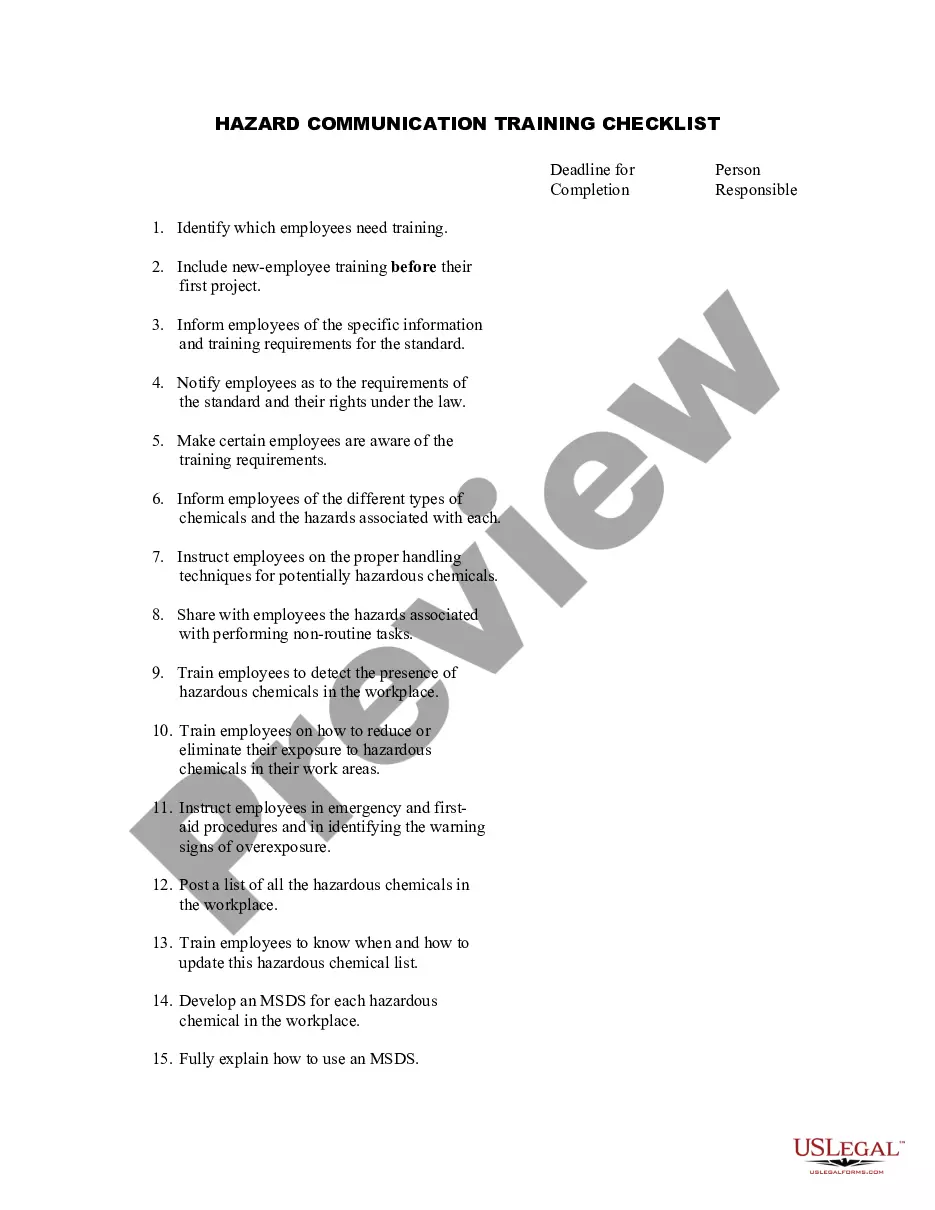
The Hazard Communication Training Checklist for Individual Employees is a crucial document aimed at ensuring that employees who may be exposed to hazardous materials receive proper training. This checklist serves as certification that each employee has been briefed on safety procedures and the handling of hazardous substances, setting it apart from general employee training forms by focusing specifically on hazard communication protocols. By using this form, employers demonstrate their commitment to workplace safety and compliance with occupational safety regulations.
Main sections of this form
- Employee identification details for tracking training participation.
- Sections for documenting the specific hazardous materials covered in the training.
- Confirmation of employee understanding regarding safety procedures and emergency measures.
- Signature lines for both the employee and the trainer to validate training completion.
- Space for additional notes or specific training instructions relevant to the workplace.

Common use cases
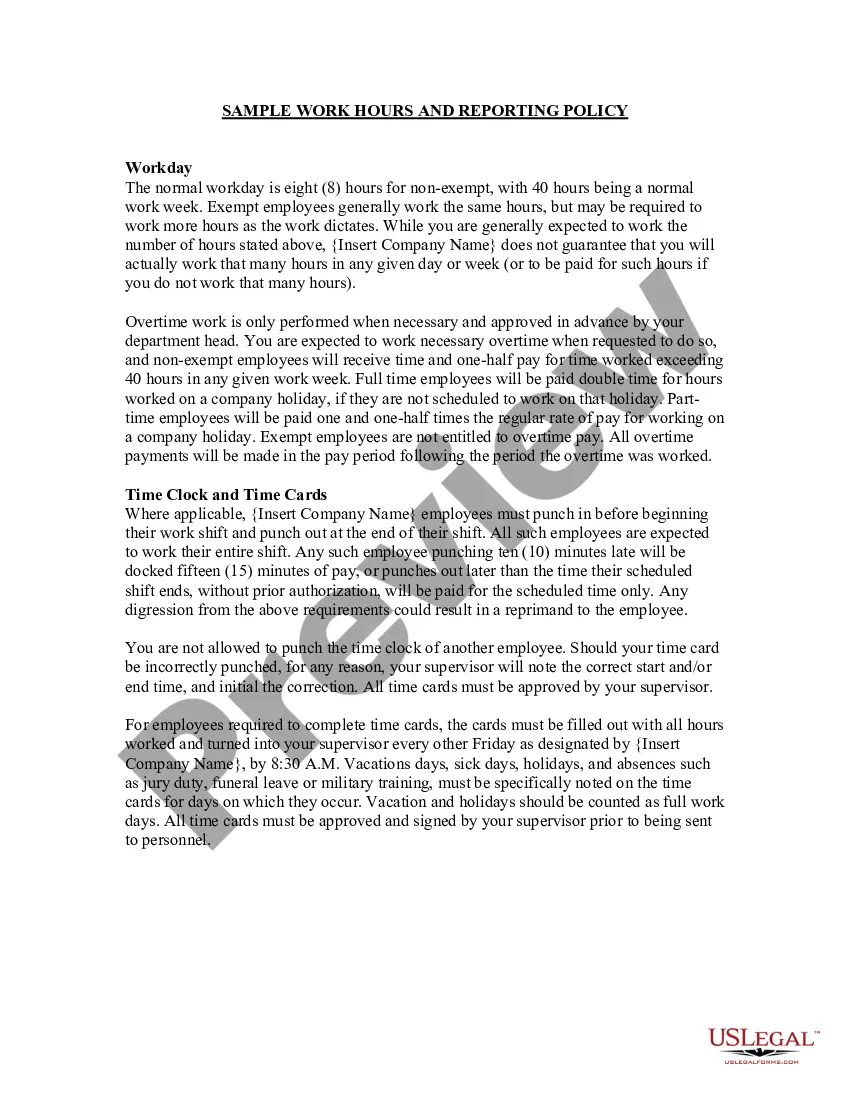
This form is utilized when employers need to train employees about hazardous materials in the workplace. It's important to use this checklist whenever new hazardous substances are introduced or when employees join the organization. Additionally, it is beneficial during routine safety audits and when conducting refreshers on safety protocols to ensure compliance with legal requirements.
Who needs this form
- Employers who operate in industries where employees may come into contact with hazardous materials.
- Human resource professionals responsible for employee training compliance.
- Safety officers or coordinators in charge of workplace safety programs.
- Managers overseeing the onboarding of new employees in relevant positions.
Instructions for completing this form
- Identify the employee by entering their name and position.
- List all hazardous materials the employee may encounter during their work.
- Document the details of the training session, including the date and topics covered.
- Have the employee confirm their understanding by signing the checklist.
- Collect the trainer's signature following the completion of the training.
Is notarization required?
This form does not typically require notarization unless specified by local law. Employers should keep a signed copy of the checklist in their records to demonstrate compliance with training requirements.
Get your form ready online
Our built-in tools help you complete, sign, share, and store your documents in one place.
Make edits, fill in missing information, and update formatting in US Legal Forms—just like you would in MS Word.
Download a copy, print it, send it by email, or mail it via USPS—whatever works best for your next step.
Sign and collect signatures with our SignNow integration. Send to multiple recipients, set reminders, and more. Go Premium to unlock E-Sign.
If this form requires notarization, complete it online through a secure video call—no need to meet a notary in person or wait for an appointment.
We protect your documents and personal data by following strict security and privacy standards.

Make edits, fill in missing information, and update formatting in US Legal Forms—just like you would in MS Word.

Download a copy, print it, send it by email, or mail it via USPS—whatever works best for your next step.

Sign and collect signatures with our SignNow integration. Send to multiple recipients, set reminders, and more. Go Premium to unlock E-Sign.

If this form requires notarization, complete it online through a secure video call—no need to meet a notary in person or wait for an appointment.

We protect your documents and personal data by following strict security and privacy standards.
Common mistakes
- Failing to update the checklist when new hazardous materials are introduced.
- Not providing sufficient details on the specific hazards during training.
- Neglecting to collect signatures from both the employee and the trainer.
- Using outdated training materials that do not align with current regulations.
Benefits of using this form online
- Immediate access to a comprehensive training checklist tailored to hazard communication.
- Editable format for customization to suit specific training needs or workplace policies.
- Easy storage and retrieval of completed forms for record-keeping and compliance verification.
- Efficient use of time by providing a structured approach to training documentation.
Summary of main points
- The Hazard Communication Training Checklist ensures employees are trained on handling hazardous materials.
- This form should be completed whenever hazardous materials are introduced or when new employees are hired.
- Recordkeeping is essential for compliance and safety audits.
- Using this form online offers convenience and easy customization.
Looking for another form?



Form popularity
FAQ
The program must include labels on containers of hazardous chemicals, safety data sheets (SDSs) for hazardous chemicals, and training for workers. Each employer must also describe in a written program how it will meet the requirements of the HCS in each of these areas.
The NIH Hazard Communication Program focuses on three essential components: 1. The identification of hazardous chemicals; 2. The maintenance of current hazard information at the worksite including warning labels, signs and SDSs; and 3.
What are the major changes to the Hazard Communication Standard? The three major areas of change are in hazard classification, labels, and safety data sheets (SDS).
These are the Five elements of the Hazard Communication Standard. They are: Chemical Inventory, Written Program, Labels, Material Safety Data Sheets, and Training.
These are the Five elements of the Hazard Communication Standard. They are: Chemical Inventory, Written Program, Labels, Material Safety Data Sheets, and Training.
GHS uses three hazard classes: Health Hazards, Physical Hazards and Environmental Hazards. These aren't required by OSHA.
Employers should follow these three steps for putting a Hazard Communication program into practice: Identify responsible staff, identify hazardous chemicals, and prepare & implement the program.
These are the Five elements of the Hazard Communication Standard. They are: Chemical Inventory, Written Program, Labels, Material Safety Data Sheets, and Training.
IMPORTANT PROVISIONS OF THE HCS Employers using hazardous chemicals have four main requirements: ensuring the proper chemical labeling ; providing safety data sheets ; training employees ; and creating a written hazard communication program.