Louisiana Oath of Under-tutor
Overview of this form
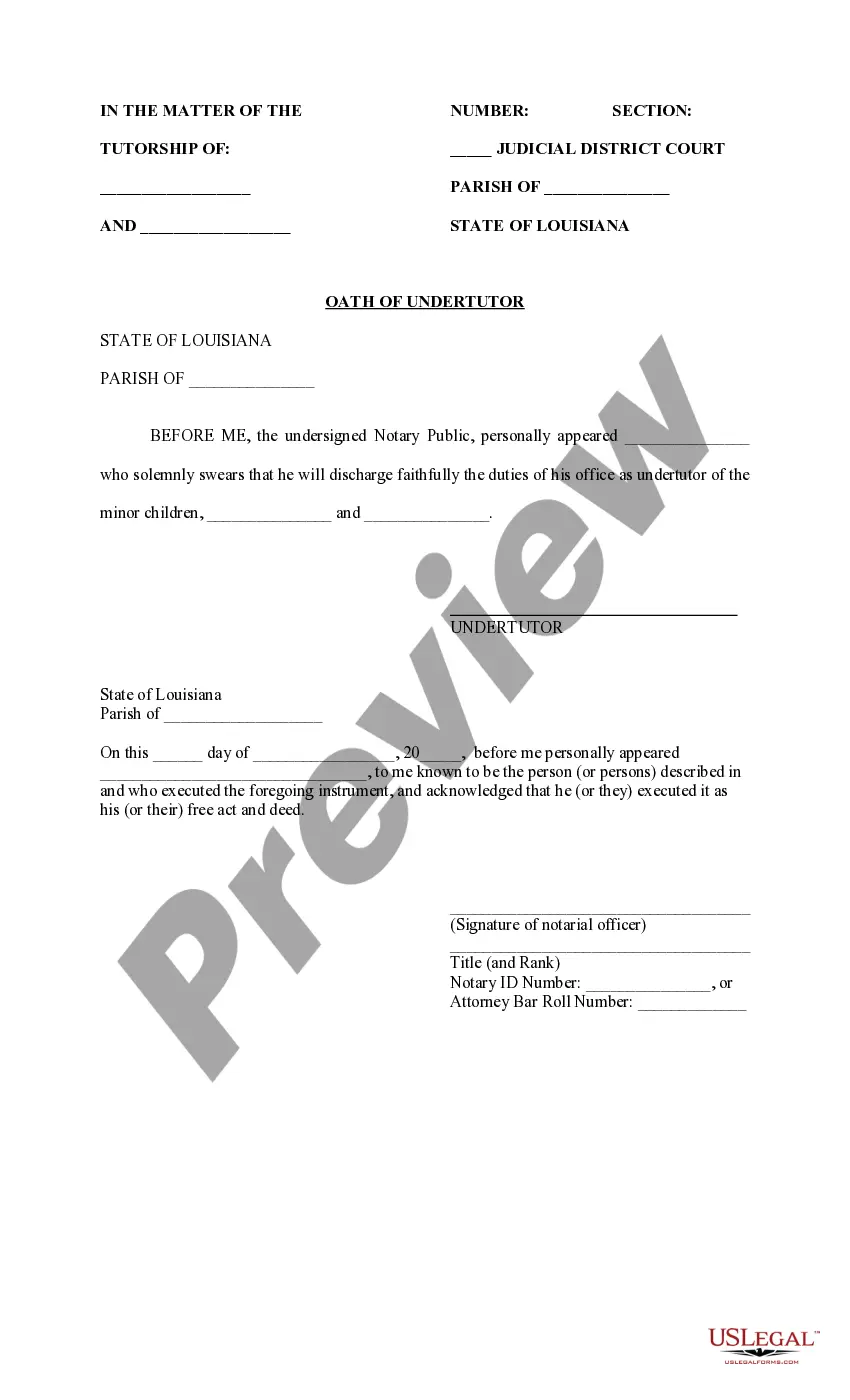
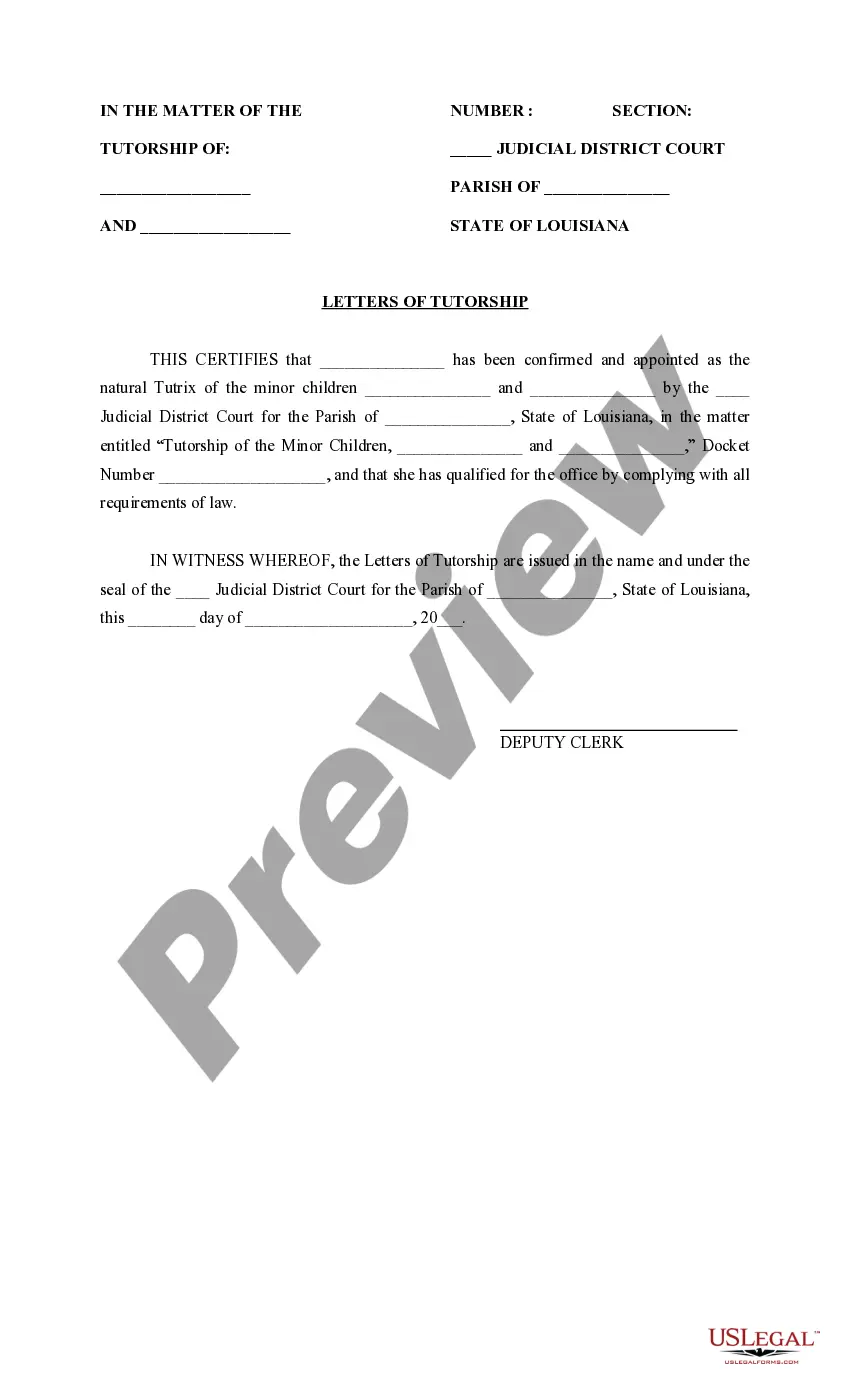
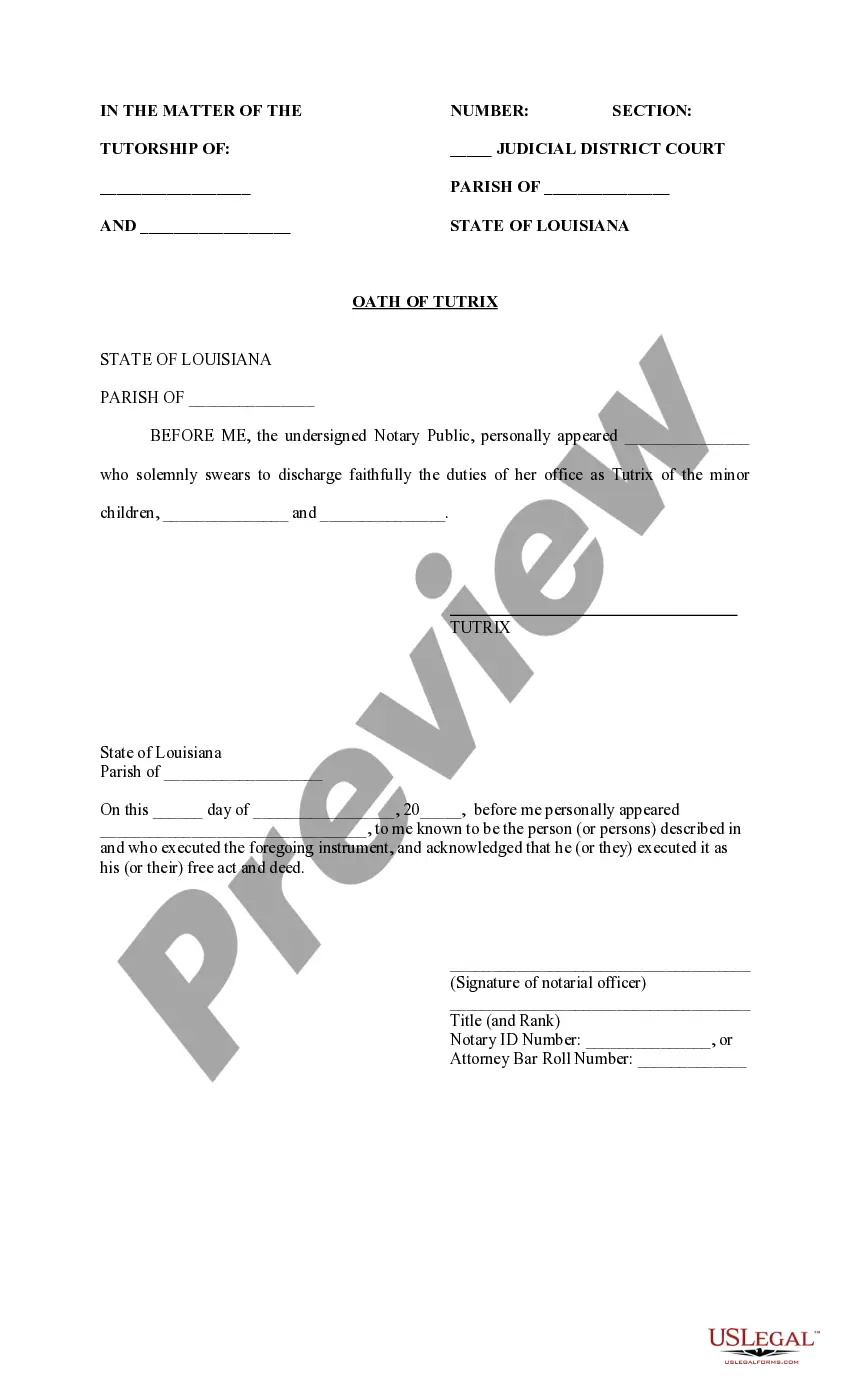
The Oath of Under-tutor is a formal declaration made by an undertutor, who is appointed to take care of the minor children involved in a legal guardianship. This oath confirms the undertutor's pledge to fulfill their responsibilities seriously and diligently. Unlike other forms of guardianship documents, this oath specifically underscores the undertutor's commitment to the welfare of the minor children under their care.
Key components of this form
- Name of the judicial district court and parish involved
- Identification of the minor children the undertutor is responsible for
- Declaration of the undertutor's commitment to their duties
- Signature of the undertutor
- Notary public section for official acknowledgment
When to use this document
This form should be used when an individual is appointed as an undertutor to minor children in a guardianship situation. It is necessary when the court requires a formal acknowledgment of the undertutor's responsibilities, ensuring that the children's welfare is prioritized and legally recognized.
Who needs this form
- Individuals appointed as undertutors in legal guardianship cases
- Family members or close friends of the family wishing to act in the best interest of the minors
- Legal representatives acting on behalf of the minor children's interests
Instructions for completing this form
- Identify the judicial district court and parish at the top of the form.
- Enter the names of the minor children for whom you are serving as undertutor.
- Affirm your commitment by signing the oath in front of a notary public.
- Complete the notary section, ensuring the date and notary public details are filled out accurately.
- Keep a copy of the completed form for your records.
Notarization guidance
Yes, this form must be notarized to be legally valid. US Legal Forms offers integrated online notarization, providing a secure video call service that is available 24/7, ensuring you can complete the notarization process conveniently and legally without the need for travel.
Get your form ready online
Our built-in tools help you complete, sign, share, and store your documents in one place.
Make edits, fill in missing information, and update formatting in US Legal Forms—just like you would in MS Word.
Download a copy, print it, send it by email, or mail it via USPS—whatever works best for your next step.
Sign and collect signatures with our SignNow integration. Send to multiple recipients, set reminders, and more. Go Premium to unlock E-Sign.
If this form requires notarization, complete it online through a secure video call—no need to meet a notary in person or wait for an appointment.
We protect your documents and personal data by following strict security and privacy standards.

Make edits, fill in missing information, and update formatting in US Legal Forms—just like you would in MS Word.

Download a copy, print it, send it by email, or mail it via USPS—whatever works best for your next step.

Sign and collect signatures with our SignNow integration. Send to multiple recipients, set reminders, and more. Go Premium to unlock E-Sign.

If this form requires notarization, complete it online through a secure video call—no need to meet a notary in person or wait for an appointment.

We protect your documents and personal data by following strict security and privacy standards.
Typical mistakes to avoid
- Forgetting to include all required names and details of the minor children.
- Omitting the signature of the undertutor.
- Failing to have the oath notarized or incorrectly completing the notary section.
Benefits of using this form online
- Convenient access to the form for immediate download and completion.
- Editability allows users to fill in specific details at their own pace.
- Reliability and assurance that the form template is drafted by licensed attorneys.
Key takeaways
- The Oath of Under-tutor is essential for anyone assuming care for minor children in Louisiana.
- Correct completion and notarization of the form are crucial for its enforceability.
- This form emphasizes the undertutorâs commitment to act in the childrenâs best interests.
Looking for another form?

Form popularity
FAQ
Tutorship is the power which an individual has to take care of the person of one who is unable to take care of himself. Tutorship is created by the lawful appointment to the care of the person and property of a minor.
The role of the tutorship council is to: supervise the administration performed by the tutor to a minor child, whether this tutor is legal, dative or suppletive; assist them in their task; give them authorizations; provide opinions to the court about the administration of certain property.
Tutorship is the power which an individual has to take care of the person of one who is unable to take care of himself. Tutorship is created by the lawful appointment to the care of the person and property of a minor.
TUTOR, civil law. A person who has been lawfully appointed to the care of the person and property of a minor.By the laws of Louisiana minors under the age of fourteen years, if males, and under the age of twelve years, if females, are both, as to their persons and their estates, placed under the authority of a tutor.
The child must have been found to be a Child in Need of Care by the court. Then the Department of Children and Family Services (DCFS), the parent or the attorney for the child may make a request of the court asking that a guardian be appointed. The child must have lived with the guardian for at least 6 months.
Tutorship is when a person is legally responsible for caring for a minor child and has been appointed by a court to be the child's tutor. Guardianship is the term used in every other state for tutorship. You will even see it in many Louisiana laws.
Different jurisdictions have varied definitions of tutors and guardians, though they both serve similar functions. A guardian or tutor does not take over all parental responsibilities, as in the case of adoptive parents, but has the authority to make decisions on behalf of a minor when a parent is not available.
An adult whose competency is in question must be represented by an attorney at a hearing. If the court finds that the person is incompetent to exercise some or all decision-making authority, then the court must decide who is the appropriate person to take on decision-making for the incompetent person.