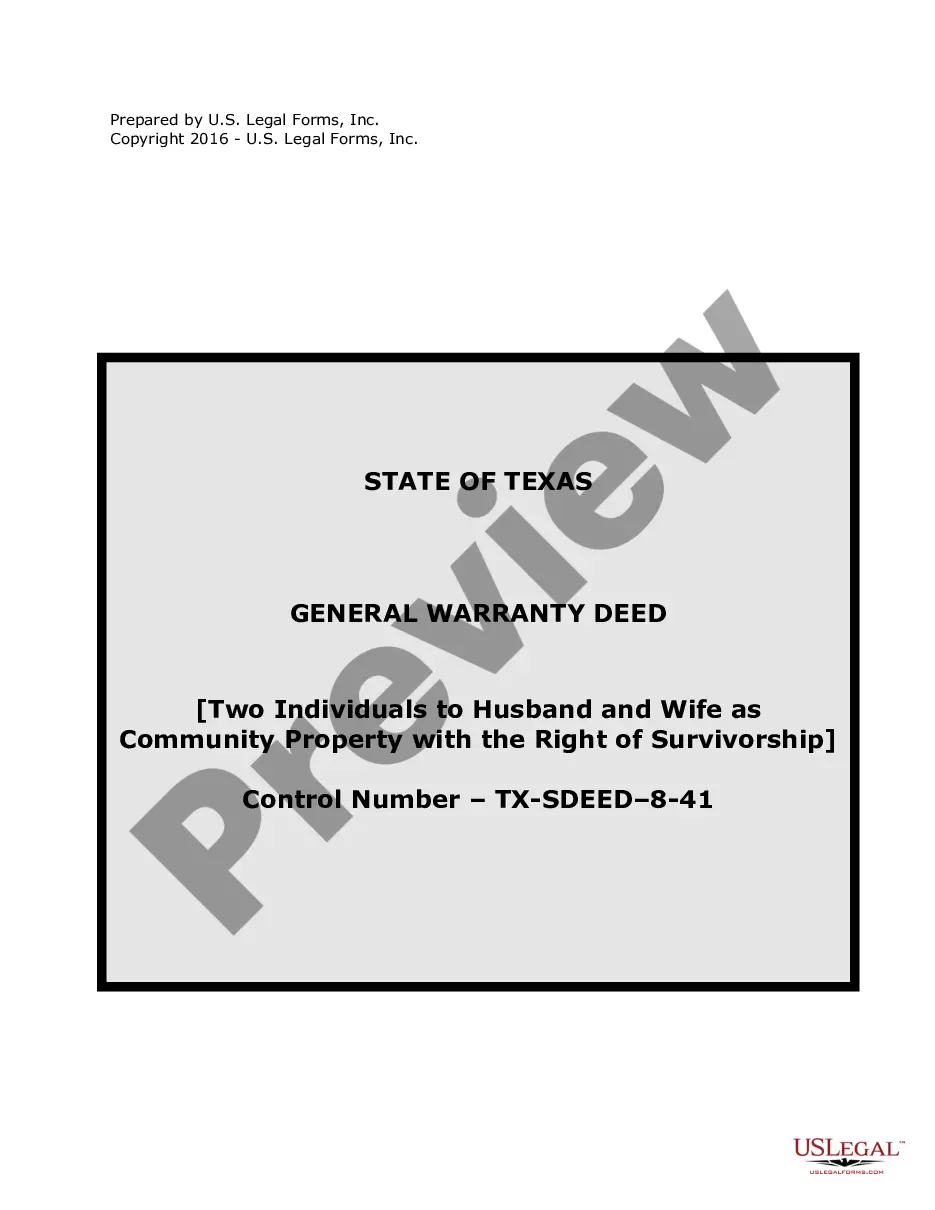
Texas General Warranty Deed for Two Individuals to Husband and Wife as Community Property with Rights of Survivorship
About this form
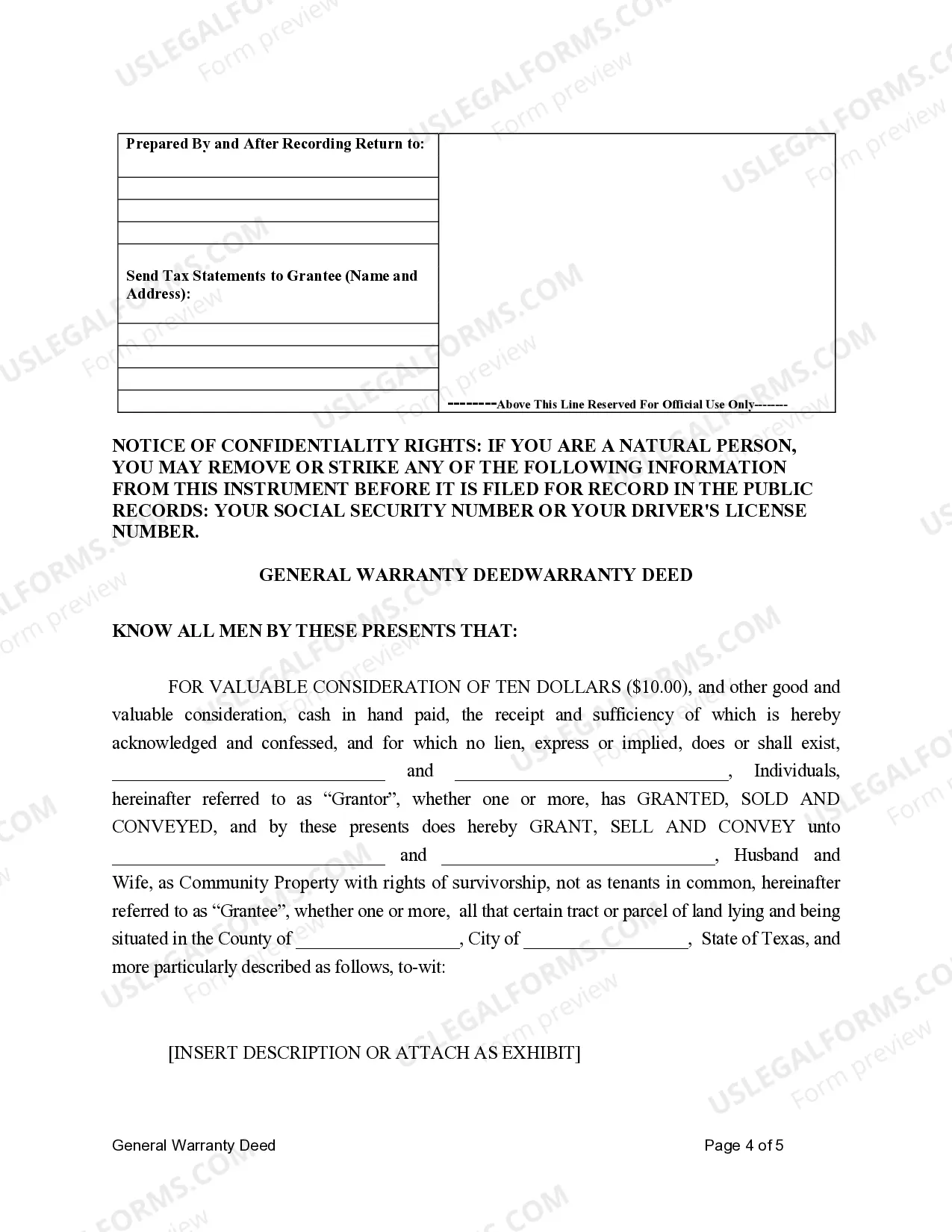
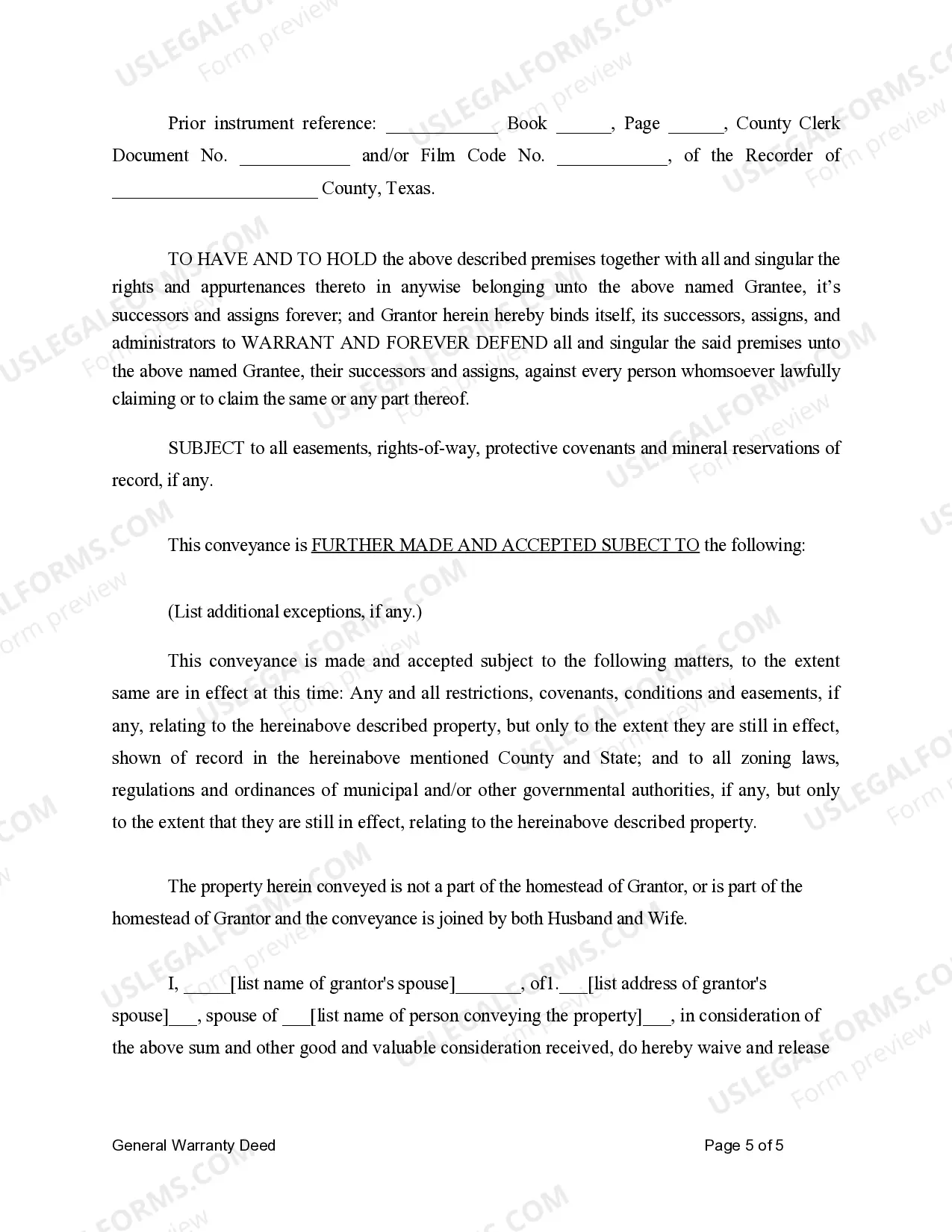
The General Warranty Deed for Two Individuals to Husband and Wife as Community Property with Rights of Survivorship is a legal document used to transfer property ownership between two individuals to a married couple. This deed ensures that the property is held as community property, granting the surviving spouse full ownership if one spouse passes away. This form provides more protection than a standard warranty deed by assuring buyers that the title is free from any claims against it.
Key components of this form
- Grantors information: Includes names of individuals transferring the property.
- Grantees information: Details of the husband and wife receiving the property.
- Property description: Specific description of the property being transferred.
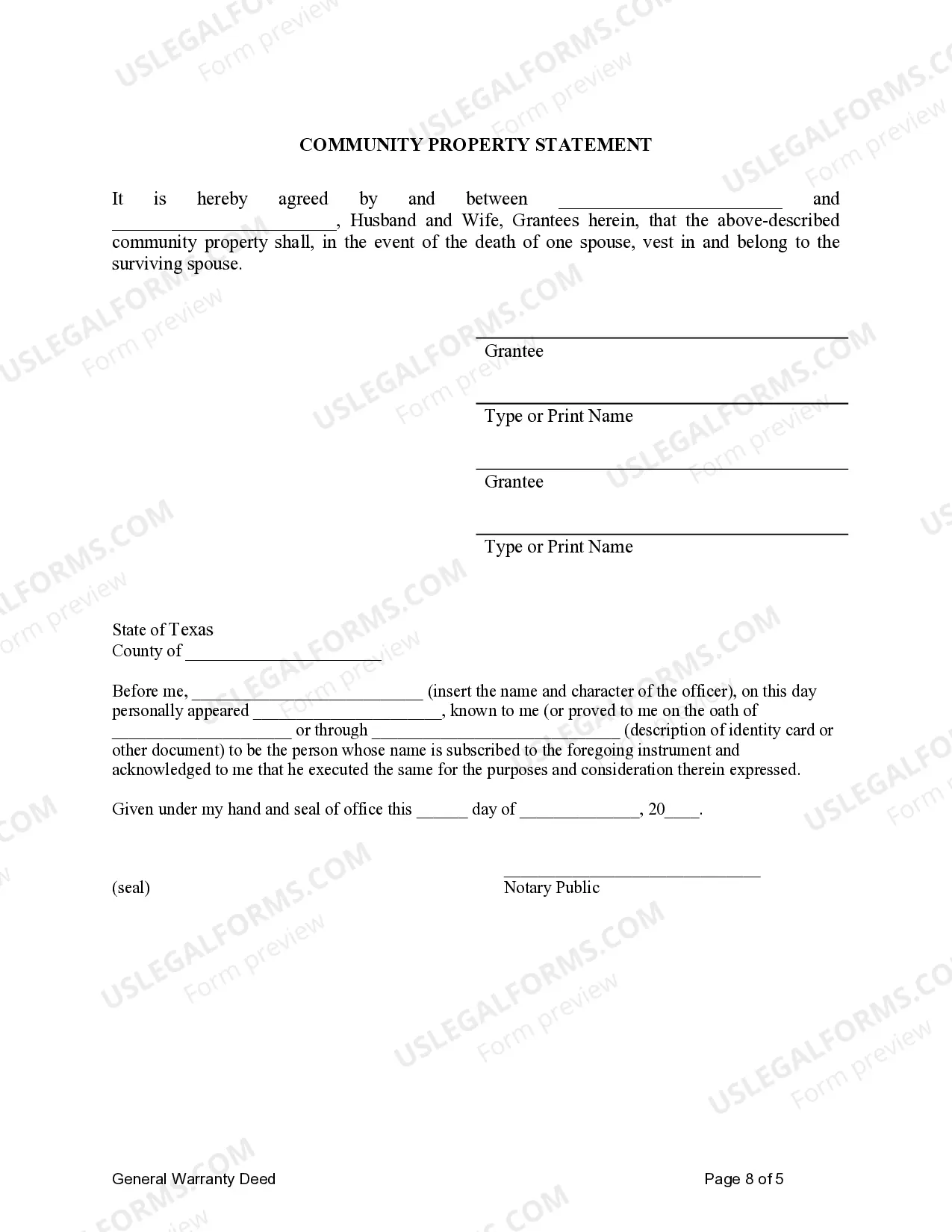
- Community property statement: Declaration that the property will belong to the surviving spouse upon death.
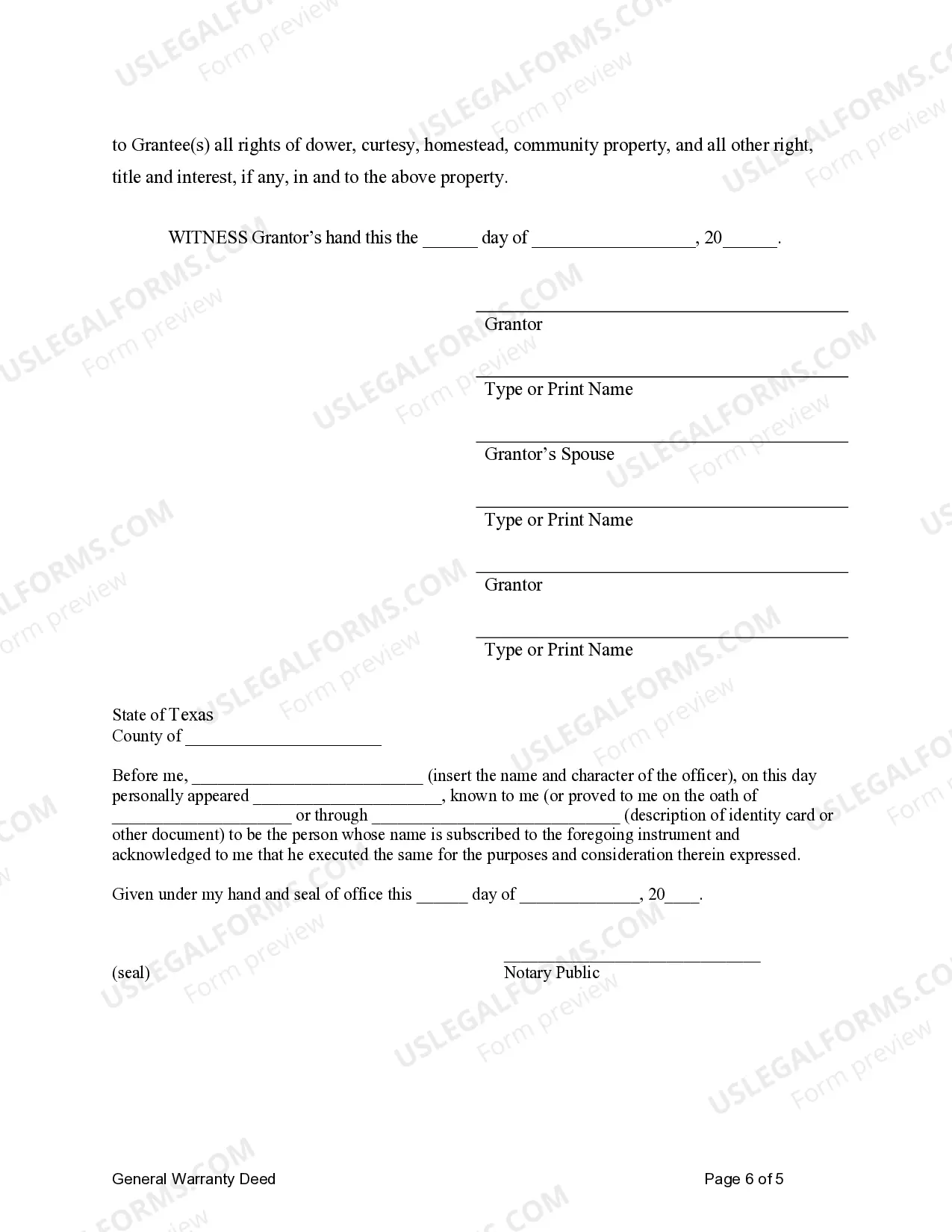
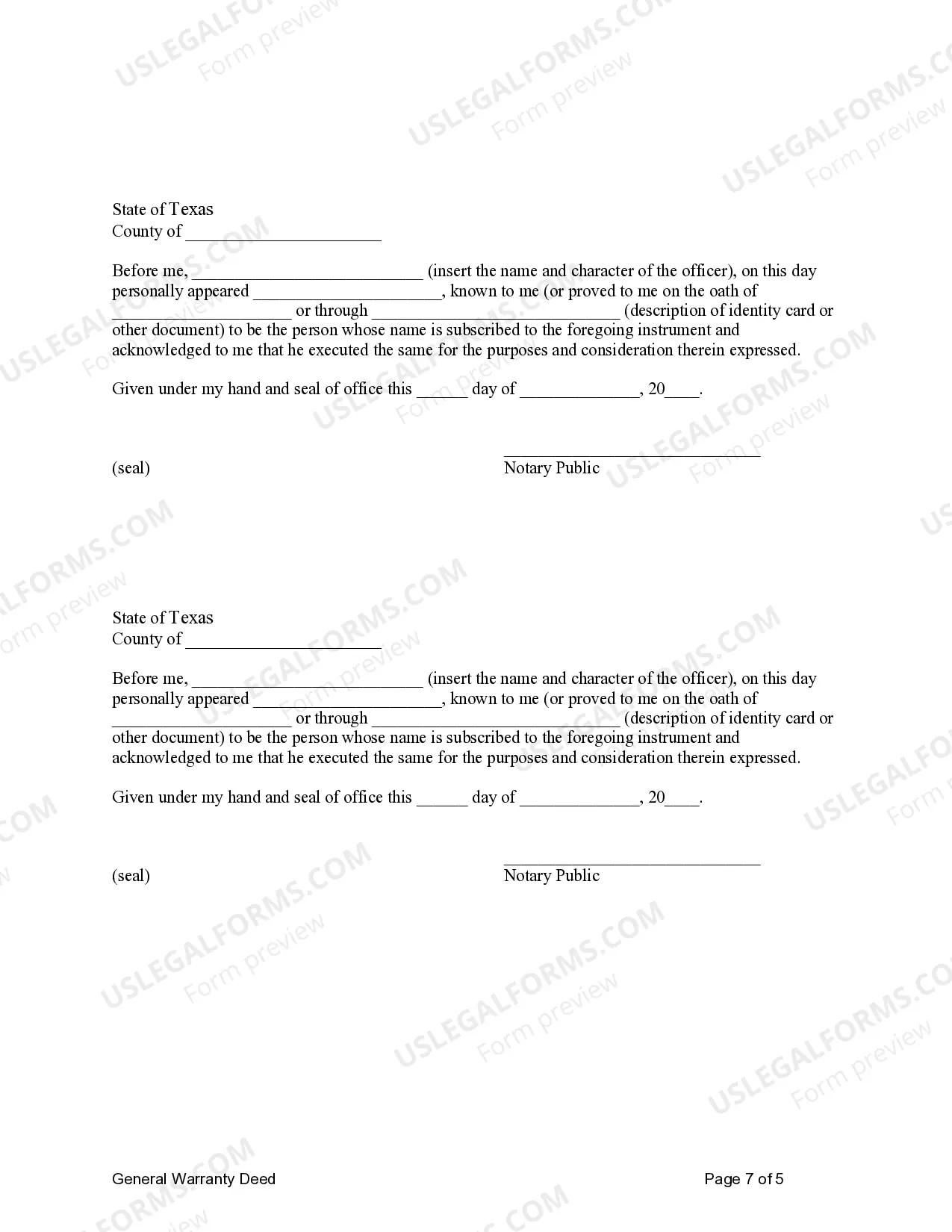
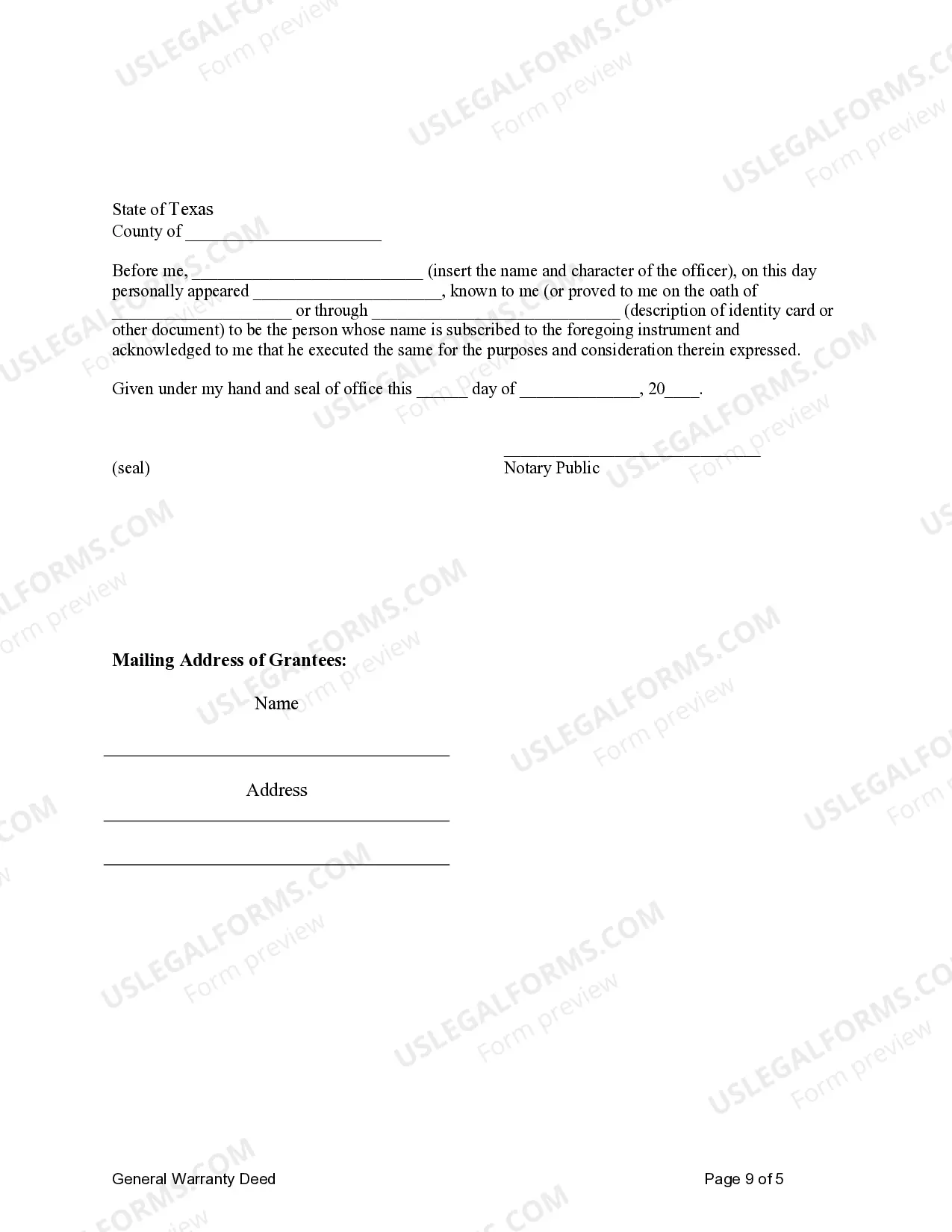
- Signature lines: Areas designated for the grantors and any required witnesses or notaries to sign.




Common use cases
This form should be used during property transfer situations where two individuals wish to convey property to a married couple. It is often utilized in estate planning to ensure that property ownership seamlessly transitions to the surviving spouse without the need for probate. This form may also be relevant in transactions that involve marriage or the establishment of community property agreements.
Who can use this document
The following individuals should consider using this form:
- Two individuals who own property and wish to transfer it to a husband and wife.
- Couples looking to establish community property with rights of survivorship.
- Estate planners and individuals managing inheritance matters.
How to prepare this document
- Identify the grantors by entering the names of the two individuals transferring the property.
- Specify the grantees by providing the names of the husband and wife who will receive the property.
- Enter a detailed description of the property being transferred, including necessary legal identifiers.
- Fill in the date of the transaction and any additional conditions regarding the property.
- Ensure all parties sign the document where indicated, including any required witnesses.
Notarization requirements for this form
This form must be notarized to be legally valid. US Legal Forms provides secure online notarization powered by Notarize, allowing you to complete the process through a verified video call.
Get your form ready online
Our built-in tools help you complete, sign, share, and store your documents in one place.
Make edits, fill in missing information, and update formatting in US Legal Forms—just like you would in MS Word.
Download a copy, print it, send it by email, or mail it via USPS—whatever works best for your next step.
Sign and collect signatures with our SignNow integration. Send to multiple recipients, set reminders, and more. Go Premium to unlock E-Sign.
If this form requires notarization, complete it online through a secure video call—no need to meet a notary in person or wait for an appointment.
We protect your documents and personal data by following strict security and privacy standards.

Make edits, fill in missing information, and update formatting in US Legal Forms—just like you would in MS Word.

Download a copy, print it, send it by email, or mail it via USPS—whatever works best for your next step.

Sign and collect signatures with our SignNow integration. Send to multiple recipients, set reminders, and more. Go Premium to unlock E-Sign.

If this form requires notarization, complete it online through a secure video call—no need to meet a notary in person or wait for an appointment.

We protect your documents and personal data by following strict security and privacy standards.
Common mistakes
- Failing to provide a complete and accurate property description.
- Not obtaining necessary signatures from all parties involved.
- Overlooking the need to have the document properly notarized if required.
Why use this form online
- Easy access to the form that can be downloaded and printed from the comfort of your home.
- Editable fields allow for convenient completion, reducing the likelihood of errors.
- A reliable resource ensuring compliance with current legal standards for Texas property laws.
Key takeaways
- This warranty deed transfers property to a married couple as community property.
- It includes a right of survivorship, ensuring the surviving spouse retains full ownership.
- Accurate completion and notarization of the form are essential for legal validity.
- This form is specifically designed for use in Texas and aligns with state laws.
Looking for another form?
Form popularity
FAQ
This deed transfers property to a married couple and records it as community property with rights of survivorship. It ensures the surviving spouse automatically owns the property after one spouse dies and provides general warranty that the title is free from claims at the time of transfer. It offers greater protection than a standard warranty deed.
This form is designed for two grantors to convey property to a married couple as community property with rights of survivorship. To add a spouse, list both spouses as grantees and include their information in the grantee section, with signatures witnessed or notarized in accordance with the form’s signature lines.
Yes. When property is conveyed with this deed, it is held as community property with rights of survivorship, so the surviving spouse automatically owns the property after the other spouse dies. This arrangement helps the ownership transition without probate for the survivorship portion.
If the property is held under this deed as community property with rights of survivorship, the death of one owner transfers full ownership to the surviving spouse automatically. This differs from forms that do not guarantee survivorship or community property treatment.
Yes. This deed is designed to create community property with rights of survivorship for a married couple in Texas, ensuring the surviving spouse gains full ownership upon death of the other spouse.
This deed explicitly creates property held as community property with rights of survivorship for a married couple, reflecting Texas’s community property framework. Joint tenancy with rights of survivorship does not declare community property status, so the ownership and survivorship mechanics can differ in practice.