Resignation Letter for Retirement
What this document covers
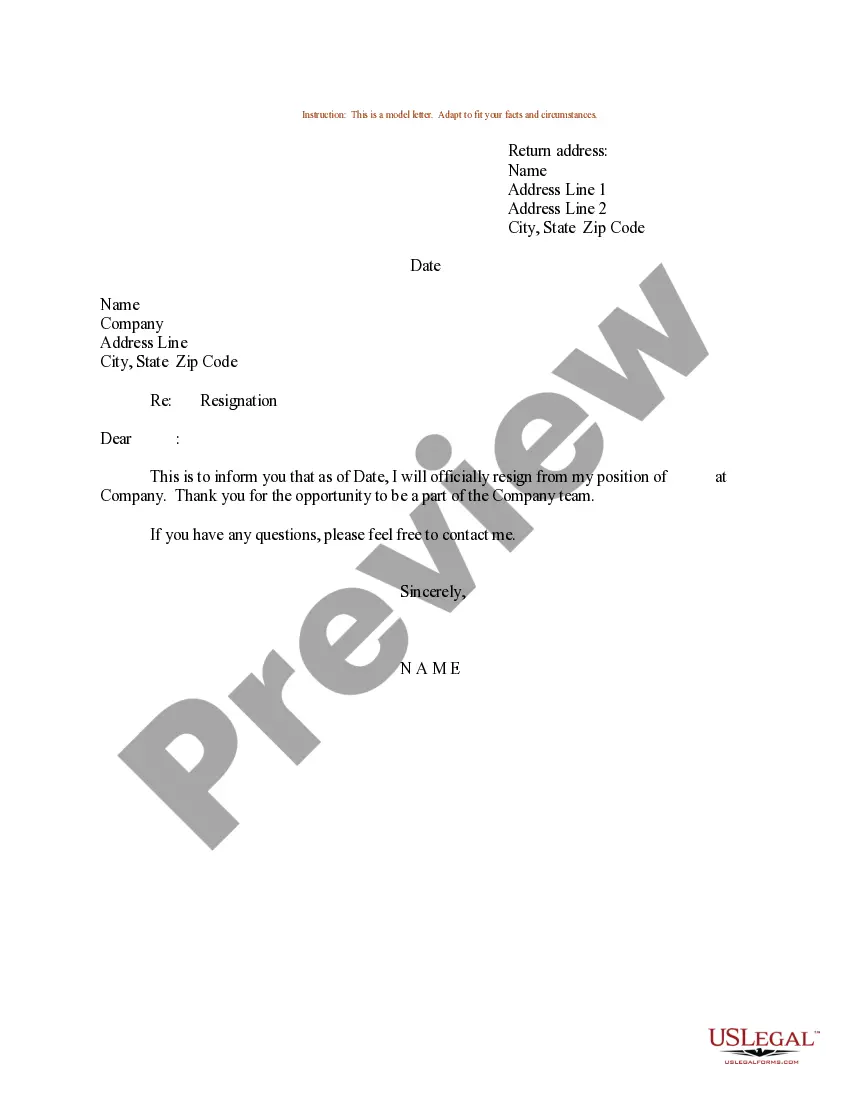
The Resignation Letter for Retirement is a sample letter that allows employees to formally notify their employer of their decision to retire. This form is designed to ensure clear communication of the retirement plan and does not serve the same purpose as other resignation letters, which may not specifically reference retirement.
What’s included in this form
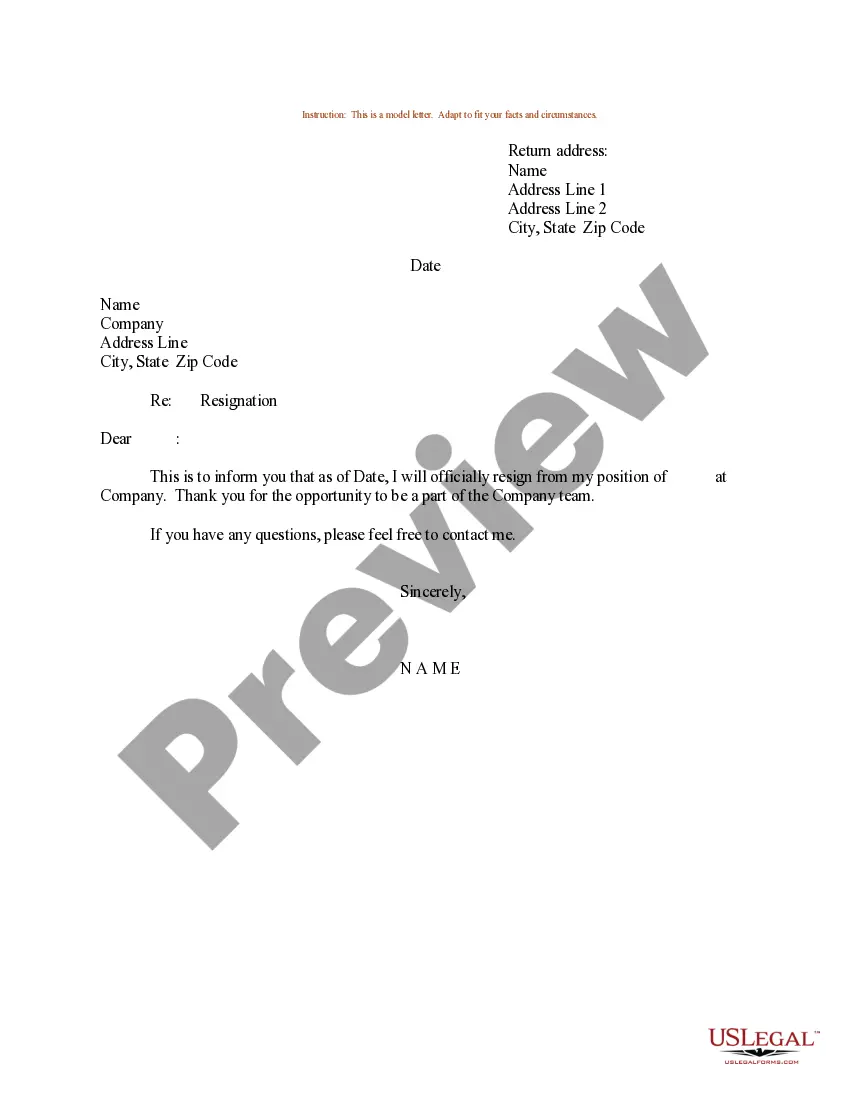
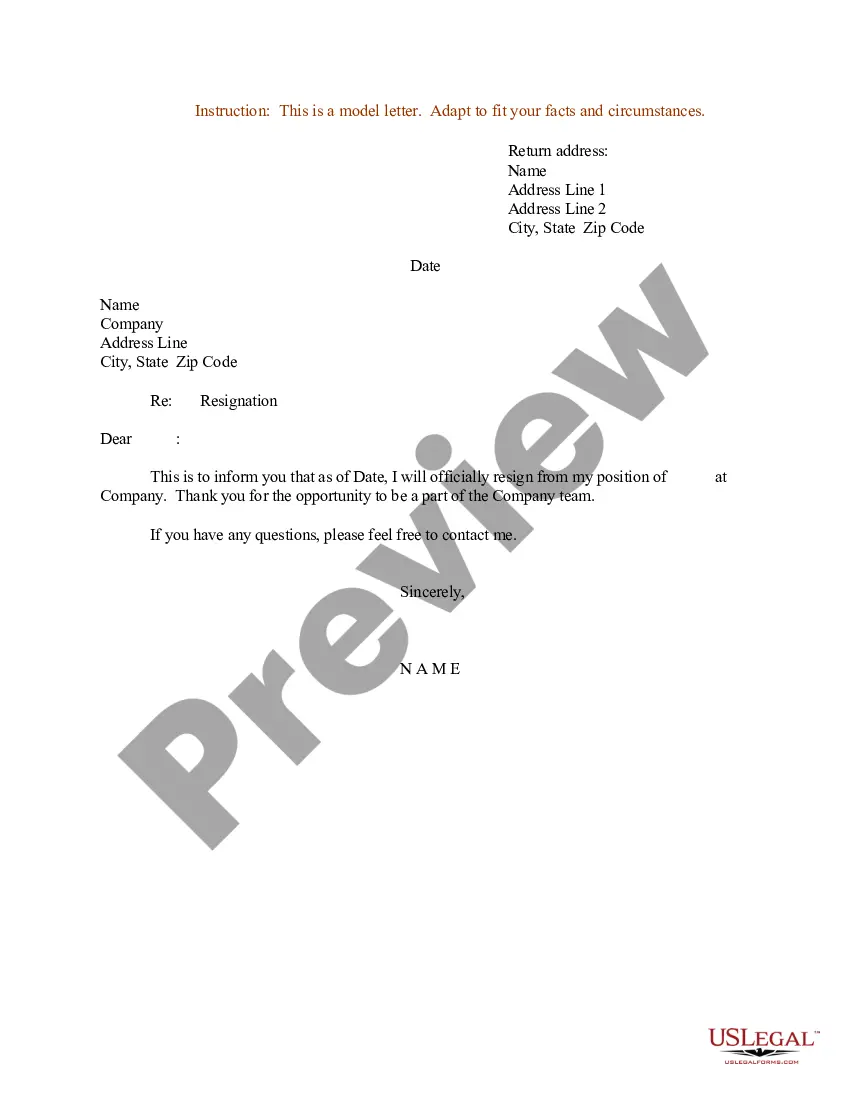
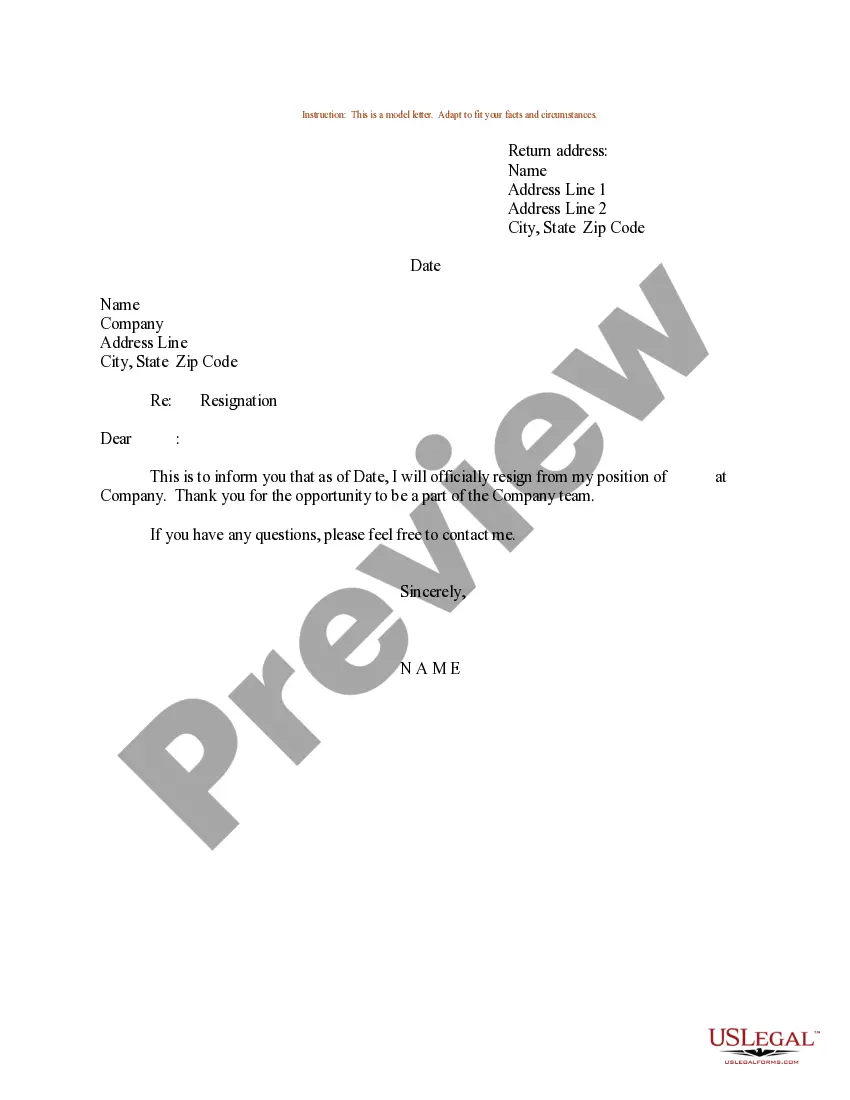
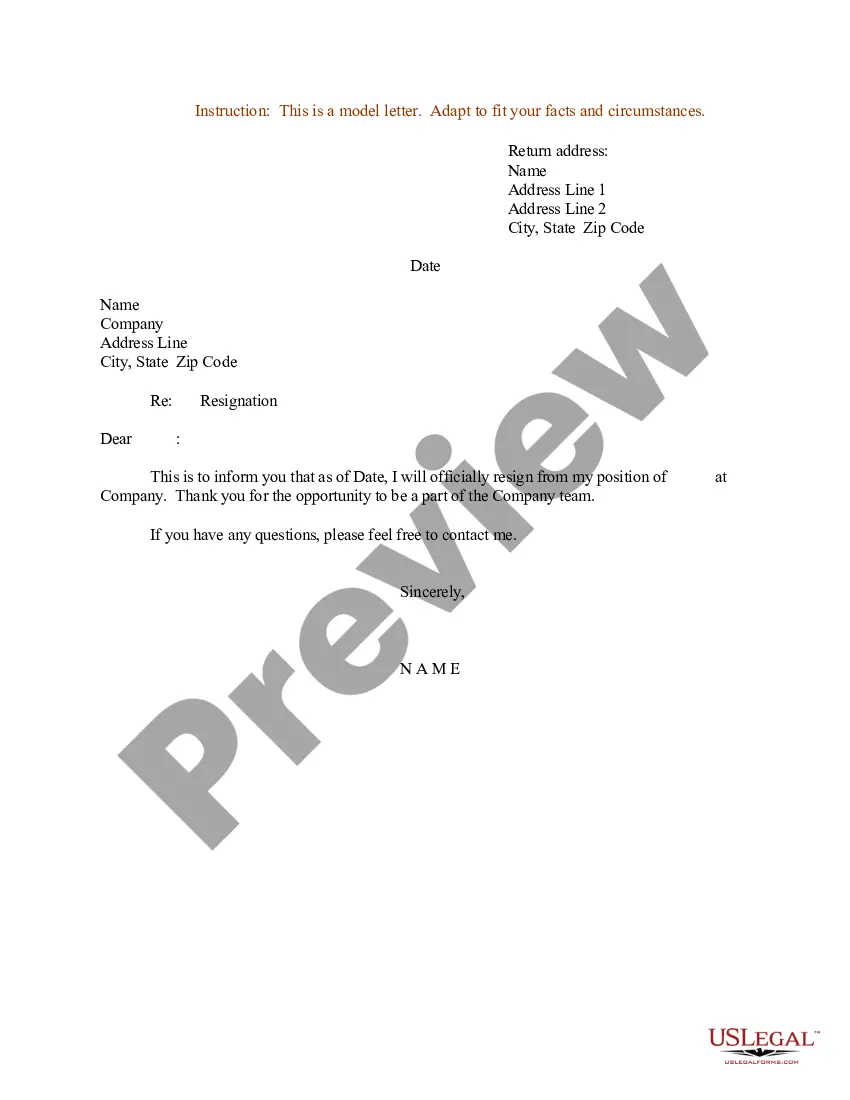
- Return address: Includes the sender's name and address.
- Date: The date on which the letter is written.
- Recipient address: Contains the employer's name and address.
- Subject line: Clearly states the purpose of the letter as a resignation.
- Body of the letter: A brief statement of retirement intentions and expression of gratitude.
- Closing: Signature line for the sender.
Situations where this form applies
This resignation letter is used when an employee decides to retire from their position. It serves to formally notify their employer of their intention to leave the workforce and allows the organization to prepare for the transition. Timing is important, and this letter should be given in accordance with company policies or agreed-upon notice periods.
Intended users of this form
This form is appropriate for:
- Employees planning to retire from their current job.
- Individuals seeking to formally communicate their retirement to their employer.
- Those who want to maintain professionalism in their resignation process.
Completing this form step by step
- Identify your personal information: Enter your name and address at the top of the letter.
- Include the date of the letter just below your address.
- Provide the employer's name and address in the next section.
- Draft the body of the letter, clearly stating your intention to retire.
- Add a closing statement thanking your employer for the opportunities provided.
- Sign the letter before submitting it to your employer.
Notarization requirements for this form
This form does not typically require notarization unless specified by local law.
Get your form ready online
Our built-in tools help you complete, sign, share, and store your documents in one place.
Make edits, fill in missing information, and update formatting in US Legal Forms—just like you would in MS Word.
Download a copy, print it, send it by email, or mail it via USPS—whatever works best for your next step.
Sign and collect signatures with our SignNow integration. Send to multiple recipients, set reminders, and more. Go Premium to unlock E-Sign.
If this form requires notarization, complete it online through a secure video call—no need to meet a notary in person or wait for an appointment.
We protect your documents and personal data by following strict security and privacy standards.

Make edits, fill in missing information, and update formatting in US Legal Forms—just like you would in MS Word.

Download a copy, print it, send it by email, or mail it via USPS—whatever works best for your next step.

Sign and collect signatures with our SignNow integration. Send to multiple recipients, set reminders, and more. Go Premium to unlock E-Sign.

If this form requires notarization, complete it online through a secure video call—no need to meet a notary in person or wait for an appointment.

We protect your documents and personal data by following strict security and privacy standards.
Typical mistakes to avoid
- Failing to give appropriate notice to the employer.
- Using a vague statement instead of specifying retirement intentions.
- Not expressing gratitude for the experiences gained while employed.
- Forgetting to proofread for spelling or grammatical errors.
Benefits of using this form online
- Convenience: Easily accessible from anywhere and downloadable in Word format.
- Editability: Customize the template to suit personal needs and preferences.
- Reliability: Drafted by licensed attorneys, ensuring that the content is legally sound.
Legal use & context
- This resignation letter is a formal record of your intent to retire.
- It helps to protect both the employeeâs interests and the employerâs procedural compliance.
- Using the proper format can prevent misunderstandings and foster goodwill.
What to keep in mind
- The Resignation Letter for Retirement serves as a formal notice to employers about retirement.
- Clear communication aids in a smooth transition for both parties.
- Customizing the letter can help reflect individual circumstances and relationship with the employer.
Looking for another form?
Form popularity
FAQ
The difference between retiring and resigning is that when you retire, sometimes you still can receive (social) benefits like healthcare and a pension.Resigning means you voluntarily quit your job, which means you're not eligible for those benefits.
Just as with any other position you have left in your career, regardless of your handbook, you should tell your plans to your boss no later than three weeks prior to your intended date of retirement. The "three week notice" is the bare minimum of time required to find, hire and train a replacement.
Offer thanks and appreciation. Try to be gracious and let colleagues know that you value the time that you've spent together. Detail your history at the company. Write about future plans. Last day on the job.
Tell your boss that you are tentatively thinking about retiring on date . Say you are not 100% certain yet but want to give a heads-up now of your retirement plans. Also explain that you would like to reserve the right to change your mind. Ask to keep things quiet for now.
Step 1: Announce Your Retirement To Your Boss Verbally And the first person you need to announce your retirement to is your boss or direct supervisor. You don't want to spread the news too far before you announce it to your boss.
Give a date. Early in the letter, give a specific date for your retirement. Mention your successes at the company. Express gratitude. Offer your services. Send the letter to Human Resources. Provide contact information.
The difference between retiring and resigning is that when you retire, sometimes you still can receive (social) benefits like healthcare and a pension.Resigning means you voluntarily quit your job, which means you're not eligible for those benefits.
Your retirement letter should include the details of your departure: Your letter should include the date you are resigning, which will be the last day you work. If you can help during the transition that will follow your resignation, mention this as well.