Montana Renovation Contract for Contractor
What is this form?
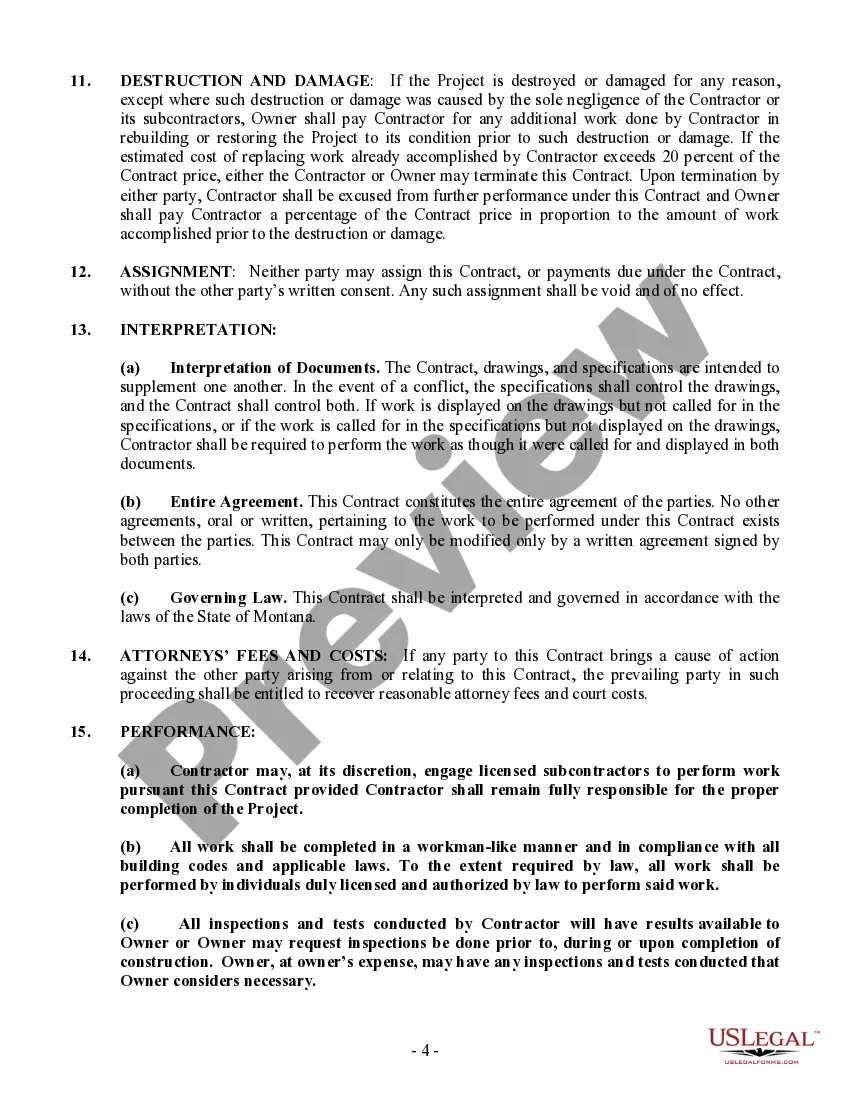
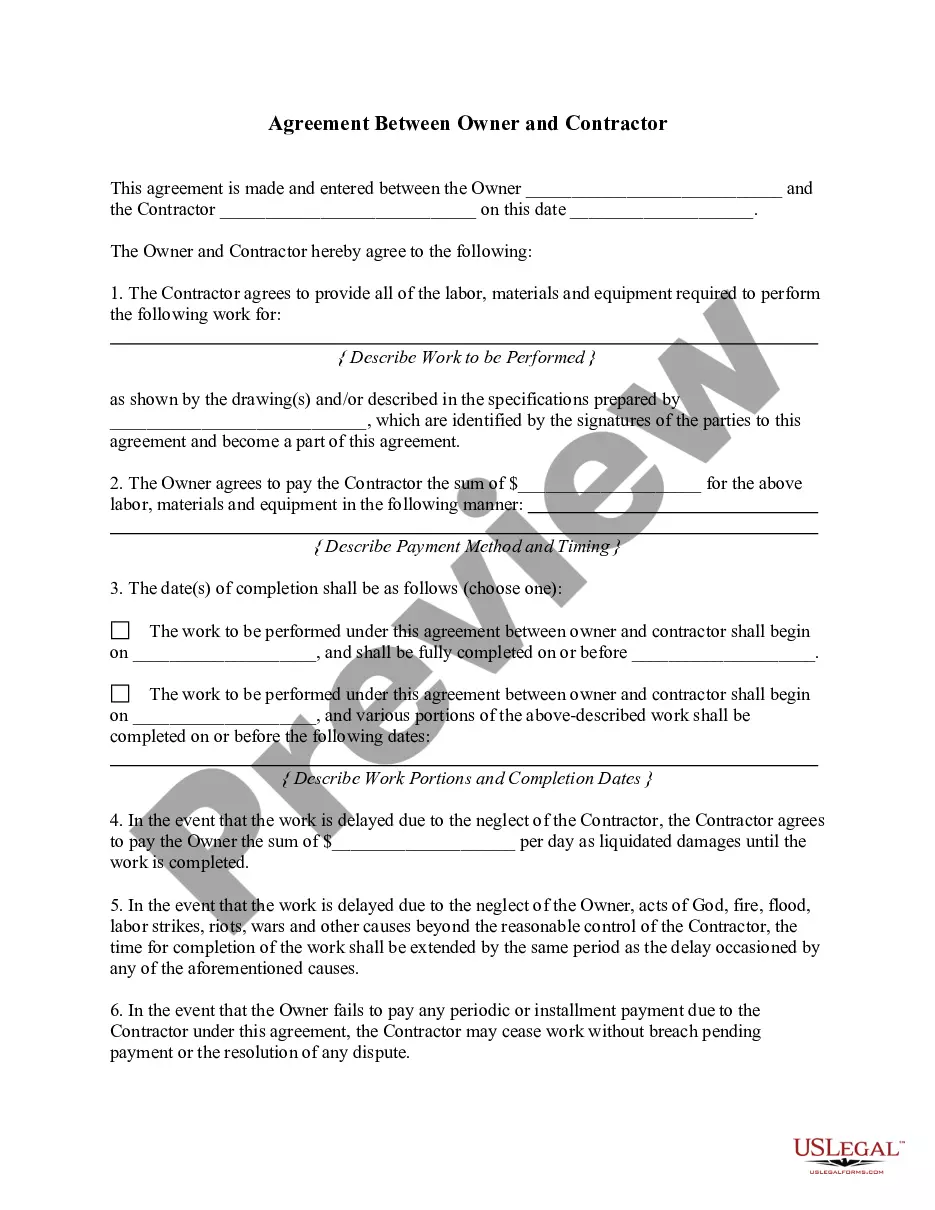
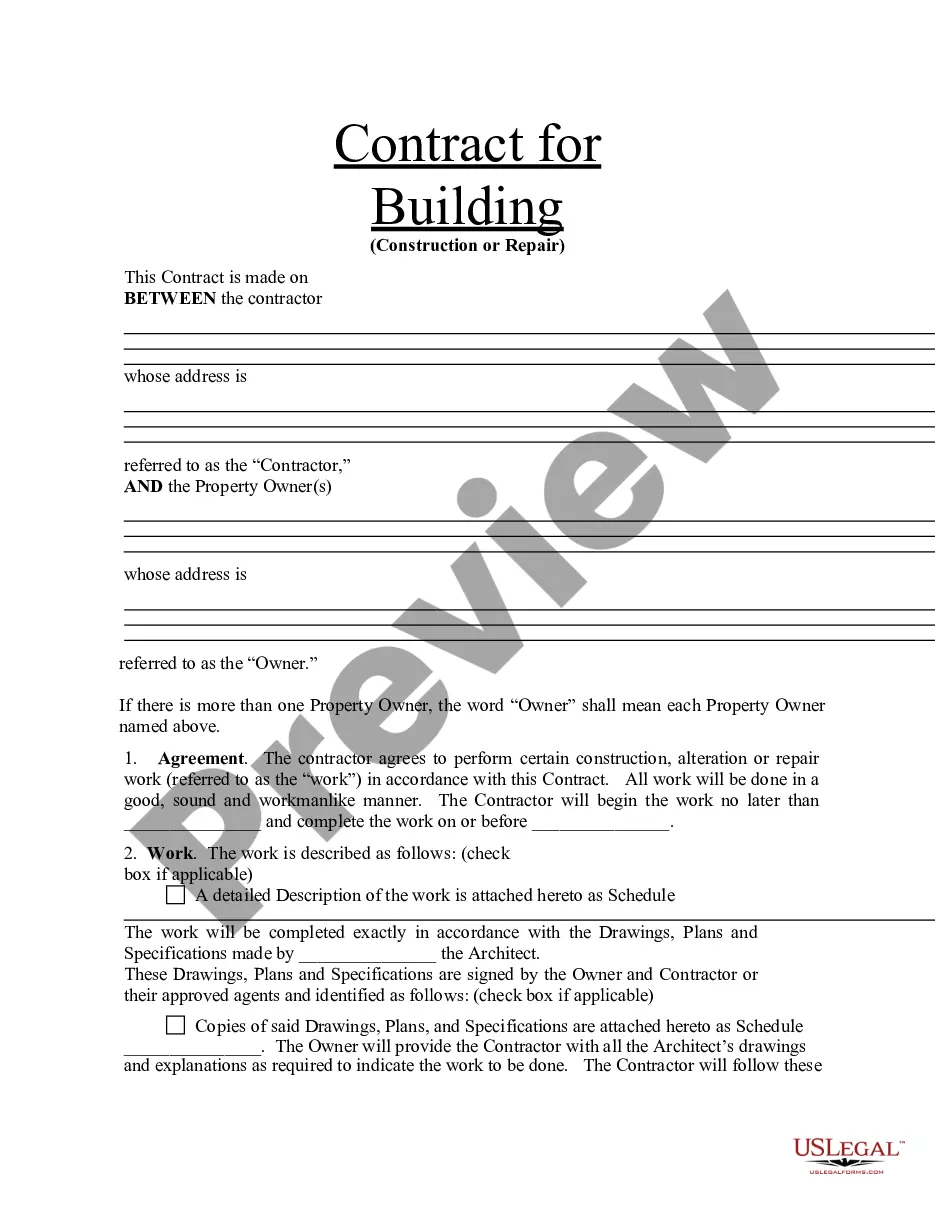
The renovation contract for contractor is a legal document used between renovation contractors and property owners. This form outlines the terms of the project, including payment structures such as cost plus or fixed fee arrangements. It ensures that both parties have a clear understanding of project requirements such as change orders, insurance, and warranties. This form distinguishes itself by being specifically drafted to comply with the laws of the State of Montana.
Key parts of this document
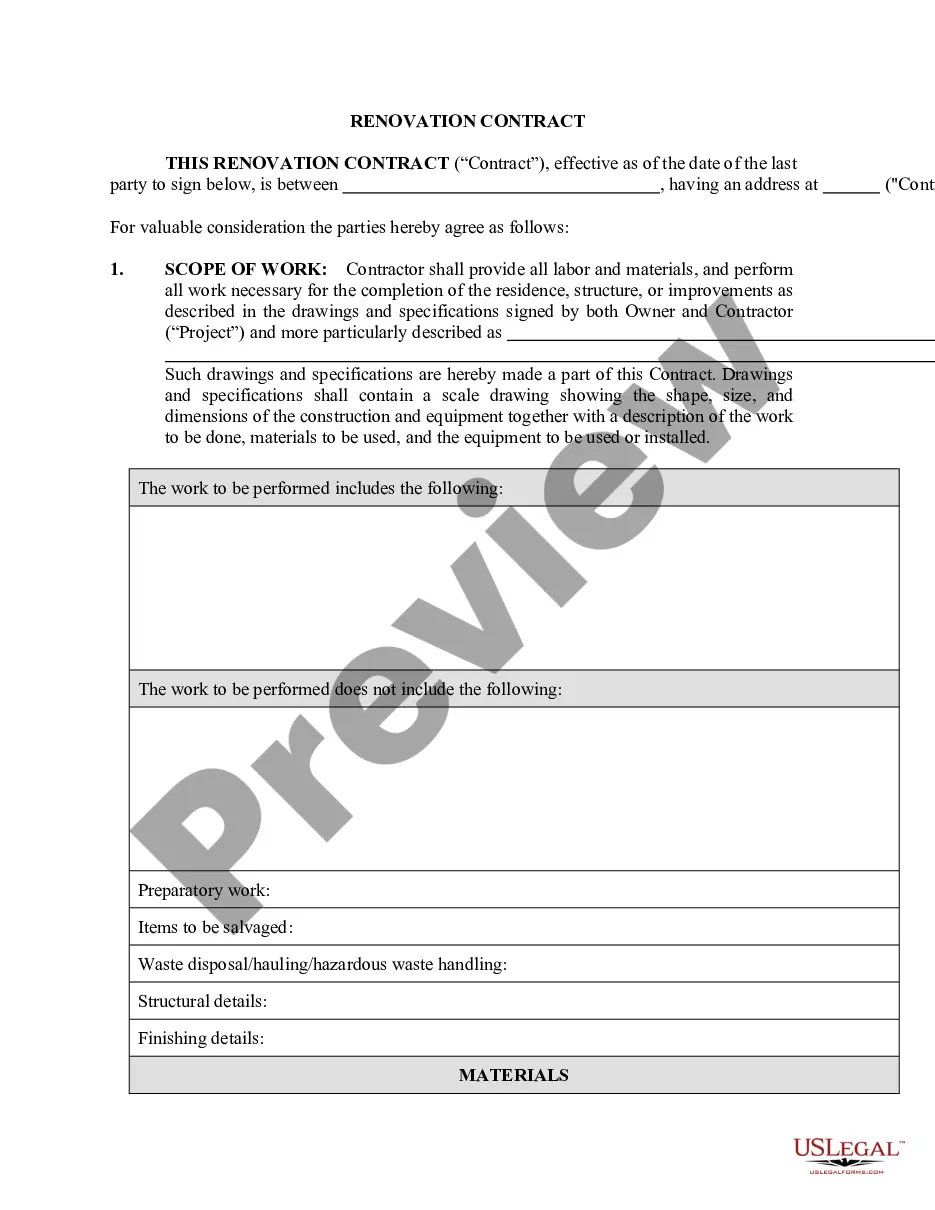
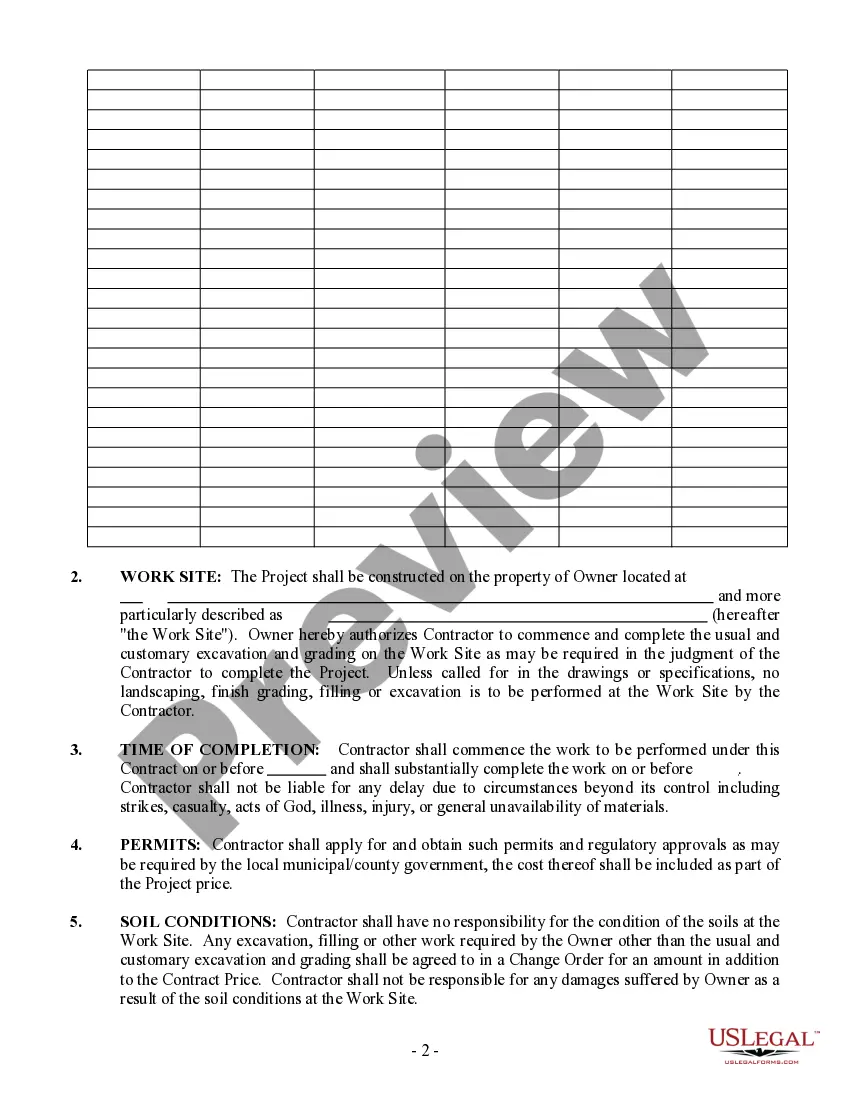
- Permits: Specifies the contractor's responsibility to obtain necessary permits and approvals.
- Soil Conditions: Outlines the contractor's lack of responsibility for soil conditions at the work site.
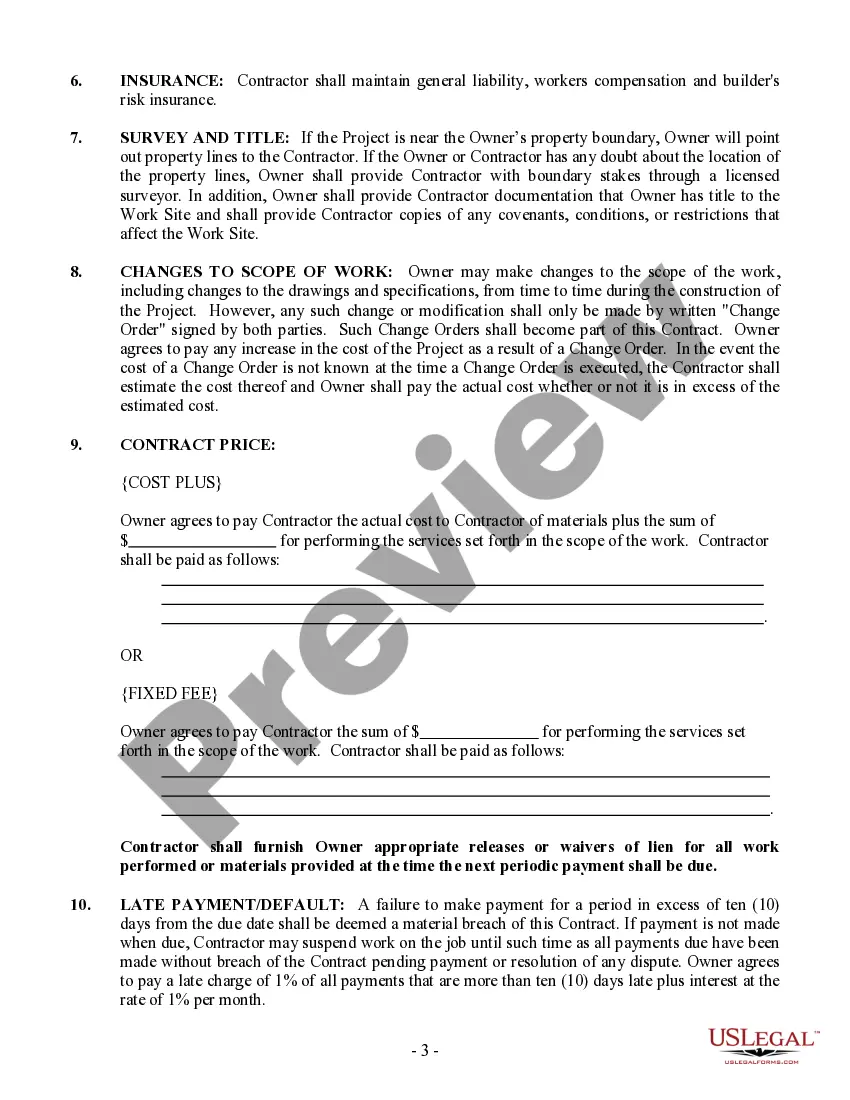
- Insurance: Requires the contractor to maintain various types of insurance, including liability and workers' compensation.
- Survey and Title: Addresses the need for property boundary confirmation and documentation of ownership.
- Changes to Scope of Work: Describes the process for making changes during the project, requiring written change orders.
- Late Payment: Details the penalties for late payments, including potential suspension of work.



When to use this document
This form is essential for any renovation project where a contractor is hired by a property owner. Use this renovation contract when initiating work on residential or commercial properties, ensuring both parties agree on the project's terms, payment structure, and responsibilities. It is particularly important when anticipating changes in the scope of work or when specific legal compliance is required.
Who should use this form
- Property Owners: Individuals or businesses hiring a contractor for renovation projects.
- Renovation Contractors: Licensed professionals providing renovation services to property owners.
- Legal Advisors: Those needing a reliable template for contracts within the renovation context in Montana.
How to prepare this document
- Identify the parties involved: Clearly fill in the names and contact details of the contractor and property owner.
- Specify the project details: Describe the renovation work to be performed and any necessary timelines.
- Enter payment structure: Clearly outline whether the payment will be cost plus or fixed fee, including total project price.
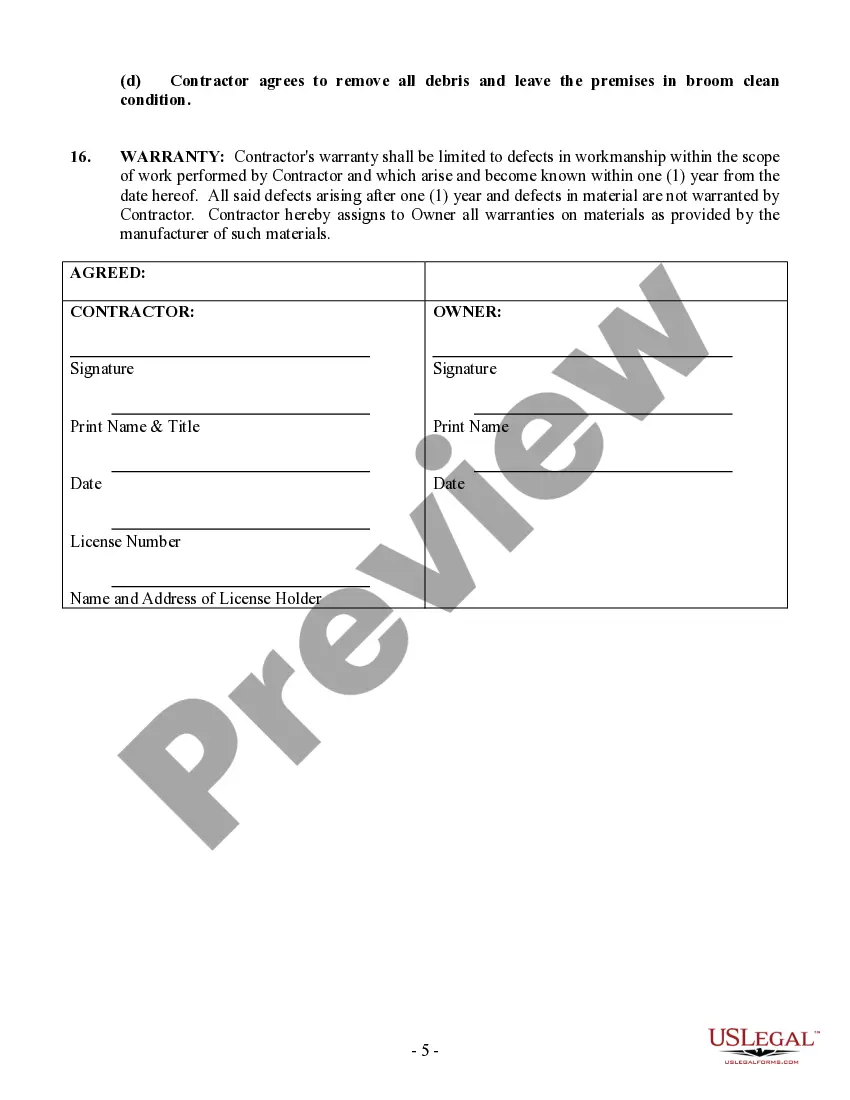
- Review and sign: Both parties should carefully review the contract, and then sign and date the document to finalize the agreement.
Is notarization required?
This form does not typically require notarization unless specified by local law. However, having a notarized contract can add an extra layer of legally binding assurance.
Get your form ready online
Our built-in tools help you complete, sign, share, and store your documents in one place.
Make edits, fill in missing information, and update formatting in US Legal Forms—just like you would in MS Word.
Download a copy, print it, send it by email, or mail it via USPS—whatever works best for your next step.
Sign and collect signatures with our SignNow integration. Send to multiple recipients, set reminders, and more. Go Premium to unlock E-Sign.
If this form requires notarization, complete it online through a secure video call—no need to meet a notary in person or wait for an appointment.
We protect your documents and personal data by following strict security and privacy standards.

Make edits, fill in missing information, and update formatting in US Legal Forms—just like you would in MS Word.

Download a copy, print it, send it by email, or mail it via USPS—whatever works best for your next step.

Sign and collect signatures with our SignNow integration. Send to multiple recipients, set reminders, and more. Go Premium to unlock E-Sign.

If this form requires notarization, complete it online through a secure video call—no need to meet a notary in person or wait for an appointment.

We protect your documents and personal data by following strict security and privacy standards.
Common mistakes
- Failing to obtain required permits before starting work.
- Not documenting changes to the project scope with formal change orders.
- Neglecting to clarify responsibilities regarding soil conditions.
- Overlooking insurance requirements that could expose parties to liability.
Why use this form online
- Convenience: Easily download and access the form anytime you need it.
- Editability: Customize the contract to fit the specific needs of your project.
- Reliability: Access professionally drafted forms that adhere to legal standards.
Legal use & context
- This contract is enforceable as long as both parties have signed it and it meets Montana's legal requirements.
- Ensure all essential components are filled out to avoid disputes.
Summary of main points
- A renovation contract for contractors clarifies terms between property owners and contractors.
- It includes essential components such as payment terms, insurance requirements, and responsibilities for permits.
- This form is specific to Montana law, making it suited for projects within that state.
Looking for another form?

Form popularity
FAQ
In order to cancel the transaction, the consumer must send the notice of cancellation form, or some other written statement indicating the intent to cancel the contract, to the creditor at the address stated on the notice. This notice need only state the consumer's intention to cancel the transaction.
1. Not Having a Written Contract.The taxing, labor and employment, and insurance authorities expect a written contract that states that the worker is an independent contractor and will be paid as such with no tax withholding, no benefits, etc.
Check Contract Basics. The basic job of a contractor agreement is to spell out the scope of the project's work. Set a Payment Schedule. Schedule Start and End Dates. Specify Change Orders. Research Your Arbitration Options. Turn Down the Contractor's Warranty.
Get it in writing. Keep it simple. Deal with the right person. Identify each party correctly. Spell out all of the details. Specify payment obligations. Agree on circumstances that terminate the contract. Agree on a way to resolve disputes.
For most types of projects you hire an independent contractor (IC) to do, the law does not require you to put anything in writing. You can meet with the IC, agree on the terms of your arrangement, and have an oral contract or agreement that is legally binding. Just because you can doesn't mean you should, however.
Detailed Description of the Job. How Payments Will Be Made. Start and End Dates of the Project. How Changes to the Project Will Be Dealt With. Lien Waivers. Written Notice of Your Right to Cancel Without Penalty. Warranty. Signatures.
For most types of projects you hire an independent contractor (IC) to do, the law does not require you to put anything in writing. You can meet with the IC, agree on the terms of your arrangement, and have an oral contract or agreement that is legally binding. Just because you can doesn't mean you should, however.
Identify the parties involved in the contract. Determine the terms and conditions you want to include in your contract. Write a draft using all the details you have gathered. Ask opinion from people in the same line of business. Review and make changes to your work.