Operations Manual Checklist
About this form
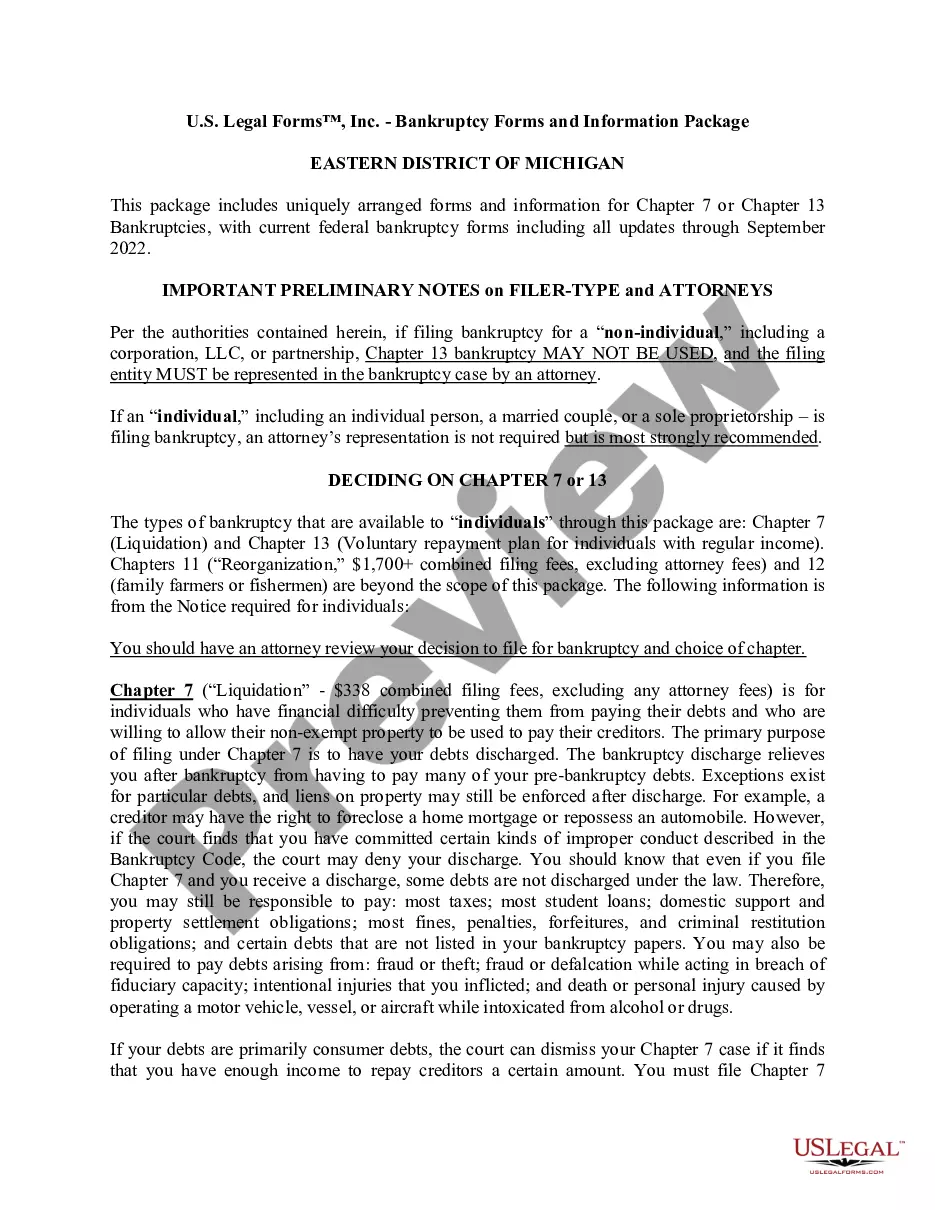
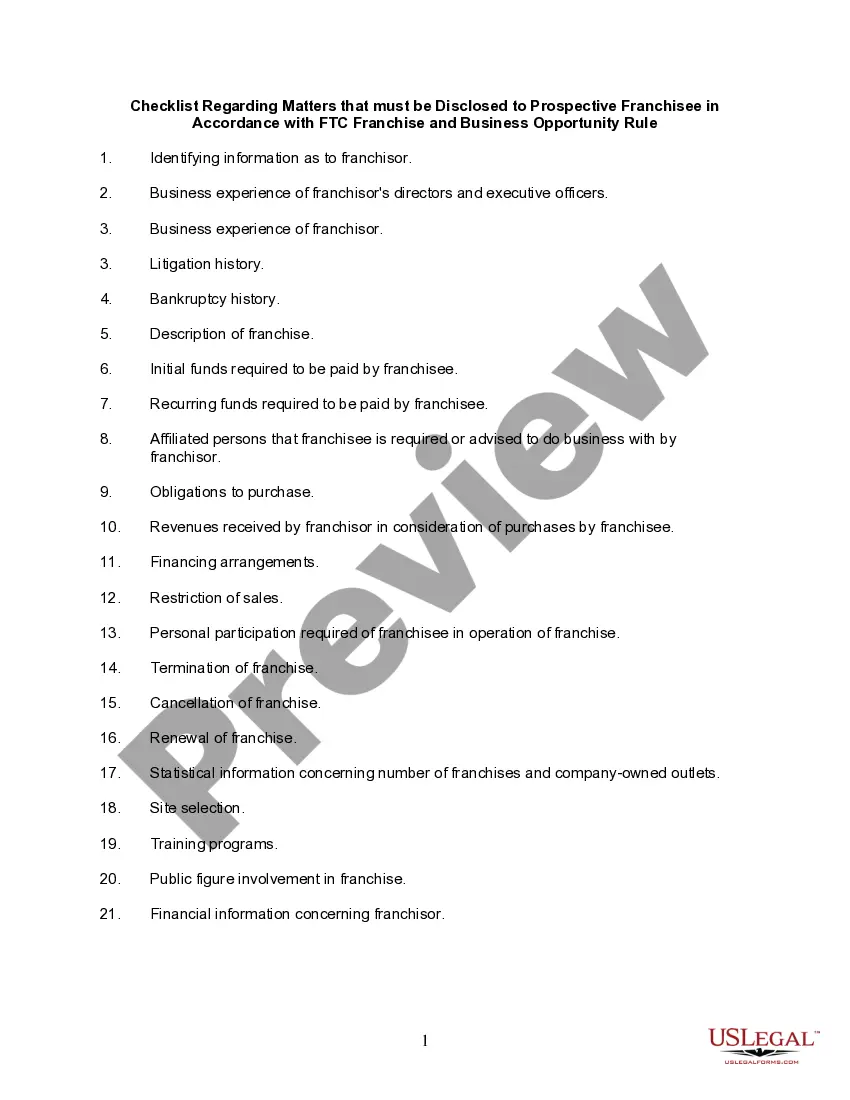
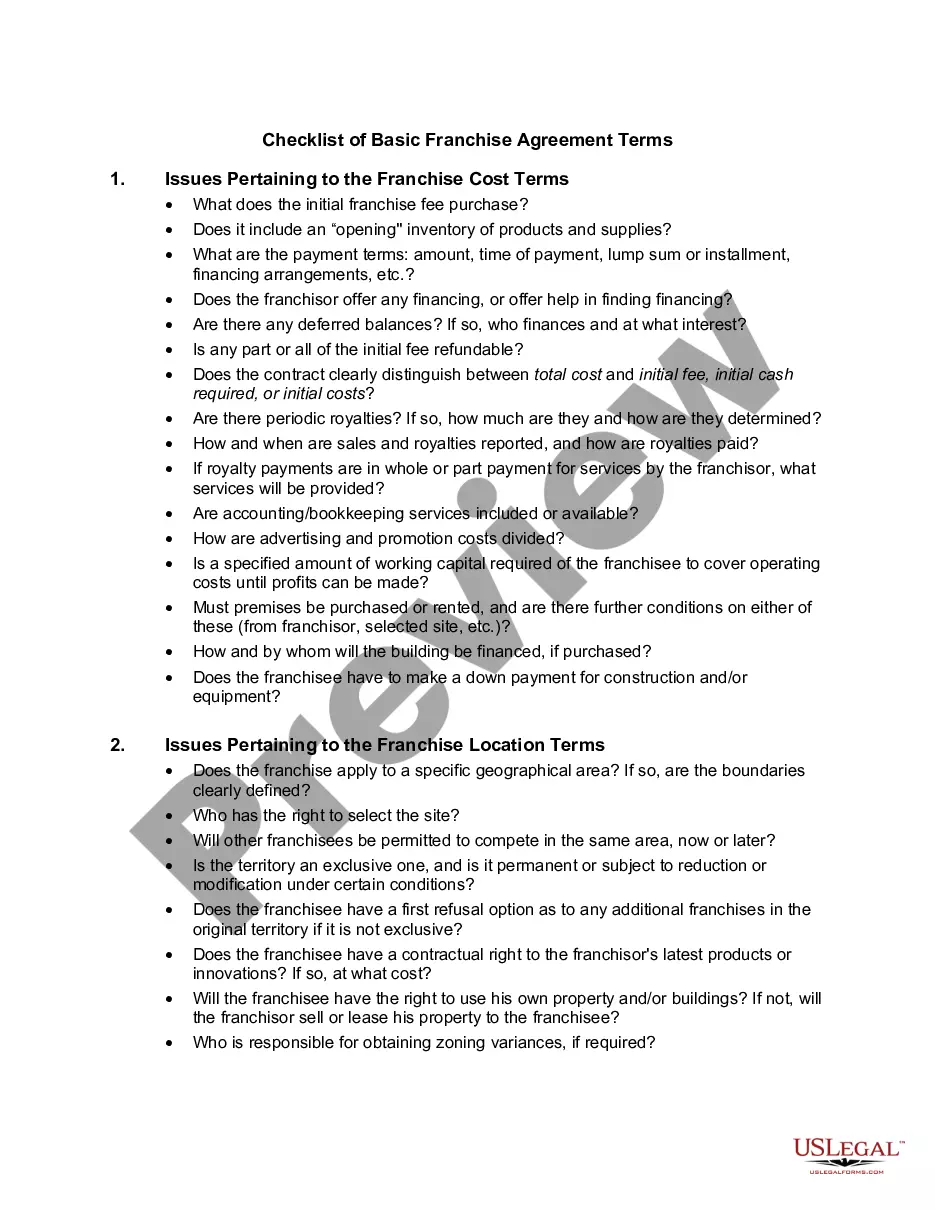
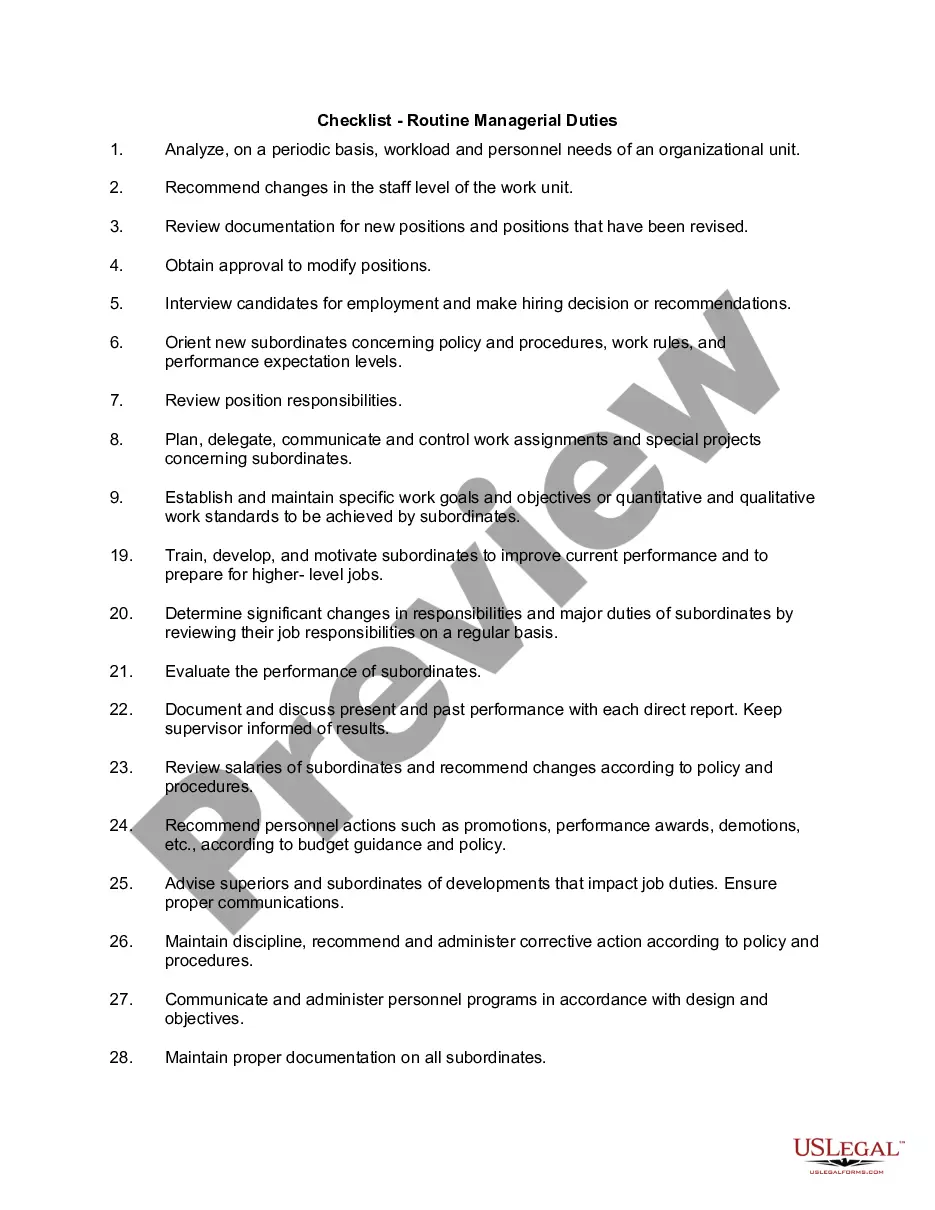
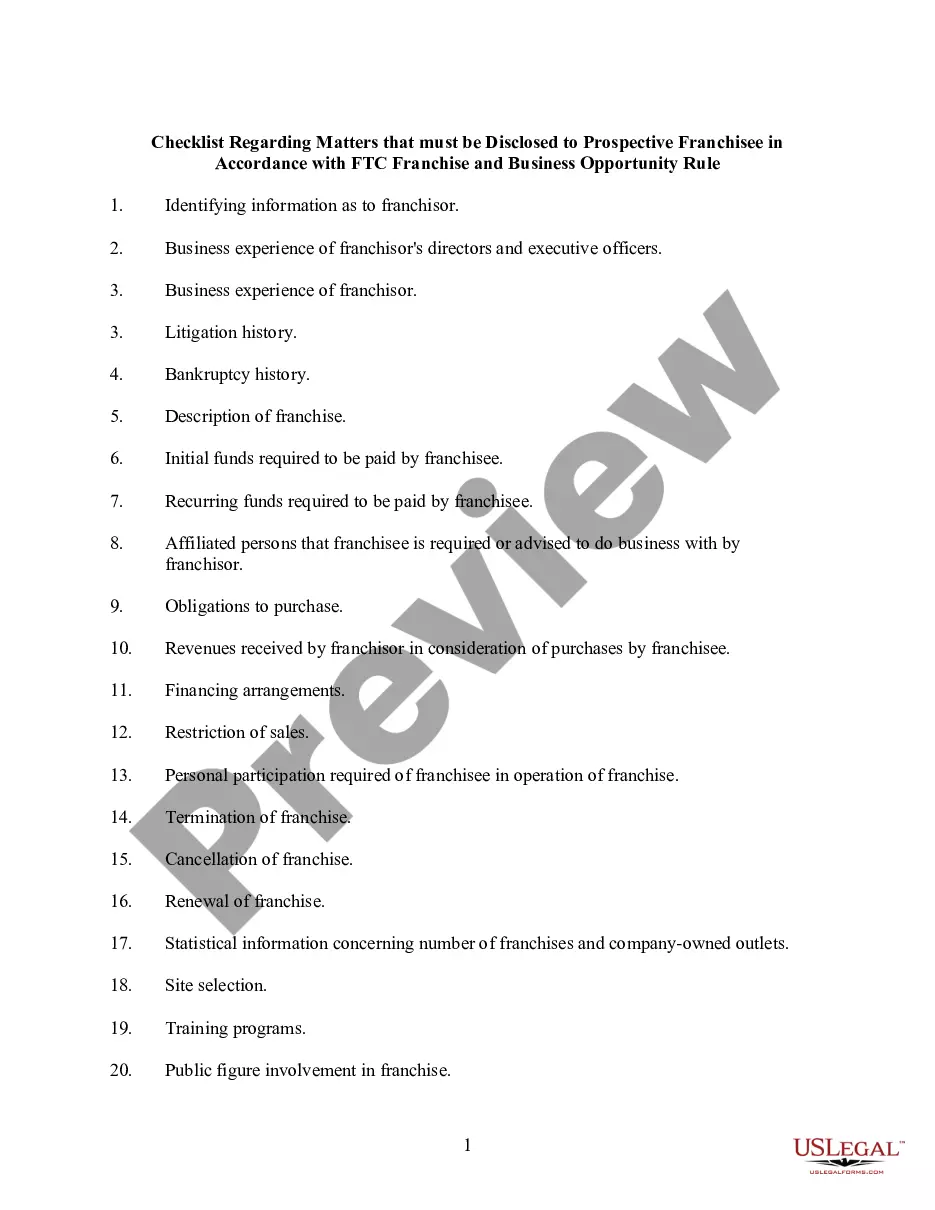
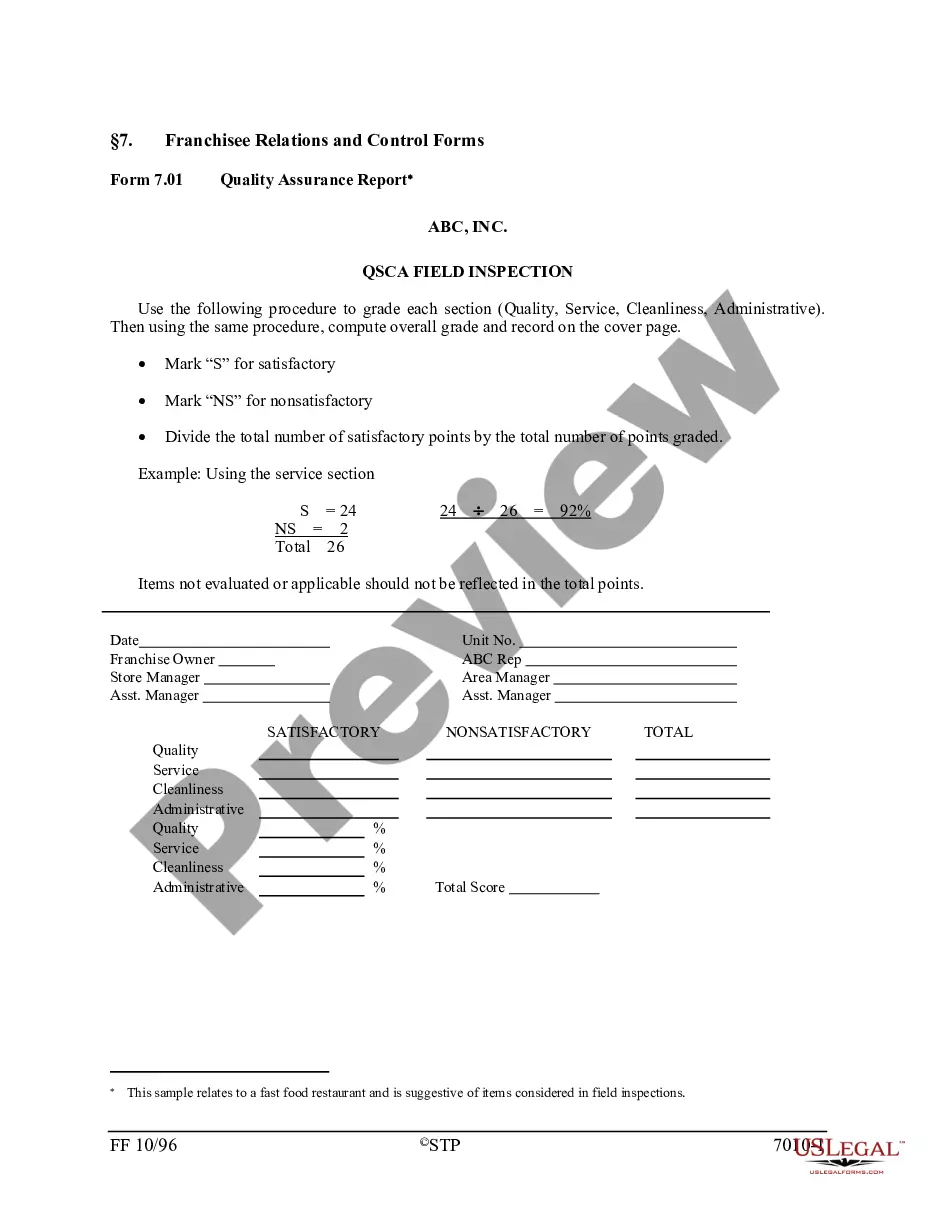
The Operations Manual Checklist is a comprehensive guide designed to assist franchisors and franchisees in ensuring compliance with operational standards. This form offers detailed sections that outline key policies, processes, and legal requirements, helping franchises operate smoothly and efficiently. Unlike general operational checklists, this form specifically caters to the franchising environment, addressing unique franchisee obligations and standards.
Main sections of this form
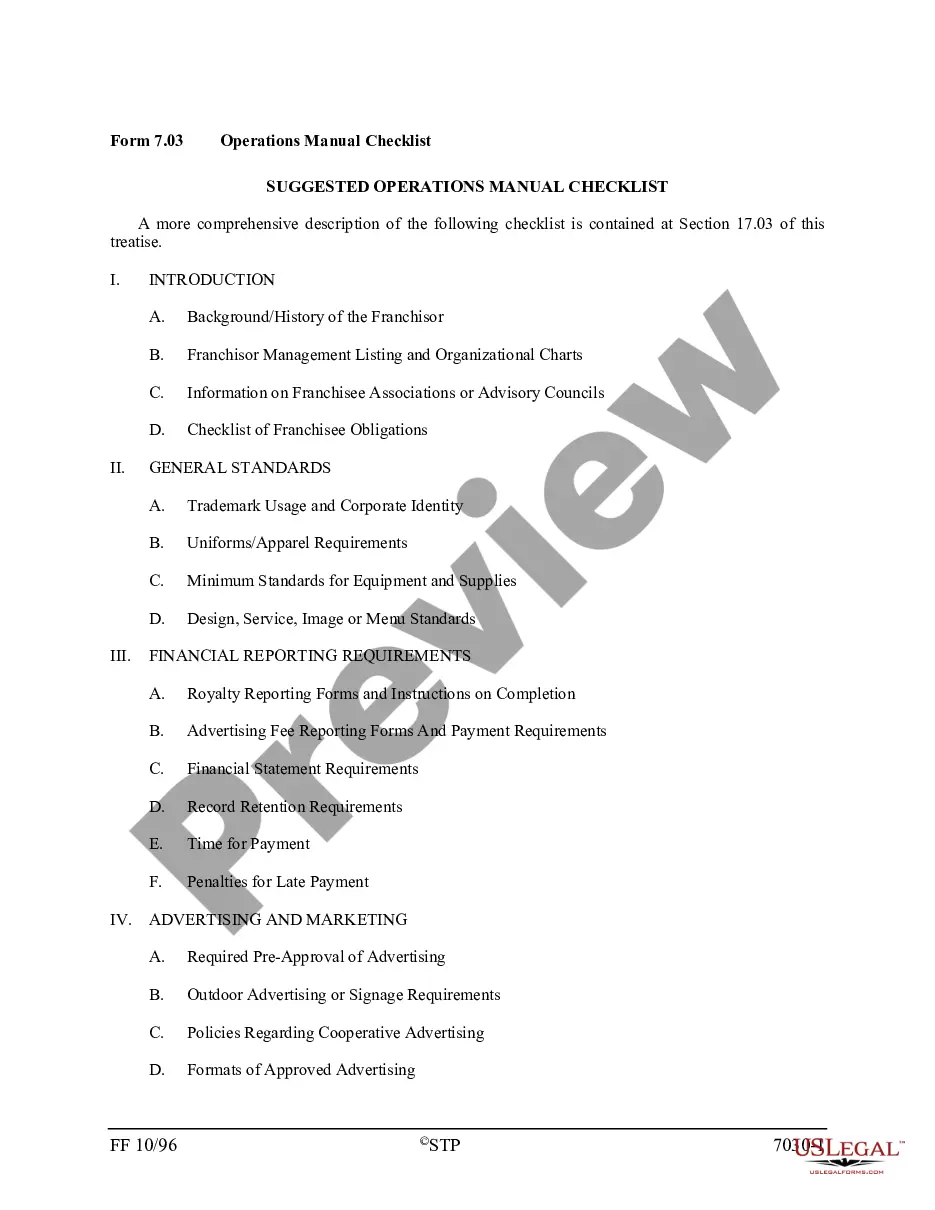
- Introduction: Overview of the franchisor's background, management, and franchisee obligations.
- General Standards: Guidelines for trademark usage, corporate identity, and minimum operational standards.
- Financial Reporting Requirements: Details on royalty reporting, financial statements, and penalties for late payments.
- Advertising and Marketing: Regulations for advertising approvals and local promotional requirements.
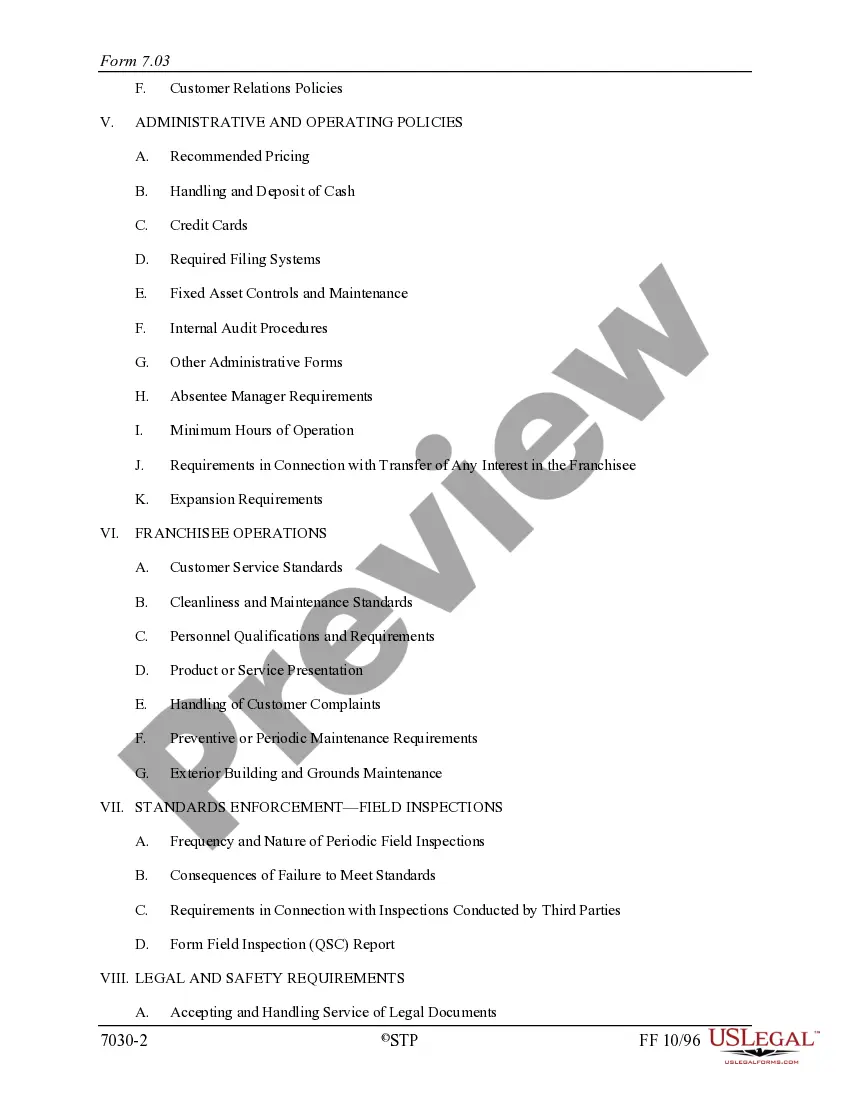
- Administrative and Operating Policies: Recommended pricing, cash handling procedures, and minimum operation hours.
- Franchisee Operations: Standards for customer service, maintenance, and handling of customer complaints.
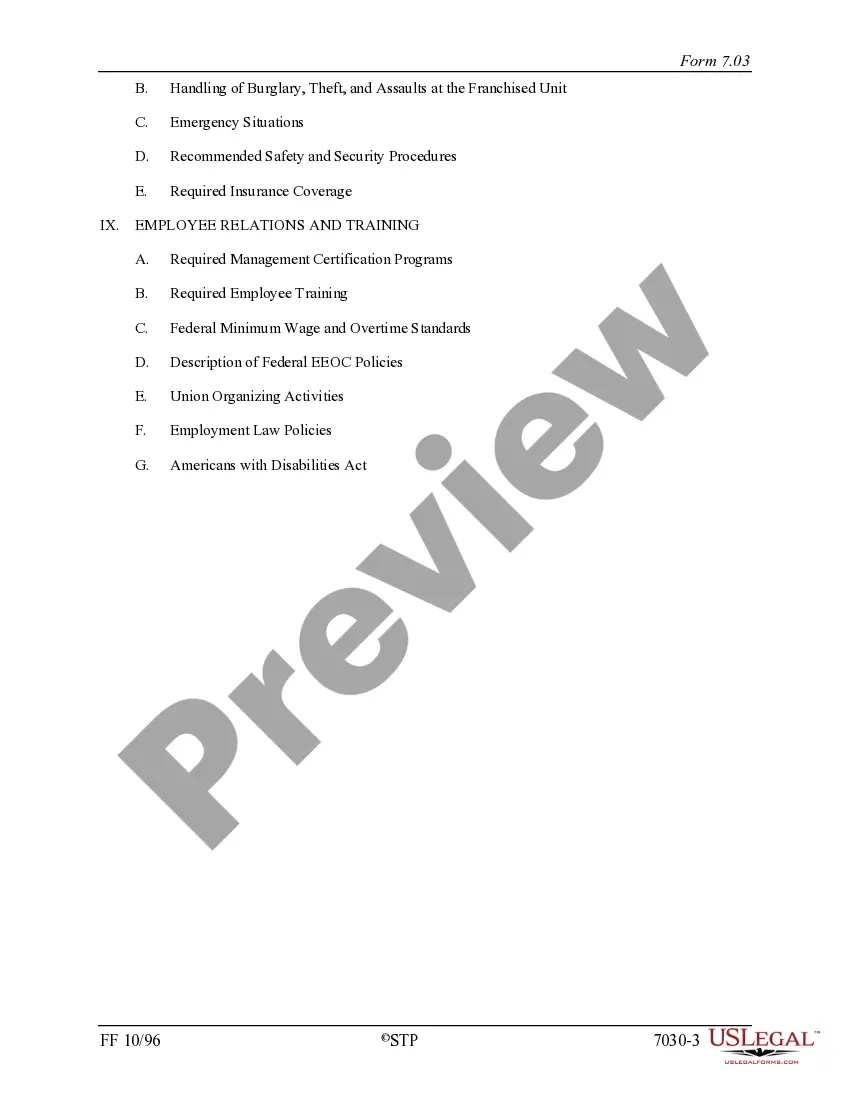
- Legal and Safety Requirements: Policies for managing legal documents and emergency situations.
- Employee Relations and Training: Information on required training, labor laws, and employee relations policies.
Situations where this form applies
This form is essential when starting or managing a franchise. Use it to establish and maintain compliance with operational standards, manage financial reporting, and ensure proper advertising practices. It is also useful for training new employees and managing legal requirements in the franchise context.
Who should use this form
- Franchisors looking to standardize operations across multiple franchise locations.
- Franchisees who need a reference to ensure compliance with franchisor expectations.
- Franchise managers responsible for training employees and maintaining operational standards.
- Legal advisors working with franchises on compliance and operational matters.
Instructions for completing this form
- Review the introduction section for essential franchise information and obligations.
- Complete the General Standards section by outlining your business's trademark usage and operational policies.
- Fill out the Financial Reporting Requirements with accurate information about royalty payments and financial statements.
- Detail your advertising strategies in the Advertising and Marketing section, ensuring compliance with pre-approval policies.
- Implement policies outlined in Administrative and Operating Policies to govern daily business operations.
- Ensure you cover all aspects of Employee Relations and Training, including staff training requirements and compliance with labor laws.
Does this document require notarization?
Notarization is generally not required for this form. However, certain states or situations might demand it. You can complete notarization online through US Legal Forms, powered by Notarize, using a verified video call available anytime.
Get your form ready online
Our built-in tools help you complete, sign, share, and store your documents in one place.
Make edits, fill in missing information, and update formatting in US Legal Forms—just like you would in MS Word.
Download a copy, print it, send it by email, or mail it via USPS—whatever works best for your next step.
Sign and collect signatures with our SignNow integration. Send to multiple recipients, set reminders, and more. Go Premium to unlock E-Sign.
If this form requires notarization, complete it online through a secure video call—no need to meet a notary in person or wait for an appointment.
We protect your documents and personal data by following strict security and privacy standards.

Make edits, fill in missing information, and update formatting in US Legal Forms—just like you would in MS Word.

Download a copy, print it, send it by email, or mail it via USPS—whatever works best for your next step.

Sign and collect signatures with our SignNow integration. Send to multiple recipients, set reminders, and more. Go Premium to unlock E-Sign.

If this form requires notarization, complete it online through a secure video call—no need to meet a notary in person or wait for an appointment.

We protect your documents and personal data by following strict security and privacy standards.
Mistakes to watch out for
- Failing to regularly update the checklist as business operations change.
- Not addressing all sections, leading to incomplete compliance with franchising standards.
- Ignoring state-specific requirements or local legislation when completing the form.
- Overlooking necessary employee training requirements outlined in the manual.
Why complete this form online
- Instant access to downloadable and customizable form templates, saving time.
- Ease of updating and revising the checklist as business needs evolve.
- Guidance from licensed attorneys ensures that the form complies with current laws.
- Convenience of online storage and retrieval, eliminating the need for physical documentation.
Legal use & context
- This checklist serves as a foundational document defining operational obligations in a franchise agreement.
- It aids in legal compliance and can be critical in resolving disputes between franchisors and franchisees.
- Maintaining adherence to the checklist can protect franchises from potential lawsuits related to operational failures.
Looking for another form?






Form popularity
FAQ
Step 1: Begin with the end in mind. Step 2: Choose a format. Step 3: Ask for input. Step 4: Define the scope. Step 5: Identify your audience. Step 6: Write the SOP. Step 7: Review, test, edit, repeat.
Keep it simple ! Simplicity and efficiency often run together in the industry world. Write clear and accurate documents. Clarity and precision. Go Paperless ! Make the work instructions one of the company quality system pillars. Put yourself in the user's shoes.
Write the intro. Give context to the project, identify owners of the project, and clearly document the task or job at hand. Describe how to do the job. Validate information. Format for easy reading. Simplify and rewrite, if necessary. Test it out. Save and share.
Start your manual with an outline. Use your job description and any documentation from recent reviews to pull out your core responsibilities. Separate any policies you need to document from any procedures you need to document.
Processes & Procedures. Business Policies Note that these are business-specific, not social policies. Not accepting checks is a business policy, while vacation, benefits, etc. are social. Hierarchy & Roles. Contact Details & Job Descriptions. Emergency Procedures.
A standard operating procedure manual is a handbook that lists all the written instructions for an organization's essential tasks. An SOP manual houses all an organization's individual SOPs in one place.Employees can reference the SOP manual to answer any questions they may have about proper procedures.
Structure your work instructions in a clear, step-by-step instruction hierarchy. (guide - topic - instruction - step). Use an active tone of voice when writing instructions. Keep it short and to the point. Use a clear visual to illustrate the step. Split up a task in several different sub-tasks.
Processes & Procedures. Business Policies Note that these are business-specific, not social policies. Not accepting checks is a business policy, while vacation, benefits, etc. are social. Hierarchy & Roles. Contact Details & Job Descriptions. Emergency Procedures.
Use short sentences and short paragraphs. Arrange your points in logical order. Make your statements specific. Use the imperative mood. Put the most important item in each sentence at the beginning. Say one thing in each sentence.