Michigan Eastern District Bankruptcy Guide and Forms Package for Chapters 7 or 13
What is this form?
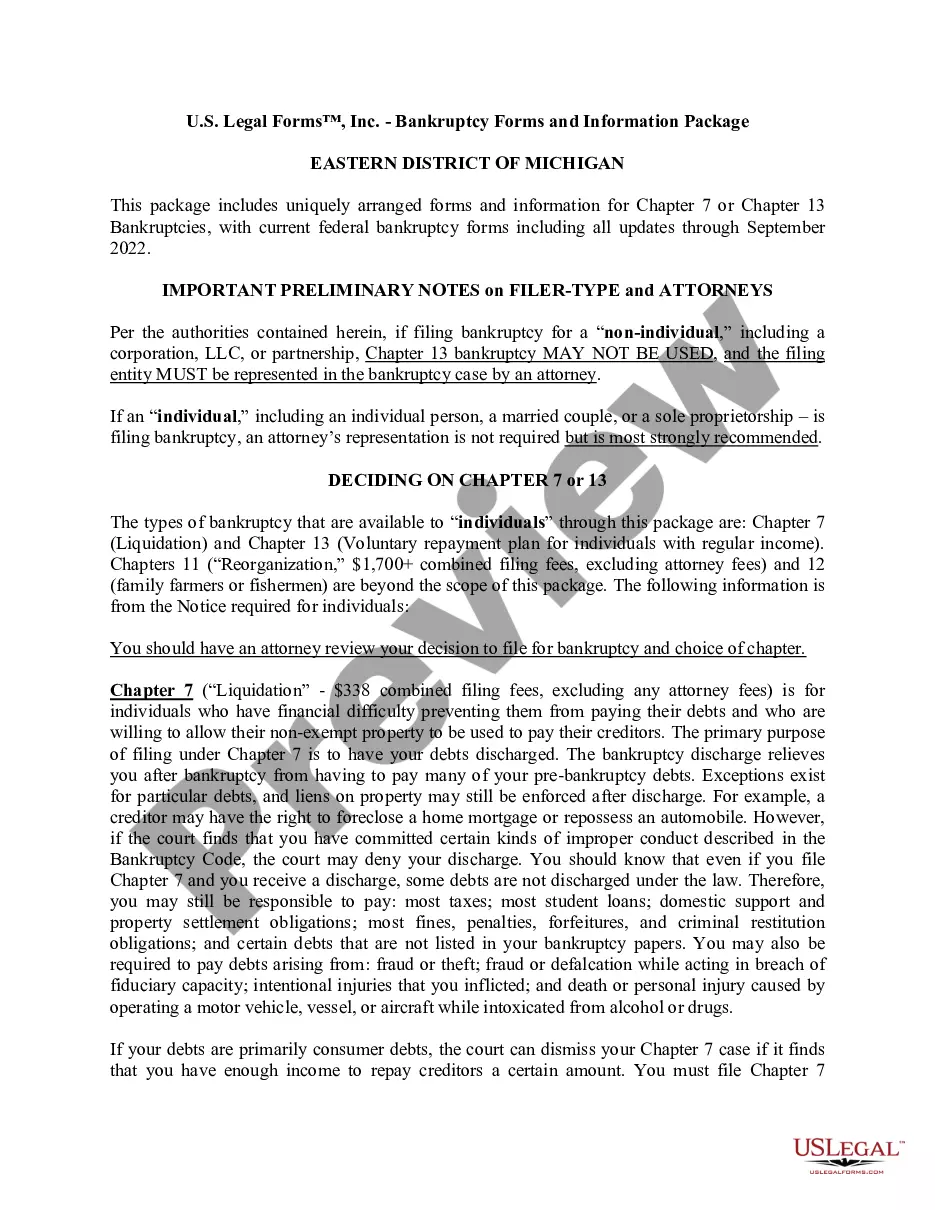
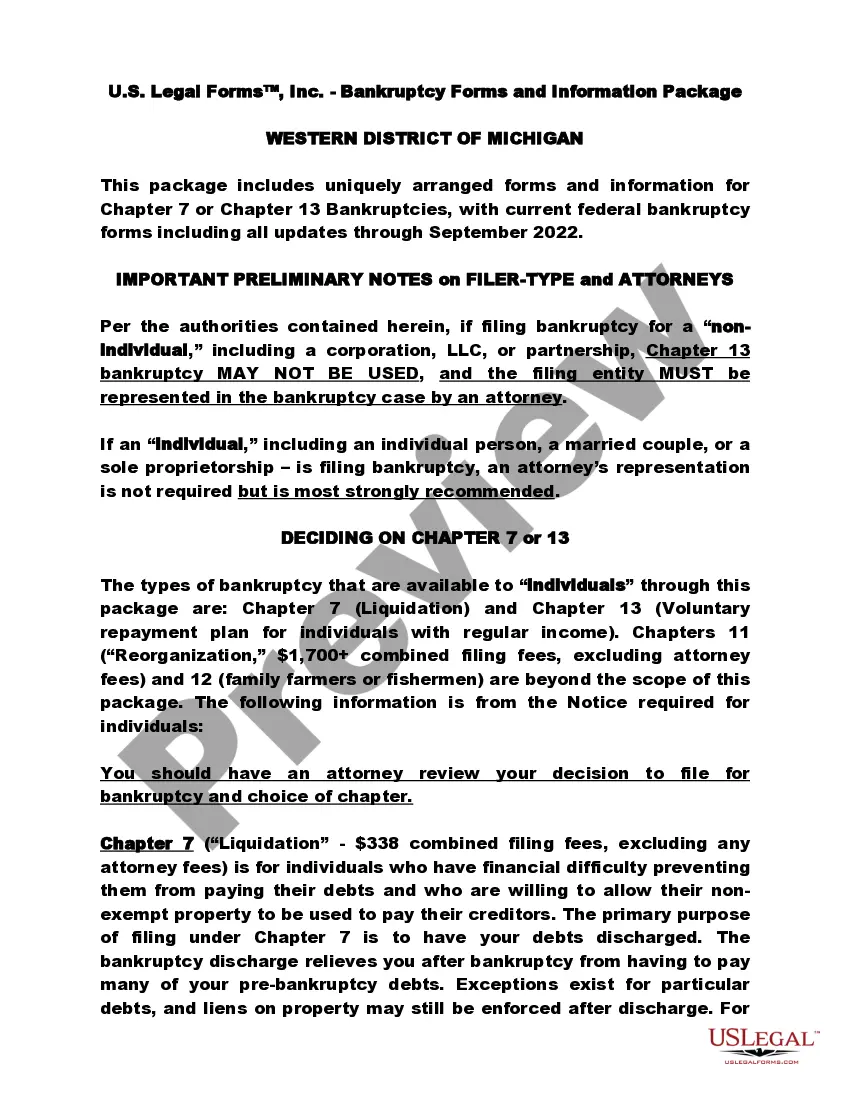
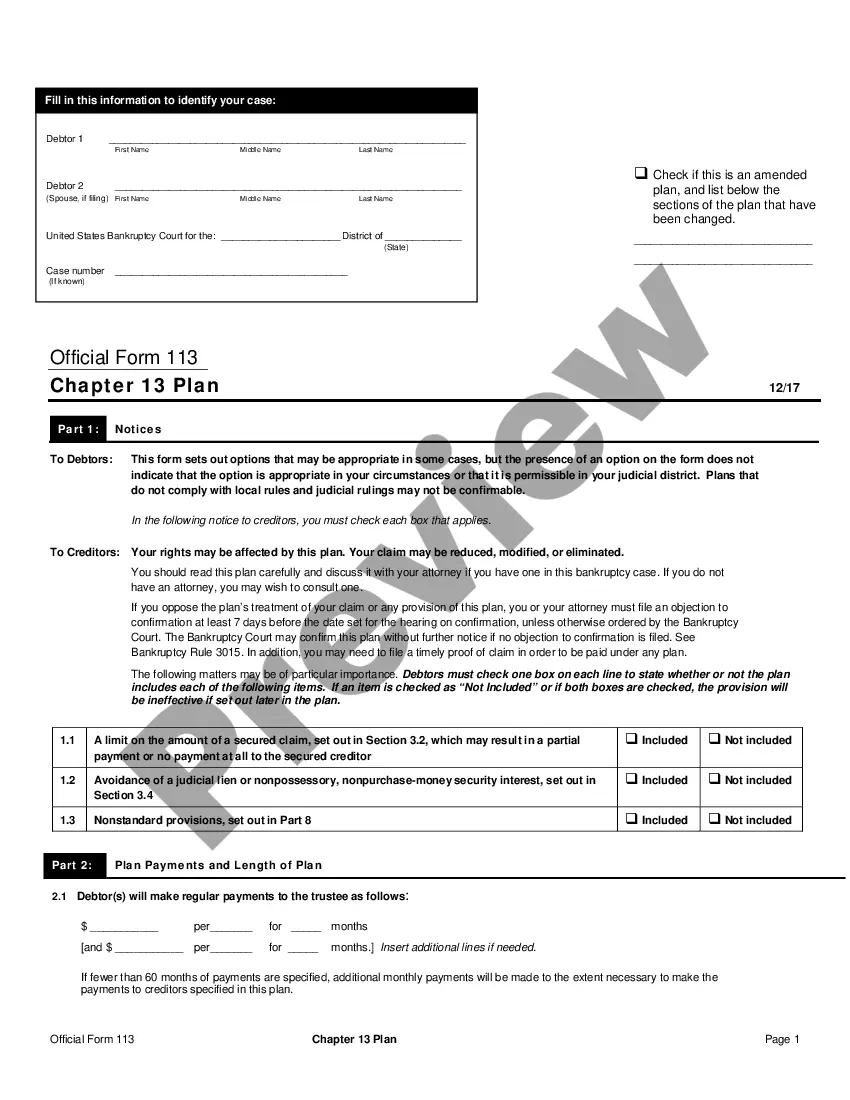
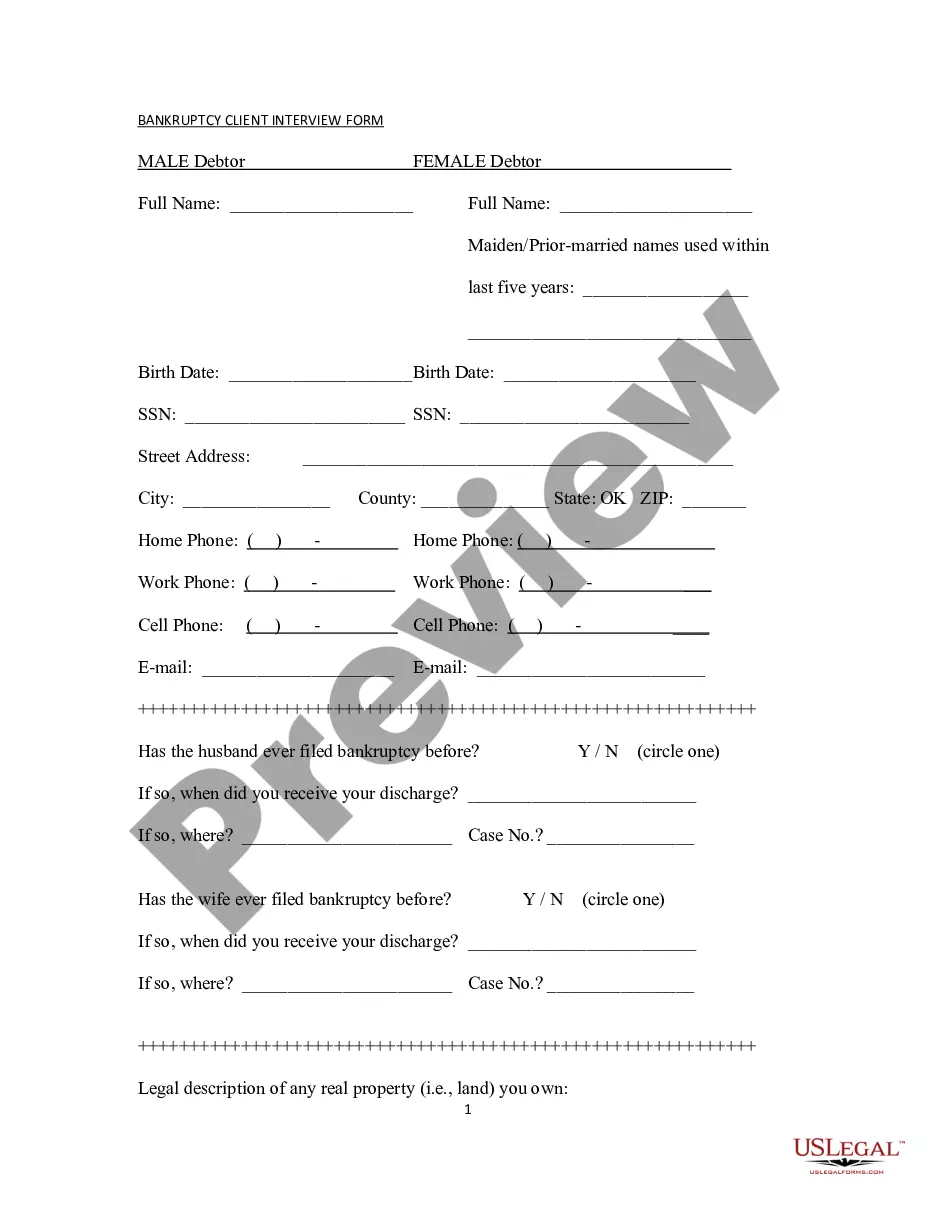
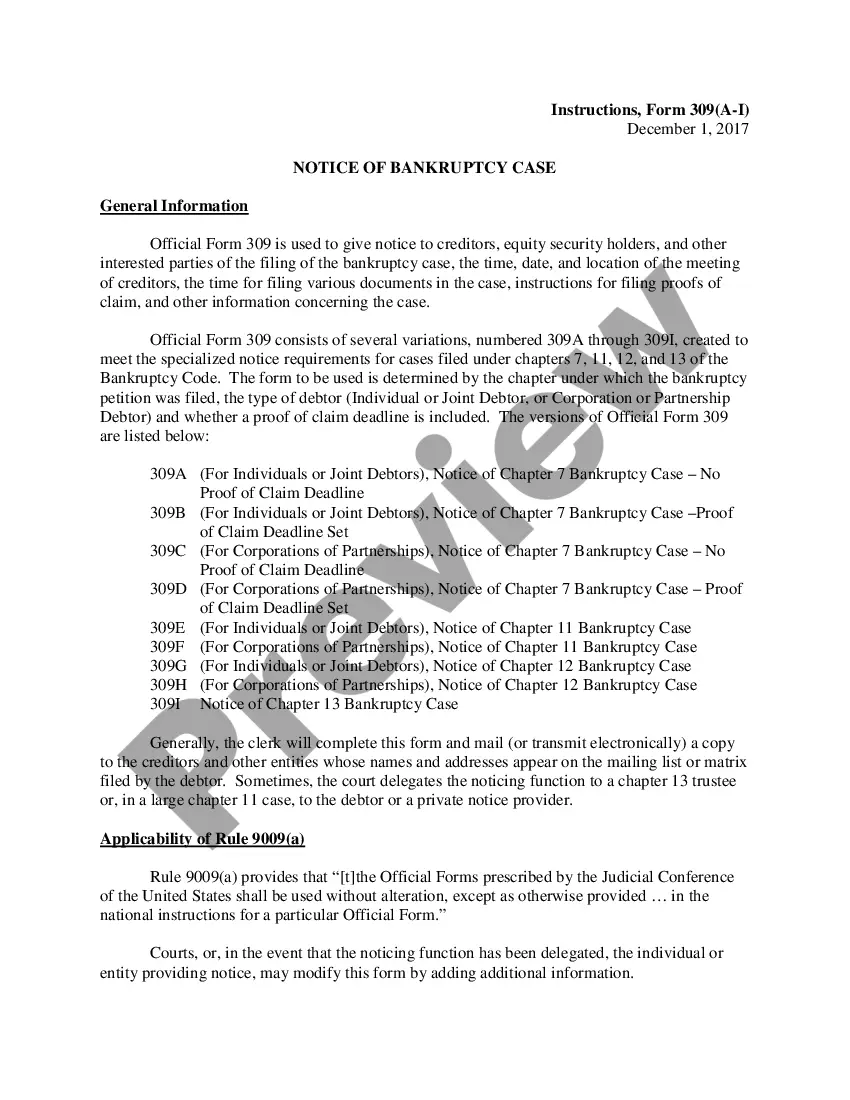
The Michigan Eastern District Bankruptcy Guide and Forms Package for Chapters 7 or 13 provides individuals with essential resources and information for filing bankruptcy under Chapter 7 or Chapter 13. This package includes forms, detailed instructions, and guidance tailored to the specific requirements of these bankruptcy chapters, helping users navigate the process more effectively.
Main sections of this form
- Important preliminary notes regarding filer type and attorney representation
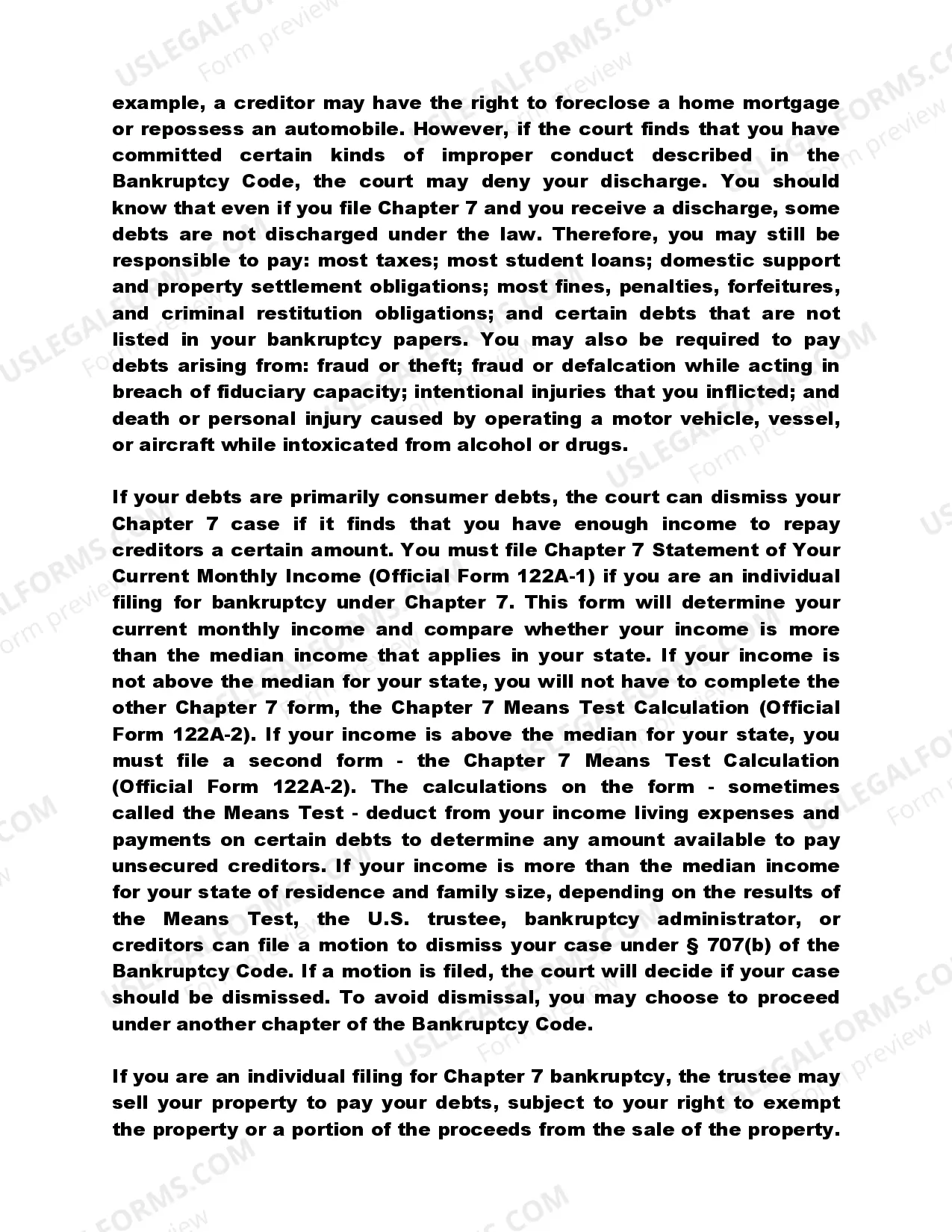
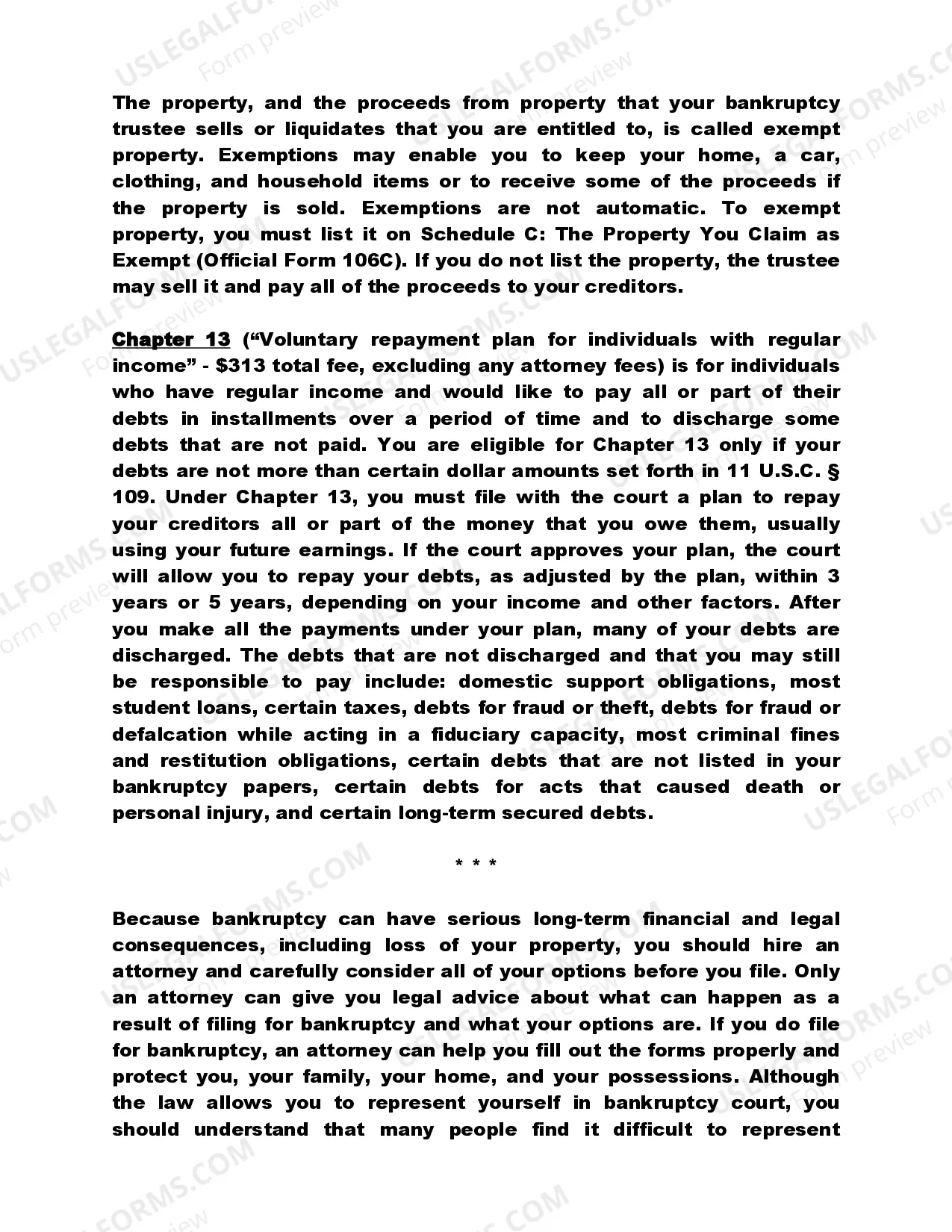
- Chapter 7 overview, including eligibility, debt discharge, and exemptions
- Chapter 13 overview, including plan repayment and qualifying debts
- Specific forms such as the Chapter 7 Statement of Your Current Monthly Income (Official Form 122A-1) and Chapter 7 Means Test Calculation (Official Form 122A-2)
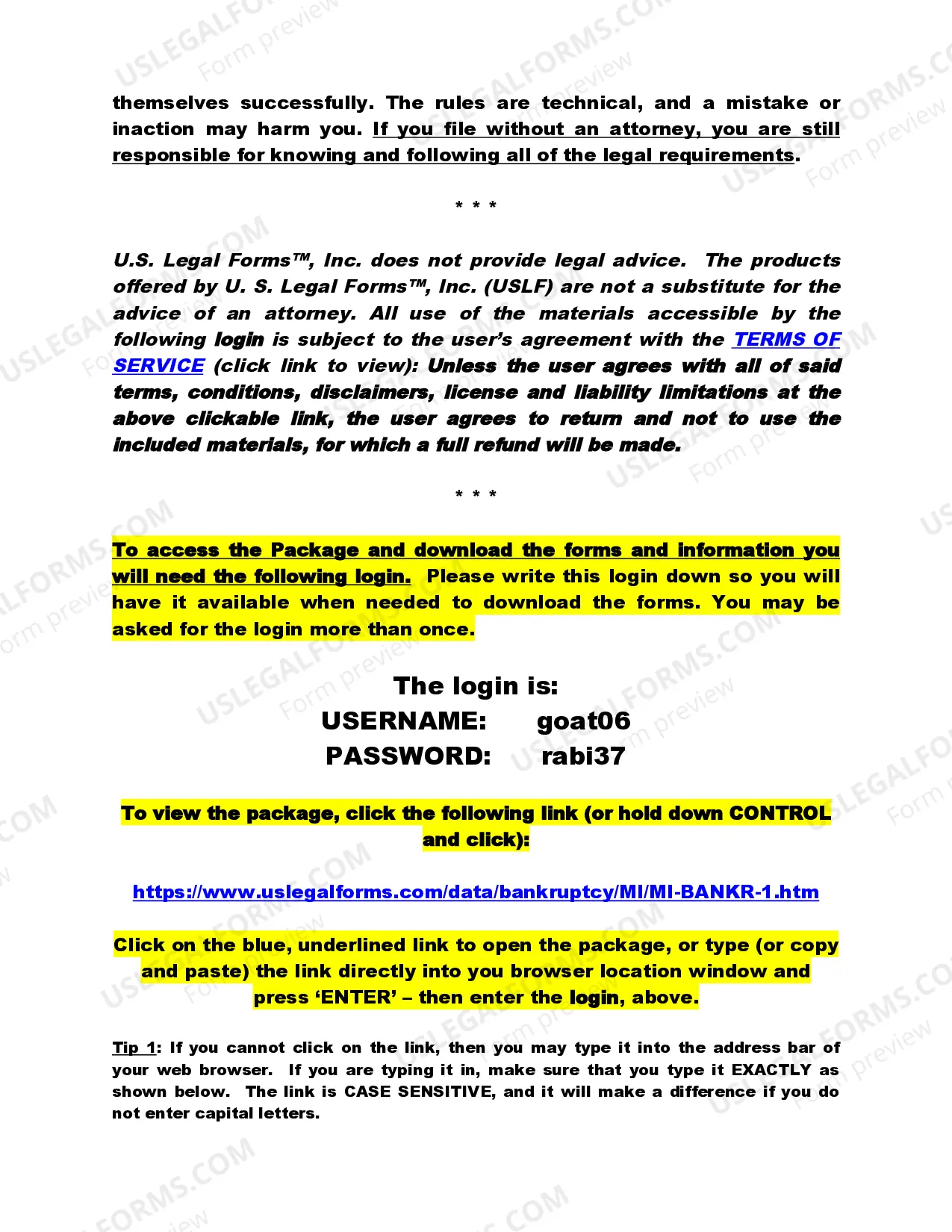
- Instructions for accessing and downloading the package
When to use this form
This package is appropriate when an individual is considering filing for bankruptcy due to financial difficulties. It applies to situations where debts exceed income, and includes options for liquidating assets under Chapter 7 or establishing a repayment plan under Chapter 13. Using this package ensures that individuals have the necessary tools to proceed confidently with their bankruptcy filing.
Who can use this document
This form is intended for:
- Individuals looking to file for Chapter 7 bankruptcy due to overwhelming debts
- Individuals with regular income interested in repaying their debts through Chapter 13
- Those seeking a clear, comprehensive understanding of the bankruptcy process in Michigan
- Individuals who prefer to have a structured and guided approach to filing bankruptcy
Completing this form step by step
- Determine which chapter of bankruptcy is appropriate for your situation (Chapter 7 or Chapter 13).
- Review the eligibility criteria and ensure your debts qualify for the selected chapter.
- Gather necessary documentation, including your financial records and income details.
- Complete the required forms accurately, starting with the Chapter 7 Statement of Your Current Monthly Income if applicable.
- Submit the completed forms and any necessary fees to the appropriate court.
Does this form need to be notarized?
This form does not typically require notarization unless specified by local law. Users should verify local requirements to ensure compliance.
Get your form ready online
Our built-in tools help you complete, sign, share, and store your documents in one place.
Make edits, fill in missing information, and update formatting in US Legal Forms—just like you would in MS Word.
Download a copy, print it, send it by email, or mail it via USPS—whatever works best for your next step.
Sign and collect signatures with our SignNow integration. Send to multiple recipients, set reminders, and more. Go Premium to unlock E-Sign.
If this form requires notarization, complete it online through a secure video call—no need to meet a notary in person or wait for an appointment.
We protect your documents and personal data by following strict security and privacy standards.

Make edits, fill in missing information, and update formatting in US Legal Forms—just like you would in MS Word.

Download a copy, print it, send it by email, or mail it via USPS—whatever works best for your next step.

Sign and collect signatures with our SignNow integration. Send to multiple recipients, set reminders, and more. Go Premium to unlock E-Sign.

If this form requires notarization, complete it online through a secure video call—no need to meet a notary in person or wait for an appointment.

We protect your documents and personal data by following strict security and privacy standards.
Common mistakes
- Failing to list all debts in the bankruptcy filings, which can lead to complications.
- Neglecting to complete the Chapter 7 Means Test if required, risking case dismissal.
- Not seeking legal advice when unsure about eligibility or process requirements.
- Incorrectly completing forms or omitting information, leading to delays in processing.
Benefits of using this form online
- Convenience of accessing the forms and information anytime, anywhere.
- Editability allows users to tailor forms to their specific needs before submission.
- Reliability of up-to-date legal forms drafted by licensed attorneys.
Legal use & context
- The completed forms must comply with Michigan bankruptcy court regulations.
- Filing for Chapter 7 or Chapter 13 can affect your credit history and future financial options.
- Debts not discharged vary, and understanding your specific situation is crucial.
Looking for another form?
Form popularity
FAQ
Before filing Chapter 7, consider gathering your financial documents and evaluating your debts. It is vital to attend credit counseling, as required by law, and assess your eligibility. The Michigan Eastern District Bankruptcy Guide and Forms Package for Chapters 7 or 13 guides you through these steps and emphasizes the importance of being fully informed before taking this significant financial step.
The primary difference between Chapter 7 and Chapter 13 bankruptcy is how debts are handled. Chapter 7 often discharges unsecured debts quickly, while Chapter 13 allows you to reorganize and repay debts over a period of three to five years. The Michigan Eastern District Bankruptcy Guide and Forms Package for Chapters 7 or 13 can help you understand which option best fits your financial landscape.
To file Chapter 7, you will need documents such as your income statements, tax returns, bank statements, and a list of assets and debts. It's crucial to compile this paperwork accurately to ensure a smooth filing process. The Michigan Eastern District Bankruptcy Guide and Forms Package for Chapters 7 or 13 offers detailed checklists and forms to streamline your preparation.
The income limit for Chapter 7 bankruptcy in Michigan is determined by the median income for your household size. If your income falls below this level, you may qualify for Chapter 7. For those above the limit, the Michigan Eastern District Bankruptcy Guide and Forms Package for Chapters 7 or 13 can provide strategies and alternatives to explore your options.
The average monthly payment for Chapter 13 bankruptcy can vary significantly based on your income, debts, and the court's requirements. In general, payments can range from $300 to $900. Utilizing the Michigan Eastern District Bankruptcy Guide and Forms Package for Chapters 7 or 13 can help you understand how to calculate your specific payments and create a manageable plan that fits your financial situation.
To qualify for Chapter 7 bankruptcy in Michigan, you must pass the means test, which assesses your income against the state's median income level. Sufficient documentation of your income, expenses, and debts is necessary to determine your eligibility. The Michigan Eastern District Bankruptcy Guide and Forms Package for Chapters 7 or 13 provides detailed instructions to help assess your qualification smoothly.
Certain debts are not discharged with Chapter 7 bankruptcy, including student loans, child support, and certain tax obligations. It’s important to understand these exceptions before proceeding. By utilizing the Michigan Eastern District Bankruptcy Guide and Forms Package for Chapters 7 or 13, you can get clarity on what your bankruptcy will and will not cover.
For Chapter 7 bankruptcy in Michigan, you typically need to provide at least six months of bank statements. These documents help to verify your financial situation and assist in completing your bankruptcy forms accurately. The Michigan Eastern District Bankruptcy Guide and Forms Package for Chapters 7 or 13 outlines all the documentation needed to help streamline this requirement.
To file Chapter 7 bankruptcy in Michigan, you must first complete the required forms, which include the means test and schedules. After preparing your documents, you can file them with the Michigan Eastern District Bankruptcy Court. Using the Michigan Eastern District Bankruptcy Guide and Forms Package for Chapters 7 or 13 can simplify this process and ensure you have all necessary paperwork ready for submission.