Video Surveillance Agreement and Release
About this form
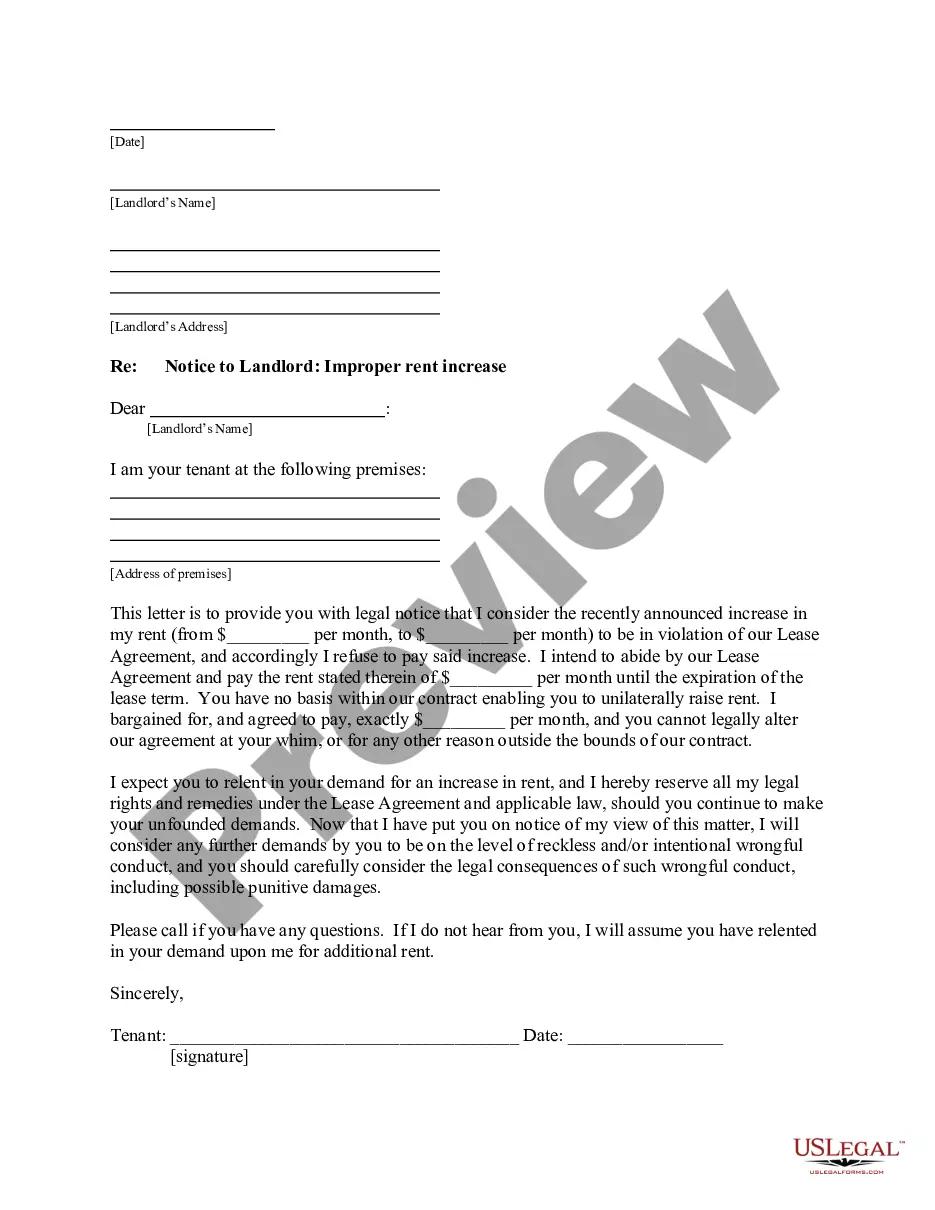
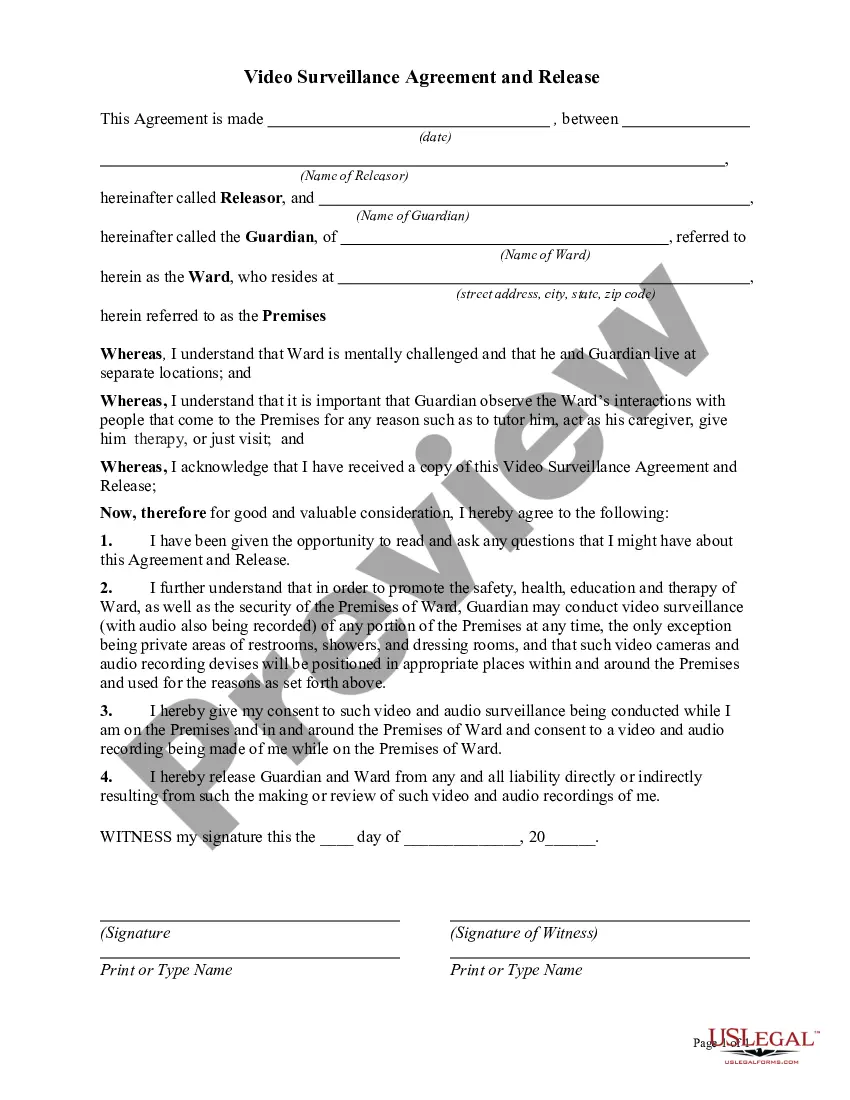
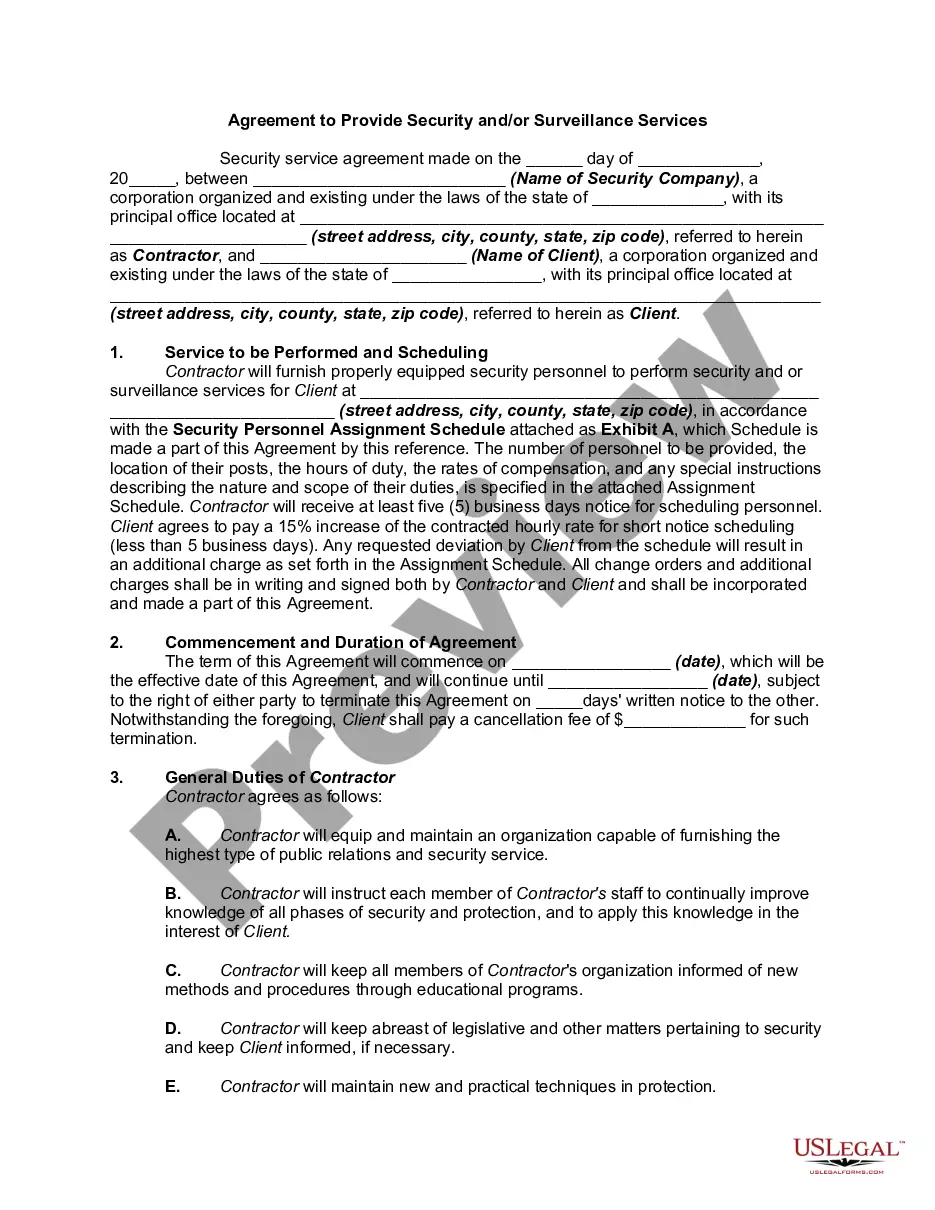
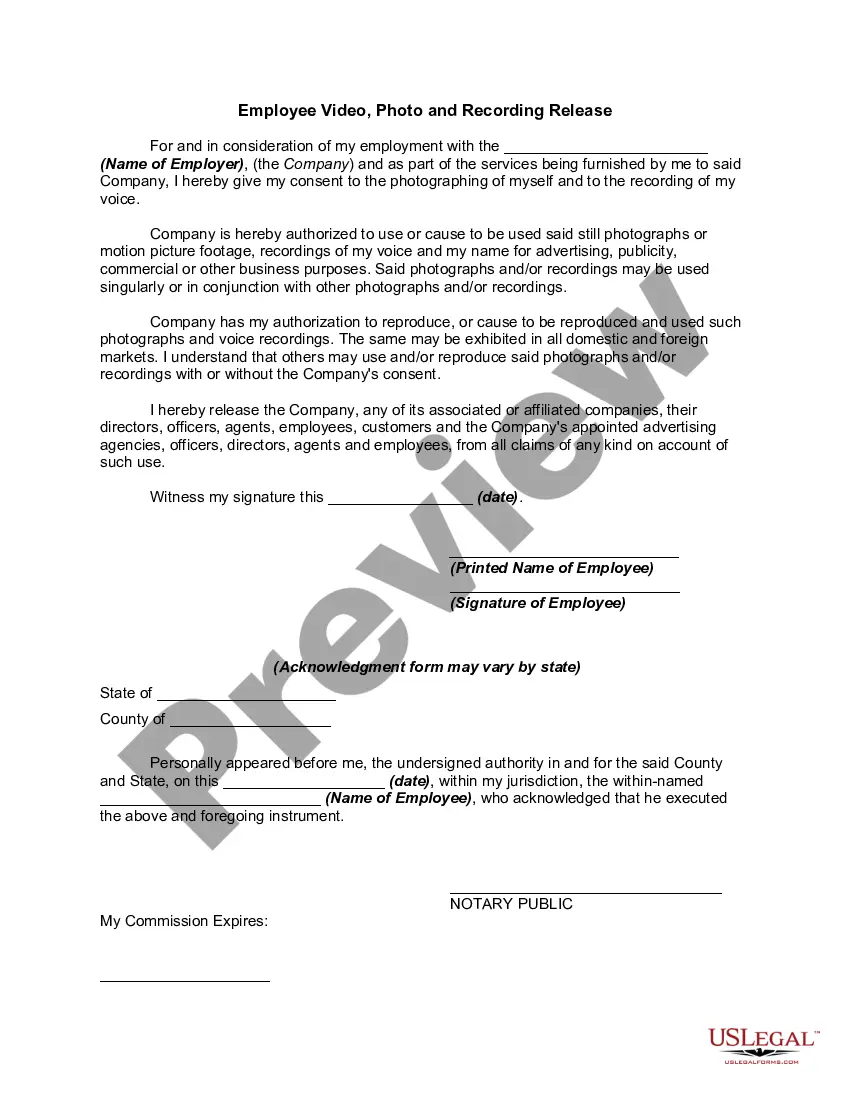
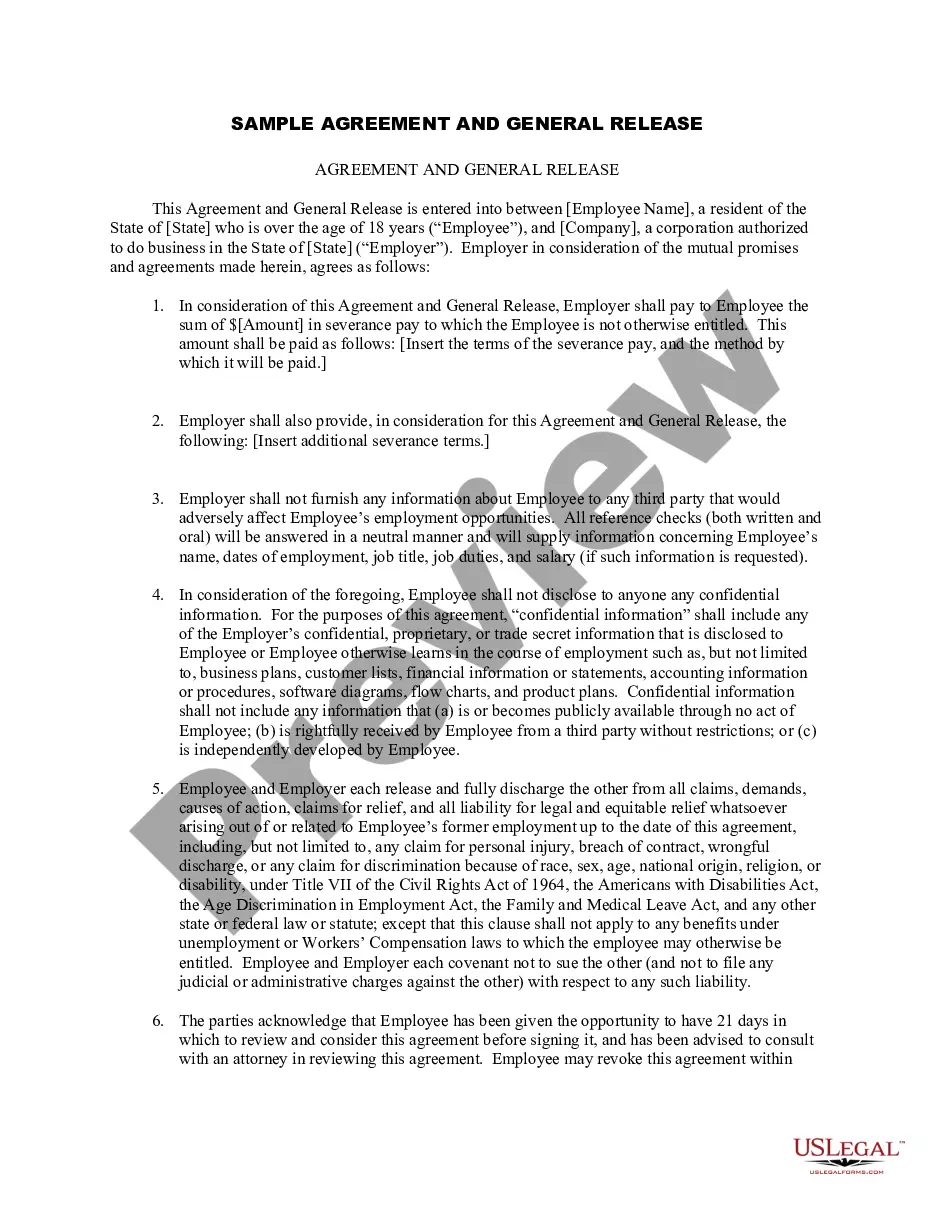
The Video Surveillance Agreement and Release is a legal document that permits a guardian to conduct video and audio surveillance of a ward in designated areas. This form is essential for ensuring the safety and well-being of the ward by allowing the guardian to monitor interactions with caregivers, therapists, and visitors. Unlike standard surveillance agreements, this form specifically addresses the consent of individuals present on the premises, making it particularly relevant in caregiving and therapeutic environments.
Main sections of this form
- Consent from the ward for video and audio surveillance during visits to the premises.
- Clarification that the surveillance excludes private areas such as restrooms and changing rooms.
- Provisions for the positioning of surveillance devices to ensure safety and security.
- Opportunity for the ward to ask questions regarding the content of the agreement.
- Details on how the recorded material may be used to promote the ward's well-being.
When this form is needed
This form is necessary in scenarios where a legal guardian deems it essential to monitor the activities and interactions of a ward with various individuals such as caregivers, tutors, or visitors. For instance, if a ward is receiving in-home therapy or care, and the guardian wants to ensure the quality of that care, this form provides the legal basis for conducting such surveillance. It is also beneficial when the guardian wishes to maintain transparency about the environment in which the ward is being monitored.
Who needs this form
This form is appropriate for:
- Legal guardians responsible for the care of a ward.
- Parents or family members acting as guardians.
- Caregivers seeking to establish a formal agreement for video surveillance.
- Therapists or educational professionals involved in the ward's care.
Steps to complete this form
- Identify the parties involved, including the guardian and the ward.
- Read the agreement thoroughly, ensuring understanding of the surveillance provisions and rights.
- Specify which areas will be monitored, making note of excluded private areas.
- Provide consent for video and audio monitoring by signing the form.
- Keep a signed copy of the agreement for personal records.
Notarization guidance
This form does not typically require notarization unless specified by local law. However, it is recommended to check state-specific requirements, as some jurisdictions may have different notarization rules for agreements involving surveillance.
Get your form ready online
Our built-in tools help you complete, sign, share, and store your documents in one place.
Make edits, fill in missing information, and update formatting in US Legal Forms—just like you would in MS Word.
Download a copy, print it, send it by email, or mail it via USPS—whatever works best for your next step.
Sign and collect signatures with our SignNow integration. Send to multiple recipients, set reminders, and more. Go Premium to unlock E-Sign.
If this form requires notarization, complete it online through a secure video call—no need to meet a notary in person or wait for an appointment.
We protect your documents and personal data by following strict security and privacy standards.

Make edits, fill in missing information, and update formatting in US Legal Forms—just like you would in MS Word.

Download a copy, print it, send it by email, or mail it via USPS—whatever works best for your next step.

Sign and collect signatures with our SignNow integration. Send to multiple recipients, set reminders, and more. Go Premium to unlock E-Sign.

If this form requires notarization, complete it online through a secure video call—no need to meet a notary in person or wait for an appointment.

We protect your documents and personal data by following strict security and privacy standards.
Common mistakes
- Failing to specify which areas are excluded from surveillance.
- Not understanding the implications of providing consent.
- Overlooking the need to ask questions if unclear about any provisions of the agreement.
- Not providing a copy of the signed agreement to the ward or involved parties.
Benefits of completing this form online
- Convenience of easily downloading the form from anywhere at any time.
- Editable templates allow customization to fit specific situations.
- Access to legally vetted forms drafted by licensed attorneys for peace of mind.
- A secure method of handling sensitive information without the need for in-person meetings.
Legal use & context
- This form is designed to comply with surveillance laws and regulations applicable in various jurisdictions.
- Legal enforceability hinges on obtaining proper consent from all parties involved.
- Ensures monitoring is conducted in a manner that respects privacy rights, particularly concerning exempt areas.
Key takeaways
- The Video Surveillance Agreement and Release is essential for legal guardians monitoring a wardâs interactions.
- Understanding the scope and limitations of surveillance is crucial for compliance and privacy protection.
- Using this form ensures that both the guardian and ward are aware of their rights and responsibilities related to surveillance.
Looking for another form?
Form popularity
FAQ
Find Your Angle. Every good news story has an angle. Write Your Headline. Your headline should grab the attention of your audience. Write Your Lede. Write 2 - 5 Strong Body Paragraphs With Supporting Details. Include Quotes. Include Contact Information. Include Your Boilerplate Copy.
A Media Release Form is a legally binding document in granting consent or authorization for a recipient party allowing it to make reproduction of certain media allowed by the Releasor. The Releasee may produce, modify videos, among others.
Release forms.A Personal Release form is a document that gives you, the filmmaker, the rights to film another person for your project and then to use that footage in your film. Well, that's the basic description.
A video release form allows a third (3rd) party to use the appearance (both in video format and still image) and voice of an individual for the benefit of the third (3rd) party.These benefits may include use for media, online, physical products (e.g. DVDs), or any other type of publication.
Company/brand name announces product/service name company/brand name announces financial news company/brand name plans action company/brand name achieves accomplishment
If the video is part of a process to make money, it's considered commercial. So if you're making a video to appear on a company's website or to promote a product, for example, you'll need release forms. The next consideration is whether the location where you're recording is publicly or privately owned.
Printed Name. Address. Email and Phone Number. Signature. Names of the parties waiving rights for listed use. Names of the parties receiving rights of the listed media. Acknowledgement of Age. Identification and consent of Legal Guardian.
It is always best to get a signed media released form, even if you are not sure you will publish someone's likeness. The time and effort it takes are minimal compared with the legal hot water you could find yourself in if you don't.