Missouri Transfer on Death Deed or TOD - Beneficiary Deed for Individual to Trust
About this form
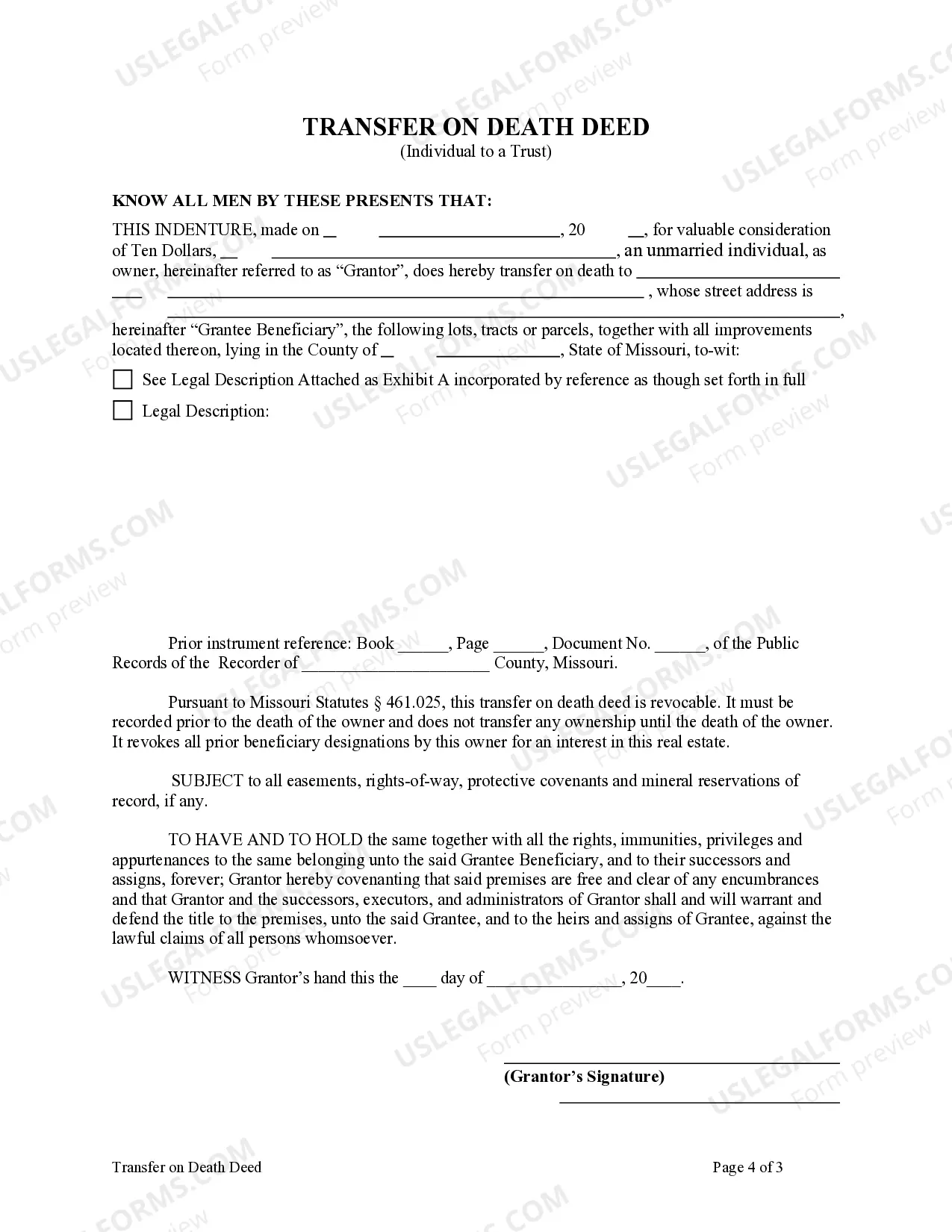
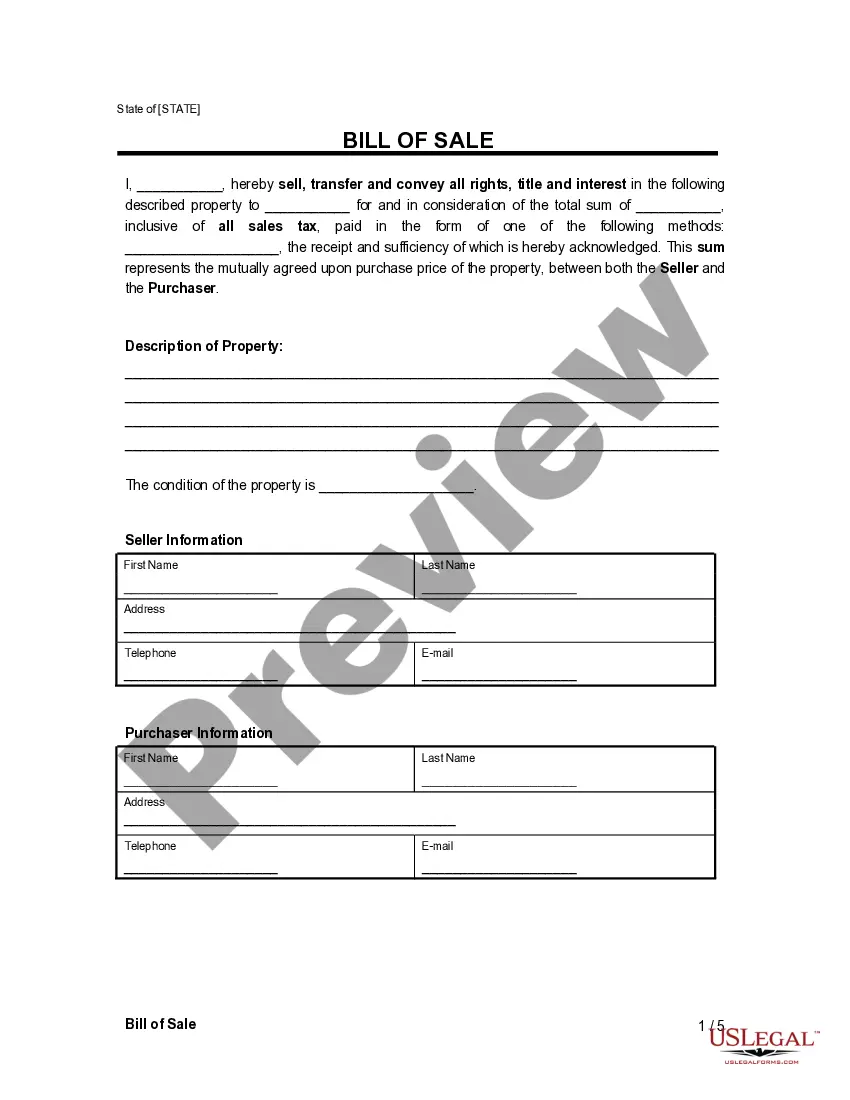
The Transfer on Death Deed (TOD) is a legal document that allows an individual, known as the Grantor, to transfer real property to a Trust upon their death. This form differs from standard deeds as it is revocable during the Grantor's lifetime and becomes effective only upon their death, ensuring a smooth transition of ownership without the need for probate. By designating a Trust as the beneficiary, the Grantor can also streamline estate planning and management.
What’s included in this form
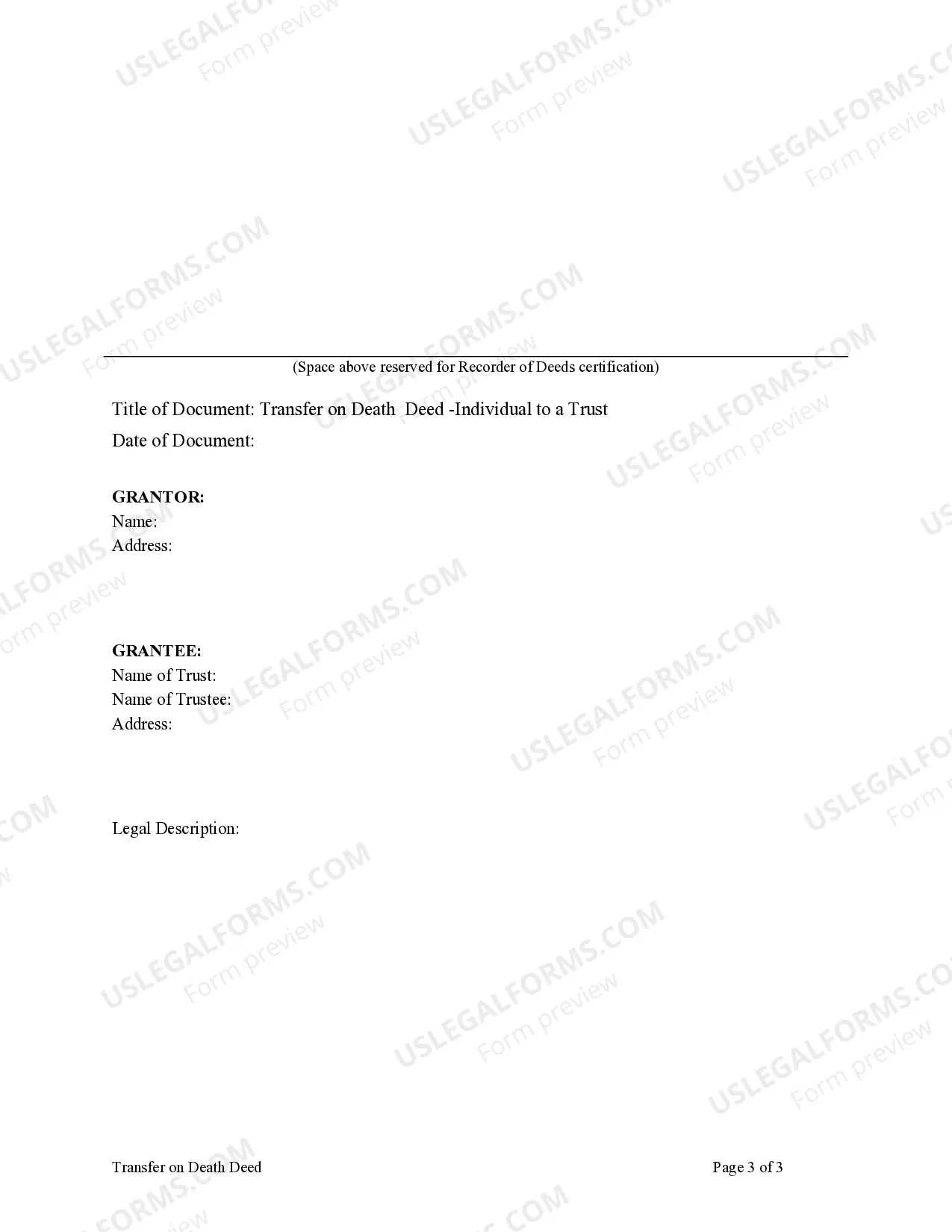
- Identification of the Grantor and the Trust as the Grantee.
- Description of the property being transferred.
- Revocability clause allowing changes before the Grantorâs death.
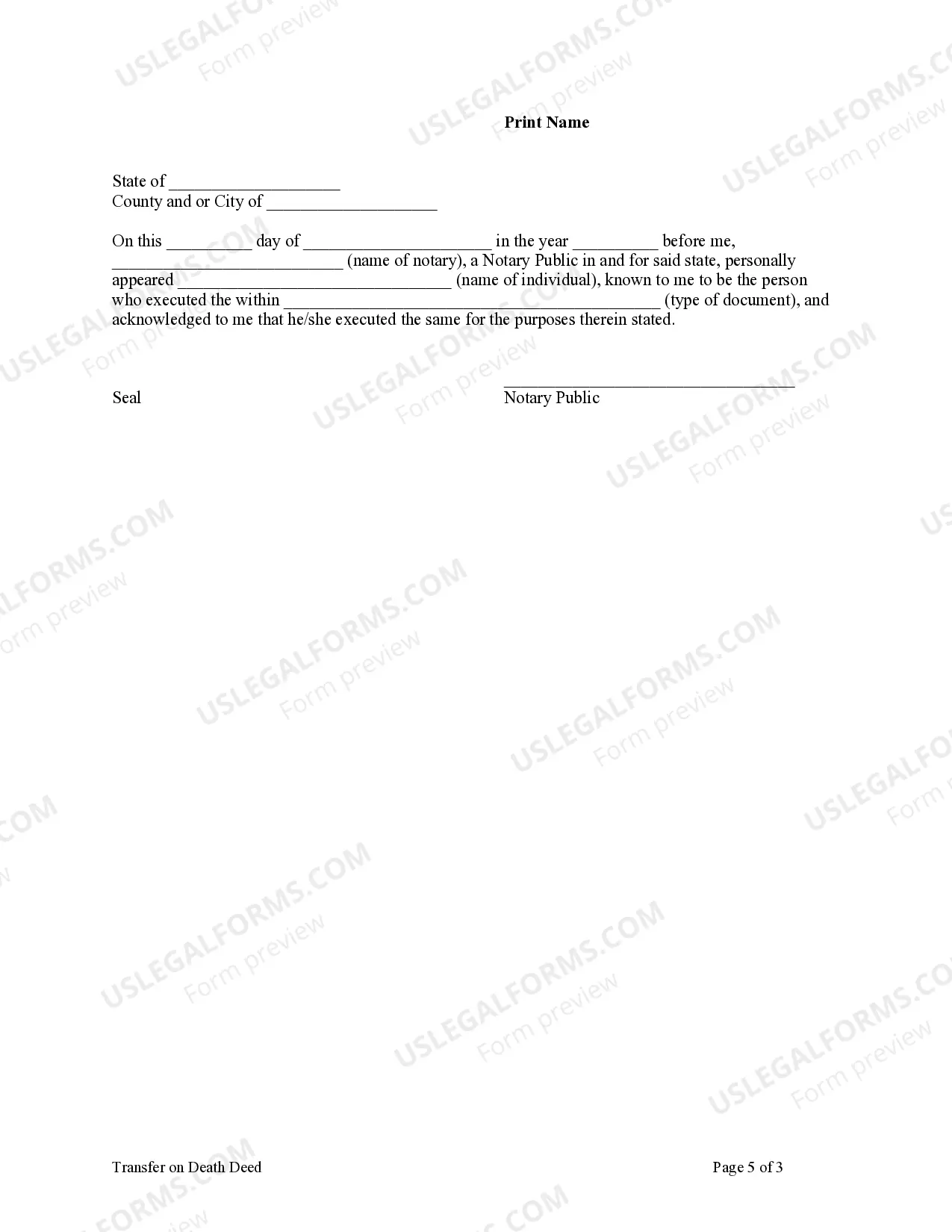
- Signatures of the Grantor, in the presence of a notary public.
- Legal acknowledgment by a notary to validate the deed.


When to use this document
This Transfer on Death Deed form should be used when an individual wishes to transfer property to a Trust, ensuring that the Trust becomes the owner after their death. It is particularly useful for estate planning, as it allows the Grantor to retain ownership and control over the property during their lifetime while simplifying the distribution process to beneficiaries after death.
Intended users of this form
This form is intended for:
- Individuals who own real property and wish to transfer it to a Trust upon their death.
- Grantors looking to retain control over their property while benefiting from estate planning.
- Those seeking a way to avoid probate and facilitate quicker property transfers to their beneficiaries.
How to prepare this document
- Identify the Grantor and the Trust that will receive the property.
- Provide a detailed description of the property being transferred, including any relevant identifiers.
- Fill in the date and location of signing.
- Sign the form in front of a notary public to ensure its validity.
- Have the notary complete the acknowledgment section to confirm the signature.
Is notarization required?
Yes, this form must be notarized to be legally valid. This requirement ensures that the signatures are authentic and that the form complies with state laws. US Legal Forms provides integrated online notarization, allowing you to complete this step via secure video call, making the process quick and convenient without the need for travel.
Get your form ready online
Our built-in tools help you complete, sign, share, and store your documents in one place.
Make edits, fill in missing information, and update formatting in US Legal Forms—just like you would in MS Word.
Download a copy, print it, send it by email, or mail it via USPS—whatever works best for your next step.
Sign and collect signatures with our SignNow integration. Send to multiple recipients, set reminders, and more. Go Premium to unlock E-Sign.
If this form requires notarization, complete it online through a secure video call—no need to meet a notary in person or wait for an appointment.
We protect your documents and personal data by following strict security and privacy standards.

Make edits, fill in missing information, and update formatting in US Legal Forms—just like you would in MS Word.

Download a copy, print it, send it by email, or mail it via USPS—whatever works best for your next step.

Sign and collect signatures with our SignNow integration. Send to multiple recipients, set reminders, and more. Go Premium to unlock E-Sign.

If this form requires notarization, complete it online through a secure video call—no need to meet a notary in person or wait for an appointment.

We protect your documents and personal data by following strict security and privacy standards.
Common mistakes to avoid
- Failing to include a complete legal description of the property.
- Not having the form notarized, which can invalidate the deed.
- Not retaining the ability to revoke the deed during the Grantorâs lifetime.
Benefits of completing this form online
- Convenience of completing the form at your own pace without needing to schedule an appointment.
- Editability to tailor the document to fit your individual needs before finalizing.
- Reliable formatting and statutory compliance, ensuring adherence to applicable laws.
Looking for another form?
Form popularity
FAQ
The TOD rule in Missouri allows individuals to transfer real estate assets directly to beneficiaries upon their death, using a Missouri Transfer on Death Deed or TOD - Beneficiary Deed for Individual to Trust. This rule helps avoid the probate process, simplifying the transfer of property. It is essential to understand the legal requirements and implications of this deed to ensure your wishes are fulfilled. You can rely on resources like US Legal Forms to navigate the specifics of this rule.
You should file a Missouri Transfer on Death Deed or TOD - Beneficiary Deed for Individual to Trust with the county recorder's office in the county where the property is located. This filing is crucial as it officially records your intent to transfer the property upon your death. Make sure to check the specific requirements for your county, as they may vary slightly. Using US Legal Forms can help you find the correct filing procedures and requirements for your area.
Having a trust does not necessarily eliminate the need for a Missouri Transfer on Death Deed or TOD - Beneficiary Deed for Individual to Trust. A TOD deed can be an effective way to transfer property outside of probate, even if a trust exists. It provides a straightforward way to ensure that specific assets go directly to your chosen beneficiaries, complementing your estate plan. Consulting with a legal professional can help clarify how both tools can work together.
To file a Missouri Transfer on Death Deed or TOD - Beneficiary Deed for Individual to Trust, you must first complete the deed form accurately. Ensure that you list the beneficiary and provide a legal description of your property. After completing the form, you need to sign it in front of a notary public and then file it with your local county recorder's office. Using platforms like US Legal Forms can simplify this process, providing you with templates and guidance.
Fill in information about you and the TOD beneficiary. provide a description of the property. check over the completed deed. sign the deed in front of a notary public, and. record the deed at the recorder's office in the county where the property is located.
All you need to do is fill out a simple form, provided by the bank, naming the person you want to inherit the money in the account at your death. As long as you are alive, the person you named to inherit the money in a payable-on-death (POD) account has no rights to it.
Get a Deed Form or Prepare Your Own. You can buy a state-specific TOD deed form for your state or type up your own document. Name the Beneficiary. Describe the Property. Sign the Deed. Record the Deed.
File a petition in probate court. The first step to transferring the property to the rightful new owners is to open up a case in probate court. Petition the court for sale and convey the property to the purchaser. Next, you must petition the court to sell the property.
The California TOD deed form allows property to be automatically transferred to a new owner when the current owner dies, without the need to go through probate. It also gives the current owner retained control over the property, including the right to change his or her mind about the transfer.
If you'd like to avoid having your property going through the probate process, it's a good idea to look into a transfer on death deed. A transfer on death deed allows you to select a beneficiary who will receive your property, but only when you've passed away.