Florida Commercial Sublease
What is this form?
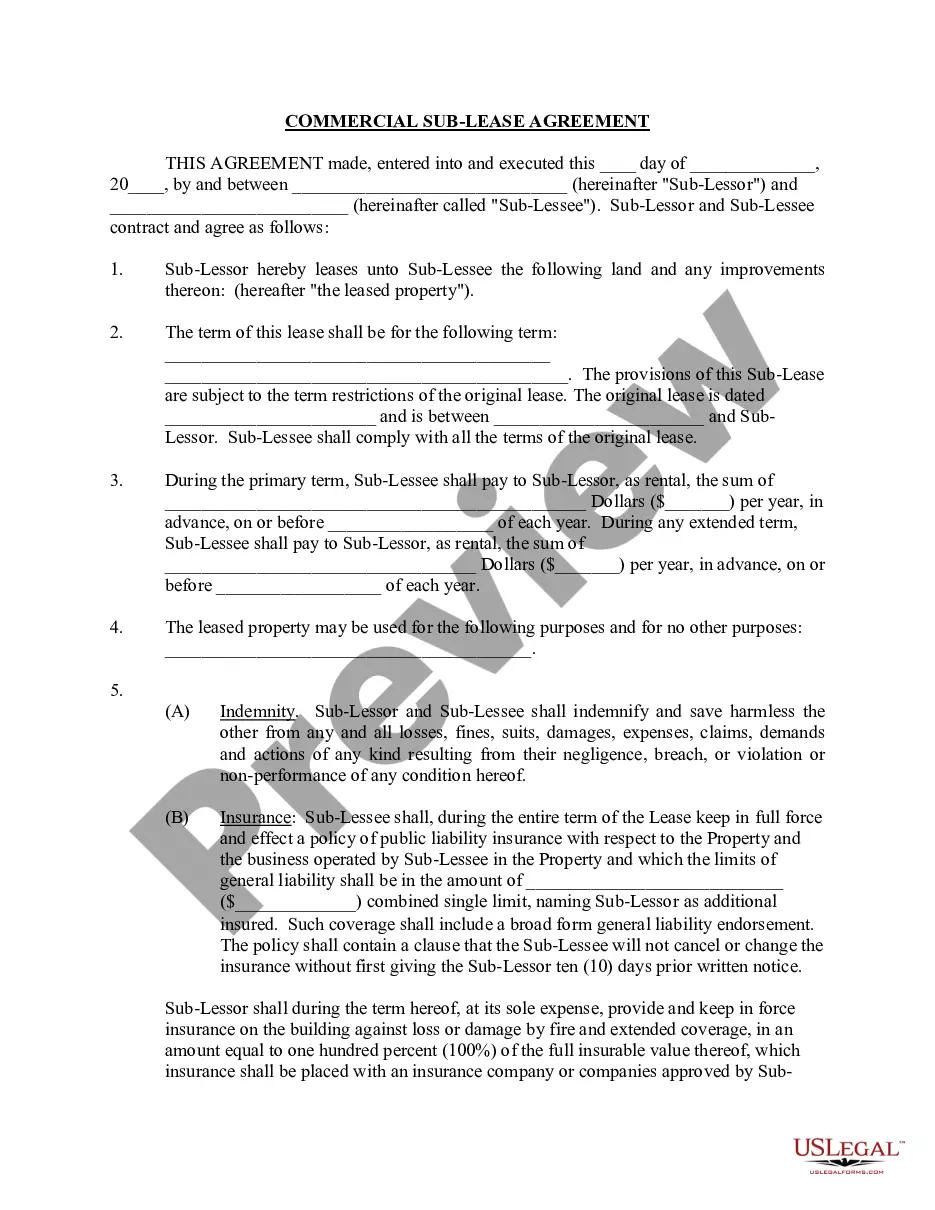
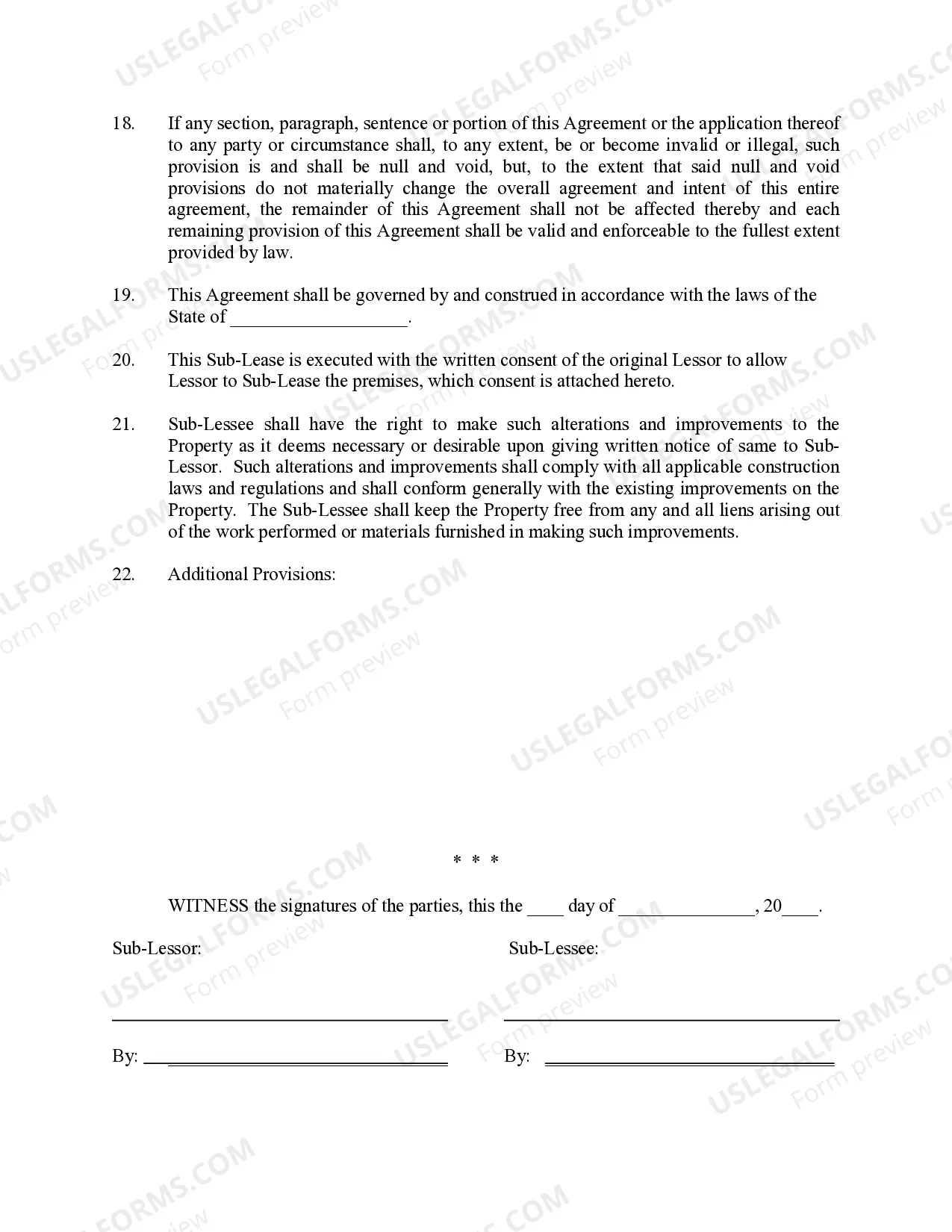
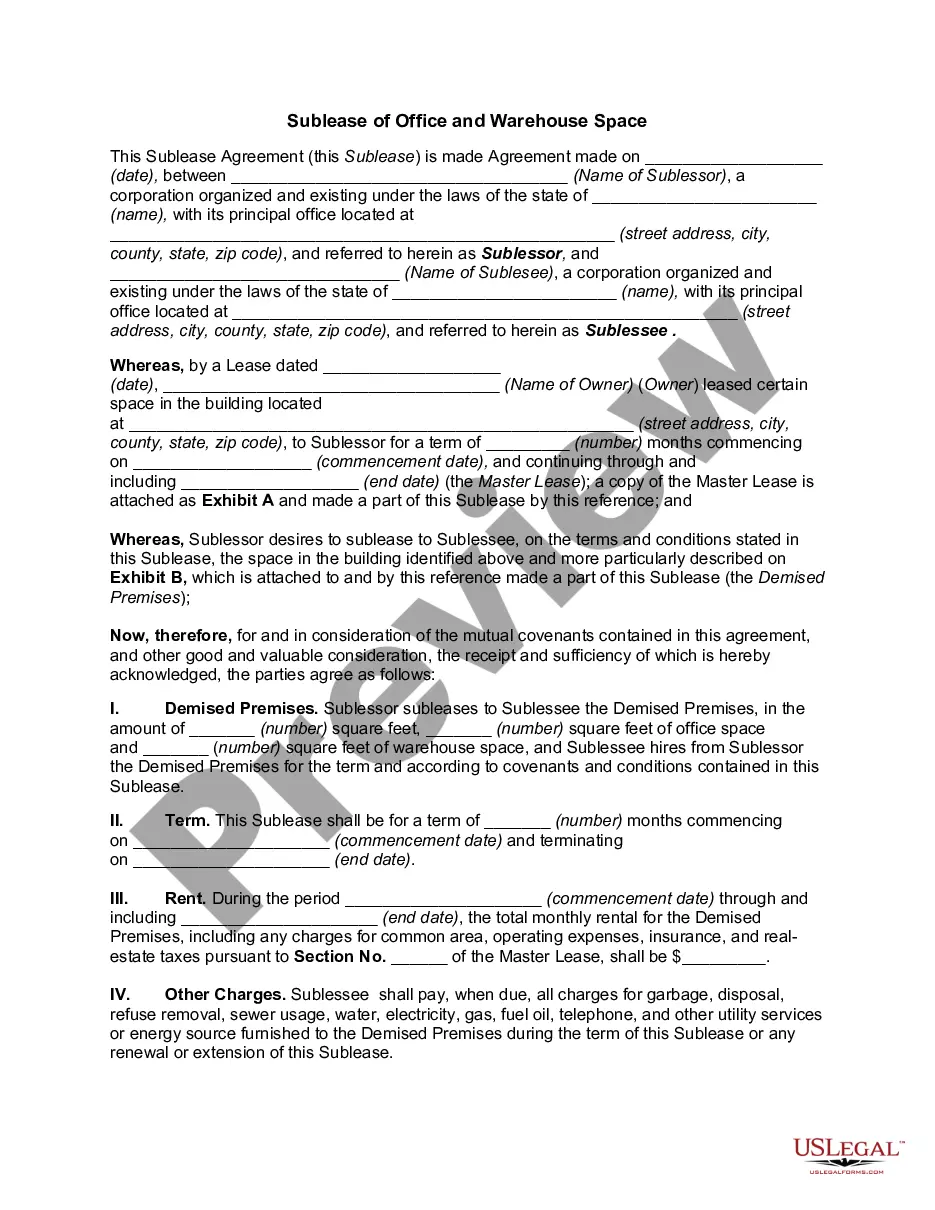
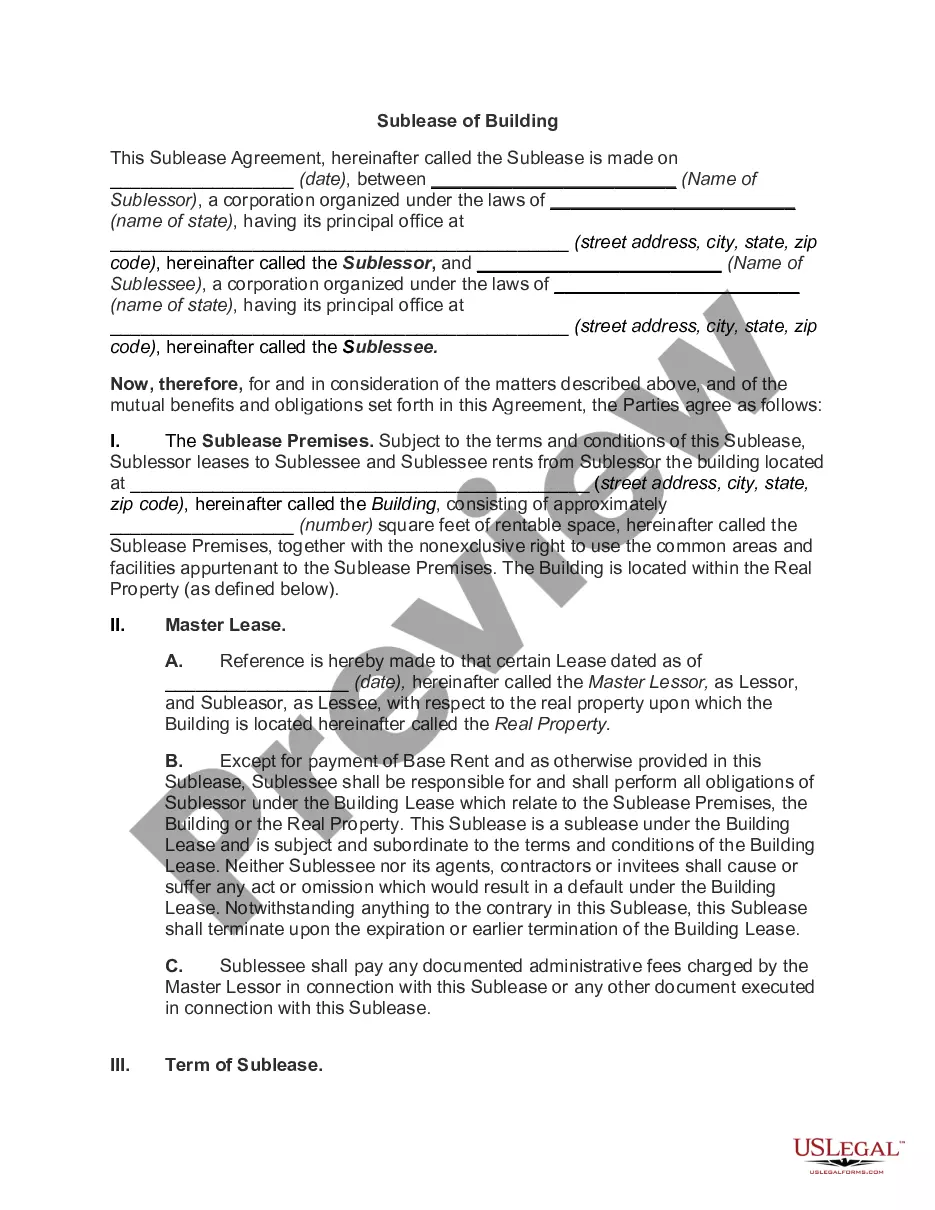
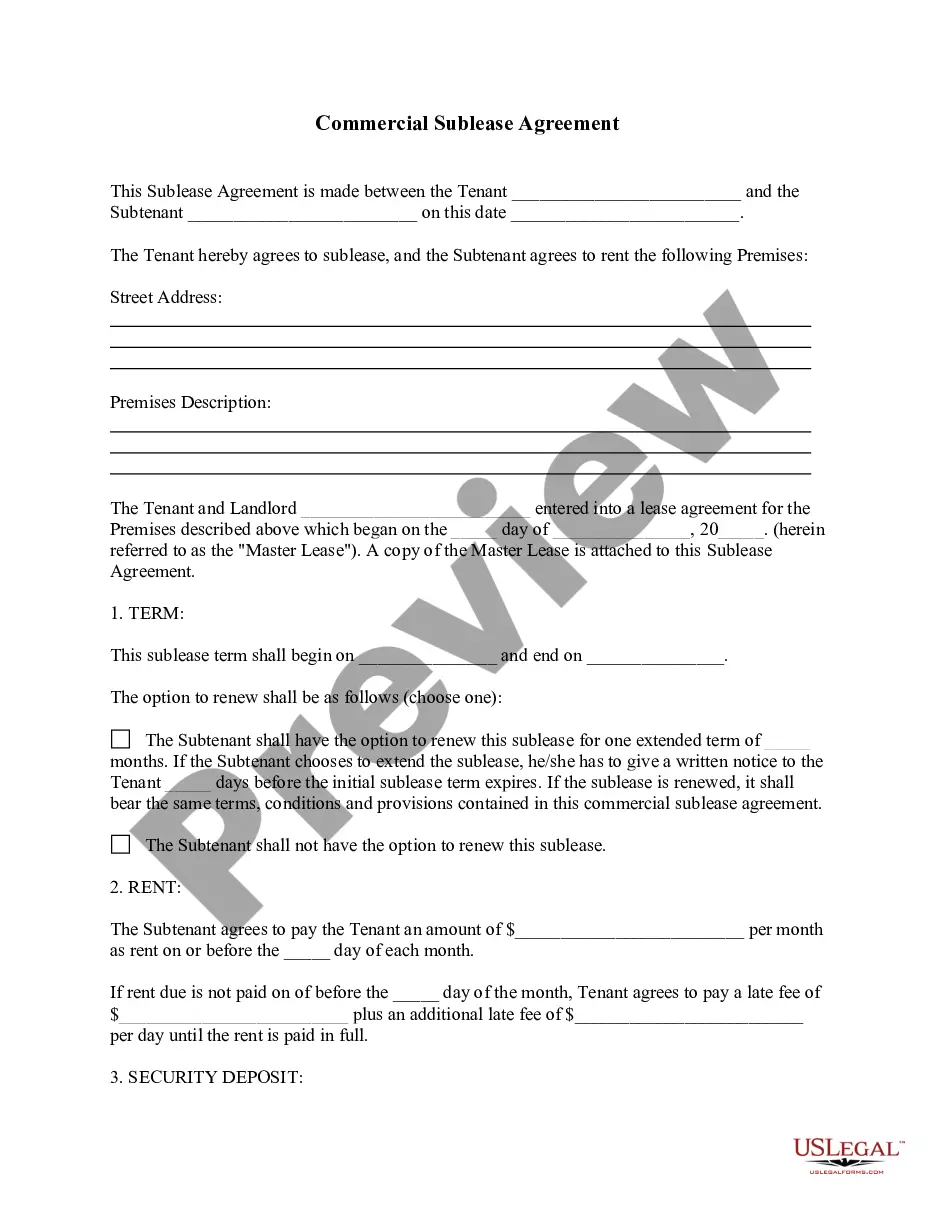
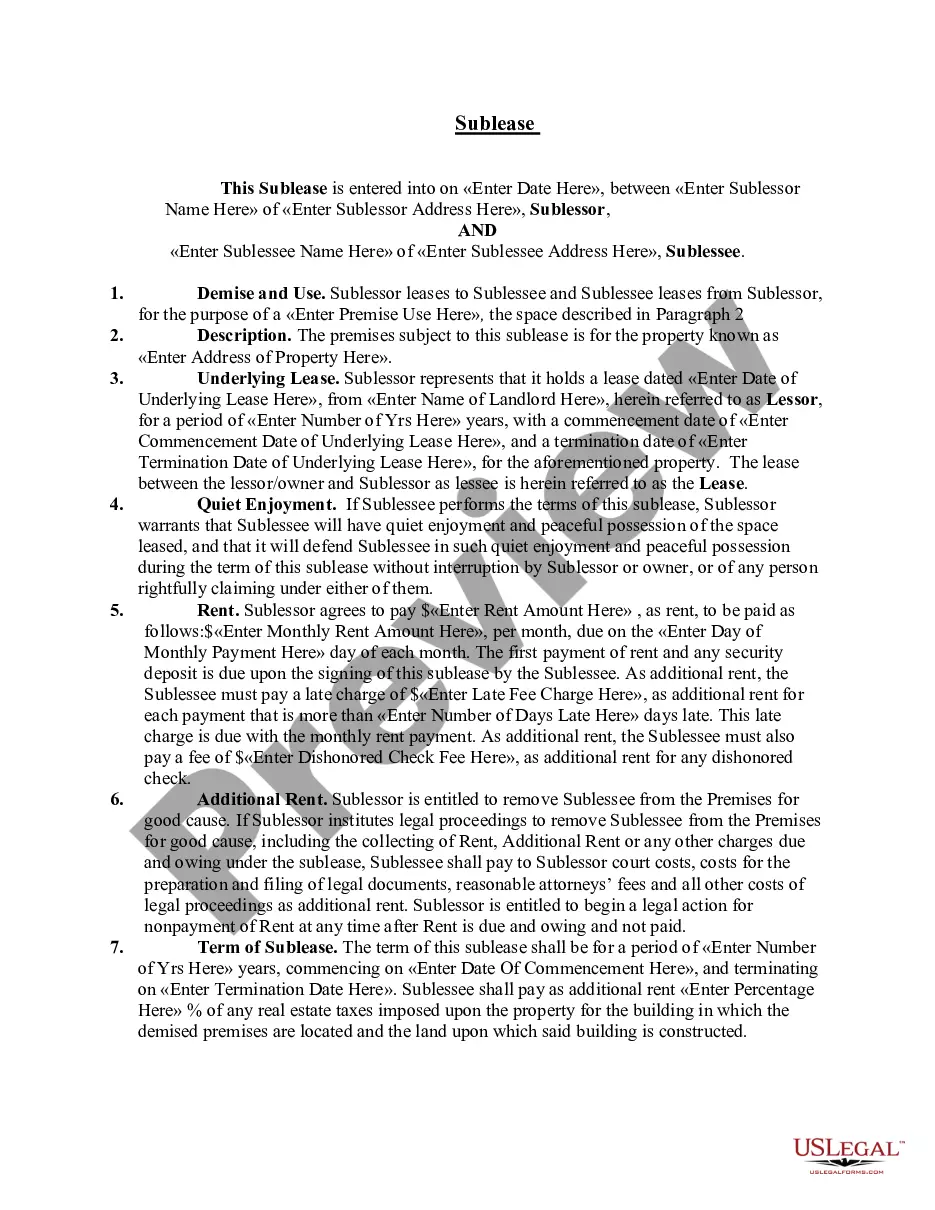
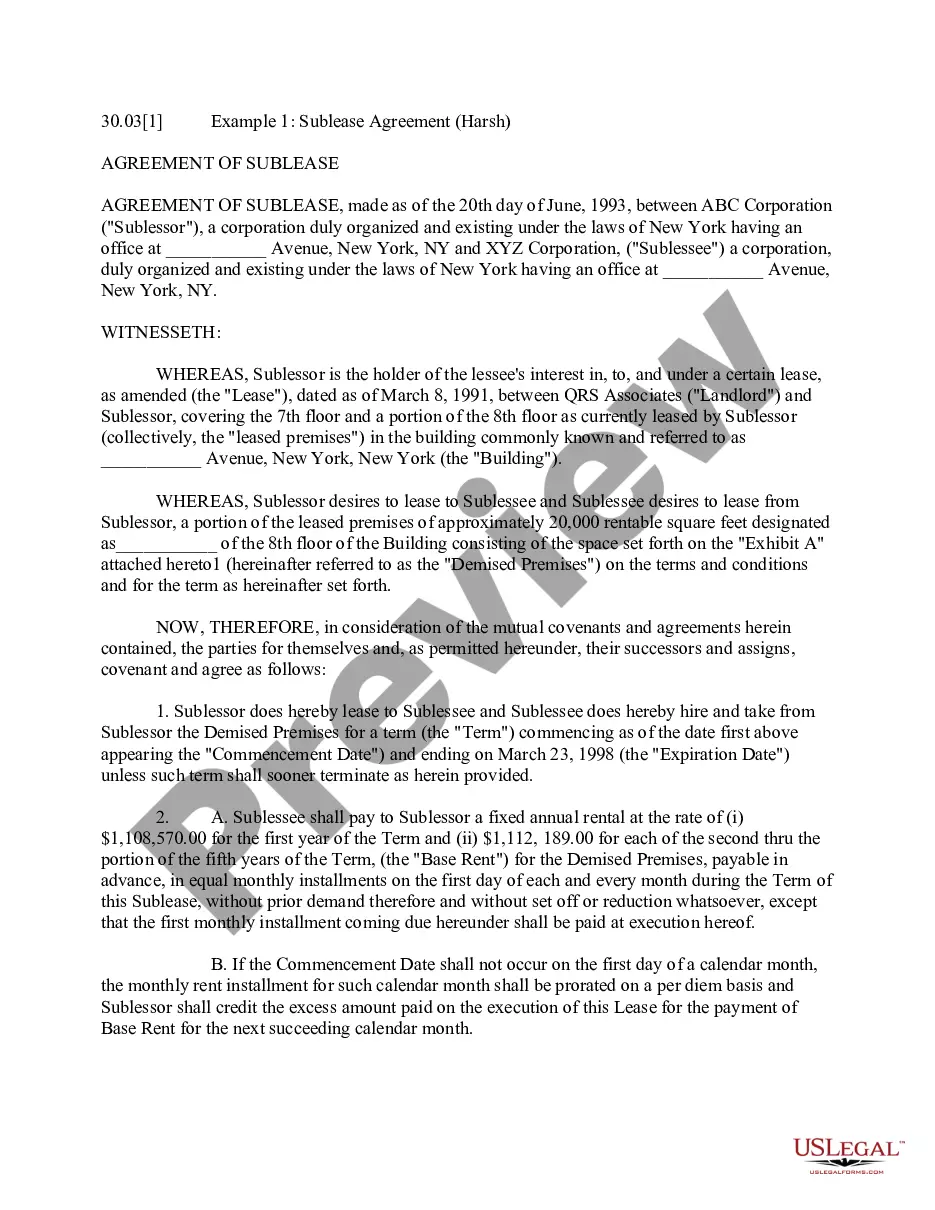
The Commercial Sublease form is a legal document that outlines the terms under which a tenant (Sub-Lessor) can lease part or all of a commercial property to another tenant (Sub-Lessee). This agreement ensures that the Sub-Lessee adheres to the original lease terms set between the Sub-Lessor and the original landlord. Unlike a primary lease, a sublease allows the original tenant to maintain their lease rights while transferring some of the occupancy and rental obligations to the new tenant.
Form components explained
- Identification of the parties involved: Sub-Lessor and Sub-Lessee.
- Details about the leased property including specific terms and conditions.
- Rental payment amounts and due dates.
- Permitted uses for the property.
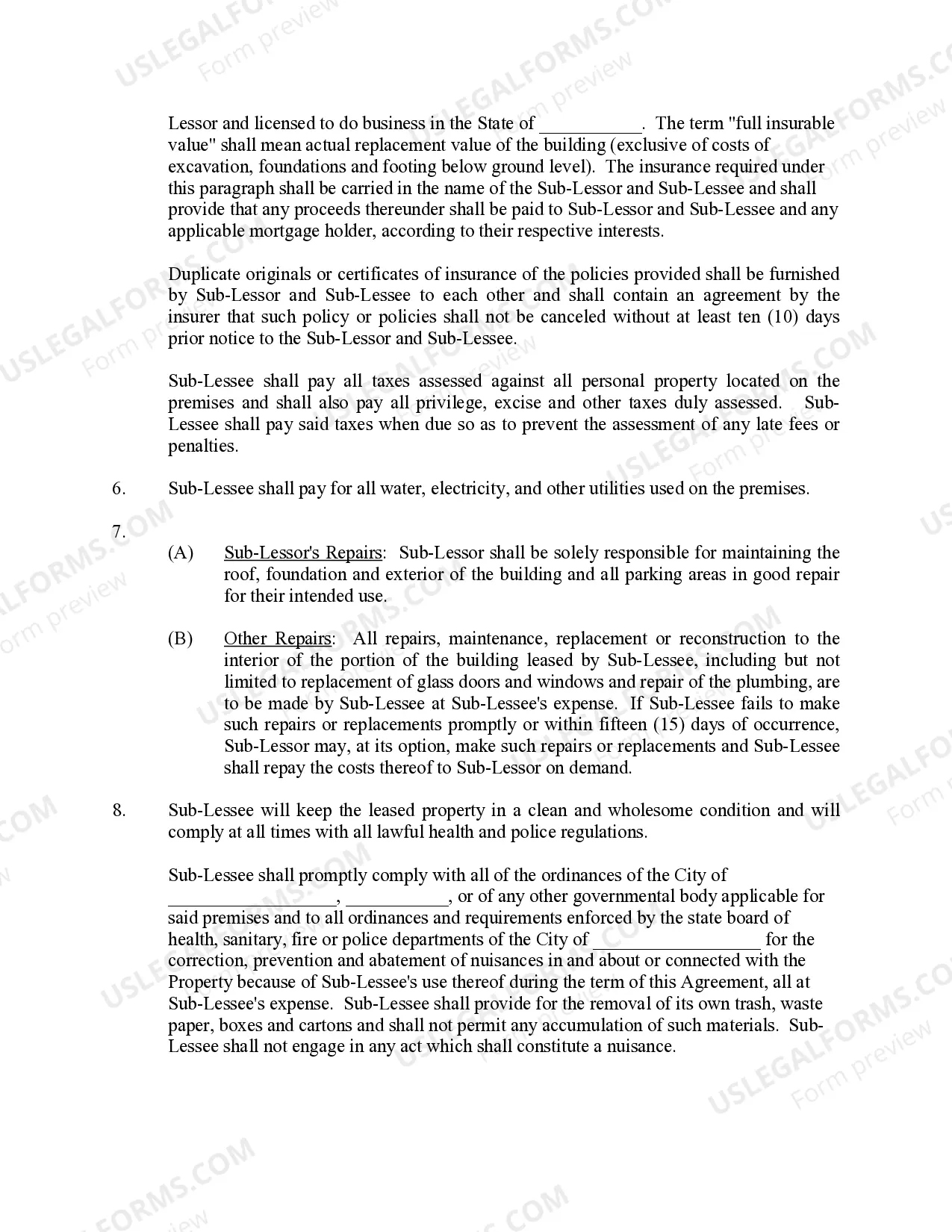
- Indemnity and insurance requirements for both parties.
- Maintenance responsibilities and obligations of the Sub-Lessee.
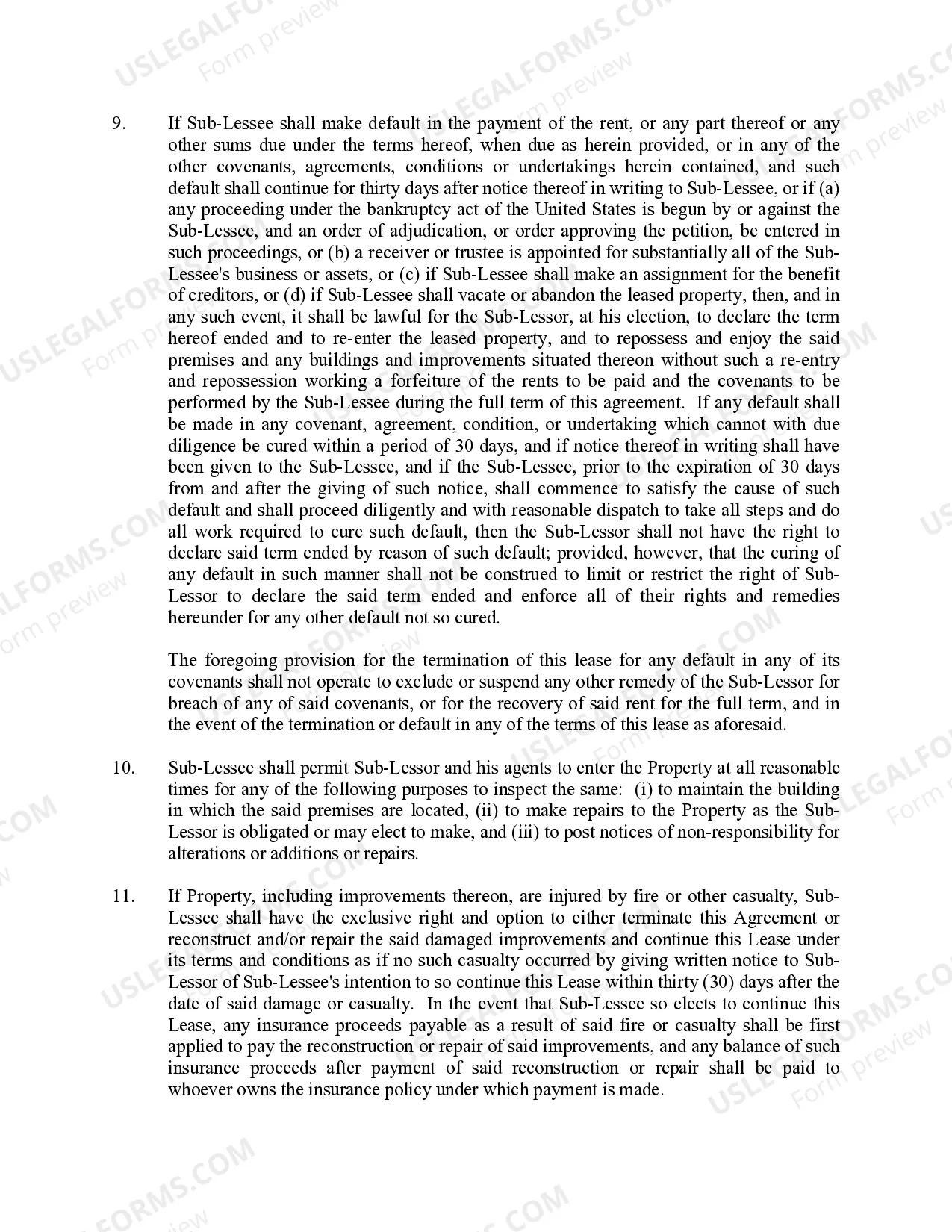
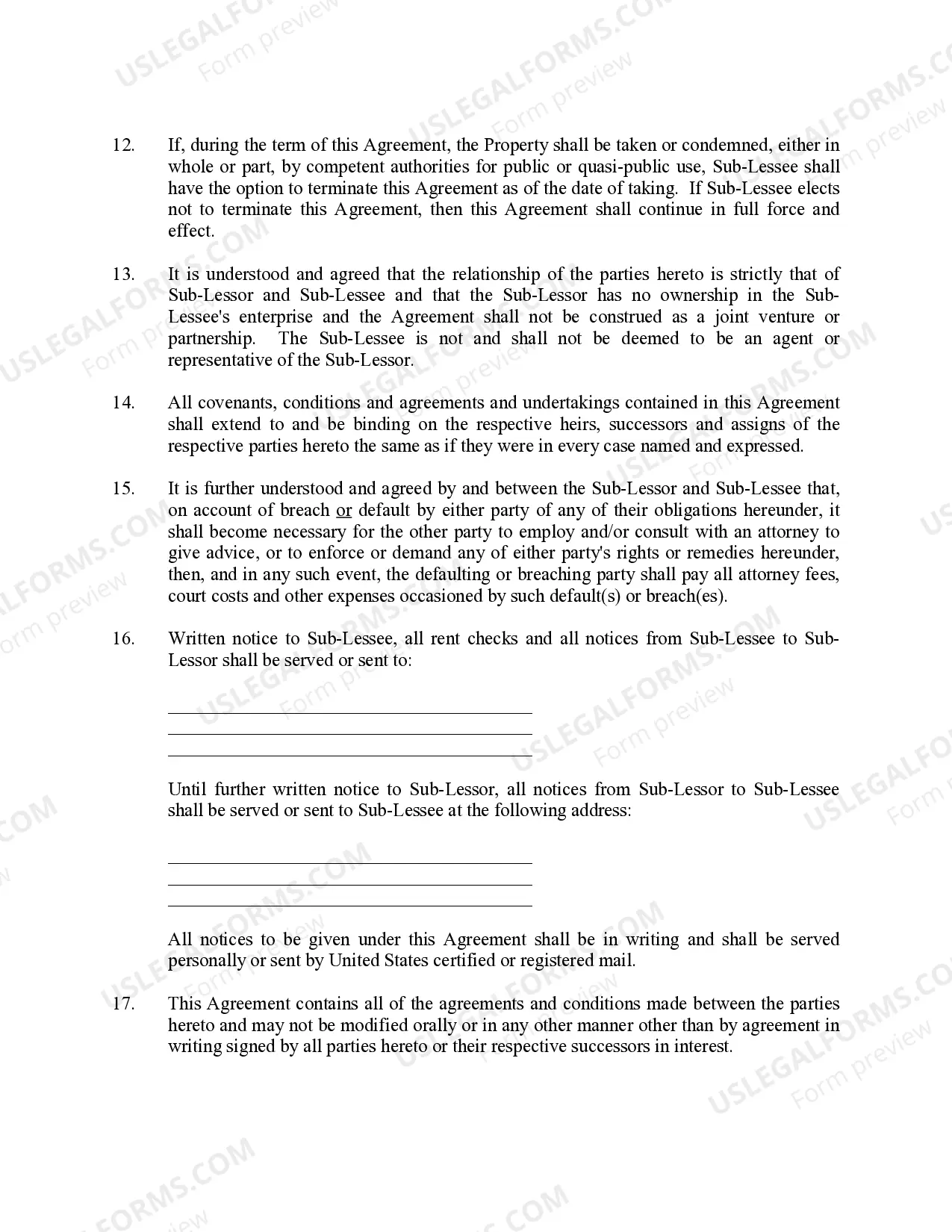
- Provisions for default and potential termination of the agreement.
When this form is needed
This Commercial Sublease form is essential when a commercial tenant wishes to rent out all or part of their leased property to another individual or business. Situations may include a business expanding or downsizing, a temporary absence of the primary tenant, or when the existing tenant can no longer occupy the premises. This form is also useful when the original lease permits subleasing under specific conditions.
Who this form is for
- Business owners looking to sublease their commercial space.
- Original tenants who want to comply with their lease agreement while accommodating new tenants.
- Individuals or entities seeking to occupy commercial space without entering a direct lease with the property owner.
Completing this form step by step
- Identify the Sub-Lessor and the Sub-Lessee by entering their names and contact information.
- Specify the details of the leased property including address and description.
- Enter the rental amounts, specifying what is due and when.
- Outline the permitted uses for the property clearly in the relevant section.
- Ensure that insurance and indemnity clauses are filled in accurately based on the specific terms agreed upon.
- Complete all necessary dates and signatures to finalize the agreement.
Notarization requirements for this form
In most cases, this form does not require notarization. However, some jurisdictions or signing circumstances might. US Legal Forms offers online notarization powered by Notarize, accessible 24/7 for a quick, remote process.
Get your form ready online
Our built-in tools help you complete, sign, share, and store your documents in one place.
Make edits, fill in missing information, and update formatting in US Legal Forms—just like you would in MS Word.
Download a copy, print it, send it by email, or mail it via USPS—whatever works best for your next step.
Sign and collect signatures with our SignNow integration. Send to multiple recipients, set reminders, and more. Go Premium to unlock E-Sign.
If this form requires notarization, complete it online through a secure video call—no need to meet a notary in person or wait for an appointment.
We protect your documents and personal data by following strict security and privacy standards.

Make edits, fill in missing information, and update formatting in US Legal Forms—just like you would in MS Word.

Download a copy, print it, send it by email, or mail it via USPS—whatever works best for your next step.

Sign and collect signatures with our SignNow integration. Send to multiple recipients, set reminders, and more. Go Premium to unlock E-Sign.

If this form requires notarization, complete it online through a secure video call—no need to meet a notary in person or wait for an appointment.

We protect your documents and personal data by following strict security and privacy standards.
Common mistakes to avoid
- Failing to obtain the original landlord's approval for the sublease.
- Not clearly specifying allowed uses of the property.
- Omitting important dates, such as the rental due dates or lease term length.
- Neglecting to ensure that the Sub-Lessee understands the obligations outlined in the original lease.
Why use this form online
- Convenient access to standard legal language prepared by licensed attorneys.
- Editable forms allow for customization based on specific needs.
- Immediate downloadable access, saving time and effort in drafting documents.
Legal use & context
- This form creates a legally binding agreement between the Sub-Lessor and Sub-Lessee.
- Failure to adhere to the terms may result in legal consequences and potential eviction.
- Both parties should retain a copy of the signed sublease for their records.
Main things to remember
- The Commercial Sublease is essential for tenants looking to lease out space while retaining their original lease obligations.
- Clear communication and careful completion of the form are crucial for legal protection.
- Review state-specific rules to ensure the sublease complies with local laws.
Looking for another form?

Form popularity
FAQ
The Florida Commercial Sublease is a contract that lets a tenant (the Sub-Lessor) lease part or all of a commercial space to another tenant (the Sub-Lessee) while the Sub-Lessee remains bound to the original lease terms with the landlord. It’s used when subleasing is allowed under the main lease—such as to expand, downsize, or cover a temporary absence.
Yes. The form provides the key terms to document a sublease, including the identities of Sub-Lessor and Sub-Lessee, property details, rent and due dates, permitted uses, insurance and indemnity requirements, maintenance obligations, and default and termination provisions.
If the Sub-Lessee breaches the sublease terms, including improper subletting, the Sub-Lessor can pursue default and potential termination under the agreement. Eviction would follow Florida law, but the form sets the grounds for termination if the sublease is violated.
The form components do not specify a notarization requirement. Notarization rules vary, so check Florida rules and the landlord’s requirements or consult a licensed attorney to confirm whether notarization is needed in your case.
Potential downsides include ongoing liability for the Sub-Lessor if the Sub-Lessee breaches the main lease terms, added complexity around indemnity and insurance, and coordinating maintenance and permitted uses between two tenants. The form addresses these through indemnity, insurance, and default/termination provisions.
The Florida Commercial Sublease lets the Sub-Lessor remain bound to the original lease with the landlord while transferring some occupancy and rental obligations to the Sub-Lessee. A standard commercial lease is directly between the landlord and the occupant without a subtenant.