Sublease of Office and Warehouse Space
About this form
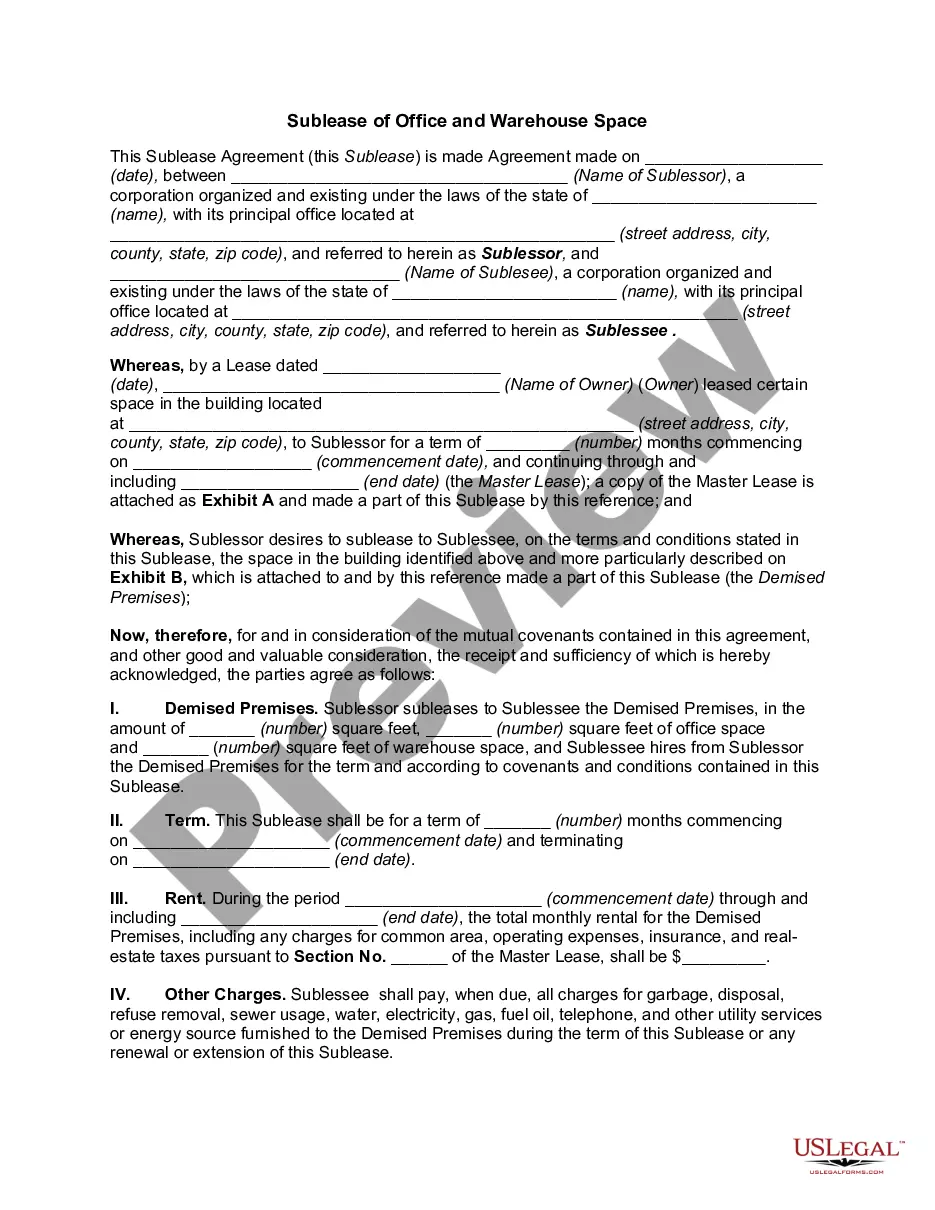
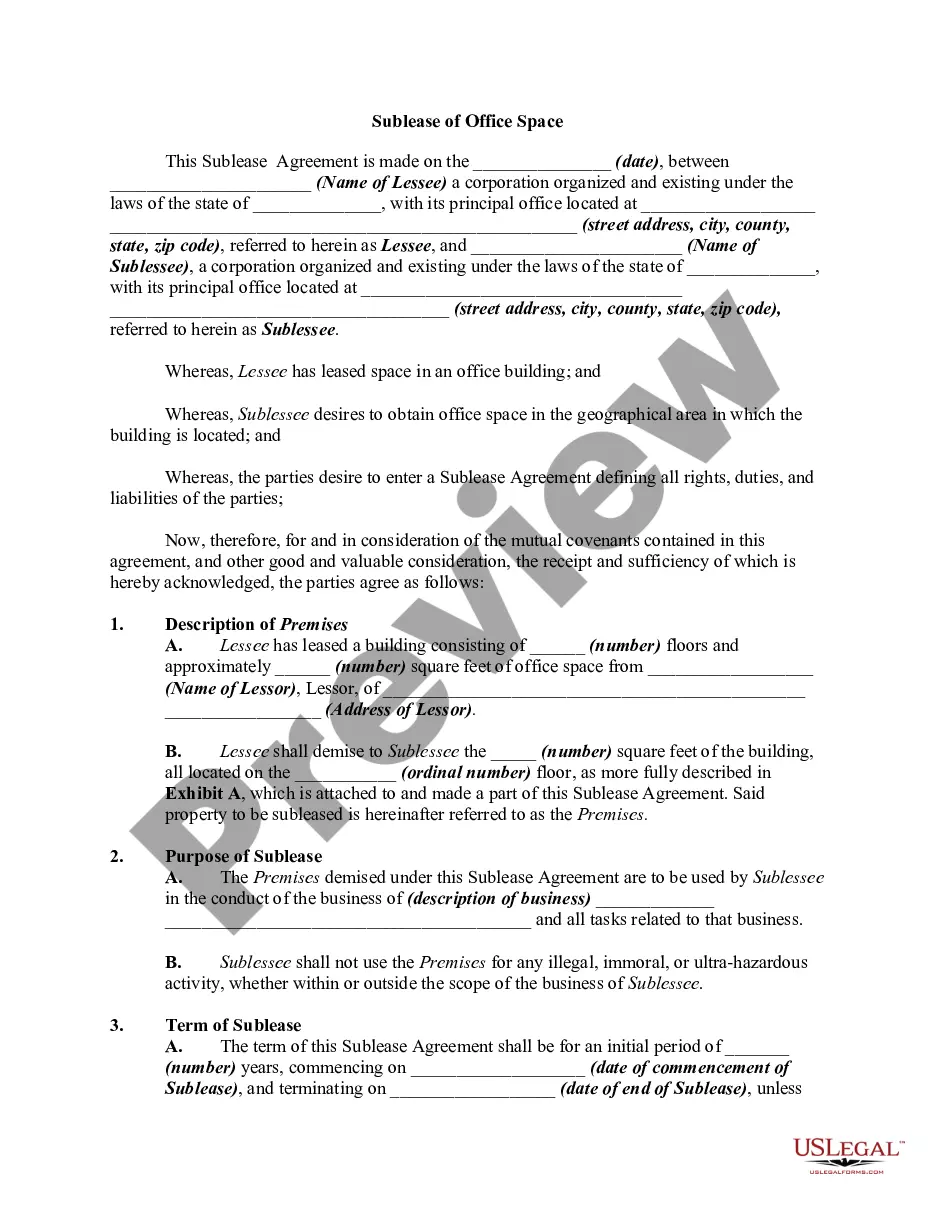
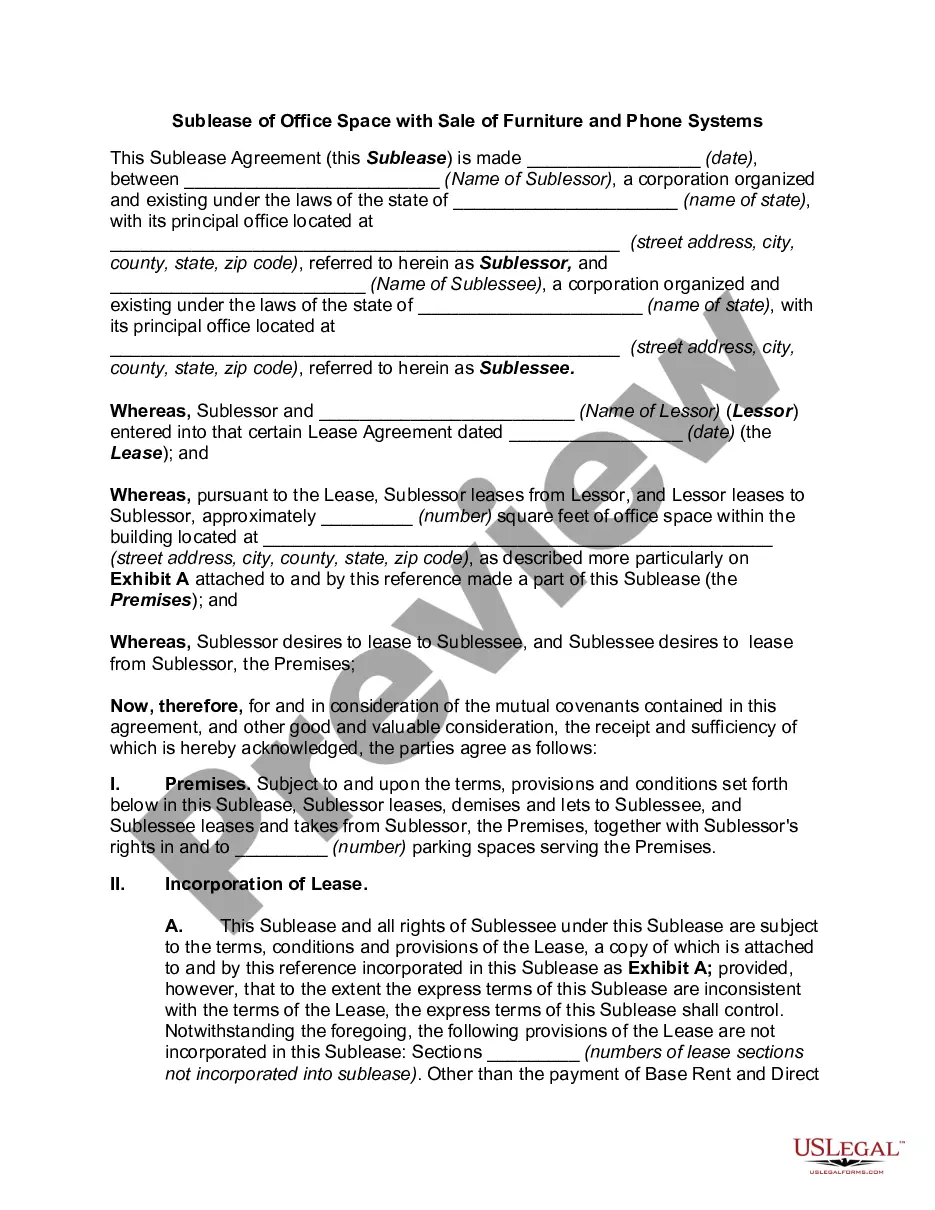
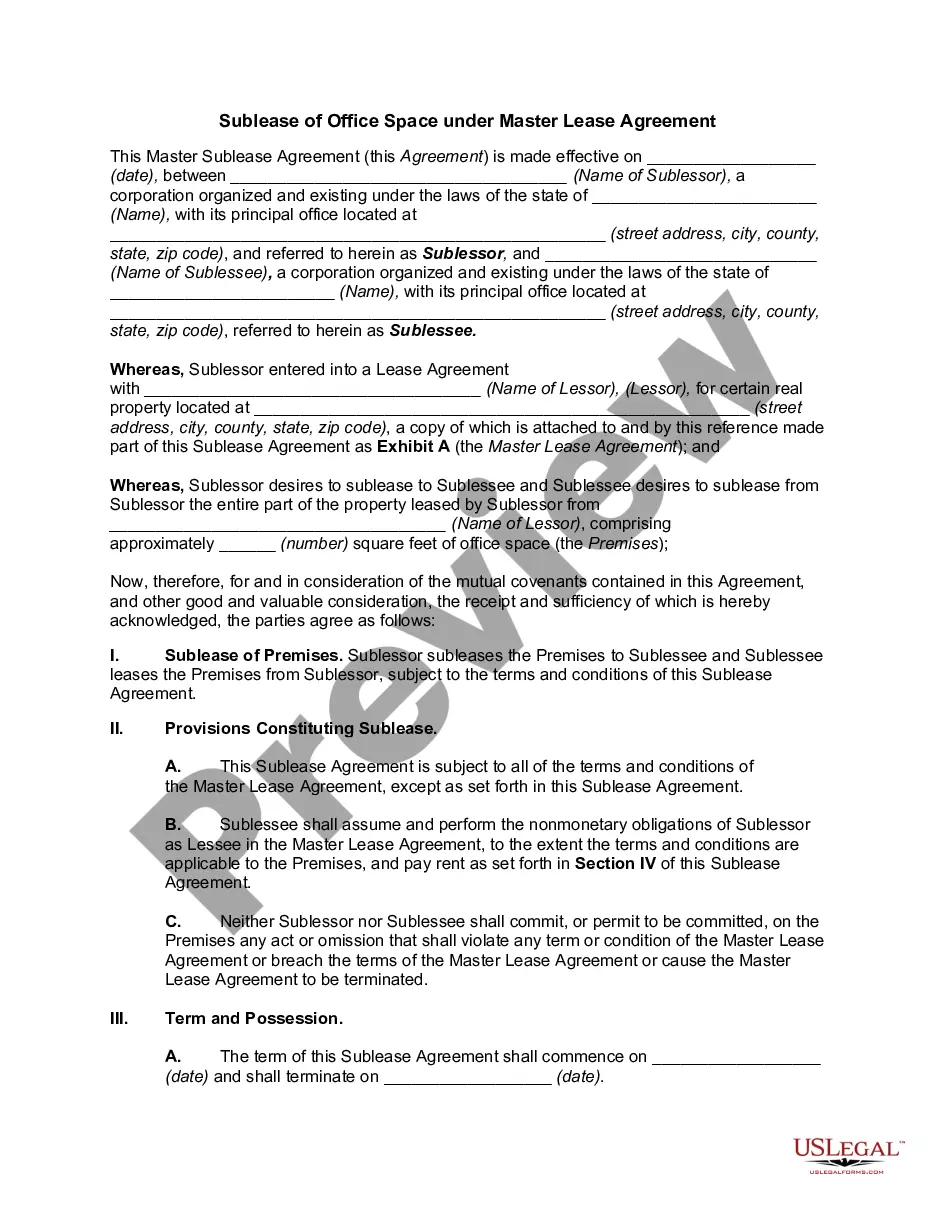
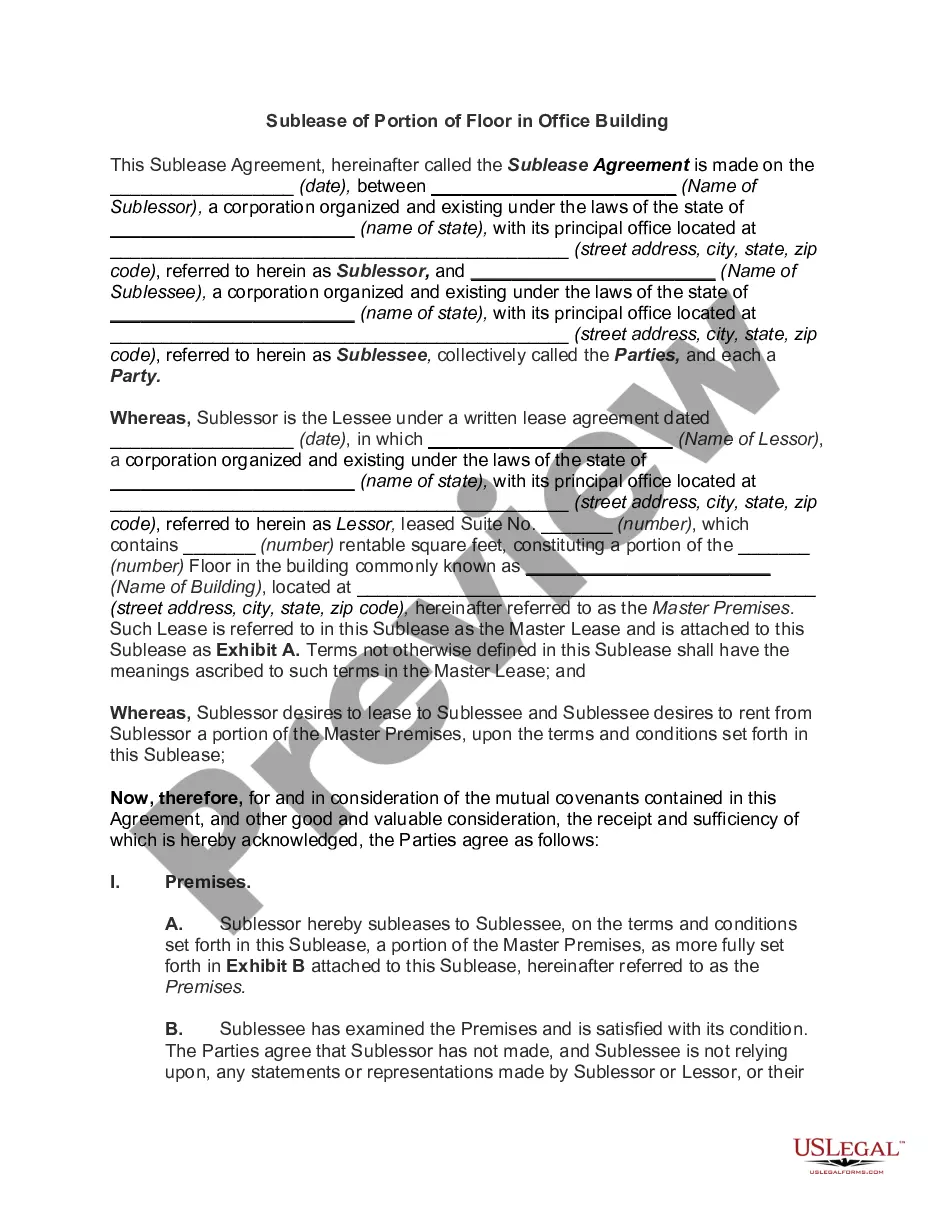
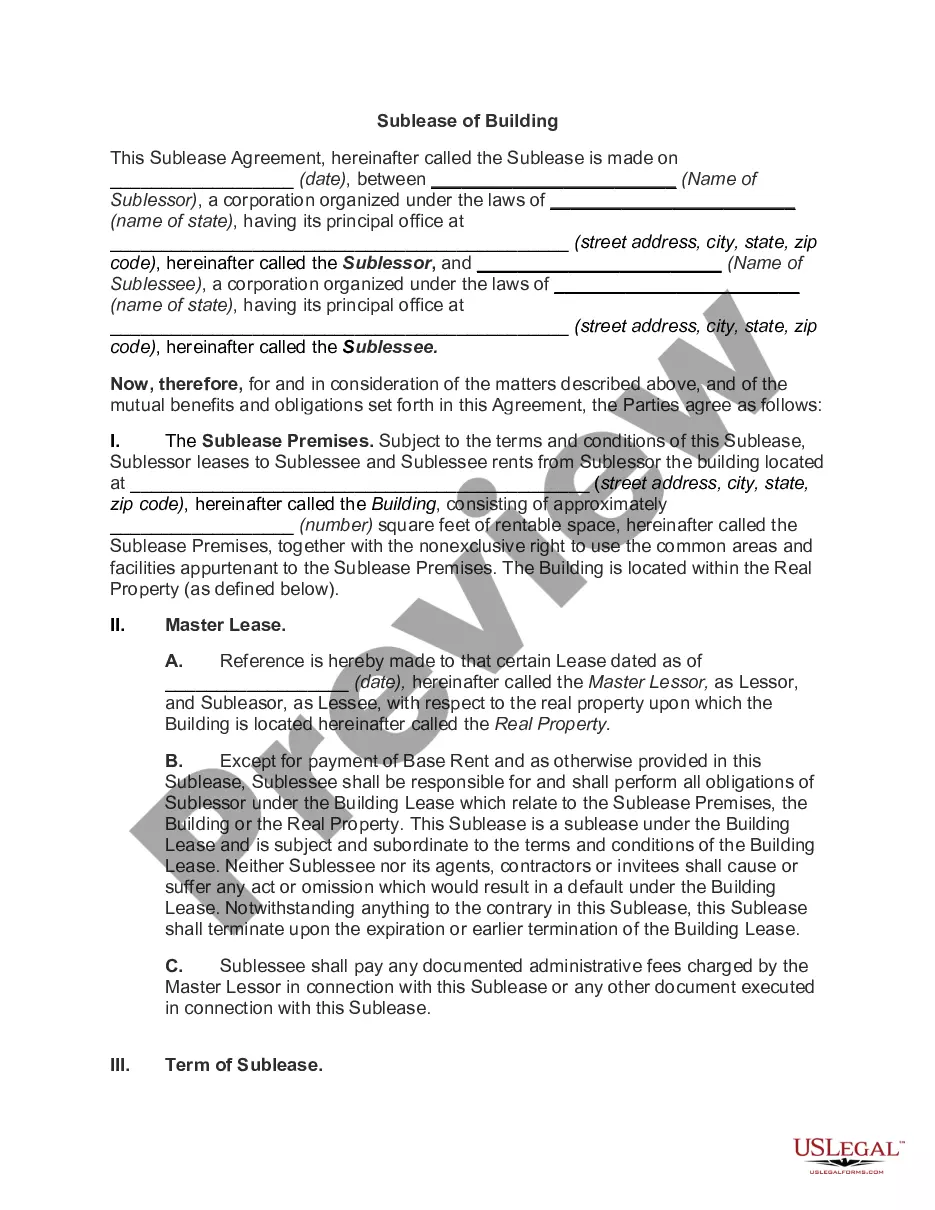
The Sublease of Office and Warehouse Space is a legal document that allows a tenant (the sublessor) to rent out all or part of their leased space to another party (the sublessee). This form provides a structured agreement outlining the rights and responsibilities of both parties. It is essential for clarifying terms related to the rental period, payment, and usage of the space, distinguishing it from other rental agreements through its subleasing context.
Form components explained
- Identification of the parties involved, including the sublessor and sublessee.
- Details regarding the premises being subleased, including the total square footage and specific areas such as office and warehouse space.
- Set term of the lease, including start and end dates.
- Rental amount and any additional charges for utilities and services.
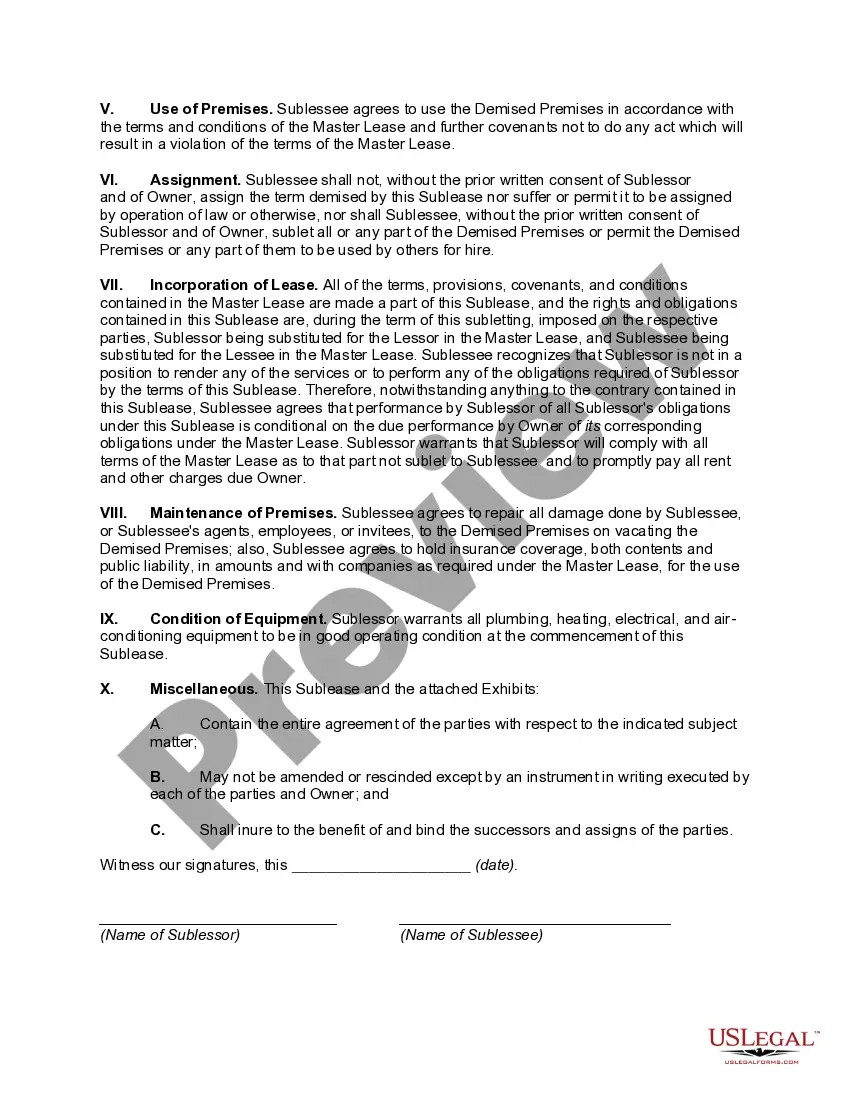
- Conditions for using the premises in compliance with the master lease agreement.
- Provisions regarding maintenance, insurance, and other responsibilities for both parties.
When this form is needed
This form can be used in various situations, such as when a current tenant needs to temporarily vacate their office or warehouse space and wishes to generate income by subleasing to another business. It is particularly useful when a tenant's business needs change but they remain responsible for their original lease obligations.
Who should use this form
- Business owners who are seeking a way to sublease office or warehouse space.
- Current lessees who need to maintain their lease while no longer using the entire space.
- Investors or corporations looking to minimize costs by sharing space with another entity.
Instructions for completing this form
- Identify and clearly print the names of the sublessor and sublessee along with their addresses.
- Describe the premises being subleased, including detailed information about the space and its size.
- Specify the term of the sublease, including the starting and ending dates.
- Fill in the rental amount and detail any additional charges related to utilities or services.
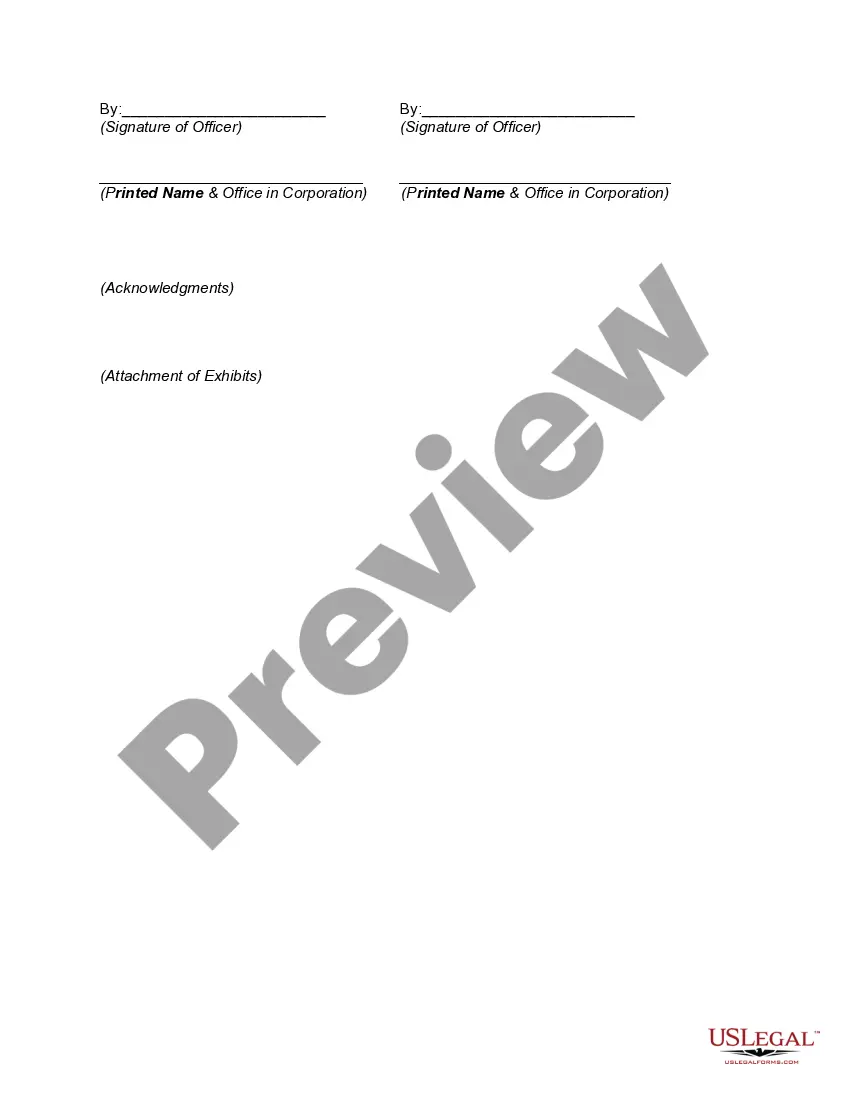
- Include signatures of authorized representatives along with the date to validate the agreement.
Does this form need to be notarized?
This form does not typically require notarization unless specified by local law. Nonetheless, it is advisable to check with local regulations to ensure compliance with any legal requirements surrounding subleasing agreements.
Get your form ready online
Our built-in tools help you complete, sign, share, and store your documents in one place.
Make edits, fill in missing information, and update formatting in US Legal Forms—just like you would in MS Word.
Download a copy, print it, send it by email, or mail it via USPS—whatever works best for your next step.
Sign and collect signatures with our SignNow integration. Send to multiple recipients, set reminders, and more. Go Premium to unlock E-Sign.
If this form requires notarization, complete it online through a secure video call—no need to meet a notary in person or wait for an appointment.
We protect your documents and personal data by following strict security and privacy standards.

Make edits, fill in missing information, and update formatting in US Legal Forms—just like you would in MS Word.

Download a copy, print it, send it by email, or mail it via USPS—whatever works best for your next step.

Sign and collect signatures with our SignNow integration. Send to multiple recipients, set reminders, and more. Go Premium to unlock E-Sign.

If this form requires notarization, complete it online through a secure video call—no need to meet a notary in person or wait for an appointment.

We protect your documents and personal data by following strict security and privacy standards.
Common mistakes to avoid
- Failing to include all necessary details about the premises, leading to confusion later.
- Not specifying the duration of the sublease clearly.
- Ignoring to review the master lease for restrictions that may affect the sublease.
- Not securing all required signatures before the agreement is effective.
Advantages of online completion
- Convenience of downloading and printing the form directly from your device.
- Editability allows you to customize the form according to your specific needs.
- Access to legal templates drafted by licensed attorneys for reliability.
Legal use & context
- This form serves as a binding agreement between the sublessor and sublessee, ensuring that terms are enforceable if disputes arise.
- Both parties should be aware of their rights and responsibilities under the master lease, which may impact the sublease.
Looking for another form?
Form popularity
FAQ
A commercial sublease is an agreement between a tenant currently leasing a property, a new tenant looking for space, and the property owner. When you sublease your space you are the sublessor (or sublandlord) and your new tenant is the sublessee (or subtenant).
A lessee is a person who rents land or property from a lessor. The lessee is also known as the tenant and must uphold specific obligations as defined in the lease agreement and by law.
In short, subletting allows a new renter to take over the lease directly with the landlord, while subleasing involves renting all or part of the space to another renter through the original renter.
Most commercial leases forbid subletting.Before you consider subletting, you should carefully check your own head lease to make sure you are allowed to sub let. Even if the original lease prevents subletting, a sublease may be negotiated if all parties agree.
A sublessor, in the OED's definition, is a person who grants a sublease, and a sublessee is a person to whom a sublease is granted.
Is Subletting Illegal? In most cases, subletting is legal if the tenant obtains the landlords permission to let out the rental property. However, if the tenant sublets without written permission, they could come into legal difficulties.
A sublet, or sublease agreement, adds someone new to an existing lease. Usually the new person (subletter) replaces someone who is moving out (sublessor or sublessee) but it can also happen with any new person being added to a lease.
A sublease is a legally binding contract made between a tenant and a new tenant (also known as a subtenant or a sublessee).Usually, the first tenant must get consent from the landlord before he/she is allowed to sublease the premises.