Sublease of Office Space under Master Lease Agreement
Overview of this form
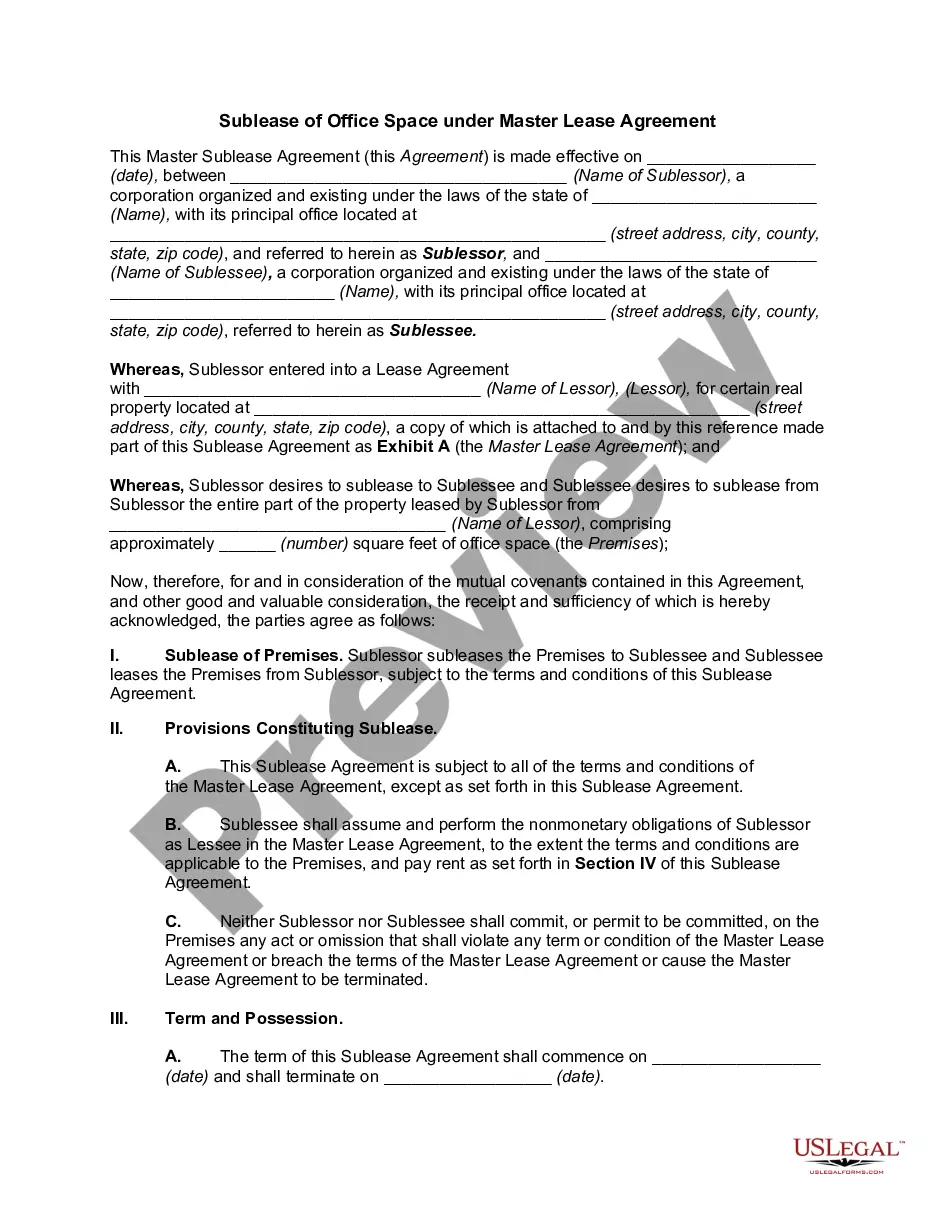
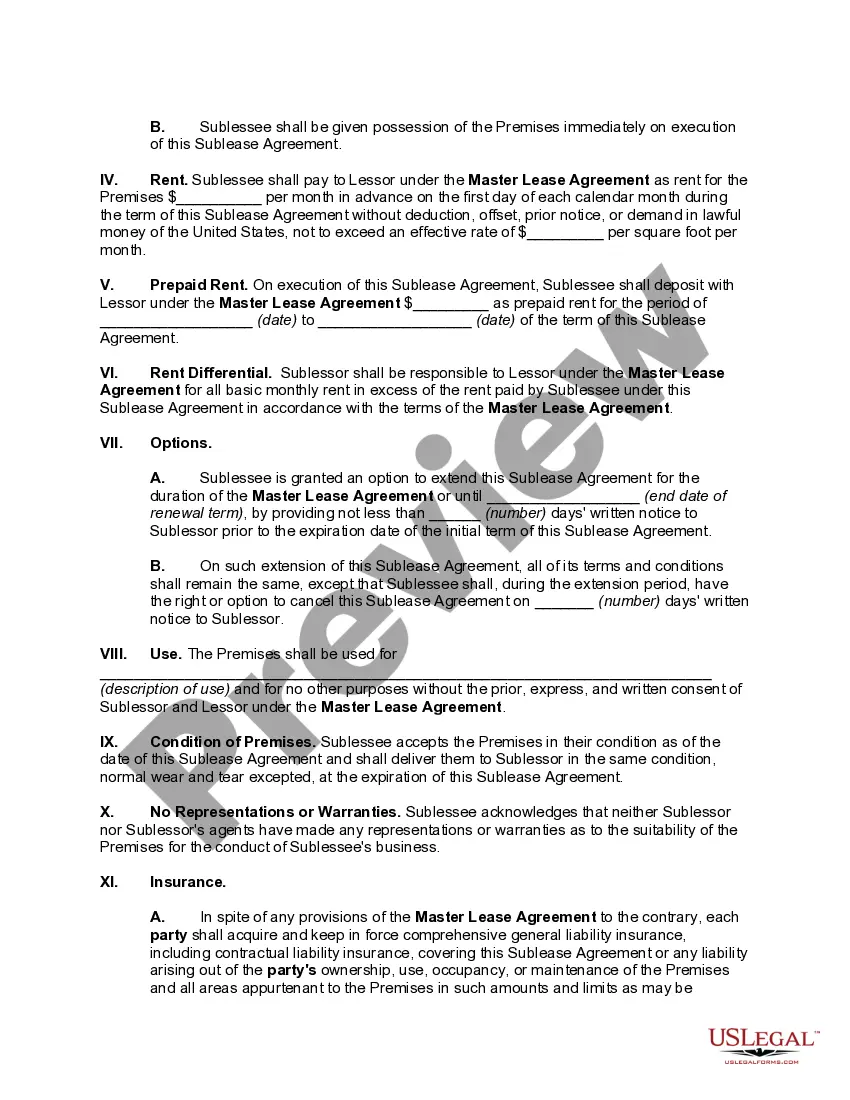
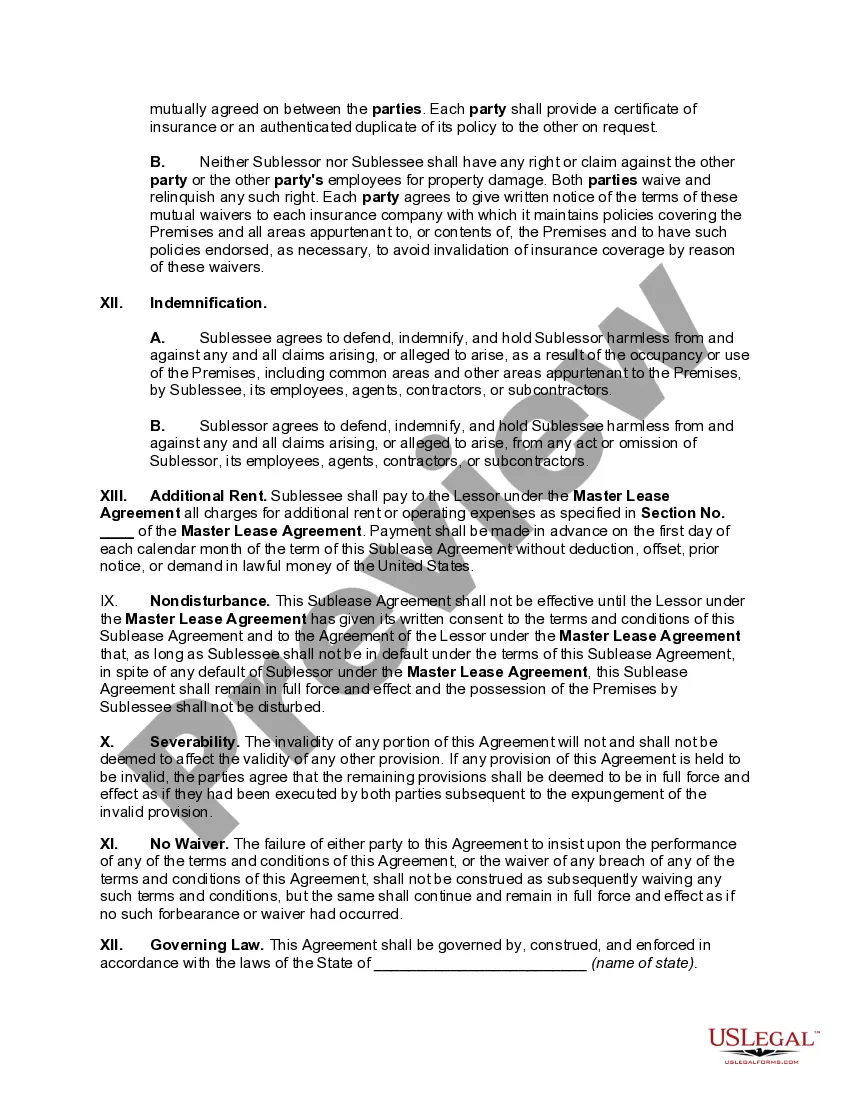
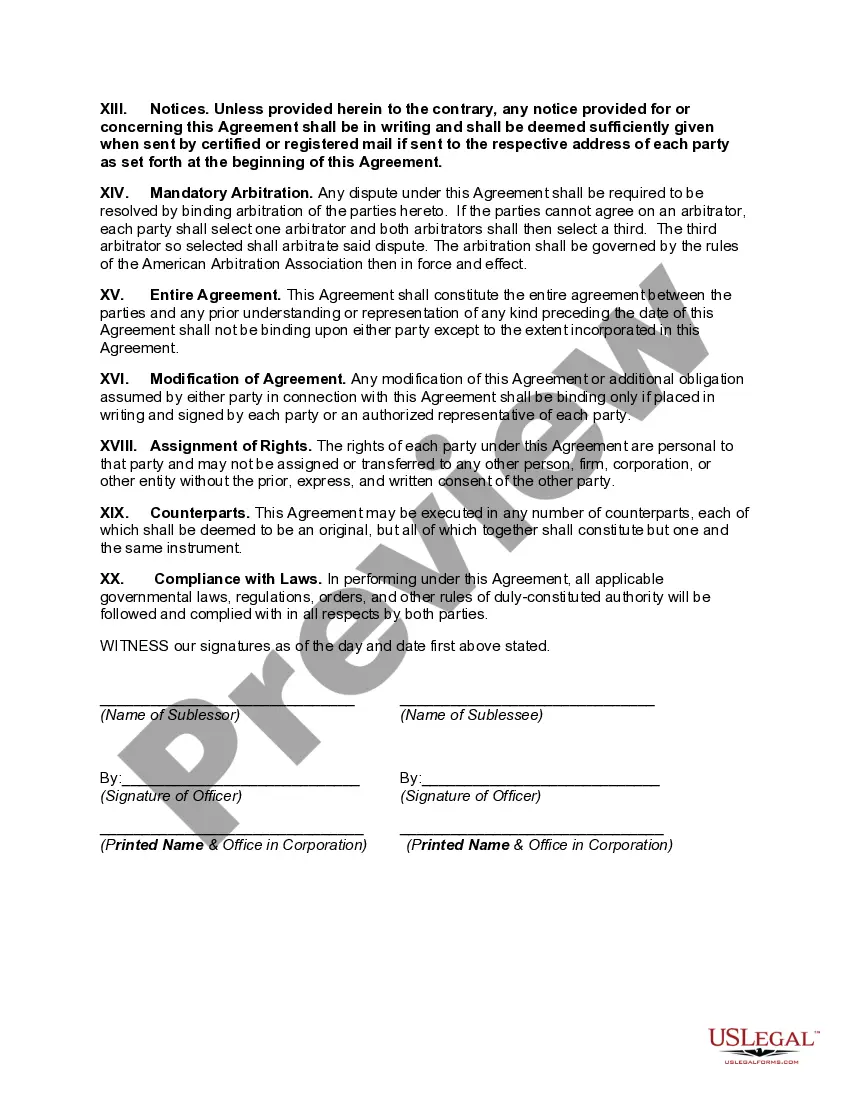
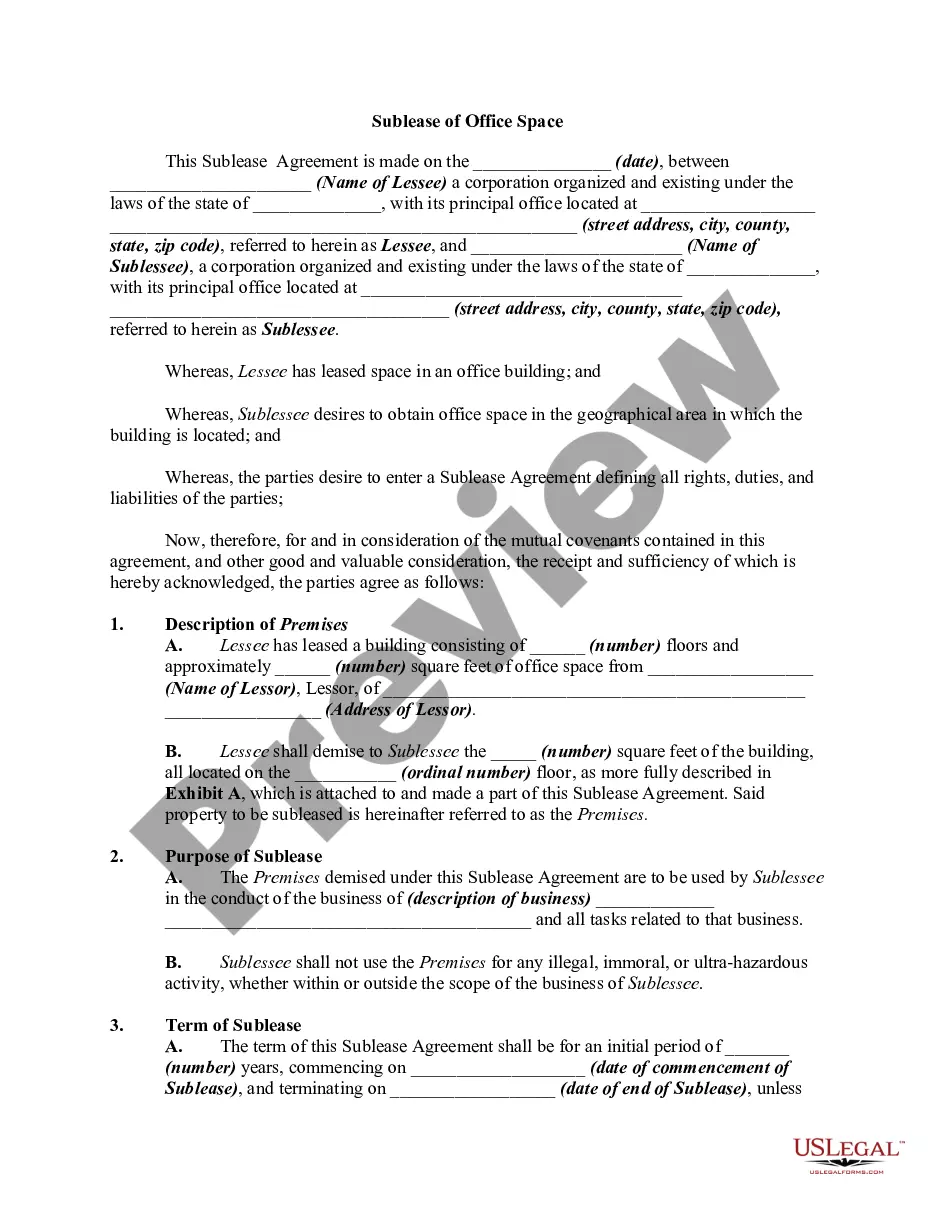
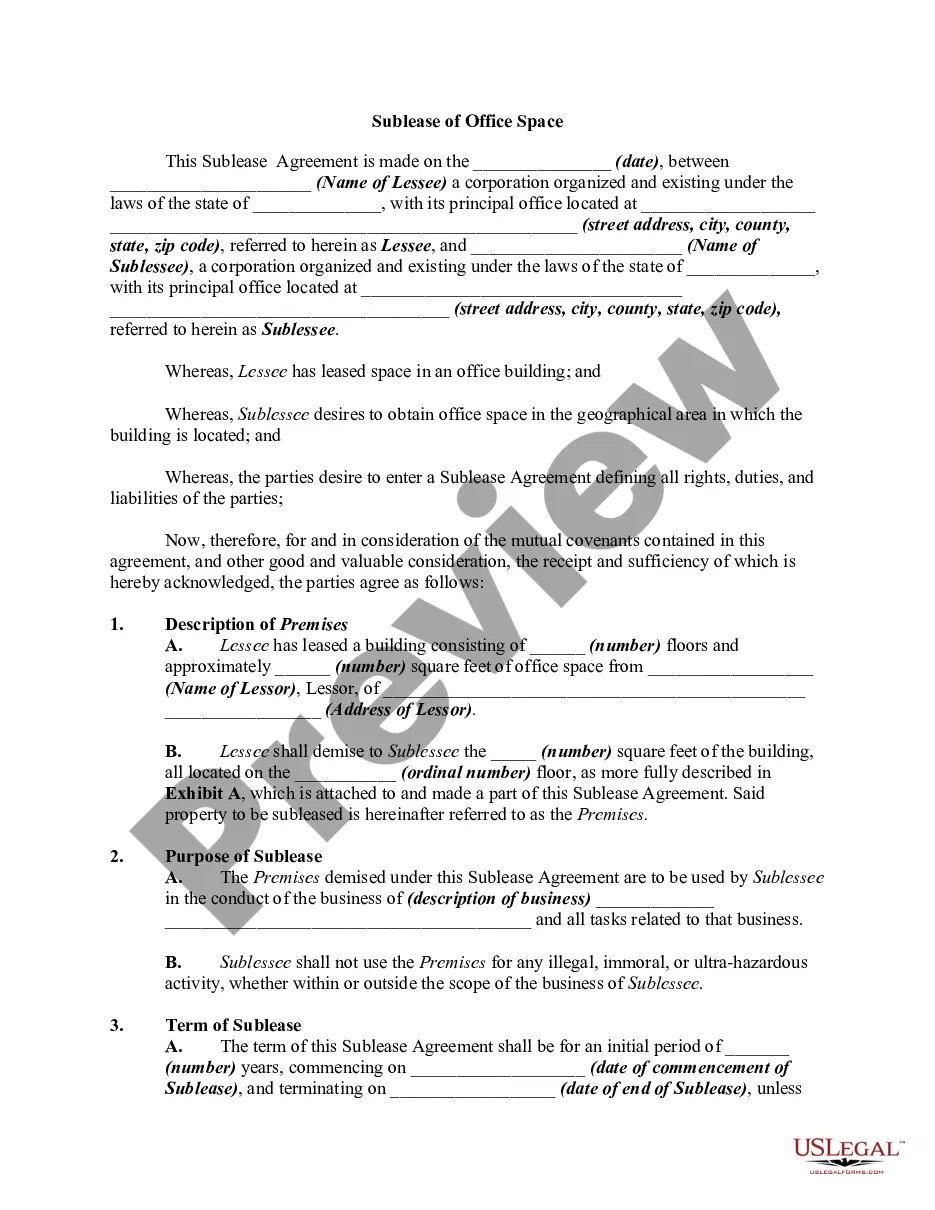
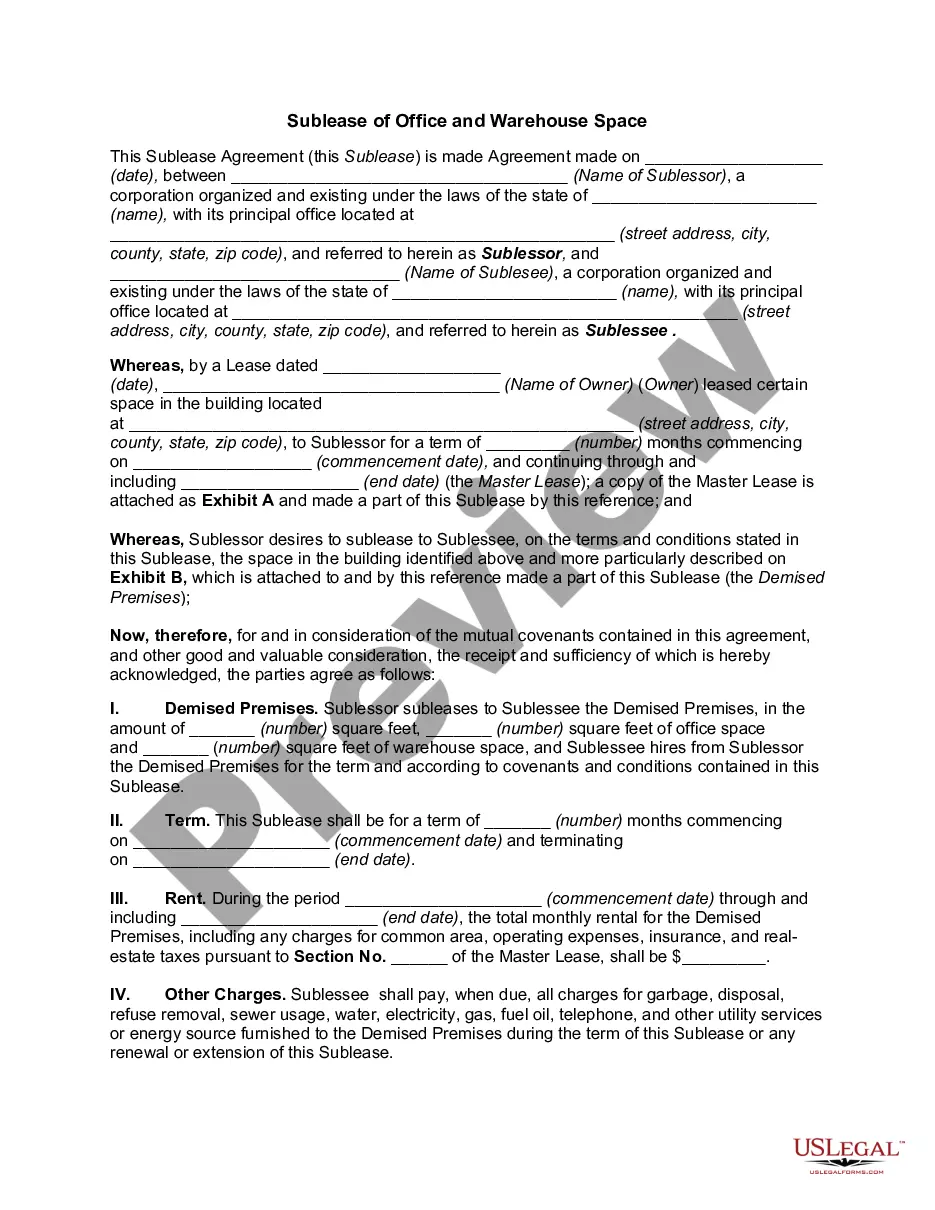
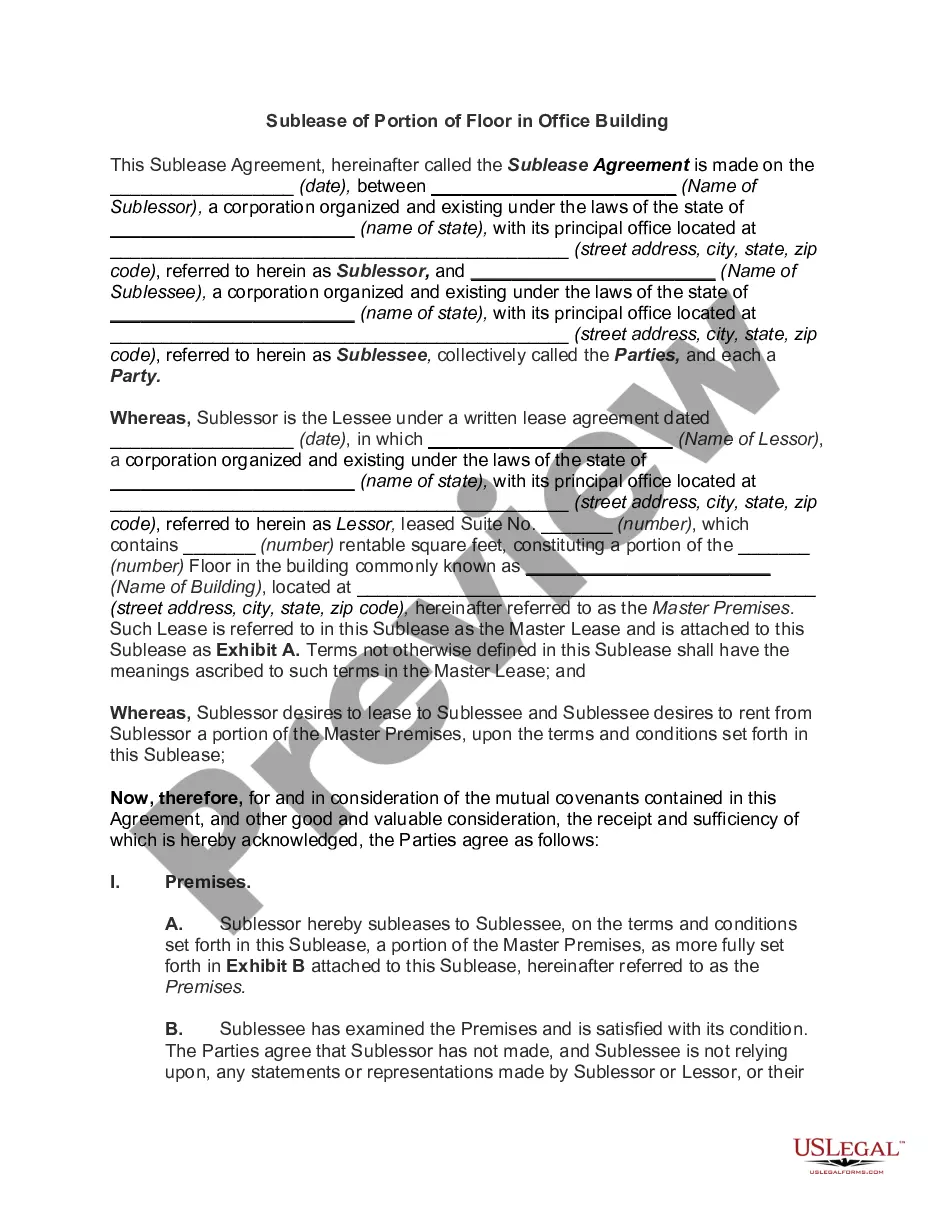
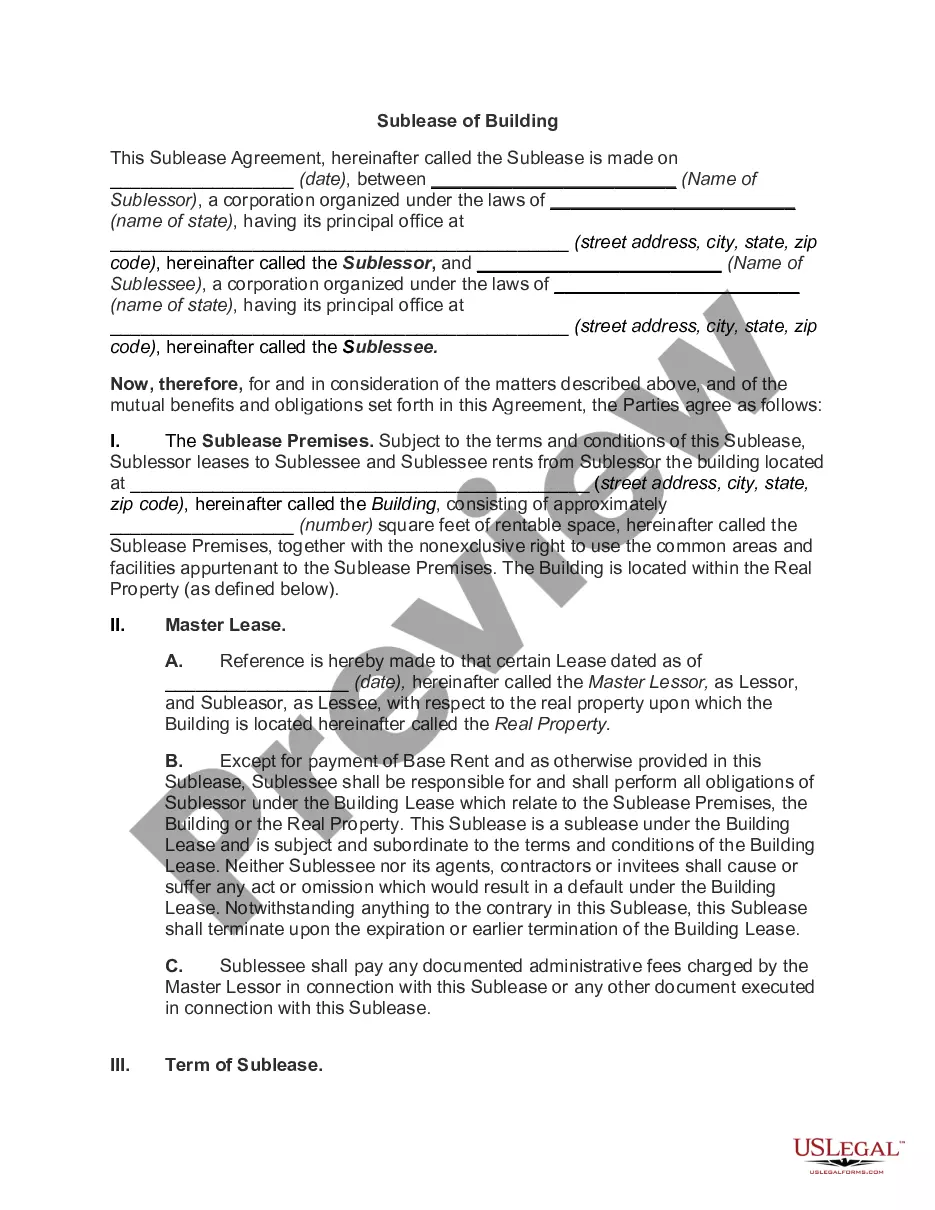
The Sublease of Office Space under Master Lease Agreement is a legal document that allows a tenant (Sublessor) to allow another party (Sublessee) to occupy and use office space that the Sublessor has leased from a property owner (Lessor). This form outlines the specific conditions under which the Sublessor can sublease the property, distinguishing it from a standard lease agreement, which typically involves a direct agreement between a lessor and a tenant without the involvement of a sublease.
What’s included in this form
- Definition of parties involved: Sublessor and Sublessee.
- Term of the sublease: Start and end dates of the lease.
- Payment details: Monthly rent obligations and terms for additional rent.
- Conditions and obligations regarding the use of the premises.
- Insurance and indemnification clauses to protect both parties.
- Provisions for extension or renewal of the sublease agreement.
Common use cases
This form is useful in various scenarios, such as when a tenant needs to temporarily relocate or reduce costs by subleasing part or all of their office space while still under a master lease agreement. It's also appropriate for businesses looking to occupy additional space in a shared office environment or when the original tenant cannot fulfill their lease obligations.
Who needs this form
- Sublessors looking to rent out office space they currently lease.
- Sublessees seeking temporary office space without entering into a full lease agreement.
- Business entities and corporations involved in commercial leasing.
Completing this form step by step
- Identify the parties involved by entering the names of the Sublessor and Sublessee.
- Specify the property location and the size of the office space being subleased.
- Complete the sections regarding the term of the lease and payment details.
- Ensure that both parties agree to the conditions outlined in the agreement.
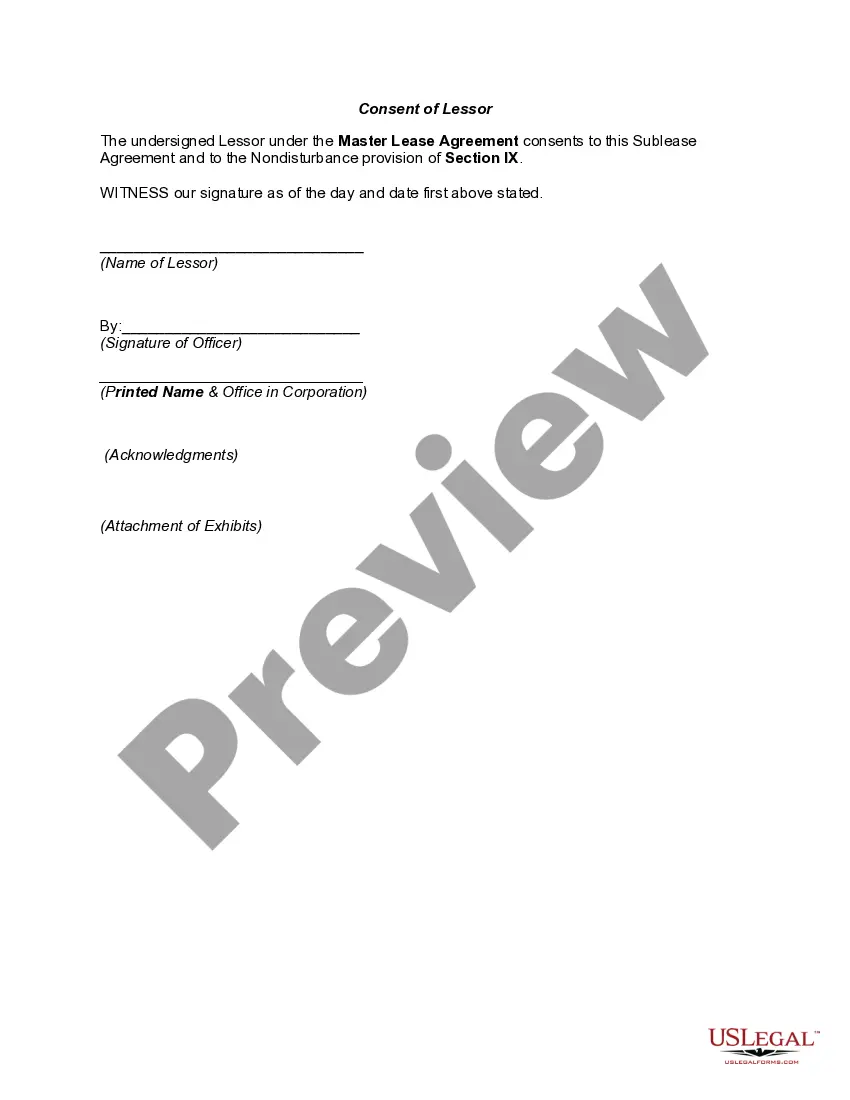
- Obtain necessary signatures and, if required, approval from the Lessor.
Does this form need to be notarized?
This form does not typically require notarization unless specified by local law.
Get your form ready online
Our built-in tools help you complete, sign, share, and store your documents in one place.
Make edits, fill in missing information, and update formatting in US Legal Forms—just like you would in MS Word.
Download a copy, print it, send it by email, or mail it via USPS—whatever works best for your next step.
Sign and collect signatures with our SignNow integration. Send to multiple recipients, set reminders, and more. Go Premium to unlock E-Sign.
If this form requires notarization, complete it online through a secure video call—no need to meet a notary in person or wait for an appointment.
We protect your documents and personal data by following strict security and privacy standards.

Make edits, fill in missing information, and update formatting in US Legal Forms—just like you would in MS Word.

Download a copy, print it, send it by email, or mail it via USPS—whatever works best for your next step.

Sign and collect signatures with our SignNow integration. Send to multiple recipients, set reminders, and more. Go Premium to unlock E-Sign.

If this form requires notarization, complete it online through a secure video call—no need to meet a notary in person or wait for an appointment.

We protect your documents and personal data by following strict security and privacy standards.
Common mistakes
- Failing to ensure the Lessor's consent, which is critical for the legality of the sublease.
- Not specifying the terms of use for the Premises, which can lead to disputes later.
- Leaving out essential dates such as the start and end of the sublease.
Benefits of using this form online
- Immediate access to professionally drafted documents tailored to your needs.
- Editability allows you to customize the form as needed.
- Time-saving compared to drafting a lease from scratch.
Looking for another form?

Form popularity
FAQ
A landlord cannot evict a subtenant. Remember, the landlord has no contractual relationship with the subtenant, even though the subtenant is living in the landlord's property. The contract was between you, the master tenant, and the subtenant. So, only you have standing to evict the subtenant.
On your sublease agreement, include a list of various areas of the property (including the subtenant's room, hardwood floors, walls, exterior, etc.) and note its condition. And since you and your subtenant will need to abide by the original lease that you signed, it's important to include this with your sublease.
Only landlords are allowed to evict their tenants. A master tenant is considered a landlord in relation to his or her subtenant, meaning that a master tenant is able to evict a subtenant.Similarly, roommates who are co-tenants cannot evict their fellow co-tenants.
Is Subletting Illegal? In most cases, subletting is legal if the tenant obtains the landlords permission to let out the rental property. However, if the tenant sublets without written permission, they could come into legal difficulties.
The new tenant (or subtenant) becomes a tenant under the Residential Tenancies Act, so a landlord has the authority to evict the subtenant for the reasons listed in the Act. The original tenant may also be able to evict the subtenant if he or she has assumed the role of landlord for the subtenant.
In short, subletting allows a new renter to take over the lease directly with the landlord, while subleasing involves renting all or part of the space to another renter through the original renter.
Most commercial leases forbid subletting.Before you consider subletting, you should carefully check your own head lease to make sure you are allowed to sub let. Even if the original lease prevents subletting, a sublease may be negotiated if all parties agree.
A sublease is a legally binding contract made between a tenant and a new tenant (also known as a subtenant or a sublessee).Usually, the first tenant must get consent from the landlord before he/she is allowed to sublease the premises.