Agreement Between Chiropractic Physician as Self-Employed Independent Contractor and Professional Corporation
What this document covers
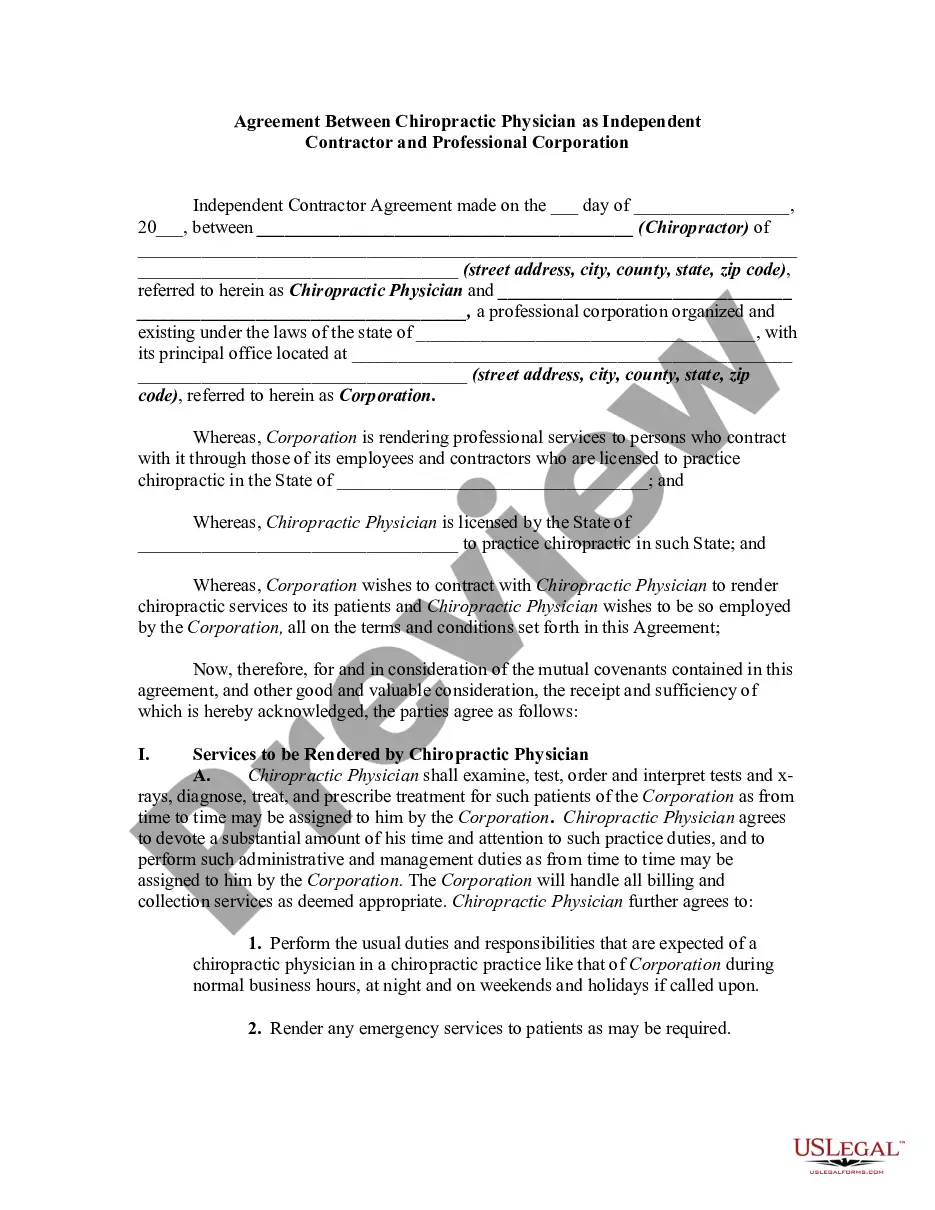
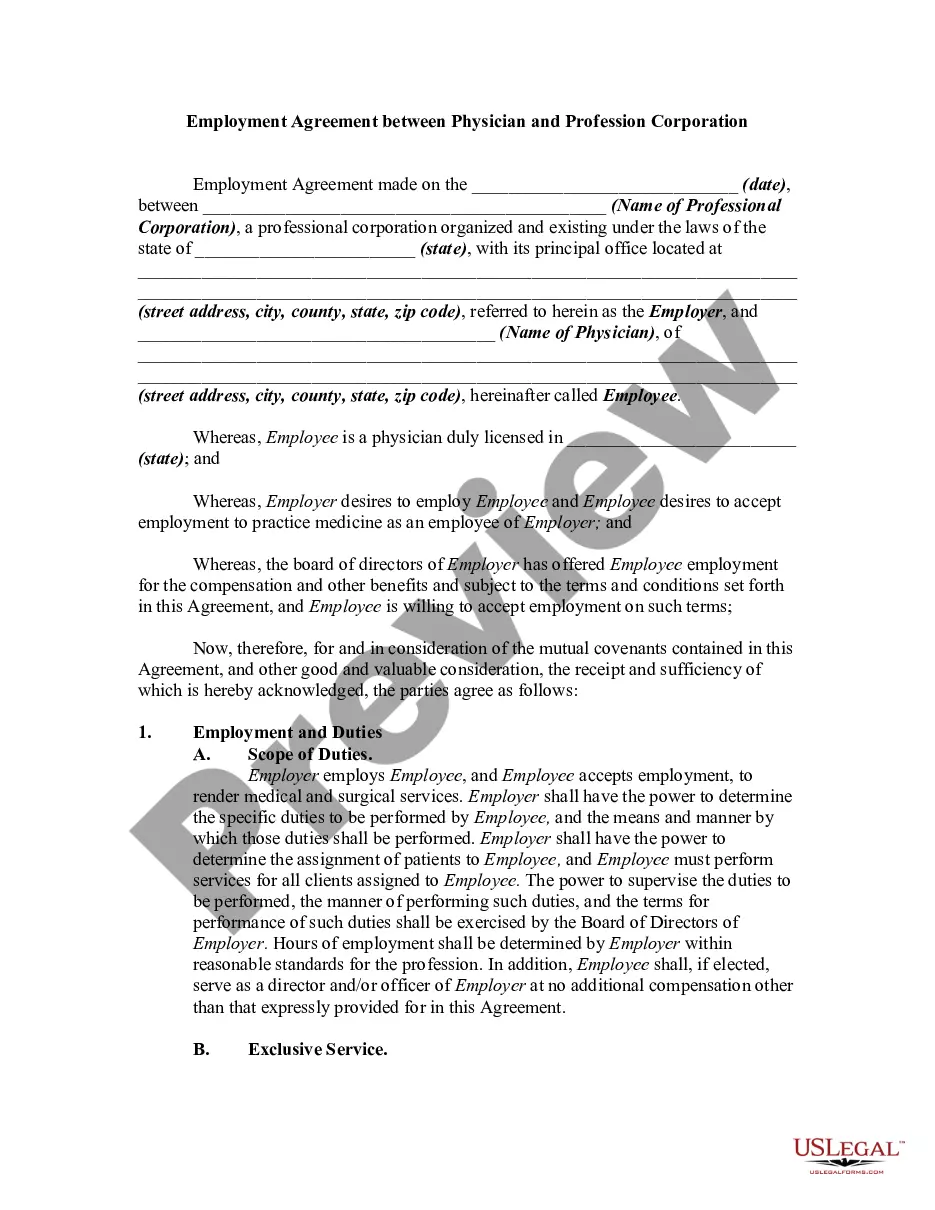
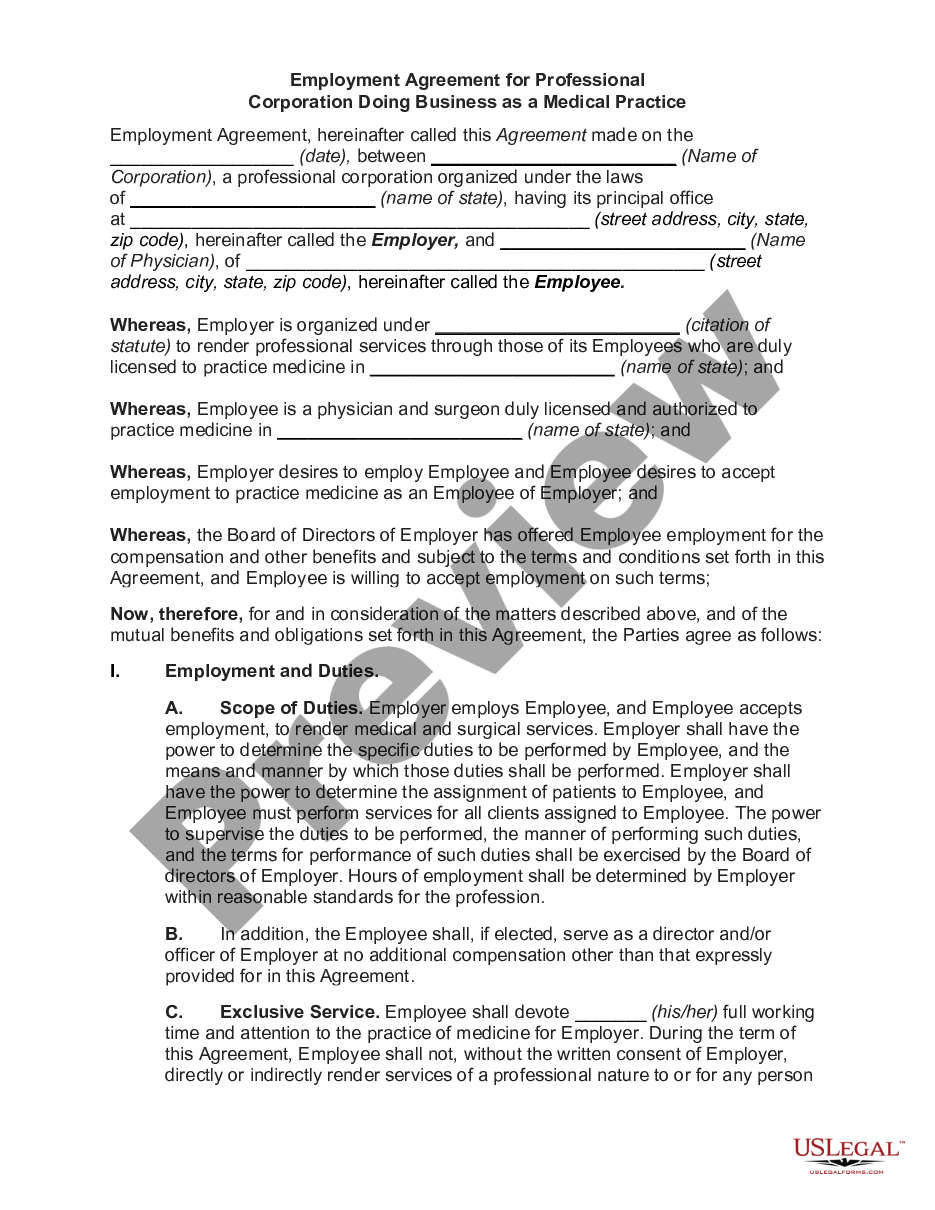
This Agreement Between Chiropractic Physician as Self-Employed Independent Contractor and Professional Corporation is a legal document that establishes a professional relationship between a chiropractic physician and a corporation. This form sets forth the terms under which the chiropractic physician will provide services as an independent contractor to the corporation, differentiating it from an employer-employee relationship. It is essential for clarifying responsibilities, compensation, and the scope of services provided by the chiropractic physician.
Form components explained
- Identification of parties involved: Chiropractic Physician and Professional Corporation.
- Details on services to be rendered by the Chiropractic Physician.
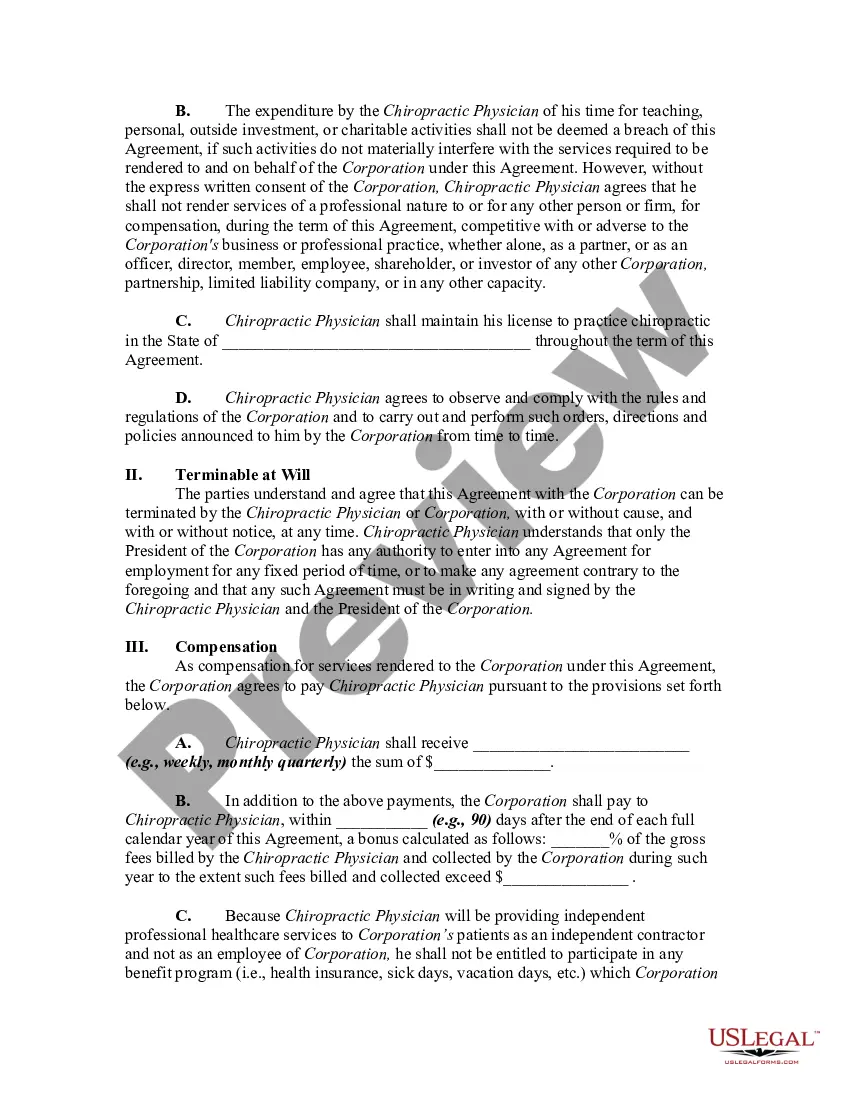
- Compensation structure, including payment frequency and potential bonuses.
- Termination clause indicating the agreement can be ended by either party.
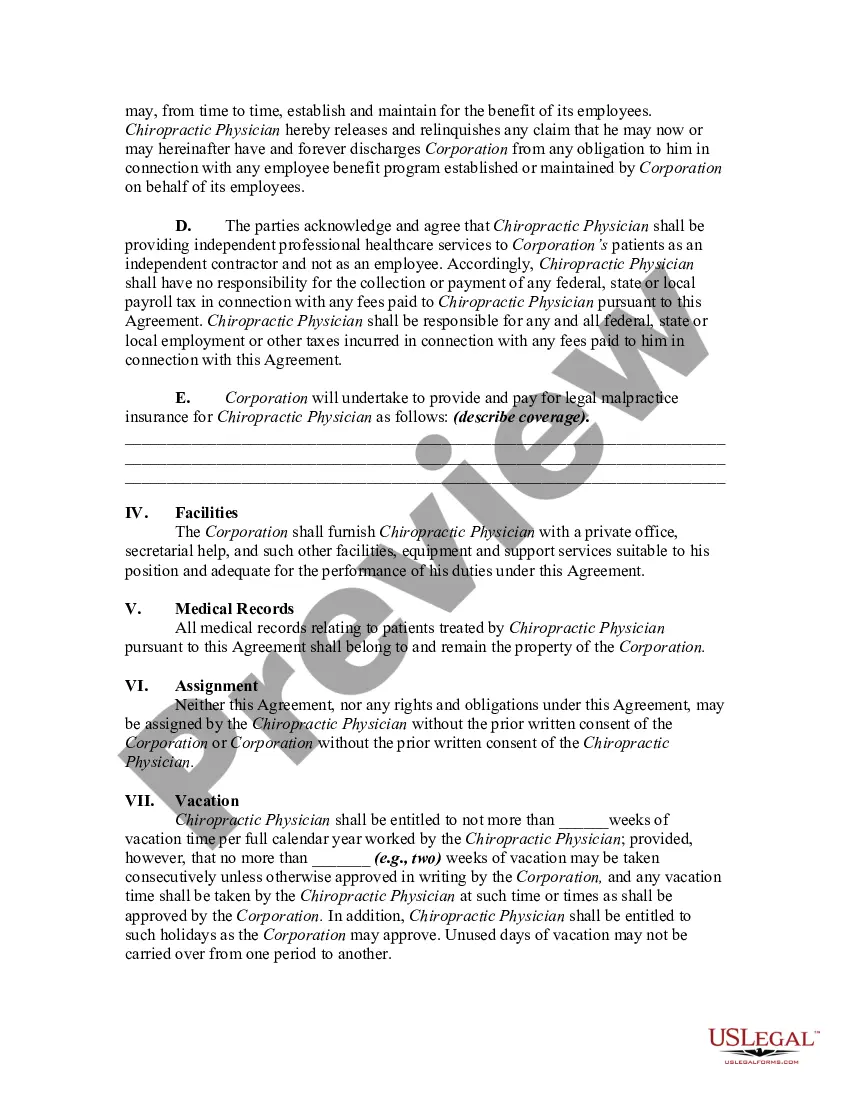
- Clarification of independent contractor status and responsibilities regarding taxes.
- Provisions regarding facility use and maintenance of medical records.



When to use this document
Who this form is for
This agreement is intended for:
- Chiropractic physicians who wish to work as independent contractors rather than employees.
- Professional corporations that employ chiropractors and need to formalize their relationship with independent contractors.
- Legal professionals advising chiropractors or corporations on independent contractor agreements.
How to prepare this document
- Identify the parties by entering the full names and addresses of the Chiropractic Physician and the Corporation.
- Define the services to be rendered by noting the responsibilities of the Chiropractic Physician.
- Specify the compensation terms, including payment frequency and bonus structure.
- Include the agreement start date and any provisions for termination.
- Ensure all parties sign and date the agreement to finalize the contract.
Notarization requirements for this form
This form usually doesn’t need to be notarized. However, local laws or specific transactions may require it. Our online notarization service, powered by Notarize, lets you complete it remotely through a secure video session, available 24/7.
Get your form ready online
Our built-in tools help you complete, sign, share, and store your documents in one place.
Make edits, fill in missing information, and update formatting in US Legal Forms—just like you would in MS Word.
Download a copy, print it, send it by email, or mail it via USPS—whatever works best for your next step.
Sign and collect signatures with our SignNow integration. Send to multiple recipients, set reminders, and more. Go Premium to unlock E-Sign.
If this form requires notarization, complete it online through a secure video call—no need to meet a notary in person or wait for an appointment.
We protect your documents and personal data by following strict security and privacy standards.

Make edits, fill in missing information, and update formatting in US Legal Forms—just like you would in MS Word.

Download a copy, print it, send it by email, or mail it via USPS—whatever works best for your next step.

Sign and collect signatures with our SignNow integration. Send to multiple recipients, set reminders, and more. Go Premium to unlock E-Sign.

If this form requires notarization, complete it online through a secure video call—no need to meet a notary in person or wait for an appointment.

We protect your documents and personal data by following strict security and privacy standards.
Avoid these common issues
- Not clearly defining the scope of services or responsibilities.
- Failing to specify compensation details or payment timelines.
- Overlooking the need for all necessary signatures to validate the agreement.
- Ignoring state-specific regulations that may affect the contract.
Benefits of using this form online
- Convenience of downloading and printing the form directly.
- Editability allows for customization to fit specific agreements.
- Access to reliable templates created by licensed attorneys.
- Time-saving compared to drafting a new agreement from scratch.
Legal use & context
- This agreement establishes a clear professional relationship between the chiropractic physician and the corporation.
- It helps protect the rights of both parties by outlining expectations and obligations.
What to keep in mind
- This agreement is essential for clarifying the independent contractor relationship in chiropractic practice.
- Proper completion and understanding of the form can prevent legal disputes.
- Both parties should review the terms carefully before signing to ensure mutual understanding.
Looking for another form?



Form popularity
FAQ
Grey was an officer of his professional corporation, he was by law an employee. The U.S. Tax Court agreed with the IRS.The bottom line is simple and basic if you form a small California corporation and treat yourself as a corporate officer, you can not legally be an independent contractor.
If you own a small business, you are generally self-employed unless you have formed a corporation. You may be called a sole proprietor, a partner in a partnership, an independent contractor, or a consultant.
Terms. This is the first section of any agreement or contract and states the names and locations of the parties involved. Responsibilities & Deliverables. Payment-Related Details. Confidentiality Clause. Contract Termination. Choice of Law.
Terms. This is the first section of any agreement or contract and states the names and locations of the parties involved. Responsibilities & Deliverables. Payment-Related Details. Confidentiality Clause. Contract Termination. Choice of Law.
5 (2002). The bottom line is simple and basic if you form a small California corporation and treat yourself as a corporate officer, you can not legally be an independent contractor.
For most types of projects you hire an independent contractor (IC) to do, the law does not require you to put anything in writing. You can meet with the IC, agree on the terms of your arrangement, and have an oral contract or agreement that is legally binding. Just because you can doesn't mean you should, however.
A very common business structure for independent contractors is the limited liability company (LLC). The main benefit is that the LLC offers limited liability for all of the owners.The LLC must pay filing fees, and in some states, additional state taxes.
The IRS requires contractors to fill out a Form W-9, request for Taxpayer Identification Number and Certification, which you should keep on file for at least four years after the hiring. This form is used to request the correct name and Taxpayer Identification Number, or TIN, of the worker or their entity.
The law codifies and expands on an April 2018 California Supreme Court decision that set a strict new test for employers. Independent contractors must be free to perform their work as they wish, must be in a different line of work from the company contracting with them and must operate their own business.