Agency Agreement - General
About this form
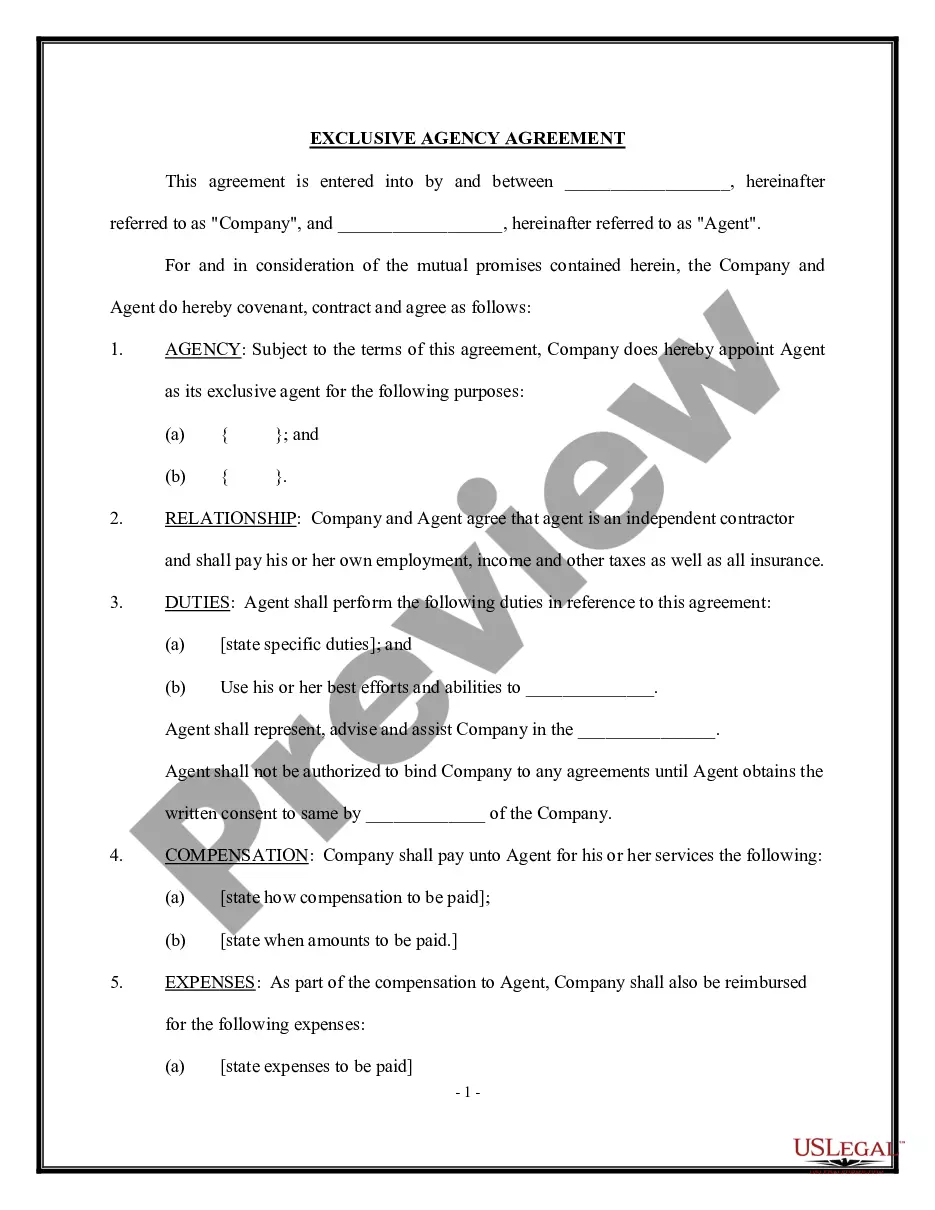
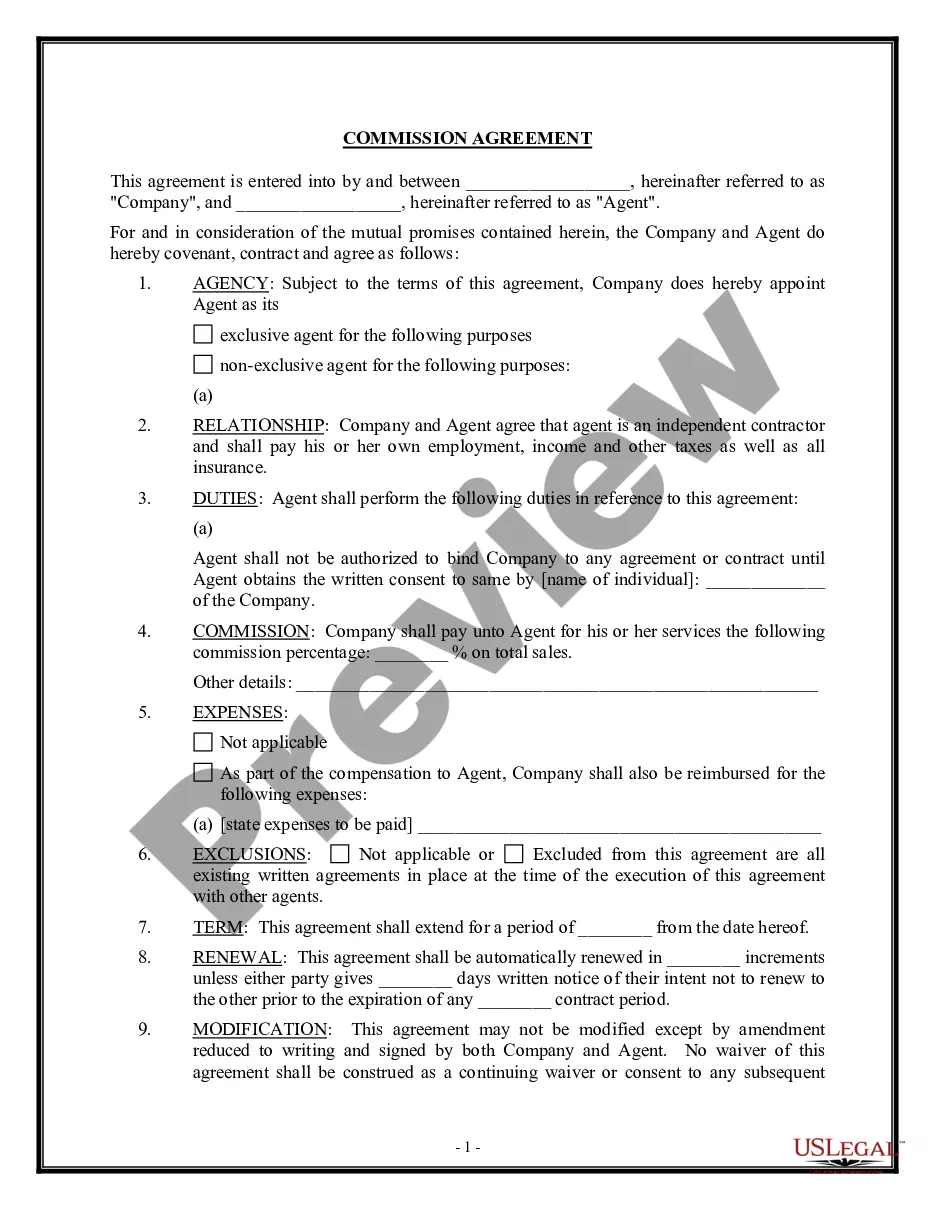
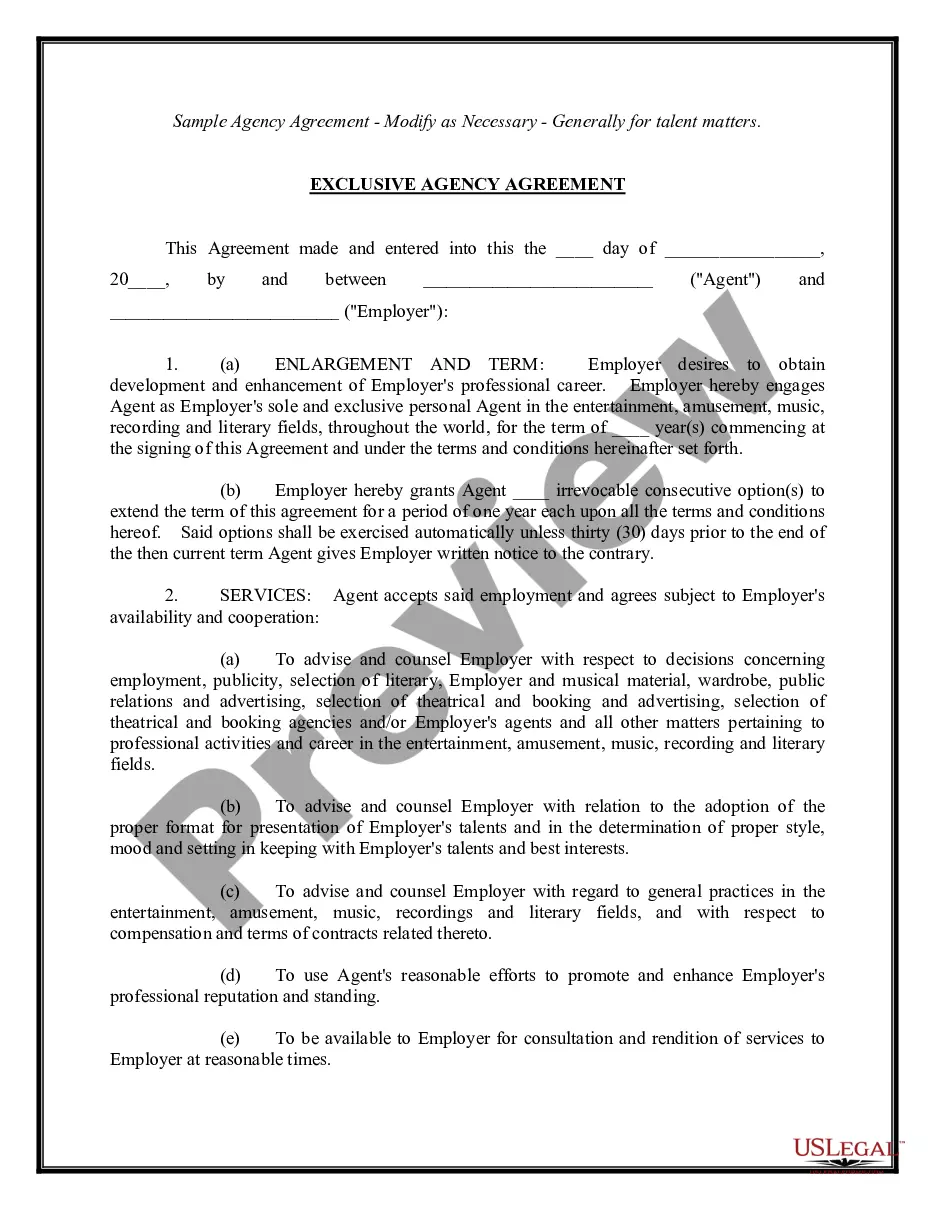
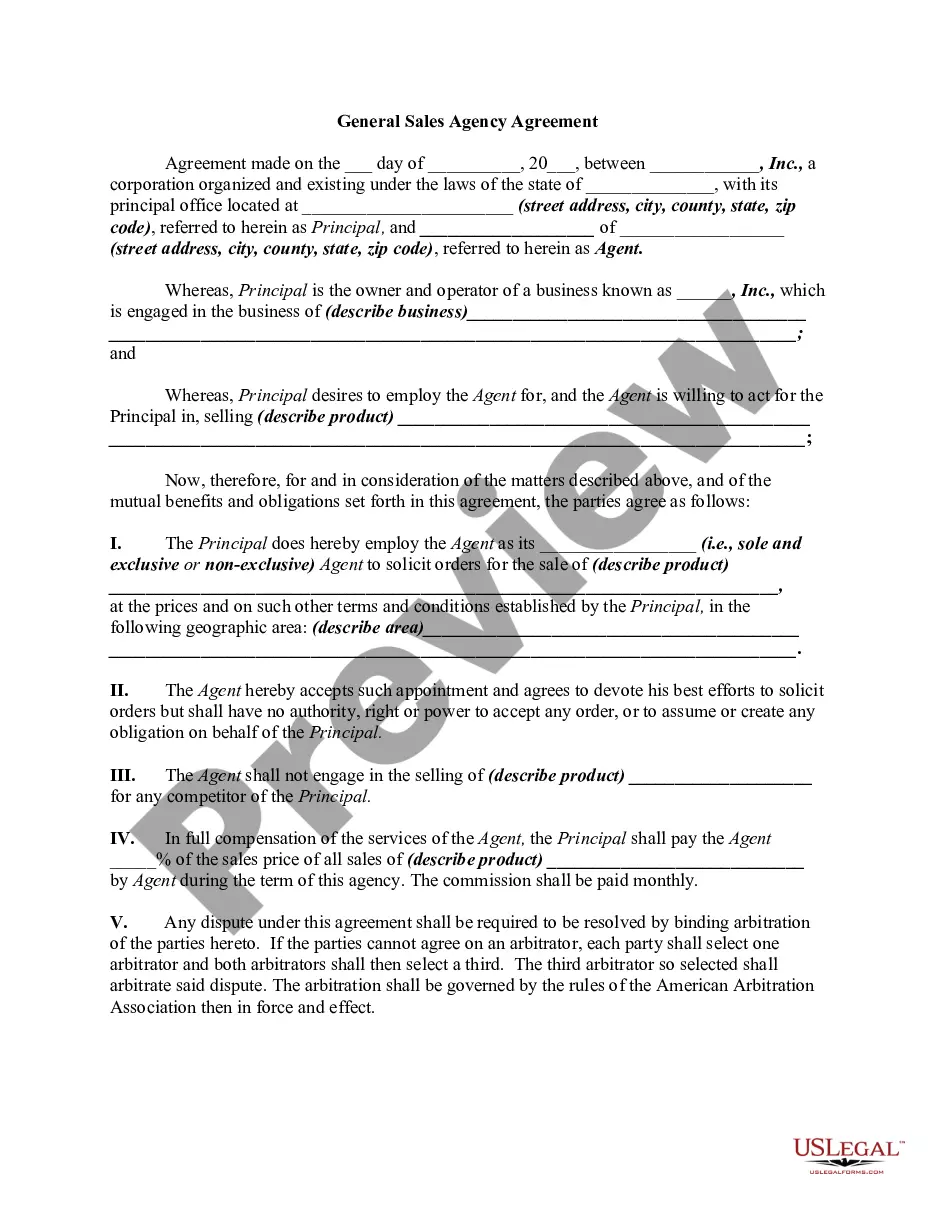
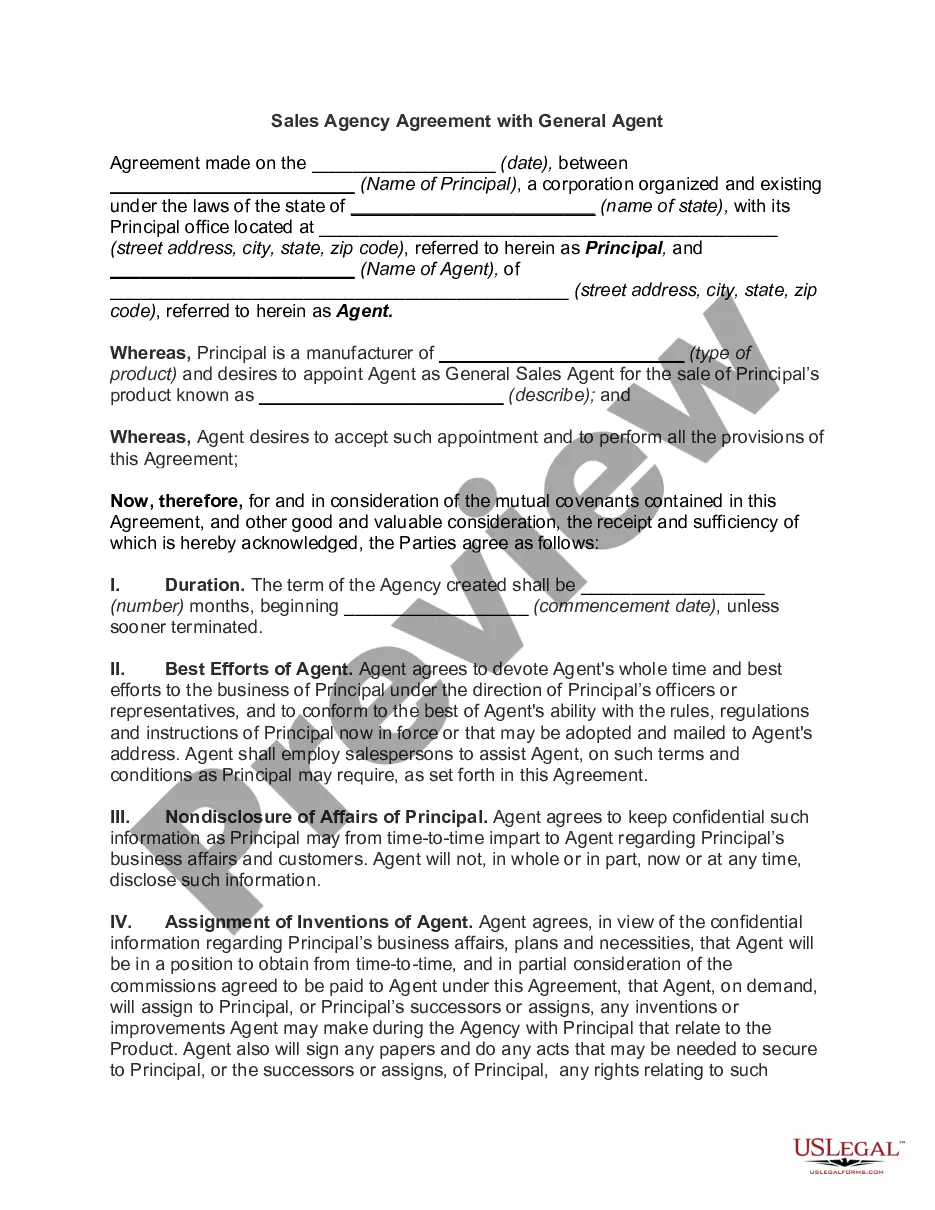
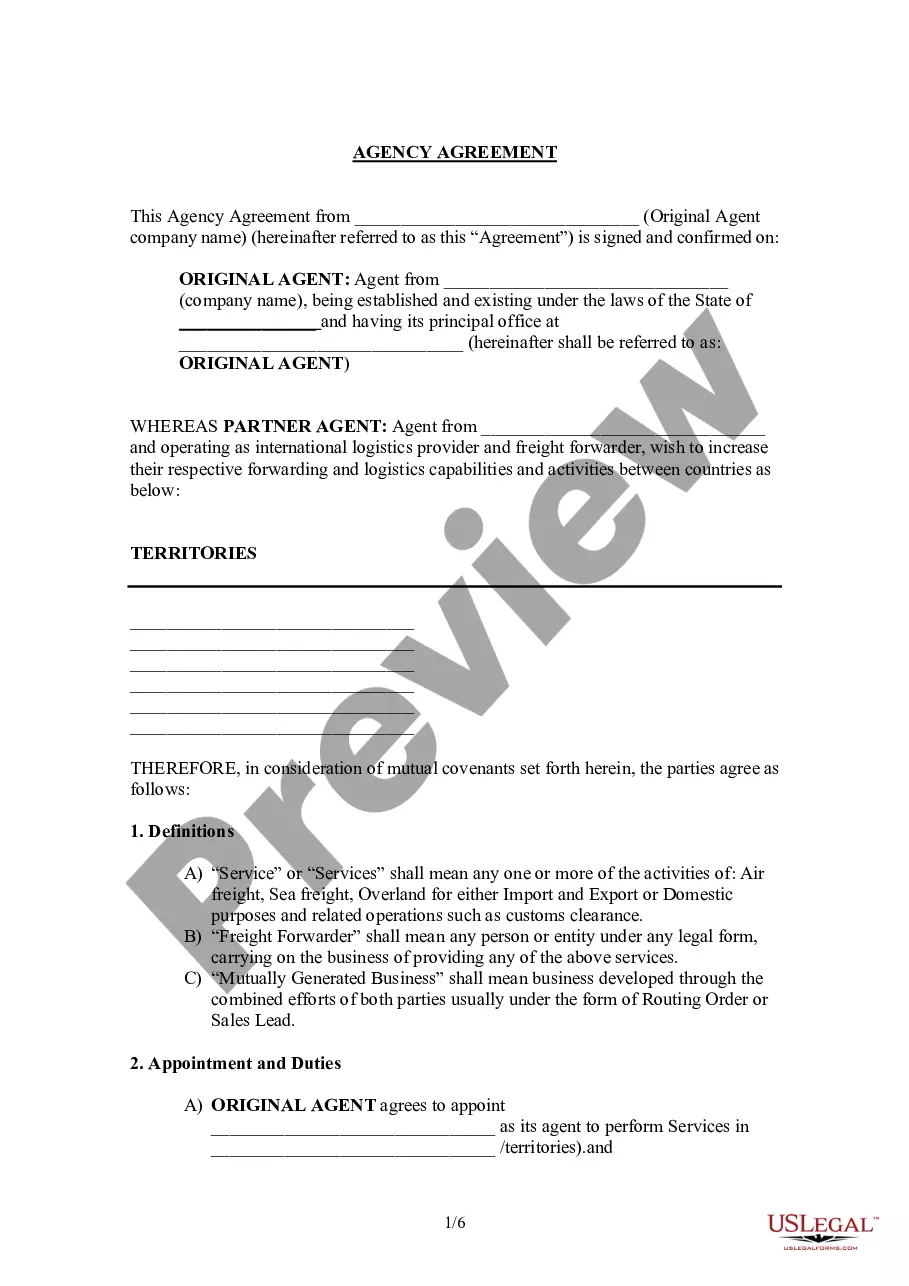
The Agency Agreement - General is a legal document that establishes a formal relationship between a company and an agent. This agreement grants the agent exclusive rights to represent the company under specific terms and conditions. It differs from other agreements by specifically highlighting the exclusivity of the agent's role and delineating compensation and responsibilities between the parties involved.
Main sections of this form
- Agency designation: Specifies the duties and responsibilities of the agent.
- Compensation: Details how and when the agent will be compensated for their services.
- Expenses: Lists any reimbursable expenses the agent may incur while performing duties.
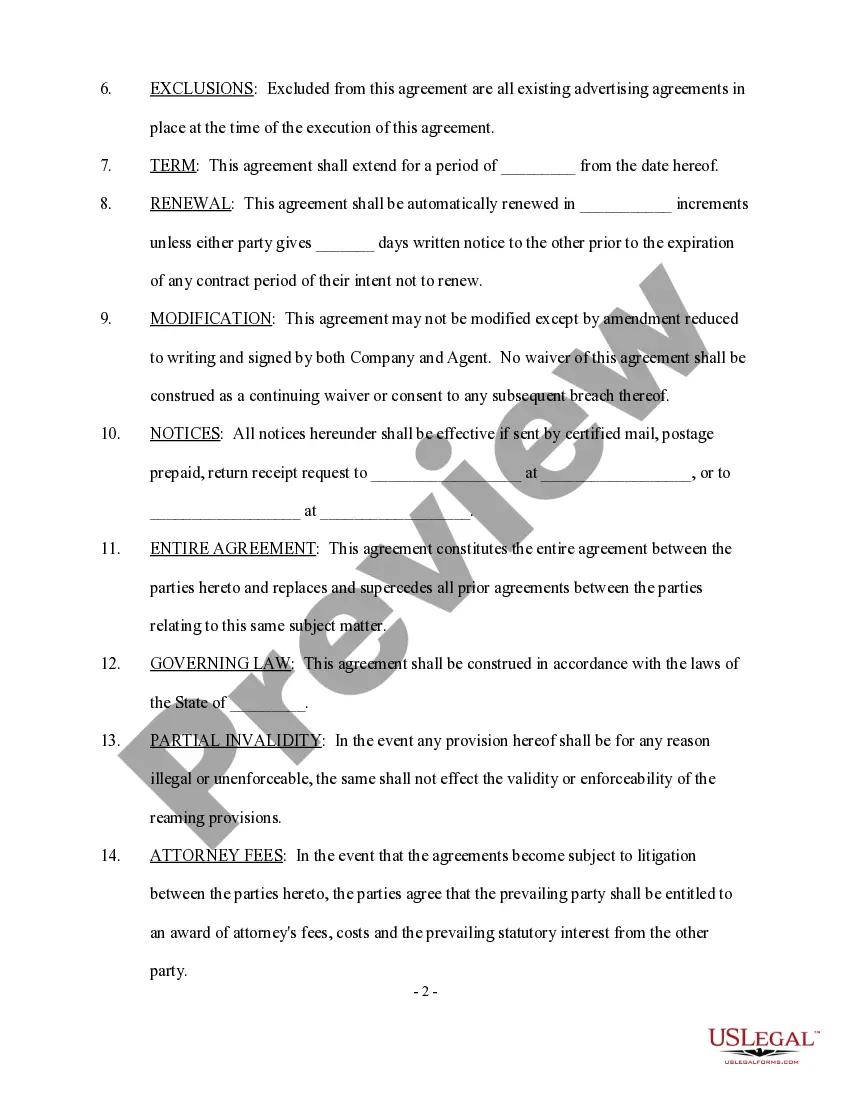
- Term: Defines the duration of the agreement and conditions for renewal.
- Modification: Outlines the process for making amendments to the agreement.
- Governing law: Indicates the state law that will govern the agreement.
When this form is needed
This form is essential when a business seeks to appoint an exclusive agent for marketing, sales, or representation purposes. It is particularly useful in situations where the company wants to ensure the agent has exclusive rights to act on its behalf, preventing conflicts that may arise with multiple agents representing the same company.
Who should use this form
This agreement is suitable for:
- Businesses that need to formalize an exclusive relationship with an agent.
- Agents looking to secure exclusive rights to sell or promote a company's products or services.
- Companies in need of a clear structure regarding agent compensation and responsibilities.
Steps to complete this form
- Identify the parties involved: Enter the legal names of the company and the agent.
- Specify the duties: Clearly outline the agent's responsibilities in the appropriate section.
- Detail compensation: Include how and when the agent will be compensated.
- Set the term: Indicate the duration of the agreement and renewal terms.
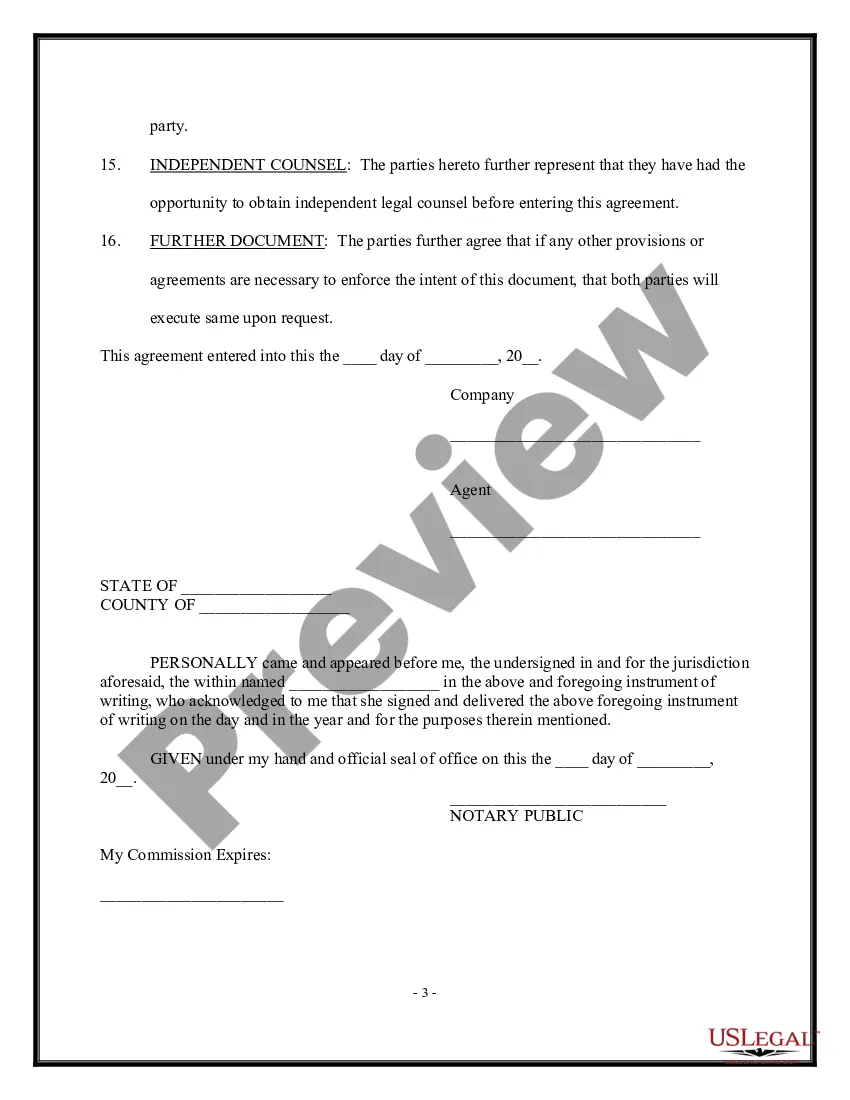
- Collect signatures: Ensure both parties sign and date the agreement.
Notarization guidance
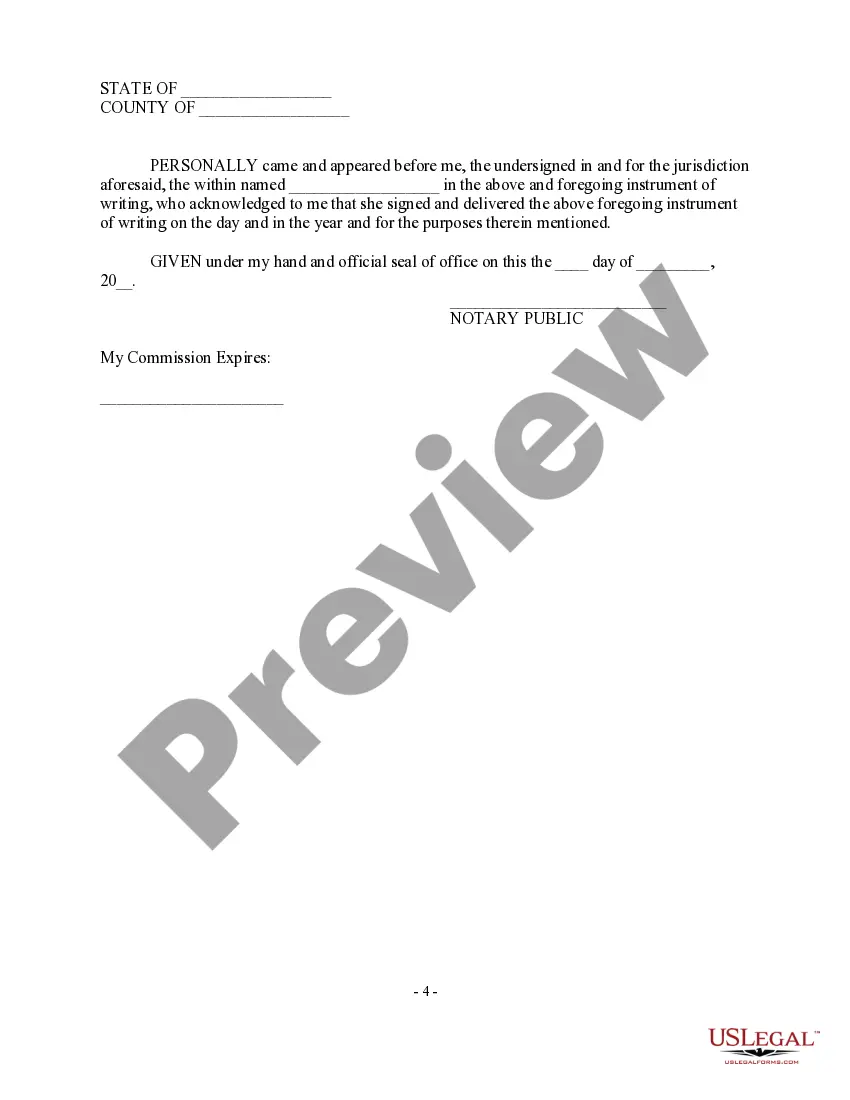
This document requires notarization to meet legal standards. US Legal Forms provides secure online notarization powered by Notarize, allowing you to complete the process through a verified video call, available 24/7.
Get your form ready online
Our built-in tools help you complete, sign, share, and store your documents in one place.
Make edits, fill in missing information, and update formatting in US Legal Forms—just like you would in MS Word.
Download a copy, print it, send it by email, or mail it via USPS—whatever works best for your next step.
Sign and collect signatures with our SignNow integration. Send to multiple recipients, set reminders, and more. Go Premium to unlock E-Sign.
If this form requires notarization, complete it online through a secure video call—no need to meet a notary in person or wait for an appointment.
We protect your documents and personal data by following strict security and privacy standards.

Make edits, fill in missing information, and update formatting in US Legal Forms—just like you would in MS Word.

Download a copy, print it, send it by email, or mail it via USPS—whatever works best for your next step.

Sign and collect signatures with our SignNow integration. Send to multiple recipients, set reminders, and more. Go Premium to unlock E-Sign.

If this form requires notarization, complete it online through a secure video call—no need to meet a notary in person or wait for an appointment.

We protect your documents and personal data by following strict security and privacy standards.
Typical mistakes to avoid
- Failing to specify the exact duties of the agent.
- Not detailing the compensation structure clearly.
- Omitting signatures or dates from the completed form.
- Neglecting to review state-specific provisions that could impact the agreement.
Benefits of using this form online
- Convenience: Downloadable forms can be accessed from anywhere at any time.
- Editability: Easily fill in specific details according to your situation.
- Reliability: Forms are drafted by licensed attorneys to ensure legal compliance and appropriateness.
Legal use & context
- Agency agreements are enforceable as long as they are properly executed and comply with applicable laws.
- Exclusions regarding existing agreements must be clearly stated to avoid future disputes.
- It's crucial to include compensation and renewal terms to ensure clarity between parties.
Main things to remember
- The Agency Agreement - General defines the exclusive relationship between a company and an agent.
- Properly completed agreements can help mitigate future disputes over responsibilities and payments.
- Consideration of state-specific laws is vital for the validity of the agreement.
Looking for another form?
Form popularity
FAQ
Section 201 Termination of agency: An agency is terminated by the principal revoking his authority, or by the agent renouncing the business of the agency; or by the business of the agency being completed; or by either the principal or agent dying or becoming of unsound mind; or by the principal being adjudicated an
A contract between the Maritime Administration and a steamship company which, as general agent, exercises administrative control over a government-owned ship for employment by the Military Sealift Command. Also called GAA.
In this kind of agreement, you give exclusive rights to one agent to sell your property. This may entitle the agent to be paid commission if the property is sold during the fixed term of the agreement, even if the property is sold by you or by another agent.
The agency agreement between a principal and the agent must always be in writing with clear terms and conditions with explicit language limiting the principal's liability if the agent does something that wasn't authorized. This protects you personally and professionally.
Agency plans have two primary purposes: 1) to ensure all persons have an equal opportunity to be informed of and to compete for employment opportunities; and 2) to ensure that all employees have an equal opportunity to compete for promotional opportunities, receive training and enjoy the benefits and privileges of
An agency agreement is a relationship between a principal and an agent, where the principal authorises the agent to engage third parties in legal relationships. Each party to the agreement will have certain obligations. You should ensure your agreement is drafted effectively and is legally binding on all parties.
An agency agreement is a legal contract creating a fiduciary relationship whereby the first party ("the principal") agrees that the actions of a second party ("the agent") binds the principal to later agreements made by the agent as if the principal had himself personally made the later agreements.