Complex Will - Max. Credit Shelter Marital Trust to Children
What is this form?
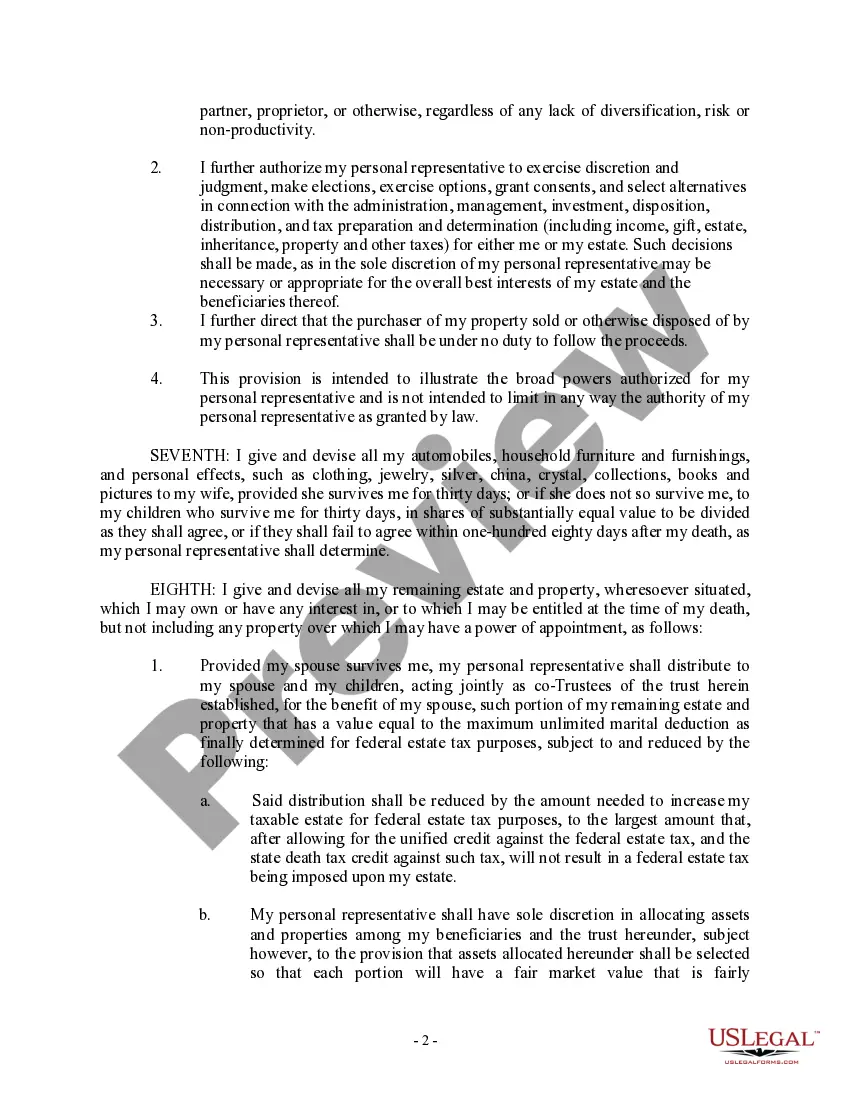
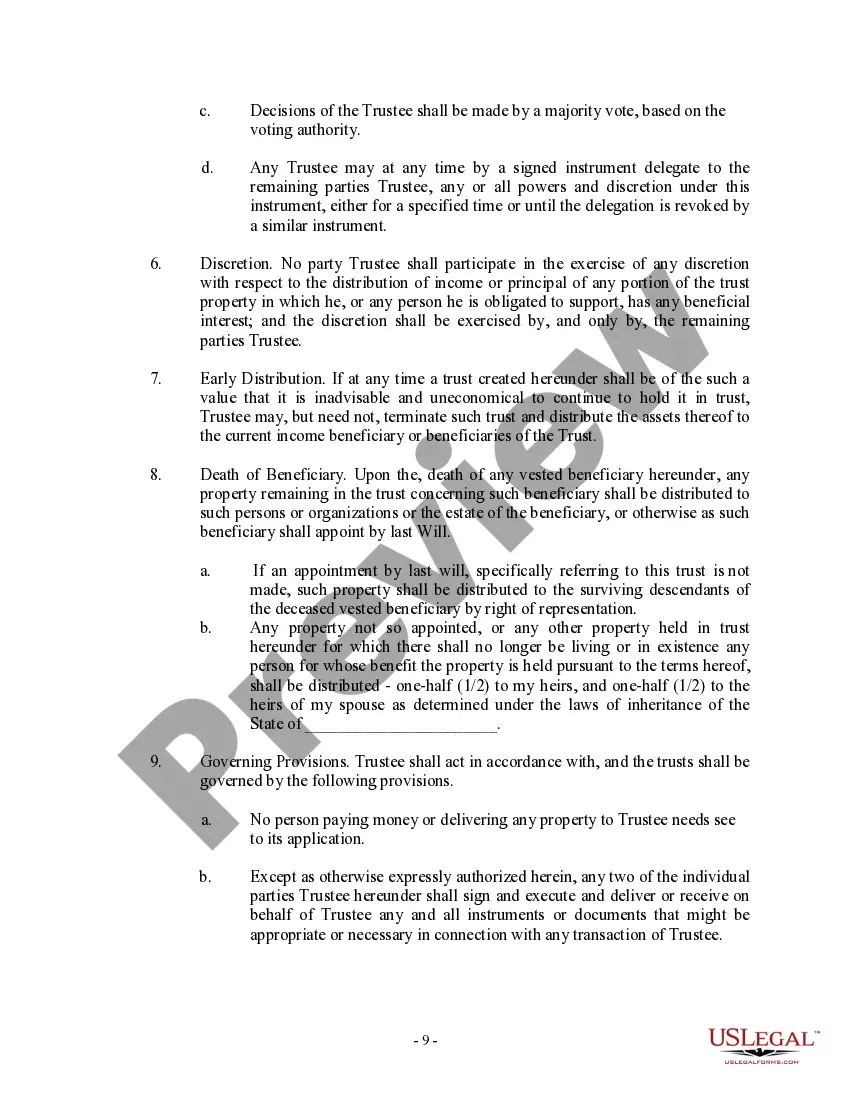
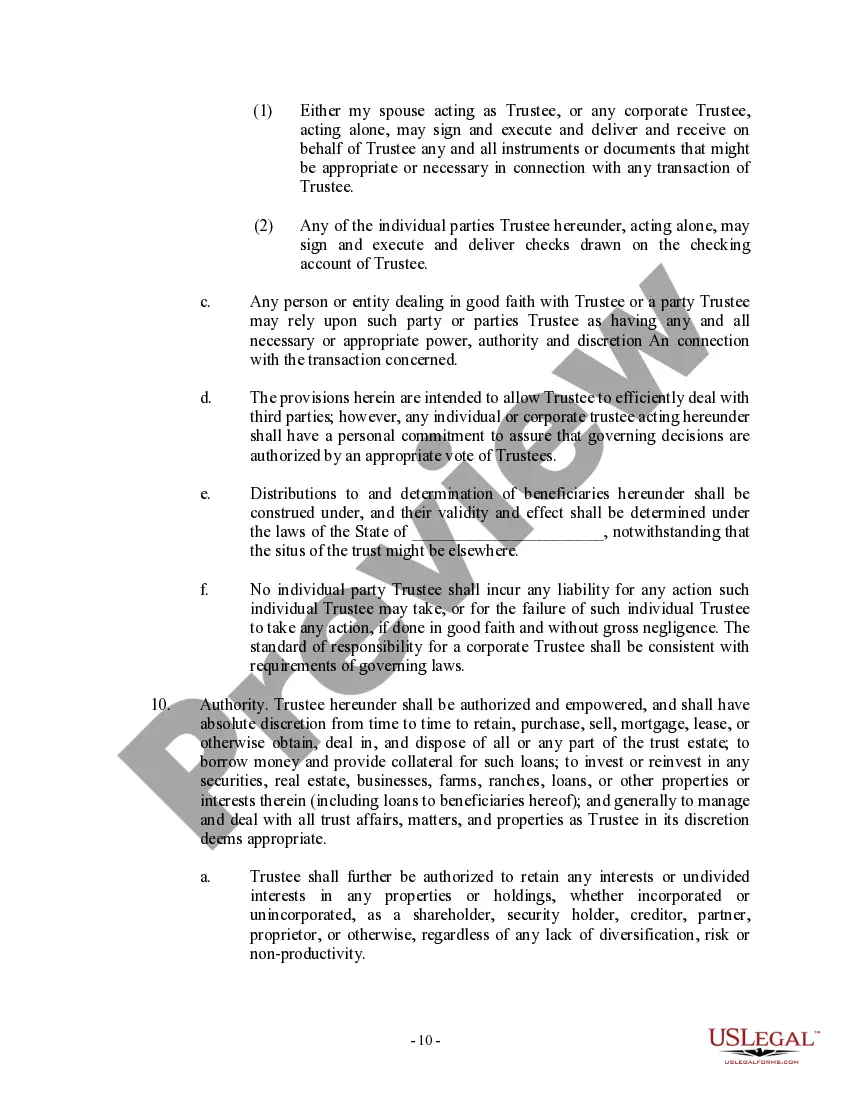
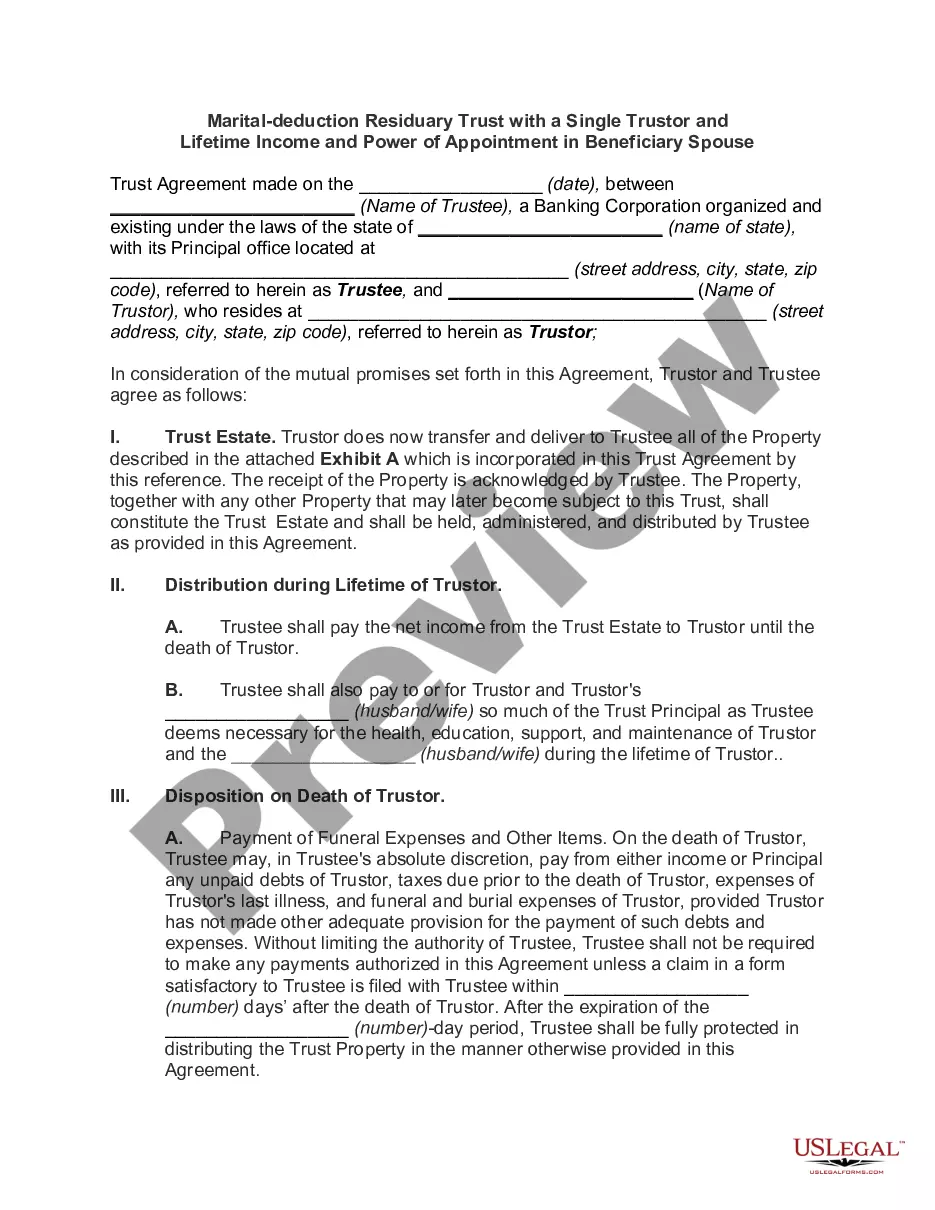
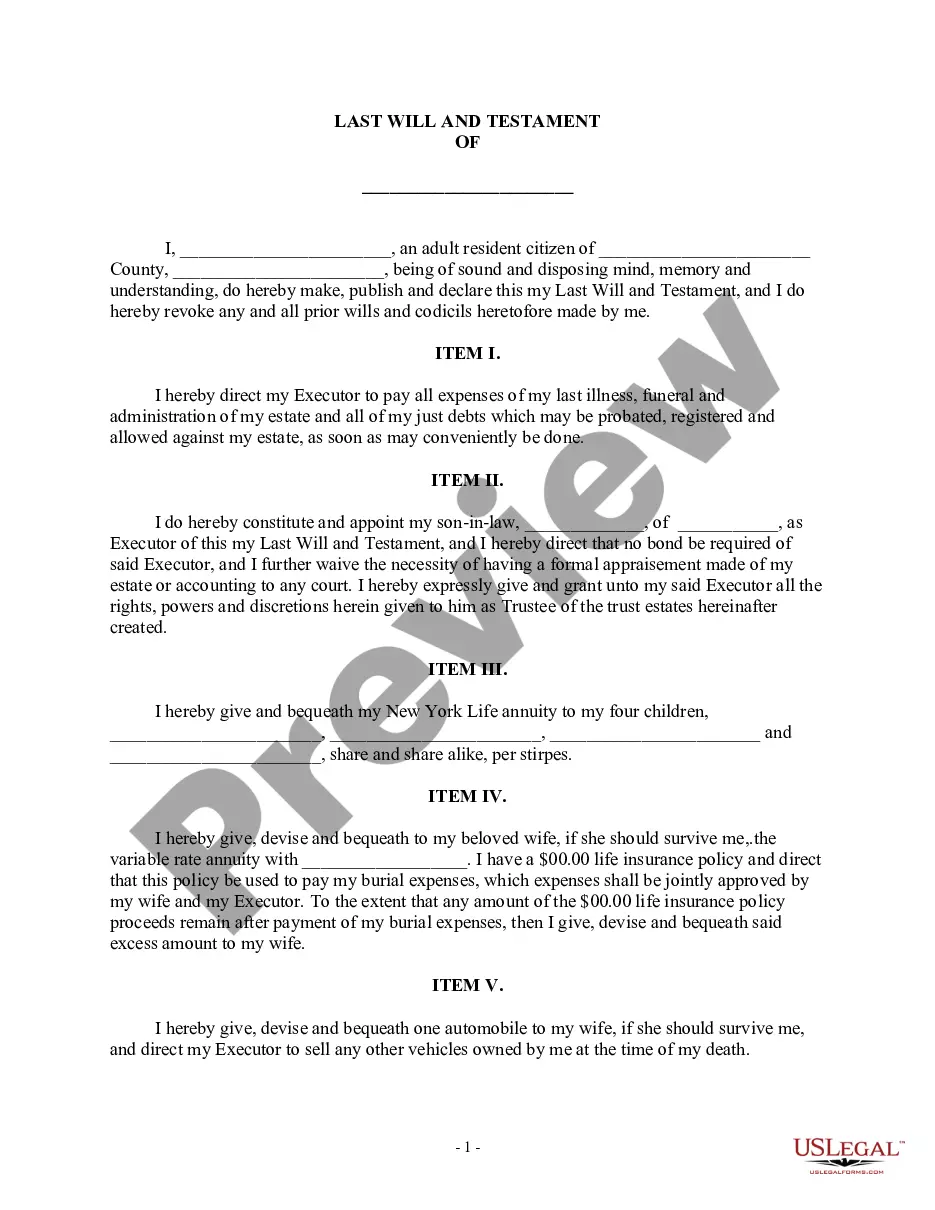
The Complex Will - Max. Credit Shelter Marital Trust to Children is a detailed legal document that outlines how a person's assets will be distributed after their death, particularly focusing on maximizing tax benefits for their surviving spouse and children. This type of will incorporates provisions for a marital trust, which helps protect assets and utilizes the unlimited marital deduction for federal estate tax purposes. Unlike a standard will, it contains complex provisions designed for individuals with specific estate planning needs, particularly those with considerable assets or tax considerations.
What’s included in this form
- Declaration of the document as the individual's last will and testament.
- Instructions for paying debts and taxes from the estate.
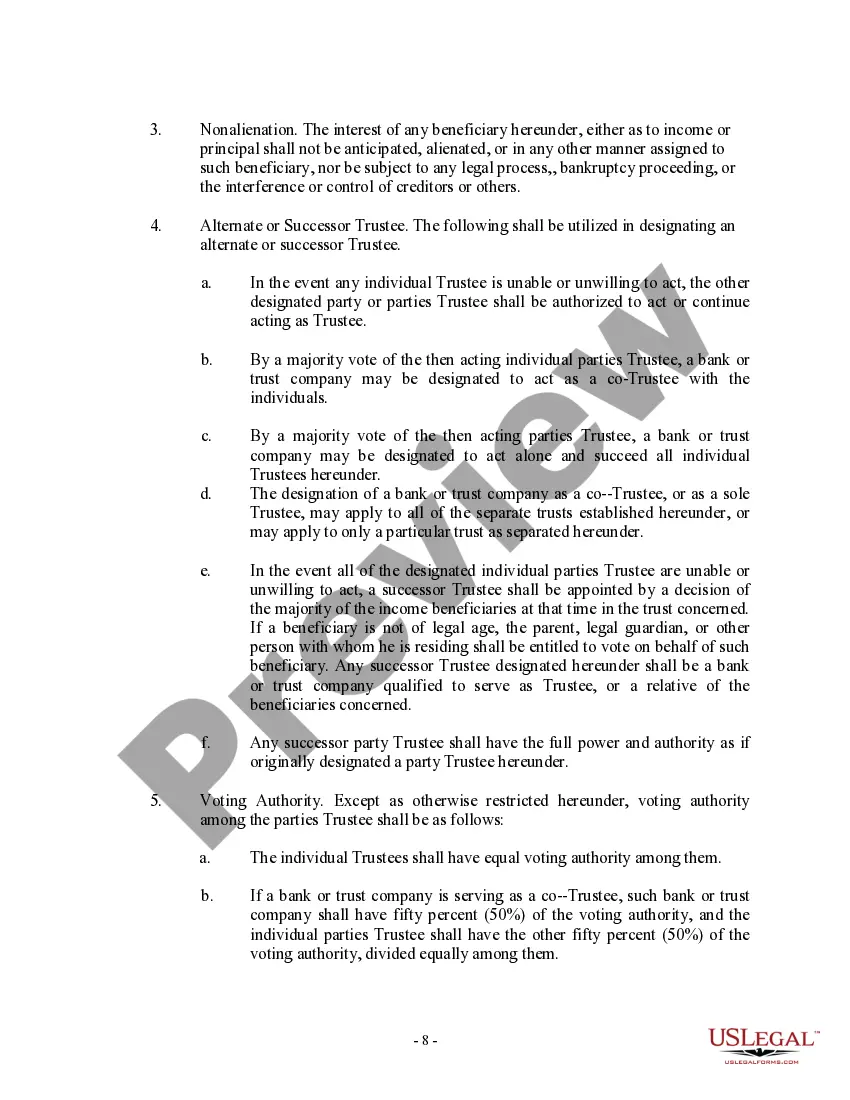
- Appointment of a personal representative to manage the estate.
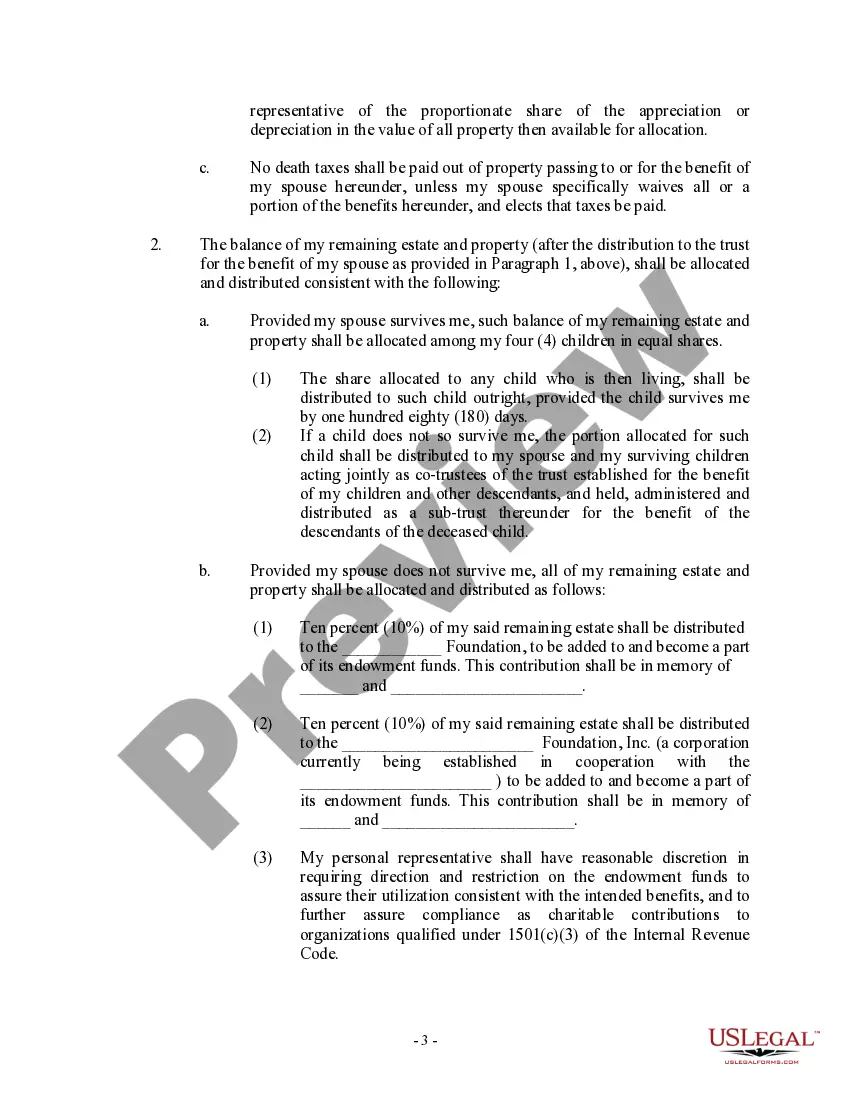
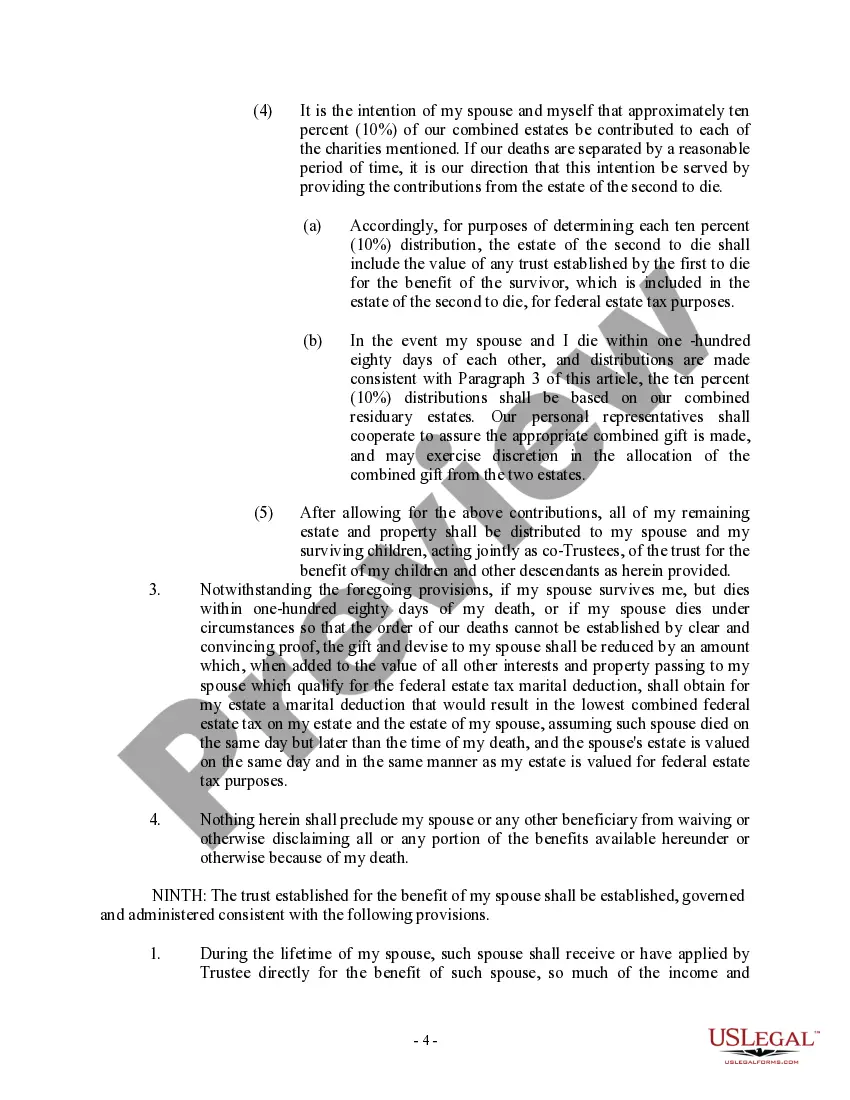
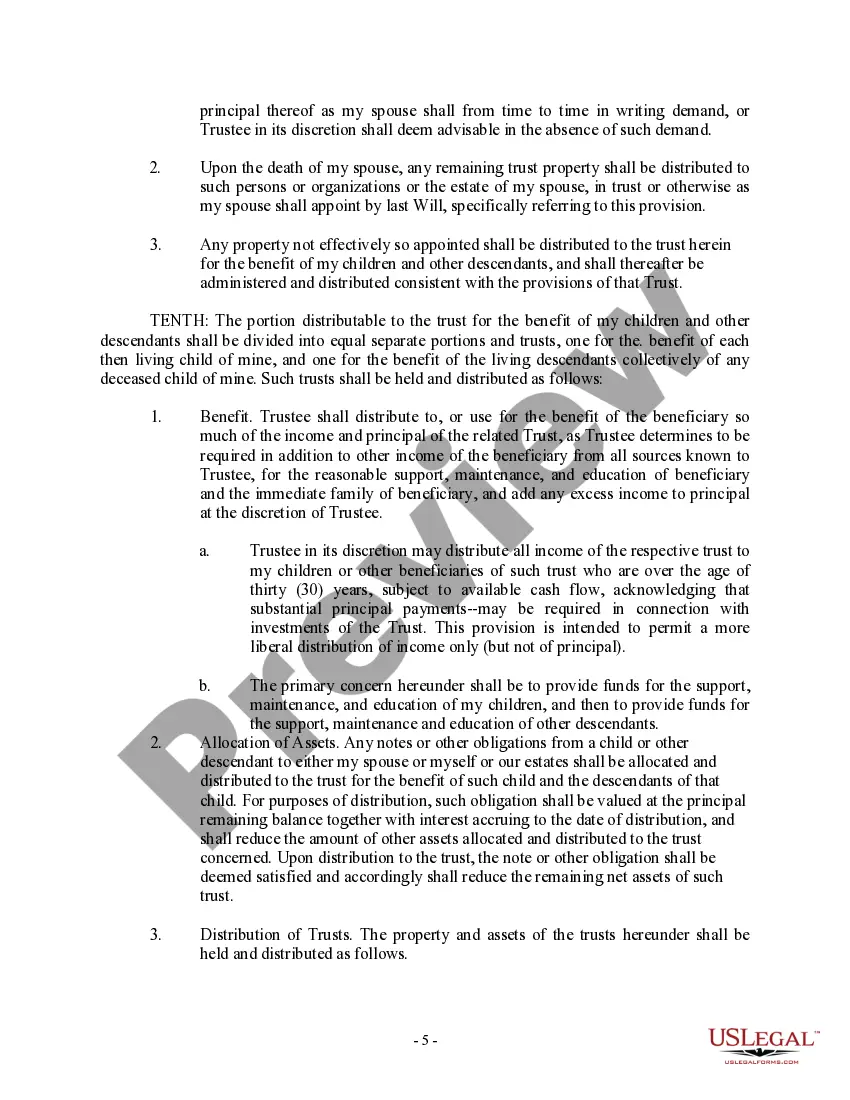
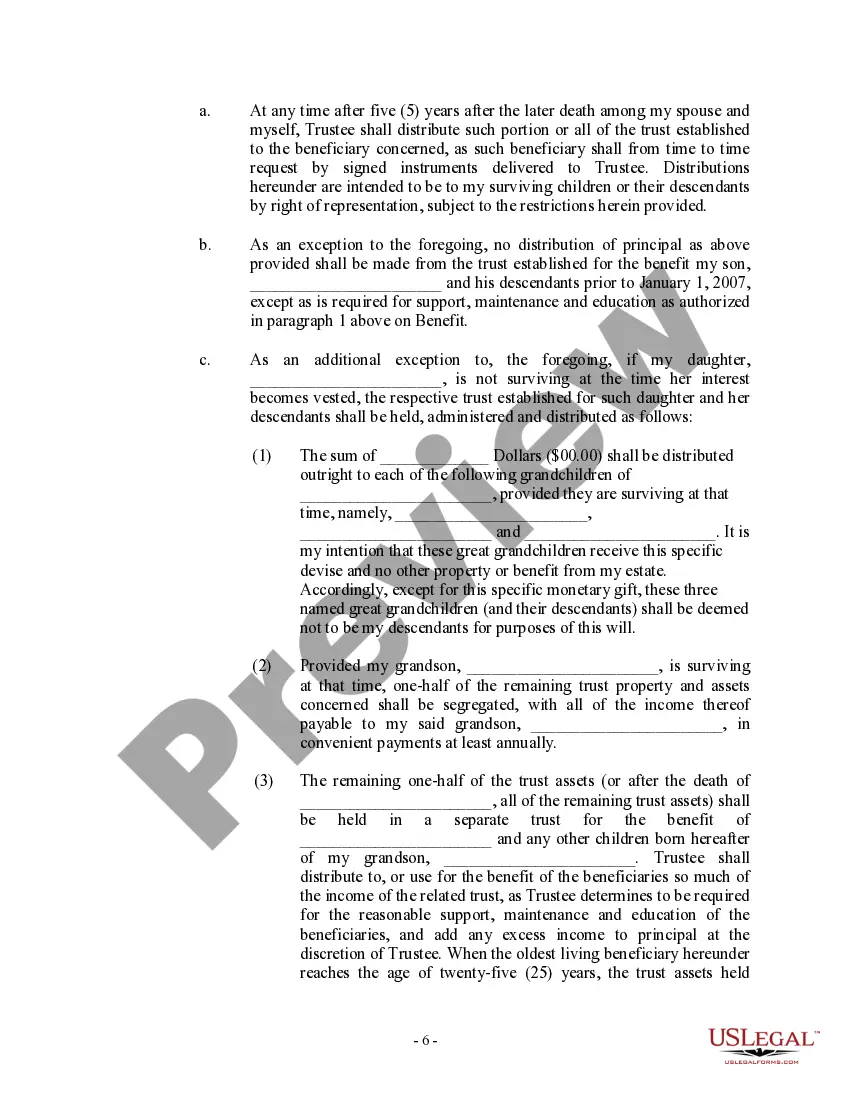
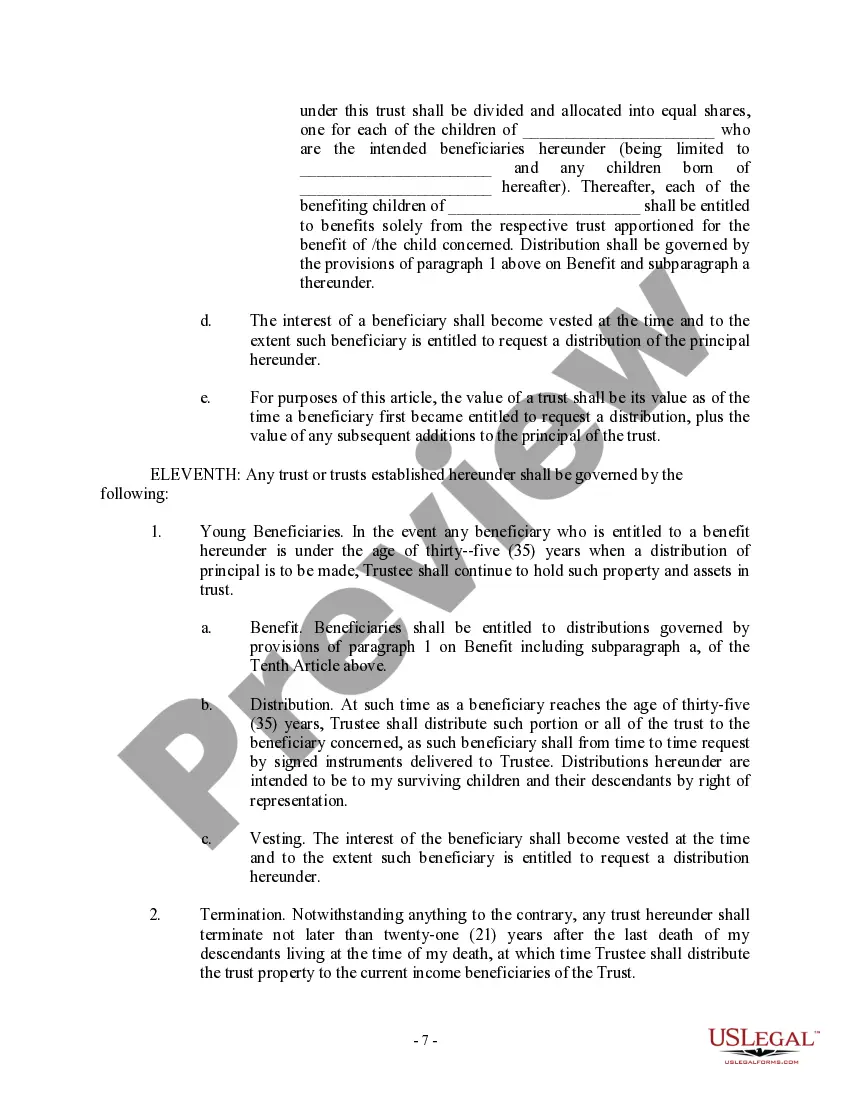
- Creation of a marital trust aimed at benefitting the spouse and children.
- Specific directives for distributing remaining assets and property among beneficiaries.
- Provisions for charitable donations from the estate.




Common use cases
This form is ideal for individuals who are married and have children, especially those looking to minimize estate taxes and ensure a smooth transfer of assets after their death. It is particularly useful for parents wishing to create a trust that provides for their surviving spouse while also benefiting their children equally. Use this form if you want to establish clear directives for your estate and ensure that your heirs are adequately protected.
Who needs this form
- Married individuals with substantial assets.
- Parents with children who want to ensure an equal distribution of their estate.
- Individuals seeking to minimize federal estate taxes.
- Those desiring to set up a marital trust for their surviving spouse's benefit.
- Anyone looking to include charitable contributions in their estate plan.
Instructions for completing this form
- Identify yourself as the testator and fill in your full name and address.
- Clearly state the names of your spouse and children, listing out each child.
- Designate a personal representative to oversee your estate, along with alternatives if they are unable to serve.
- Outline your wishes for the distribution of personal property, such as cars and household items.
- Specify details of the marital trust and how your estate will be divided among your spouse and children.
- Sign the document in front of witnesses as required by the laws of your state.
Does this form need to be notarized?
This form does not typically require notarization unless specified by local law. However, it is advisable to have your will notarized to enhance its validity and ensure a smooth probate process.
Get your form ready online
Our built-in tools help you complete, sign, share, and store your documents in one place.
Make edits, fill in missing information, and update formatting in US Legal Forms—just like you would in MS Word.
Download a copy, print it, send it by email, or mail it via USPS—whatever works best for your next step.
Sign and collect signatures with our SignNow integration. Send to multiple recipients, set reminders, and more. Go Premium to unlock E-Sign.
If this form requires notarization, complete it online through a secure video call—no need to meet a notary in person or wait for an appointment.
We protect your documents and personal data by following strict security and privacy standards.

Make edits, fill in missing information, and update formatting in US Legal Forms—just like you would in MS Word.

Download a copy, print it, send it by email, or mail it via USPS—whatever works best for your next step.

Sign and collect signatures with our SignNow integration. Send to multiple recipients, set reminders, and more. Go Premium to unlock E-Sign.

If this form requires notarization, complete it online through a secure video call—no need to meet a notary in person or wait for an appointment.

We protect your documents and personal data by following strict security and privacy standards.
Common mistakes to avoid
- Failing to update the will after major life events, such as births or deaths.
- Not clearly defining the roles of personal representatives or trustees.
- Omitting essential details about specific assets and their distribution.
- Ignoring state-specific requirements that may affect the validity of the will.
- Not having the will properly witnessed or notarized if required.
Benefits of using this form online
- Convenience in completing the form from home without the need for an attorney appointment.
- Editable fields allowing users to customize the document to their specific needs.
- Access to expert-drafted templates that ensure legal compliance and clarity.
- Secure storage options for the document for future reference.
- Immediate access to downloadable forms that can be printed or shared electronically.
Legal use & context
- Allows for tax-efficient distribution of assets to a spouse and children.
- Ensures that your wishes are clearly laid out and legally enforceable after your passing.
- Protects the interests of minor children through established trust mechanisms.
- It can help to avoid the probate process for certain assets, saving time and costs for your beneficiaries.
What to keep in mind
- This complex will allows for strategic tax planning and asset protection.
- It ensures the smooth distribution of your estate according to your specific wishes.
- Secure the long-term well-being of your spouse and children through established trusts.
- Proper execution is vital for the enforceability of your last will and testament.
Looking for another form?
Form popularity
FAQ
Paperwork. Setting up a living trust isn't difficult or expensive, but it requires some paperwork.Record Keeping. After a revocable living trust is created, little day-to-day record keeping is required.Transfer Taxes.Difficulty Refinancing Trust Property.No Cutoff of Creditors' Claims.
A trust is traditionally used for minimizing estate taxes and can offer other benefits as part of a well-crafted estate plan. A trust is a fiduciary arrangement that allows a third party, or trustee, to hold assets on behalf of a beneficiary or beneficiaries.
Revocable Trusts. Irrevocable Trust. Asset Protection Trust. Charitable Trust. Constructive Trust. Special Needs Trust. Spendthrift Trust. Tax By-Pass Trust.
Two main types of trusts: Revocable and irrevocable trust All trusts fall into one of two categories: revocable or irrevocable.
Livings Trusts. A living trust is usually created by the grantor, during the grantor's lifetime, through a transfer of property to a trustee. Testamentary Trusts. Irrevocable Life Insurance Trust. Charitable Remainder Trust.
Assets of minor children should always be held in trust. You do not want children under 18 inheriting assets. While they are under 18, their guardian or conservator will control the money for them.
Less than 2 percent of the U.S. population receives a trust fund, usually as a means of inheriting large sums of money from wealthy parents, according to the Survey of Consumer Finances. The median amount is about $285,000 (the average was $4,062,918) enough to make a major, lasting impact.
Revocable Trusts. Irrevocable Trusts. Testamentary Trusts.
A trust gives you the ability to name specific beneficiaries, and once you do, your intentions cannot be changed after the fact. This means that you will be able to specifically name your children as beneficiaries of the trustand even exclude certain children if that is your choiceand your wishes will be carried out.