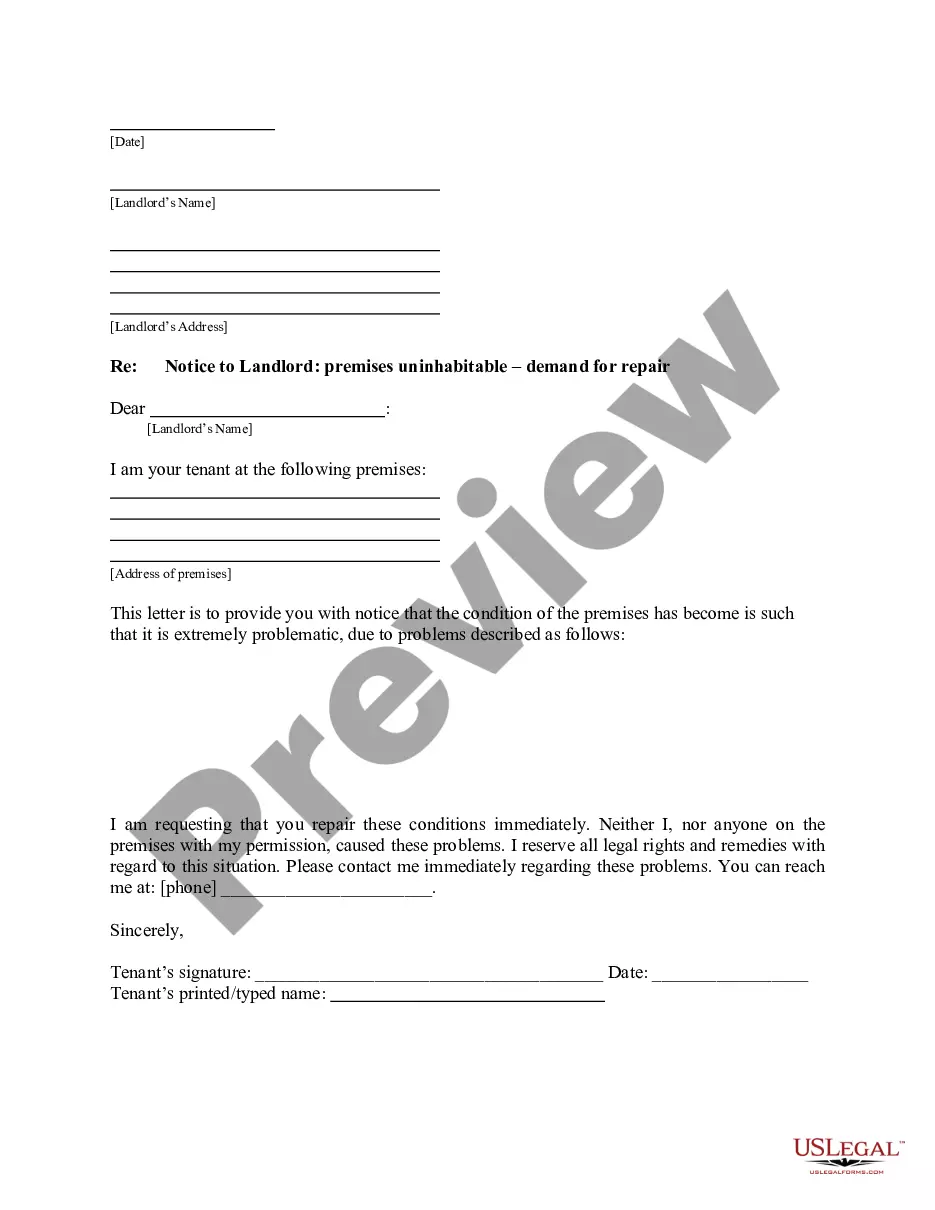
Sublease Agreement for Office Space
What is this form?
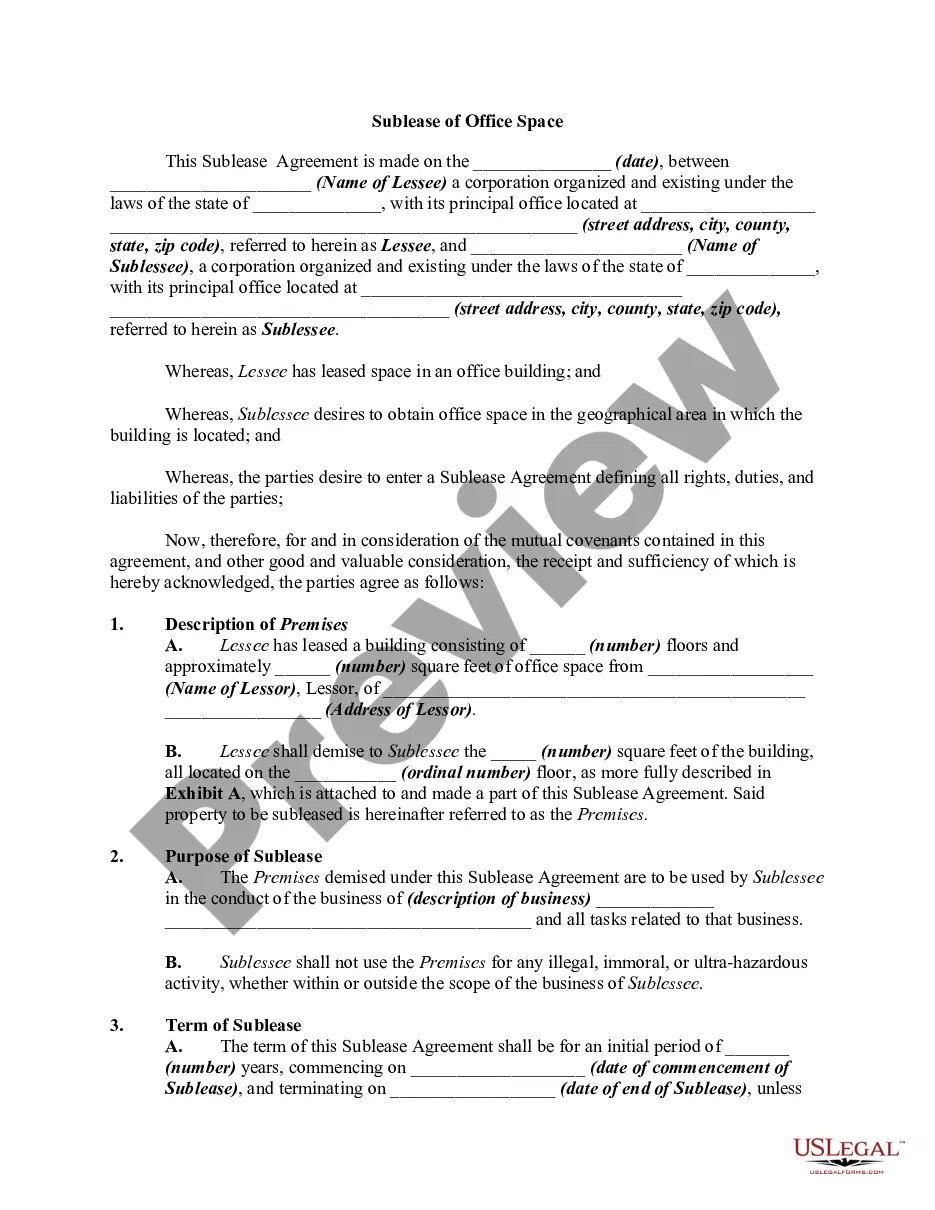
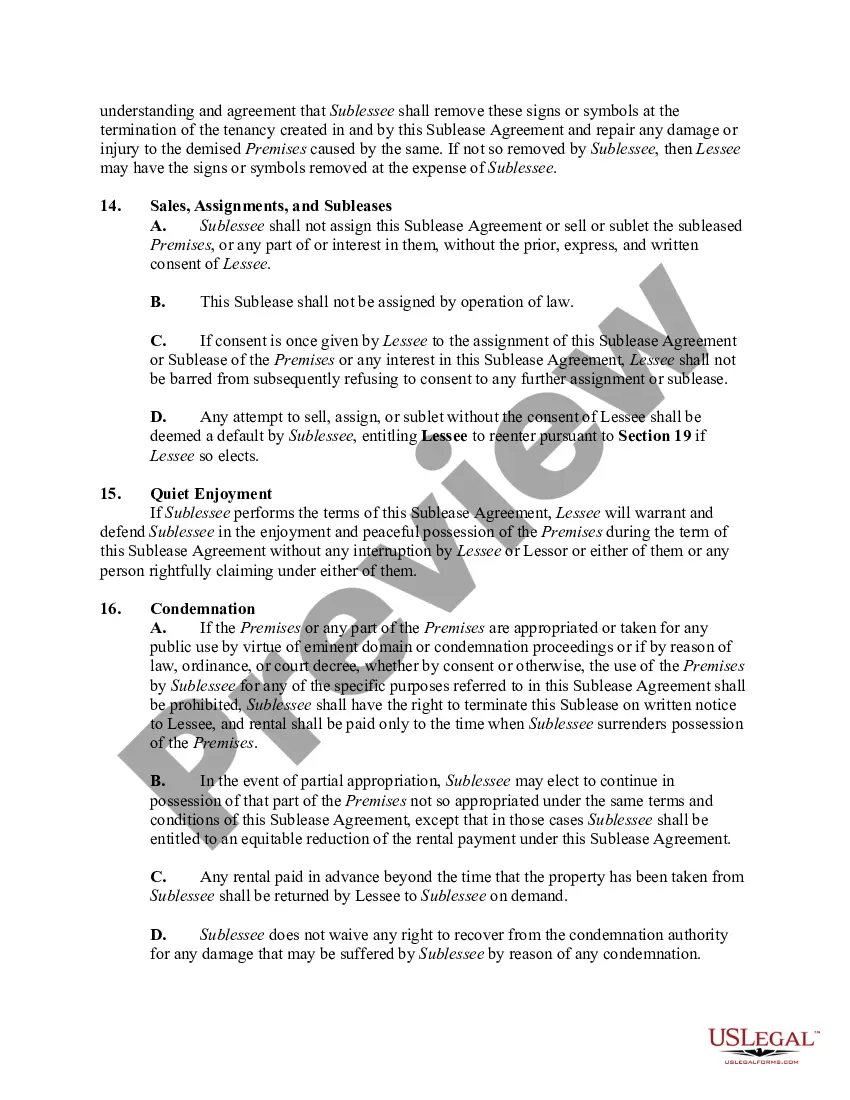
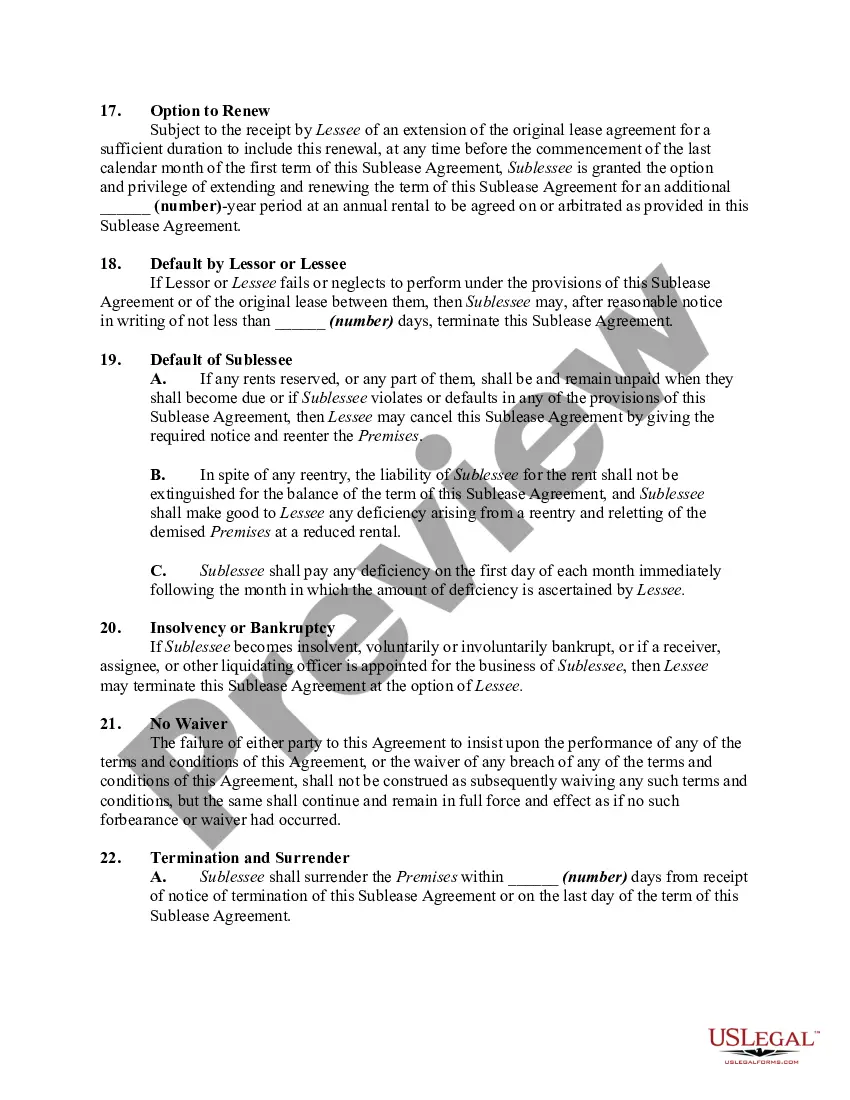
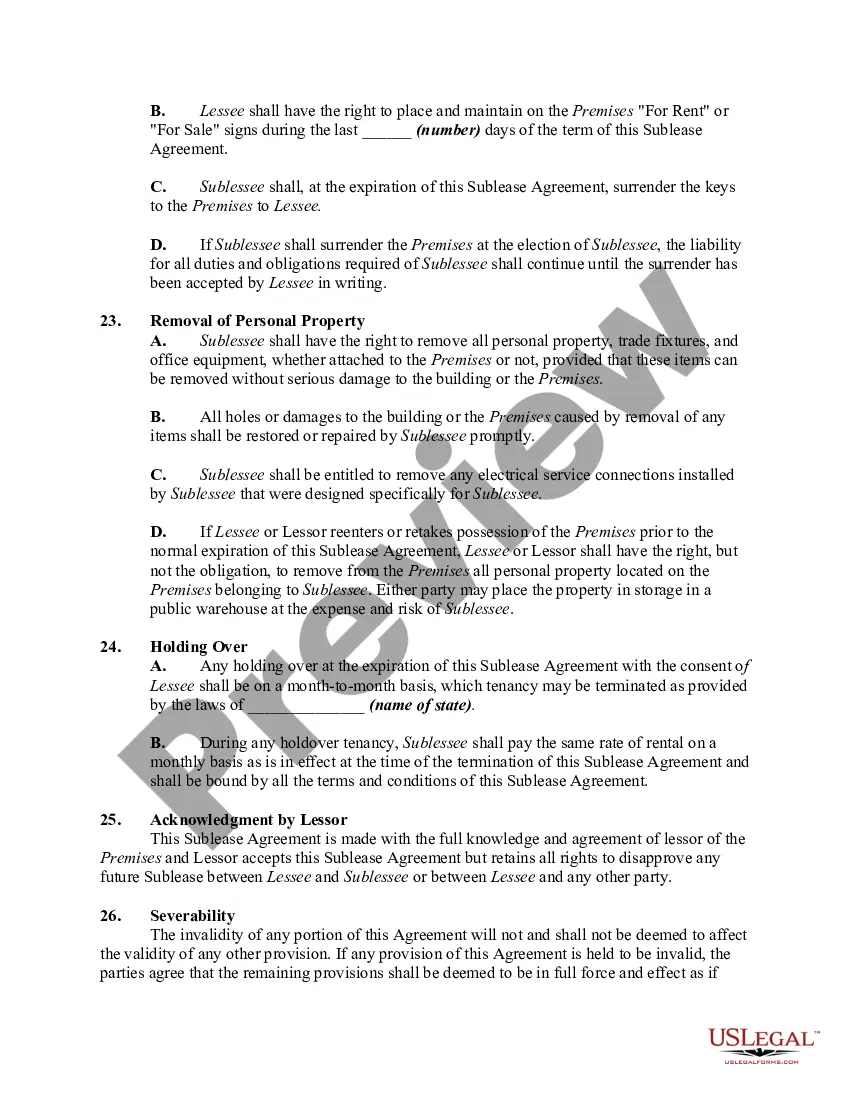
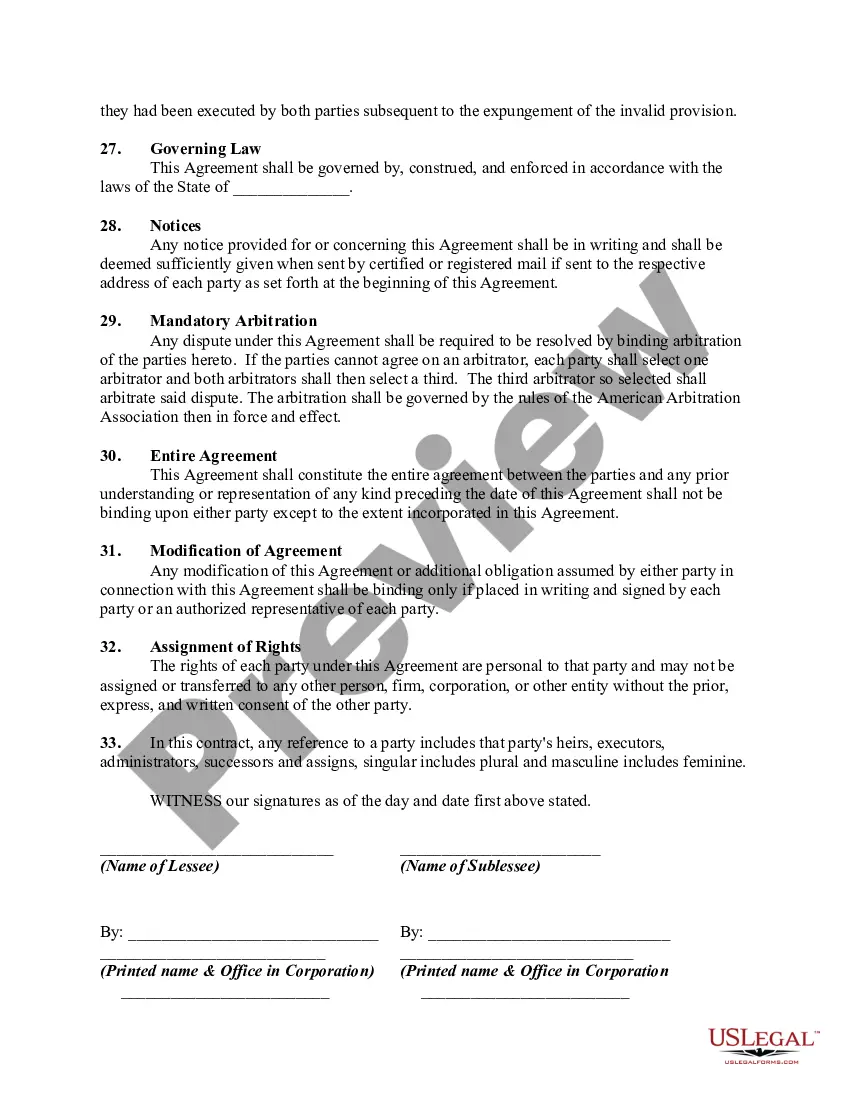
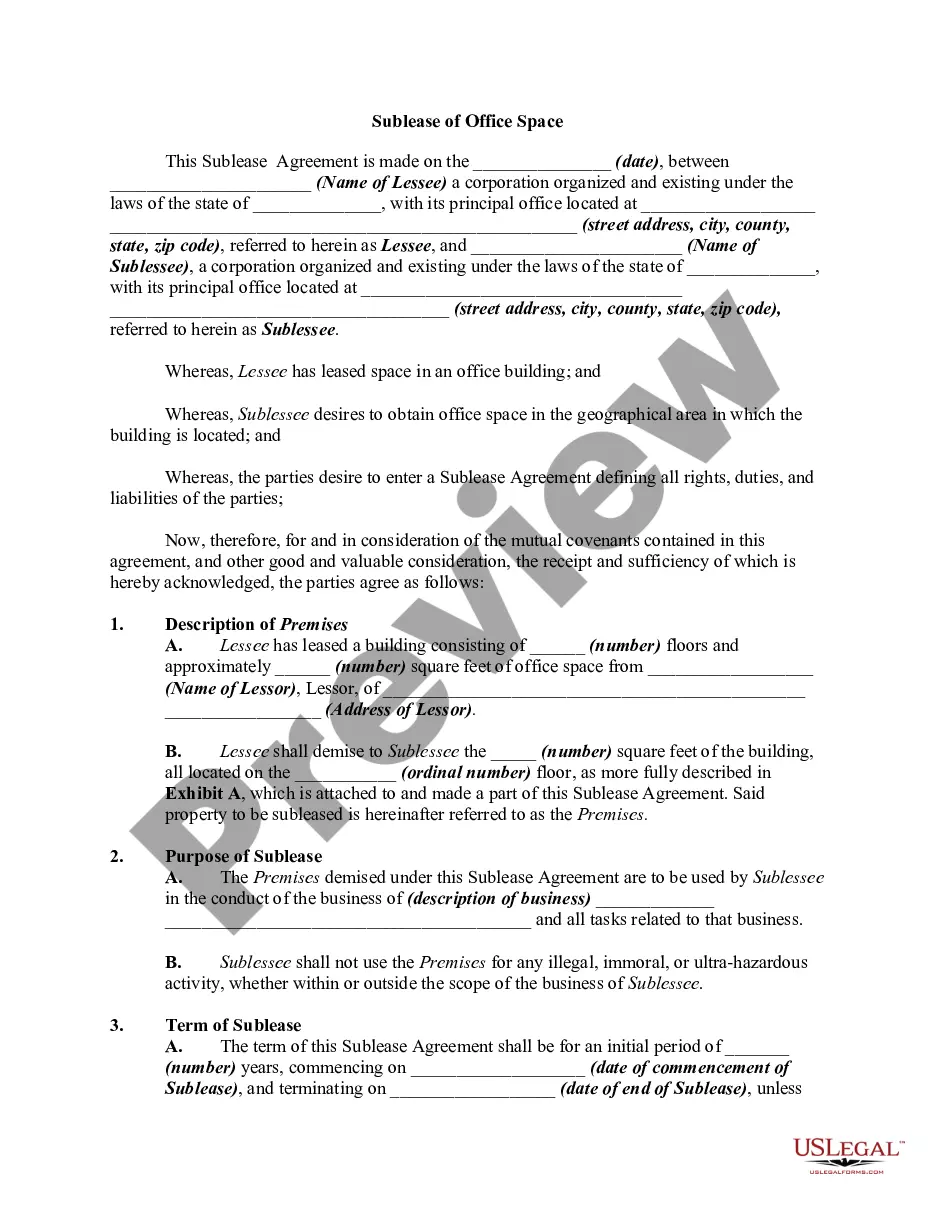
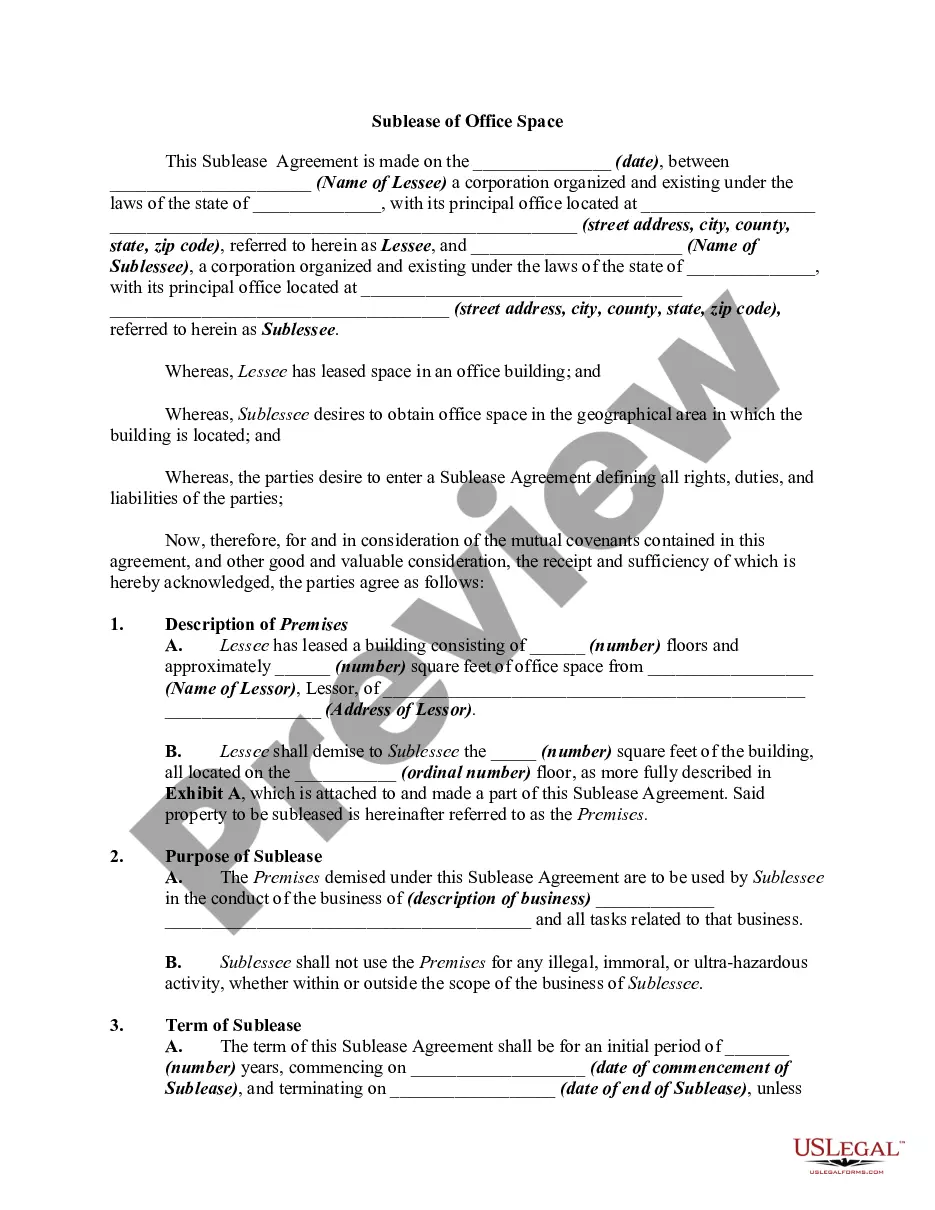
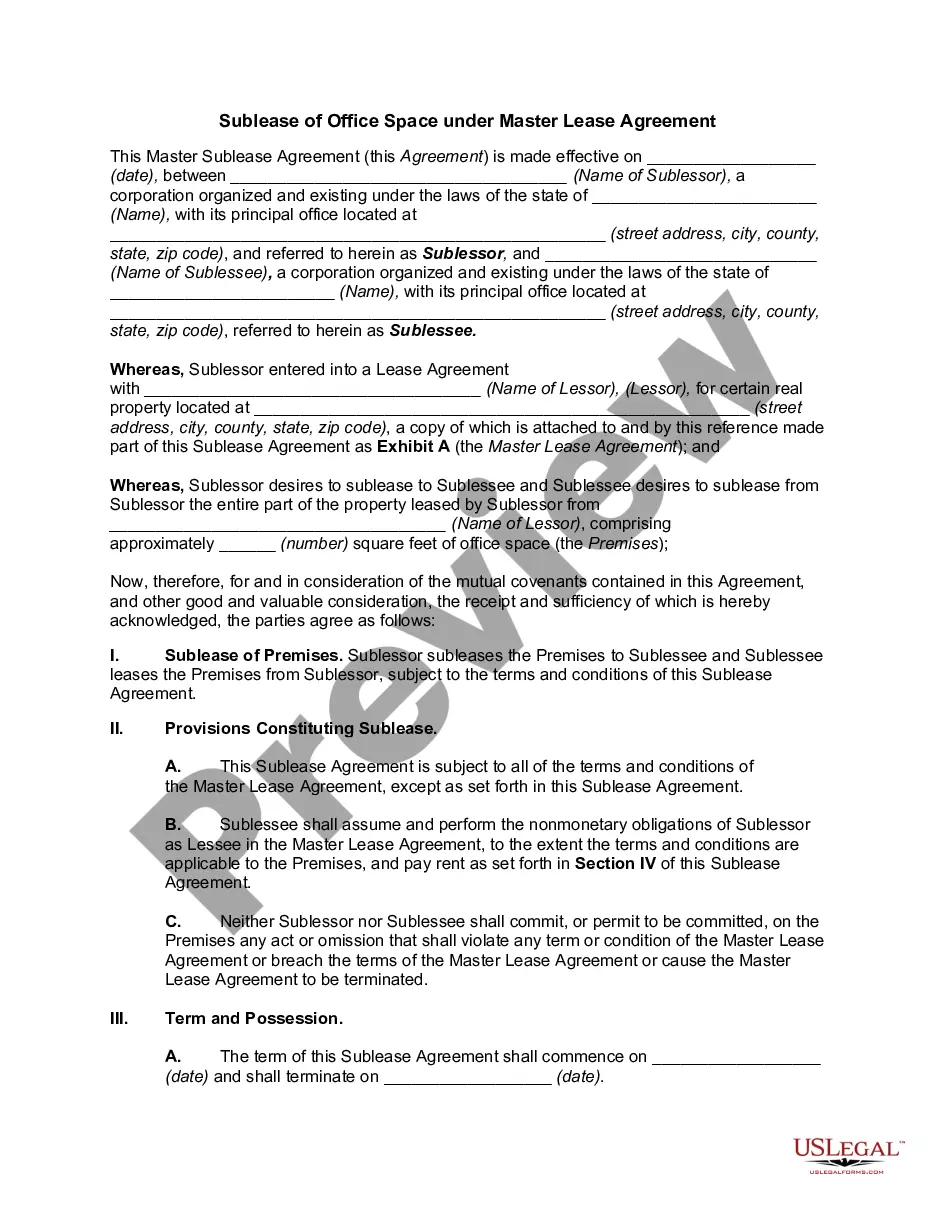
The Sublease Agreement for Office Space is a legal document that outlines the terms under which a lessee (the tenant) can sublet an office space to a third party known as the sublessee. This agreement defines the rights, responsibilities, and liabilities of both parties involved, making it distinct from standard lease agreements as it applies specifically to subleasing arrangements. It ensures that all parties are aware of their obligations and the conditions under which the sublease operates.
Form components explained
- Description of the Premises to be subleased.
- Purpose for which the sublessee will use the space.
- Term of the sublease, including start and end dates.
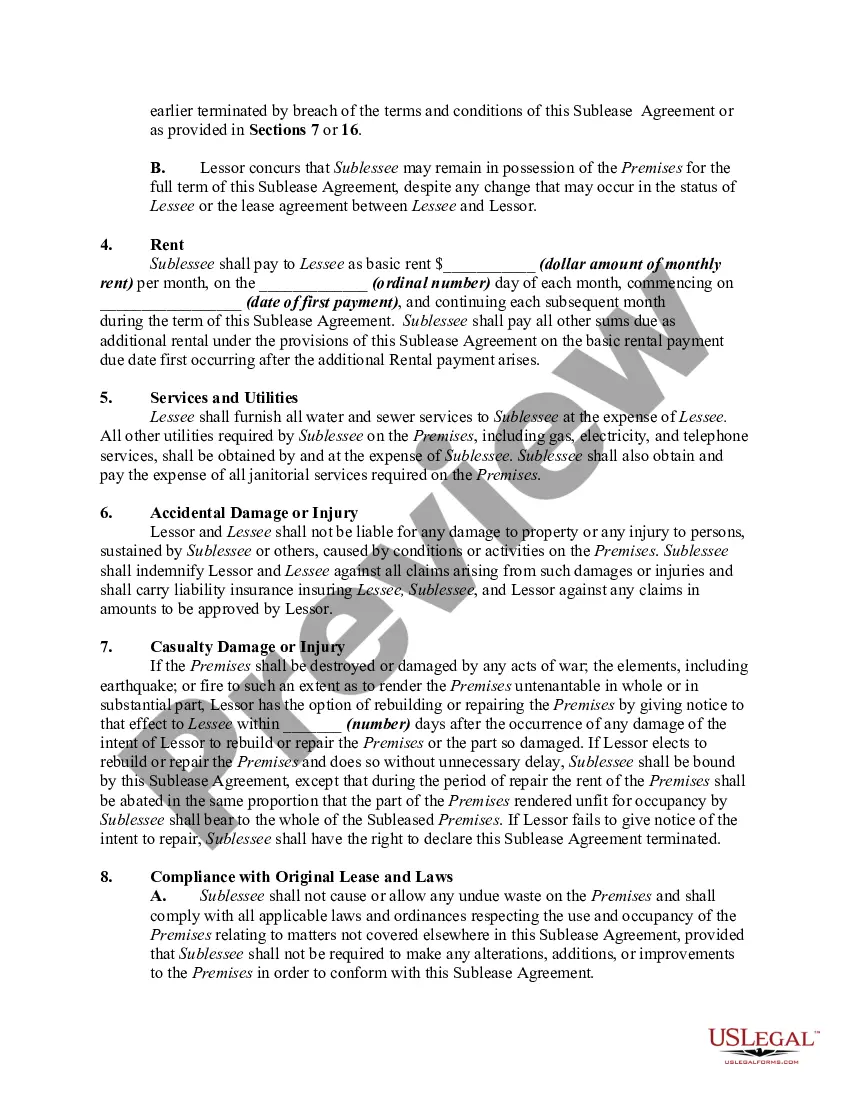
- Details of the rent payment structure.
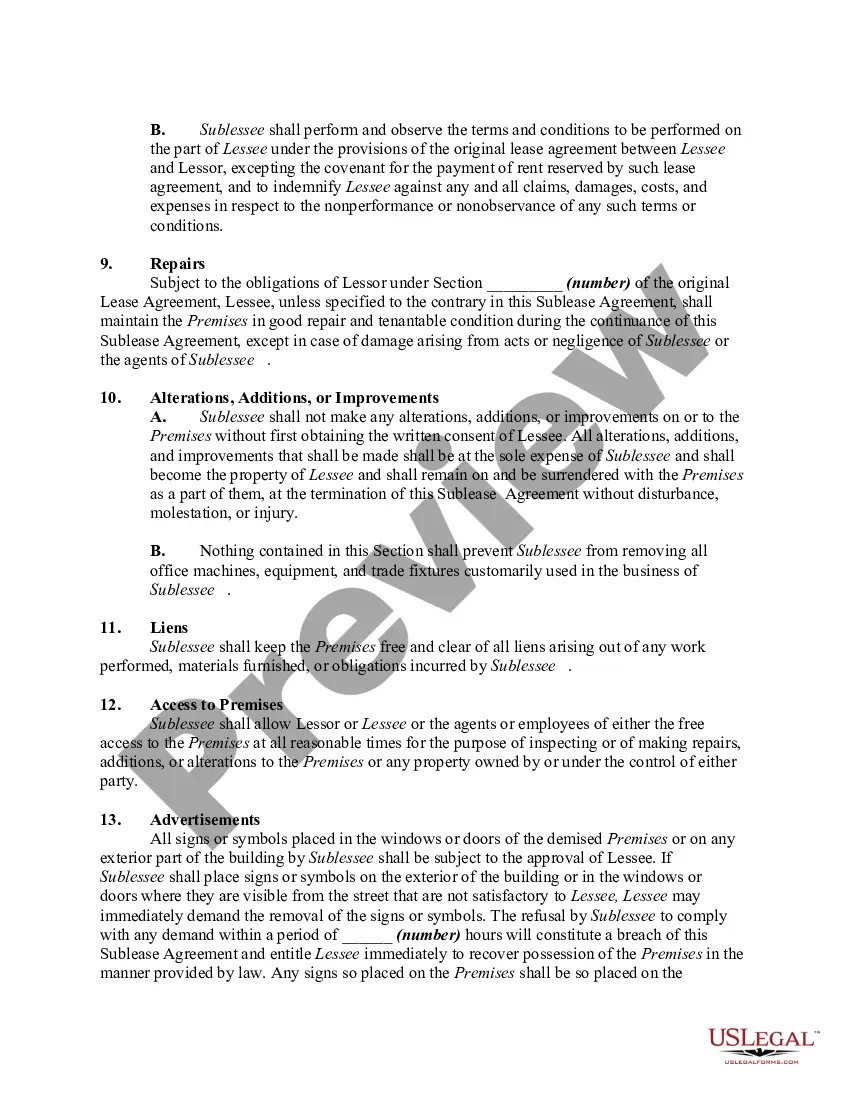
- Responsibilities for utilities and other services.
- Conditions relating to repairs and maintenance of the premises.

When to use this form
This form is necessary when a tenant (lessee) wishes to rent out their leased office space to another party (sublessee) and wants to ensure that the sublease complies with the original lease agreement. The sublease agreement is useful in scenarios such as businesses downsizing and needing to reduce costs, or when a company is experiencing a temporary increase in office demands and needs additional space without committing to a new lease entirely.
Who this form is for
- Businesses looking to sublet their office space.
- Sublessees who want to rent office space for their operations.
- Corporations with agreements that allow for subleasing opportunities.
- Individuals or entities needing flexible office arrangements.
Completing this form step by step
- Identify the parties involved by entering the names and addresses of the lessee and sublessee.
- Specify the property details, including the total area and specific location within the building.
- Enter the terms of the sublease, including the start and end dates and the monthly rental amount.
- Outline the intended use of the leased space by the sublessee.
- Ensure that all signatures are obtained from the parties involved before finalizing the agreement.
Does this form need to be notarized?
This form does not typically require notarization unless specified by local law. However, getting the sublease agreement notarized can add an extra layer of legitimacy and may be advantageous in disputes.
Get your form ready online
Our built-in tools help you complete, sign, share, and store your documents in one place.
Make edits, fill in missing information, and update formatting in US Legal Forms—just like you would in MS Word.
Download a copy, print it, send it by email, or mail it via USPS—whatever works best for your next step.
Sign and collect signatures with our SignNow integration. Send to multiple recipients, set reminders, and more. Go Premium to unlock E-Sign.
If this form requires notarization, complete it online through a secure video call—no need to meet a notary in person or wait for an appointment.
We protect your documents and personal data by following strict security and privacy standards.

Make edits, fill in missing information, and update formatting in US Legal Forms—just like you would in MS Word.

Download a copy, print it, send it by email, or mail it via USPS—whatever works best for your next step.

Sign and collect signatures with our SignNow integration. Send to multiple recipients, set reminders, and more. Go Premium to unlock E-Sign.

If this form requires notarization, complete it online through a secure video call—no need to meet a notary in person or wait for an appointment.

We protect your documents and personal data by following strict security and privacy standards.
Common mistakes to avoid
- Failing to get written consent from the original landlord or lessor when required.
- Not clearly defining the premises or the terms of usage.
- Omitting important details regarding the duration of the sublease.
- Forgetting to include specific provisions for repairs and maintenance responsibilities.
Benefits of using this form online
- Convenient access to a professionally drafted legal template.
- Editability allows for customization based on specific needs.
- Cost-effective alternative to hiring legal professionals for drafting.
- Immediate downloads facilitate quick completion and execution of the sublease.
Main things to remember
- A Sublease Agreement is essential when leasing office space to another entity.
- Ensure all details, including rent and usage terms, are clearly outlined.
- Obtain proper consent from the original landlord if required.
- This form is adaptable for use in various states but may need local compliance checks.
Looking for another form?


Form popularity
FAQ
A lease is a rental contract between a property owner and a tenant; a sublease is a contract between a tenant and a third party who lives in the rental property during part of the tenant's lease term.
Check the over-lease. This refers to the lease that was signed by the tenant from whom you're sub-leasing. Note the condition of your room. Get in touch with the management company. Make all payments in person. Ask for a deposit receipt. Comments.
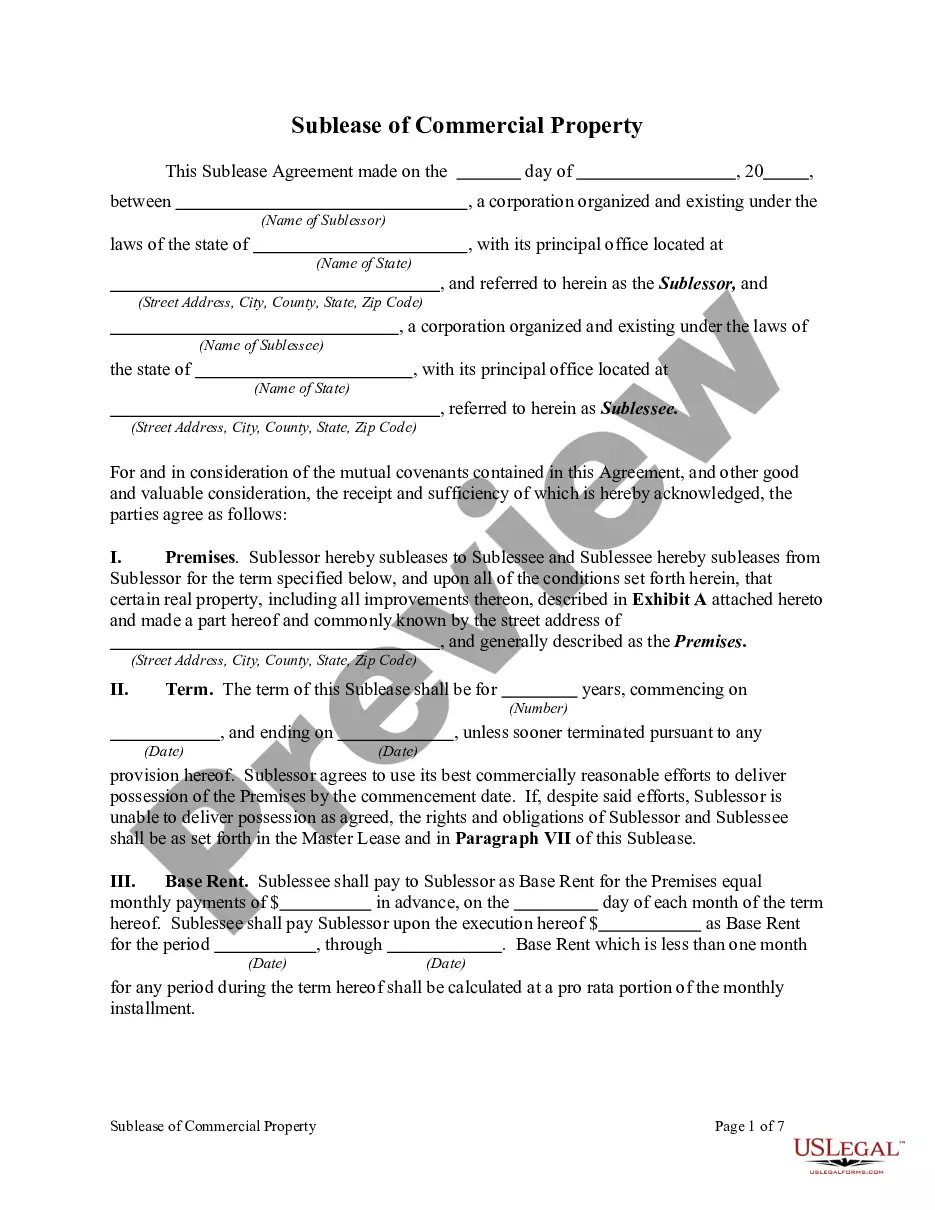
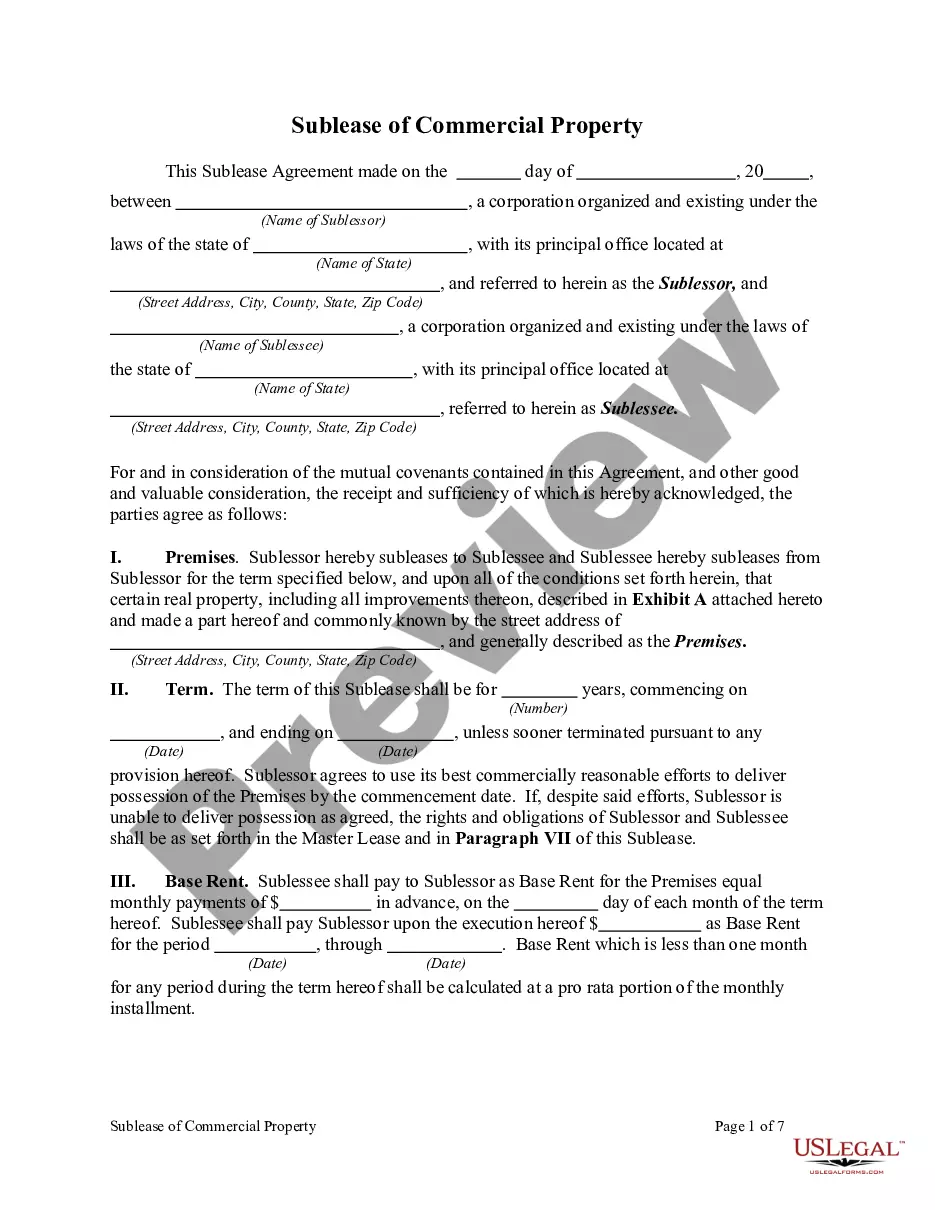
A commercial sublease is an agreement between a tenant currently leasing a property, a new tenant looking for space, and the property owner. When you sublease your space you are the sublessor (or sublandlord) and your new tenant is the sublessee (or subtenant).
Subleasing occurs when the tenant transfers a part of their legal tenancy to a third-party as a new tenant. Subleasing can be established unless the original lease forbids it. However, in most cases, the owner must be notified and must approve any subletting arrangement created by the tenant.
A sublease is a legally binding contract made between a tenant and a new tenant (also known as a subtenant or a sublessee).Usually, the first tenant must get consent from the landlord before he/she is allowed to sublease the premises.
Screen your subtenant. Don't just take the word of a friend or relative on this person being wonderful. Sign a subletting agreement. There are sample agreements online, or you could consult with a lawyer. Get a security deposit.
Early Termination of a Sublease The subtenant must give a notice of one month in order to terminate the sublease.The subtenant should also sign an Early Termination Request form and submit it to the tenant with the termination fee that could amount to nearly three months' rent (the amount may vary in some instances).
In California, subletting is only legal if you have your landlord's written consent.Additionally, you're still responsible to your landlord for any rental payments, damages, or lease violations, so be sure you have a written sublease agreement with the new tenant to protect yourself.