Proof of Residency for Minor
Overview of this form
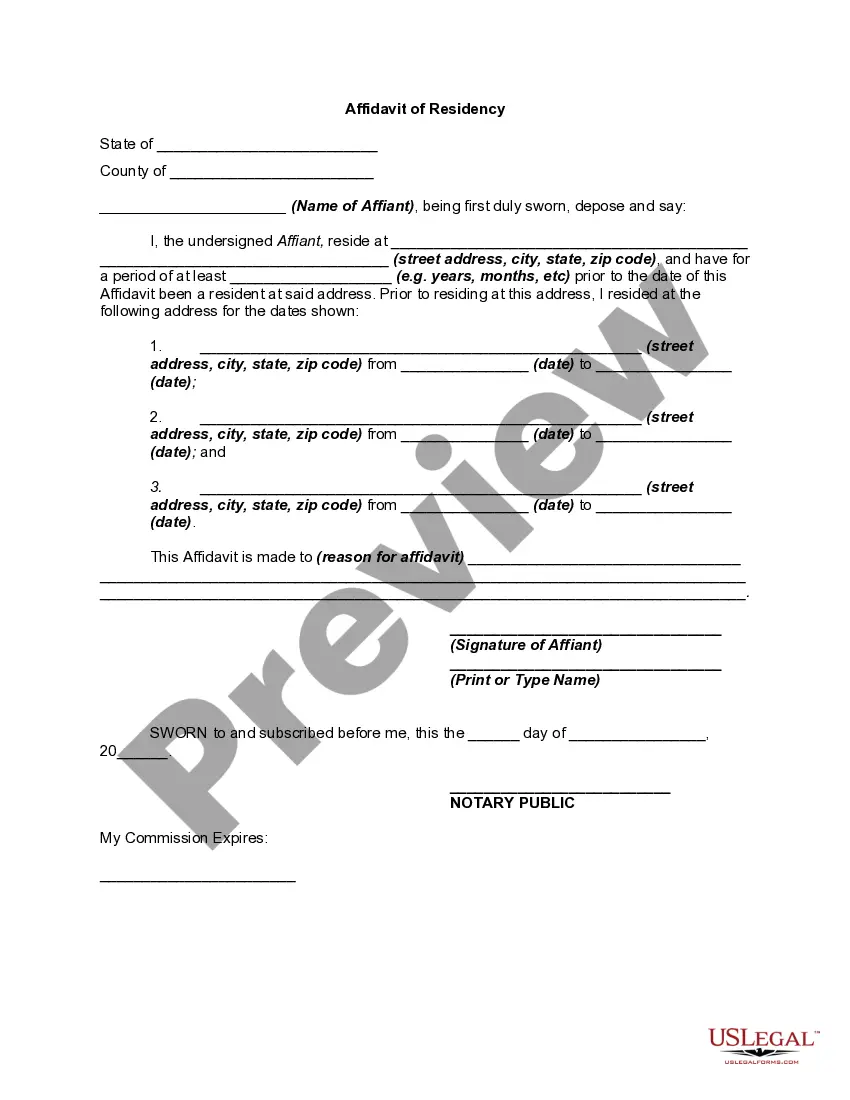
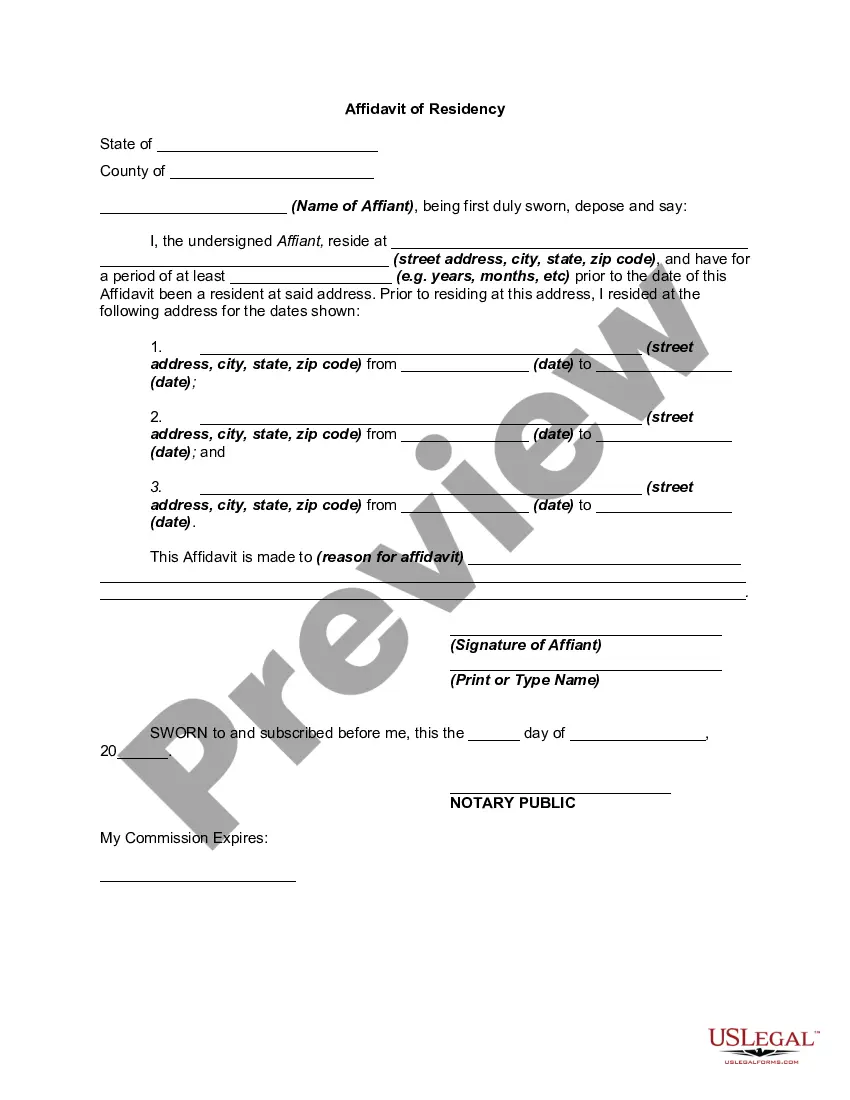
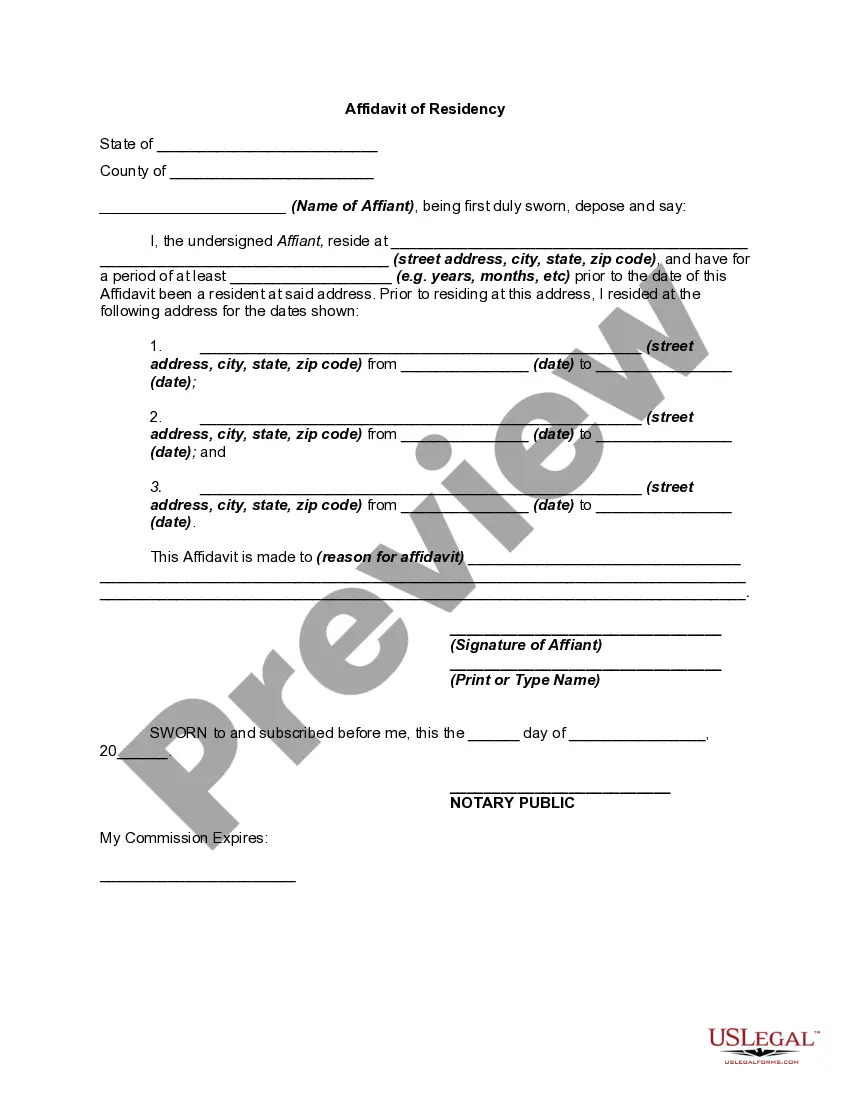
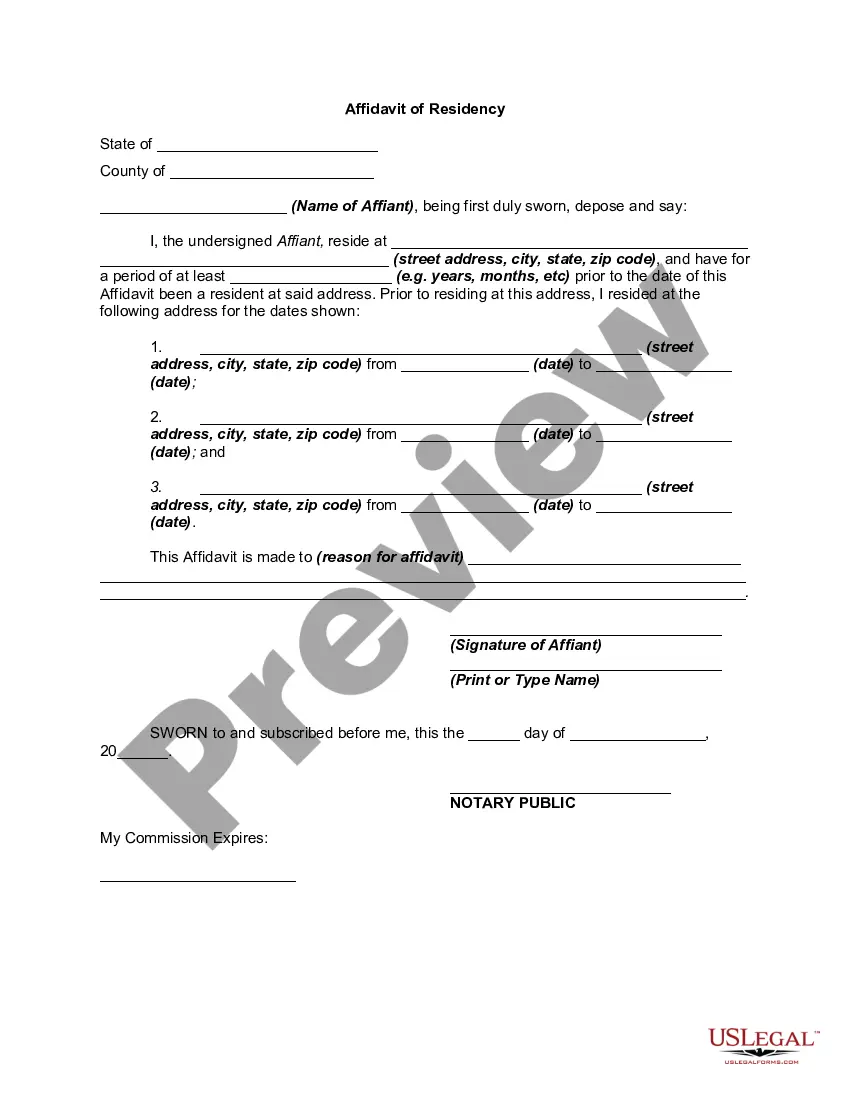
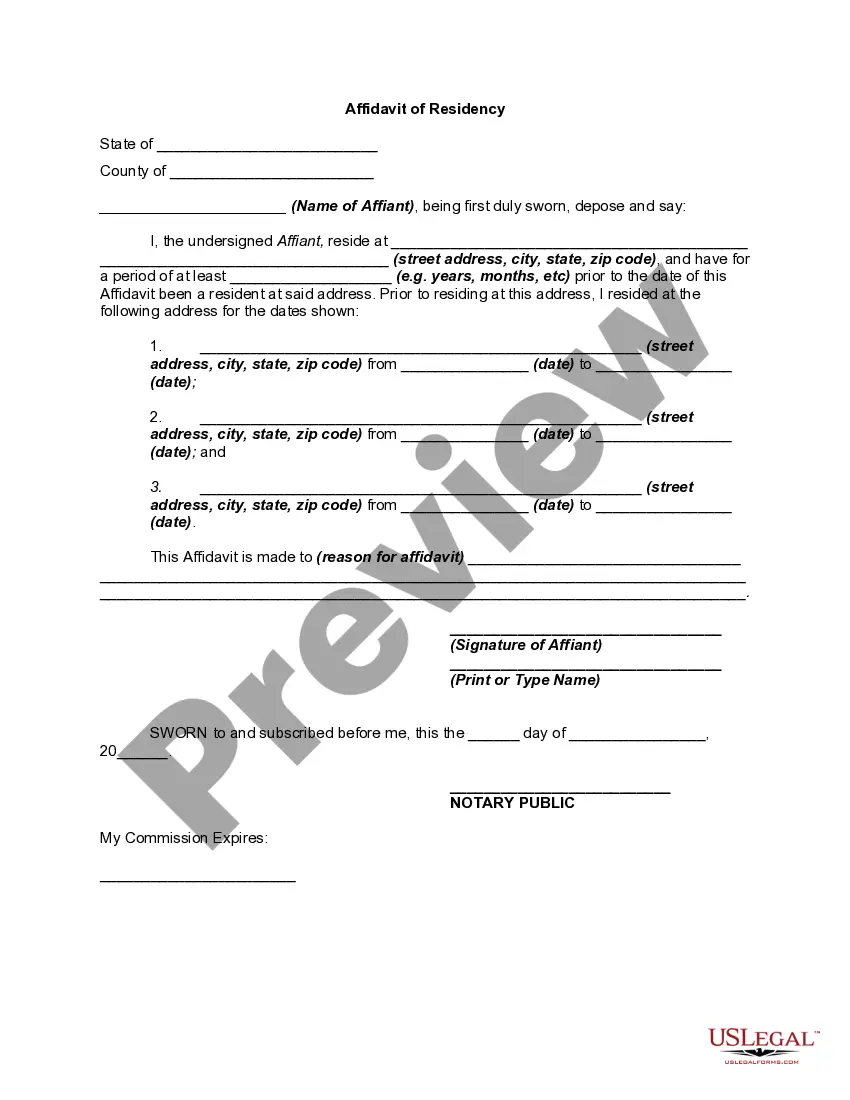
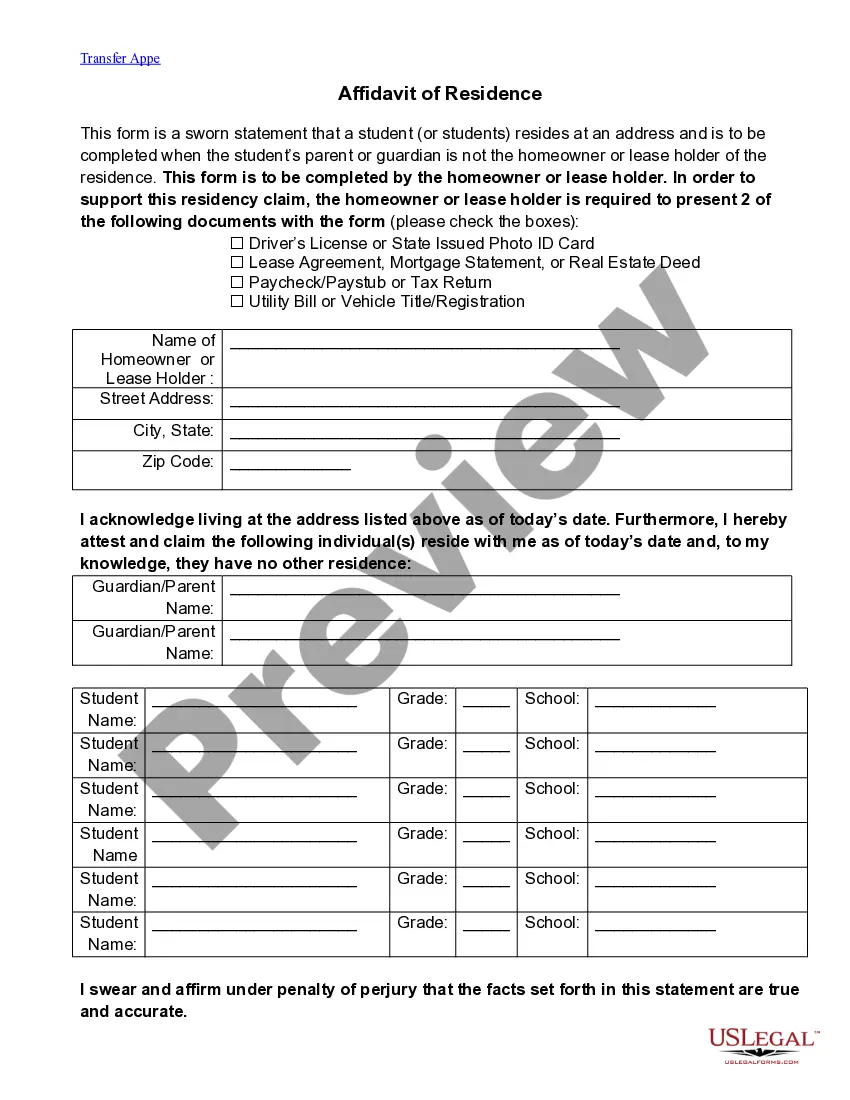
The Proof of Residency for Minor form is a legal affidavit that verifies the residency of a minor at a specific address. This form is crucial in situations where proof of a child's home address is required for legal, educational, or governmental purposes. Unlike other affidavits, this specific form addresses the residency of a minor, requiring an adult (the affiant) to declare the child's place of residence under oath.
Key components of this form
- Affiant's declaration of residence, including the current address of the minor.
- Details of prior residences for the affiant and the duration of residency at each address.
- A statement indicating the purpose of the affidavit.
- Signature of the affiant and affirmation in front of a notary public.
- Notary's endorsement including the date of notarization and commission expiration.
When this form is needed
This form is typically used when a minor needs to provide proof of residence for various purposes, including school enrollment, applying for government assistance, or during custody disputes. It serves to legally affirm the minor's living situation as stated by a responsible adult.
Intended users of this form
The following individuals should consider using the Proof of Residency for Minor form:
- Parents or legal guardians seeking to verify their child's residence.
- Caregivers or relatives responsible for a minor who require proof for official purposes.
- Individuals involved in legal proceedings regarding the custody or residency of a minor.
How to prepare this document
- Identify the affiant and provide their current residential address.
- List previous addresses where the affiant resided, including dates of residence.
- State the specific purpose for which the affidavit is being made.
- Sign the affidavit in front of a notary public.
- Ensure the notary public completes their section, including their signature and commission details.
Notarization guidance
Yes, this form must be notarized to be legally valid. It requires the affiant to swear or affirm the truth of the contents before a notary public. US Legal Forms offers integrated online notarization, making it convenient with 24/7 availability via secure video calls, ensuring legal equivalence without the need for travel.
Get your form ready online
Our built-in tools help you complete, sign, share, and store your documents in one place.
Make edits, fill in missing information, and update formatting in US Legal Forms—just like you would in MS Word.
Download a copy, print it, send it by email, or mail it via USPS—whatever works best for your next step.
Sign and collect signatures with our SignNow integration. Send to multiple recipients, set reminders, and more. Go Premium to unlock E-Sign.
If this form requires notarization, complete it online through a secure video call—no need to meet a notary in person or wait for an appointment.
We protect your documents and personal data by following strict security and privacy standards.

Make edits, fill in missing information, and update formatting in US Legal Forms—just like you would in MS Word.

Download a copy, print it, send it by email, or mail it via USPS—whatever works best for your next step.

Sign and collect signatures with our SignNow integration. Send to multiple recipients, set reminders, and more. Go Premium to unlock E-Sign.

If this form requires notarization, complete it online through a secure video call—no need to meet a notary in person or wait for an appointment.

We protect your documents and personal data by following strict security and privacy standards.
Common mistakes to avoid
- Failure to provide complete address history for all prior residences.
- Not stating the purpose of the affidavit clearly, which could lead to confusion or rejection.
- Missing the notary's signature or stamp, leading to an invalid form.
- Inaccurate information regarding dates or addresses, which can affect the affidavit's credibility.
Why complete this form online
- Convenient access to download the form anytime, without the need for physical paperwork.
- Easy editability allows you to fill out the form accurately before printing.
- Reliability of professionally drafted forms by licensed attorneys, ensuring legal compliance.
Looking for another form?
Form popularity
FAQ
Here are some common examples for proving your address: Mortgage deed, if it states that the owner uses the property as the primary residence. Mortgage or rental payment receipt. Driver's license, state ID, or change of address card. Mail from motor vehicle or other government agencies with your address(s) listed.
If you don't have any utility bills, you can still prove your residency through other means. You can use a combination of your license, tax documents, bank statements, lease agreements, and other official paperwork. The essential factor is that the form of proof shows your address and name.
How do I show Proof of Residency? Obtain a utility bill from the address you currently reside, along with a letter from the person you are living with stating that you and your child(ren) are living with them, and explain that you have no mail and/or bills in your name.
Proof of identity (could be a school-issued ID card, birth certificate, or similar) proof of Social Security number (Social Security card, 1099, W-2 form) proof of state residency (report card, recent bank statement, etc.)
Government-issued photo ID. Residential lease/property deed. Utility bill. Letter from the government/court (marriage license, divorce, government aid) Bank statement. Driver's license/learner's permit. Car registration. Notarized affidavit of residency.
Bank Statements. Court Letters. Government Documents. Income Tax Statements. Lease Agreements. Notarized Affidavit of Residency. School Records. Vehicle Registration.
Proof of address Recent child benefit or child tax credit letter. Letter confirming entitlement to benefits (housing, income support, jobseekers etc) Tenancy agreement from a registered lettings agency. Private tenancy agreement with copies of two bills/documents.