Proof of Residency for School Enrollment
Overview of this form
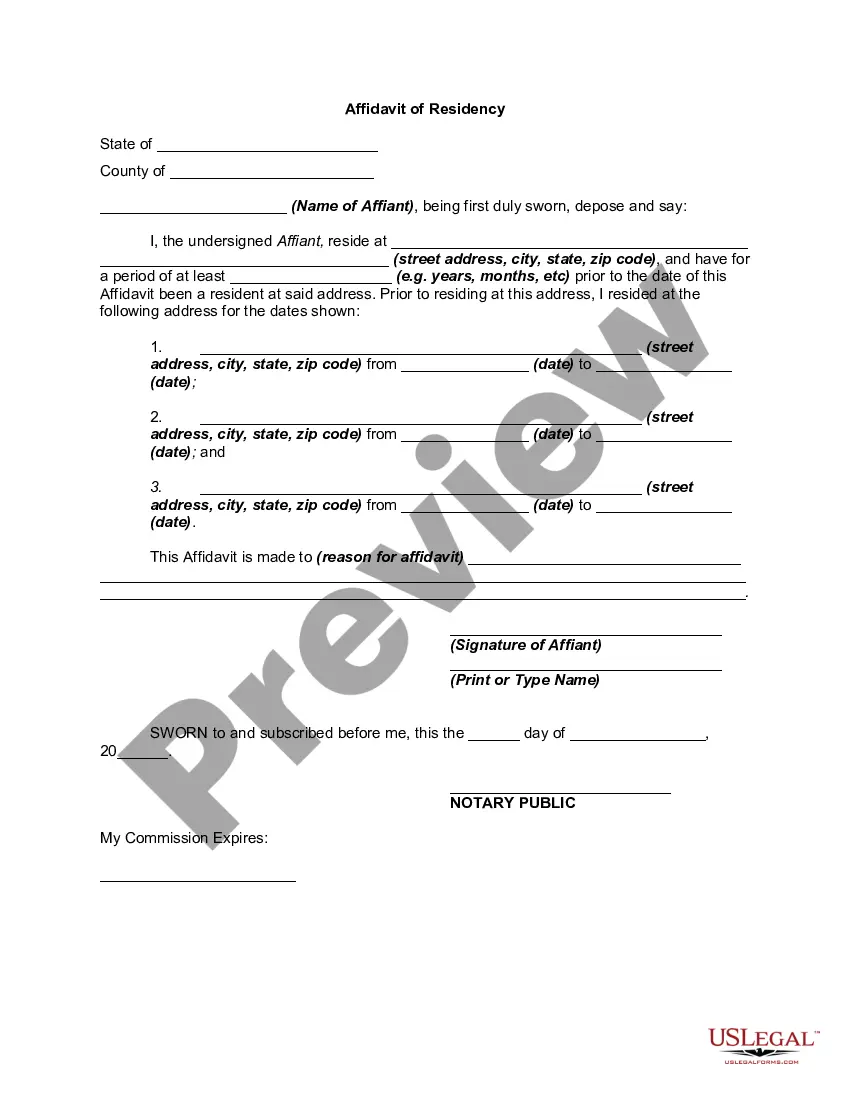
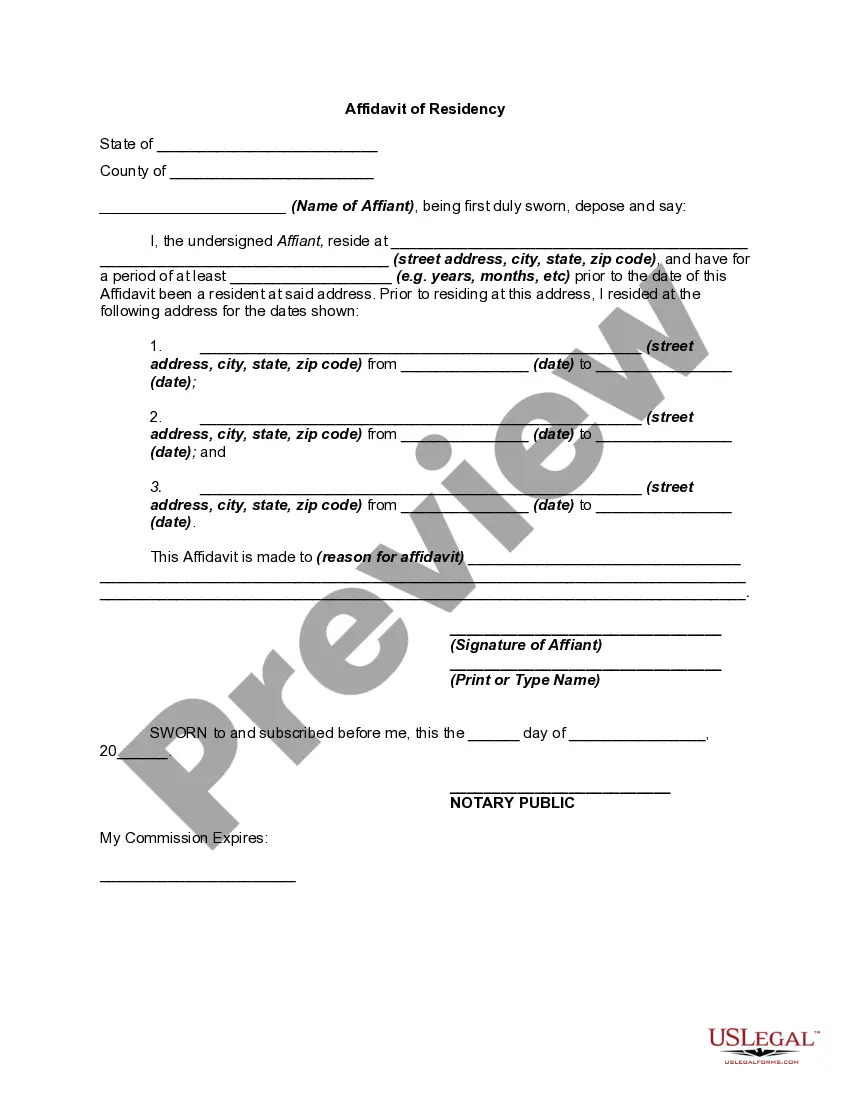
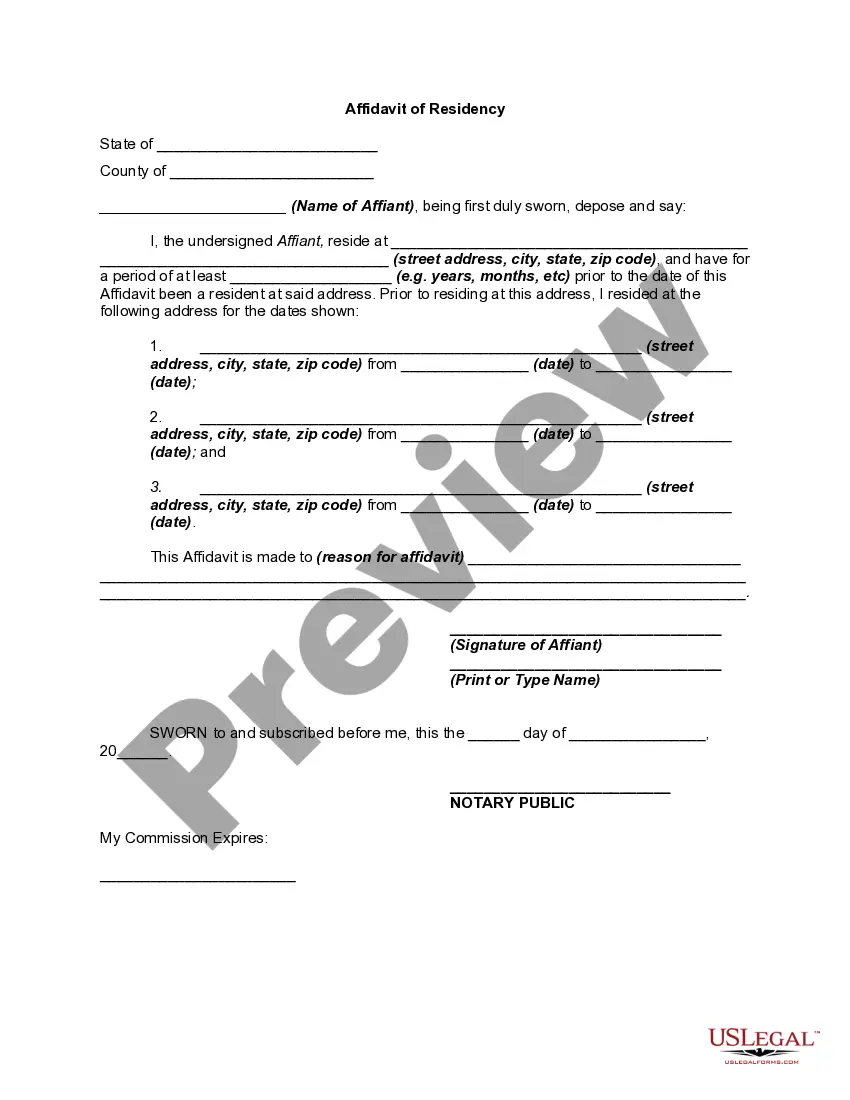
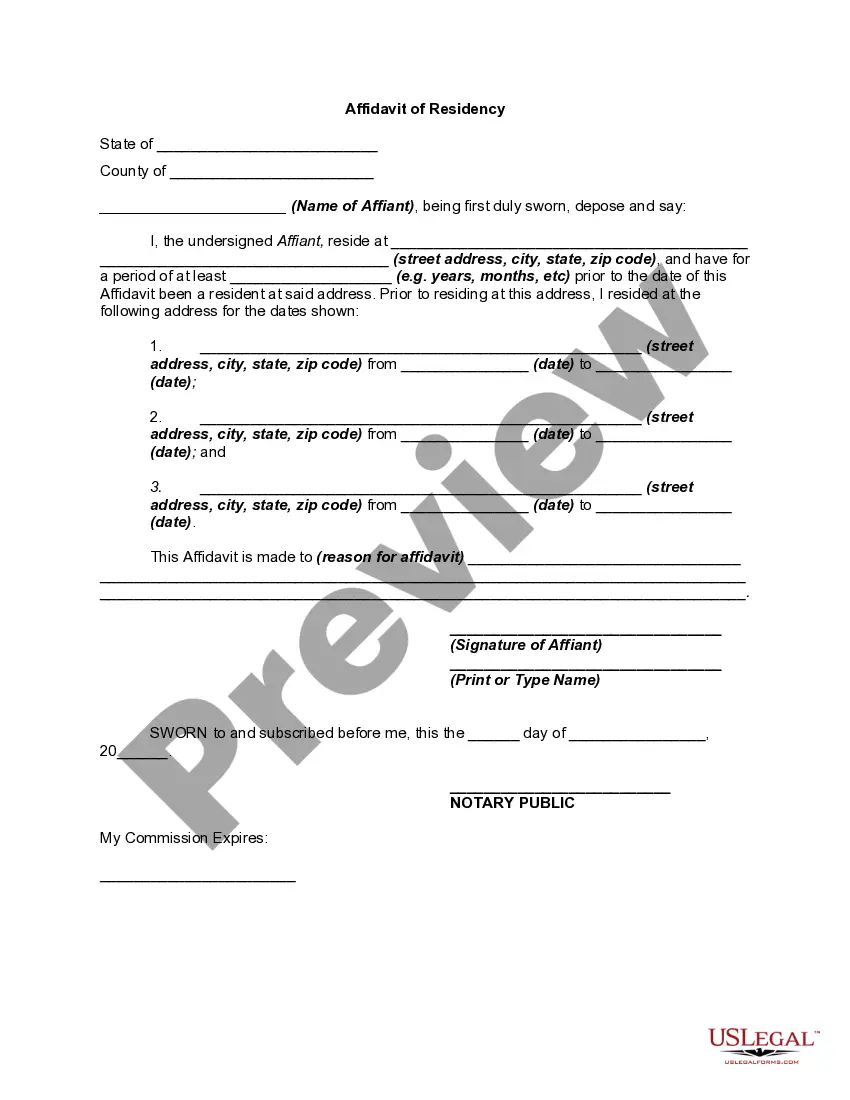
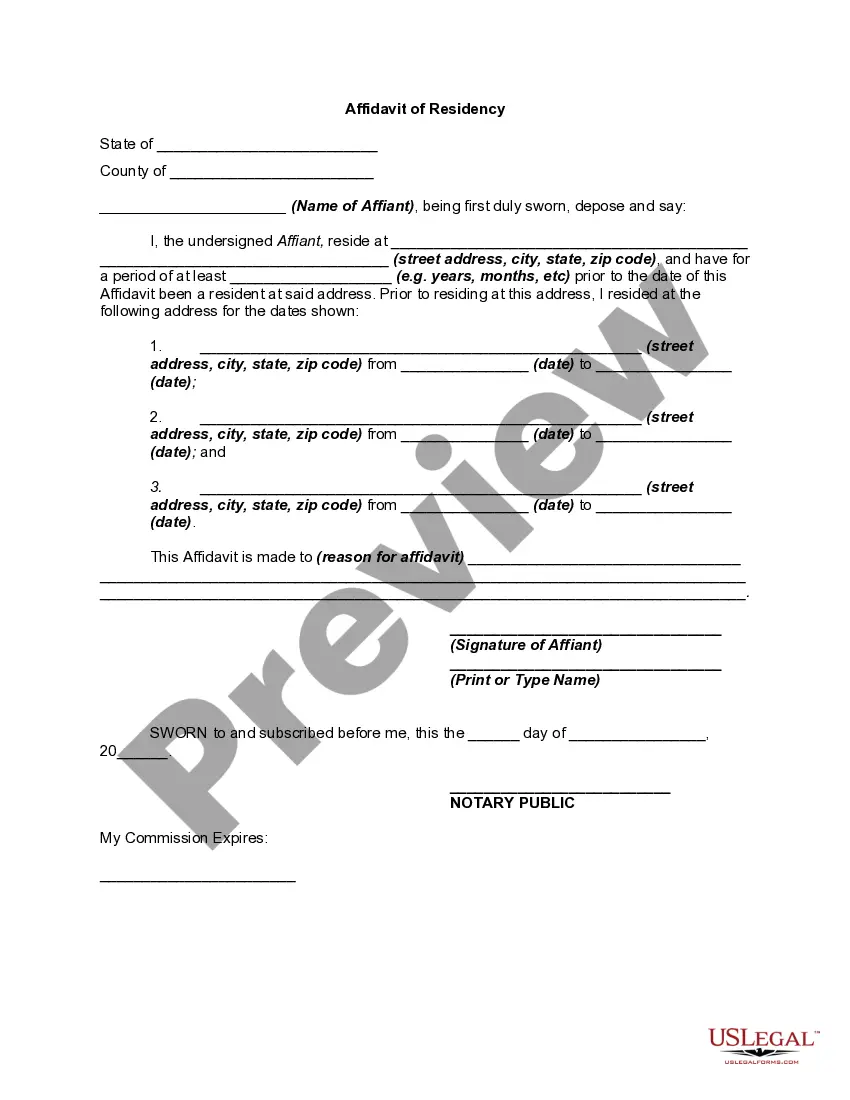
The Proof of Residency for School Enrollment is a legal document affirming an individual's residence address for the purpose of enrolling in a school. This affidavit is sworn before a notary public, ensuring that the details provided about residency are truthful to the best of the affiantâs knowledge. This form differs from similar documents as it specifically highlights residence verification needed by educational institutions, making it essential for school enrollment processes.
Form components explained
- Name of the affiant, who is making the statement.
- Current residential address of the affiant.
- Duration of residence at the current address.
- Previous addresses and the corresponding dates of residence.
- Reason for completing the affidavit, typically for school enrollment.
- Signature of the affiant and notarization details.
When to use this form
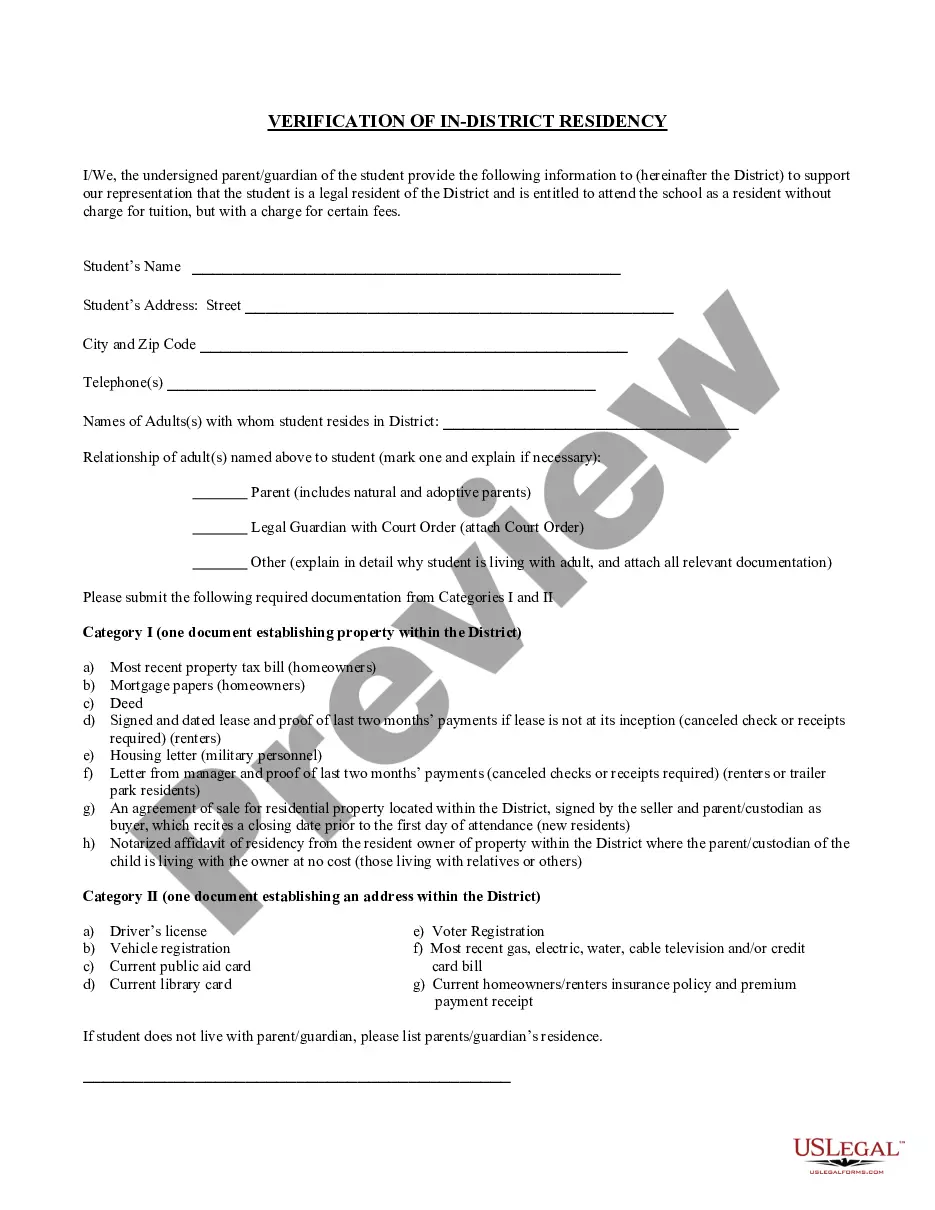
This form should be used when a school requires proof of residency for a child to be enrolled. It is commonly needed when families move to a new area and seek to register their children in local schools, or when there are questions about a student's residency status.
Who this form is for
- Parents or guardians trying to enroll their children in school.
- Individuals seeking to confirm their residency for school-related purposes.
- Affiants who need to provide legal proof of residence under oath.
Instructions for completing this form
- Enter the affiant's name at the beginning of the affidavit.
- Fill in the current residential address of the affiant.
- Specify the duration of residence at the current address.
- List previous addresses with the respective duration of residence.
- State the reason for submitting the affidavit, typically for school enrollment.
- Sign the form in front of a notary public to complete the process.
Does this form need to be notarized?
Yes, this form must be notarized to be legally valid. Using US Legal Forms, you can conveniently complete the notarization process online through secure video calls, ensuring flexibility and immediate access without travel.
Get your form ready online
Our built-in tools help you complete, sign, share, and store your documents in one place.
Make edits, fill in missing information, and update formatting in US Legal Forms—just like you would in MS Word.
Download a copy, print it, send it by email, or mail it via USPS—whatever works best for your next step.
Sign and collect signatures with our SignNow integration. Send to multiple recipients, set reminders, and more. Go Premium to unlock E-Sign.
If this form requires notarization, complete it online through a secure video call—no need to meet a notary in person or wait for an appointment.
We protect your documents and personal data by following strict security and privacy standards.

Make edits, fill in missing information, and update formatting in US Legal Forms—just like you would in MS Word.

Download a copy, print it, send it by email, or mail it via USPS—whatever works best for your next step.

Sign and collect signatures with our SignNow integration. Send to multiple recipients, set reminders, and more. Go Premium to unlock E-Sign.

If this form requires notarization, complete it online through a secure video call—no need to meet a notary in person or wait for an appointment.

We protect your documents and personal data by following strict security and privacy standards.
Mistakes to watch out for
- Not providing accurate or complete information regarding residency.
- Failing to notarize the document, which may invalidate it.
- Omitting previous addresses or inaccurate dates.
Benefits of completing this form online
- Convenience of completing the form from home without needing to visit a lawyer.
- Edit and customize the form as needed to fit your specific situation.
- Access to professionally drafted templates that ensure legal compliance.
What to keep in mind
- The Proof of Residency for School Enrollment affirms where a student resides for school purposes.
- This document must be completed accurately and notarized to be effective.
- It is essential for parents wanting to enroll their children in a school within a new district.
Looking for another form?
Form popularity
FAQ
If you don't have sufficient original documents to prove your address, some financial institutions and government agencies will accept an affidavit filled out by someone you live with. Check with the financial institution or government agency to find out if they have a specific form that you should use.
Electronic utility bills showing an Alberta address. Telephone bill. Gas bill. Cable TV bill. Other non-utility statements or correspondence mailed to your Alberta address. Bank / Credit Card statement. Alberta Social Benefit Statements. Income tax assessment summary (Notice of Assessment)
The following forms of proof of place of residence are accepted: Utility company bills. Bank statement. Photographic ID. Tax assessment. Certificate of voter registration. Correspondence from a government authority regarding the receipt of benefits. Mortgage statement.
Some of the most commonly accepted proofs of residency include a dated utility bill which includes your name and address, or a tenancy agreement with your full name and all the information about how long you have lived in your current address. In some cases a tenancy agreement may need to be notarized.
To write a letter for proof of residence, provide your legal name, certify your address and the length of time you've lived there, note any other residents living at that address, and type a legally binding oath about the accuracy of the information provided; you should also be prepared to have a landlord and/or notary
Government-issued photo ID. Residential lease/property deed. Utility bill. Letter from the government/court (marriage license, divorce, government aid) Bank statement. Driver's license/learner's permit. Car registration. Notarized affidavit of residency.
If you don't have any utility bills, you can still prove your residency through other means. You can use a combination of your license, tax documents, bank statements, lease agreements, and other official paperwork. The essential factor is that the form of proof shows your address and name.
Bank Statements. Document description: Preprinted account statements from your bank. Court Letters. Government Documents. Income Tax Statements. Lease Agreements. Notarized Affidavit of Residency. School Records. Vehicle Registration.