Sub-Operating Agreement
About this form
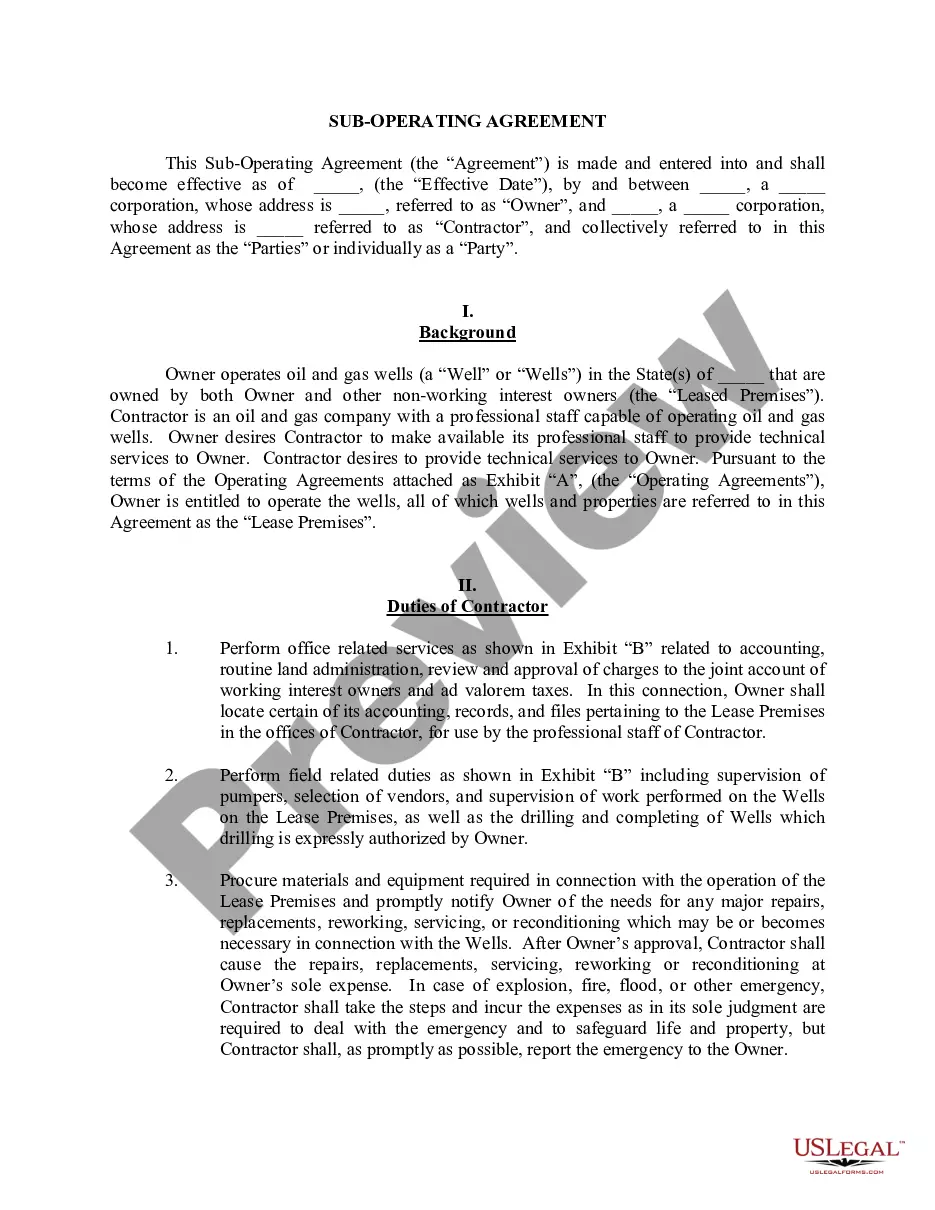
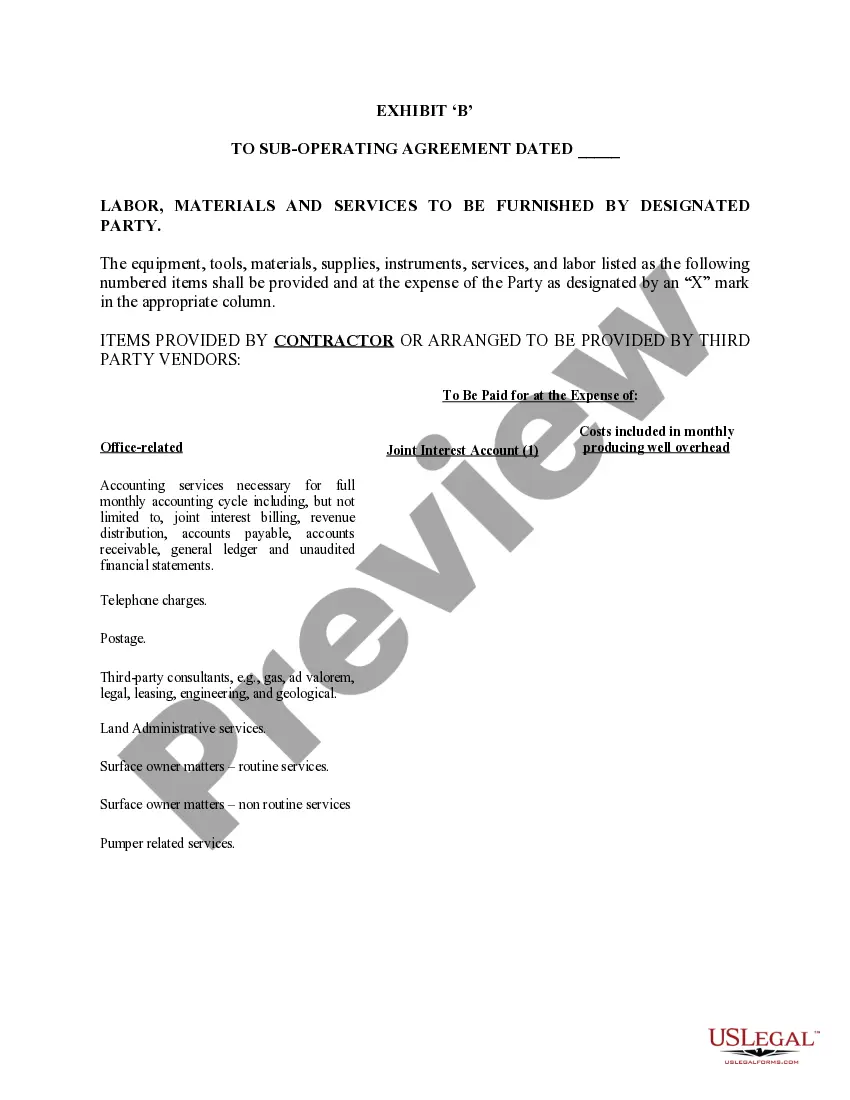
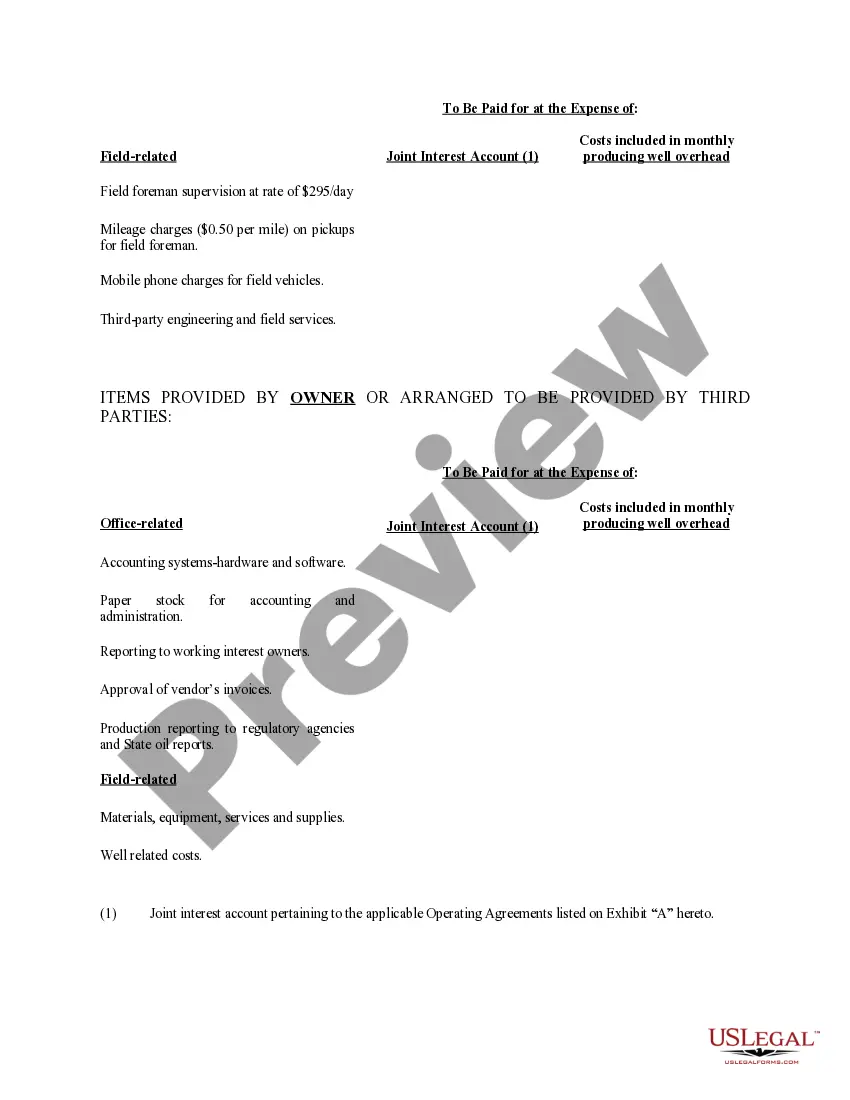
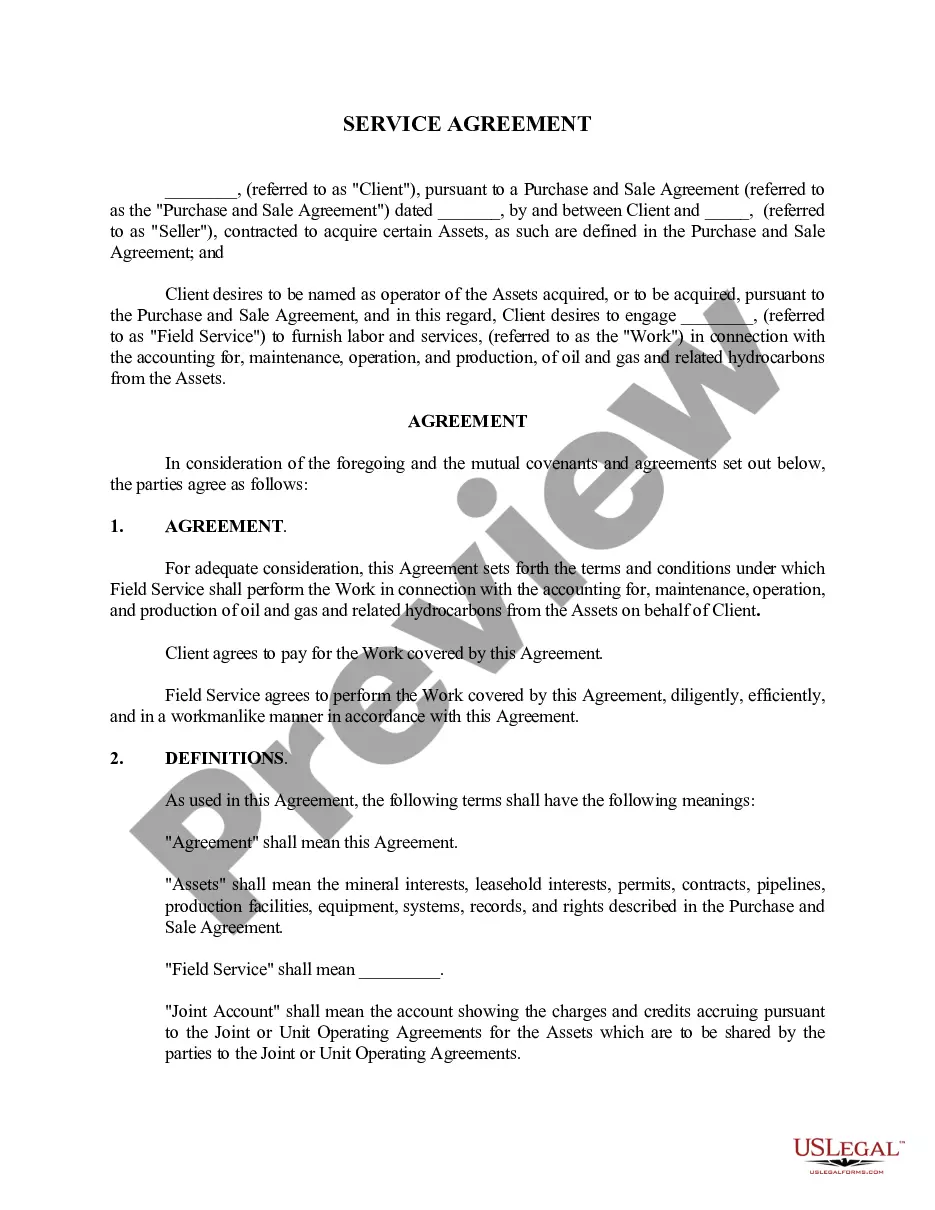
The Sub-Operating Agreement is a legal document that establishes the operational relationship between an owner of oil and gas wells and a contractor responsible for managing those wells. This agreement outlines specific duties, responsibilities, and financial arrangements, distinguishing it from other operating agreements by its focused scope on contractor services and operational management.
What’s included in this form
- Effective Date: The date when the agreement comes into force.
- Background: Details on ownership and operational rights related to the oil and gas wells.
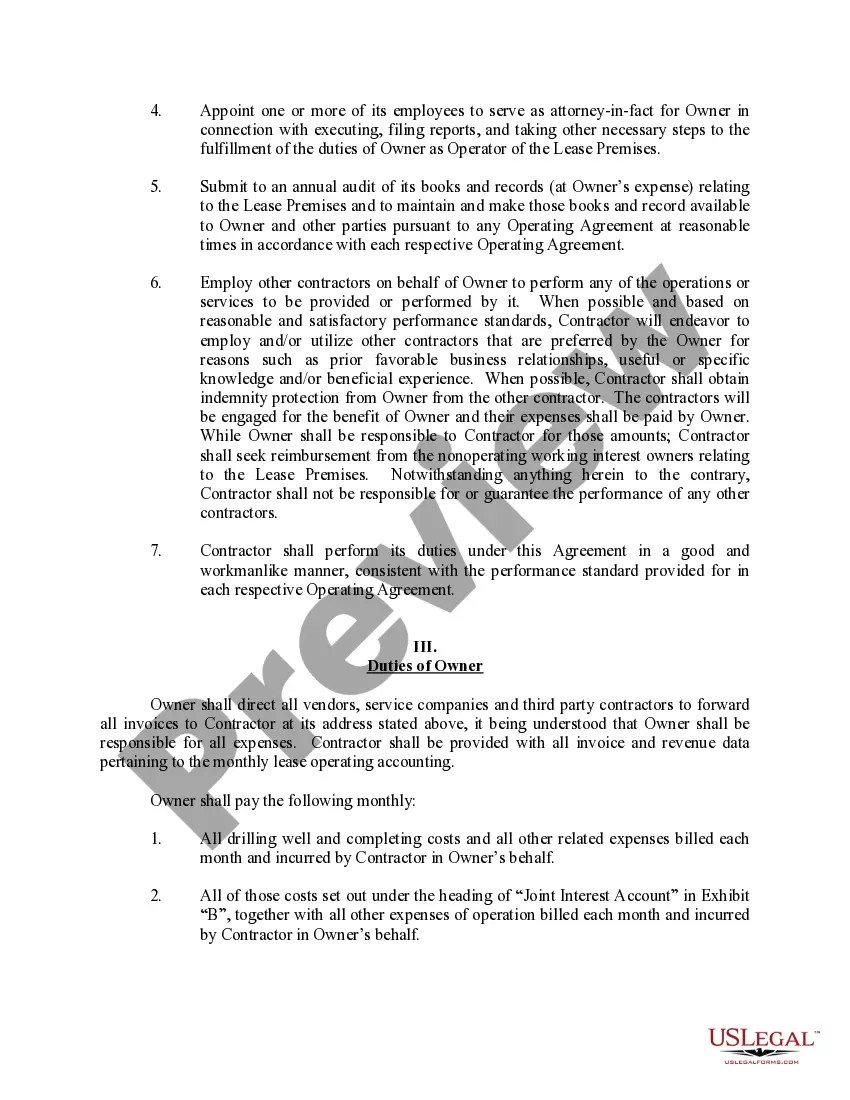
- Duties of Contractor: Specifies the responsibilities of the contractor in managing operations and providing technical services.
- Duties of Owner: Outlines the owner's financial obligations and instructions regarding third-party vendors.
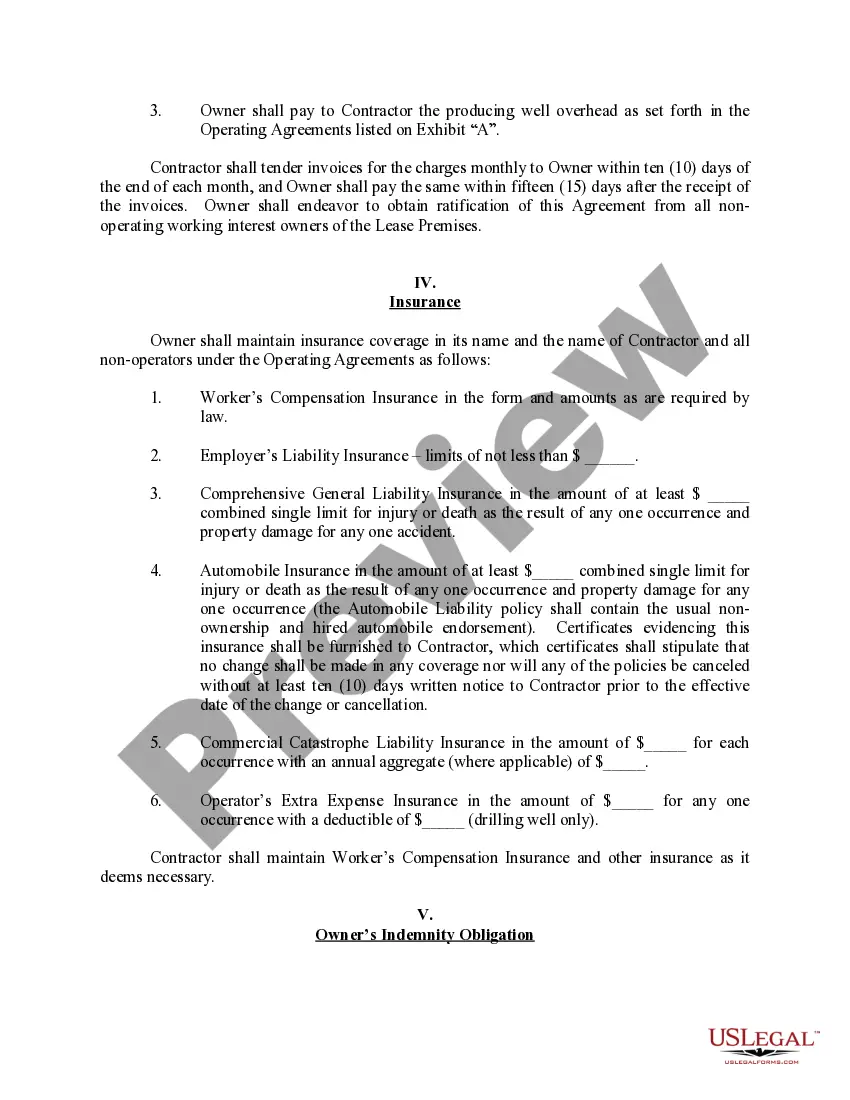
- Insurance Requirements: Describes the types of insurance coverage required for both parties.
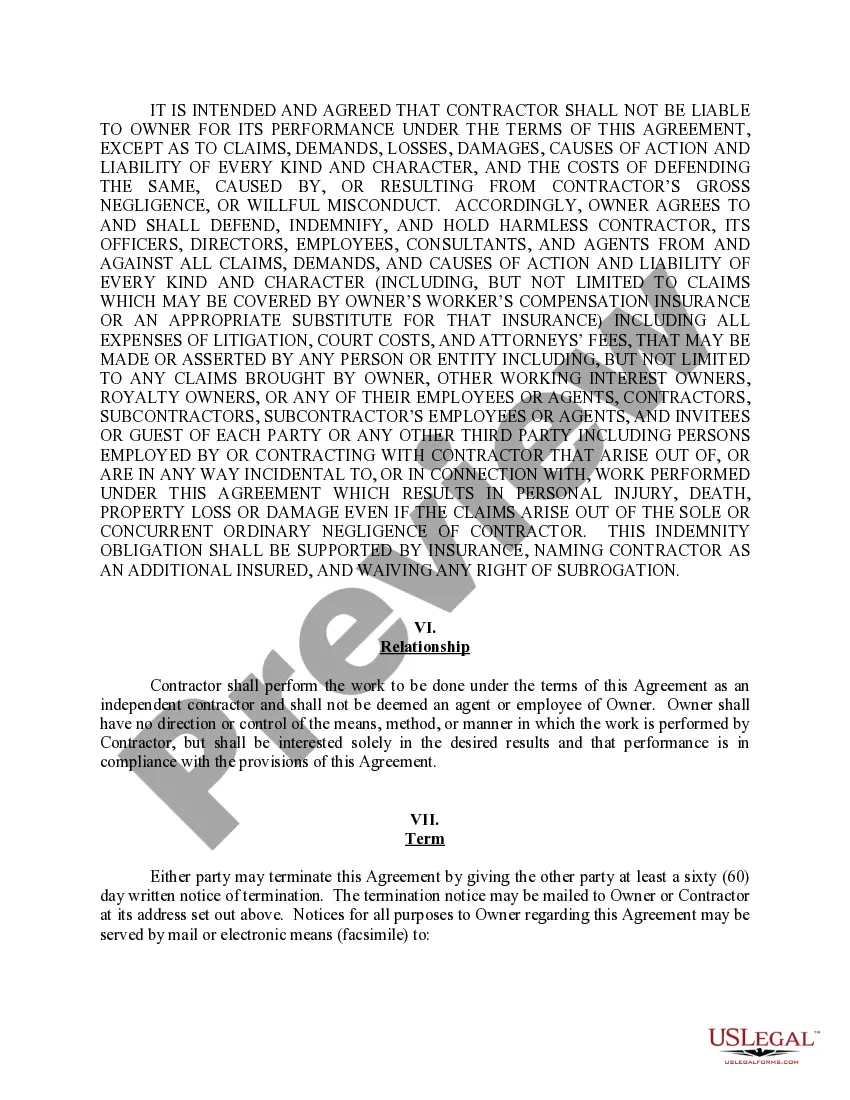
- Indemnity Obligations: Details the owner's responsibility to indemnify the contractor under certain conditions.
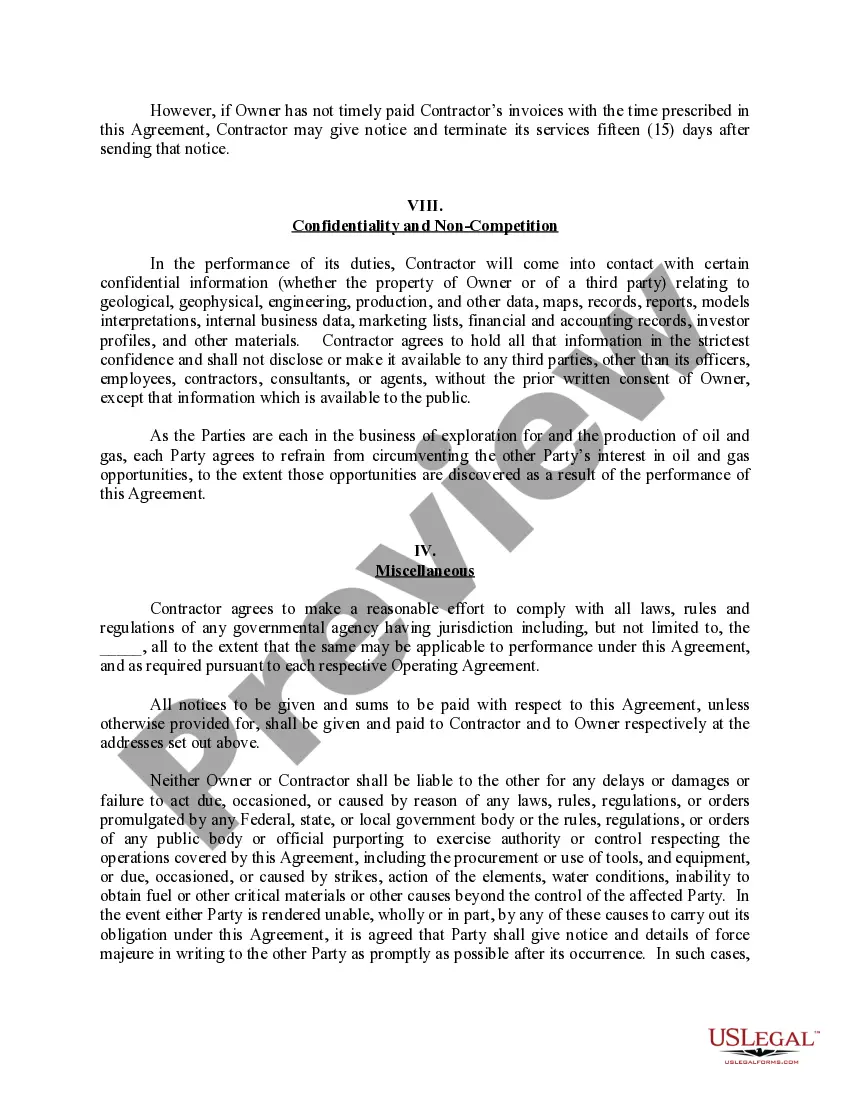
- Confidentiality and Non-Competition: Addresses expectations for confidentiality and competition between parties.

When to use this form
Use the Sub-Operating Agreement when you are the owner of oil and gas wells and wish to formalize an arrangement with a contractor for the operation and management of those wells. This document is essential whenever an owner requires technical services and oversight of operational duties, ensuring clarity and accountability between both parties.
Who can use this document
This form is intended for:
- Owners of oil and gas wells looking to hire contractors for operational purposes.
- Contractors specializing in oil and gas management services.
- Entities involved in joint ventures in the oil and gas sector.
Instructions for completing this form
To complete the Sub-Operating Agreement, follow these steps:
- Identify the parties involved, including the full legal names and business structure.
- Specify the effective date when the agreement will commence.
- Clearly outline the duties of both the contractor and the owner as described in the agreement.
- Detail the insurance requirements the owner must uphold during the agreement's term.
- Include indemnity clauses to protect the contractor from certain liabilities.
- Ensure both parties sign and date the agreement where indicated.
Does this form need to be notarized?
This form does not typically require notarization unless specified by local law. However, if you prefer added legal validation, it can be notarized to secure all parties' signatures officially.
Get your form ready online
Our built-in tools help you complete, sign, share, and store your documents in one place.
Make edits, fill in missing information, and update formatting in US Legal Forms—just like you would in MS Word.
Download a copy, print it, send it by email, or mail it via USPS—whatever works best for your next step.
Sign and collect signatures with our SignNow integration. Send to multiple recipients, set reminders, and more. Go Premium to unlock E-Sign.
If this form requires notarization, complete it online through a secure video call—no need to meet a notary in person or wait for an appointment.
We protect your documents and personal data by following strict security and privacy standards.

Make edits, fill in missing information, and update formatting in US Legal Forms—just like you would in MS Word.

Download a copy, print it, send it by email, or mail it via USPS—whatever works best for your next step.

Sign and collect signatures with our SignNow integration. Send to multiple recipients, set reminders, and more. Go Premium to unlock E-Sign.

If this form requires notarization, complete it online through a secure video call—no need to meet a notary in person or wait for an appointment.

We protect your documents and personal data by following strict security and privacy standards.
Avoid these common issues
- Failing to clearly define roles and responsibilities, leading to confusion.
- Not specifying the effective date, which can lead to disputes over when terms are enforceable.
- Neglecting to detail insurance requirements, putting both parties at risk.
- Overlooking the need for signatures from both parties, rendering the agreement invalid.
Why use this form online
- Convenience of downloading a professionally drafted form tailored to your needs.
- Editability allows customization to reflect specific terms and conditions required for your situation.
- Provides peace of mind with legally compliant language drafted by licensed attorneys.
What to keep in mind
- The Sub-Operating Agreement is essential for formalizing contractor relationships in oil and gas operations.
- Clear roles, responsibilities, and financial obligations are crucial to avoid disputes.
- Ensure compliance with state regulations where applicable, especially regarding insurance and performance standards.
Looking for another form?

Form popularity
FAQ
If the single-member LLC is owned by a corporation or partnership, the LLC should be reflected on its owner's federal tax return as a division of the corporation or partnership.
Most states do not require LLCs to have this document, so many LLCs choose not to draft one. While it may not be a requirement to have an operating agreement, it's actually in the best interest of an LLC to draft one.
An LLC is a special entity recognized under state law that is neither a sole proprietorship nor a partnership nor a corporation.A subsidiary is a company owned by another company, the parent LLC. The parent LLC owns at least 50% of the voting stock of the subsidiary.
An operating agreement (bylaws) is an internal document that defines how the business owners professionally relate to each other, whereas the articles of incorporation (certificate of formation) is a public document that legally establishes a business as a corporation.
What's the difference in bylaws vs operating agreement? Bylaws are internal governing documents for corporations, while an operating agreement lays out internal operating procedures for an LLC.
Are you wondering, can an LLC have subsidiaries? An LLC can have subsidiaries. Parent companies (also known as holding companies or umbrella companies) are usually formed as corporations. They own a large (controlling) amount of interest in a different company, which is called its subsidiary.
Yes. There are two ways in which an LLC may own another LLC: An LLC may own multiple, single-member LLCsthis is called a holding company structure; or. An LLC may serve as the master entity and own a series of LLC cells, should state statute offer this option.
A limited liability company (LLC) is not required to have bylaws. Bylaws, which are only relevant to businesses structured as corporations, include rules and regulations that govern a corporation's internal management.Alternatively, LLCs create operating agreements to provide a framework for their businesses.
Single-member LLC are changes in ownership of the interests transferred, unless the transfers are excluded under a specific statutory provision.