Mississippi Letters Testamentary
What is this form?
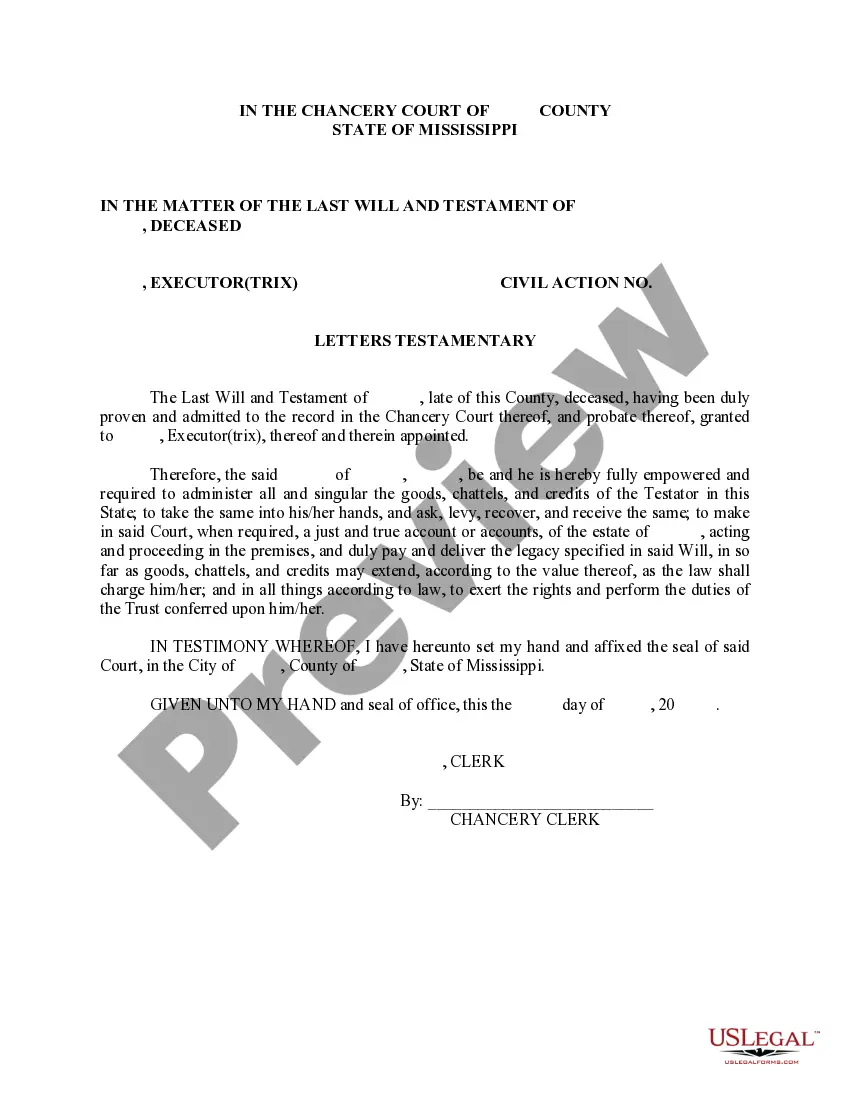
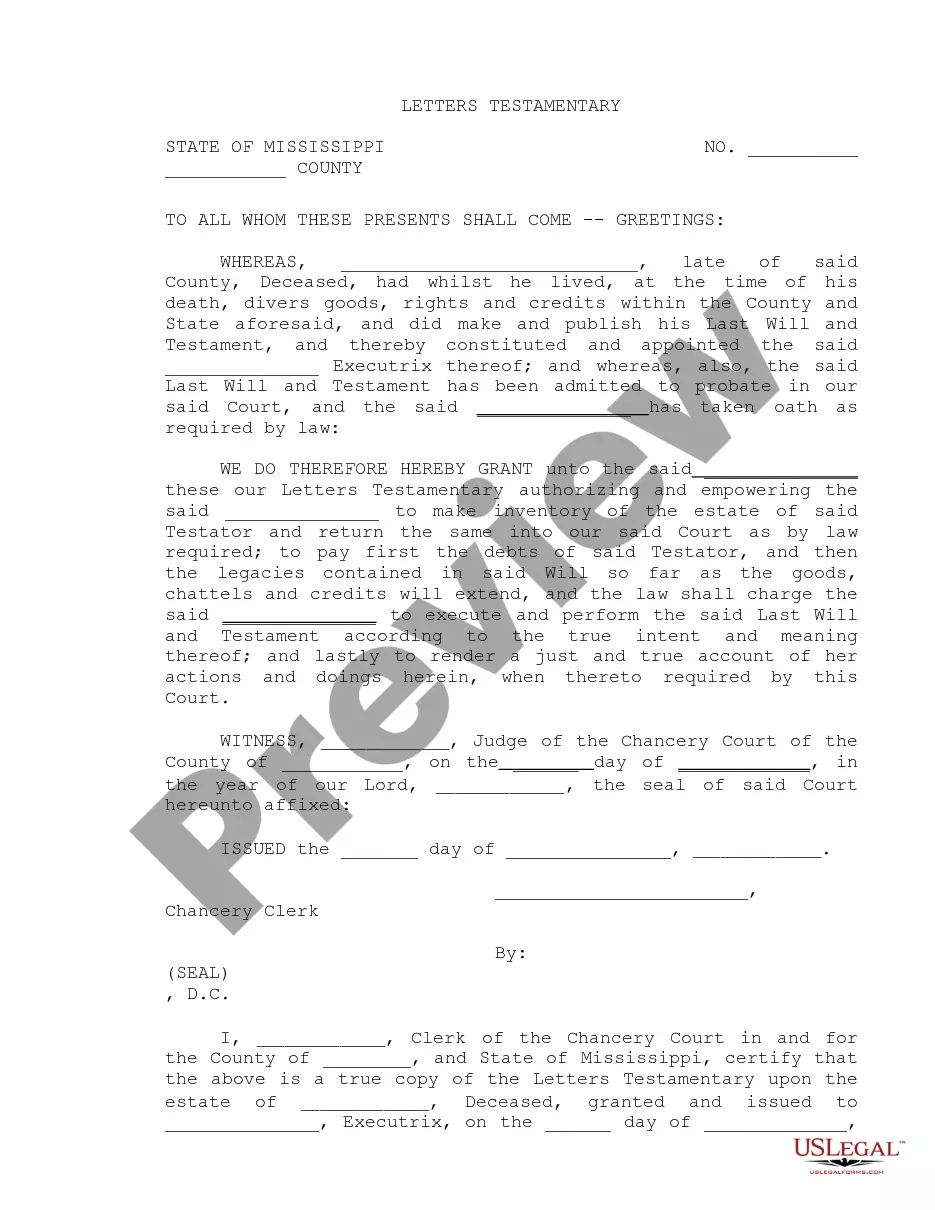
Letters Testamentary is a legal document that authorizes an individual to act as the administrator of an estate in Mississippi. This form appoints a person to manage the estate's assets and handle debts and distributions according to the will or state laws. Unlike other forms, Letters Testamentary specifically grants the power needed to oversee the probate process and ensure proper execution of the deceasedâs wishes.
What’s included in this form
- Appointed administrator: Identifies the person designated to manage the estate.
- Estate information: Details about the deceased and their assets.
- Authority granted: Specifies the powers the administrator holds regarding the estate.
- Judicial approval: Indicates that the form must be acknowledged by a court to be effective.

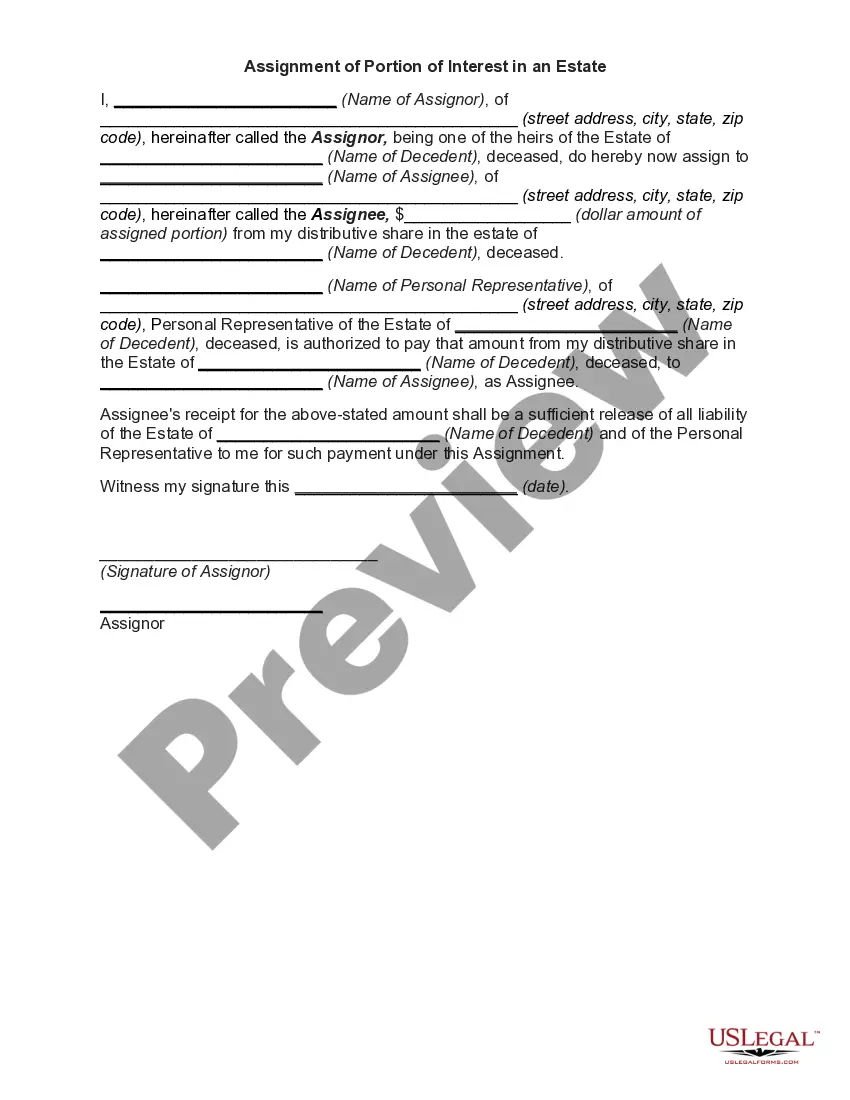
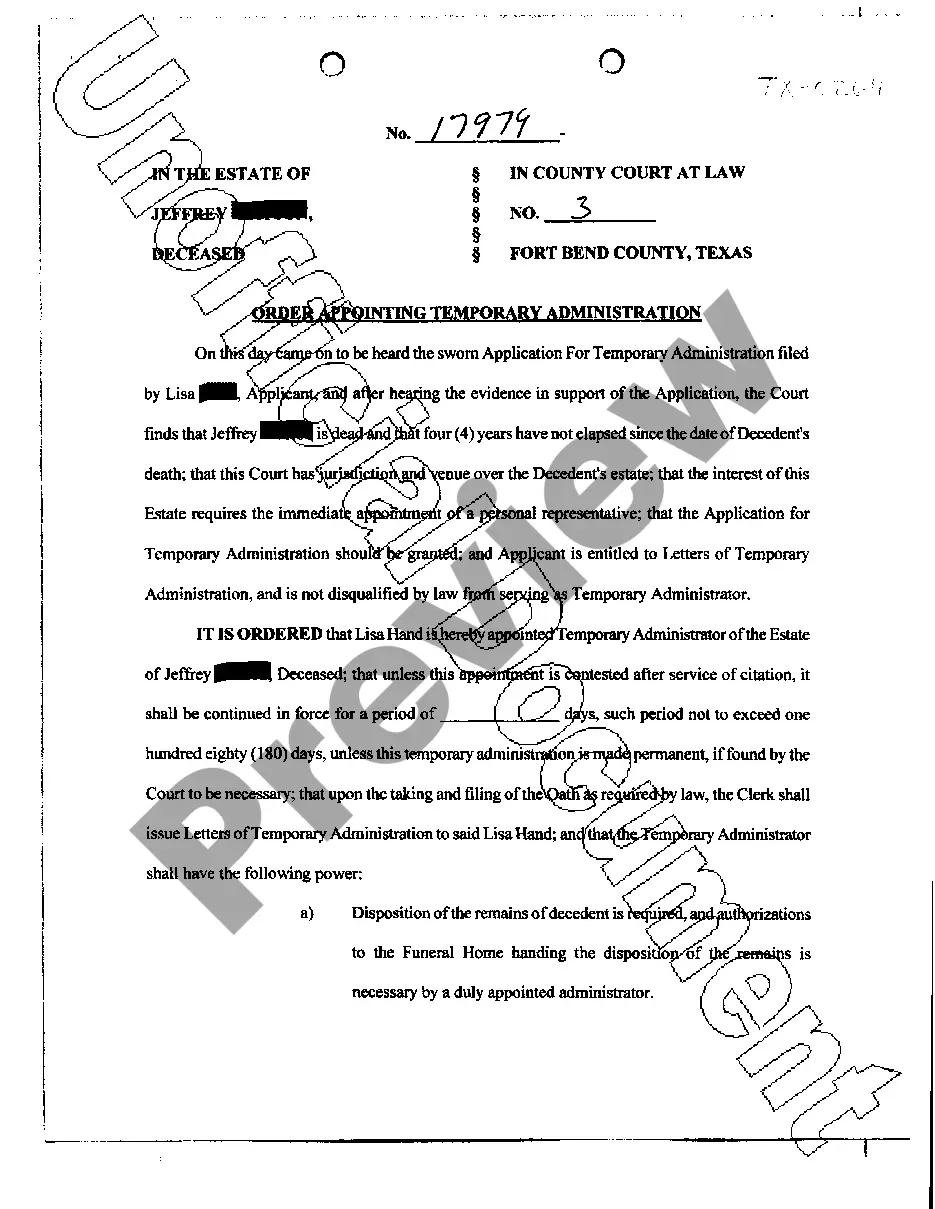
When to use this form
This form is typically used when a person passes away and an heir or designated individual needs legal authority to manage their estate. It is necessary in situations where the deceased had a will and required someone to carry out its instructions. Letters Testamentary help facilitate the probate process and ensure that estate matters are handled according to law.
Who this form is for
- Individuals who have been named as executors in a will.
- Family members or heirs seeking to administer an estate.
- Attorneys assisting clients through the probate process.
- Anyone responsible for settling the affairs of a deceased person in Mississippi.
Steps to complete this form
- Identify the deceased individual and their date of death.
- Enter the name and contact information of the appointed administrator.
- Specify any necessary details regarding the estate's assets.
- Obtain the required signatures from all relevant parties.
- File the completed form with the appropriate probate court for approval.
Is notarization required?
This form does not typically require notarization unless specified by local law. It is important to confirm your specific court's requirements regarding notarization before submitting the Letters Testamentary.
Get your form ready online
Our built-in tools help you complete, sign, share, and store your documents in one place.
Make edits, fill in missing information, and update formatting in US Legal Forms—just like you would in MS Word.
Download a copy, print it, send it by email, or mail it via USPS—whatever works best for your next step.
Sign and collect signatures with our SignNow integration. Send to multiple recipients, set reminders, and more. Go Premium to unlock E-Sign.
If this form requires notarization, complete it online through a secure video call—no need to meet a notary in person or wait for an appointment.
We protect your documents and personal data by following strict security and privacy standards.

Make edits, fill in missing information, and update formatting in US Legal Forms—just like you would in MS Word.

Download a copy, print it, send it by email, or mail it via USPS—whatever works best for your next step.

Sign and collect signatures with our SignNow integration. Send to multiple recipients, set reminders, and more. Go Premium to unlock E-Sign.

If this form requires notarization, complete it online through a secure video call—no need to meet a notary in person or wait for an appointment.

We protect your documents and personal data by following strict security and privacy standards.
Avoid these common issues
- Failing to have the form signed by all required parties.
- Providing incomplete or inaccurate information about the deceased or the assets.
- Not filing the form with the appropriate court in a timely manner.
- Neglecting to follow any additional local requirements or instructions.
Advantages of online completion
- Convenience of downloading and filling the form at any time.
- Access to the latest updates and compliance with state laws.
- Easy to customize the form according to your specific needs.
- Improved accuracy with professionally drafted templates.
Legal use & context
- Letters Testamentary is recognized by Mississippi courts as a legal document for estate management.
- Using this form allows the appointed administrator to fulfill their duties legally and responsibly.
Summary of main points
- Letters Testamentary is crucial for appointing an estate administrator in Mississippi.
- Ensure complete and accurate information to avoid processing delays.
- Consider online options for ease of access and updated forms.
Looking for another form?
Form popularity
FAQ
What are letters testamentary? When a person dies and has properly executed a last will and testament that names another person to manage his estate, the court issues letters testamentary.
A common question asked of estate planning attorneys is how to obtain a copy of a deceased person's last will and testament or other probate court records. Because probate files are public court records that anyone can read, if a will has been filed for probate then you should be able to obtain a copy of it.
When probating a will, it is necessary for one person to be appointed as the executor.Generally speaking, the executor must obtain a letter of testamentary, which provides legal documentation and proof that they are in fact the executor of the estate.
Most likely you will need an attorney to obtain letters testamentary. Many attorneys offer a free consultation. At least meet with an attorney to make sure letters testamentary is what you need.
Letters testamentary are not issued when there is no will. When a person dies intestate, or without a will, the court issues letters of administration and appoints someone to distribute the decedent's property.
To obtain your letter of testamentary, you will need to file the will and death certificate in the probate court, along with forms asking for the letter of testamentary. You'll need to provide your information, as well as some basic information about the value of the estate and the date of death.
There are two components of letter of testamentary cost: the court fee and the attorney's fees. The court fee ranges from $45 to $1,250, depending on the gross value of the estate. The attorney's fees start at about $2,500 and can go up depending on the complexity of the case.
Find the local probate court or surrogate's court, as it's sometimes called. File the will and a certified copy of the testator's death certificate . Fill out the necessary paperwork , like a petition form, and provide any additional documents.