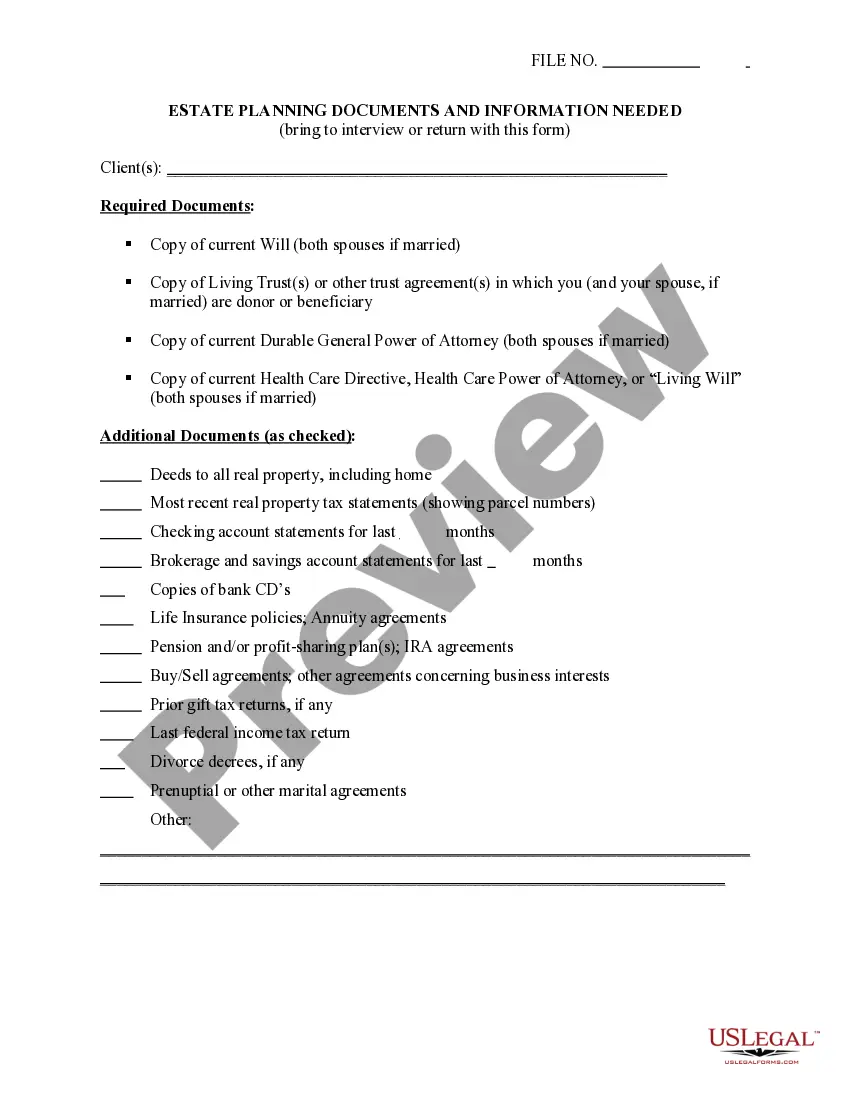
Request for Estate Planning Documents and Information
About this form
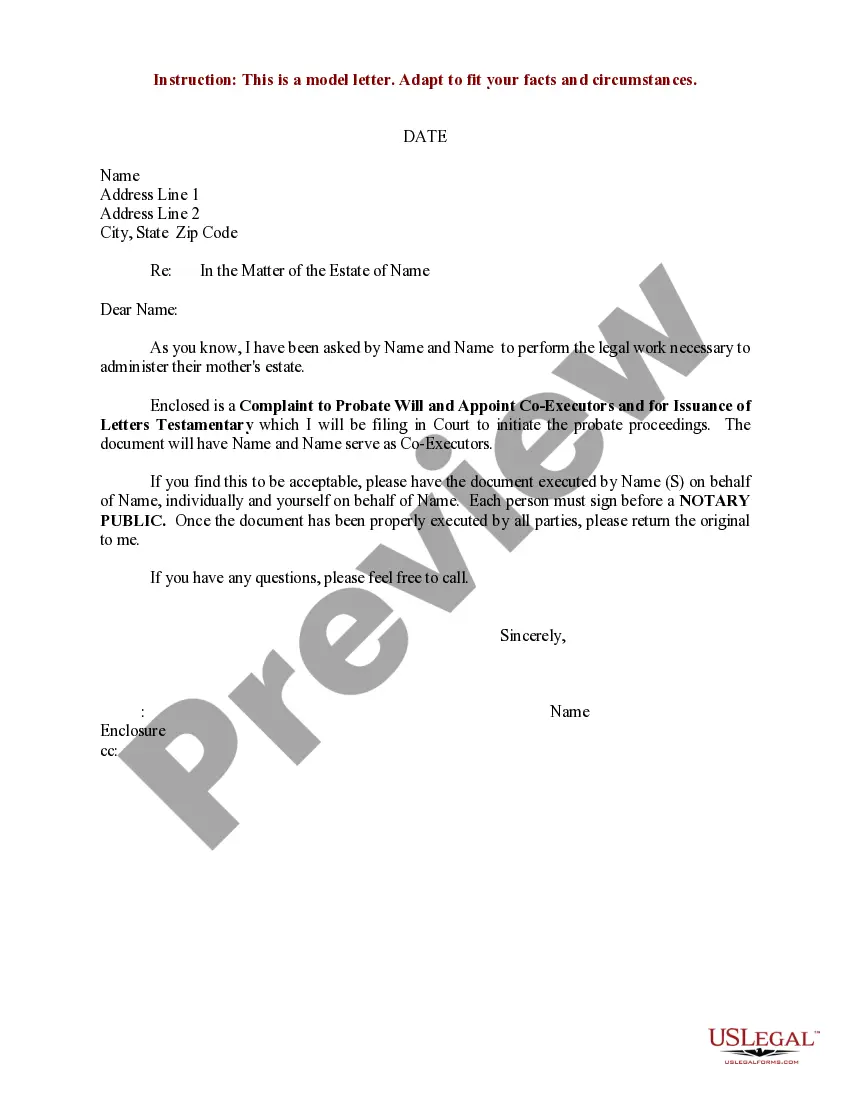
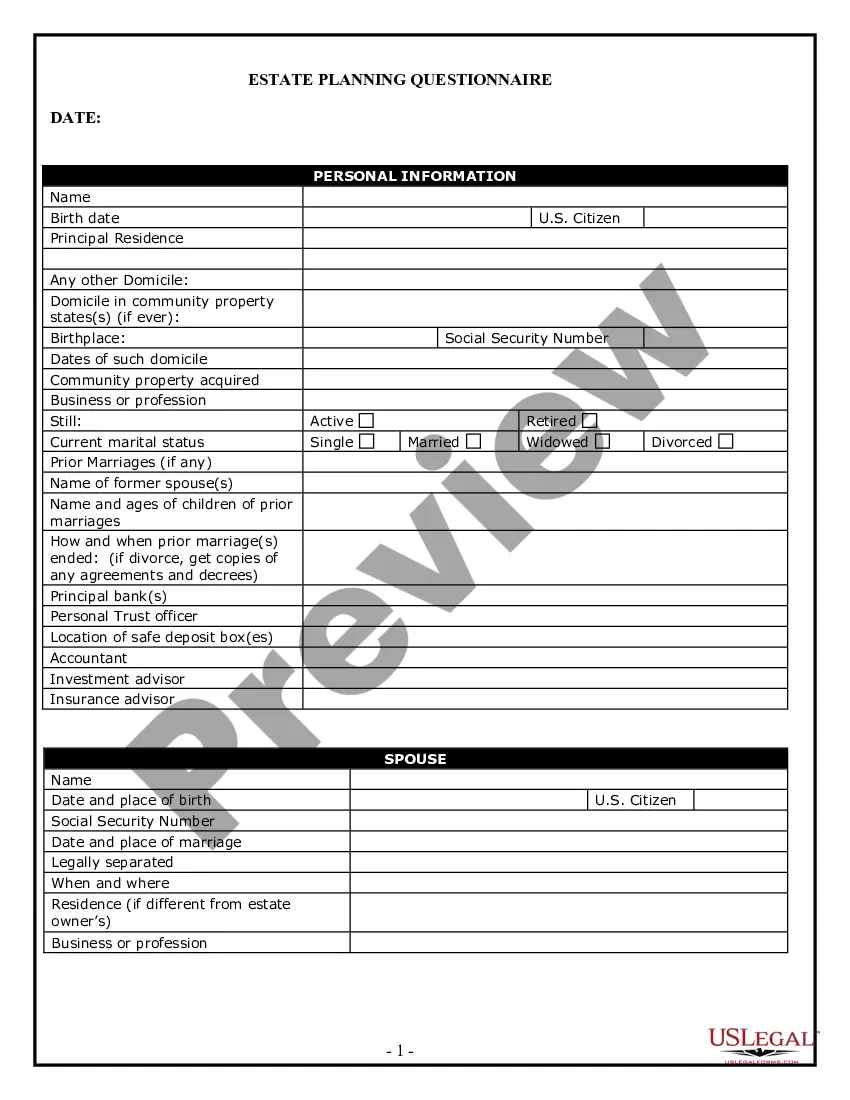
The Request for Estate Planning Documents and Information is a legal form designed to assist law firms in gathering essential documents and financial information necessary for effective estate planning. This form streamlines the process by ensuring that all pertinent information is collected upfront, which makes it different from other generic estate planning forms that may not require such specific document requests.
Main sections of this form
- Client information section for recording the names of involved parties.
- Required documents section that lists must-have items like wills, trusts, and powers of attorney.
- Additional documents checklist for optional but relevant paperwork such as property deeds and tax returns.
When to use this document
This form should be used when a client is engaging with an attorney for estate planning services. It is particularly useful at the start of the estate planning process, helping clients prepare by providing necessary documents and information that enable lawyers to create tailored estate plans.
Who this form is for
- Individuals or couples starting the estate planning process.
- Clients seeking customized estate planning advice from legal professionals.
- Anyone needing to organize their estate-related documents before a consultation with an attorney.
How to prepare this document
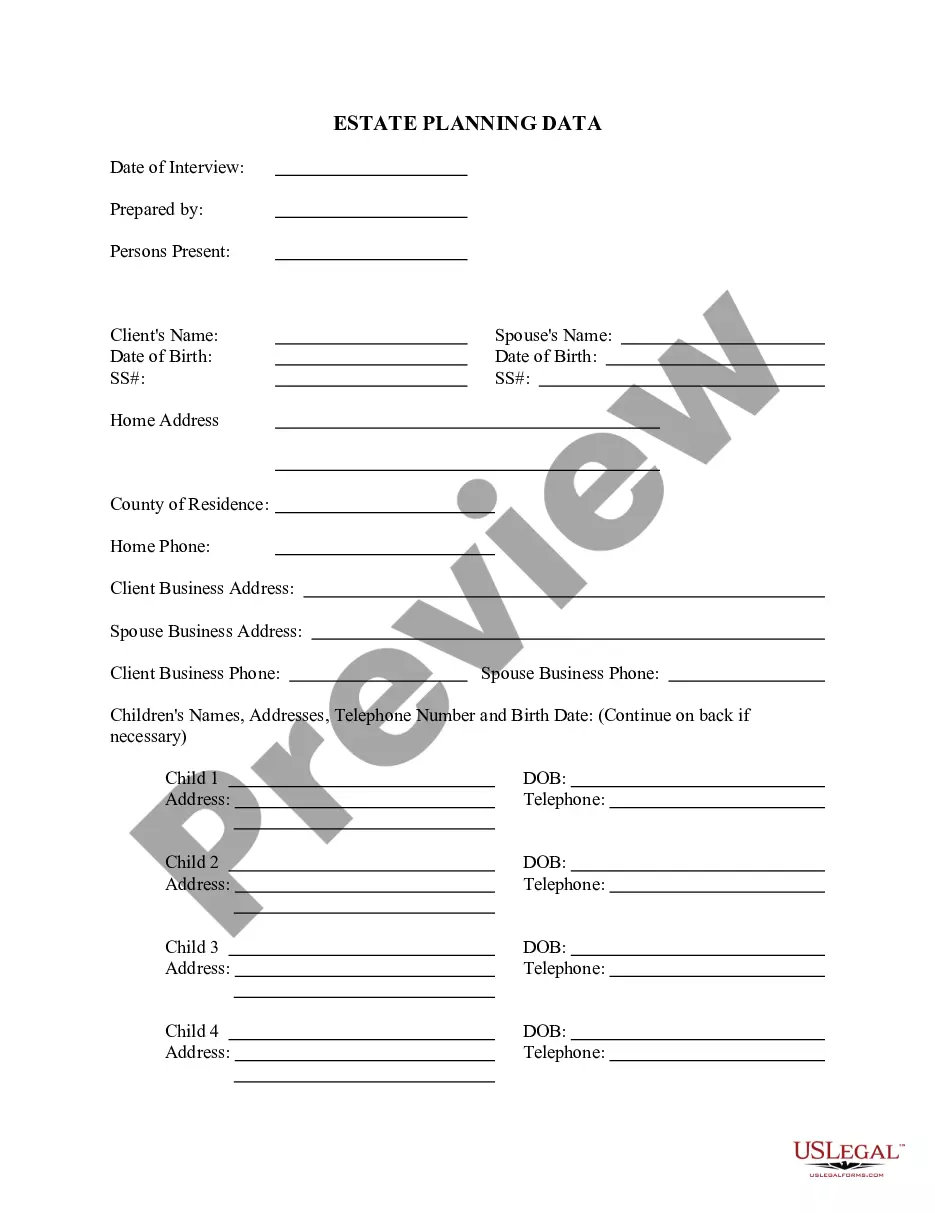
- Begin by entering your personal information at the top of the form.
- Gather and check all required documents from the list provided.
- Complete the section indicating any additional documents you are submitting.
- Review your entries for accuracy and completeness.
- Submit this form to your attorney before your estate planning consultation.
Notarization requirements for this form
This form does not typically require notarization unless specified by local law. However, you should consult with your attorney regarding any specific requirements in your state that may affect your estate planning documents.
Get your form ready online
Our built-in tools help you complete, sign, share, and store your documents in one place.
Make edits, fill in missing information, and update formatting in US Legal Forms—just like you would in MS Word.
Download a copy, print it, send it by email, or mail it via USPS—whatever works best for your next step.
Sign and collect signatures with our SignNow integration. Send to multiple recipients, set reminders, and more. Go Premium to unlock E-Sign.
If this form requires notarization, complete it online through a secure video call—no need to meet a notary in person or wait for an appointment.
We protect your documents and personal data by following strict security and privacy standards.

Make edits, fill in missing information, and update formatting in US Legal Forms—just like you would in MS Word.

Download a copy, print it, send it by email, or mail it via USPS—whatever works best for your next step.

Sign and collect signatures with our SignNow integration. Send to multiple recipients, set reminders, and more. Go Premium to unlock E-Sign.

If this form requires notarization, complete it online through a secure video call—no need to meet a notary in person or wait for an appointment.

We protect your documents and personal data by following strict security and privacy standards.
Common mistakes
- Failing to include all required documents, which can delay the estate planning process.
- Not checking off the additional documents that may be relevant to your situation.
- Submitting the form without reviewing for accuracy, potentially leading to misunderstandings during consultations.
Why use this form online
- Convenience of completing the form at your own pace from the comfort of your home.
- Editability allows clients to update and adjust their submissions as needed.
- Reliable access to a comprehensive checklist ensures no critical documents are overlooked.
Looking for another form?
Form popularity
FAQ
Your Last Will & Testament is perhaps your most important estate planning document because it delineates how you want to distribute your assets after you pass away. A Last Will & Testament is essential to determining who will inherit your property as well as how much they will inherit and when they inherit it.
A: The three main priorities of an estate plan are to ensure that your assets are distributed in the way you prefer, that someone else has the authority to make decisions on your behalf if you are unable to do so, and that your beneficiaries are clearly defined.
A comprehensive estate plan typically includes four estate planning documents. These documents include a financial power of attorney, an advance care directive, and a living trust or a last will.
What Are the 5 Components of Estate Planning? Wills and Trusts. A common misconception is that only wealthy people need wills or trusts.Durable Power of Attorney.Medical or Healthcare Power of Attorney.Living Wills and Advance Directives for Medical Decisions.Beneficiary Designations.
A letter of instruction is a cheat sheet for anyone involved in settling your affairs. Unlike a will, this letter has no legal authority. However, it can provide an easy-to-understand explanation of your overall estate plan to your executor and lay out your wishes to your family for things not covered by the will.
Having a last will and testament is an important part of every estate plan, making it a great first step in getting your plan in place.
The 4 legal documents every adult should have A will. Also known as: a last will and testament.A living will. Also known as: an advance directive.Durable health care power of attorney. It appoints: a health care proxy.Durable financial power of attorney. It appoints: an attorney-in-fact or agent.