Sample Letter for Initial Probate Proceedings - Request to Execute Documents
Understanding this form
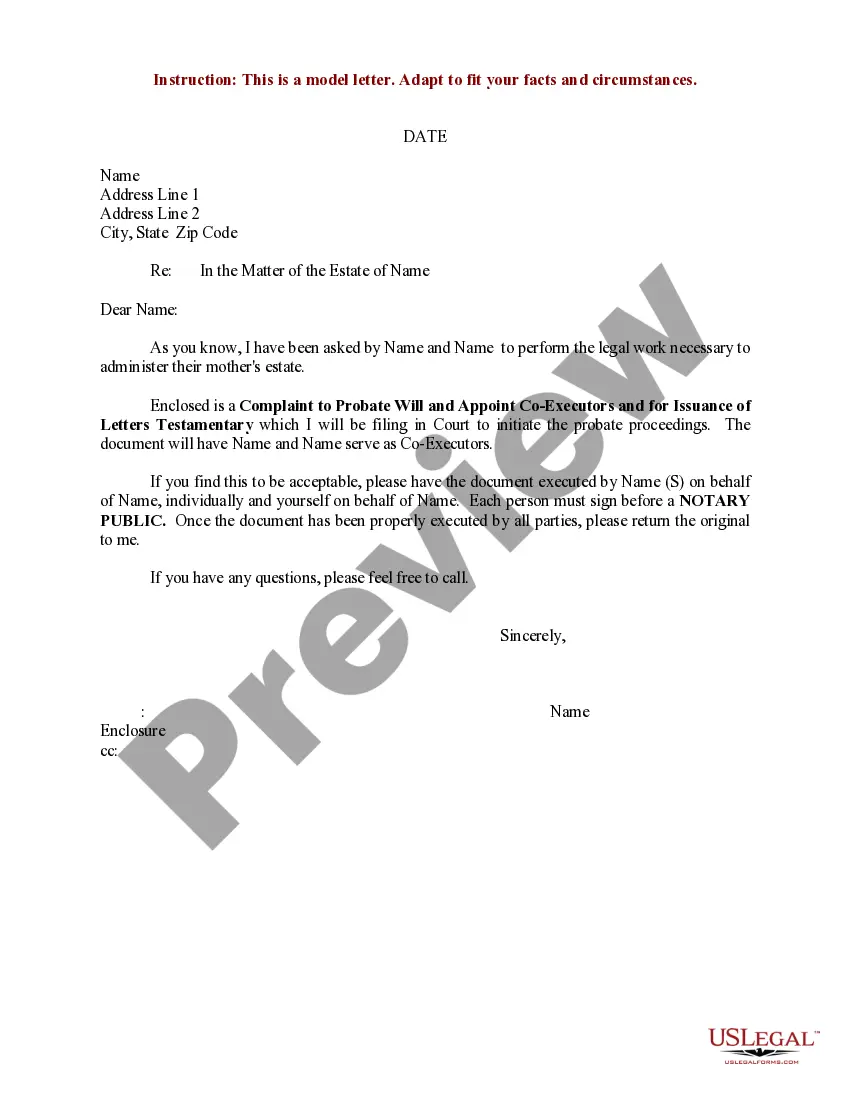
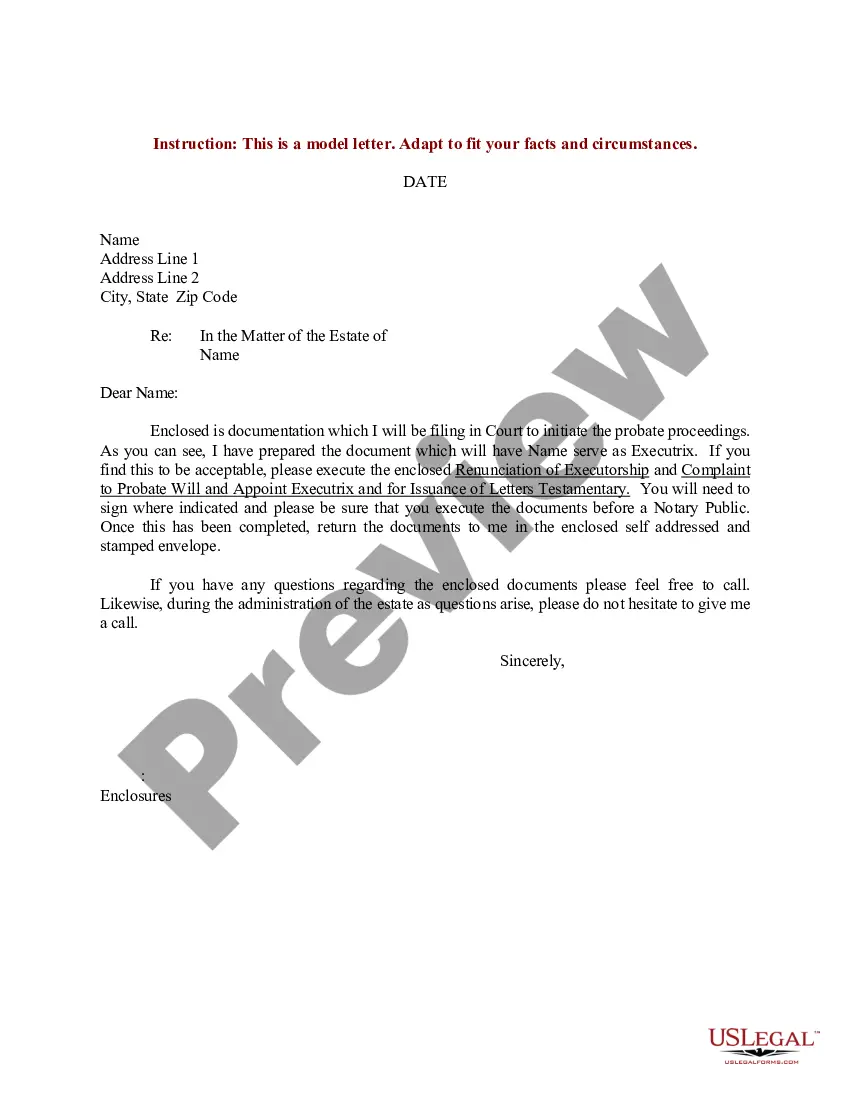
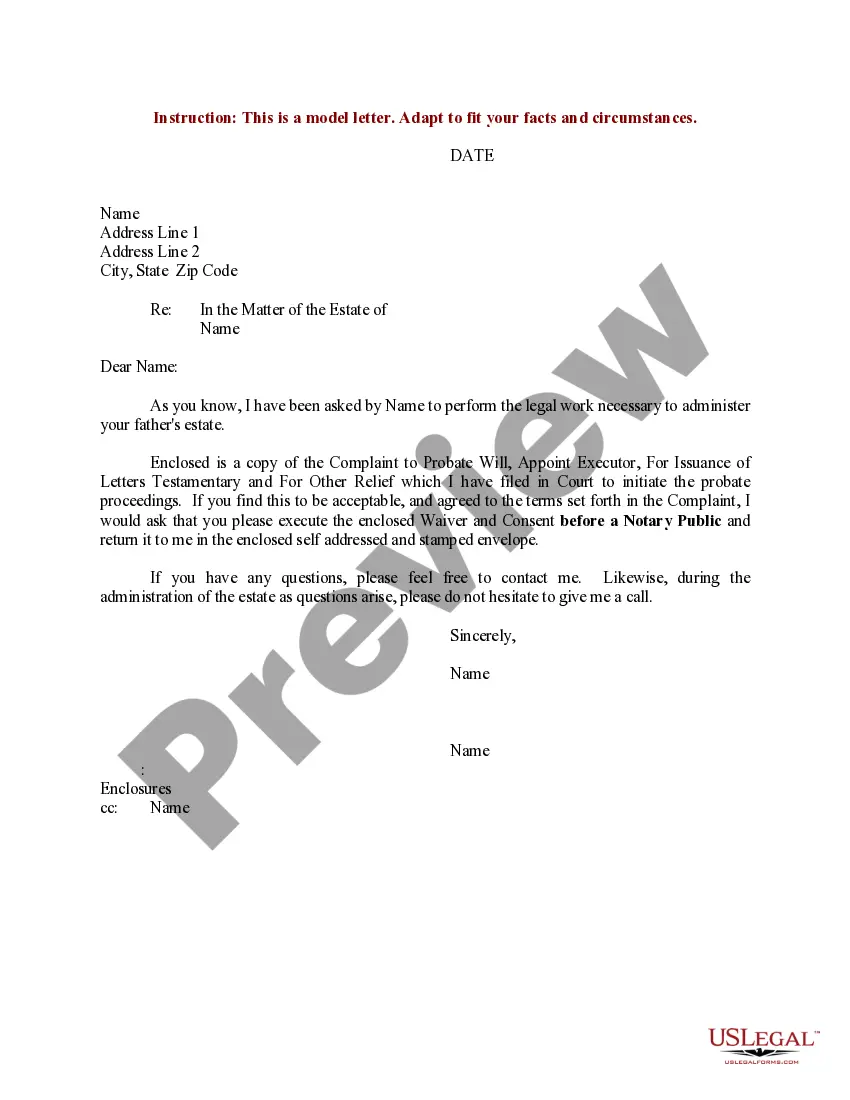
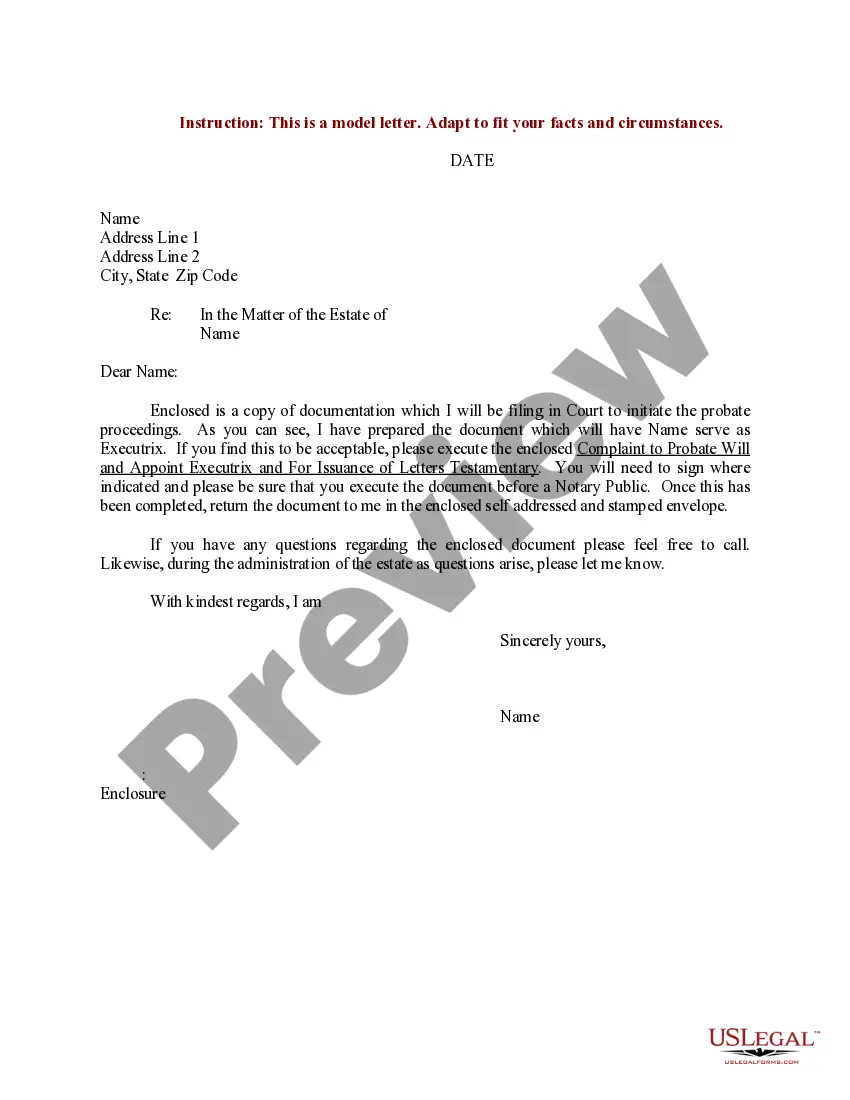
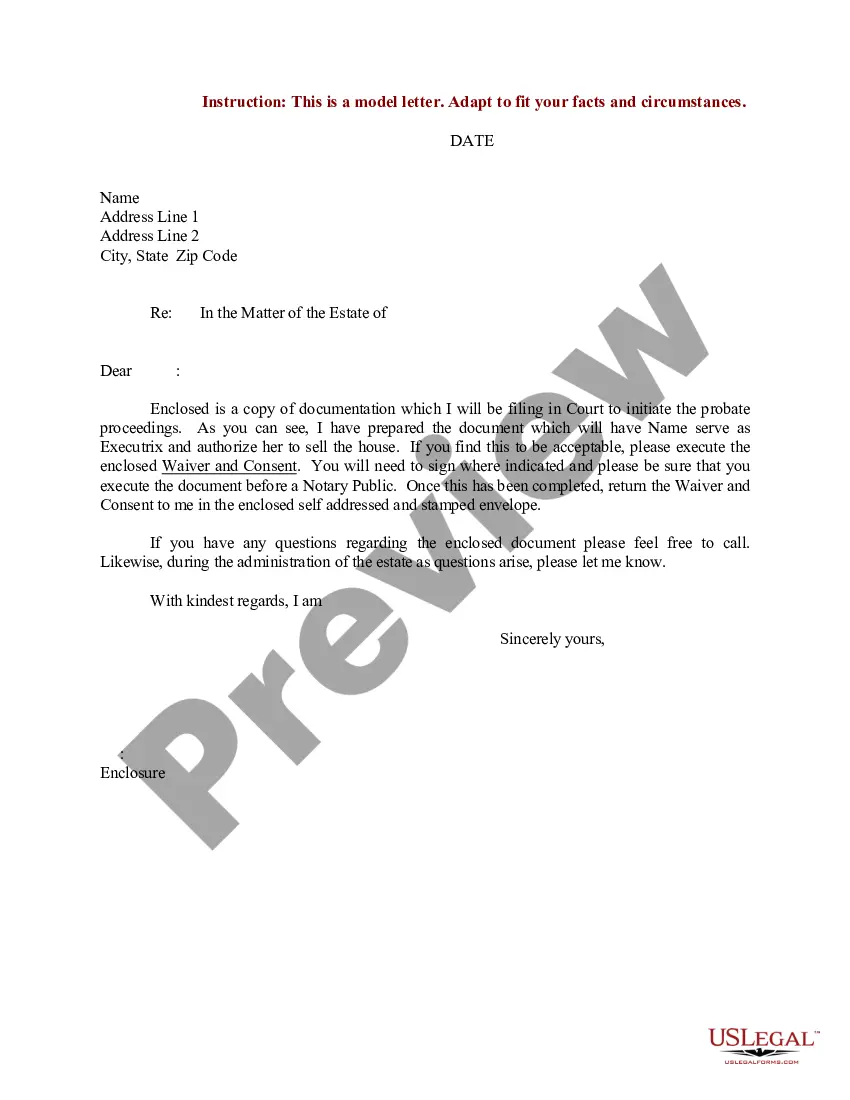
The Sample Letter for Initial Probate Proceedings - Request to Execute Documents is a template designed to assist individuals in notifying parties involved in a probate process. This form specifically acts as a letter to accompany a complaint filing for probate, enabling the execution of essential documents. It is distinct from other probate forms as it serves a formal communication role in initiating probate proceedings rather than detailing specific estate distributions or management plans.
Key components of this form
- Date of the letter
- Sender's name and address
- Recipient's name and address
- Subject line indicating the matter of the estate
- Introduction stating the sender's role in the estate administration
- Enclosure mention of the Complaint to Probate Will
When this form is needed
This form should be used when you are ready to initiate the probate process for a deceased person's estate. It is appropriate to send this letter to the involved parties, such as co-executors, beneficiaries, or legal representatives, to inform them about the actions being taken and to request the necessary documents for probate proceedings.
Who this form is for
- Executors or administrators of an estate
- Legal representatives handling probate cases
- Beneficiaries who need to understand the probate proceedings
Completing this form step by step
- Enter the date at the top of the letter.
- Fill in your name and address as the sender.
- Add the name and address of the recipient.
- Specify the subject matter related to the estate.
- Introduce yourself and your role in administering the estate.
- Mention the enclosed Complaint to Probate Will and state the next steps.
Notarization requirements for this form
This form does not typically require notarization unless specified by local law. However, it is essential to check your stateâs regulations regarding the notarization of probate-related documents.
Get your form ready online
Our built-in tools help you complete, sign, share, and store your documents in one place.
Make edits, fill in missing information, and update formatting in US Legal Forms—just like you would in MS Word.
Download a copy, print it, send it by email, or mail it via USPS—whatever works best for your next step.
Sign and collect signatures with our SignNow integration. Send to multiple recipients, set reminders, and more. Go Premium to unlock E-Sign.
If this form requires notarization, complete it online through a secure video call—no need to meet a notary in person or wait for an appointment.
We protect your documents and personal data by following strict security and privacy standards.

Make edits, fill in missing information, and update formatting in US Legal Forms—just like you would in MS Word.

Download a copy, print it, send it by email, or mail it via USPS—whatever works best for your next step.

Sign and collect signatures with our SignNow integration. Send to multiple recipients, set reminders, and more. Go Premium to unlock E-Sign.

If this form requires notarization, complete it online through a secure video call—no need to meet a notary in person or wait for an appointment.

We protect your documents and personal data by following strict security and privacy standards.
Typical mistakes to avoid
- Failing to include the date, which is crucial for legal documentation.
- Omitting receiver details, leading to delivery issues.
- Not clearly stating the purpose of the letter.
Why complete this form online
- Convenience of downloading and editing at your own pace.
- Access to templates drafted by licensed attorneys, ensuring reliability.
- Ability to customize according to specific estate details.
What to keep in mind
- The Sample Letter for Initial Probate Proceedings is essential for informing relevant parties about the probate process.
- It is important to accurately complete all fields to avoid delays in the probate proceedings.
- Consult local laws to ensure compliance with state-specific rules regarding probate letters.
Looking for another form?
Form popularity
FAQ
This template helps initiators notify parties involved in probate and accompanies a probate complaint filing to enable execution of essential documents. It serves as formal communication at the start of probate proceedings, rather than detailing estate distributions or management plans. The letter includes the date, sender's name and address, recipient's name and address, a subject line, an introduction of the sender's role, and an enclosure: Complaint to Probate Will.
Common mistakes include omitting the date or sender and recipient details, failing to include a clear subject line, not stating the sender’s role in estate administration, and not mentioning the enclosure (the Complaint to Probate Will). Ensuring all components are present helps avoid delays in initiating probate proceedings and keeps all parties properly informed.
The first step is to prepare the letter with the date, sender’s name and address, recipient’s name and address, and a clear subject line. Then it should state the sender’s role in estate administration and reference the enclosed Complaint to Probate Will before sending to involved parties.
Follow the template structure: include the date, sender and recipient details, a subject line indicating the estate matter, an introduction of the sender’s role in administration, and an enclosure note about the Complaint to Probate Will. This creates formal initiation of probate proceedings and standardizes communication with all parties.
This template is not designed for directly addressing a probate judge. It is a letter to accompany a probate complaint and notify involved parties. For correspondence to a judge, a separate court-facing filing or cover letter tailored to the judge's requirements would be appropriate.
This letter differs in that it accompanies a probate complaint and explicitly requests execution of documents necessary to begin probate. It is tailored to initiate proceedings rather than outline estate distributions or management plans, and it includes an enclosure reference to the Complaint to Probate Will.