Recruiting - Split Fee - Agreement
What is this form?
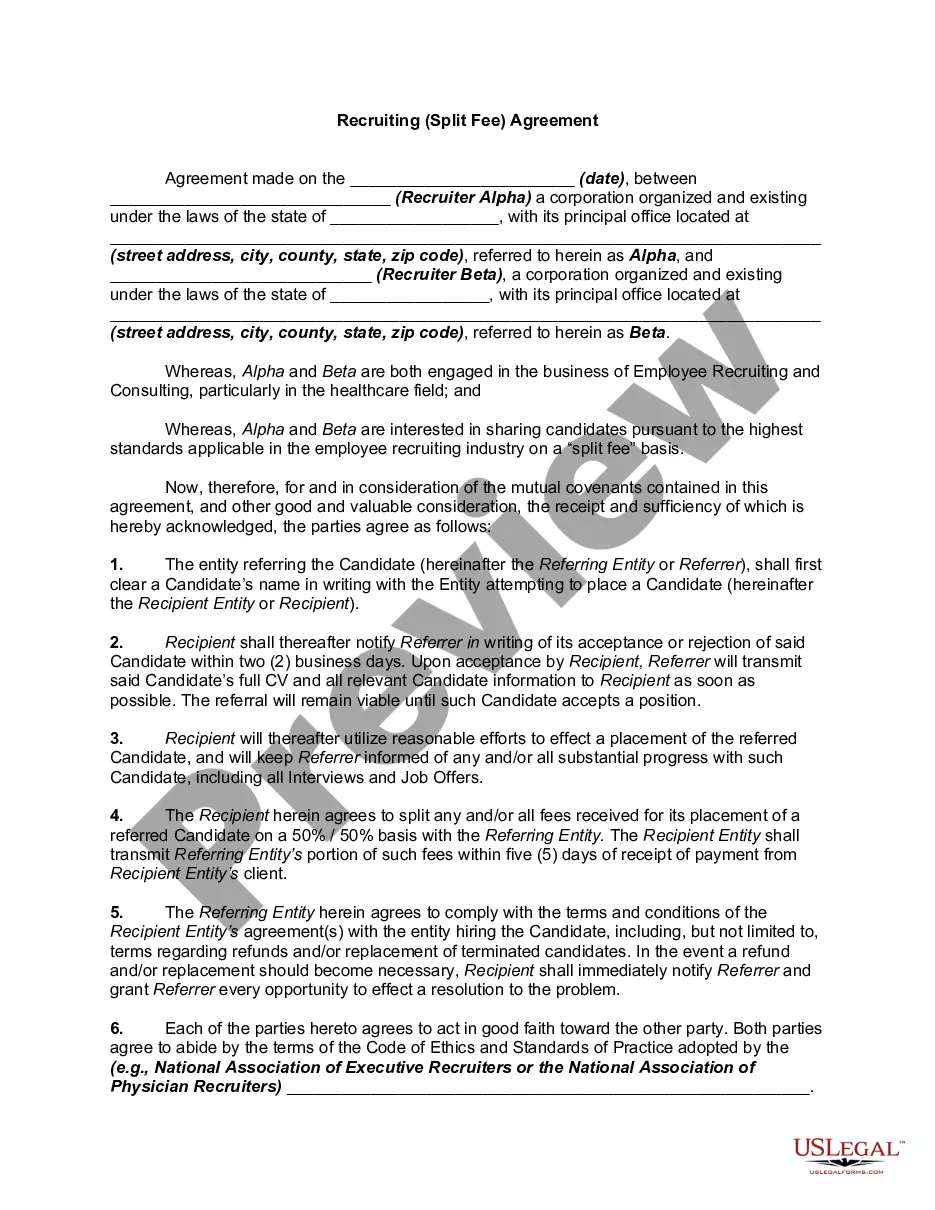
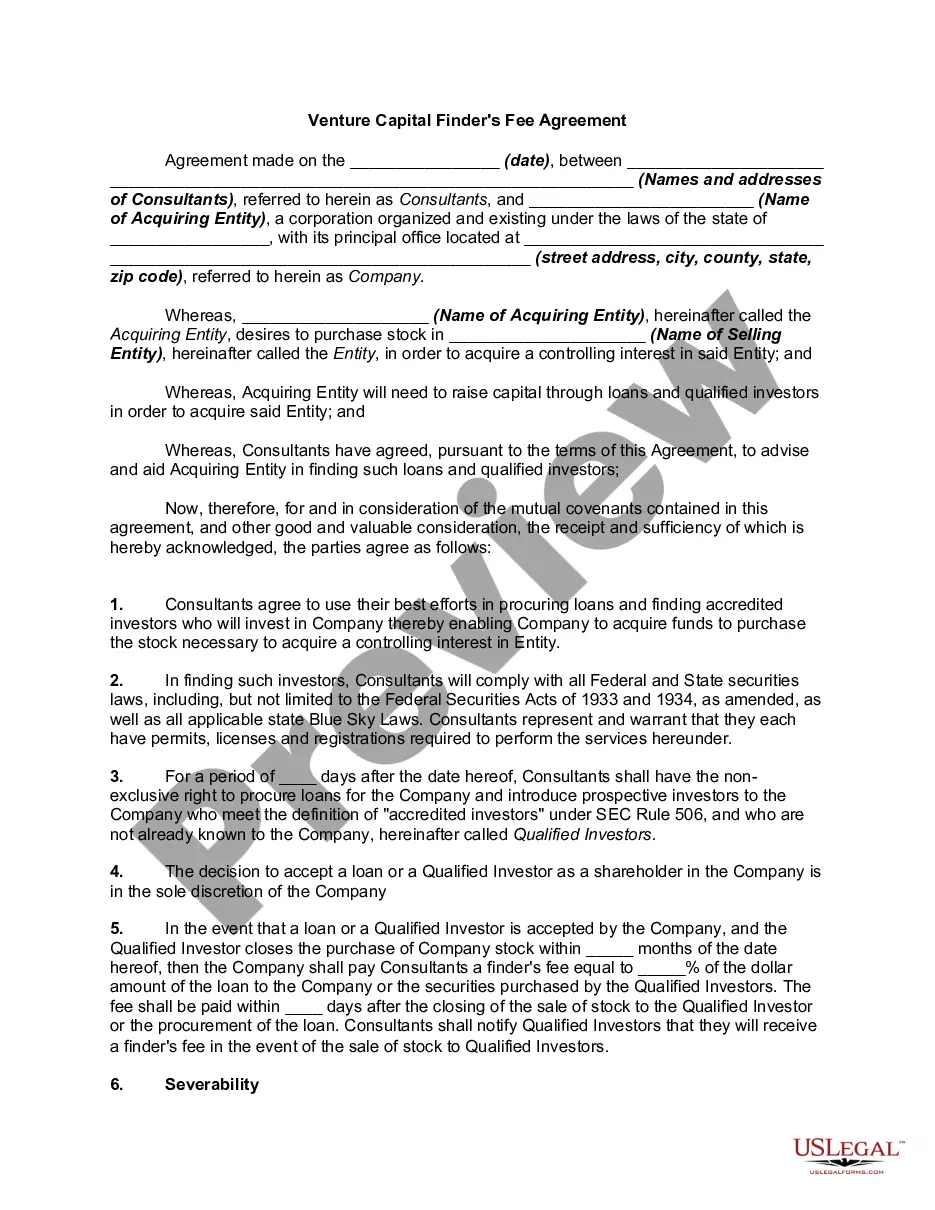
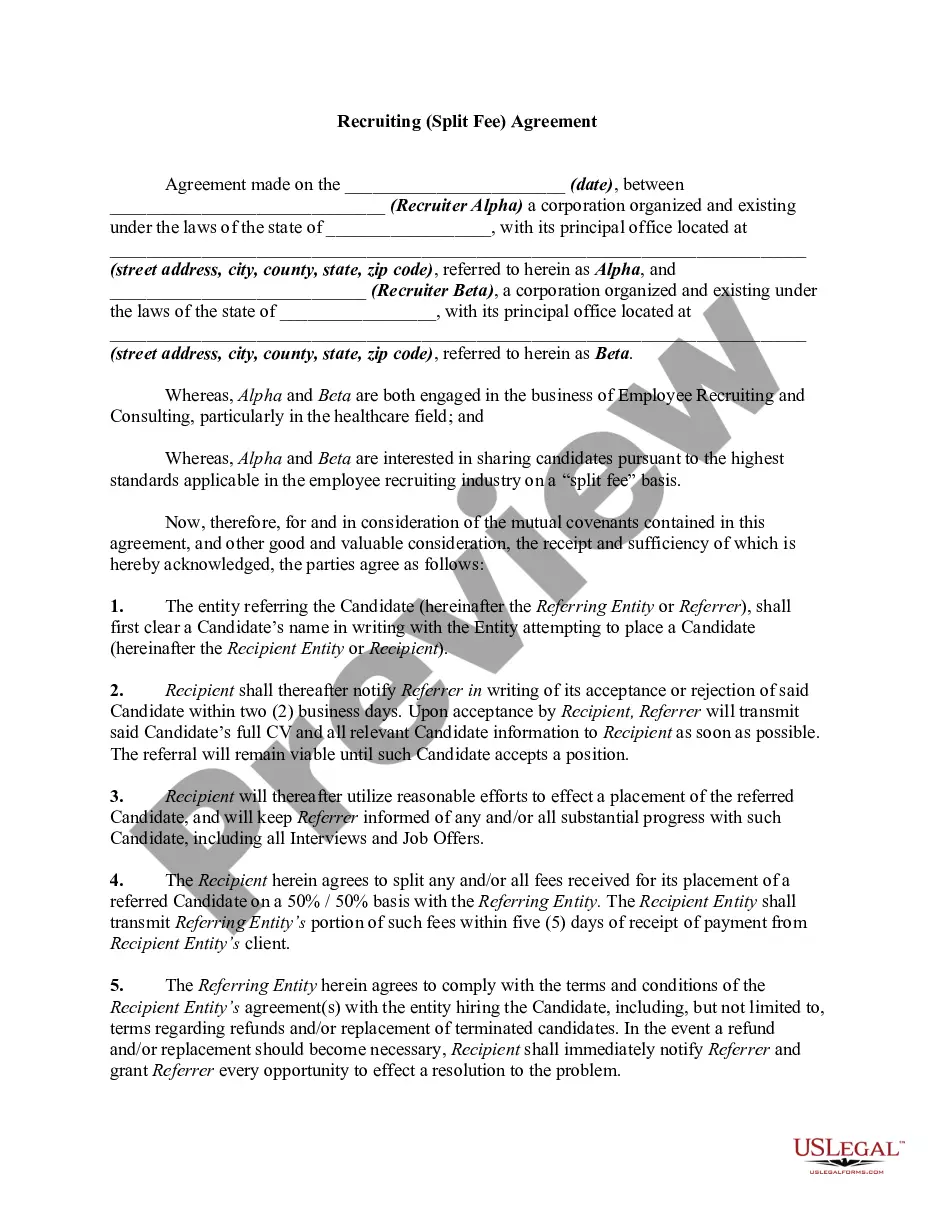
The Recruiting - Split Fee - Agreement is a critical document used between two recruiting entities to outline the terms for sharing candidate placements and fees. This form facilitates a collaborative approach by allowing one recruiter to match their job orders with another recruiterâs candidates, promoting efficiency in filling positions. Unlike standard recruitment agreements, this particular form focuses on the split fee arrangement, ensuring clear communication and expectations between the recruiting parties.
Main sections of this form
- Identification of the parties involved in the agreement (Recruiter Alpha and Recruiter Beta).
- Process for candidate referrals, including notification and acceptance timelines.
- Agreement on the split fee percentage, typically set at 50/50.
- Requirements for compliance with hiring entity agreements and ethics standards.
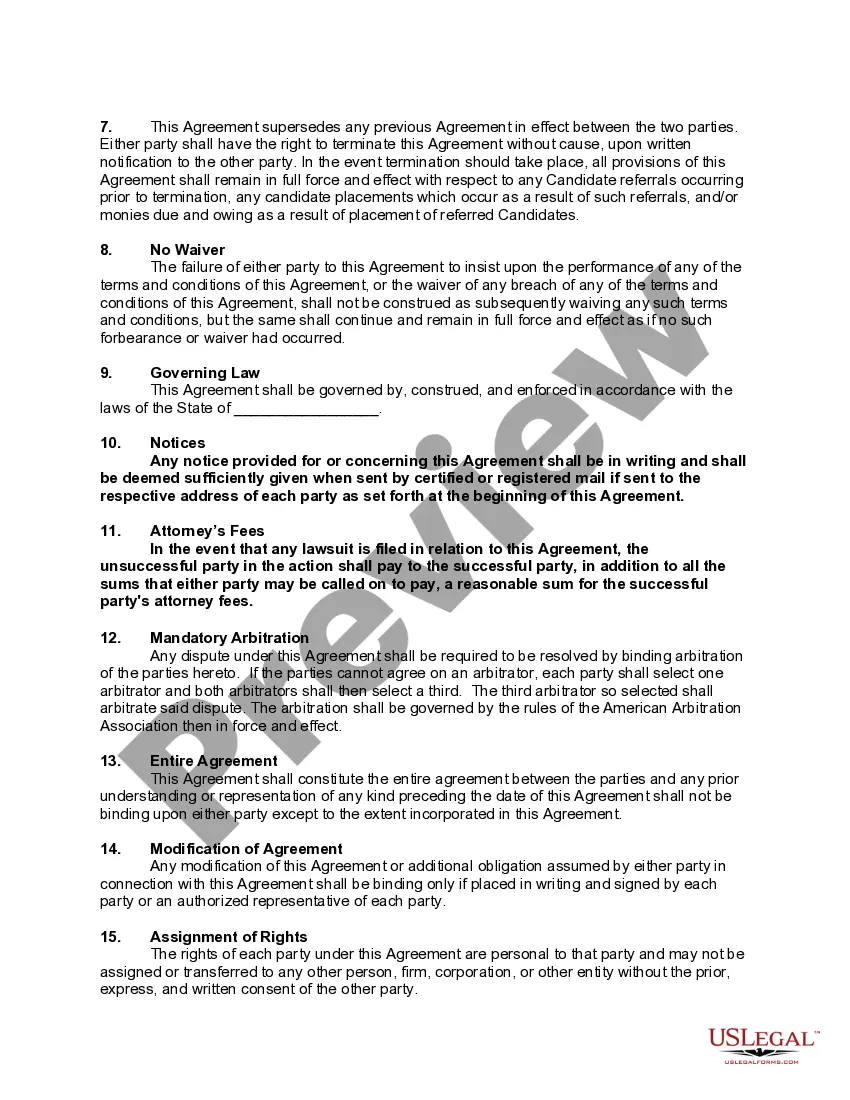
- Provisions for termination and handling of candidate referrals post-termination.
- Conditions for arbitration and governing law to resolve disputes.
When to use this form
This agreement should be used when two recruiting firms wish to collaborate on candidate placements while sharing the associated fees. It is particularly useful in industries with high recruitment costs, such as healthcare, and can be employed in situations where recruiters may have candidate leads that fit specific job orders from other firms. If you plan to work together on a split fee basis, this form provides the necessary legal framework to do so.
Who needs this form
- Recruiting agencies or recruiters looking to collaborate with other firms.
- Businesses engaged in employee recruiting, particularly in specialized fields like healthcare.
- Recruiters who wish to ensure clear legal terms regarding candidate referrals and fee splits.
How to complete this form
- Identify and fill in the names of the recruiting agencies involved (Recruiter Alpha and Recruiter Beta).
- Enter the specific date the agreement is being made.
- Provide the principal office addresses for each recruiting entity.
- Detail the agreed-upon percentage for fee splitting and any conditions tied to candidate placements.
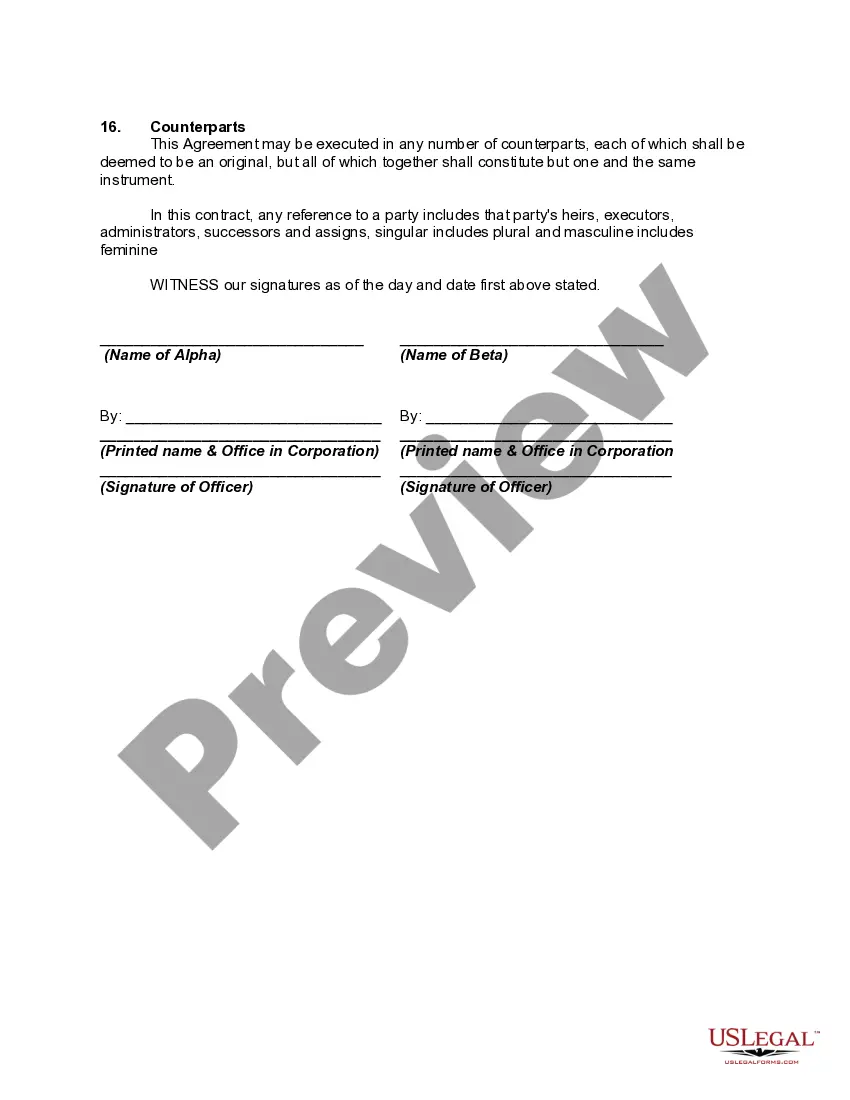
- Ensure that both parties sign the agreement along with printed names and positions within the corporation.
Is notarization required?
This form does not typically require notarization unless specified by local law. However, it is advisable to check any jurisdiction-specific requirements before finalizing the agreement.
Get your form ready online
Our built-in tools help you complete, sign, share, and store your documents in one place.
Make edits, fill in missing information, and update formatting in US Legal Forms—just like you would in MS Word.
Download a copy, print it, send it by email, or mail it via USPS—whatever works best for your next step.
Sign and collect signatures with our SignNow integration. Send to multiple recipients, set reminders, and more. Go Premium to unlock E-Sign.
If this form requires notarization, complete it online through a secure video call—no need to meet a notary in person or wait for an appointment.
We protect your documents and personal data by following strict security and privacy standards.

Make edits, fill in missing information, and update formatting in US Legal Forms—just like you would in MS Word.

Download a copy, print it, send it by email, or mail it via USPS—whatever works best for your next step.

Sign and collect signatures with our SignNow integration. Send to multiple recipients, set reminders, and more. Go Premium to unlock E-Sign.

If this form requires notarization, complete it online through a secure video call—no need to meet a notary in person or wait for an appointment.

We protect your documents and personal data by following strict security and privacy standards.
Mistakes to watch out for
- Failing to clearly specify terms for candidate referrals and fee arrangements.
- Not obtaining signatures or properly identifying authorized representatives.
- Overlooking the need for compliance with industry ethics codes and laws.
Advantages of online completion
- Convenient access to a customizable agreement that can be tailored to specific needs.
- Editable format that allows for easy updates and adjustments.
- Reliable templates crafted by licensed attorneys to ensure legal compliance.
Looking for another form?



Form popularity
FAQ
Split Placement refers to recruiting that involves two, usually third party, recruiters who work together to help a client find the best possible candidate.
Recruiters Want You to Land a Job (For Better or Worse) Most recruiters in staffing agencies are paid on commission, earning a fee based on your first year's salary when you get hired. (It doesn't come out of your pay. It's just an added expense for the company who hires you.) This often works in your favor.
From Wikipedia, the free encyclopedia. Fee splitting is the practice of sharing fees with professional colleagues, such as physicians or lawyers, in return for being sent referrals.
What Is the Average Recruiting Fee? The standard recruiting fee for agencies is between 15% and 20% of the first-year salary for a permanent job the recruiter is filling. Some agencies may charge as much as 25% for hard-to-fill roles.
A full desk recruiter gets their own job orders and fills them with their own candidates. Full desk recruiters work alone. They don't rely on salespeople to pull in clients. Nor do they have other recruiters find candidates. Full desk recruiters take care of all recruiting process steps themselves.
Virtually all recruiters are paid by the hiring company, not the candidate.The vast majority of recruiters will never charge you, and if you find one that does, make sure you understand what you're paying for. For direct hire opportunities, the recruiter will usually be paid a fee based on your first year's pay.
Do recruiters take a cut of your salary? Recruiters do not take a cut of your salary. The company the staffing agency places you at however does compensate the recruiter based on a percentage of your first year's salary if the employer and recruiting agency have a contingency agreement in place.
Traditionally, third party recruiting firms are designed so that direct-hire recruiters run a full-desk (i.e. both the client and candidate side), whereas temporary recruiters will typically run a split-desk (i.e. an inside sales person or staffing coordinator works to fill the job order which was generated by an
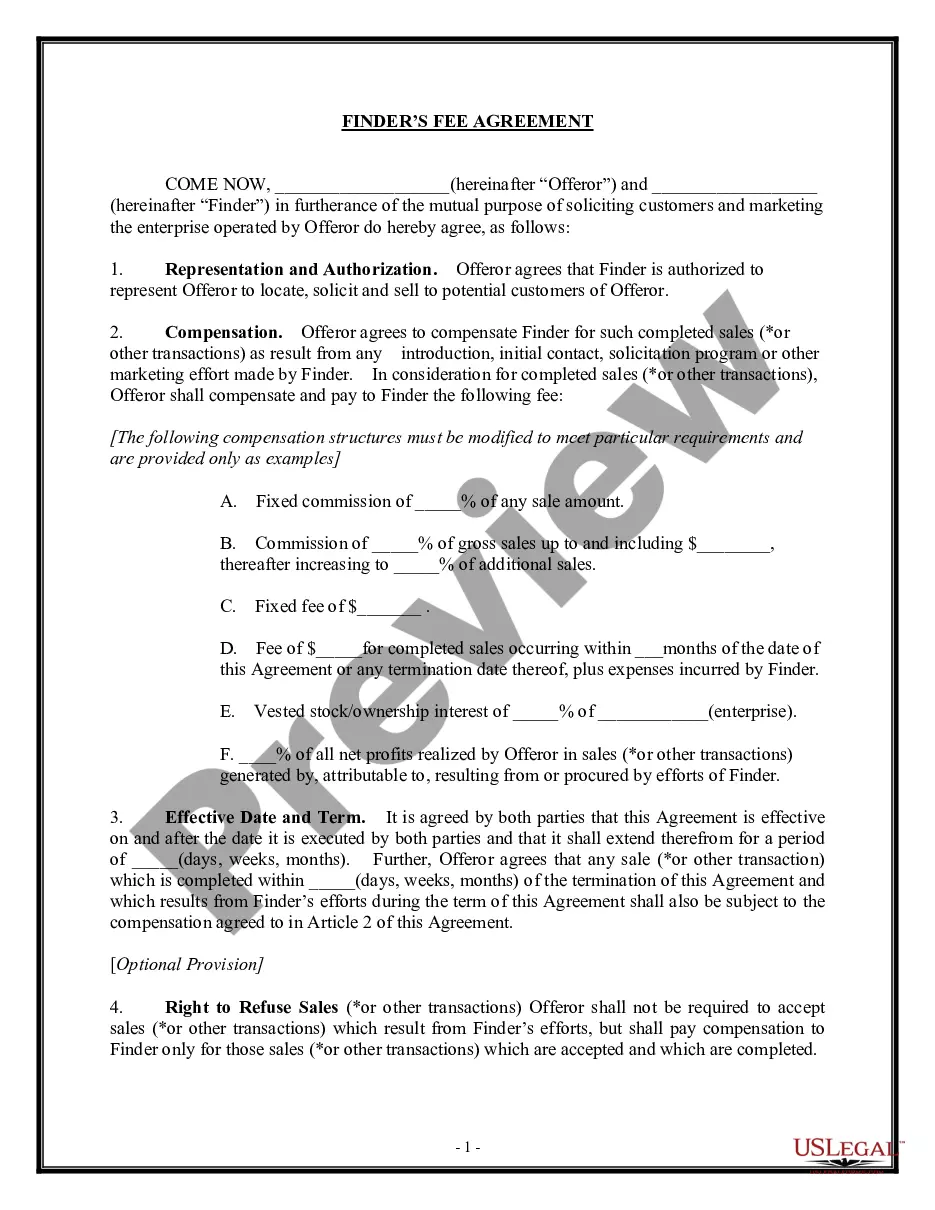
A Recruitment Agreement is an agreement between two parties where one party (the Recruiter or Recruiting Firm) is hired by the other party (the "Client" company) to identify and present qualified candidates to work with the Client. The Client pays the Recruiter a fee set by the parties.