Subordination Agreement (Deed of Trust)
What is this form?
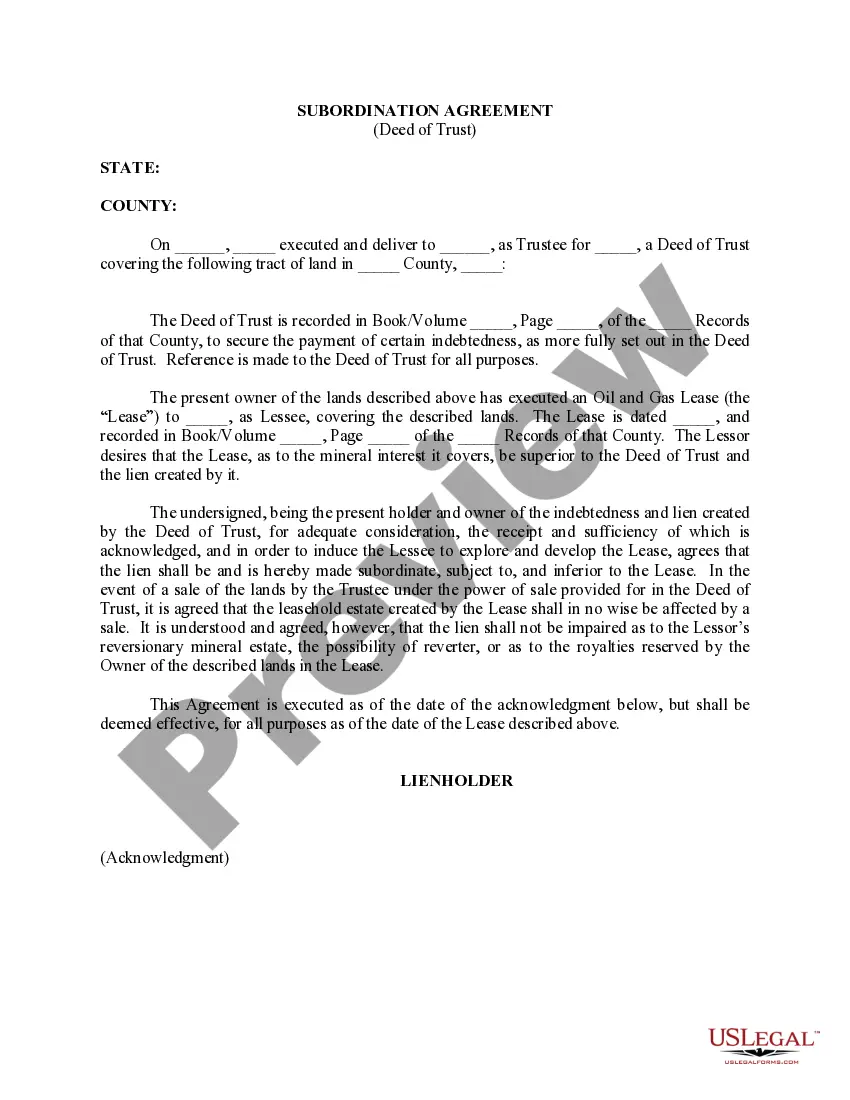
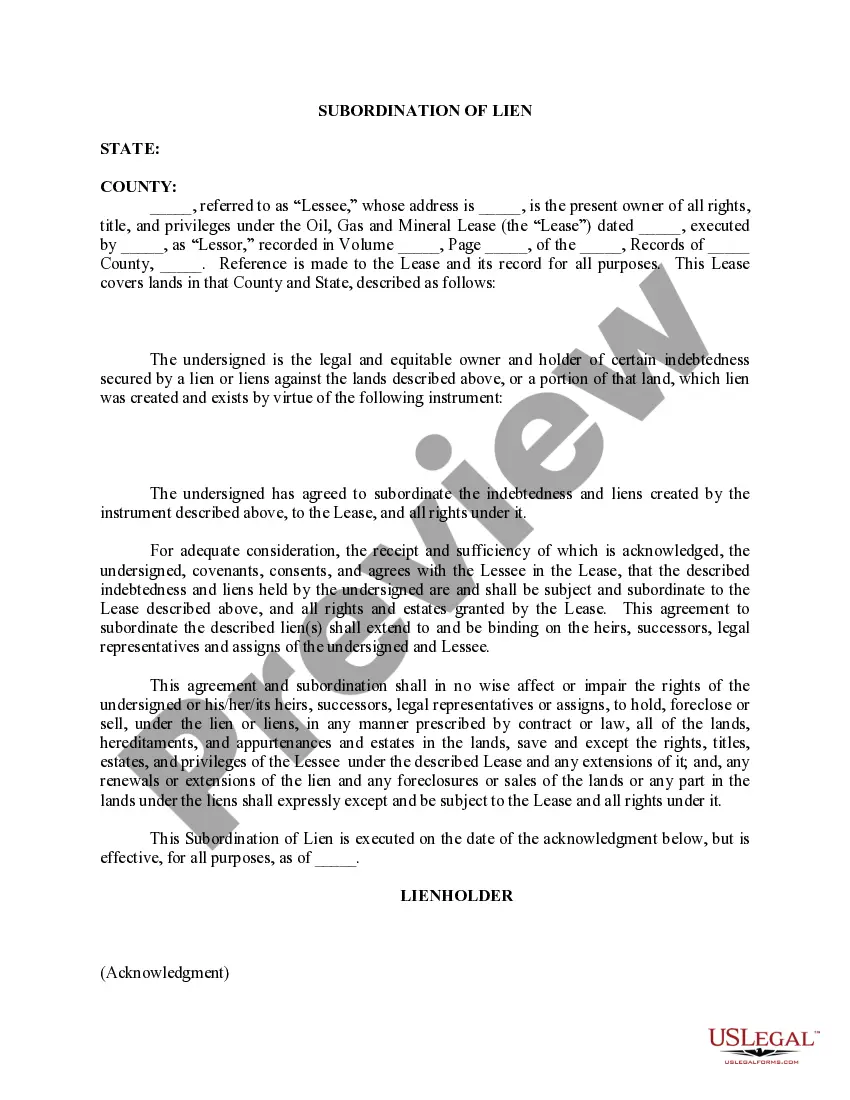
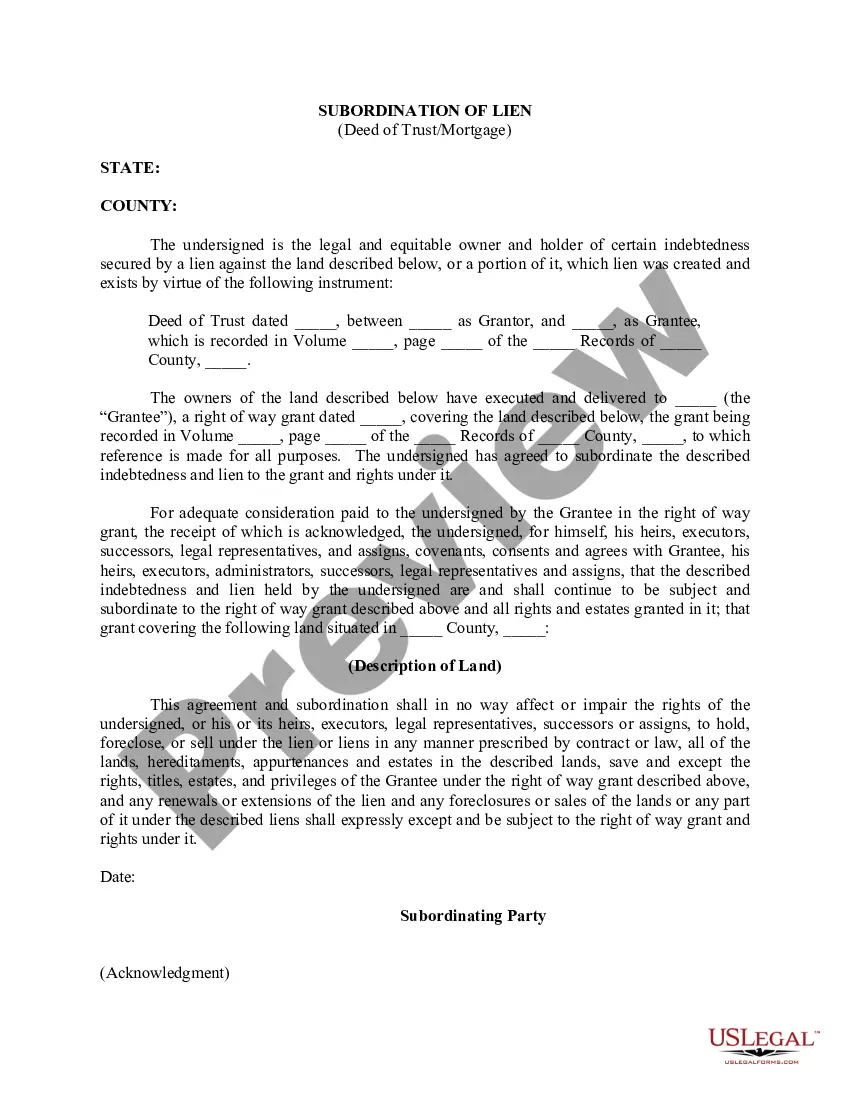
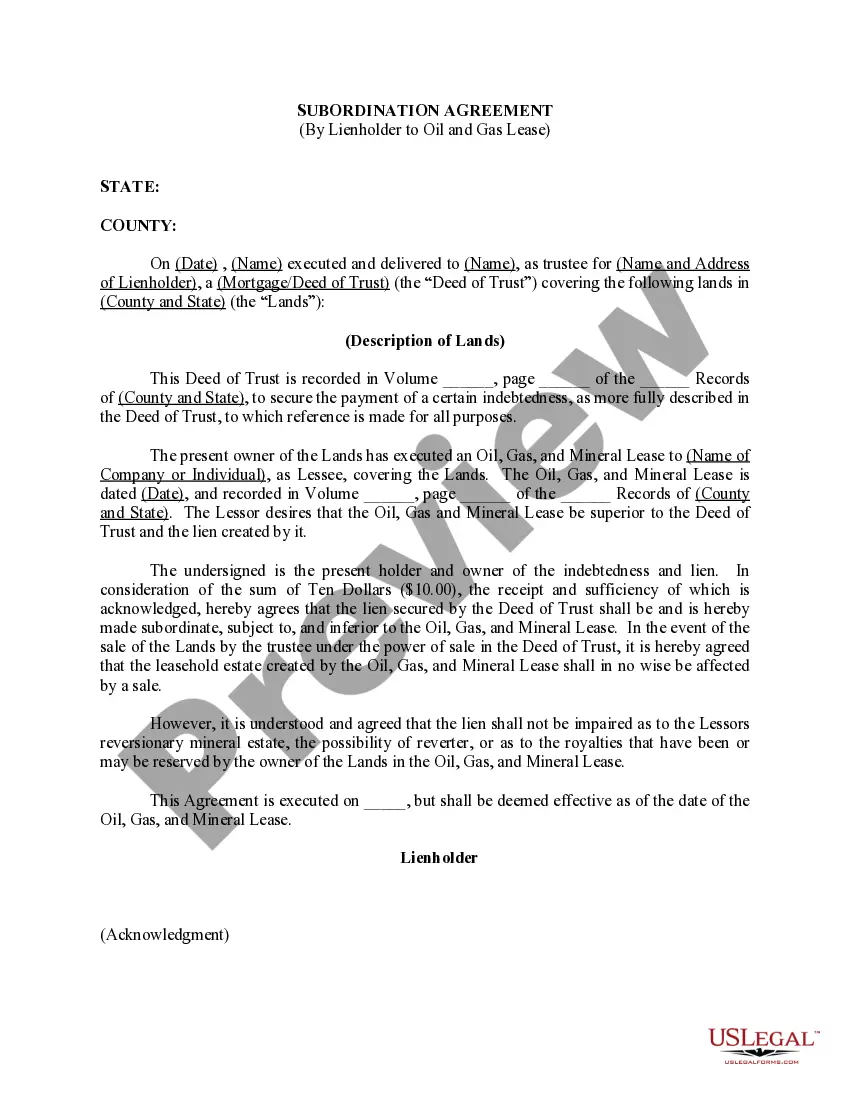
A subordination agreement, specifically a deed of trust, is a legal document used to alter the priority of liens on a property. In this agreement, the holder of an existing deed of trust agrees to subordinate their lien, making it junior to another interest, such as an oil and gas lease. This allows the lessee to pursue mineral rights on the property without the risk of the deed of trust's lien interfering with their leasehold rights. This form is essential for property owners who wish to allow exploration and development of mineral rights while maintaining their financial obligations under the original deed of trust.
Form components explained
- Identification of the parties involved (trustee, lienholder, lessee).
- Description of the property and deed of trust being subordinated.
- Details of the oil and gas lease and its original recording information.
- Terms outlining the agreement to subordinate the lien.
- Provision that the leasehold estate remains unaffected by the deed of trust sale.
When to use this document
This form is used when a property owner has executed an oil and gas lease and desires the lessee's interests to take precedence over an existing deed of trust. It is particularly useful when the property owner wants to encourage mineral exploration and development while ensuring that the obligations secured by the deed of trust remain intact. This agreement is also critical in scenarios where financial institutions require clear terms regarding the priority of interests in the property.
Intended users of this form
- Property owners entering into oil and gas leases.
- Lienholders with existing deeds of trust on the property.
- Lessee companies interested in securing mineral rights over existing liens.
- Attorneys representing clients in real estate and oil and gas transactions.
Completing this form step by step
- Identify and list all parties involved, including the trustee, lienholder, and lessee.
- Clearly describe the property and reference the existing deed of trust and oil and gas lease.
- Enter the dates associated with the deed of trust and lease.
- Include the acknowledgment of receipt of consideration from the lienholder.
- Ensure all parties sign and date the agreement as of the specified dates.
Notarization requirements for this form
This document requires notarization to meet legal standards. US Legal Forms provides secure online notarization powered by Notarize, allowing you to complete the process through a verified video call, available 24/7.
Get your form ready online
Our built-in tools help you complete, sign, share, and store your documents in one place.
Make edits, fill in missing information, and update formatting in US Legal Forms—just like you would in MS Word.
Download a copy, print it, send it by email, or mail it via USPS—whatever works best for your next step.
Sign and collect signatures with our SignNow integration. Send to multiple recipients, set reminders, and more. Go Premium to unlock E-Sign.
If this form requires notarization, complete it online through a secure video call—no need to meet a notary in person or wait for an appointment.
We protect your documents and personal data by following strict security and privacy standards.

Make edits, fill in missing information, and update formatting in US Legal Forms—just like you would in MS Word.

Download a copy, print it, send it by email, or mail it via USPS—whatever works best for your next step.

Sign and collect signatures with our SignNow integration. Send to multiple recipients, set reminders, and more. Go Premium to unlock E-Sign.

If this form requires notarization, complete it online through a secure video call—no need to meet a notary in person or wait for an appointment.

We protect your documents and personal data by following strict security and privacy standards.
Typical mistakes to avoid
- Failing to properly identify all parties involved in the agreement.
- Neglecting to include relevant details from the original deed of trust and oil and gas lease.
- Not entering accurate dates for the deed of trust and lease.
- Missing signatures or failing to have the document notarized if required by local law.
Benefits of completing this form online
- Immediate access to the form without the need to visit a law office.
- Edit and customize the template to meet specific needs with ease.
- Reliable and professionally drafted content, ensuring compliance with legal standards.
Quick recap
- The Subordination Agreement places a Lease above a Deed of Trust in terms of priority.
- This form is essential for properties involved in oil and gas leasing.
- Ensure all parties accurately complete and sign the agreement to avoid legal complications.
Looking for another form?

Form popularity
FAQ
The signed agreement must be acknowledged by a notary and recorded in the official records of the county to be enforceable.
A subordination clause or subordination agreement is used to lower the priority of a first recorded deed of trust or mortgage in favor of a later or junior recorded deed of trust or mortgage.
Despite its technical-sounding name, the subordination agreement has one simple purpose. It assigns your new mortgage to first lien position, making it possible to refinance with a home equity loan or line of credit. Signing your agreement is a positive step forward in your refinancing journey.
Unless there is a subordination agreement, it is virtually impossible to refinance your first mortgage. The document agreeing to the subordination must be signed by the lender and the borrower and requires notarization.
Who Benefits from a Subordination Clause? A subordination clause is meant to protect the interests of the primary lender. A primary mortgage usually covers the cost of purchasing the home; however, if there is a secondary mortgage, the clause ensures that the primary lender retains the number one priority.
When a Borrower wishes to refinance the property, they must request a subordination request to the Lender. The Lender will subordinate their loan only when there is no cash out as part of the refinance.
Subordination clauses in mortgages refer to the portion of your agreement with the mortgage company that says their lien takes precedence over any other liens you may have on your property.The primary lien on a house is usually a mortgage. However, it's also possible to have other liens.
The borrower (trustor) benefits the most from a subordination clause since this makes it easier to obtain an additional loan on their property. For example, the buyer of vacant land can obtain a construction loan more easily if the loan against the land will be subordinated to the construction loan.
Subordination agreements are prepared by your lender. The process occurs internally if you only have one lender. When your mortgage and home equity line or loan have different lenders, both financial institutions work together to draft the necessary paperwork.