Subordination of Lien
Overview of this form
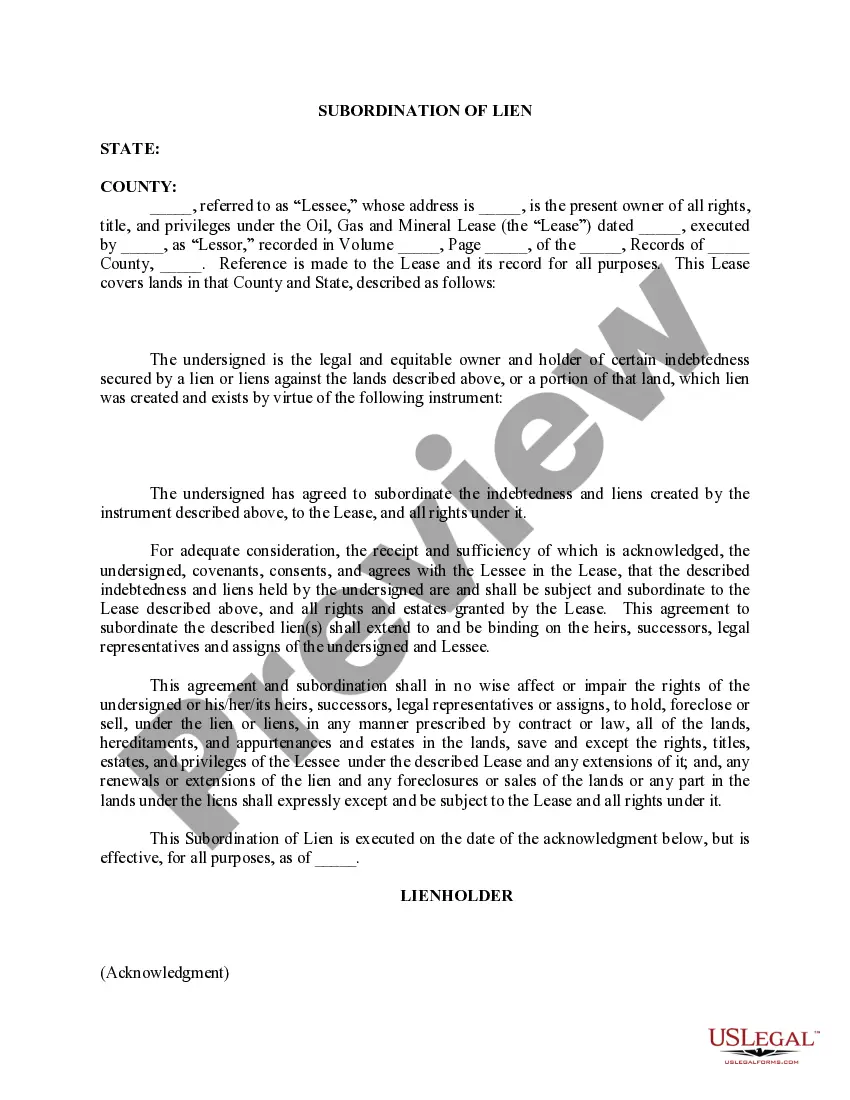
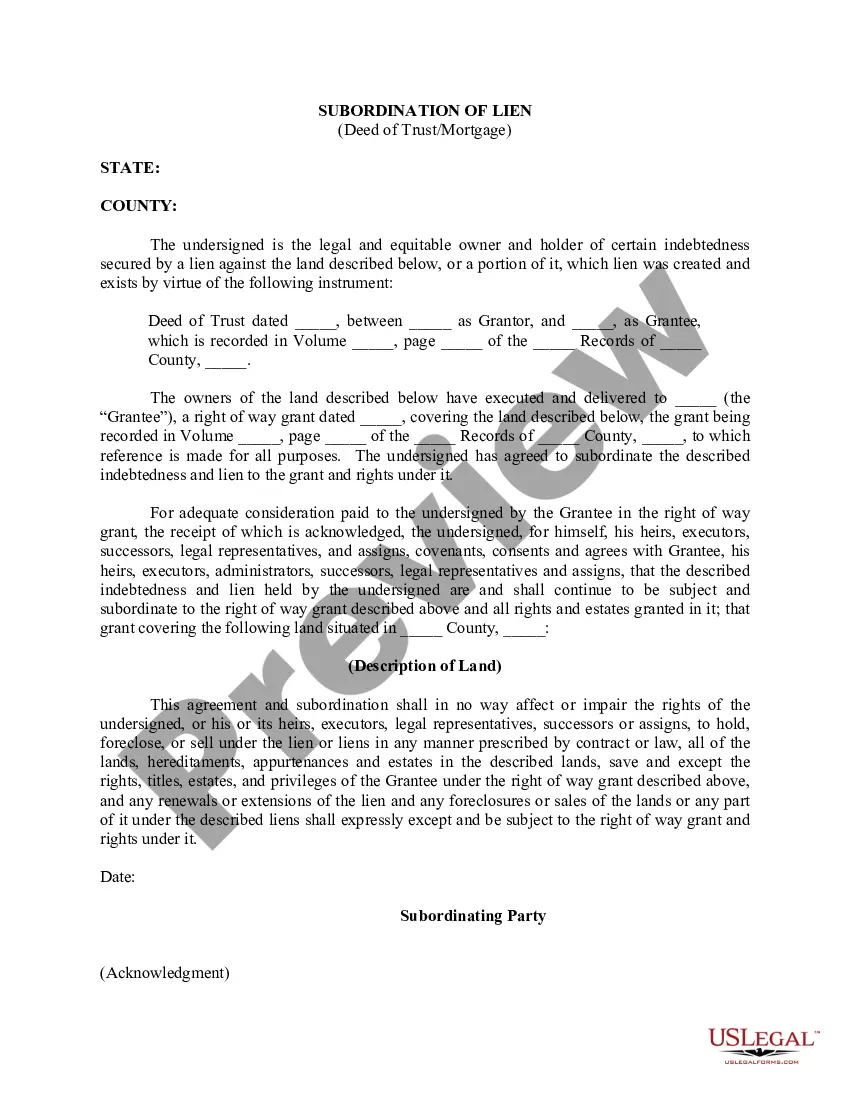
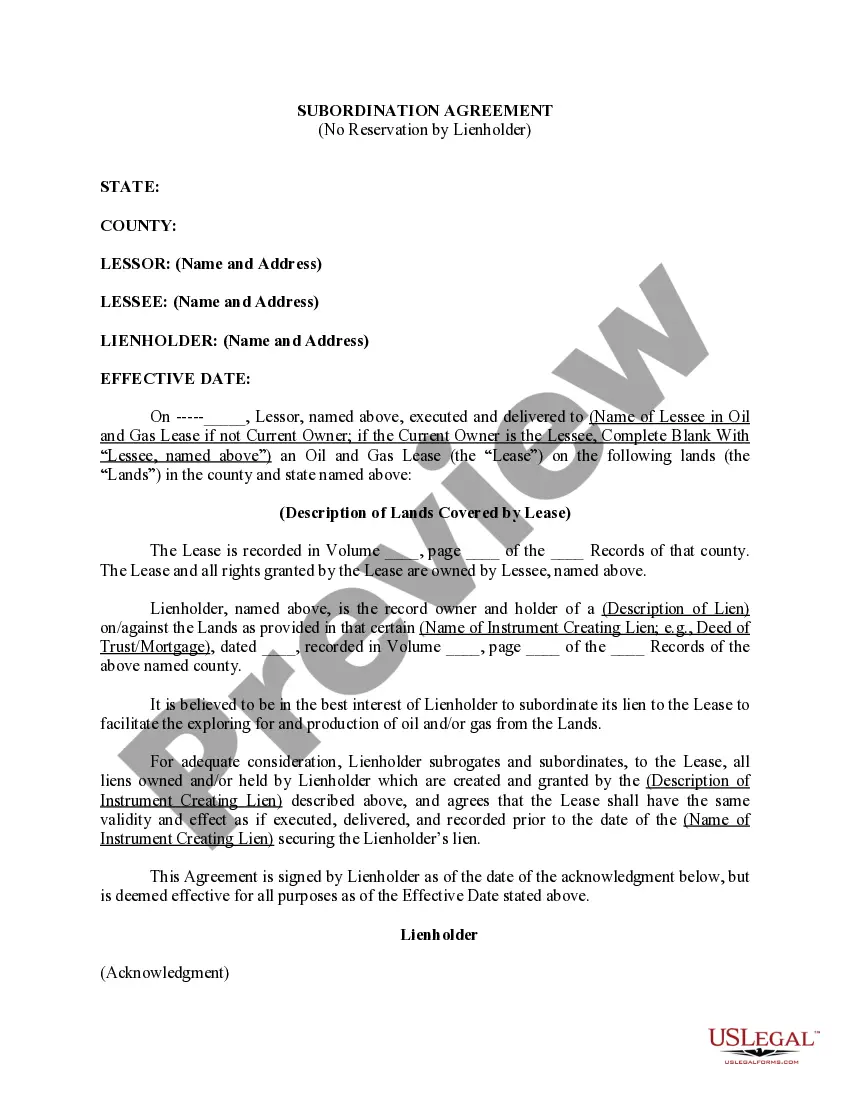
The Subordination of Lien form is a legal document that allows a lienholder to agree that their lien will be subordinate to another legal obligation, such as an Oil, Gas and Mineral Lease. This means that the lien will take a lower priority than the lease, which can be essential when securing financing or when entering into new agreements. This form ensures that all parties involved understand the hierarchy of claims against the property in question.
Main sections of this form
- Identification of the parties involved (Lessee and Lienholder).
- Details of the original lease being subordinated to the lien.
- Agreement clause outlining the subordination of the lien to the lease.
- Binding nature of the agreement, extending to heirs and successors.
- Effective date for the subordination agreement.

When this form is needed
This form is typically used when a lienholder agrees to subordinate their lien on a property to a lease, often in scenarios such as refinancing, selling the property, or entering into a new lease agreement. Using this document clarifies the rights and obligations of all parties involved, ensuring that the leaseholder's rights are protected while the lienholder acknowledges their subordinate position.
Who should use this form
- Property owners (Lessees) who need to secure leasing agreements without conflicting claims from existing liens.
- Lienholders who agree to subordinate their claims for specific agreements.
- Attorneys representing clients in real estate and property transactions.
How to complete this form
- Begin by identifying the parties involved, including the Lessee and Lienholder.
- Specify the details of the Oil, Gas and Mineral Lease, including its original date and recording information.
- Clearly outline the lien being subordinated, including details of the original contract creating the lien.
- Have all parties agree to the subordination, noting the effective date for this agreement.
- Ensure all parties sign and date the document as required.
Does this form need to be notarized?
To make this form legally binding, it must be notarized. Our online notarization service, powered by Notarize, lets you verify and sign documents remotely through an encrypted video session.
Get your form ready online
Our built-in tools help you complete, sign, share, and store your documents in one place.
Make edits, fill in missing information, and update formatting in US Legal Forms—just like you would in MS Word.
Download a copy, print it, send it by email, or mail it via USPS—whatever works best for your next step.
Sign and collect signatures with our SignNow integration. Send to multiple recipients, set reminders, and more. Go Premium to unlock E-Sign.
If this form requires notarization, complete it online through a secure video call—no need to meet a notary in person or wait for an appointment.
We protect your documents and personal data by following strict security and privacy standards.

Make edits, fill in missing information, and update formatting in US Legal Forms—just like you would in MS Word.

Download a copy, print it, send it by email, or mail it via USPS—whatever works best for your next step.

Sign and collect signatures with our SignNow integration. Send to multiple recipients, set reminders, and more. Go Premium to unlock E-Sign.

If this form requires notarization, complete it online through a secure video call—no need to meet a notary in person or wait for an appointment.

We protect your documents and personal data by following strict security and privacy standards.
Mistakes to watch out for
- Failing to accurately identify all involved parties and their legal titles.
- Not including the complete details of the original lease and lien.
- Neglecting to specify the effective date of the subordination agreement.
- Forgetting signatures or dates by the parties involved, which can render the agreement invalid.
Why use this form online
- Convenience of downloading and completing the form at your own pace.
- Access to professionally drafted templates ensures compliance with legal standards.
- Editability allows for easy customization to meet specific needs.
- Immediate availability supports timely completion of necessary legal documentation.
Main things to remember
- The Subordination of Lien form clarifies the priority of claims against property in leasing agreements.
- It is essential for parties wanting to ensure that a lien does not hinder leasing opportunities.
- Complete the form accurately to avoid common mistakes that could invalidate it.
Looking for another form?

Form popularity
FAQ
Once the senior debt is completely paid back, the company then repays the subordinated debt.Thus, this type of debt typically carries or offers lower interest rates. Meanwhile, subordinated debt carries higher interest rates given its lower priority during payback. Senior debt is generally funded by banks.
Subordinated loans are secondary loans that are paid after all first liens have been paid in the event of a default. Because they are secondary, they often have higher interest rates to offset the higher risk taken by the subordinated lender compared to primary lenders.
Subordination is the process of ranking home loans (mortgage, HELOC or home equity loan) by order of importance.Through subordination, lenders assign a lien position to these loans. Generally, your mortgage is assigned the first lien position while your HELOC becomes the second lien.
When a Borrower wishes to refinance the property, they must request a subordination request to the Lender. The Lender will subordinate their loan only when there is no cash out as part of the refinance.
Resubordination is the process of keeping the first mortgage in first place, ahead of other mortgages. When you refinance your first mortgage, the lender will insist on resubordinating the home equity loan or line of credit. The equity lender isn't required to resubordinate.
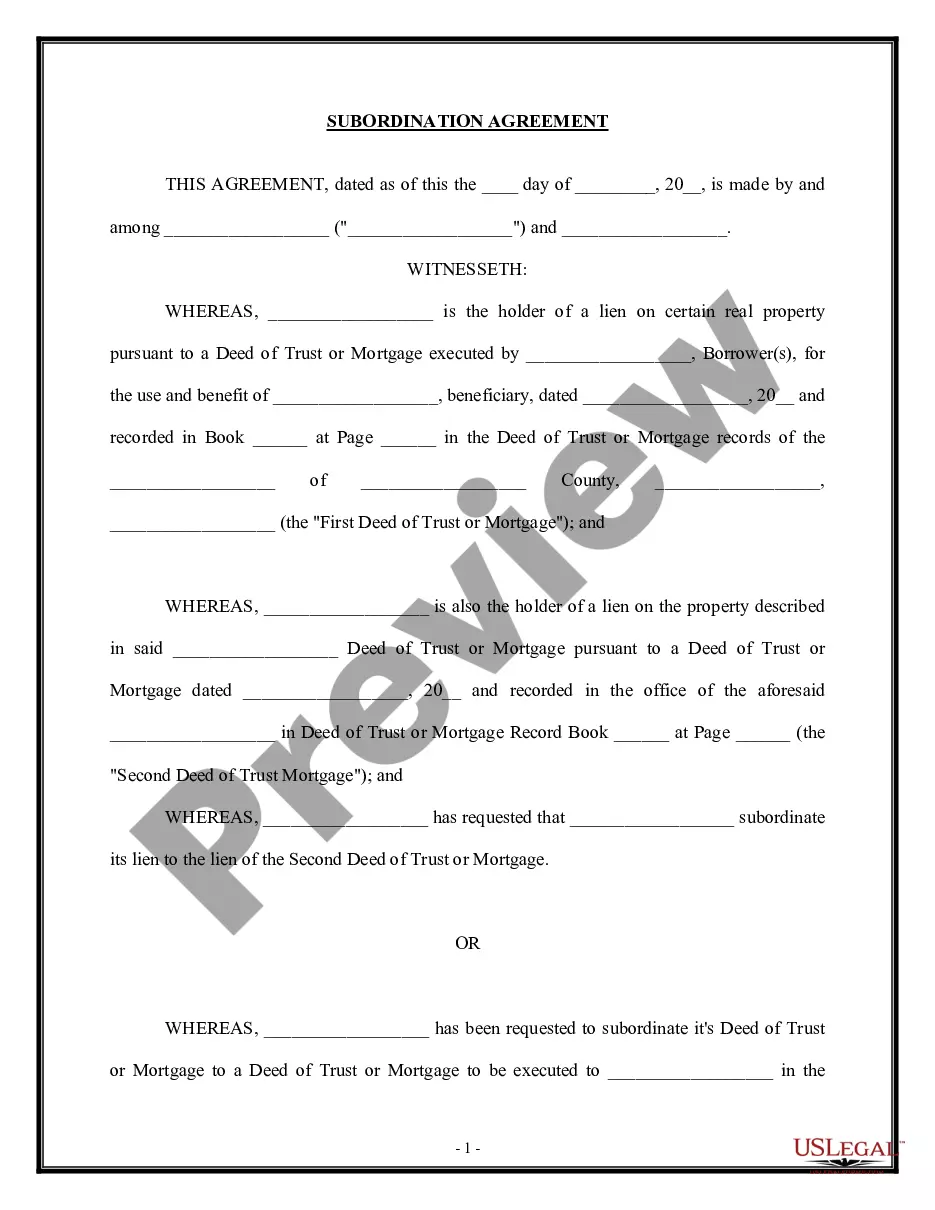
A subordination agreement is a legal document that establishes one debt as ranking behind another in priority for collecting repayment from a debtor. The priority of debts can become extremely important when a debtor defaults on payments or declares bankruptcy.
How Can a Taxpayer Request a Federal Tax Lien Subordination? Apply for a certificate of subordination of federal tax lien by following the instructions in Publication 784. You will need to complete Form 14134. It is also a smart idea to watch this self-help IRS video.