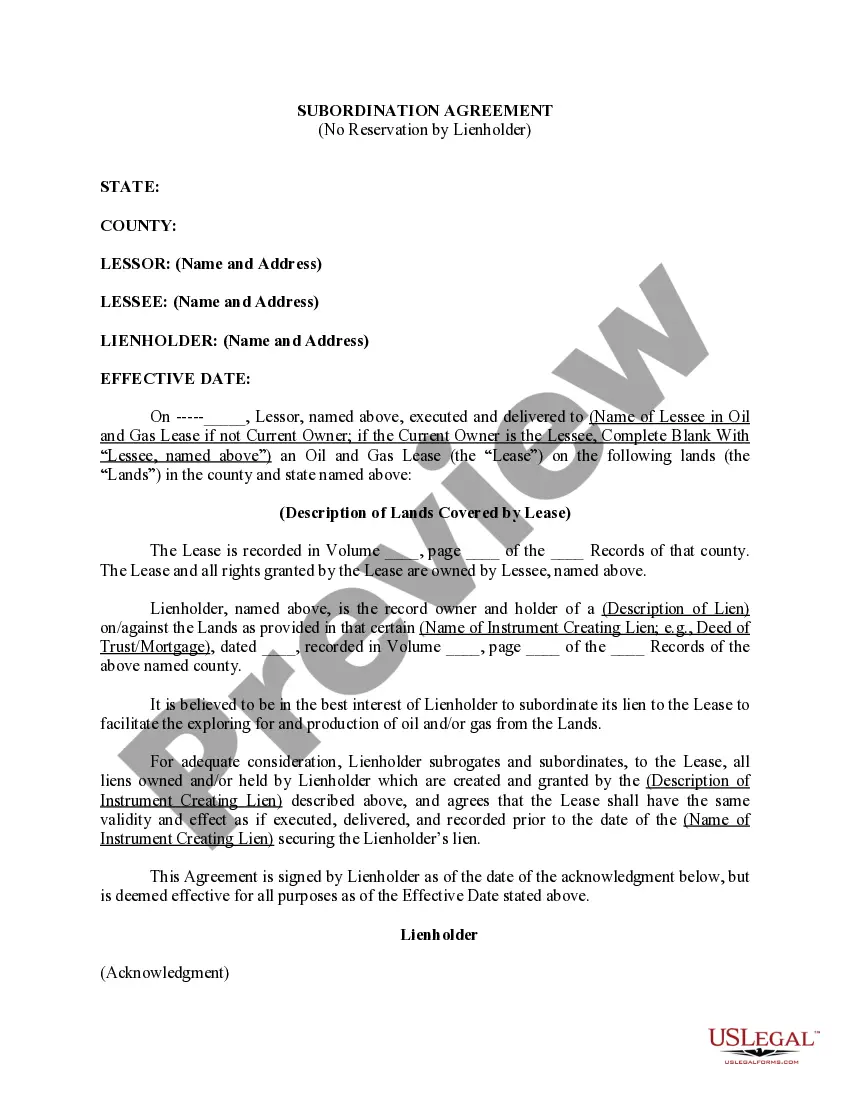
Subordination Agreement with no Reservation by Lienholder
About this form
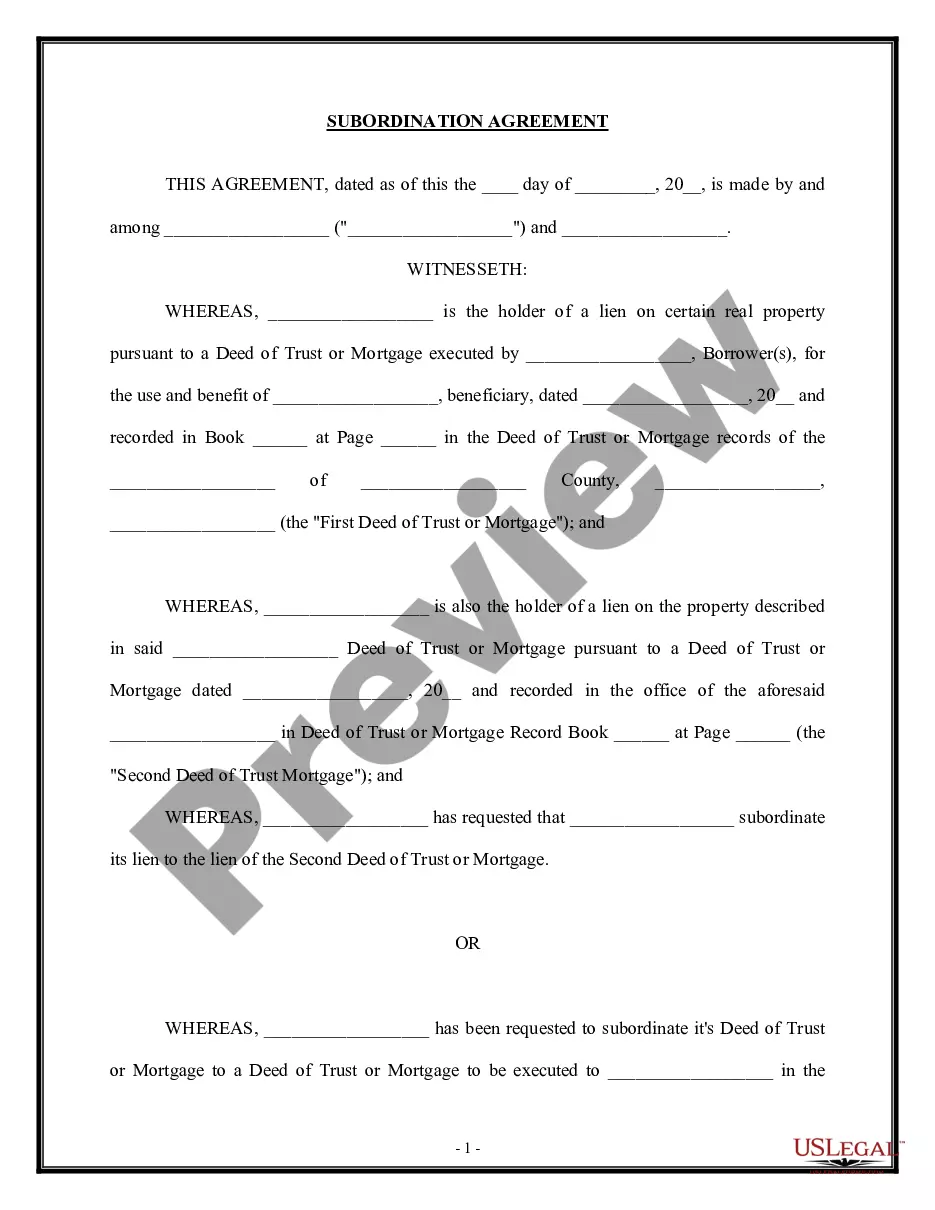
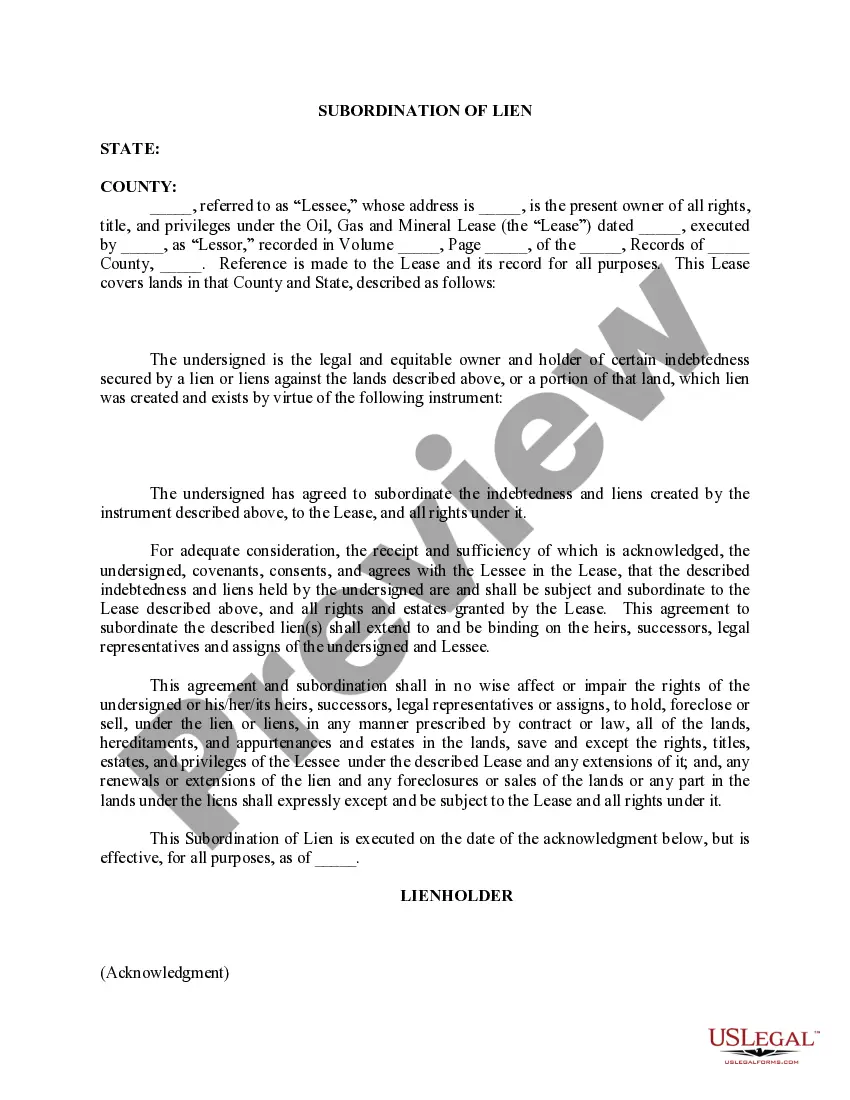
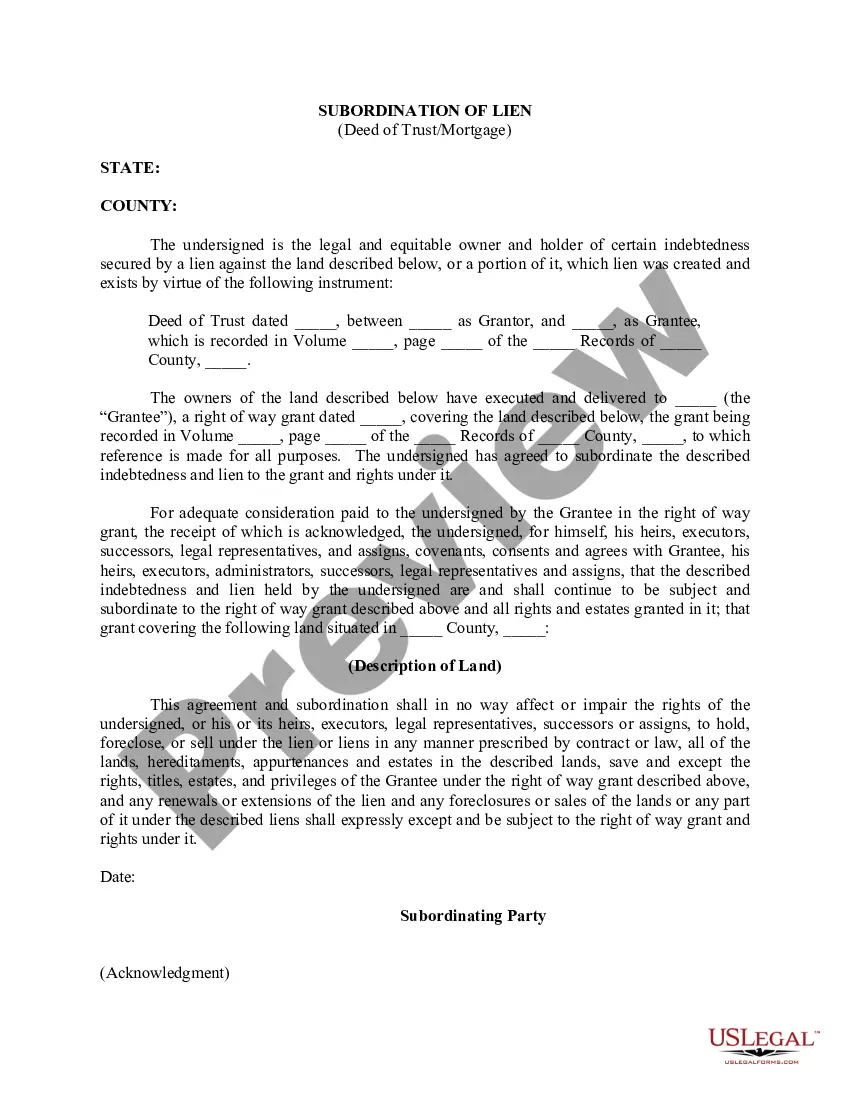
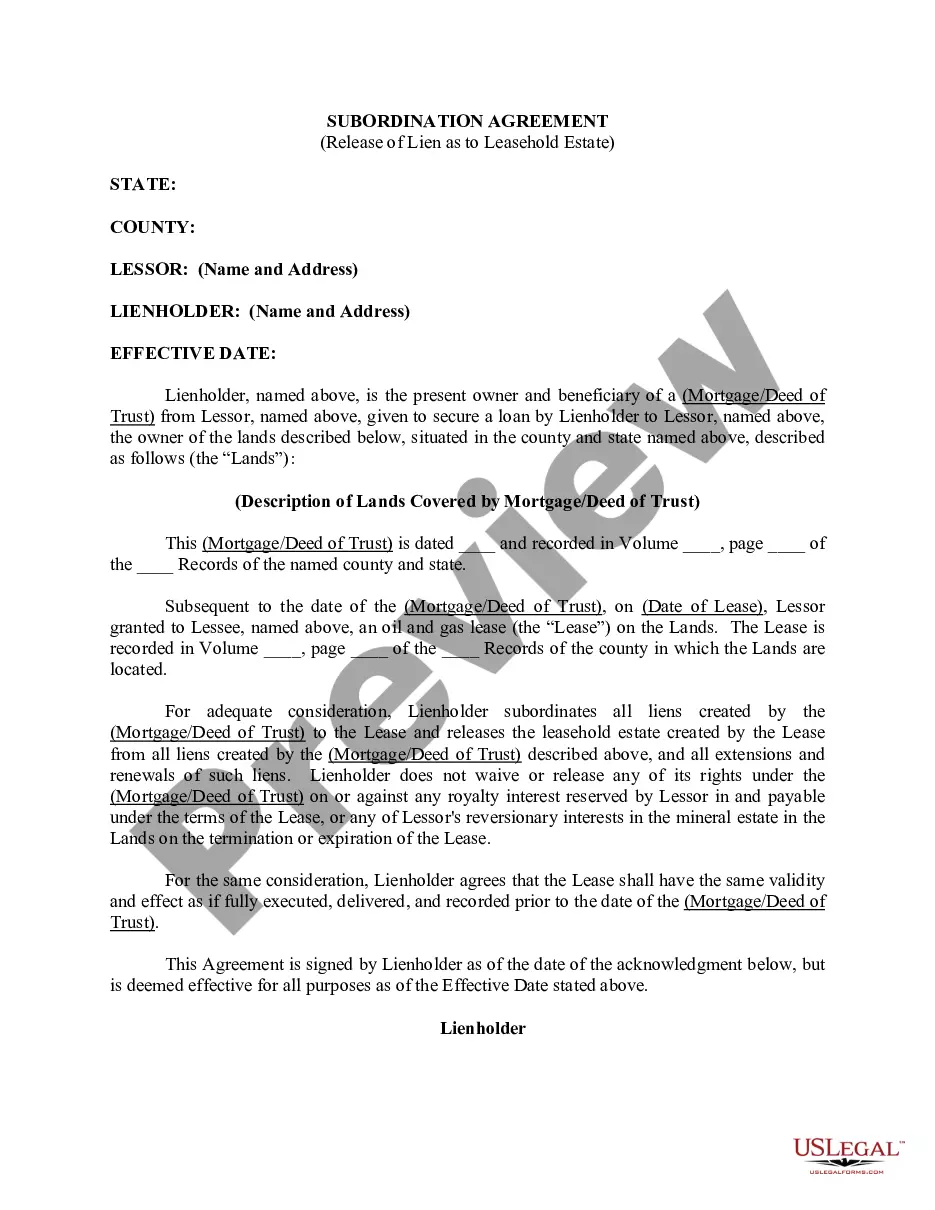
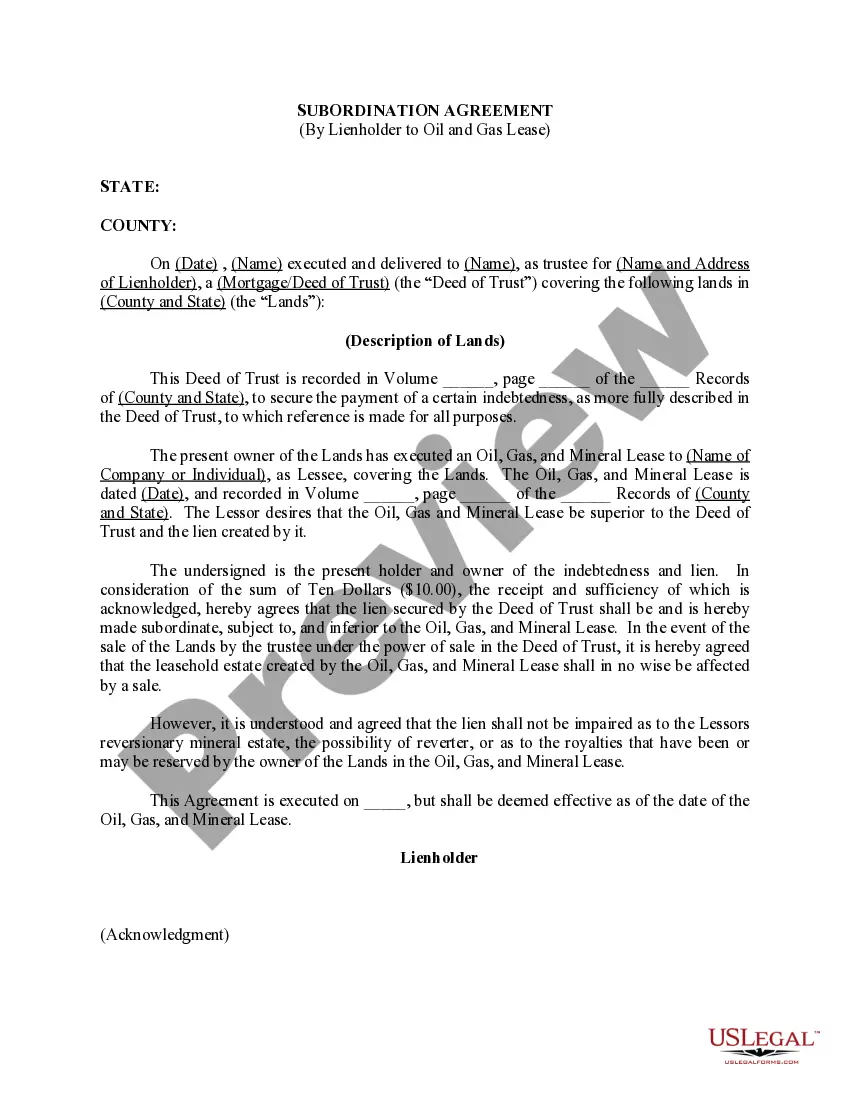
The Subordination Agreement with no Reservation by Lienholder is a legal document that allows a lienholder to subordinate their lien interests created by a deed of trust or mortgage to an oil and gas lease. This form is essential for facilitating oil and gas exploration and production on the covered lands, ensuring that the lease holds priority over the lien. Unlike other lien agreements, this form explicitly states that no reservations are made by the lienholder, which streamlines the agreement process.
Key components of this form
- The names and addresses of the lessor, lessee, and lienholder.
- The effective date of the lease.
- A description of the lands covered by the lease.
- A record reference for the lease and lien instrument.
- A clause affirming the lienholder's agreement to subordinate their lien.
- Signature of the lienholder for acknowledgment.
Common use cases
This form is used when a lienholder wishes to allow an oil and gas lease to take precedence over existing liens on certain lands. It is necessary in scenarios such as when a landowner wants to lease their property for oil and gas production and needs to assure the lessee that the lease is valid despite prior liens.
Intended users of this form
- Property owners who wish to enter into an oil and gas lease.
- Lienholders holding liens against the property who need to subordinate those claims.
- Lessee entities looking to ensure their lease is enforceable despite existing liens.
How to complete this form
- Identify and list the parties involved: the lessor, lessee, and lienholder.
- Enter the effective date of the lease.
- Provide a clear description of the lands covered by the oil and gas lease.
- Include the record reference for both the lease and the lien document.
- Ensure the lienholder signs the form to acknowledge their agreement to subordinate the lien.
Notarization requirements for this form
This form needs to be notarized to ensure legal validity. US Legal Forms provides secure online notarization powered by Notarize, allowing you to complete the process through a verified video call, available anytime.
Get your form ready online
Our built-in tools help you complete, sign, share, and store your documents in one place.
Make edits, fill in missing information, and update formatting in US Legal Forms—just like you would in MS Word.
Download a copy, print it, send it by email, or mail it via USPS—whatever works best for your next step.
Sign and collect signatures with our SignNow integration. Send to multiple recipients, set reminders, and more. Go Premium to unlock E-Sign.
If this form requires notarization, complete it online through a secure video call—no need to meet a notary in person or wait for an appointment.
We protect your documents and personal data by following strict security and privacy standards.

Make edits, fill in missing information, and update formatting in US Legal Forms—just like you would in MS Word.

Download a copy, print it, send it by email, or mail it via USPS—whatever works best for your next step.

Sign and collect signatures with our SignNow integration. Send to multiple recipients, set reminders, and more. Go Premium to unlock E-Sign.

If this form requires notarization, complete it online through a secure video call—no need to meet a notary in person or wait for an appointment.

We protect your documents and personal data by following strict security and privacy standards.
Typical mistakes to avoid
- Failing to provide accurate descriptions of the parties or property.
- Not including the effective date, which may lead to disputes about the timing of subordination.
- Leaving out the record references, which are crucial for valid claims.
Why use this form online
- Convenience of completing and downloading the form at any time.
- Editability to customize the document as needed.
- Access to reliable legal forms drafted by licensed attorneys.
Looking for another form?
Form popularity
FAQ
The signed agreement must be acknowledged by a notary and recorded in the official records of the county to be enforceable.
A subordination agreement acknowledges that one party's claim or interest is superior to that of another party in the event that the borrower's assets must be liquidated to repay the debts.
When a Borrower wishes to refinance the property, they must request a subordination request to the Lender. The Lender will subordinate their loan only when there is no cash out as part of the refinance.
But as property values are going up and the demand for refinance isn't as much, it seems that the subordination process has gotten a little easier. Typically, it takes two to three weeks to get the resubordination paperwork through, and it is likely to set you back $200 to $300.
A subordination agreement often comes up when a home has a first and a second mortgage, and the borrower wants to refinance the first mortgage. If you have two mortgages on your home and refinance the first loan, the refinancing lender might require a subordination agreement.
Subordination agreements are prepared by your lender. The process occurs internally if you only have one lender. When your mortgage and home equity line or loan have different lenders, both financial institutions work together to draft the necessary paperwork.
A subordination fee is a fee directly related to the credit transaction. There is no comparable cash transaction to compare it to and a subordination is not a required document to perfect your lien. It's only required to perfect your lien in the position that you required as a condition of making the loan.
Unless there is a subordination agreement, it is virtually impossible to refinance your first mortgage. The document agreeing to the subordination must be signed by the lender and the borrower and requires notarization.