Subordination Agreement - Lien
Understanding this form
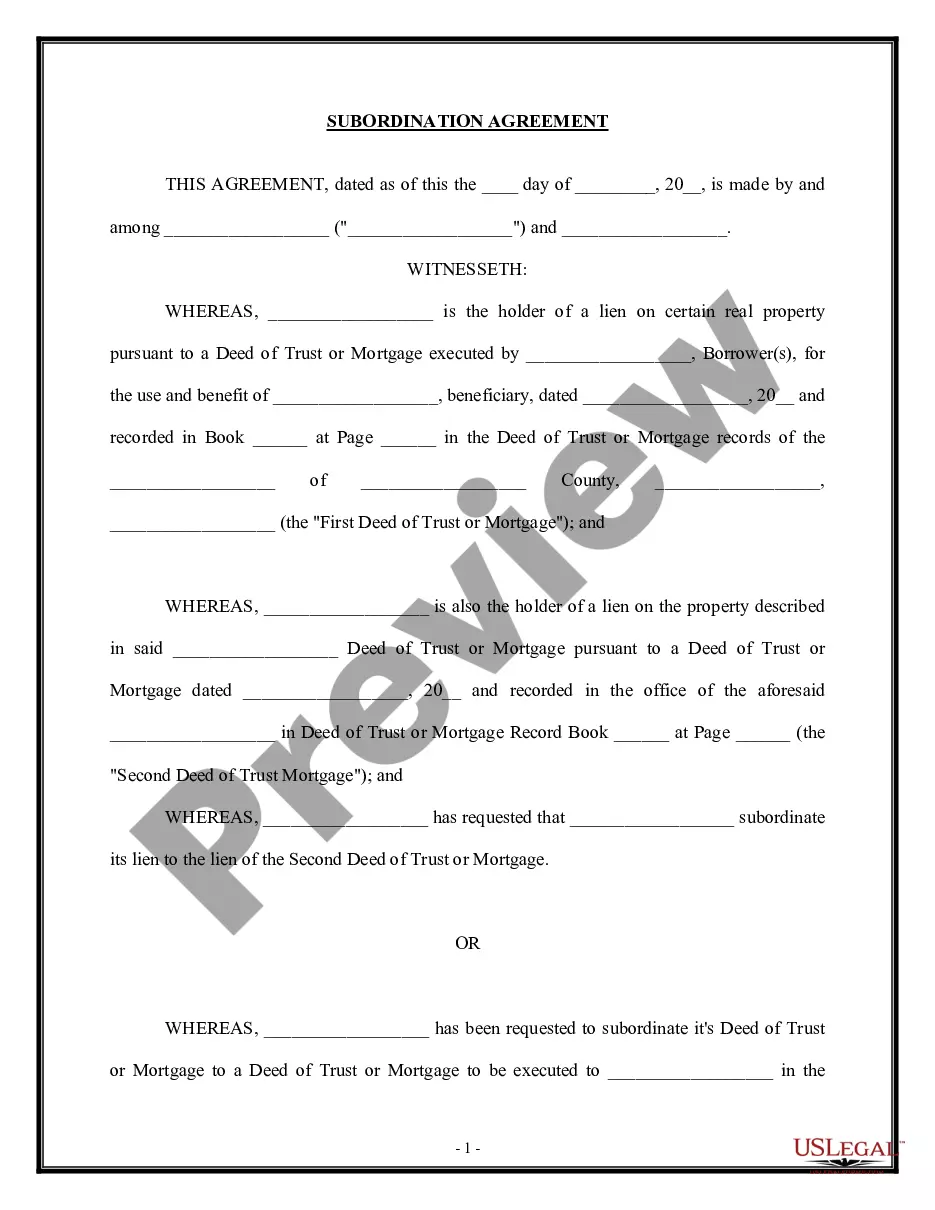
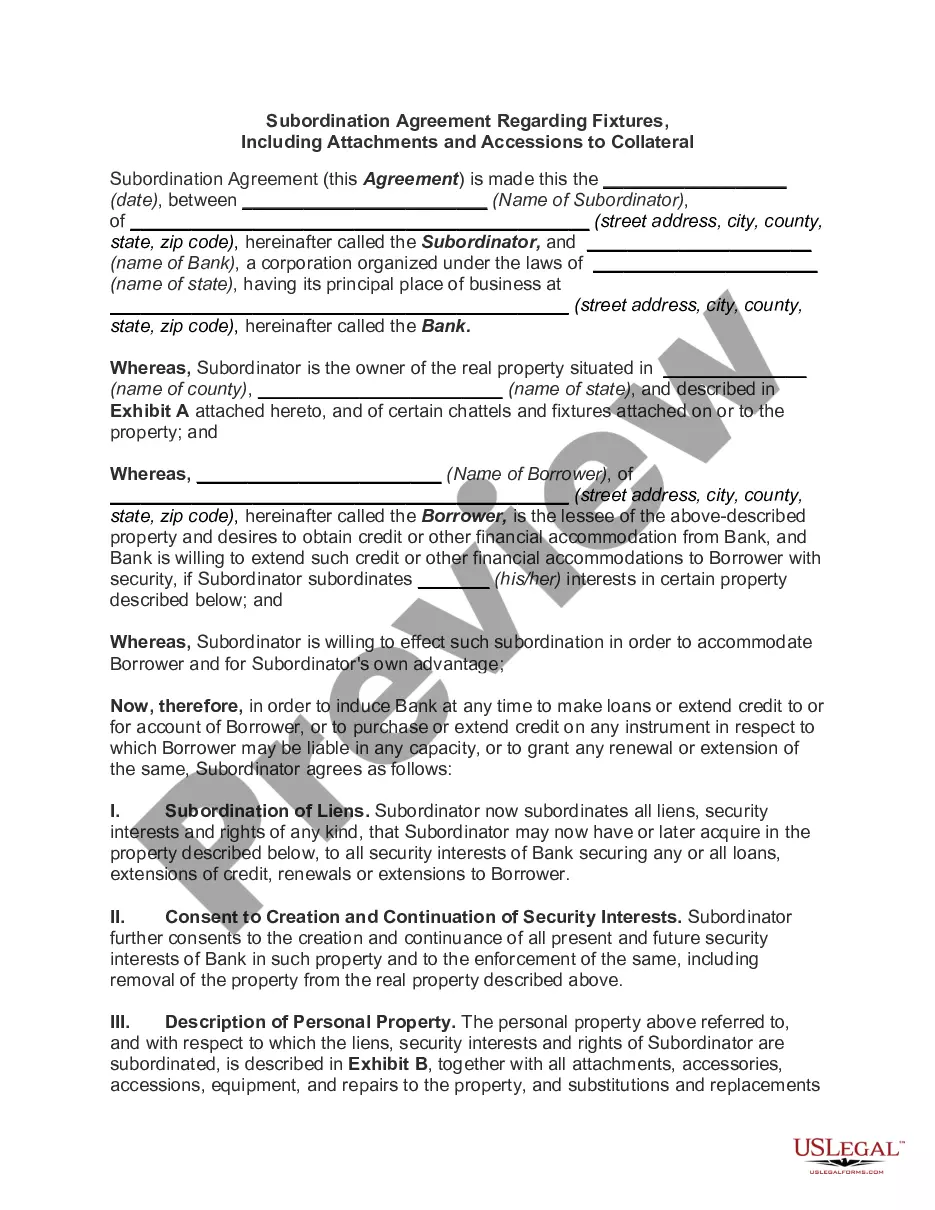
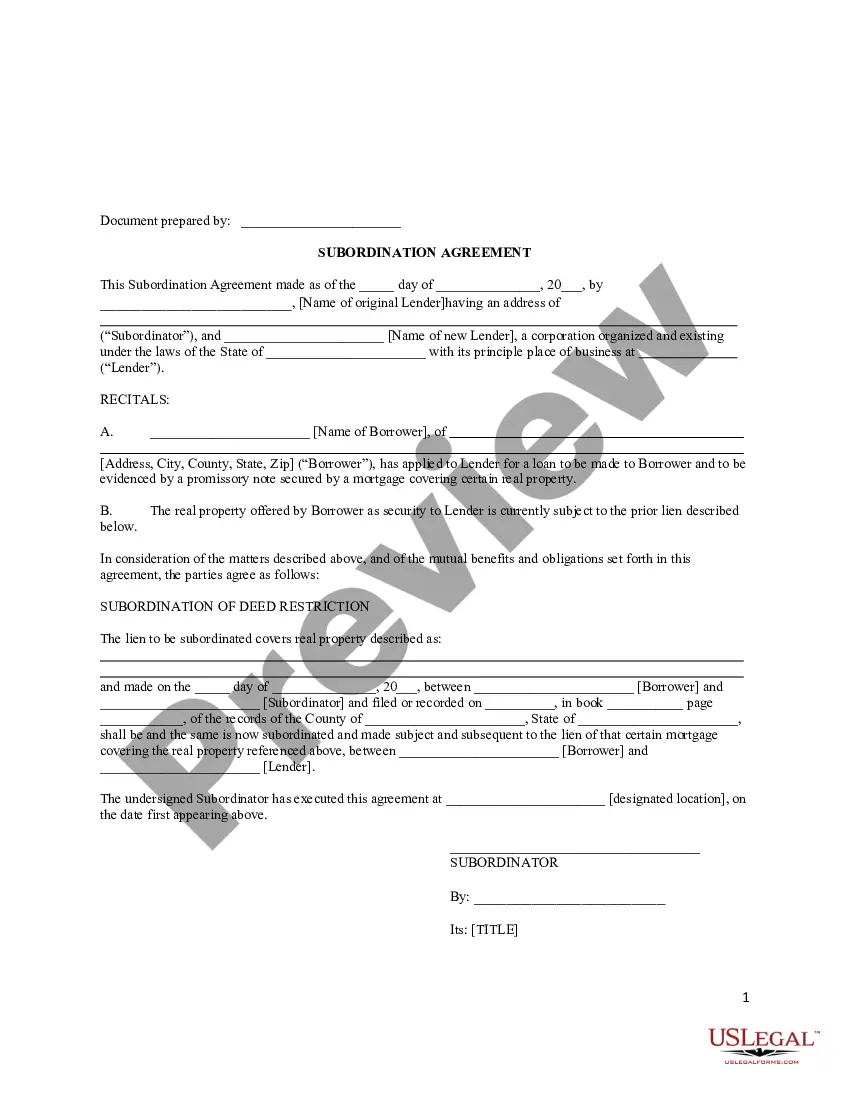
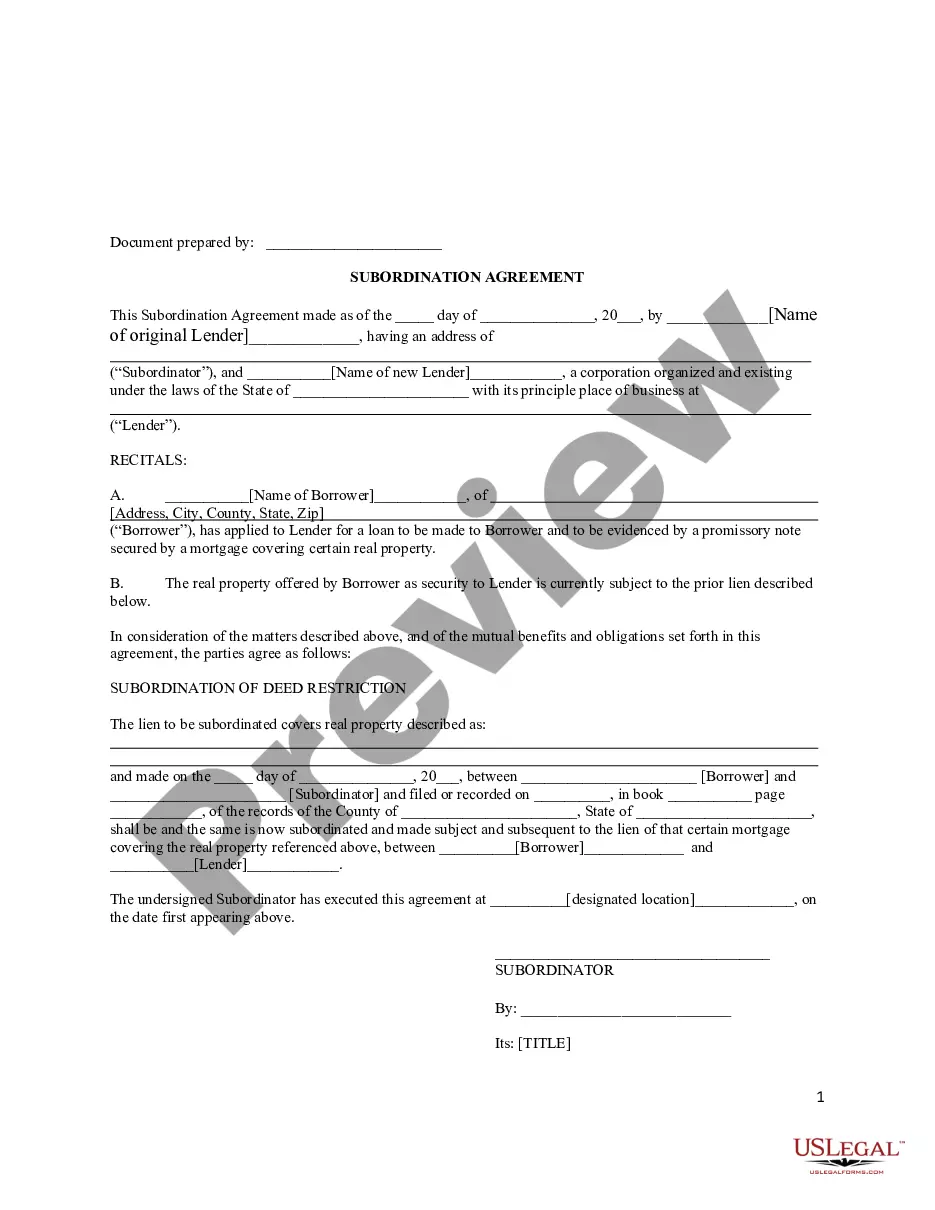
A subordination agreement is a legal document used when a second lienholder requests that the first mortgage or deed of trust take a subordinate position to a subsequent lien. This agreement clarifies that the first lien is now ranked below the second lien, allowing the second lienholder greater priority in case of default on the loan. Unlike similar agreements, this form specifically addresses the rearrangement of lien priority, which can impact the rights of creditors and borrowers during bankruptcy or foreclosure processes.
Key parts of this document
- Date of agreement
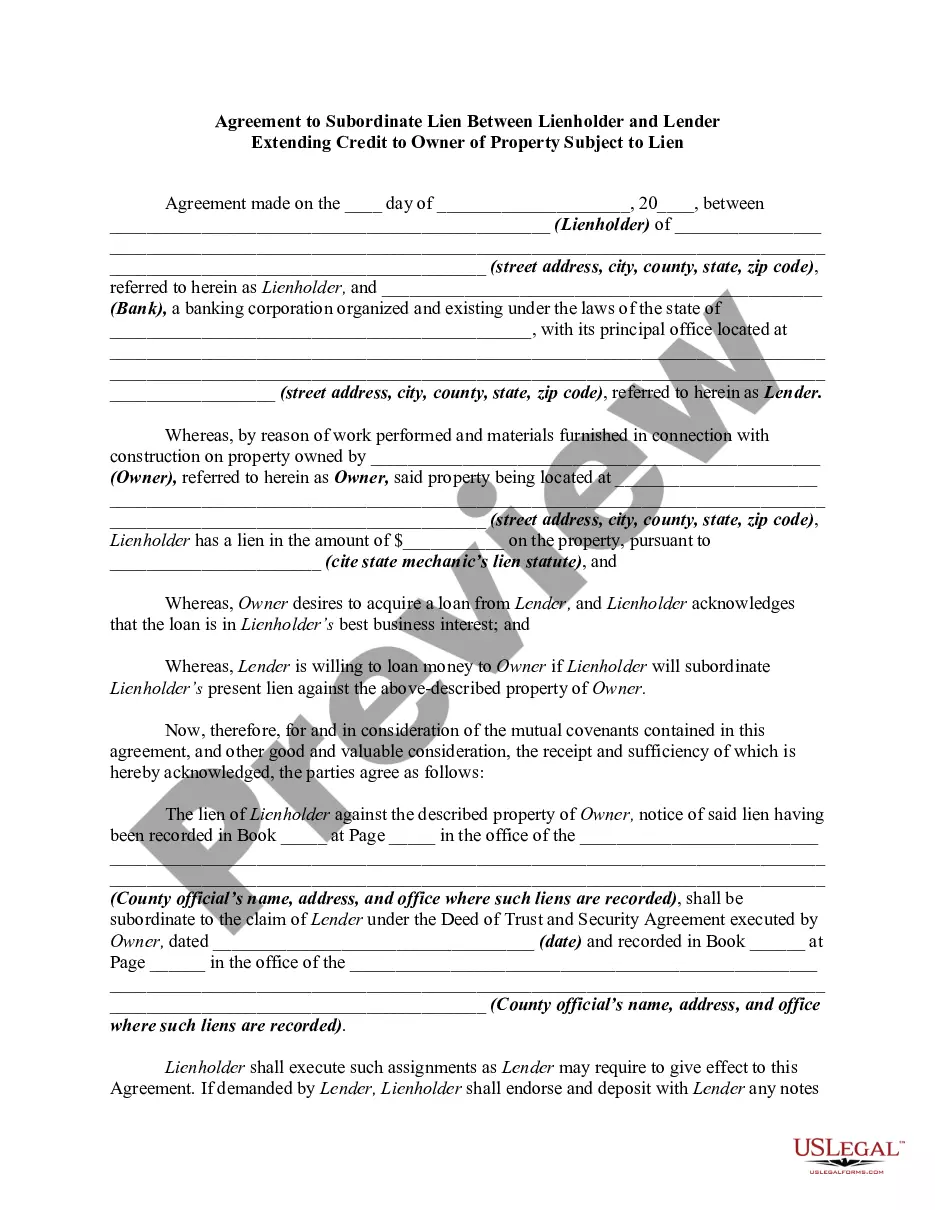
- Identities of the parties involved (the first and second lienholders)
- Details of the first and second deeds of trust, including recording information
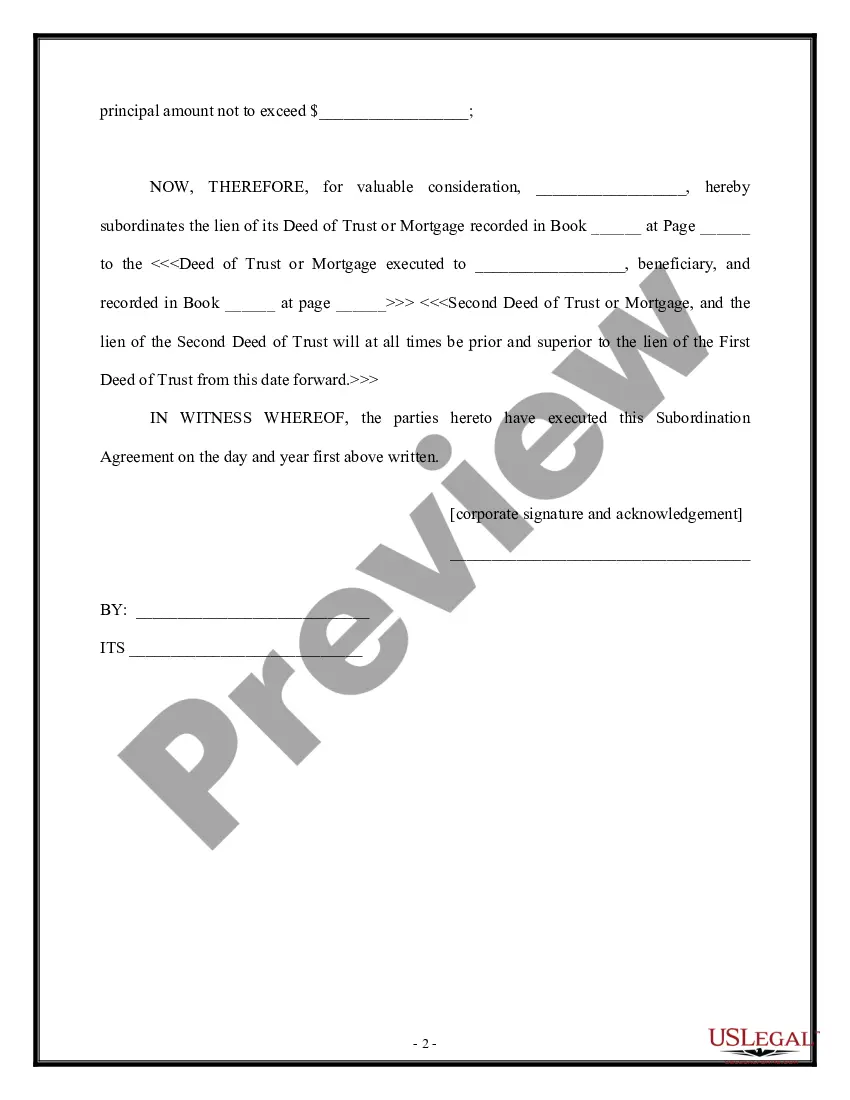
- Statement of subordination
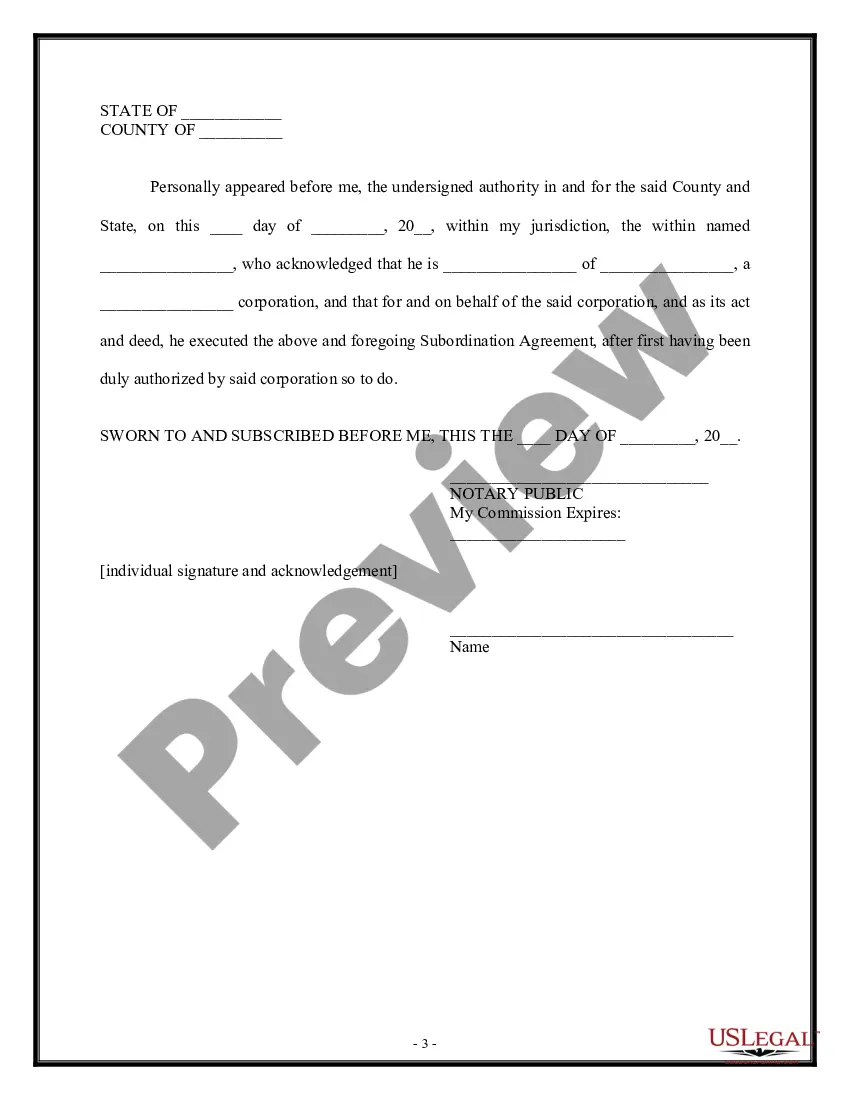
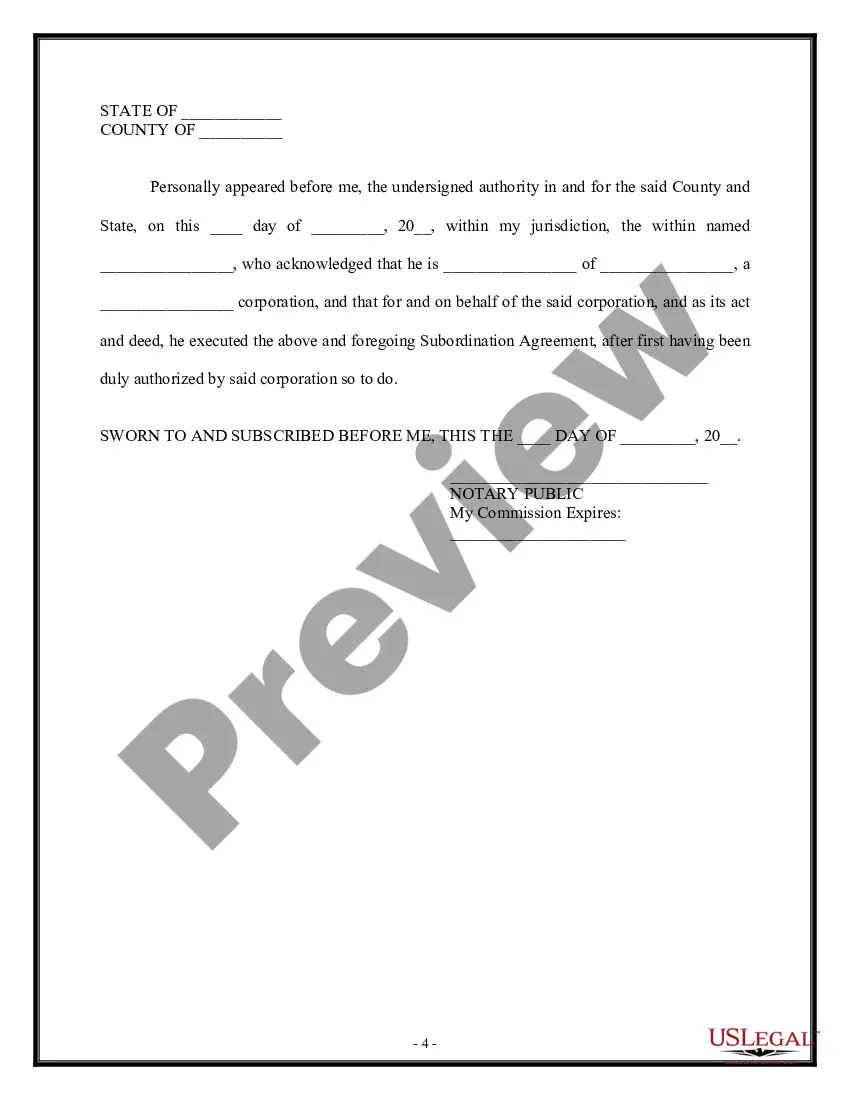
- Signatures of all parties with acknowledgment sections for notarization

When to use this form
This subordination agreement should be used when a second lienholder needs to secure a loan that requires their lien to take priority over an existing first lien. Situations may include refinancing or obtaining a new loan where the lender stipulates that their collateral needs to be in a superior lien position. It's also helpful in scenarios involving property sales or restructuring of debt where adjusting lien priority is necessary for approval.
Who should use this form
- Homeowners seeking additional financing secured by a second mortgage
- Second lienholders looking to assert their rights in relation to existing loans
- Attorneys representing clients in real estate transactions
- Creditors wishing to establish priority in lien rights
Instructions for completing this form
- Identify the date the agreement is being signed.
- Fill in the names and roles of the parties involved in the agreement.
- Specify the details of both the first and second deeds of trust, including recording dates and location.
- Clearly state the intent to subordinate the first lien to the second lien.
- Collect and enter signatures from all parties, ensuring proper acknowledgments are completed in front of a notary, if required.
Notarization guidance
This form must be notarized to be legally valid. US Legal Forms provides secure online notarization powered by Notarize, allowing you to complete the process through a verified video call.
Get your form ready online
Our built-in tools help you complete, sign, share, and store your documents in one place.
Make edits, fill in missing information, and update formatting in US Legal Forms—just like you would in MS Word.
Download a copy, print it, send it by email, or mail it via USPS—whatever works best for your next step.
Sign and collect signatures with our SignNow integration. Send to multiple recipients, set reminders, and more. Go Premium to unlock E-Sign.
If this form requires notarization, complete it online through a secure video call—no need to meet a notary in person or wait for an appointment.
We protect your documents and personal data by following strict security and privacy standards.

Make edits, fill in missing information, and update formatting in US Legal Forms—just like you would in MS Word.

Download a copy, print it, send it by email, or mail it via USPS—whatever works best for your next step.

Sign and collect signatures with our SignNow integration. Send to multiple recipients, set reminders, and more. Go Premium to unlock E-Sign.

If this form requires notarization, complete it online through a secure video call—no need to meet a notary in person or wait for an appointment.

We protect your documents and personal data by following strict security and privacy standards.
Common mistakes
- Failing to include accurate deed recording information.
- Not properly notarizing signatures, which can invalidate the agreement.
- Leaving out essential details that clarify lien priority.
- Using outdated versions of the form that may not comply with current laws.
Benefits of completing this form online
- Immediate access to downloadable form templates created by licensed attorneys.
- Easy customization to fit specific needs and scenarios.
- Guidance through the completion process, reducing the likelihood of errors.
- Secure and convenient methods to ensure forms are properly notarized when necessary.
Looking for another form?



Form popularity
FAQ
Despite its technical-sounding name, the subordination agreement has one simple purpose. It assigns your new mortgage to first lien position, making it possible to refinance with a home equity loan or line of credit.
Subordination is the process of ranking home loans (mortgage, HELOC or home equity loan) by order of importance.Through subordination, lenders assign a lien position to these loans. Generally, your mortgage is assigned the first lien position while your HELOC becomes the second lien.
A subordination agreement prioritizes collateralized debts, ranking one behind another for purposes of collecting repayment from a debtor in the event of foreclosure or bankruptcy. A second-in-line creditor collects only when and if the priority creditor has been fully paid.
A subordination agreement refers to a legal agreement that prioritizes one debt over another for securing repayments from a borrower. The agreement changes the lien position. A lien is a right allowing one party to possess a property of another party who owns a debt until the debt is dissolved.
But as property values are going up and the demand for refinance isn't as much, it seems that the subordination process has gotten a little easier. Typically, it takes two to three weeks to get the resubordination paperwork through, and it is likely to set you back $200 to $300.
: placement in a lower class, rank, or position : the act or process of subordinating someone or something or the state of being subordinated As a prescriptive text, moreover, the Bible has been interpreted as justifying the subordination of women to men.
A subordination agreement often comes up when a home has a first and a second mortgage, and the borrower wants to refinance the first mortgage. If you have two mortgages on your home and refinance the first loan, the refinancing lender might require a subordination agreement.