Employee Agreement - General
What is this form?
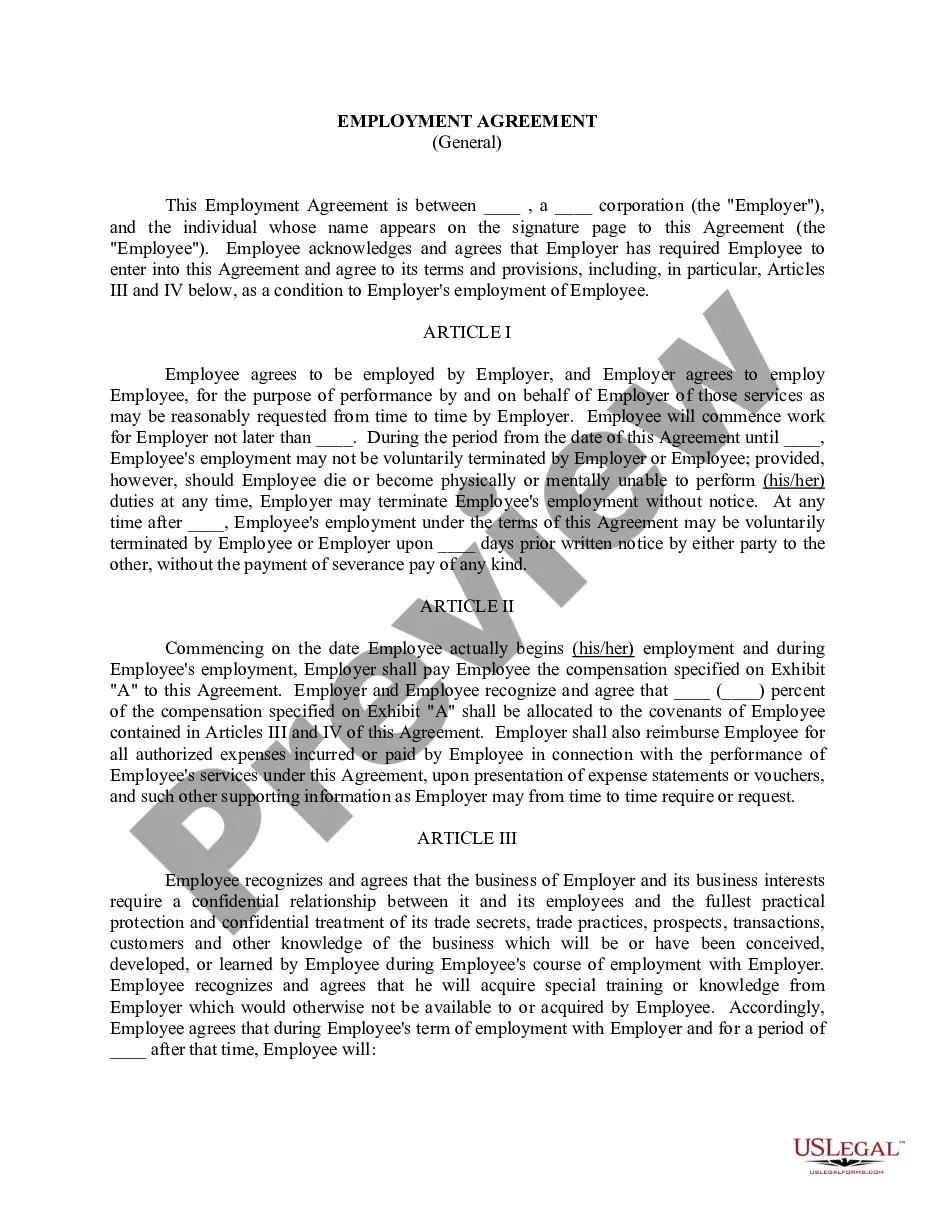
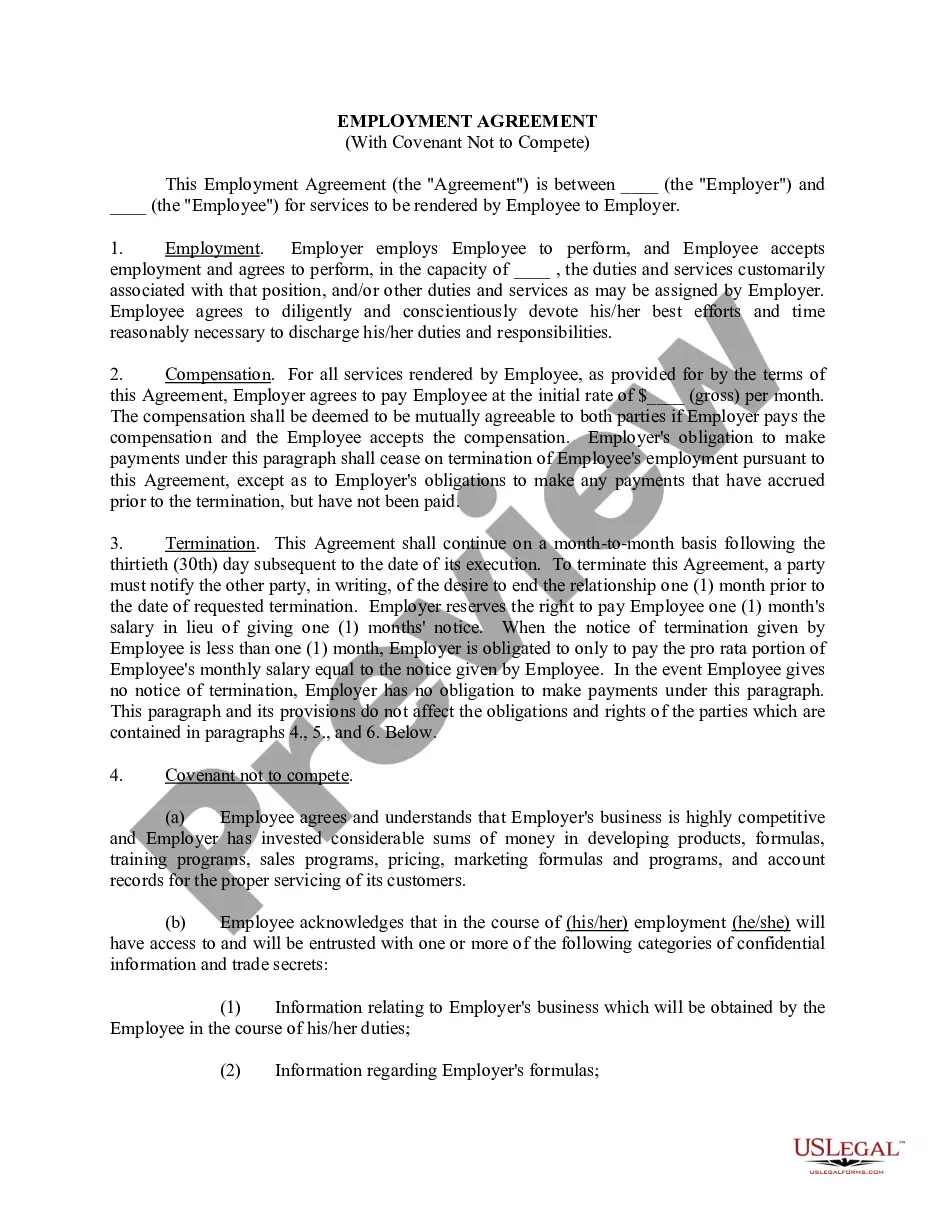
The Employee Agreement - General is a formal contract outlining the terms of employment between an employer and an employee. This document serves to establish expectations, responsibilities, and the legal relationship between the parties. Unlike other employment-related forms, this agreement includes specific sections regarding confidentiality, compensation, and termination conditions that protect both employer and employee interests.
Main sections of this form
- Identification of the employer and employee.
- Details of employment terms, including start date and duration of employment.
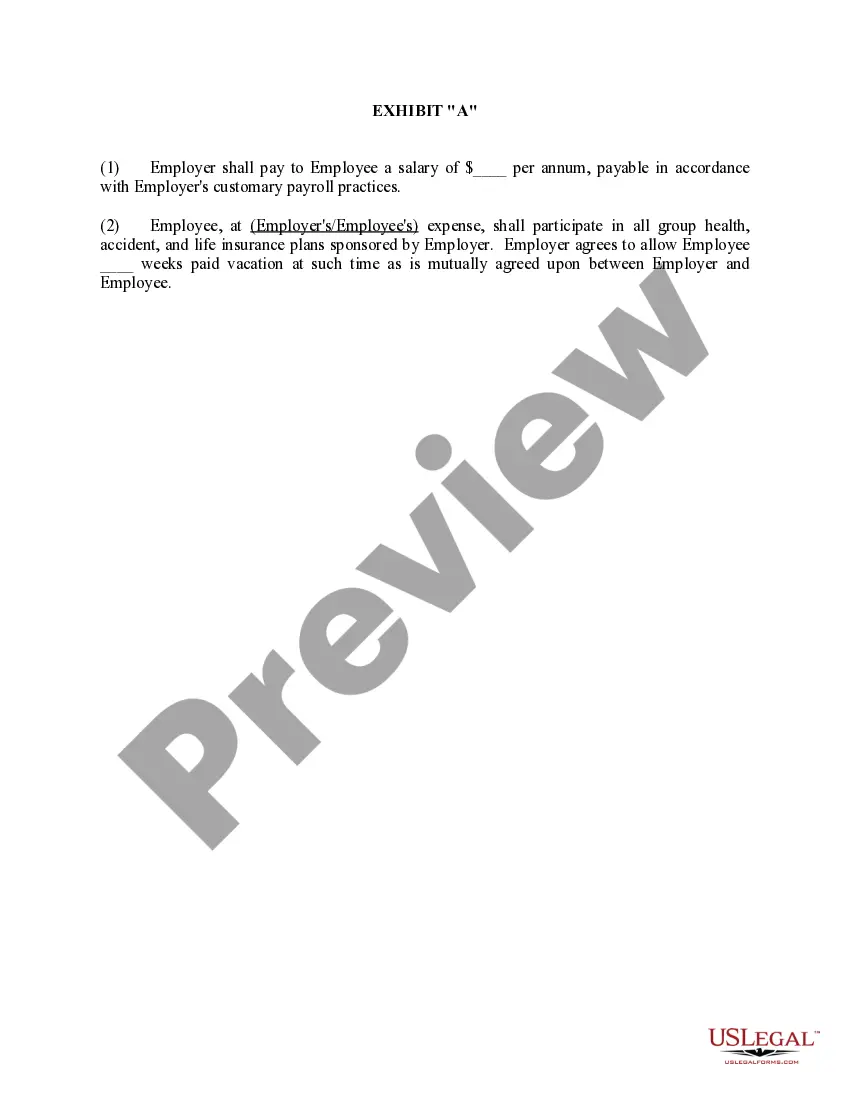
- Compensation details and reimbursement procedures for expenses.
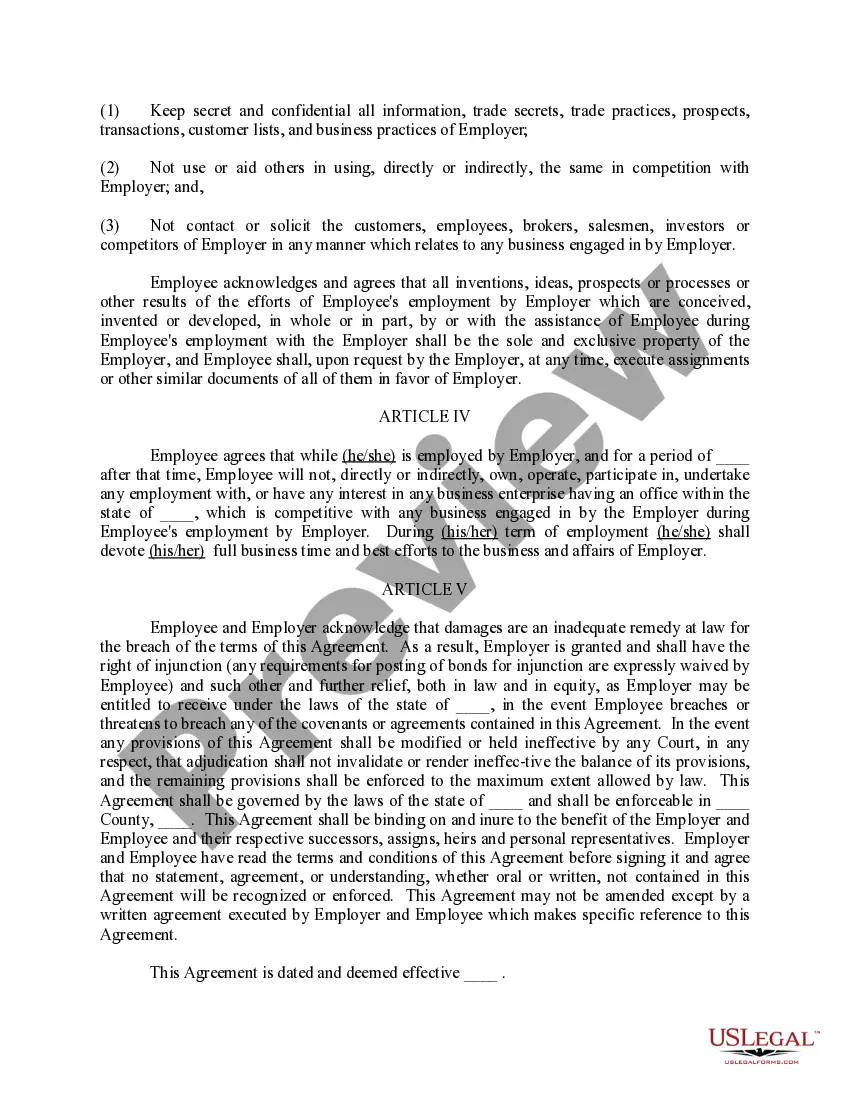
- Confidentiality obligations related to the employer's trade secrets and business practices.
- Non-compete clauses that restrict the employee's activities after leaving the employer.
- Conditions for termination and the process for providing notice.

When this form is needed
This form is essential when hiring an employee in a formal capacity and is particularly important for businesses that require protection of sensitive information or trade secrets. Use it when establishing clear terms for employment, including confidentiality agreements, compensation structures, and the duration of the employment relationship. It is ideal for both startups and established businesses looking to formalize their employee agreements.
Who needs this form
This employment agreement should be used by:
- Employers seeking to define the terms of employment clearly and legally.
- Human resource professionals responsible for onboarding new employees.
- Business owners in any industry where confidentiality and non-compete issues are relevant.
- Employees who wish to understand their rights and obligations before signing an employment contract.
How to complete this form
- Identify the parties involved: fill in the names of the employer and employee.
- Specify the start date of employment and any duration terms.
- Detail the compensation as outlined in Exhibit A, including salary and benefits.
- Fill in the confidentiality obligations and non-compete terms as needed.
- Include both parties' signatures to execute the agreement.
- Ensure all required fields are completed and reviewed before finalizing the document.
Notarization guidance
This form does not typically require notarization unless specified by local law. It is advisable to check if any state regulations necessitate notarization for employment agreements in your jurisdiction.
Get your form ready online
Our built-in tools help you complete, sign, share, and store your documents in one place.
Make edits, fill in missing information, and update formatting in US Legal Forms—just like you would in MS Word.
Download a copy, print it, send it by email, or mail it via USPS—whatever works best for your next step.
Sign and collect signatures with our SignNow integration. Send to multiple recipients, set reminders, and more. Go Premium to unlock E-Sign.
If this form requires notarization, complete it online through a secure video call—no need to meet a notary in person or wait for an appointment.
We protect your documents and personal data by following strict security and privacy standards.

Make edits, fill in missing information, and update formatting in US Legal Forms—just like you would in MS Word.

Download a copy, print it, send it by email, or mail it via USPS—whatever works best for your next step.

Sign and collect signatures with our SignNow integration. Send to multiple recipients, set reminders, and more. Go Premium to unlock E-Sign.

If this form requires notarization, complete it online through a secure video call—no need to meet a notary in person or wait for an appointment.

We protect your documents and personal data by following strict security and privacy standards.
Avoid these common issues
- Failing to clearly define the compensation and benefits.
- Leaving out necessary confidentiality and non-compete clauses.
- Not including the start date or termination notice period.
- Forgetting to have both parties sign the agreement.
- Failing to consult local laws regarding employment agreements.
Advantages of online completion
- Convenience of downloading and filling out the form at your own pace.
- Editability allows for customization to fit specific employment situations.
- Access to attorney-drafted language for legal soundness.
- Fast turnaround without the need for in-person appointments.
- Secure storage and availability of the form for future reference.
Legal use & context
- The agreement provides a clear framework for the employment relationship, outlining expectations.
- It serves as a deterrent against misuse of confidential business information.
- Both parties are bound to the terms, which increases accountability.
Main things to remember
- The Employee Agreement - General formalizes the employment relationship.
- It includes critical components like confidentiality and non-compete clauses.
- Completion requires careful attention to detail regarding all partiesâ rights and responsibilities.
Looking for another form?
Form popularity
FAQ
Identify the employee and the business hiring them. List the date that the employment contract will be made effective. Provide the name of the role that the employee will fill. List the term of employment. Detail the pay and benefits the employee receives.
An employment contract doesn't always have to be in writing to be enforceable. While that may be the case, written agreements are certainly easier to enforce and not subject to certain limitations that oral agreements are. Oral agreements are still subject to the requirements of what it takes to form a basic contract.
Job information. Compensation and benefits. Time off, sick days, and vacation policy. Employee classification. The schedule and employment period. Confidentiality agreement. A technology privacy policy. Termination terms and conditions.
An employment agreement is a binding contract between an employer and that employer's employee. The contract covers specific aspects of employment. These include wages, health insurance benefits, pension benefits, and bonuses.Specific provisions in an employment agreement include: Length of Employment.
An employment contract is an agreement between a company and a worker. It describes the role, responsibilities, and payment and benefits. Employment contracts should be reviewed before signing, because there may be consequences if you don't hold up your end of the bargain.
Fixed price contracts. With a fixed price contract the buyer (that's you) doesn't take on much risk. Cost-reimbursable contracts. With a cost-reimbursable contract you pay the vendor for the actual cost of the work. Time and materials contracts.
There are three types of employment status: employee, worker and self-employed. The three are often not in practice used correctly and the difference is not always known.
Types of Employment Contracts: Permanent employment, temporary employment and independent contractors.
An employment contract is a signed agreement between an individual employee and an employer or a labor union. It establishes both the rights and responsibilities of the two parties: the worker and the company.