Employee Agreement with Covenant not to Compete
What this document covers
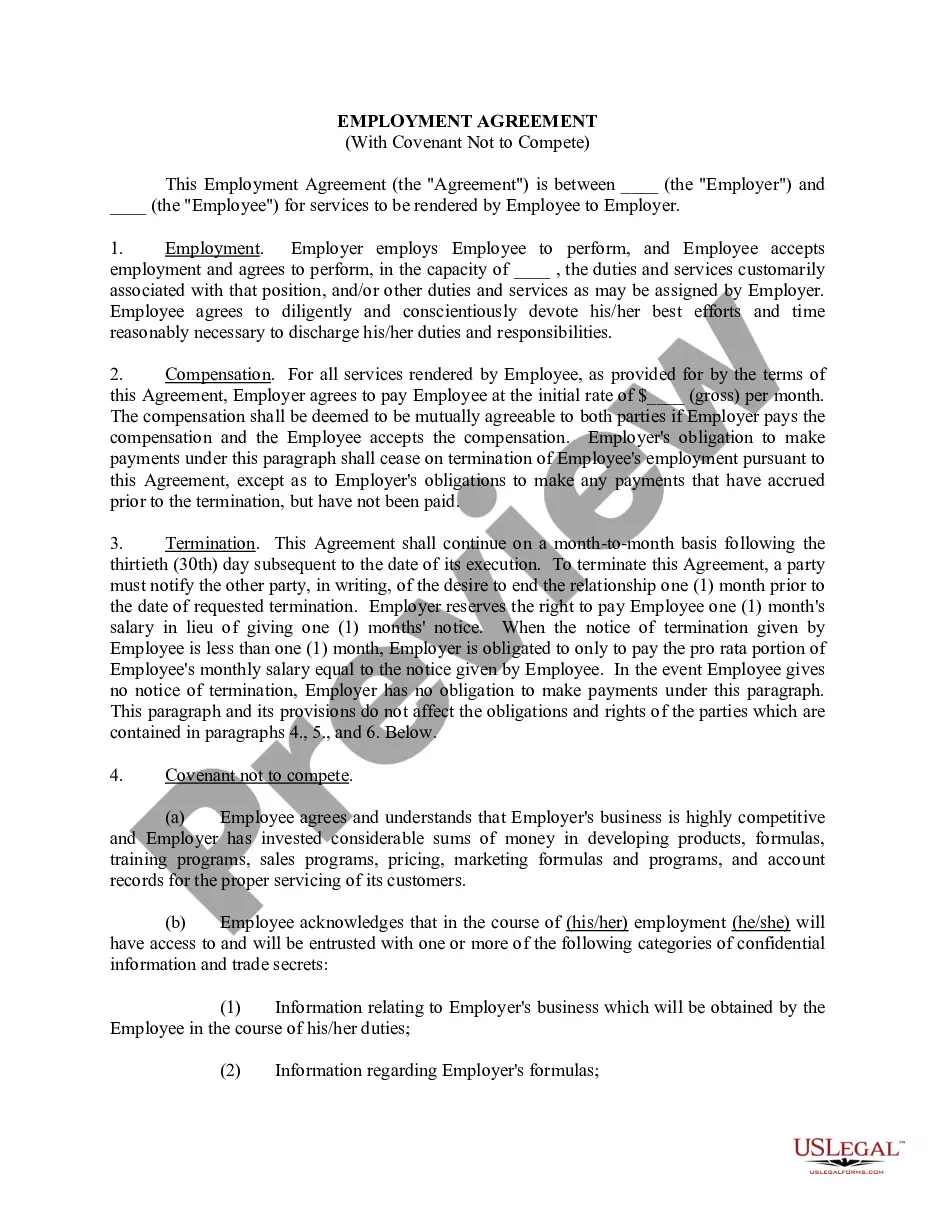
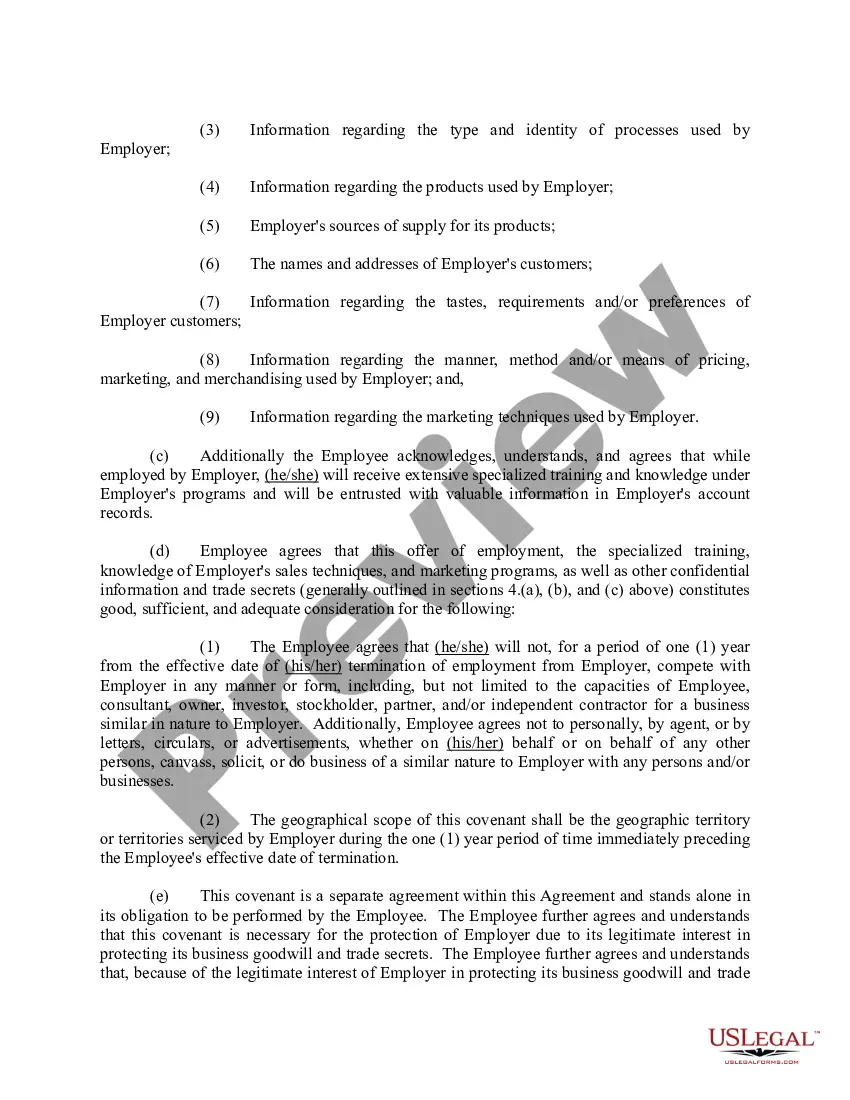
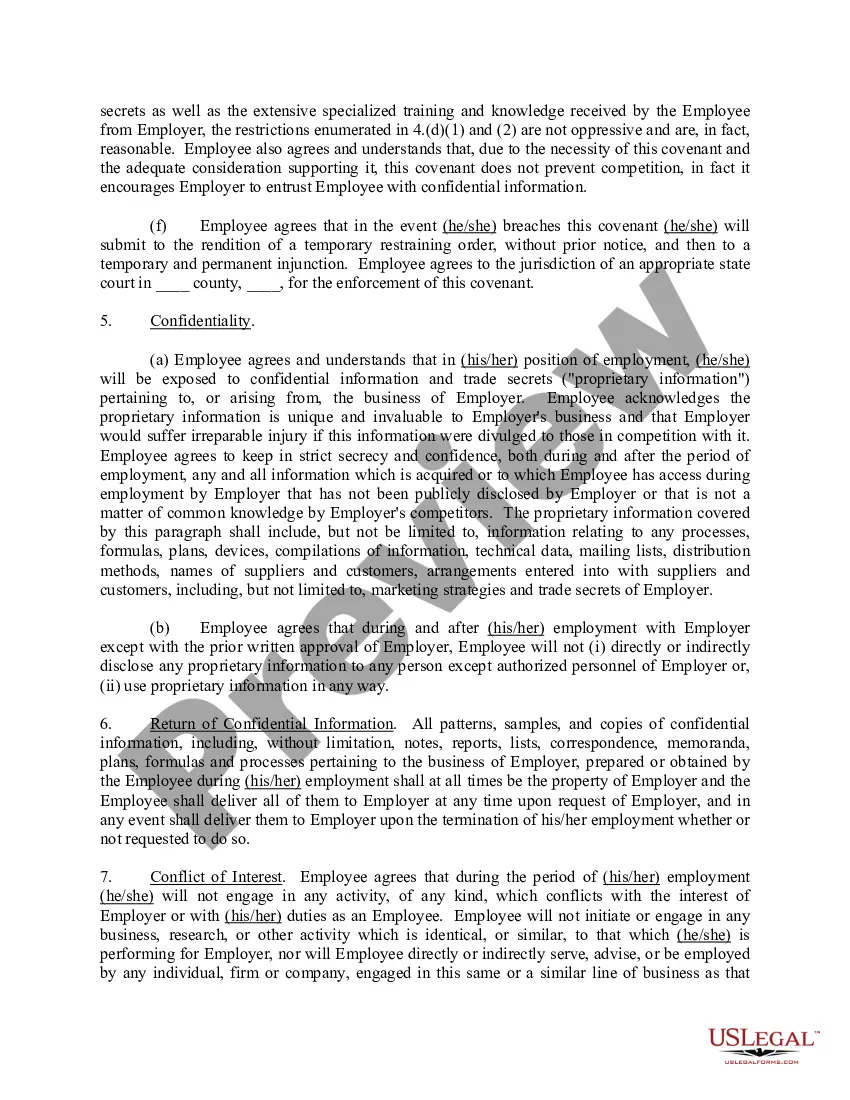
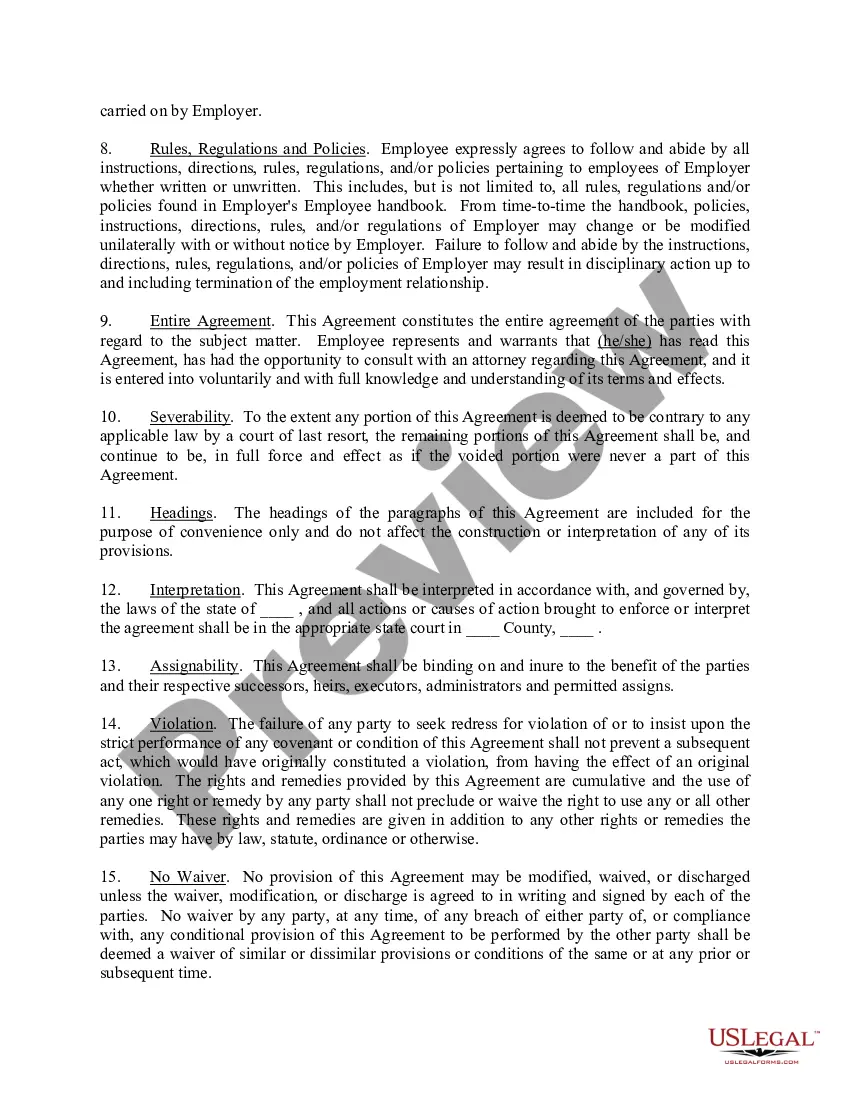
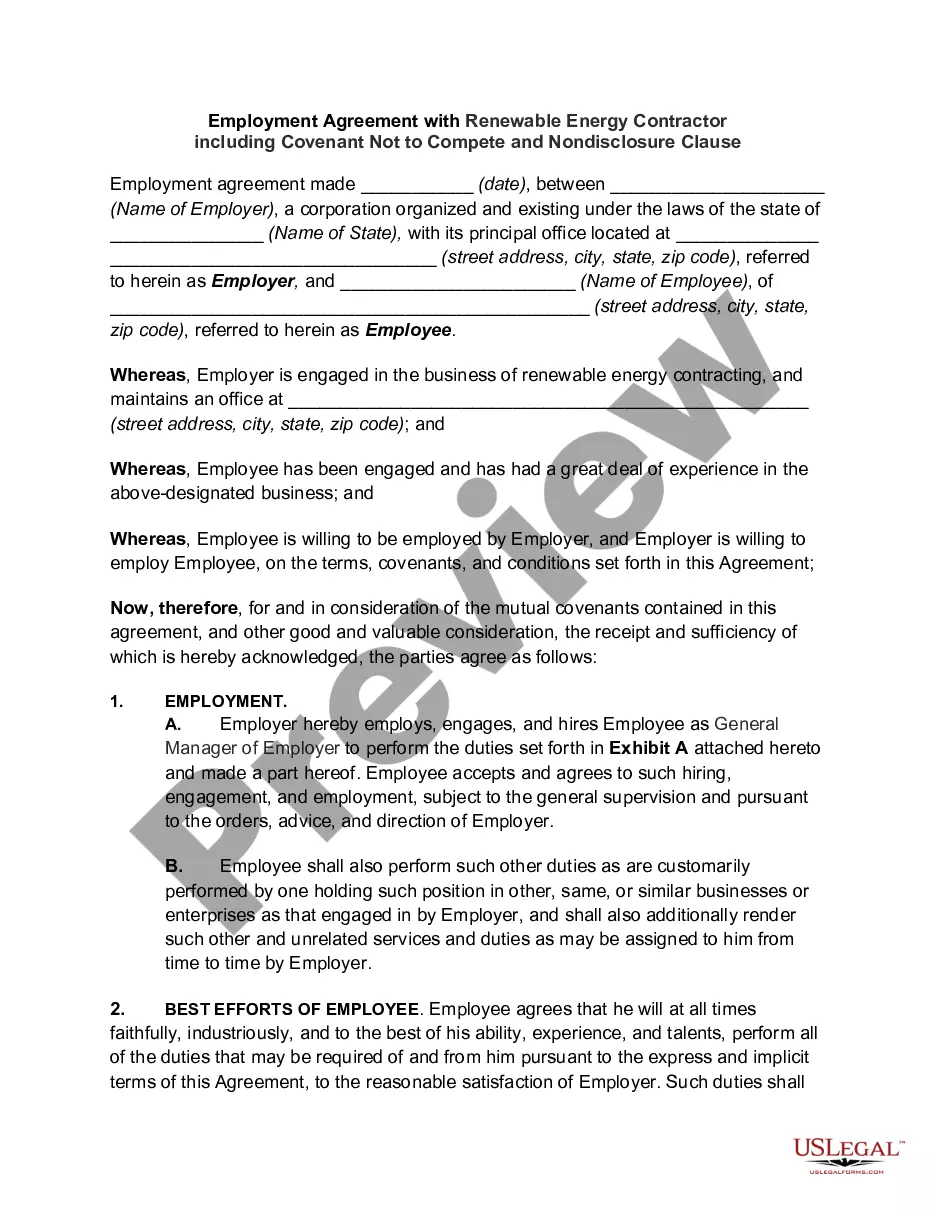
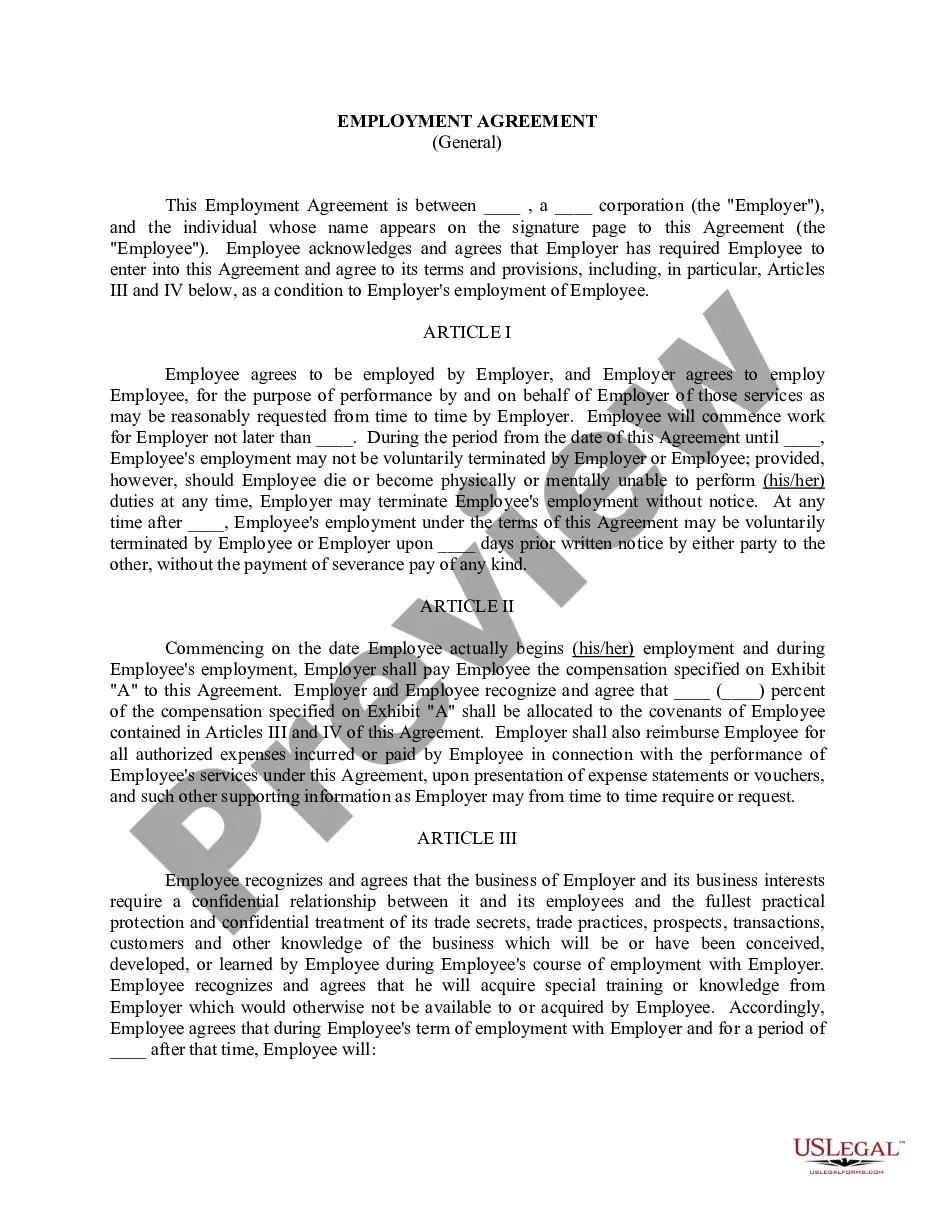
The Employee Agreement with Covenant Not to Compete is a legal document designed to define the terms of employment between an employer and an employee, while also including a commitment from the employee not to engage in competitive activities after leaving the company. This specialized agreement ensures that sensitive company information and trade secrets remain protected, differentiating it from standard employment agreements by emphasizing the covenant not to compete.
What’s included in this form
- Employment Agreement: Outlines the relationship between the employer and employee, including job duties and responsibilities.
- Compensation: Details the salary and payment terms for the employee's services.
- Termination Clauses: Specifies how either party may terminate the agreement, including notice periods and final payments.
- Covenant Not to Compete: Describes the restrictions on the employee's ability to compete with the employer after employment ends.
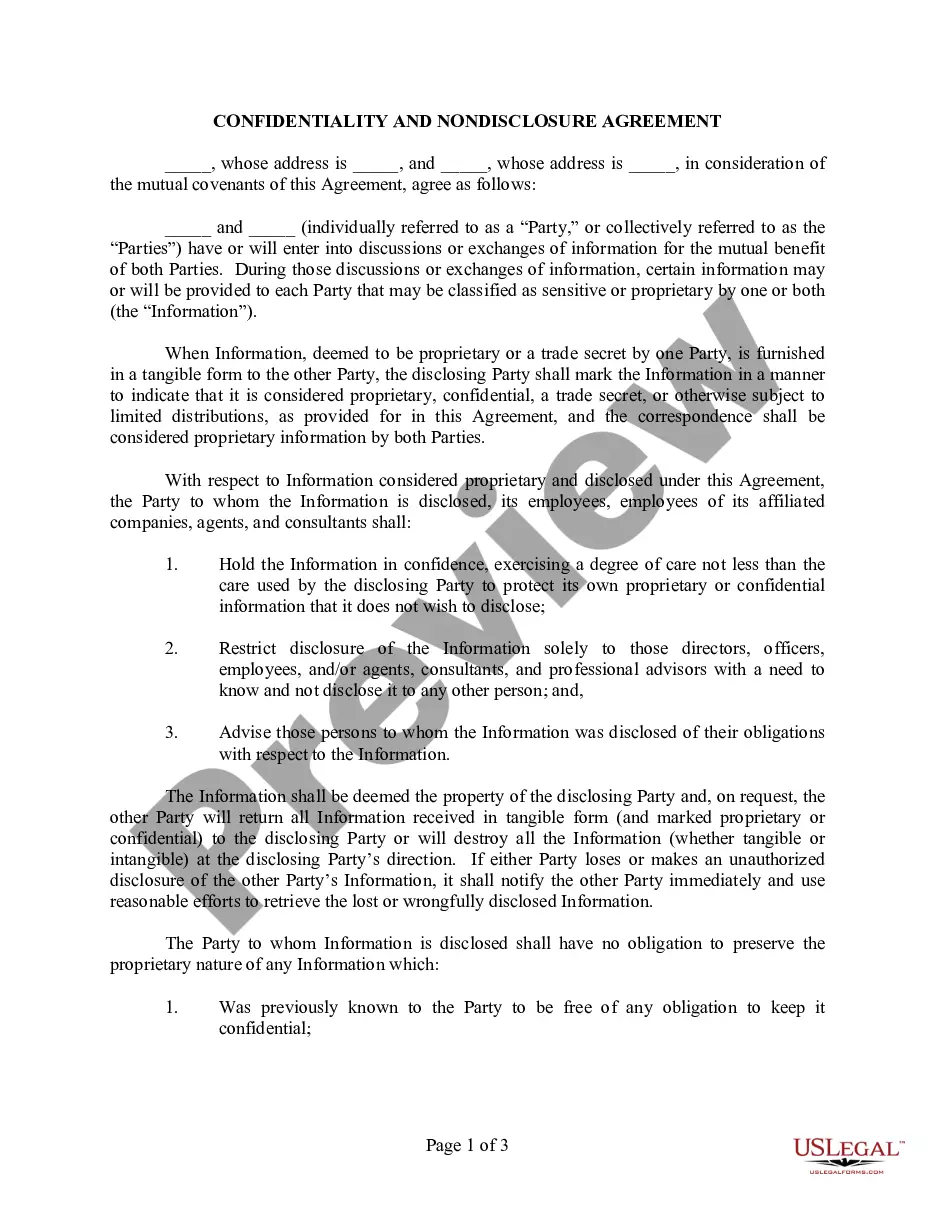
- Confidentiality Agreement: Protects the employer's proprietary information from being disclosed or misused by the employee.
- Return of Confidential Information: Mandates that all confidential materials must be returned upon termination of employment.

When this form is needed
This form should be used when an employer hires an employee and wishes to establish clear terms of employment that include a covenant not to compete. It's particularly important for businesses that deal with sensitive information, trade secrets, or proprietary processes. Use this form when you need to protect your company's interests after an employee departs.
Who should use this form
This form is ideal for:
- Employers in competitive industries who want to safeguard their trade secrets and proprietary information.
- Business owners looking to set clear expectations and boundaries with new employees.
- Employees accepting positions that involve access to sensitive company information.
How to prepare this document
- Identify the parties involved: fill in the names of the employer and employee.
- Specify the job position and duties of the employee clearly.
- Enter the agreed compensation amount for the employee's work.
- Detail the terms for termination, including the notice period.
- Clearly outline the covenant not to compete and the confidentiality obligations.
- Both parties should sign and date the agreement to make it effective.
Does this document require notarization?
Notarization is not commonly needed for this form. However, certain documents or local rules may make it necessary. Our notarization service, powered by Notarize, allows you to finalize it securely online anytime, day or night.
Get your form ready online
Our built-in tools help you complete, sign, share, and store your documents in one place.
Make edits, fill in missing information, and update formatting in US Legal Forms—just like you would in MS Word.
Download a copy, print it, send it by email, or mail it via USPS—whatever works best for your next step.
Sign and collect signatures with our SignNow integration. Send to multiple recipients, set reminders, and more. Go Premium to unlock E-Sign.
If this form requires notarization, complete it online through a secure video call—no need to meet a notary in person or wait for an appointment.
We protect your documents and personal data by following strict security and privacy standards.

Make edits, fill in missing information, and update formatting in US Legal Forms—just like you would in MS Word.

Download a copy, print it, send it by email, or mail it via USPS—whatever works best for your next step.

Sign and collect signatures with our SignNow integration. Send to multiple recipients, set reminders, and more. Go Premium to unlock E-Sign.

If this form requires notarization, complete it online through a secure video call—no need to meet a notary in person or wait for an appointment.

We protect your documents and personal data by following strict security and privacy standards.
Typical mistakes to avoid
- Failing to clearly define the scope of the job duties, which can lead to misunderstandings.
- Not specifying the duration and geographical limits of the non-compete clause.
- Neglecting to outline the confidentiality obligations adequately.
- Forgetting to include details on what constitutes a breach of the agreement.
Why complete this form online
- Convenience of immediate download for quick access.
- Editability allows for customization to fit specific needs.
- Reliability from templates drafted by licensed attorneys to ensure legal compliance.
Legal use & context
- Business owners can protect their competitive advantages through carefully structured non-compete agreements.
- Courts may scrutinize the reasonableness of the non-compete clauses regarding duration and geographic scope.
- Understanding state-specific laws is crucial for the enforceability of such agreements, as rules can vary widely.
Key takeaways
- The Employee Agreement with Covenant Not to Compete sets essential employment terms and protects business interests.
- Clear language in the agreement helps prevent legal disputes and misunderstandings.
- Always consider state laws related to employment agreements for compliance.
Looking for another form?

Form popularity
FAQ
What is a noncompete agreement? Keep the group small. Keep the restrictions reasonable and narrow. Provide consideration for the agreement. Get it in writing. Prepare multiple versions if necessary. Concede choice of law/forum. Provisions to include.
The seller's ability to compete. The seller's intent to compete. The seller's economic resources. Potential damage posed by the seller's competition. The seller's expertise in the industry in question.
Covenant Not to Compete Must Be Amortized Over 15 years The Tax Court, in a CASE OF FIRST IMPRESSION, has held that a company must amortize over 15 years a covenant not to compete because it was entered into with an indirect acquisition of an interest in a trade or business -- that is, the redemption of the company's
The value of a non-competition agreement is represented by the present value of the cash flows that would be lost if the covenanter were to compete, adjusted for the effective probability that the covenanter would compete, and compete successfully.
Generally when a business is sold most of the gain for the seller is long-term capital gain taxed at favorable rates. However, any amount allocated to the covenant not to compete is ordinary income, taxed at the highest individual tax rate applicable to the seller.
The well-known general rule is that a covenant not to compete is only enforceable if its terms are reasonable and necessary to protect the legitimate business interests of the employer.Courts then often engage in an analysis of the business interests involved and the geographic and temporal scopes of such agreements.
Study your competition. Write up the agreement. Have your agreement reviewed by a legal professional. Present the non-compete contract to your employee. If everyone is satisfied, sign and date the agreement.
Voiding a non-compete contract is possible in certain circumstances. For instance, if you can prove that you never signed the contract, or if you can demonstrate that the contract is against the public interest, you may be able to void the agreement.
Consideration. Protection of a Legitimate Business Interest. Customer relationships. Confidential information. Reasonableness of the Restraint. Duration. Scope. Overbroad Covenant.