Confidentiality and Nondisclosure Agreement
What this document covers
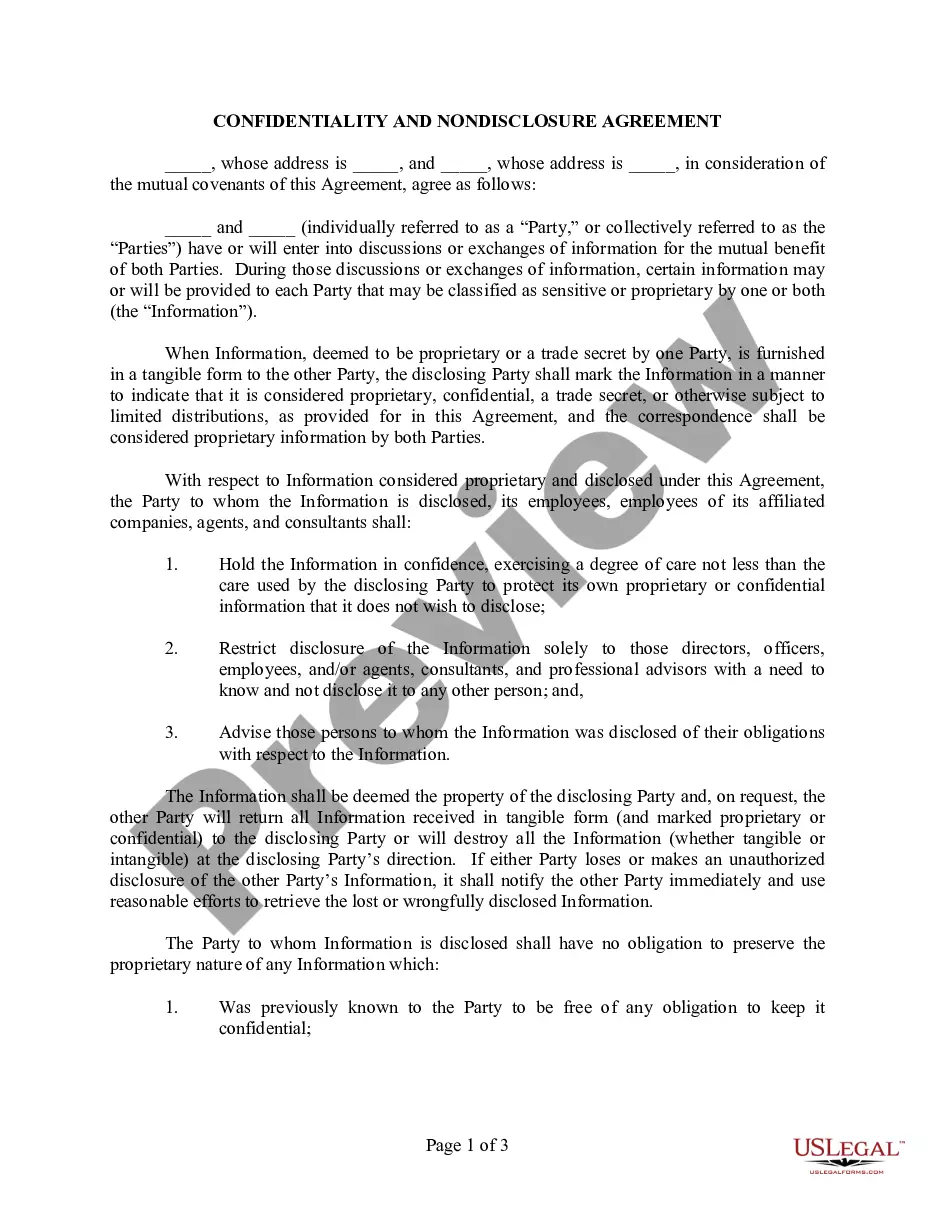
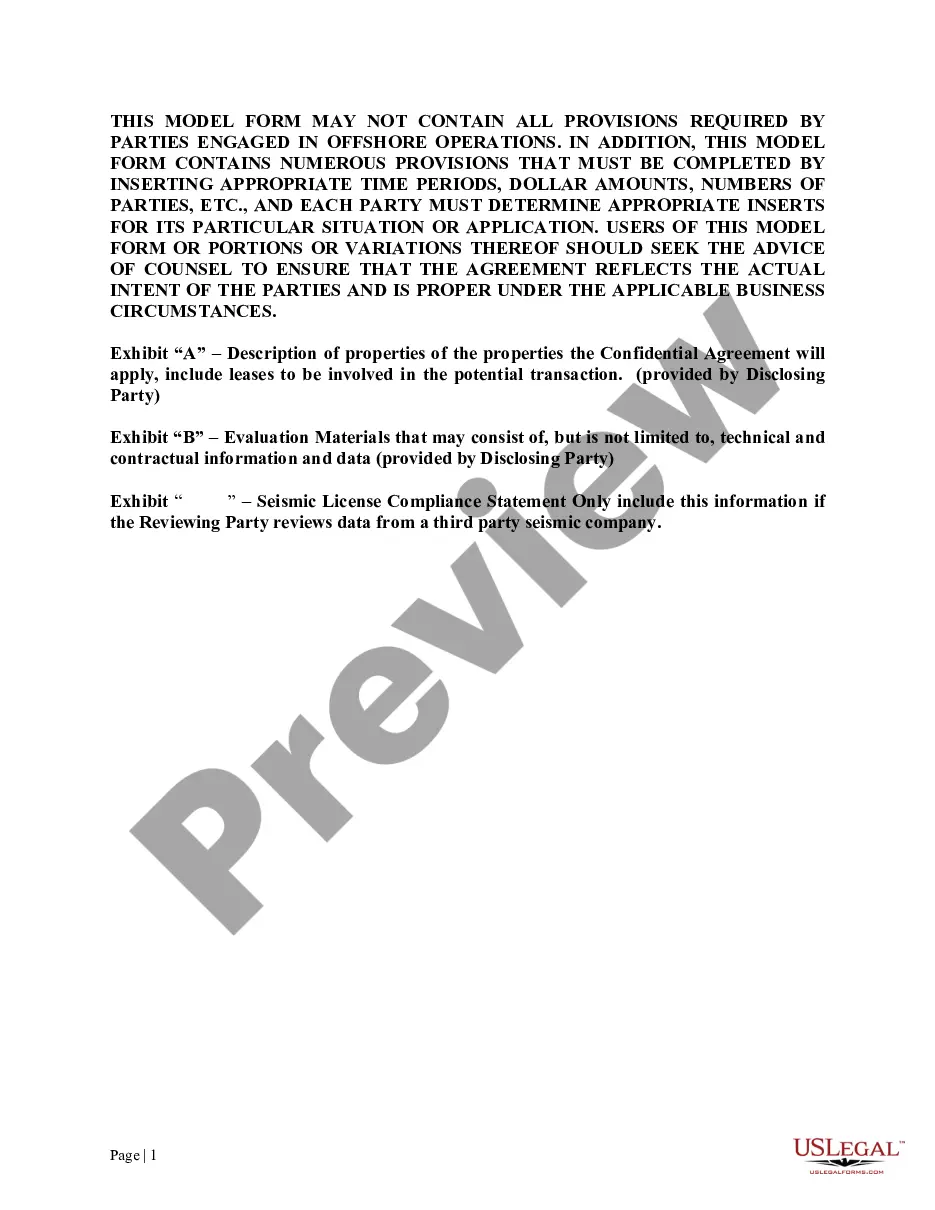
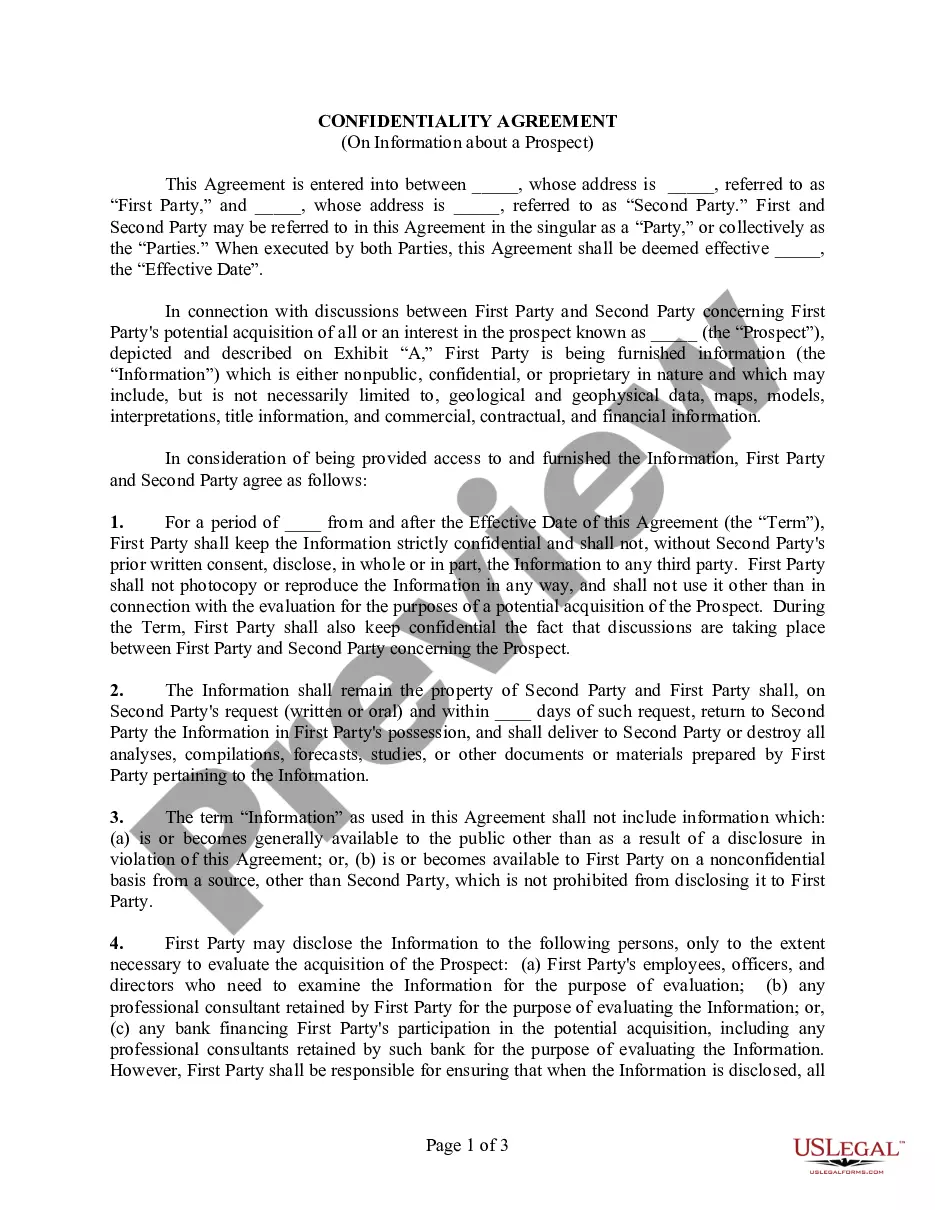
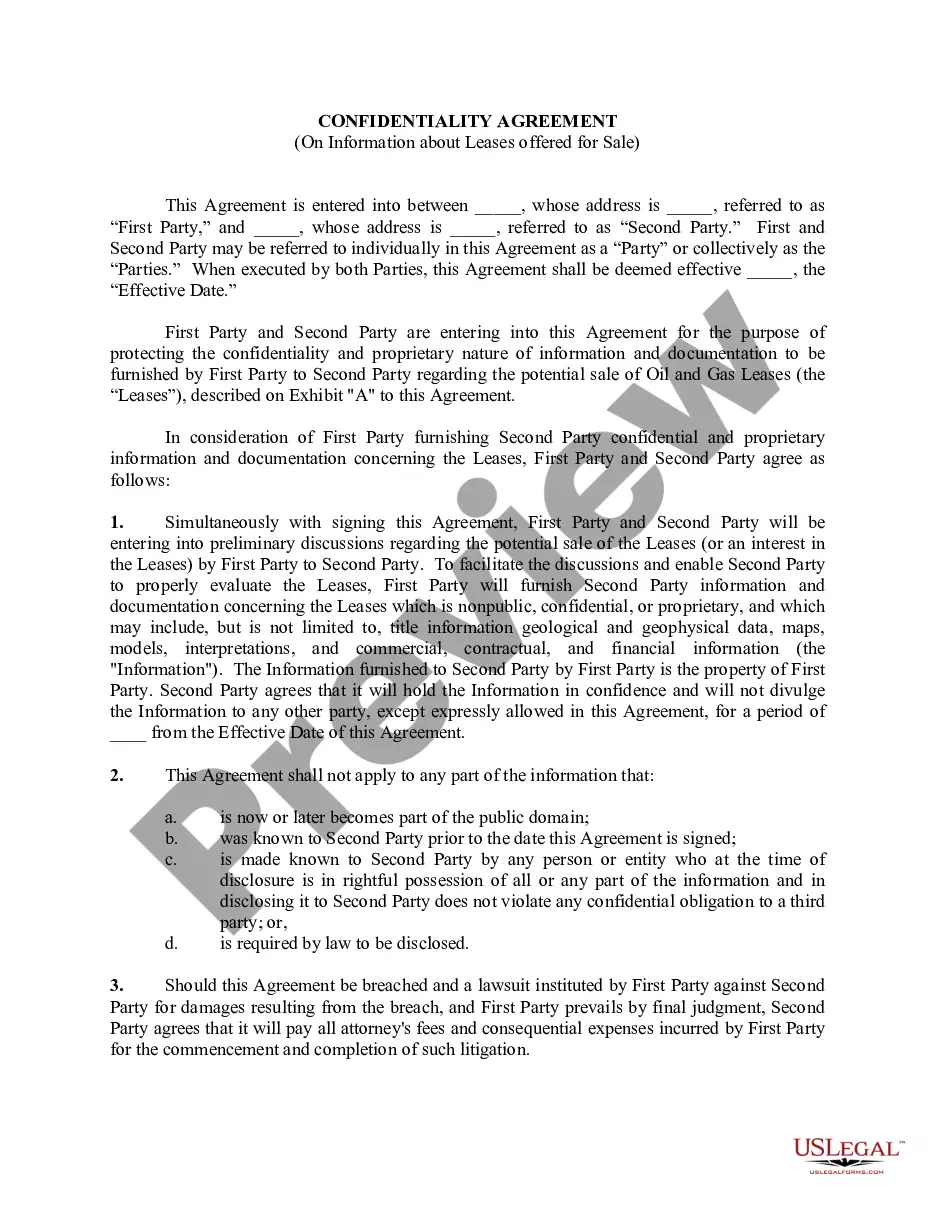
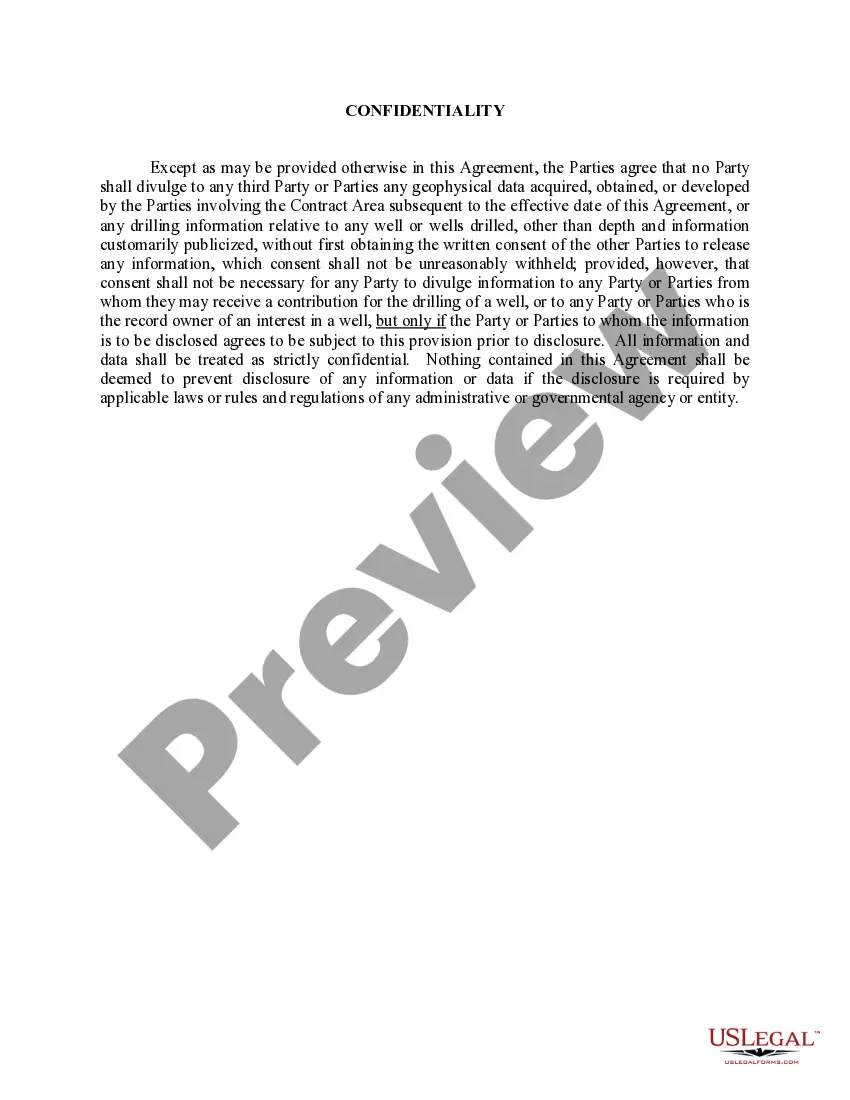
The Confidentiality and Nondisclosure Agreement is designed to protect sensitive information exchanged between parties. This form prevents unauthorized sharing of proprietary or confidential information, ensuring that both parties maintain secrecy during discussions. It is distinct from similar forms by specifically addressing the requirements for handling trade secrets and proprietary information, making it a crucial document for any professional or business relationship that involves sharing sensitive data.
Key parts of this document
- Identification of the disclosing and receiving parties.
- Definition and scope of the confidential information.
- Obligations to maintain confidentiality and restrictions on disclosure.
- Provisions for handling accidental disclosures or losses of information.
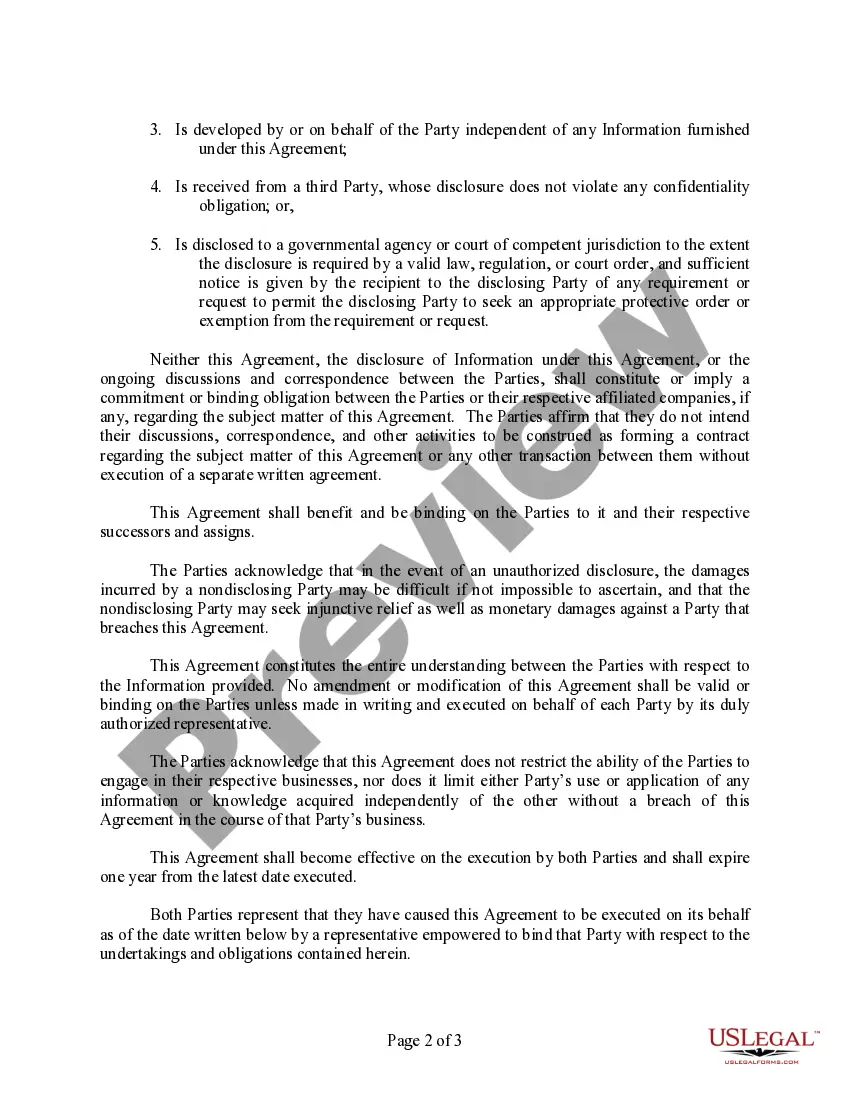
- Indemnity clauses regarding breaches of the agreement.
- Duration of the confidentiality obligations.
When to use this form
This agreement is necessary when two or more parties are entering discussions or exchanges related to business transactions, collaborations, or partnerships that may involve sensitive information. It is crucial when dealing with confidential data such as trade secrets, customer lists, financial records, or proprietary technology to ensure both parties are legally protected against information leaks.
Who can use this document
- Businesses entering partnerships or collaborations.
- Individuals discussing potentially sensitive information related to financial matters or intellectual property.
- Consultants or contractors working with confidential client data.
- Organizations seeking to protect proprietary information while negotiating agreements.
Steps to complete this form
- Identify and enter the names and addresses of both parties involved.
- Clearly define what constitutes confidential information within the agreement.
- Specify the duration for which the confidentiality obligations will remain in effect.
- Include any specific terms regarding the return or destruction of confidential information upon request.
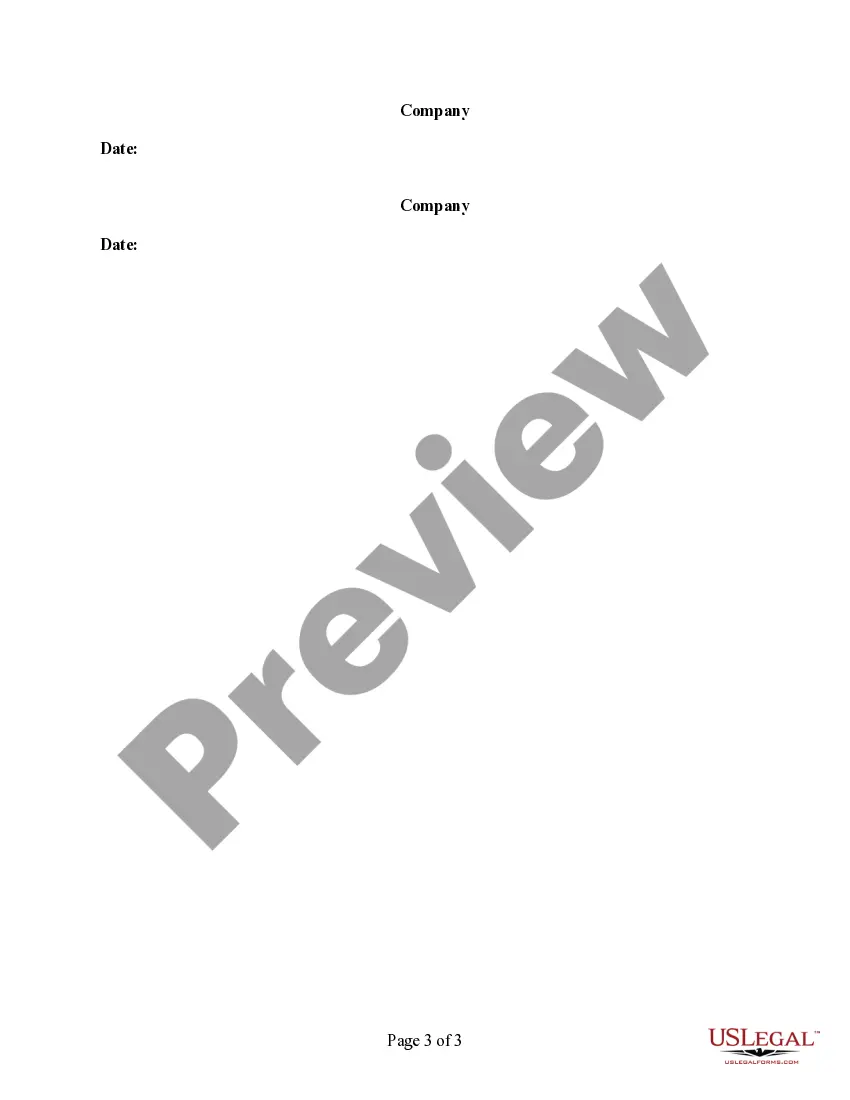
- Obtain signatures from both parties to validate the agreement.
Notarization guidance
This form does not typically require notarization to be legally valid. However, some jurisdictions or document types may still require it. US Legal Forms provides secure online notarization powered by Notarize, available 24/7 for added convenience.
Get your form ready online
Our built-in tools help you complete, sign, share, and store your documents in one place.
Make edits, fill in missing information, and update formatting in US Legal Forms—just like you would in MS Word.
Download a copy, print it, send it by email, or mail it via USPS—whatever works best for your next step.
Sign and collect signatures with our SignNow integration. Send to multiple recipients, set reminders, and more. Go Premium to unlock E-Sign.
If this form requires notarization, complete it online through a secure video call—no need to meet a notary in person or wait for an appointment.
We protect your documents and personal data by following strict security and privacy standards.

Make edits, fill in missing information, and update formatting in US Legal Forms—just like you would in MS Word.

Download a copy, print it, send it by email, or mail it via USPS—whatever works best for your next step.

Sign and collect signatures with our SignNow integration. Send to multiple recipients, set reminders, and more. Go Premium to unlock E-Sign.

If this form requires notarization, complete it online through a secure video call—no need to meet a notary in person or wait for an appointment.

We protect your documents and personal data by following strict security and privacy standards.
Common mistakes
- Failing to clearly define what is considered confidential information.
- Not specifying the duration of the confidentiality obligations.
- Omitting signatures or failing to ensure that both parties sign the agreement.
- Neglecting to inform employees or affiliates about their obligations regarding confidential information.
Benefits of completing this form online
- Convenience of immediate access and download when needed.
- Editability allows customization to fit specific needs or situations.
- Reliability of having a professionally drafted agreement, drafted by licensed attorneys.
Legal use & context
- This agreement establishes a legal framework that defines confidentiality obligations.
- It provides a basis for seeking damages or injunctive relief in case of unauthorized disclosure.
- Parties should understand that information disclosed may still have limitations based on specific statutory or regulatory requirements.
Summary of main points
- The Confidentiality and Nondisclosure Agreement is crucial for protecting sensitive information in business dealings.
- Ensure all parties clearly understand their rights and obligations under this agreement.
- Using this form online offers convenience and reliability for creating a legal document.
- Consult local regulations if you're unsure about particular requirements in your state.
Looking for another form?
Form popularity
FAQ
A definition of confidential information. Who is involved. Why the recipient knows the information. Exclusions or limits on confidential information. Receiving party's obligations. Time frame or term. Discloser to the recipient.
Depending on the complexity of what you need protected and the number of parties involved, the cost of having an NDA drafted can vary significantly. When you hire a lawyer in the Priori network, drafting an NDA typically costs anywhere from $175-$1,500.
Set the date of the agreement. Describe the two parties, sometimes called the Disclosing Party and the Receiving Party.7feff Include names and identification, so there can be no misunderstanding about who signed the agreement.
2. Clearly label all confidential information as confidential. This means writing confidential on documents or any folder you keep them in. If you are sending an email, make sure the title clearly identifies it as confidential.
1. Confidentiality Agreement is used when a higher degree of secrecy is required. Non-disclosure implies you must not disclose personal or private information. But keeping confidential implies you be more proactive in making sure information is kept secret.
Identify each party in the first section of the form. The NDA form will start by declaring it to be an agreement and identifying who the agreement is between. Whoever is disclosing the information to be protected is the "disclosing party"; write his or her name on this space.
Therapist/patient confidentiality Sharing confidential information about a client with a family member or friend.Leaving your computer containing confidential information open to others. Continuing to work with a client when there's a conflict of interests (for example, they know one of your family members or friends)
Identification of the parties. Definition of what is deemed to be confidential. The scope of the confidentiality obligation by the receiving party. The exclusions from confidential treatment. The term of the agreement.
Use a standard format for contracts. Decide what type of confidentiality statement you should use. Identify the involved parties in the agreement. Define the information to keep confidential. List the information excluded from the agreement.