Confidentiality
What this document covers
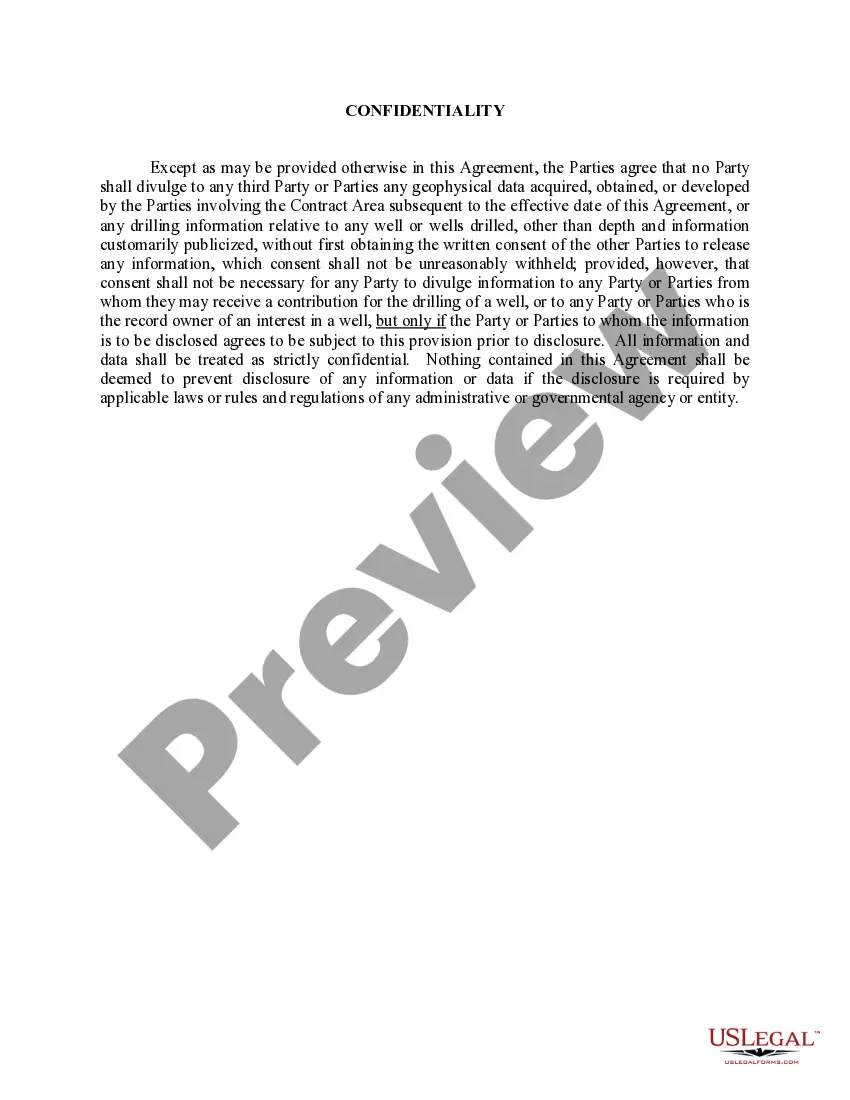
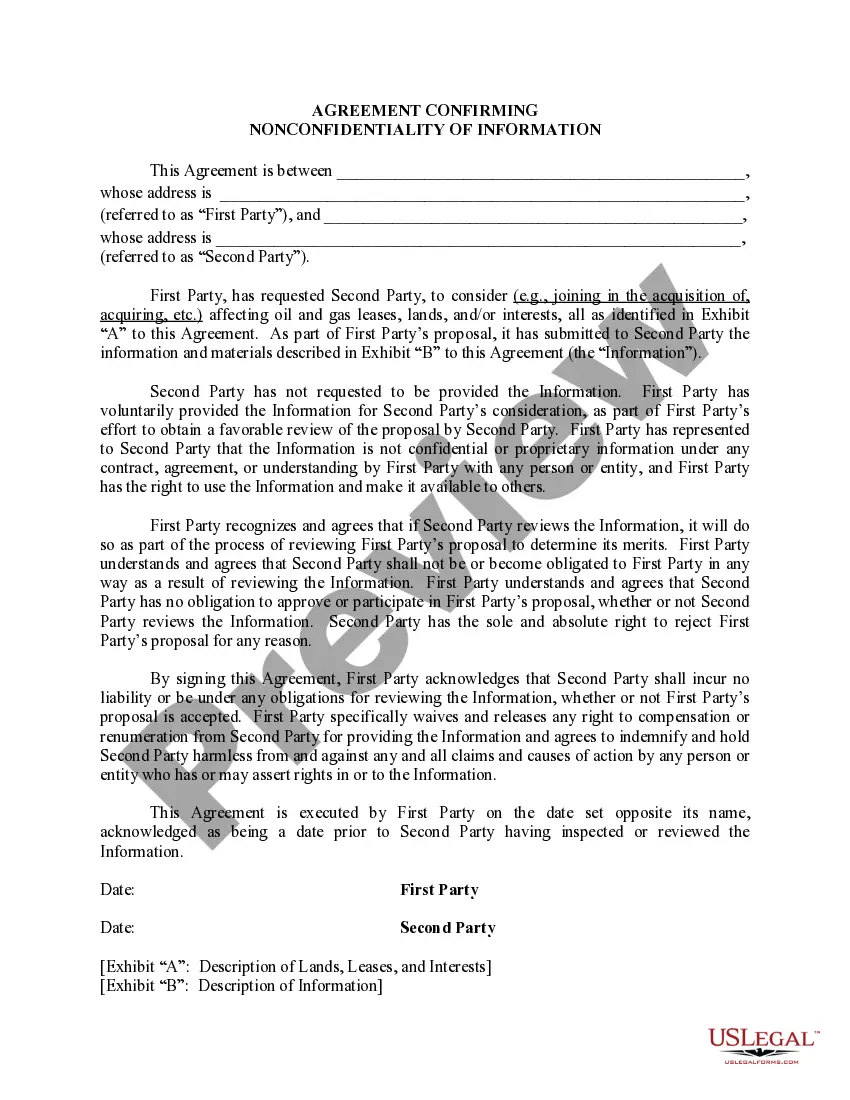
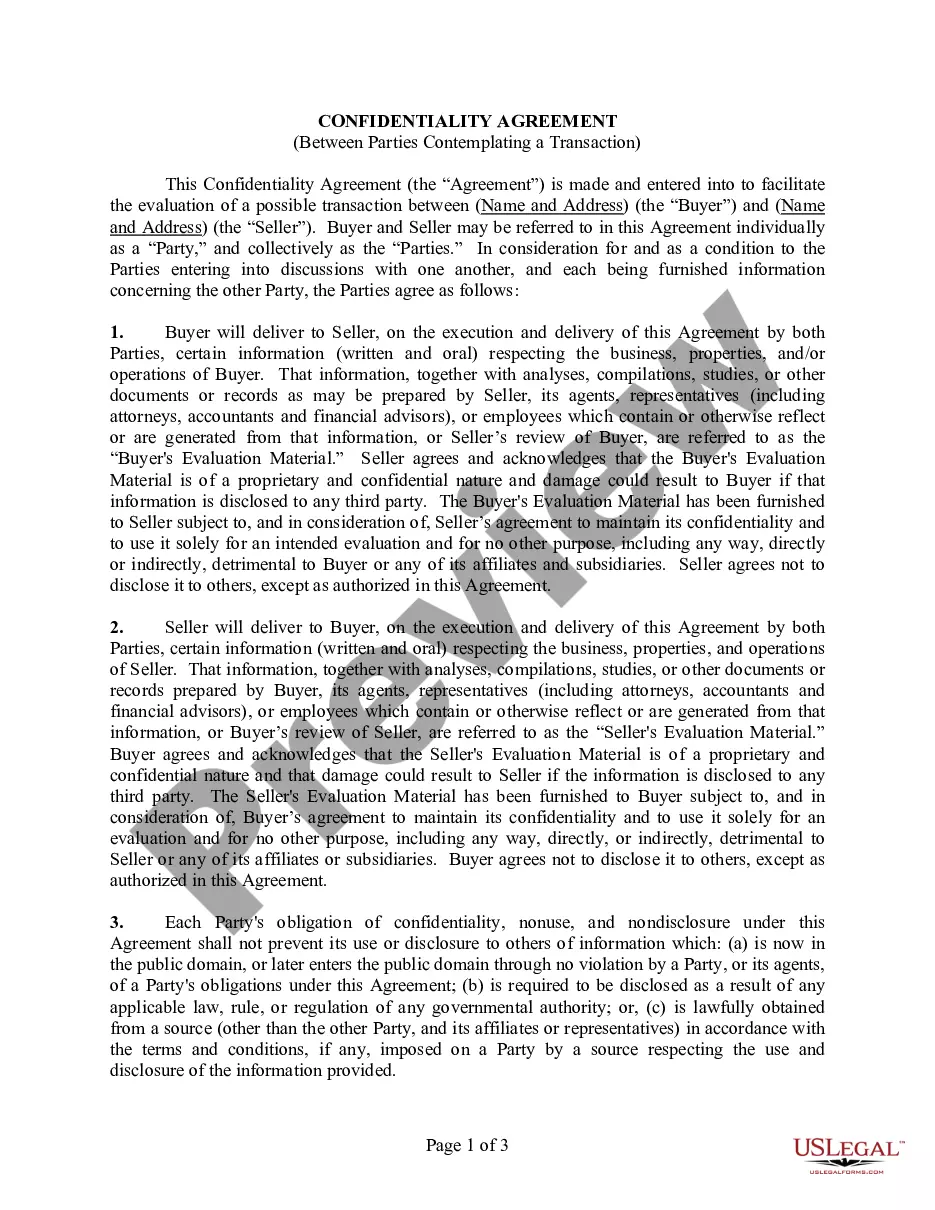
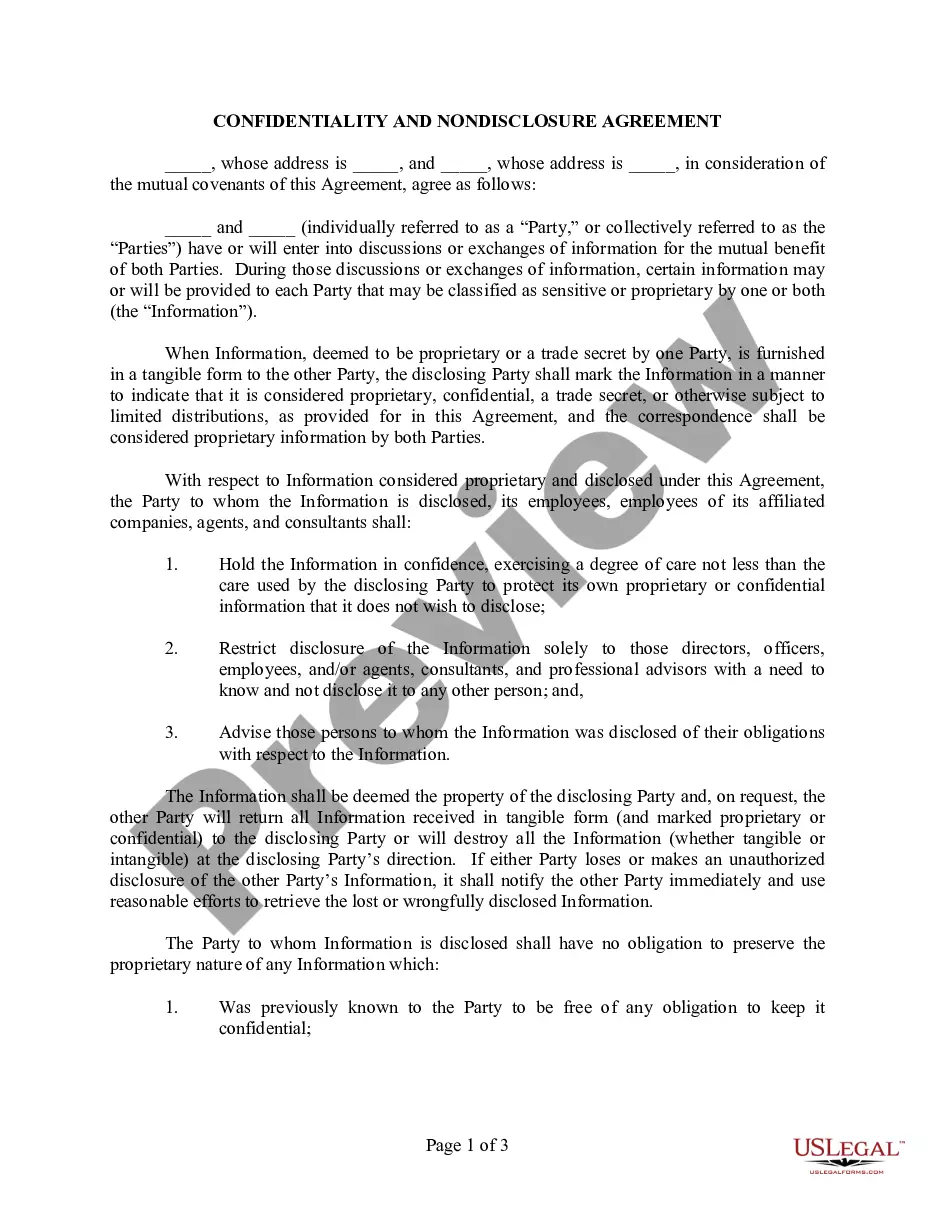
The Confidentiality Agreement is a legal document that ensures parties involved in a project do not disclose sensitive geophysical data or drilling information to unauthorized third parties. This agreement is crucial for protecting proprietary information and minimizing the risk of data leaks. Unlike other agreements, it specifically focuses on the confidentiality of geophysical data associated with a specific contract area, providing distinct legal protection for the involved parties.
Key parts of this document
- Definition of confidential information, including geophysical data and drilling details.
- Obligations of each party regarding non-disclosure.
- Conditions under which information can be shared without consent.
- Provisions for seeking written consent for disclosures.
- Specification of information that is not considered confidential.
When to use this document
This form should be used when two or more parties are entering a business relationship that involves sharing sensitive geophysical data or drilling information. It is particularly relevant in industries such as oil, gas, and mining where proprietary information is critical. Use this agreement to protect your interests before engaging in discussions or data sharing related to projects in the designated Contract Area.
Who this form is for
- Businesses in the oil and gas sector sharing geophysical data.
- Consultants working with drilling information for multiple clients.
- Investors seeking to protect their interests in exploration projects.
- Any parties involved in joint ventures requiring confidentiality agreements.
- Legal professionals advising clients on confidentiality in industry-specific matters.
Instructions for completing this form
- Identify all parties involved in the agreement at the beginning of the document.
- Clearly define and describe the confidential information being protected.
- Outline the obligations of each party regarding the handling of confidential information.
- Specify any exceptions where information can be disclosed without prior consent.
- Include signature lines for all parties to formalize the agreement.
Does this document require notarization?
In most cases, this form does not require notarization. However, some jurisdictions or signing circumstances might. US Legal Forms offers online notarization powered by Notarize, accessible 24/7 for a quick, remote process.
Get your form ready online
Our built-in tools help you complete, sign, share, and store your documents in one place.
Make edits, fill in missing information, and update formatting in US Legal Forms—just like you would in MS Word.
Download a copy, print it, send it by email, or mail it via USPS—whatever works best for your next step.
Sign and collect signatures with our SignNow integration. Send to multiple recipients, set reminders, and more. Go Premium to unlock E-Sign.
If this form requires notarization, complete it online through a secure video call—no need to meet a notary in person or wait for an appointment.
We protect your documents and personal data by following strict security and privacy standards.

Make edits, fill in missing information, and update formatting in US Legal Forms—just like you would in MS Word.

Download a copy, print it, send it by email, or mail it via USPS—whatever works best for your next step.

Sign and collect signatures with our SignNow integration. Send to multiple recipients, set reminders, and more. Go Premium to unlock E-Sign.

If this form requires notarization, complete it online through a secure video call—no need to meet a notary in person or wait for an appointment.

We protect your documents and personal data by following strict security and privacy standards.
Common mistakes to avoid
- Failing to clearly define what constitutes confidential information.
- Not including an expiration date for the confidentiality obligations.
- Neglecting to specify exceptions for information that can be disclosed.
- Forgetting to securely store the signed agreement for future reference.
Benefits of using this form online
- Convenience of downloading and filling out the form at your own pace.
- Editability allows for customization to suit specific project needs.
- Access to professionally drafted templates ensuring legal correctness.
- Reliable storage of digital documents for easy retrieval and sharing.
Legal use & context
- This agreement is enforceable in a court of law, provided it is properly executed and relevant laws are adhered to.
- Confidentiality agreements help protect trade secrets and proprietary information, reducing the risk of unauthorized disclosure.
- Limitations may exist depending on local regulations regarding confidentiality clauses.
Key takeaways
- A Confidentiality Agreement helps safeguard sensitive information during collaborative projects.
- Clearly define what data is covered by the agreement to avoid disputes.
- Ensure all parties understand and agree to the terms before signing to avoid future legal issues.
Looking for another form?


Form popularity
FAQ
Name, date of birth, age, sex and address. current contact details of family, guardian etc. bank details. medical history or records. personal care issues. service records and file progress notes. individual personal plans. assessments or reports.
Set the date of the agreement. Describe the two parties, sometimes called the Disclosing Party and the Receiving Party.7feff Include names and identification, so there can be no misunderstanding about who signed the agreement.
Use a standard format for contracts. Decide what type of confidentiality statement you should use. Identify the involved parties in the agreement. Define the information to keep confidential. List the information excluded from the agreement.
A definition of confidential information. Who is involved. Why the recipient knows the information. Exclusions or limits on confidential information. Receiving party's obligations. Time frame or term. Discloser to the recipient.
A confidentiality agreement (also called a nondisclosure agreement or NDA) is a legally binding contract in which a person or business promises to treat specific information as a trade secret and promises not to disclose the secret to others without proper authorization.
A confidentiality agreement (also called a nondisclosure agreement or NDA) is a legally binding contract in which a person or business promises to treat specific information as a trade secret and promises not to disclose the secret to others without proper authorization.
2. Clearly label all confidential information as confidential. This means writing confidential on documents or any folder you keep them in. If you are sending an email, make sure the title clearly identifies it as confidential.
A typical confidentiality clause might say, "The phrases and circumstances of this Agreement are completely confidential between the parties and shall not be disclosed to anybody else. Any disclosure in violation shall be deemed a breach of this Agreement."