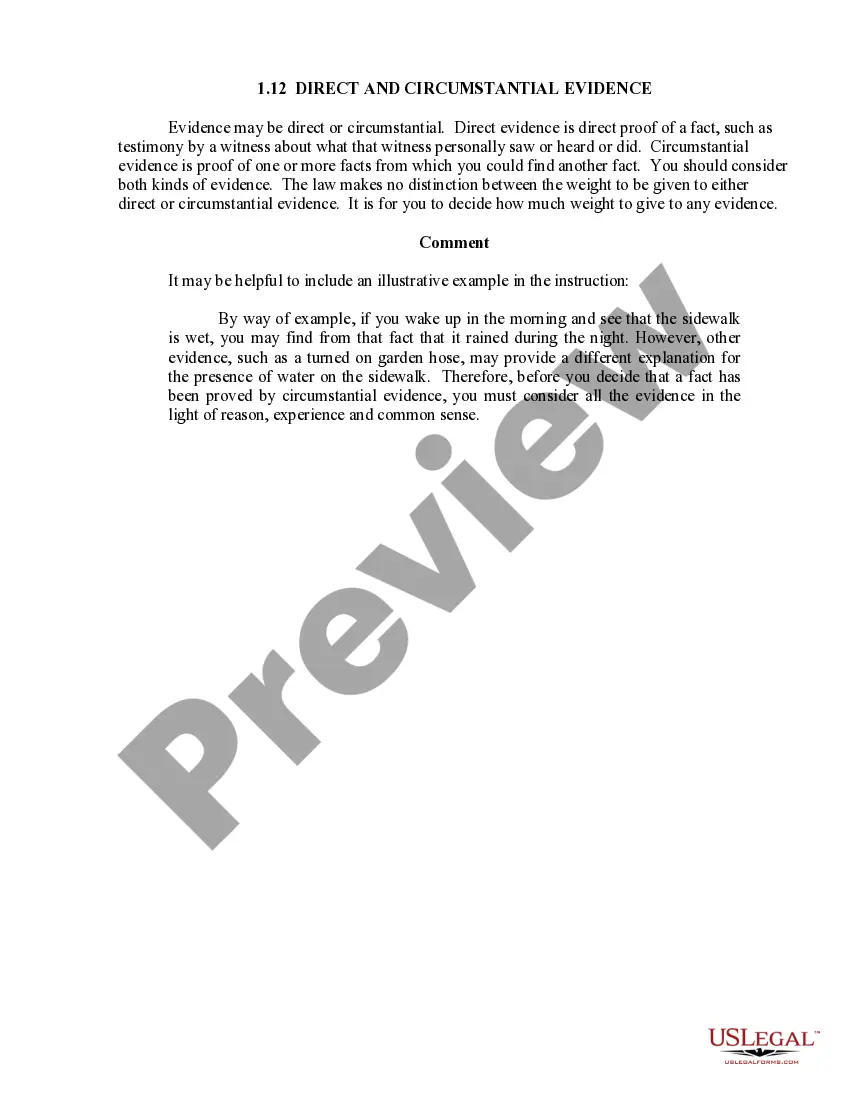
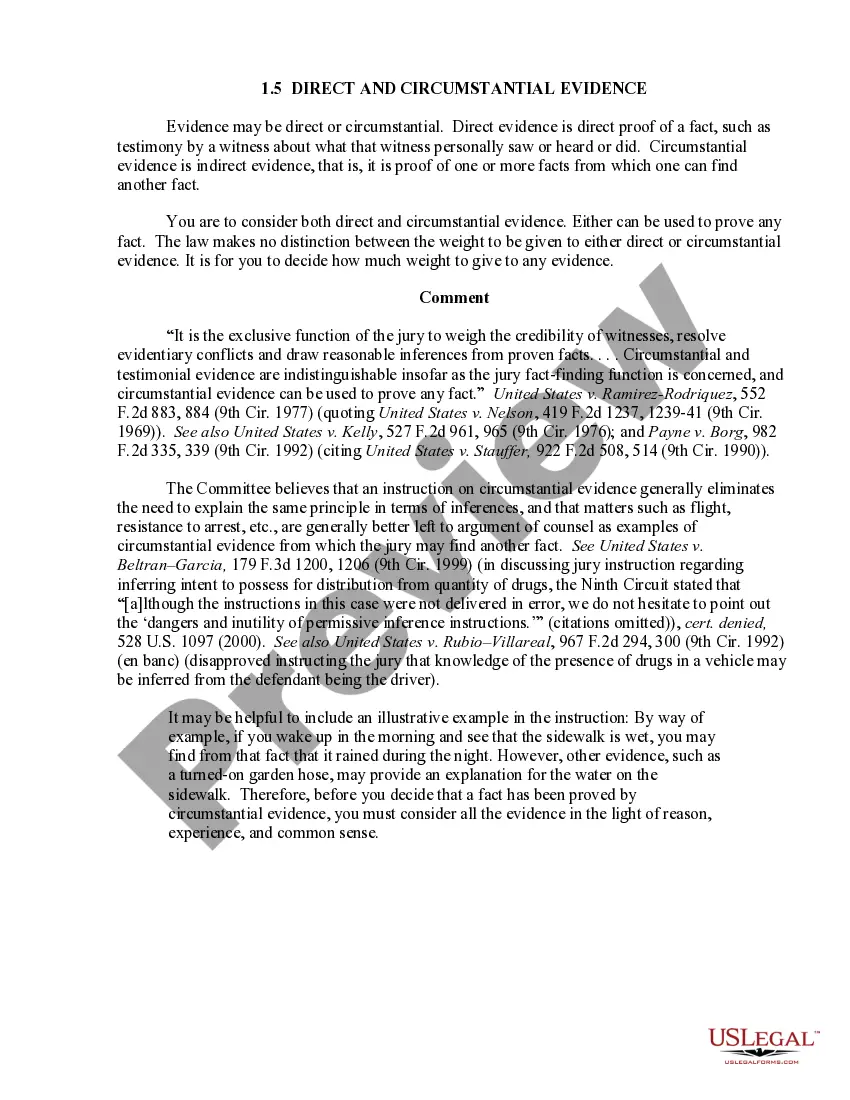
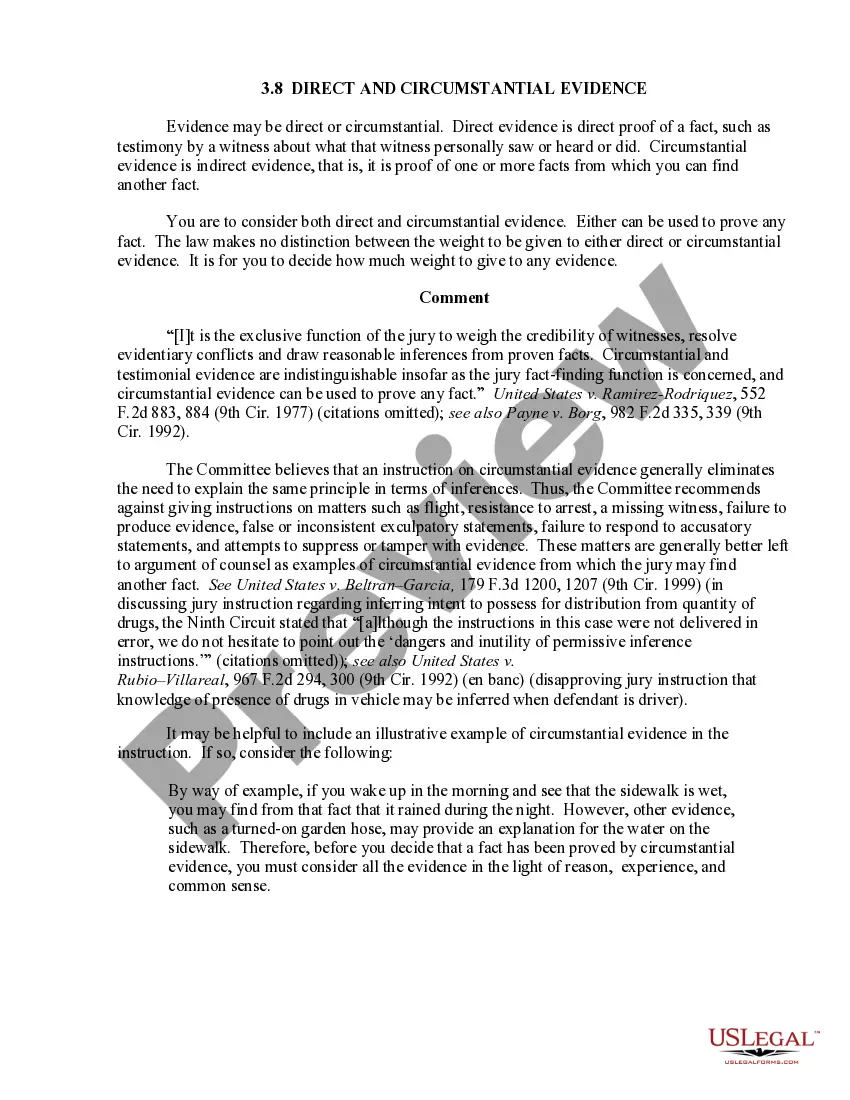
1.12 Direct and Circumstantial Evidence
Does this form need to be notarized?
Notarization is not commonly needed for this form. However, certain documents or local rules may make it necessary. Our notarization service, powered by Notarize, allows you to finalize it securely online anytime, day or night.
Get your form ready online
Our built-in tools help you complete, sign, share, and store your documents in one place.
Make edits, fill in missing information, and update formatting in US Legal Forms—just like you would in MS Word.
Download a copy, print it, send it by email, or mail it via USPS—whatever works best for your next step.
Sign and collect signatures with our SignNow integration. Send to multiple recipients, set reminders, and more. Go Premium to unlock E-Sign.
If this form requires notarization, complete it online through a secure video call—no need to meet a notary in person or wait for an appointment.
We protect your documents and personal data by following strict security and privacy standards.

Make edits, fill in missing information, and update formatting in US Legal Forms—just like you would in MS Word.

Download a copy, print it, send it by email, or mail it via USPS—whatever works best for your next step.

Sign and collect signatures with our SignNow integration. Send to multiple recipients, set reminders, and more. Go Premium to unlock E-Sign.

If this form requires notarization, complete it online through a secure video call—no need to meet a notary in person or wait for an appointment.

We protect your documents and personal data by following strict security and privacy standards.
Looking for another form?
Form popularity
FAQ
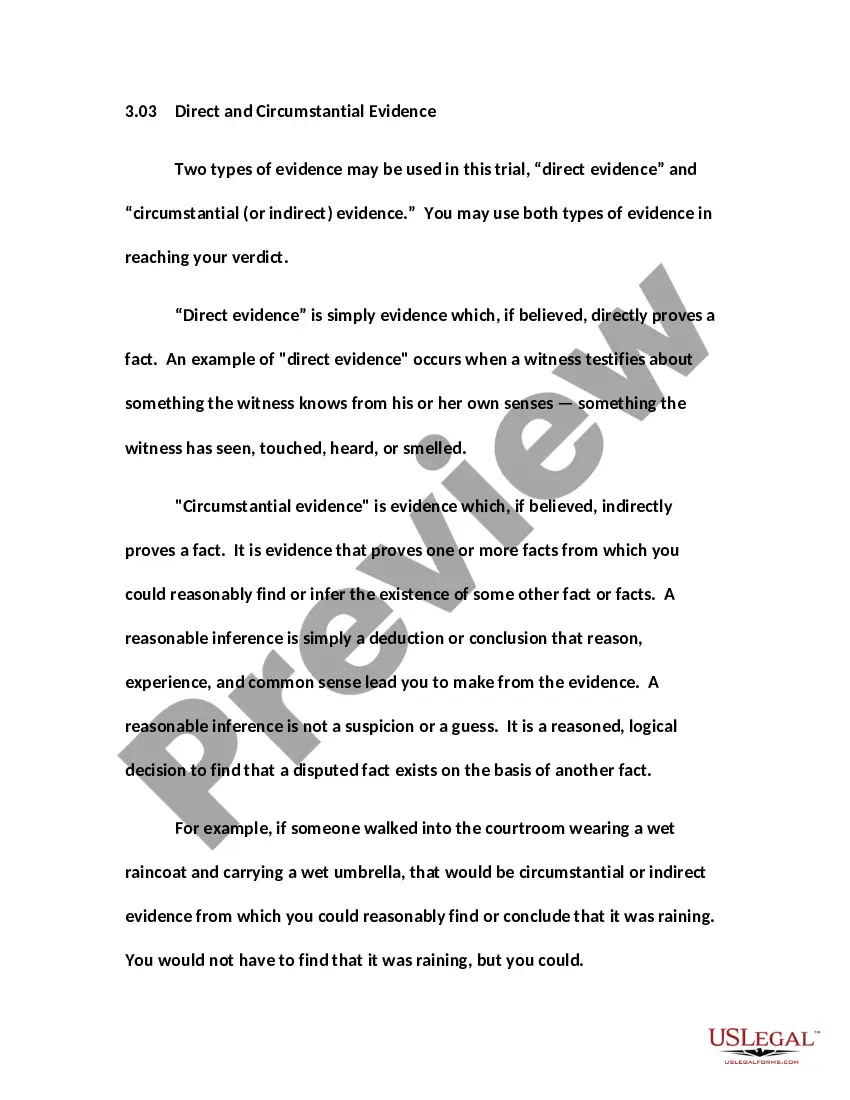
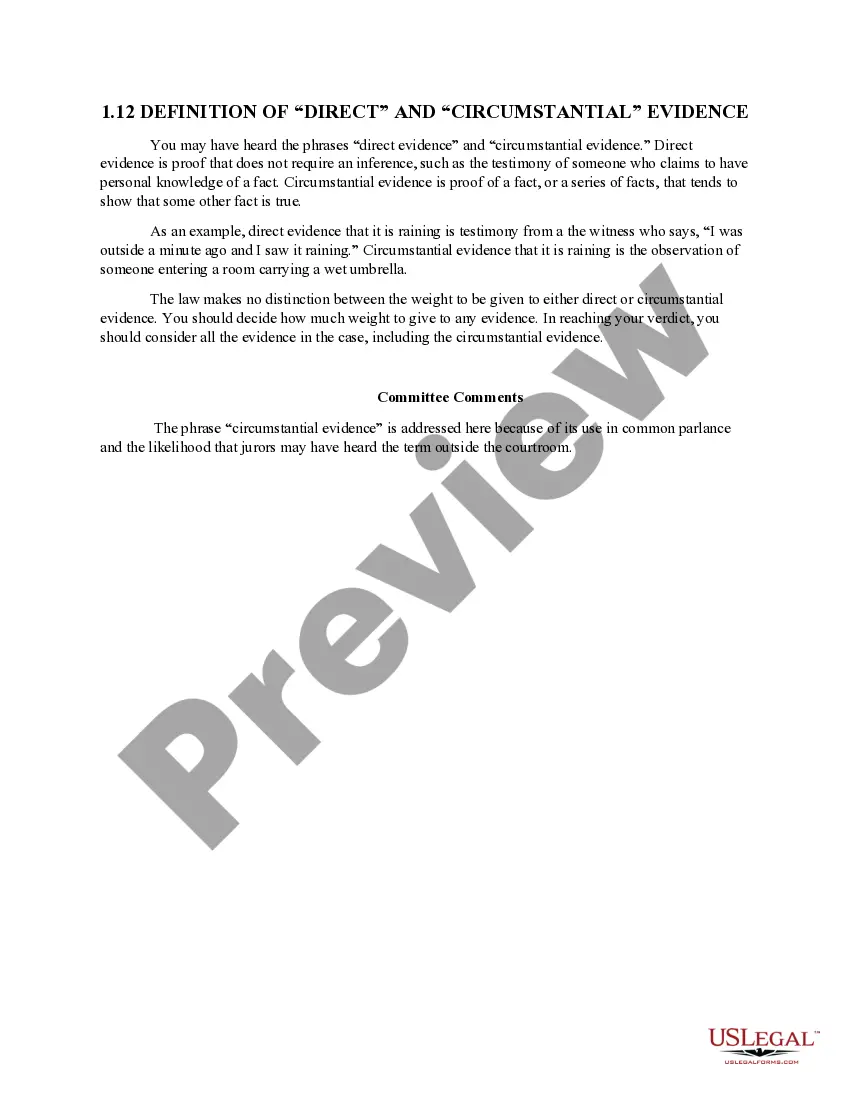
There are two types of evidence; namely, direct evidence and circumstantial evidence. In this case, the People contend that there is circumstantial evidence of the defendant's guilt.
Four examples of circumstantial evidence include physical evidence, human behavior, indirect witness testimony, and scientific evidence. A combination of these forms of evidence is often enough to convict someone, but they are still not as powerful as a direct witness of the crime.
Generally speaking, there are four main kinds of evidence. These are testimonial, documentary, demonstrative, and what's called real evidence.
A defendant's statement is direct evidence only if it constitutes a relevant admission of guilt. . . . ?By contrast, where the defendant makes an admission that merely includes inculpatory acts from which a jury may or may not infer guilt, the statement is circumstantial and not direct evidence. . . .
Circumstantial evidence is indirect evidence that may infer the commission of a crime as it does not directly prove a key fact. It is typically weaker than direct evidence.
You may be surprised to learn that, although circumstantial evidence is unreliable, it is also admissible in court and can be used to convict a person of a crime.
For example, a witness saying that she saw a defendant stab a victim is providing direct evidence. By contrast, a witness saying that she saw a defendant enter a house, heard screaming, and saw the defendant leave with a bloody knife is circumstantial evidence.
For example, that a suspect is seen running away from a murder scene with a weapon in hand is circumstantial evidence he committed the murder. This contrasts with direct evidence, which directly proves the fact in question. An eyewitness who testifies to seeing the suspect shoot the victim is direct evidence.