Acquisition, Merger, or Liquidation
About this form
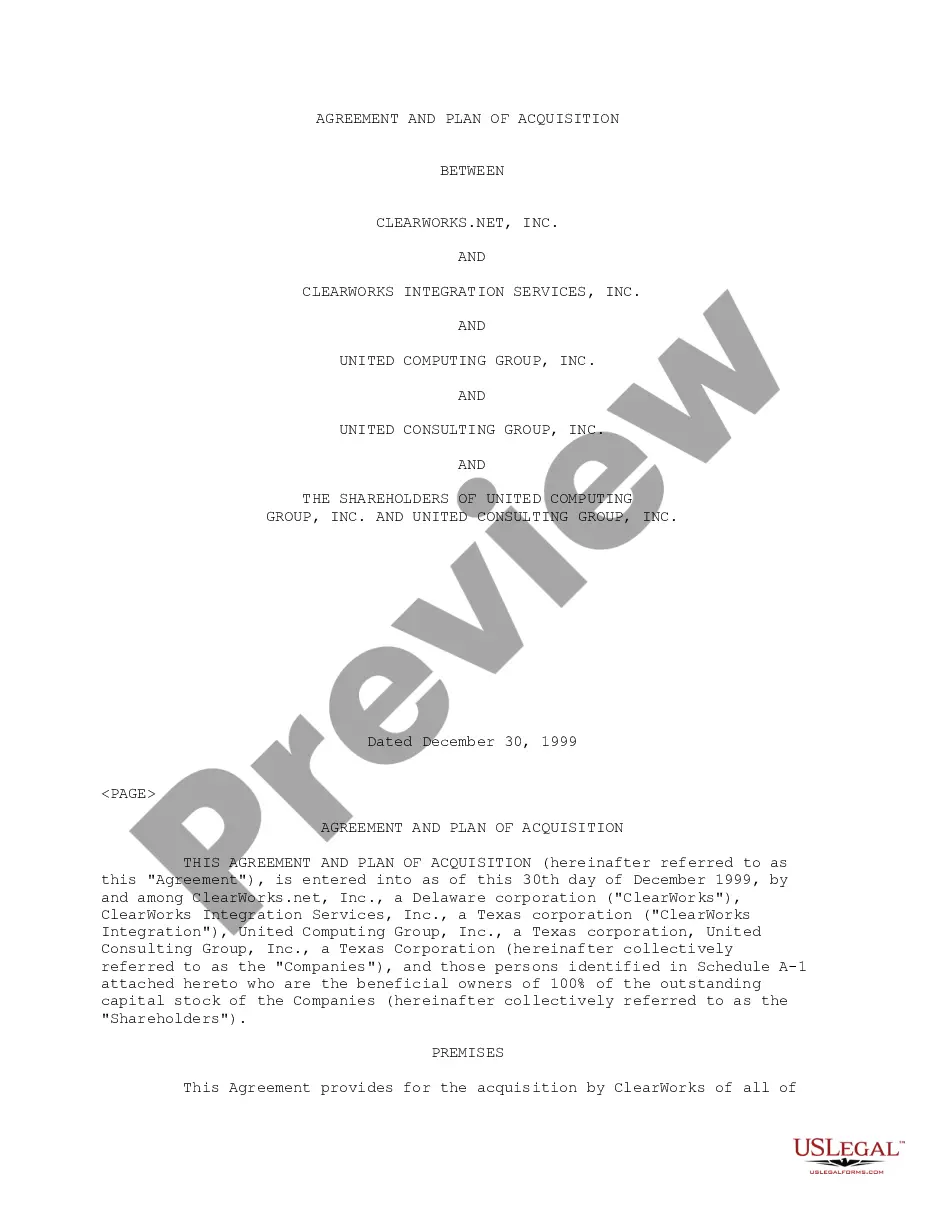
The Acquisition, Merger, or Liquidation form is a legal document that outlines the terms under which a company may process acquisitions, mergers, or liquidations. This form is crucial for organizations navigating significant structural changes, ensuring proper handling of stock options and shareholder rights. It serves to protect both the company and its shareholders during major transactions, making it distinct from other business forms that may not address these specific circumstances.
What’s included in this form
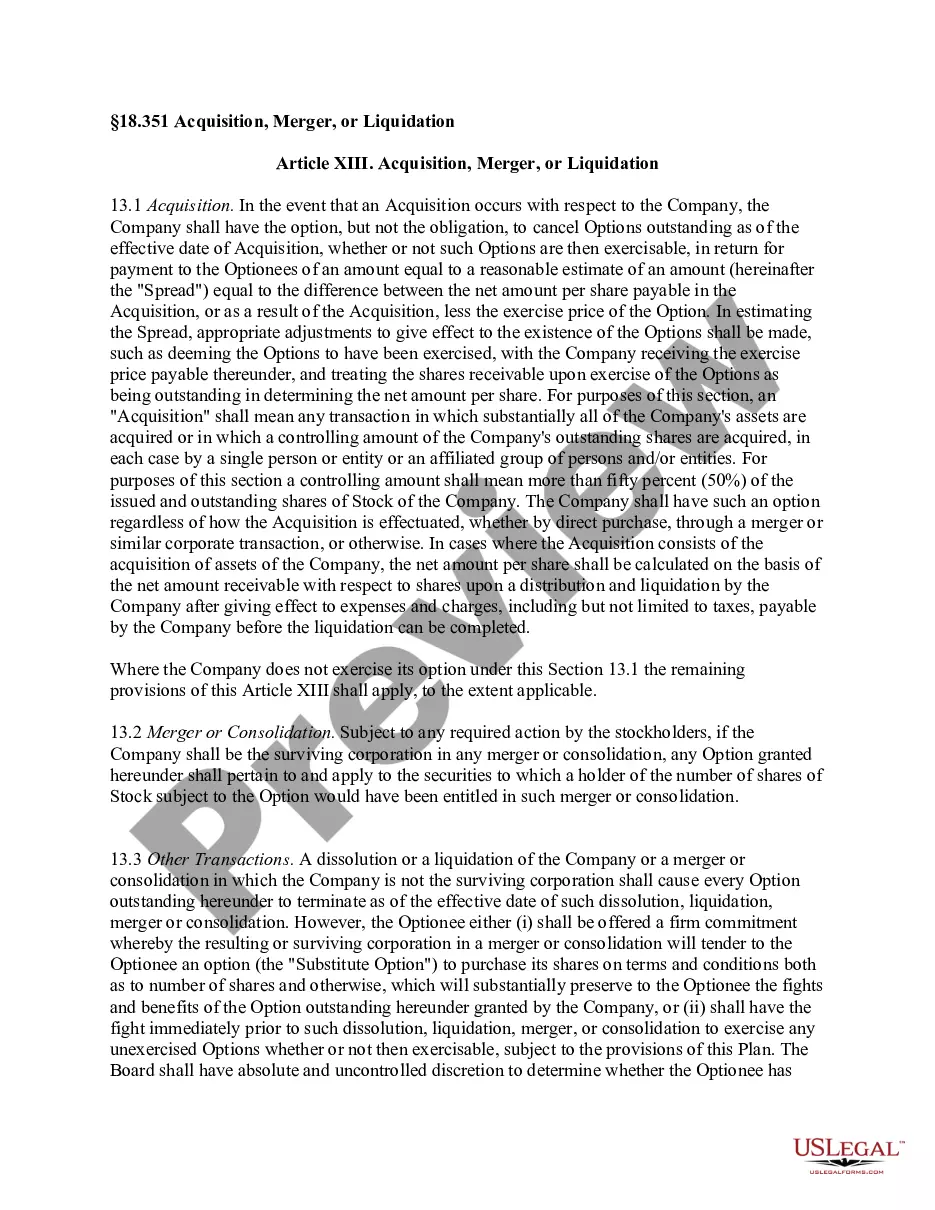
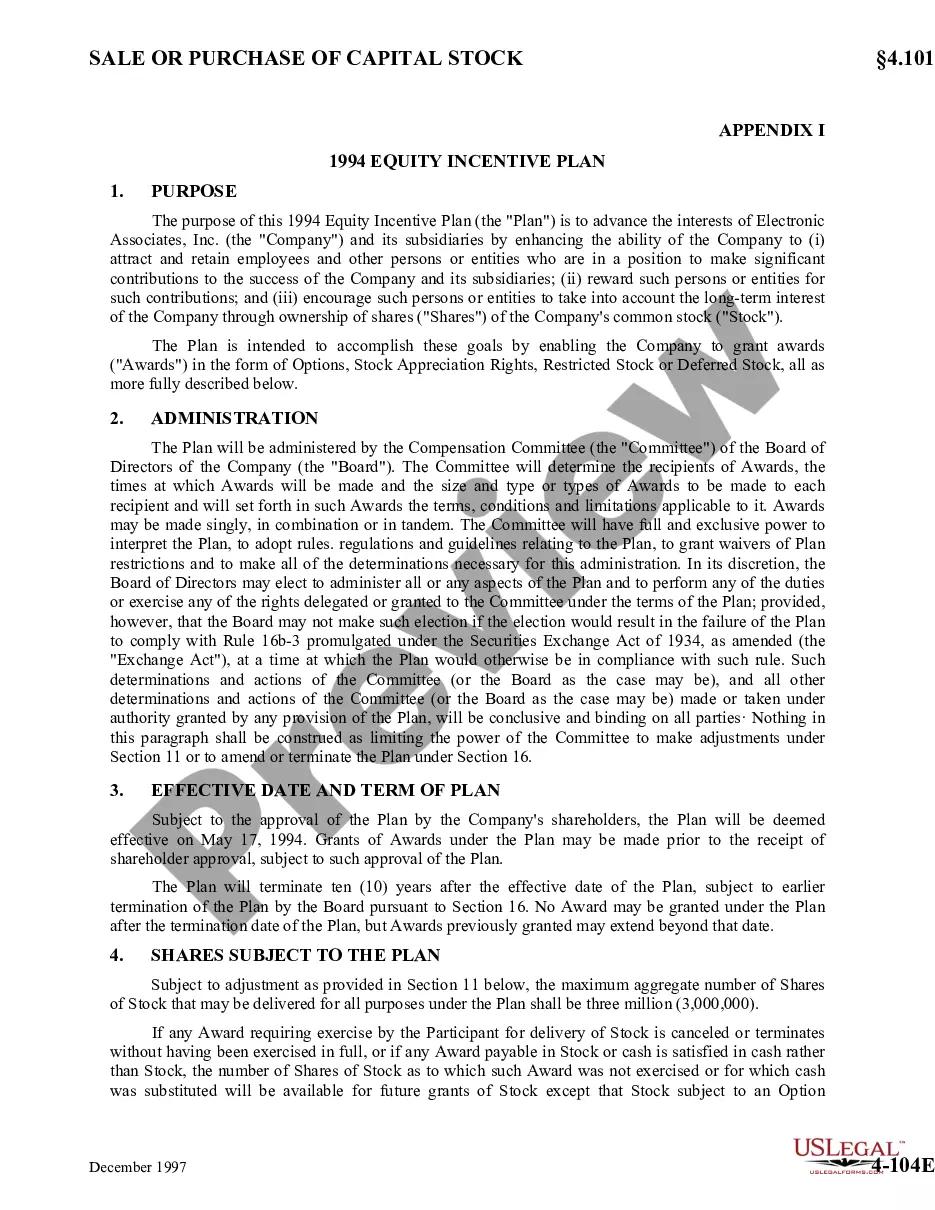
- Section on the acquisition of assets and options, stating how options may be canceled or compensated during an acquisition
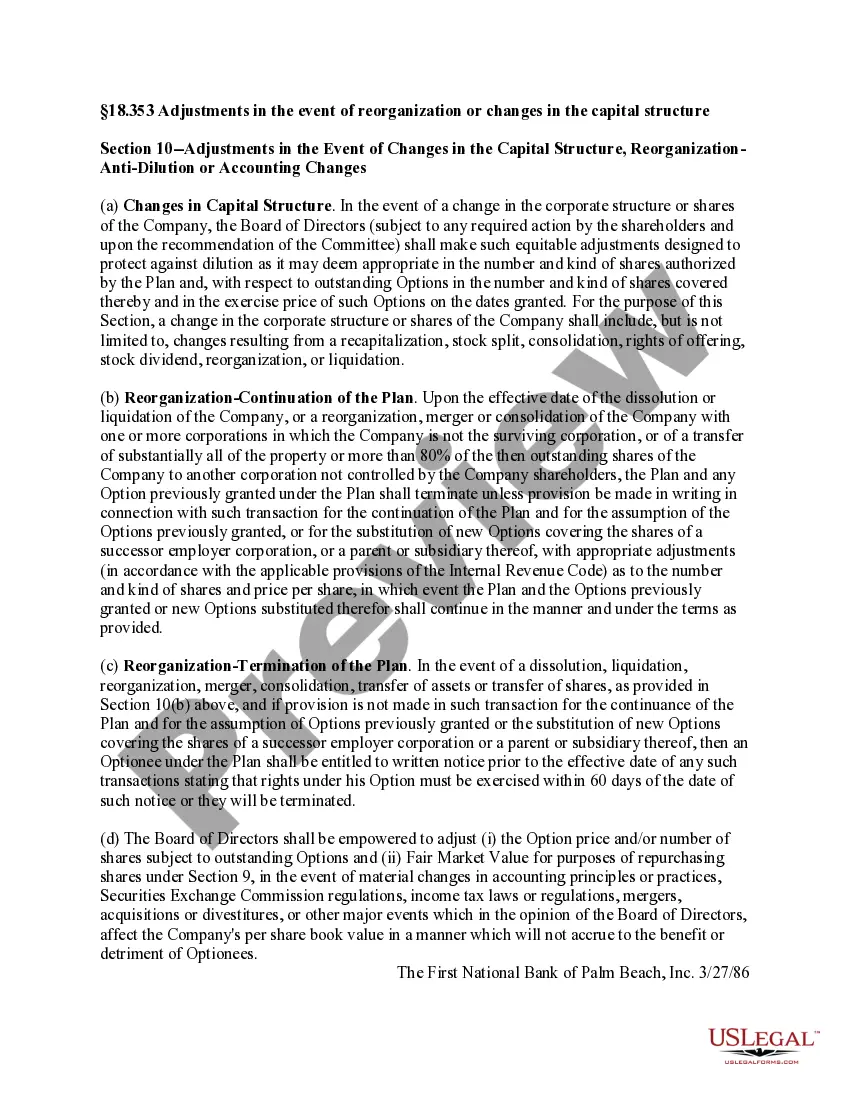
- Clause detailing the treatment of options in the event of a merger or consolidation
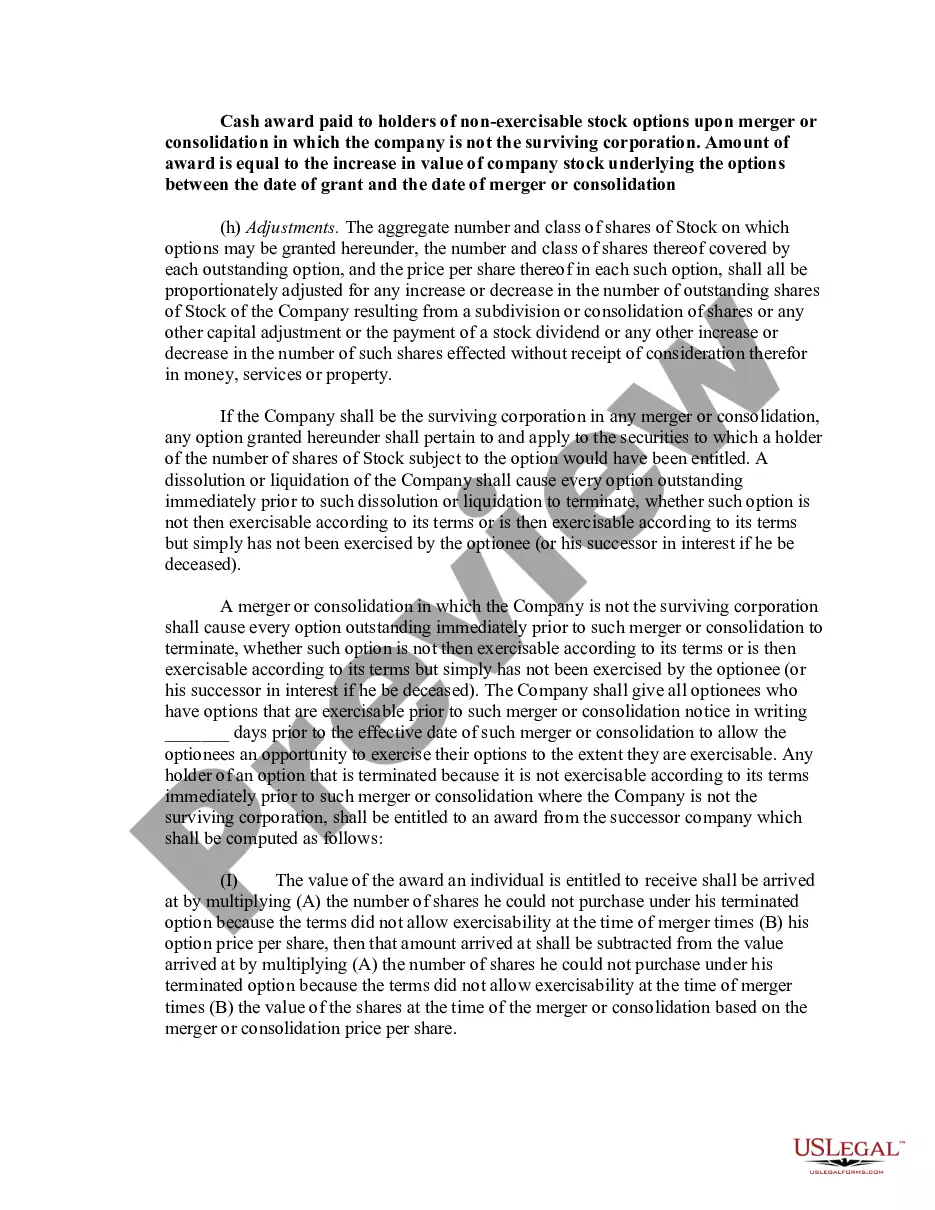
- Provisions on the termination of options during dissolution or liquidation
- Definition of key terms, including "Acquisition" and "controlling amount"
- Discretionary powers of the Board regarding offers made to option holders

Situations where this form applies
This form is necessary in scenarios where a company is undergoing acquisition, merger, or liquidation. It provides guidelines for accommodating stock options during these transitions. Use this form if you are planning a significant financial transaction that could impact stockholders, such as selling the company, merging with another entity, or dissolving the business entirely.
Intended users of this form
- Business owners contemplating a merger or acquisition
- Corporate legal representatives handling company restructuring
- Shareholders needing clarity on their rights during corporate transitions
- Companies planning liquidation and needing to outline option management
How to complete this form
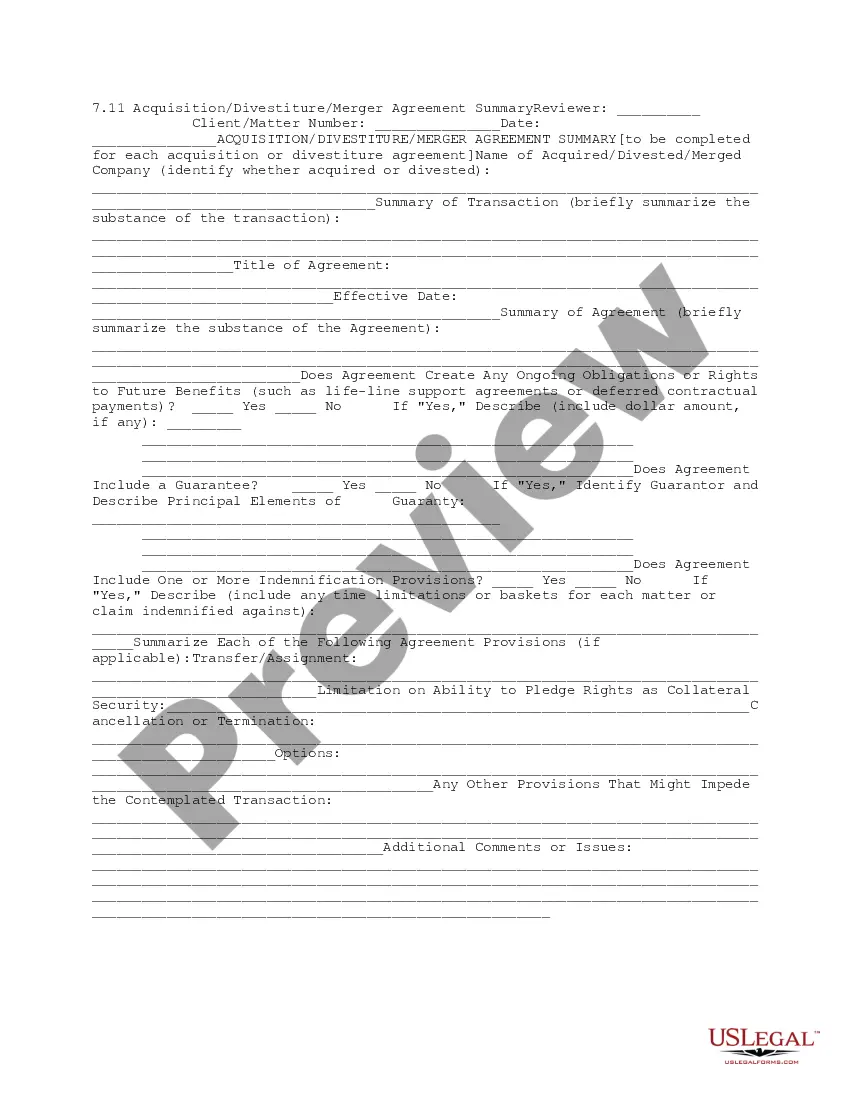
- Identify the parties involved in the acquisition or merger.
- Clearly specify the terms and conditions of the transaction.
- Include provisions regarding stock options and shareholder rights.
- Detail the method of execution, such as whether the acquisition occurs through direct purchase or merger.
- Ensure that all affected parties review and sign the document as required.
Does this form need to be notarized?
Notarization is generally not required for this form. However, certain states or situations might demand it. You can complete notarization online through US Legal Forms, powered by Notarize, using a verified video call available anytime.
Get your form ready online
Our built-in tools help you complete, sign, share, and store your documents in one place.
Make edits, fill in missing information, and update formatting in US Legal Forms—just like you would in MS Word.
Download a copy, print it, send it by email, or mail it via USPS—whatever works best for your next step.
Sign and collect signatures with our SignNow integration. Send to multiple recipients, set reminders, and more. Go Premium to unlock E-Sign.
If this form requires notarization, complete it online through a secure video call—no need to meet a notary in person or wait for an appointment.
We protect your documents and personal data by following strict security and privacy standards.

Make edits, fill in missing information, and update formatting in US Legal Forms—just like you would in MS Word.

Download a copy, print it, send it by email, or mail it via USPS—whatever works best for your next step.

Sign and collect signatures with our SignNow integration. Send to multiple recipients, set reminders, and more. Go Premium to unlock E-Sign.

If this form requires notarization, complete it online through a secure video call—no need to meet a notary in person or wait for an appointment.

We protect your documents and personal data by following strict security and privacy standards.
Mistakes to watch out for
- Failing to clearly define "Acquisition" and other key terms can lead to confusion.
- Not including proper provisions for different scenarios, such as termination during liquidation.
- Overlooking the need for shareholder approval or other legal actions required for the merger.
Why use this form online
- Convenient access to downloadable templates that save time.
- Editable forms that allow customization to meet specific company needs.
- Reliable, attorney-drafted content that ensures legal compliance.
Legal use & context
- This form helps safeguard the rights of stockholders during significant corporate changes.
- It is essential for clarity in financial transactions and legal compliance for companies.
- The provisions outlined ensure that all participants are treated fairly and equitably.
Quick recap
- The Acquisition, Merger, or Liquidation form is vital for corporate transitions.
- Clear definitions and terms ensure all parties understand their rights and obligations.
- Using this form helps facilitate smooth legal processes and protects stakeholders.
Looking for another form?


Form popularity
FAQ
Types of Mergers. The three main types of mergers are horizontal, vertical, and conglomerate. In a horizontal merger, companies at the same stage in the same industry merge to reduce costs, expand product offerings, or reduce competition.
A merger, or acquisition, is when two companies combine to form one to take advantage of synergies. A merger typically occurs when one company purchases another company by buying a certain amount of its stock in exchange for its own stock.Shareholders are able to vote on whether a merger should take place or not.
Horizontal - a merger between companies with similiar products. Vertical - a merger that consolidates the supply line of a product. Concentric - a merger between companies who have similar audiences with different products. Conglomerate - a merger between companies who offer diverse products/services.
Mergers are considered to be a more friendly corporate restructuring strategy. This is because they are voluntary and mutually beneficial for both companies involved. In contrast, acquisitions generally carry a more negative connotation because the term entails that one company completely consumes another.
The liability must be assumed by the acquiring firm in a merger, whereas in a liquidation, the liability does not get transferred automatically to the acquiring firm.
Conglomerate. A merger between firms that are involved in totally unrelated business activities. Horizontal Merger. A merger occurring between companies in the same industry. Market Extension Mergers. Product Extension Mergers. Vertical Merger.
Raises prices of products or services. A merger results in reduced competition and a larger market share. Creates gaps in communication. The companies that have agreed to merge may have different cultures. Creates unemployment. Prevents economies of scale.