Acquisition Divestiture Merger Agreement Summary
Overview of this form
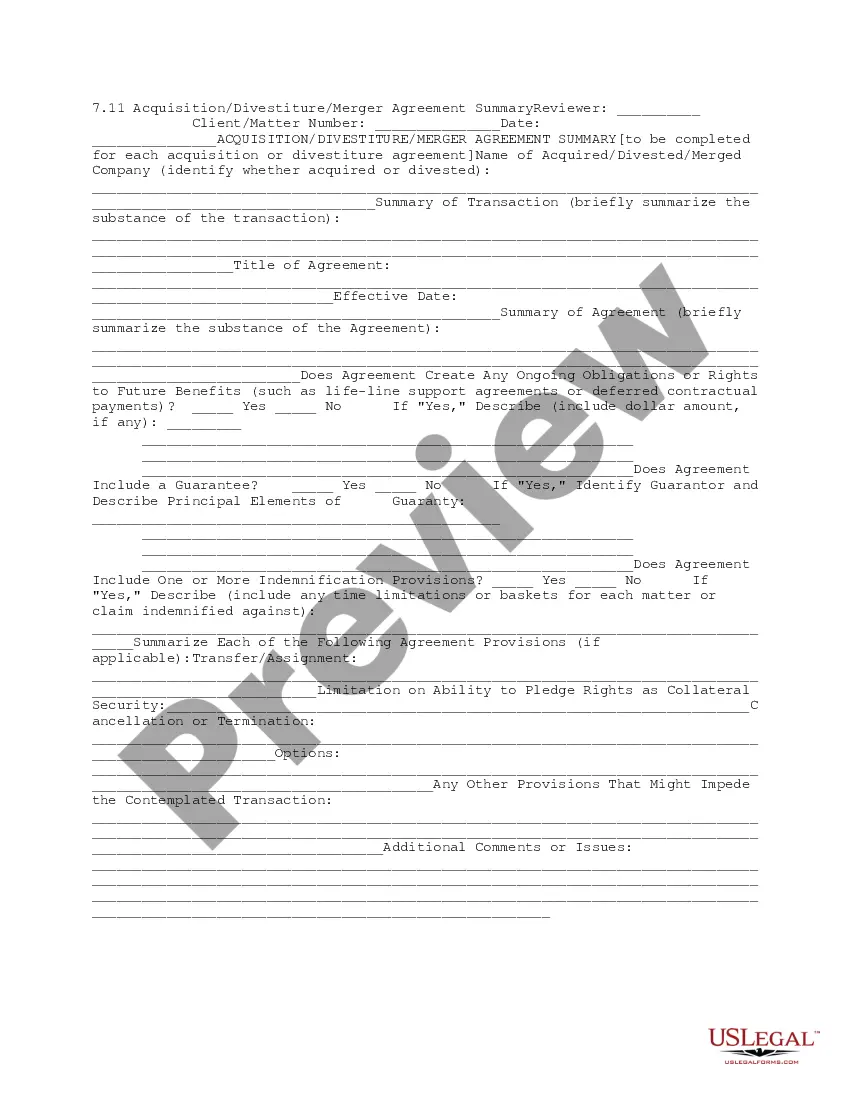
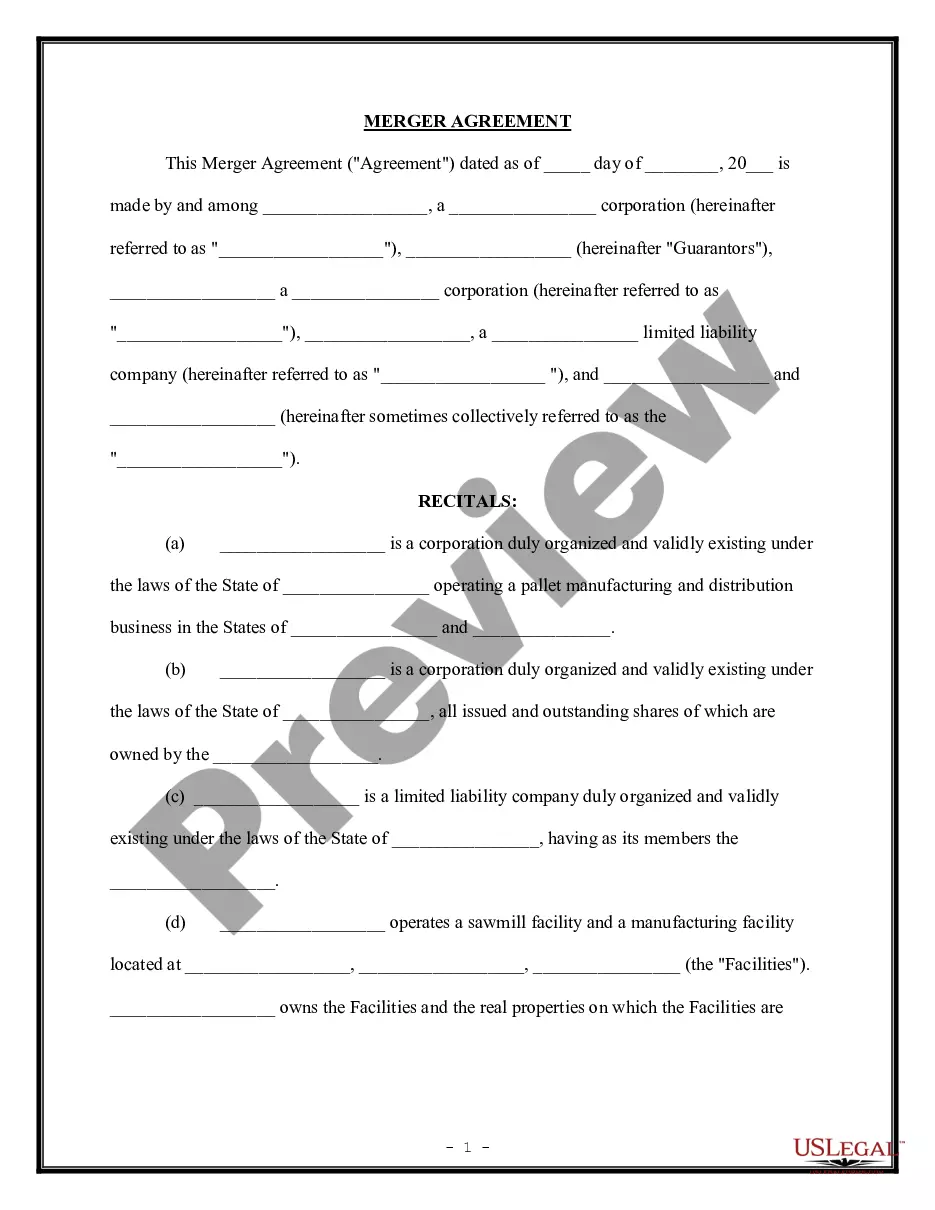
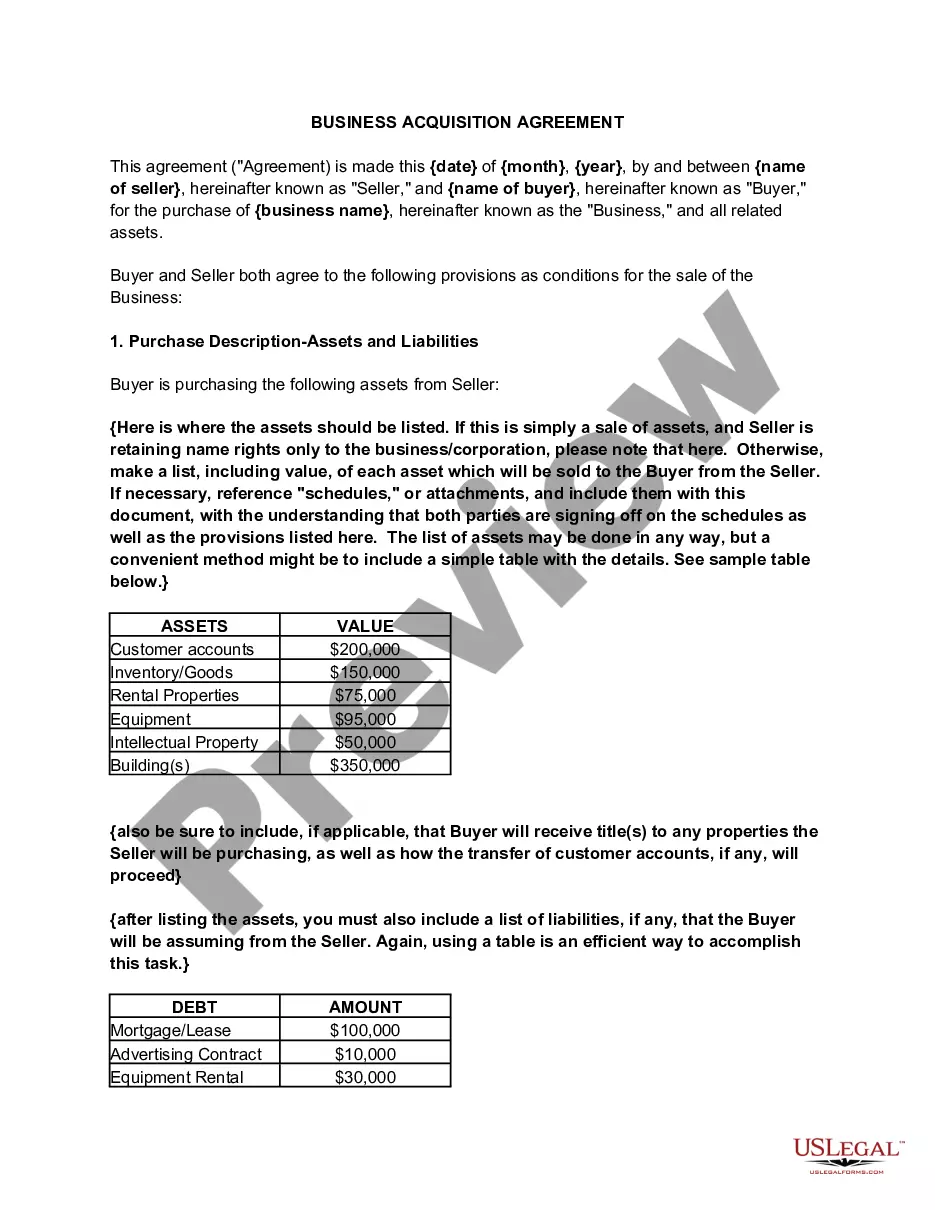
The Acquisition Divestiture Merger Agreement Summary is a comprehensive due diligence form designed to provide a clear summary of each acquisition, divestiture, or merger agreement within a company. This form is essential for documenting vital transaction details and obligations, differentiating it from other general contract summaries by focusing specifically on the nuances of business transactions involving changes in ownership or control of companies.
What’s included in this form
- Reviewer details and client/matter number for tracking.
- Name of the acquired, divested, or merged company.
- Summary of the transaction providing an overview of its nature.
- Effective date and title of the agreement.
- Summary of the agreement, highlighting key terms and conditions.
- Sections addressing ongoing obligations, guarantees, and indemnification provisions.
- Additional provisions that may affect the transaction.
- Space for additional comments and issues.



When to use this form
This form should be used during the due diligence process of any acquisition, divestiture, or merger involving your company. It is particularly important when reviewing contracts that establish new legal obligations or transfer of ownership to ensure all pertinent information is documented and analyzed for potential risks and responsibilities.
Intended users of this form
- Business owners and executives involved in acquisitions or divestitures.
- Legal teams and compliance officers overseeing transaction processes.
- Accountants and financial advisors conducting due diligence.
- Companies and shareholders considering mergers or asset sales.
How to prepare this document
- Identify the reviewer and enter the client/matter number along with the date.
- Document the name of the acquired, divested, or merged company, specifying the nature of the transaction.
- Summarize the transaction details and the agreement's key terms briefly.
- Indicate if the agreement includes ongoing obligations, guarantees, or indemnification provisions, providing necessary details.
- Outline additional significant provisions that could impact the agreement and add any comments or issues.
Is notarization required?
In most cases, this form does not require notarization. However, some jurisdictions or signing circumstances might. US Legal Forms offers online notarization powered by Notarize, accessible 24/7 for a quick, remote process.
Get your form ready online
Our built-in tools help you complete, sign, share, and store your documents in one place.
Make edits, fill in missing information, and update formatting in US Legal Forms—just like you would in MS Word.
Download a copy, print it, send it by email, or mail it via USPS—whatever works best for your next step.
Sign and collect signatures with our SignNow integration. Send to multiple recipients, set reminders, and more. Go Premium to unlock E-Sign.
If this form requires notarization, complete it online through a secure video call—no need to meet a notary in person or wait for an appointment.
We protect your documents and personal data by following strict security and privacy standards.

Make edits, fill in missing information, and update formatting in US Legal Forms—just like you would in MS Word.

Download a copy, print it, send it by email, or mail it via USPS—whatever works best for your next step.

Sign and collect signatures with our SignNow integration. Send to multiple recipients, set reminders, and more. Go Premium to unlock E-Sign.

If this form requires notarization, complete it online through a secure video call—no need to meet a notary in person or wait for an appointment.

We protect your documents and personal data by following strict security and privacy standards.
Typical mistakes to avoid
- Failing to include all necessary details of the transaction, which can lead to ambiguity.
- Neglecting to summarize ongoing obligations, which could impact future business decisions.
- Overlooking the verification of company names and agreement titles.
- Not specifying any guarantees and indemnification provisions clearly.
Benefits of using this form online
- Convenient access to a professionally drafted template that ensures legal compliance.
- Edit and customize the form easily to fit your transaction's unique circumstances.
- Accessible 24/7, allowing for immediate use and secure document handling.
- Reduces the risk of errors with built-in prompts and guidance within the form.
Legal use & context
- This form is recognized as a valid documentation tool for business transactions within prevalent legal frameworks.
- It helps maintain a record of transactions that can be referenced for legal or financial scrutiny.
- Proper completion of the form can aid in ensuring compliance with statutory obligations.
Main things to remember
- The Acquisition Divestiture Merger Agreement Summary provides a structured approach to documenting business transactions.
- Completing the form accurately is crucial for legal protection and compliance.
- The form is suitable for use by various stakeholders involved in the transactions.
- Consulting legal professionals may enhance the documentâs efficacy and enforceability.
Looking for another form?

Form popularity
FAQ
Practicing mergers and acquisitions requires a strong proficiency in accounting, finance, law, strategy, and business. While it is not necessary to have an advanced degree, many M&A professionals have MBAs, and less frequently, law degrees.
Step 1: Identify the Acquirer. Step 2: Determining the Acquisition Date. Step 3: Recognising & Measuring Identifiable Assets Acquired & Liabilities. Step 4: Recognising and Measuring Any Non-Controlling Interest (NCI)
There are three major steps to conducting a merger or acquisition analysis: Step 1: Obtaining a purchase price. Uses of Funds. The uses of funds represent how much funding we need to complete the acquisition. Purchase Price. Net Debt. Transaction Fees. Sources of Funds. Pro-forma transaction adjustments.
Sell your company before it's for sale. Upgrade your team. Prepare for due diligence before a deal arises. Review your key client contracts. Think of what you want next.
Comparable Company Analysis. Discounted Cash Flow Analysis. Accretion/Dilution Analysis.
Debt and Liabilities: The acquirer company should examine the target company's debt load. A good candidate for merger or acquisition is a company that has a sensible amount of debt with a high-interest rate which a more successful company can refinance to help lower the interest rate.
Identify a business combination. Identify the acquirer. Measure the cost of the transaction. Allocate the cost of a business combination to the identifiable net assets acquired and goodwill. Account for goodwill.
M&A Buy-Side vs. Your job is to provide them with financial analysis and insight into the potential buyers of their company. Ultimately, your goal is to ensure your clients receive the best deal and the highest possible price for the sale of their company.
Success metrics to use are sales, revenue, and/or profit. Numbers of customer contacts can be used to predict future sales levels.