Preliminary Due Diligence Team Memorandum
What this document covers
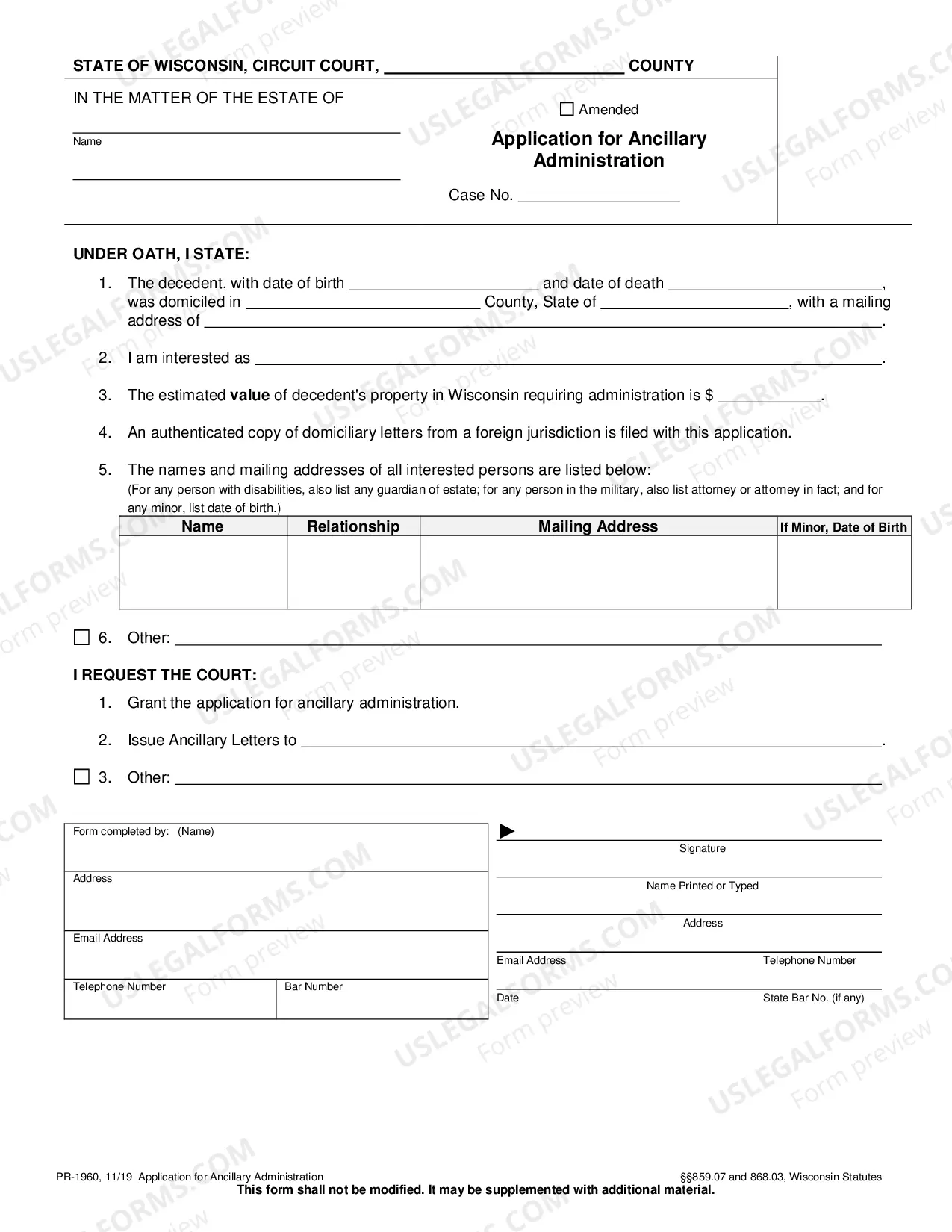
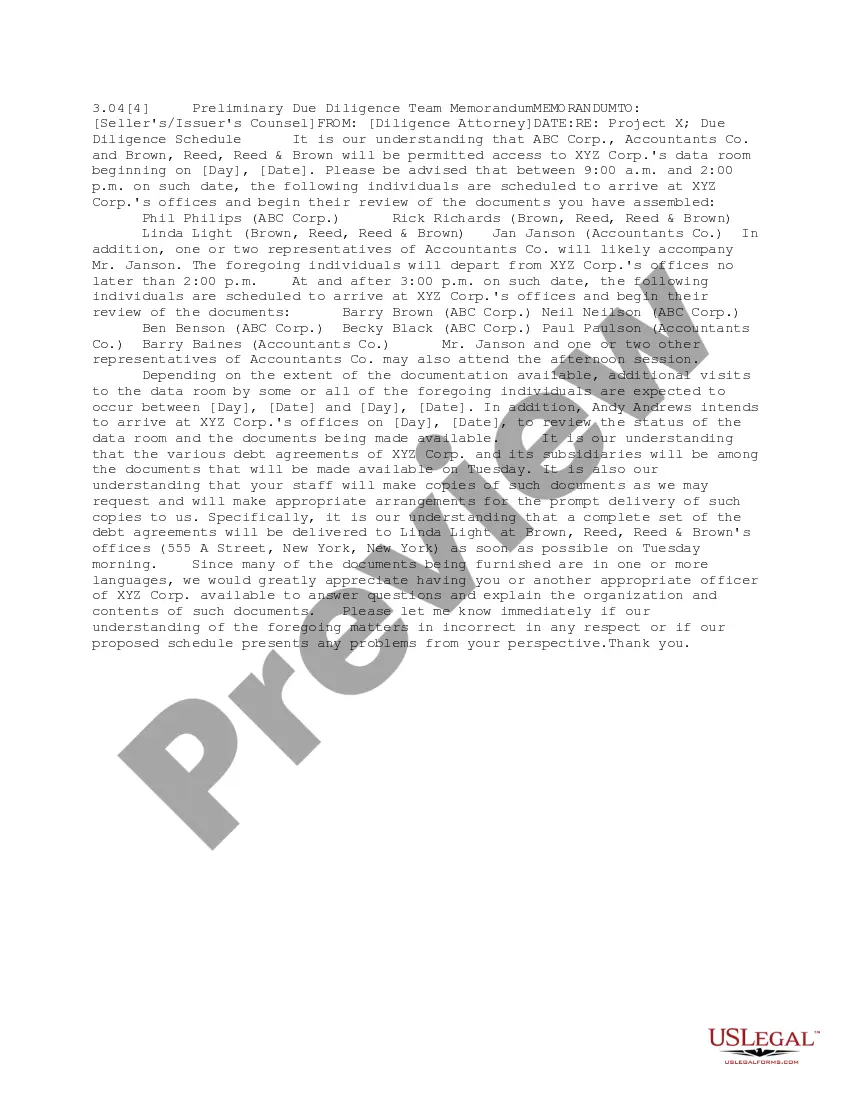
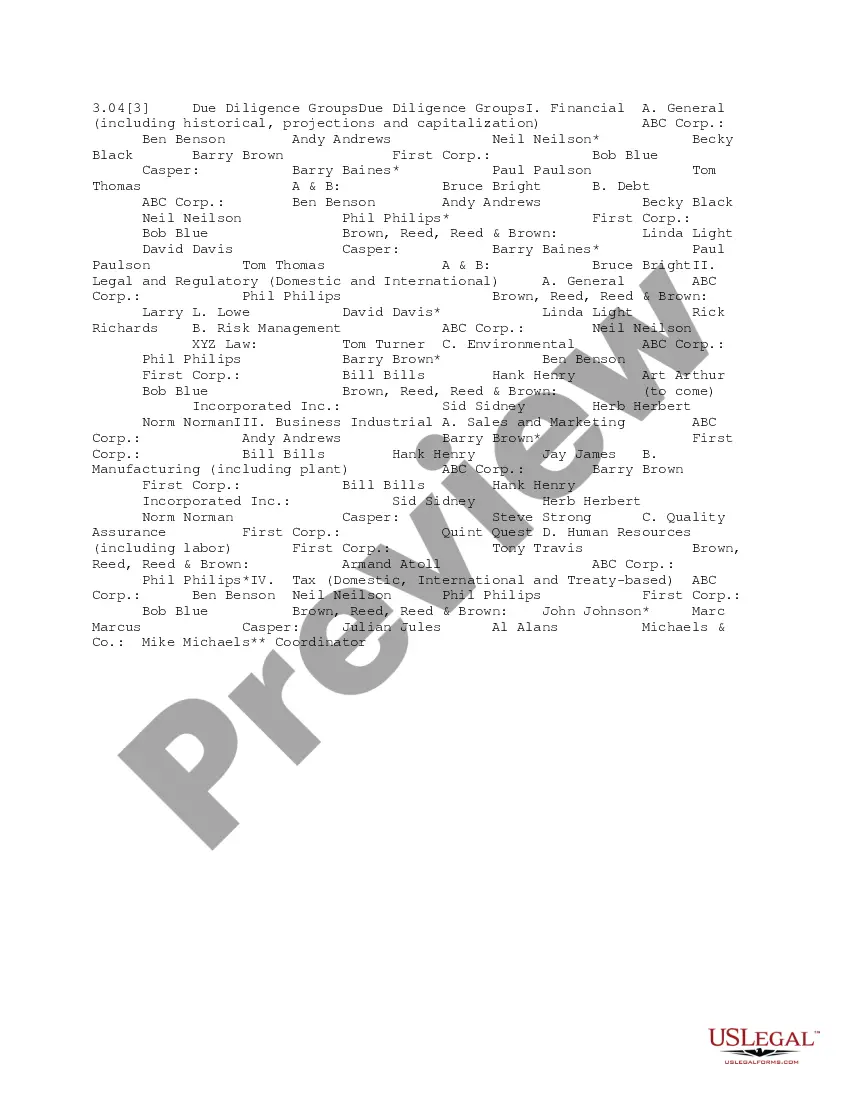
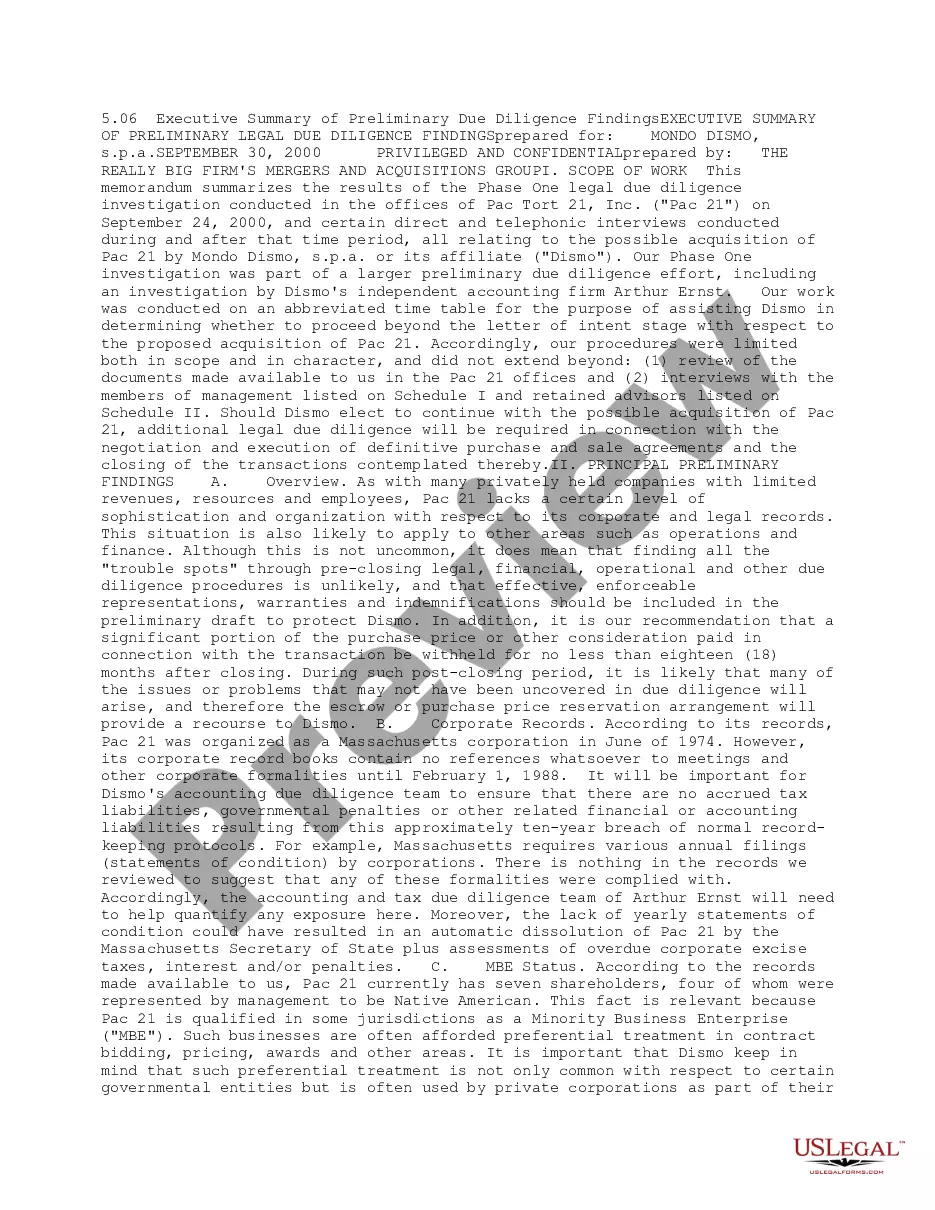
The Preliminary Due Diligence Team Memorandum is a document used to outline a proposed schedule for team members conducting due diligence on a project. This memorandum helps in coordinating access to documents and resources, ensuring all relevant parties understand when and how meetings will occur. Unlike other forms of due diligence documents, this memorandum specifically targets the scheduling and logistics aspect, making it a vital tool in the due diligence process.
Key parts of this document
- Memorandum header, including sender, recipient, and date
- Project reference to specify the due diligence initiative
- Schedule of team member visits to the data room
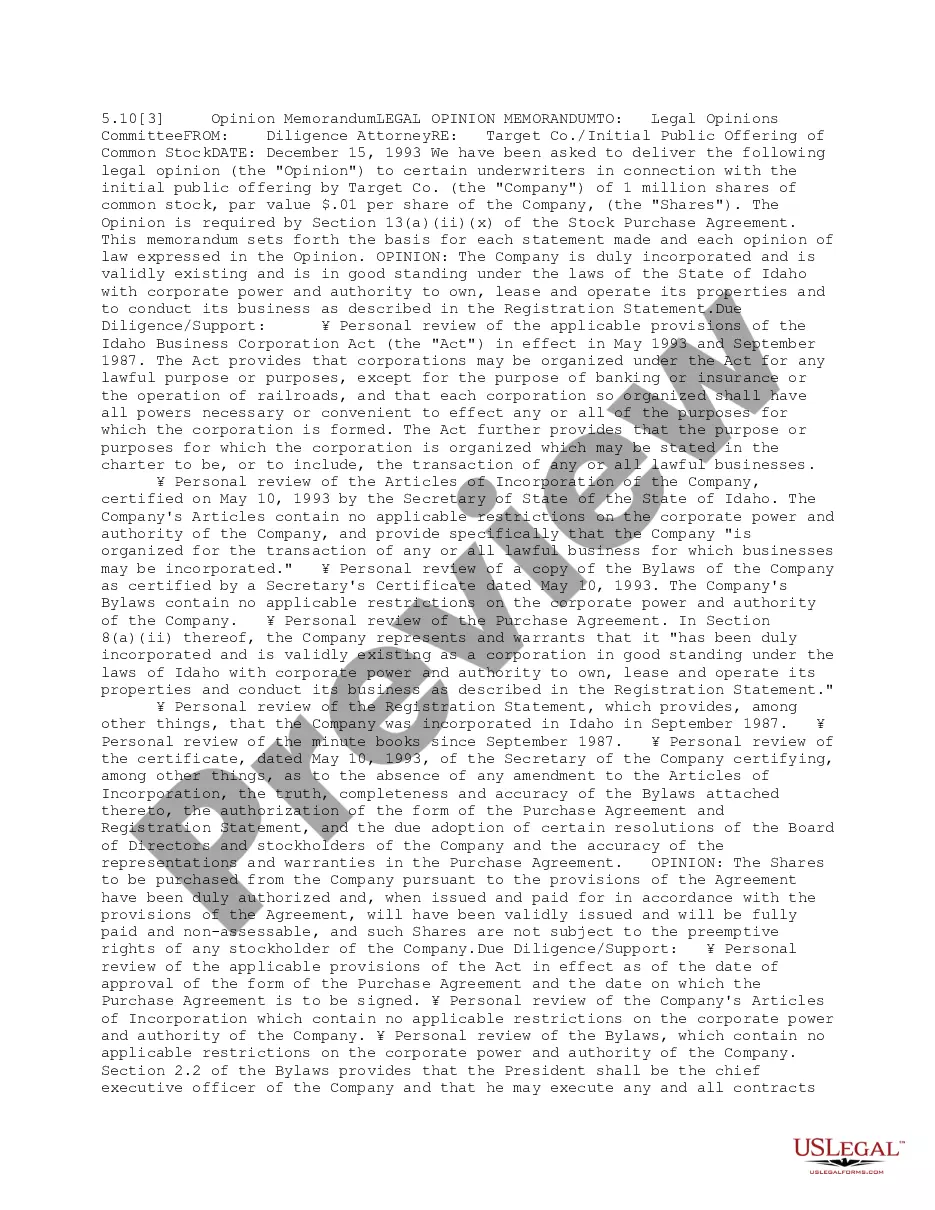
- Details on document types available for review
- Request for additional support in answering questions during document review
- Contact information for follow-up communication
Common use cases
This form is essential when a company is preparing for a due diligence process related to transactions like mergers or acquisitions. Use this memorandum to organize and communicate a clear schedule for parties involved, ensuring everyone is aligned on document access and review times.
Who should use this form
- Attorneys representing sellers or issuers
- Accountants conducting financial reviews
- Team members involved in the due diligence process
- Corporate executives managing transaction logistics
Completing this form step by step
- Identify the parties involved in the due diligence process.
- Specify the project to which the due diligence pertains.
- Outline the schedule for document review, including designated times and participant names.
- Indicate the types of documents that will be available for review.
- Provide contact information for questions during the review process.
Notarization guidance
Notarization is generally not required for this form. However, certain states or situations might demand it. You can complete notarization online through US Legal Forms, powered by Notarize, using a verified video call available anytime.
Get your form ready online
Our built-in tools help you complete, sign, share, and store your documents in one place.
Make edits, fill in missing information, and update formatting in US Legal Forms—just like you would in MS Word.
Download a copy, print it, send it by email, or mail it via USPS—whatever works best for your next step.
Sign and collect signatures with our SignNow integration. Send to multiple recipients, set reminders, and more. Go Premium to unlock E-Sign.
If this form requires notarization, complete it online through a secure video call—no need to meet a notary in person or wait for an appointment.
We protect your documents and personal data by following strict security and privacy standards.

Make edits, fill in missing information, and update formatting in US Legal Forms—just like you would in MS Word.

Download a copy, print it, send it by email, or mail it via USPS—whatever works best for your next step.

Sign and collect signatures with our SignNow integration. Send to multiple recipients, set reminders, and more. Go Premium to unlock E-Sign.

If this form requires notarization, complete it online through a secure video call—no need to meet a notary in person or wait for an appointment.

We protect your documents and personal data by following strict security and privacy standards.
Common mistakes to avoid
- Failing to specify the exact times for team member visits.
- Not including all relevant parties in the memorandum.
- Neglecting to confirm the types of documents available for review.
- Leaving out contact information for follow-up queries.
Why use this form online
- Convenient access to a professionally drafted memorandum template.
- Easy editing capabilities to tailor the document to your specific project needs.
- Immediate download ensures you can begin the due diligence process without delay.
- Reliable legal formatting drafted by licensed attorneys.
Legal use & context
- This memorandum is typically used in transactional settings and must accurately reflect the agreed-upon due diligence schedule.
- It serves as a formal record of communication regarding due diligence activities and expectations.
- Proper use of this document can help mitigate misunderstandings and streamline the due diligence process.
Looking for another form?

Form popularity
FAQ
Due diligence is a process of research and analysis that is initiated before an acquisition, investment, business partnership or bank loan, in order to determine the value of the subject of the due diligence or whether there are any major issues involved.
Investment banker, preliminary due diligence refers to the evaluation of the. company that takes place after the letter of interest is accepted and before. the letter of intent is signed.
Step 1: Company Capitalization. Step 2: Revenue, Margin Trends. Step 3: Competitors & Industries. Step 4: Valuation Multiples. Step 5: Management and Ownership. Step 6: Balance Sheet Exam. Step 7: Stock Price History. Step 8: Stock Options & Dilution.
Financial Due Diligence. Review business strategy. Review proposed transaction terms. Accounting Due Diligence. Ensure compliance with relevant accounting rules and policies. Tax Due Diligence. Analyze current tax position. Legal Due Diligence. Assess balance sheet and off-balance sheet liabilities and potential risks.
Write for the target audience. Focus on the report objectives. Limit the report to information that has material impact to your company. Structure the information to be used as valuable reference material later.
There are several reasons why due diligence is conducted: To confirm and verify information that was brought up during the deal or investment process. To identify potential defects in the deal or investment opportunity and thus avoid a bad business transaction.
Due Diligence Examples Conducting thorough inspections on a property before buying it in order to make sure that it is a good investment. An underwriter auditing an issuer's business and operations prior to selling it.
Statement of what is being studied, research or proposed. Background and supporting documentation on the proposal (corporate reports, financial statements, legal documents, copies of transaction history, market research)