California New Resident Guide
Overview of this form
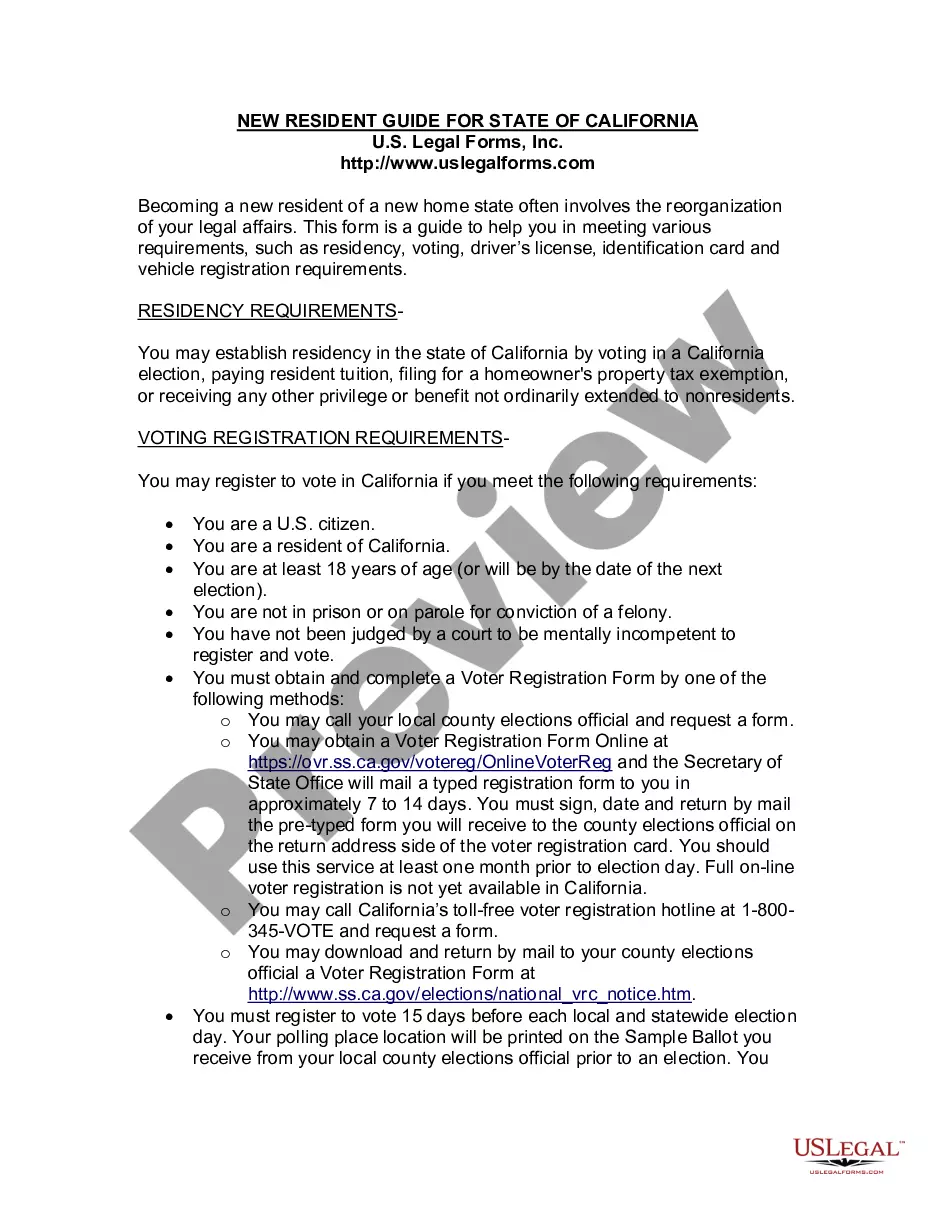
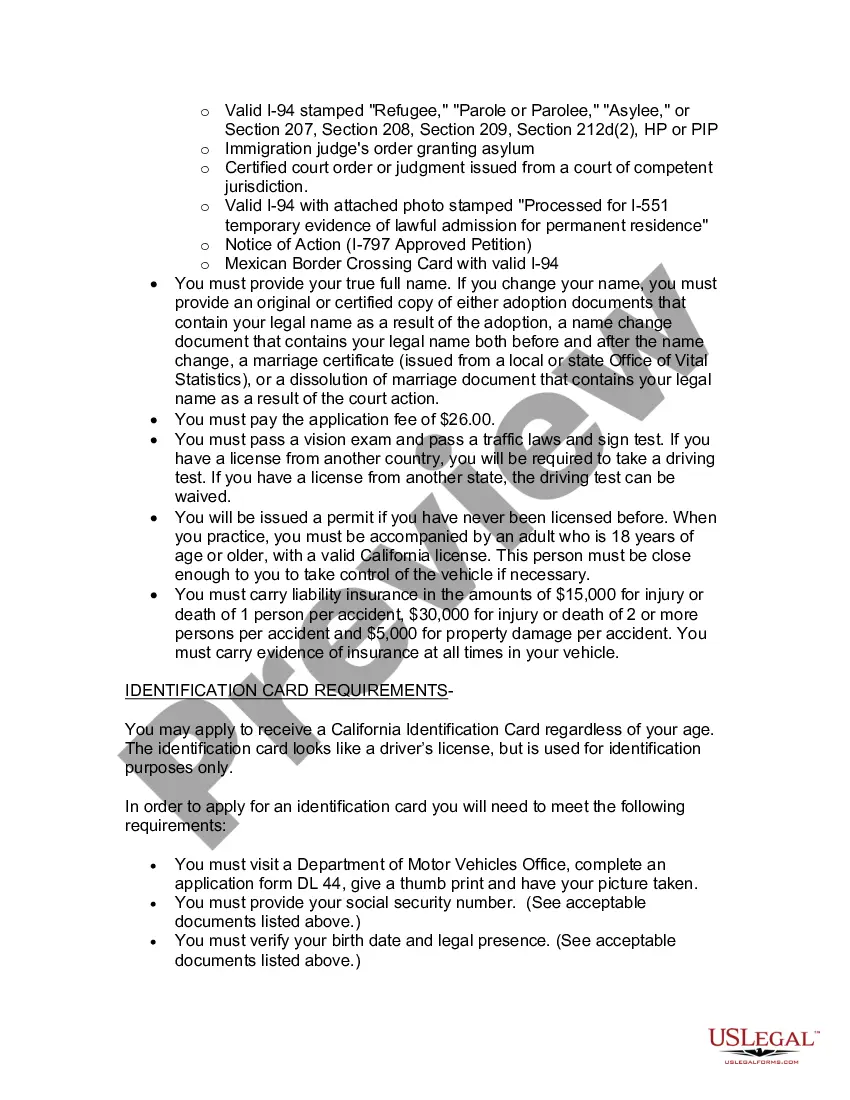
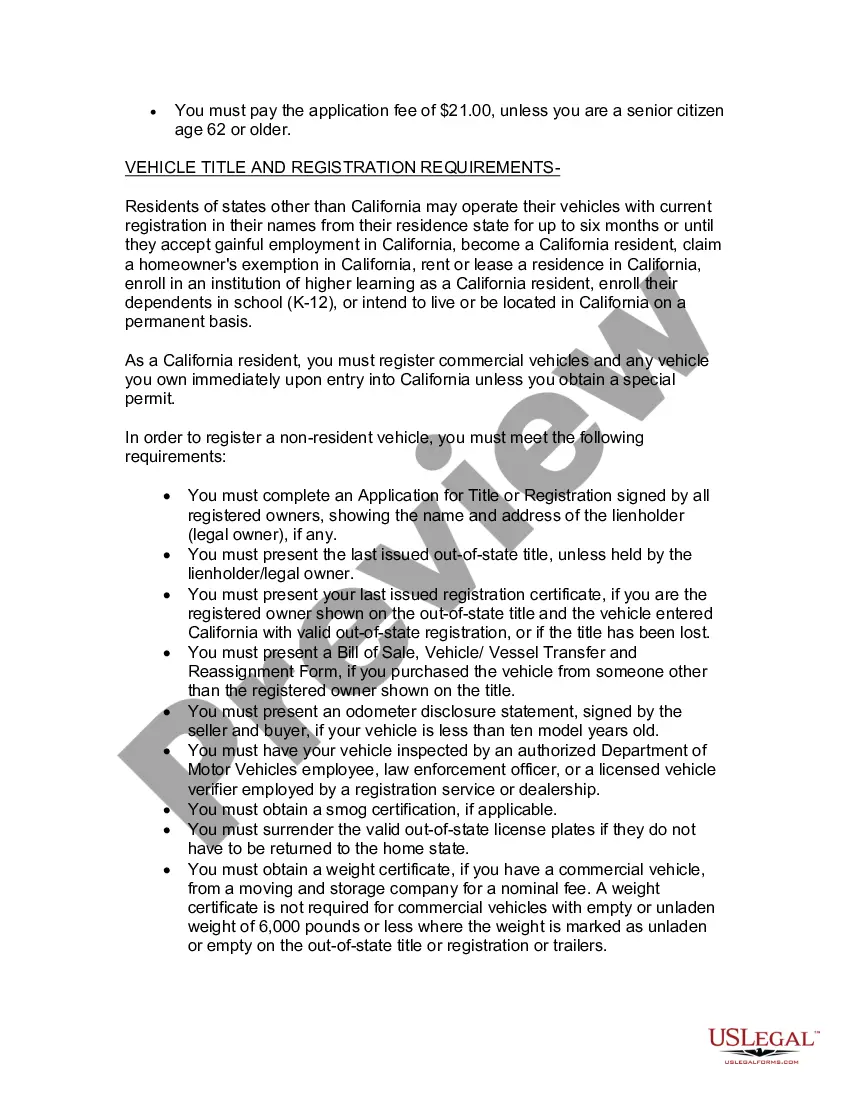
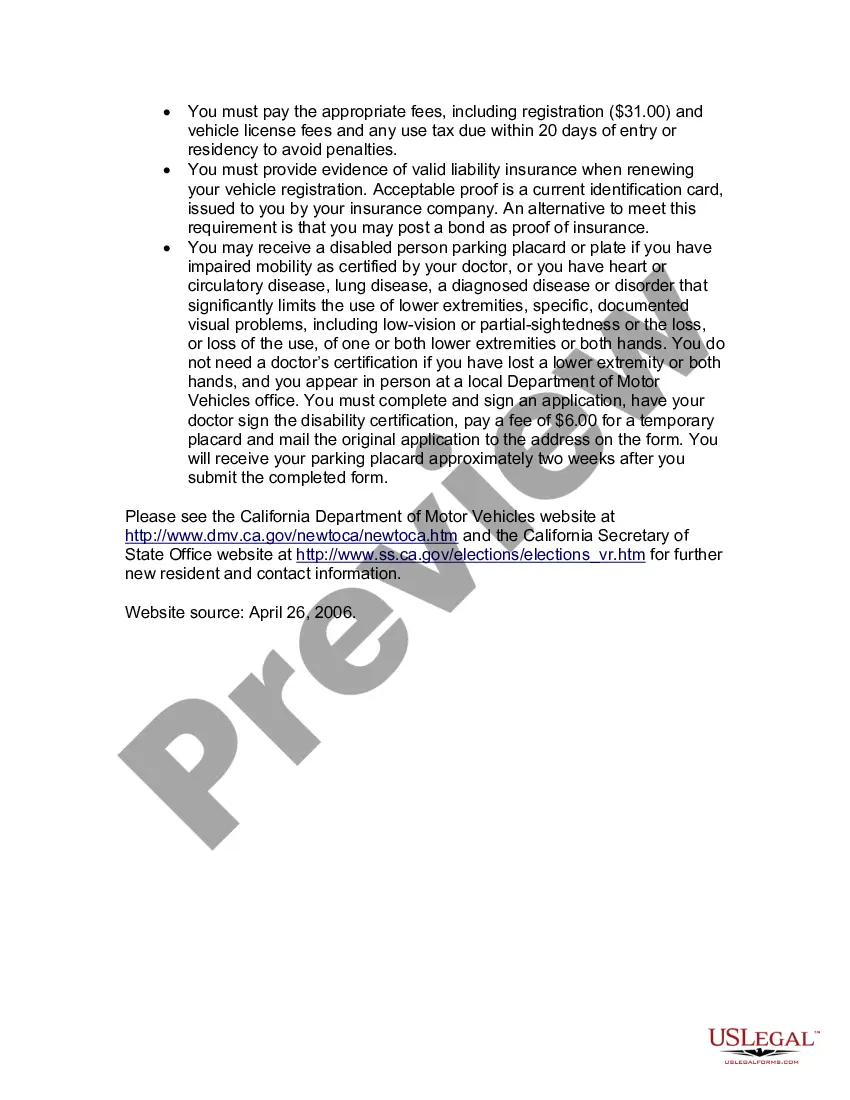
The New Resident Guide is an essential resource for individuals relocating to a new home state. It outlines the myriad state requirements concerning residency, voter registration, identification cards, driver's licenses, and vehicle title and registration. This guide is distinct from typical residency forms because it details the specific legal processes new residents must follow to establish their status in the state.
Main sections of this form
- Residency Requirements: Details on how to establish residency in the new state.
- Voting Registration Requirements: Steps and eligibility criteria for registering to vote.
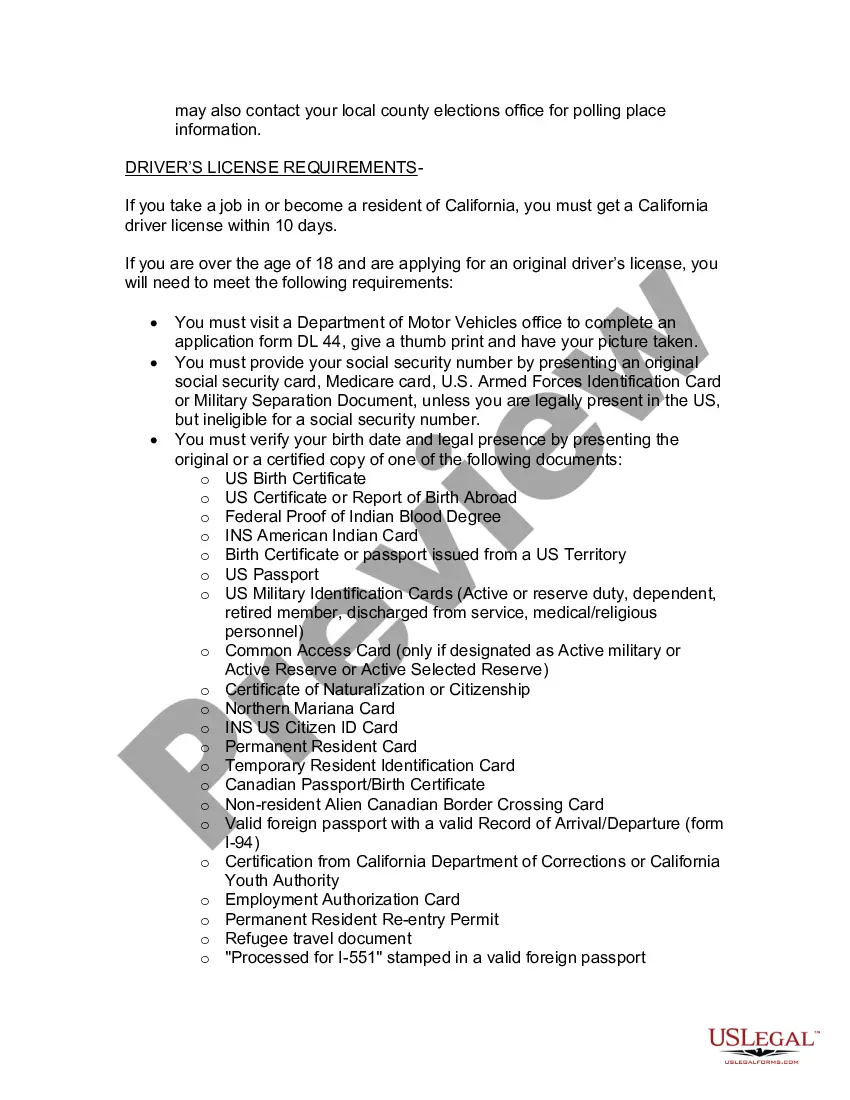
- Driver's License Requirements: Information needed to obtain a driver's license in the new state.
- Identification Card Requirements: Guidelines for applying for an identification card.
- Vehicle Title and Registration Requirements: Instructions for registering a vehicle in the new state.
When this form is needed
This form is useful when moving to a new state and needing guidance on how to fulfill legal obligations. Use this guide to ensure you meet all requirements for residency, voting, and obtaining necessary identification and vehicle registrations in your new home state.
Intended users of this form
- Individuals relocating to a new state.
- New residents looking to understand state-specific legal requirements.
- Anyone who needs assistance with voter registration and driver's licensing in their new home state.
Instructions for completing this form
- Read the residency requirements carefully to understand how to establish your residency.
- Follow the voting registration section to ensure you register in time for upcoming elections.
- Visit the Department of Motor Vehicles to apply for a driver's license or ID card, bringing all required documentation.
- Complete vehicle registration by gathering necessary title and previous registration documents.
- Pay any applicable fees and comply with insurance requirements to avoid penalties.
Notarization guidance
In most cases, this form does not require notarization. However, some jurisdictions or signing circumstances might. US Legal Forms offers online notarization powered by Notarize, accessible 24/7 for a quick, remote process.
Get your form ready online
Our built-in tools help you complete, sign, share, and store your documents in one place.
Make edits, fill in missing information, and update formatting in US Legal Forms—just like you would in MS Word.
Download a copy, print it, send it by email, or mail it via USPS—whatever works best for your next step.
Sign and collect signatures with our SignNow integration. Send to multiple recipients, set reminders, and more. Go Premium to unlock E-Sign.
If this form requires notarization, complete it online through a secure video call—no need to meet a notary in person or wait for an appointment.
We protect your documents and personal data by following strict security and privacy standards.

Make edits, fill in missing information, and update formatting in US Legal Forms—just like you would in MS Word.

Download a copy, print it, send it by email, or mail it via USPS—whatever works best for your next step.

Sign and collect signatures with our SignNow integration. Send to multiple recipients, set reminders, and more. Go Premium to unlock E-Sign.

If this form requires notarization, complete it online through a secure video call—no need to meet a notary in person or wait for an appointment.

We protect your documents and personal data by following strict security and privacy standards.
Common mistakes
- Failing to register to vote within the deadline.
- Not bringing all required documents to the DMV for your driver's license application.
- Ignoring vehicle registration timelines after moving.
Why complete this form online
- Access to updated and reliable legal information.
- Convenient downloading of the New Resident Guide from anywhere.
- Editable templates allow you to personalize your guide according to your new state's requirements.
Legal use & context
- This guide provides essential steps to ensure compliance with state residency laws.
- Incorporates the latest requirements for voter registration and vehicle regulations.
- Helps to avoid common legal pitfalls associated with moving to a new state.
What to keep in mind
- Understand your residency requirements in your new state.
- Follow the appropriate steps for voter registration and driver's licensing.
- Gather necessary documentation to ensure a smooth transition to your new home state.
Looking for another form?
Form popularity
FAQ
To establish residency in California, you should secure a permanent place to live, register to vote, and obtain a California driver's license. Staying informed through the California New Resident Guide can provide you with key insights into the necessary steps. This guide will support your journey in making California your new home.
Proof of residency in California can include utility bills, bank statements, rental agreements, or any government-issued documents that display your name and address. This documentation is crucial when you apply for various services highlighted in the California New Resident Guide. Keeping these documents organized will simplify your transition.
As a new resident, you must visit your local Department of Motor Vehicles (DMV) office to apply for a California driver's license. Bring valid identification, proof of residency, and pass a vision test. Following the California New Resident Guide will help you navigate this process smoothly.
To qualify as a resident of California, you must live in the state for at least six months of the year. Moreover, you need to establish your primary home here. This information is essential for the California New Resident Guide as it helps you understand your obligations and rights.
You can live in California for up to six months without being classified as a resident for tax purposes. However, it is essential to monitor your time in the state to avoid inadvertently triggering residency classification. Many find the complexities of residency requirements challenging, which is why utilizing a California New Resident Guide can provide the necessary information to make informed decisions.
The 6 month rule for residency in California indicates that residing in the state for over six months may establish you as a resident. This impacts your tax responsibilities and eligibility for state benefits. Through tracking your presence, you can manage your residency status better. A California New Resident Guide can assist in understanding the implications of this rule.
Yes, California does implement a 183 day residency rule, which plays a significant role in determining your tax obligations. If you spend more than 183 days in California during a year, you may be considered a resident for tax purposes. It's vital to keep track of your days in the state, and a California New Resident Guide can provide helpful insights into managing your residency status.
The 7500 mile rule relates to the distance you can travel from California without losing your residency status. This rule stipulates that if you leave California but maintain your home base there, you can travel up to 7500 miles in a year without affecting your residency. Understanding this rule is essential, and a California New Resident Guide can help clarify these crucial details.
The 6 month rule in California generally refers to a guideline for residency status based on physical presence. If you reside in California for more than half the year, you may be classified as a resident for tax purposes. This classification can significantly impact your tax liabilities. Consulting a California New Resident Guide can help you navigate this rule effectively.
Owning a home in California does not automatically make you a resident. Residency is determined by various factors, including your intent to live in California and your length of stay. Therefore, even if you own property, you may still be considered a non-resident for tax and legal purposes. For more detailed guidance, a California New Resident Guide can provide clarity on residency requirements.