Order Setting Bond
About this form
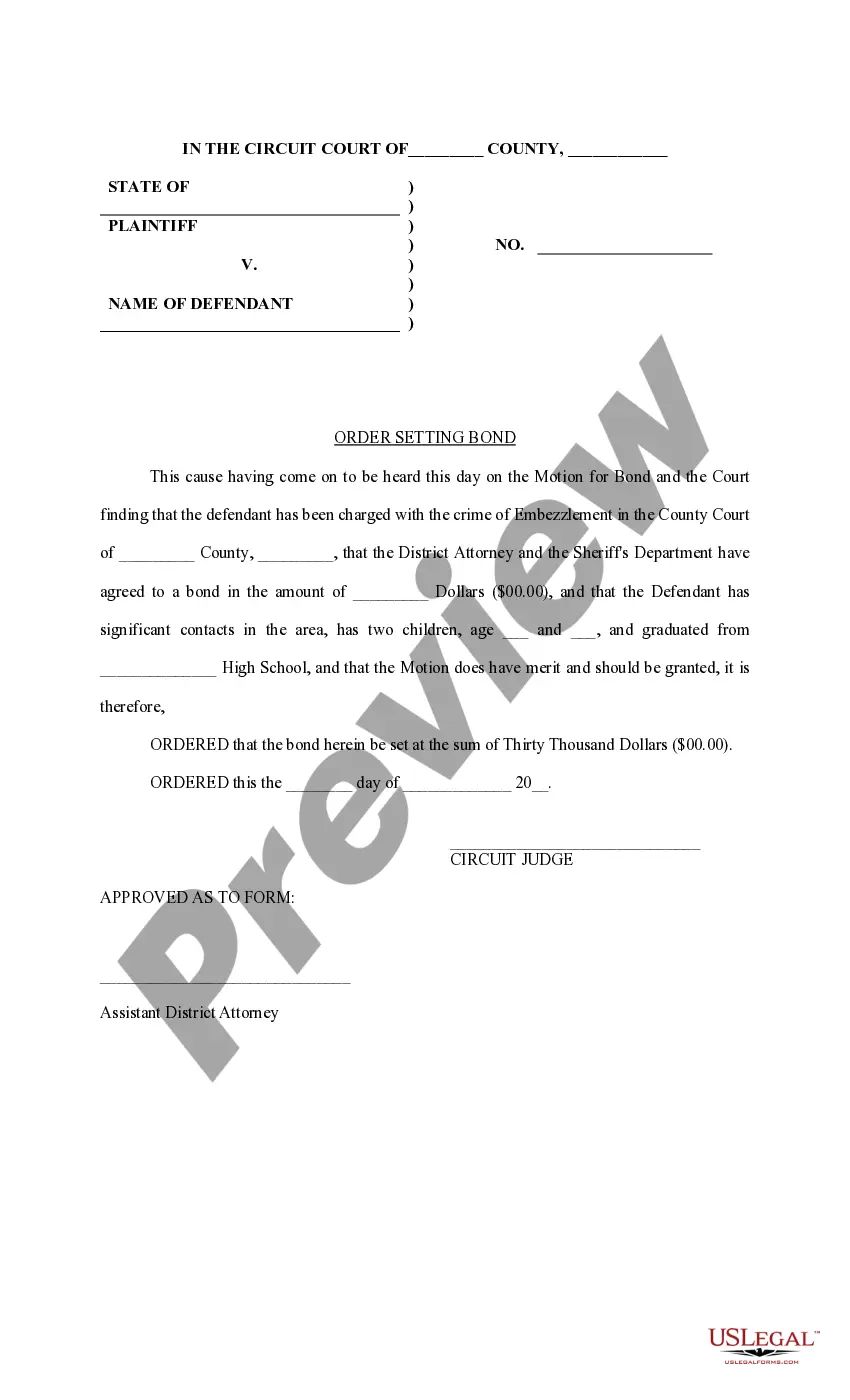
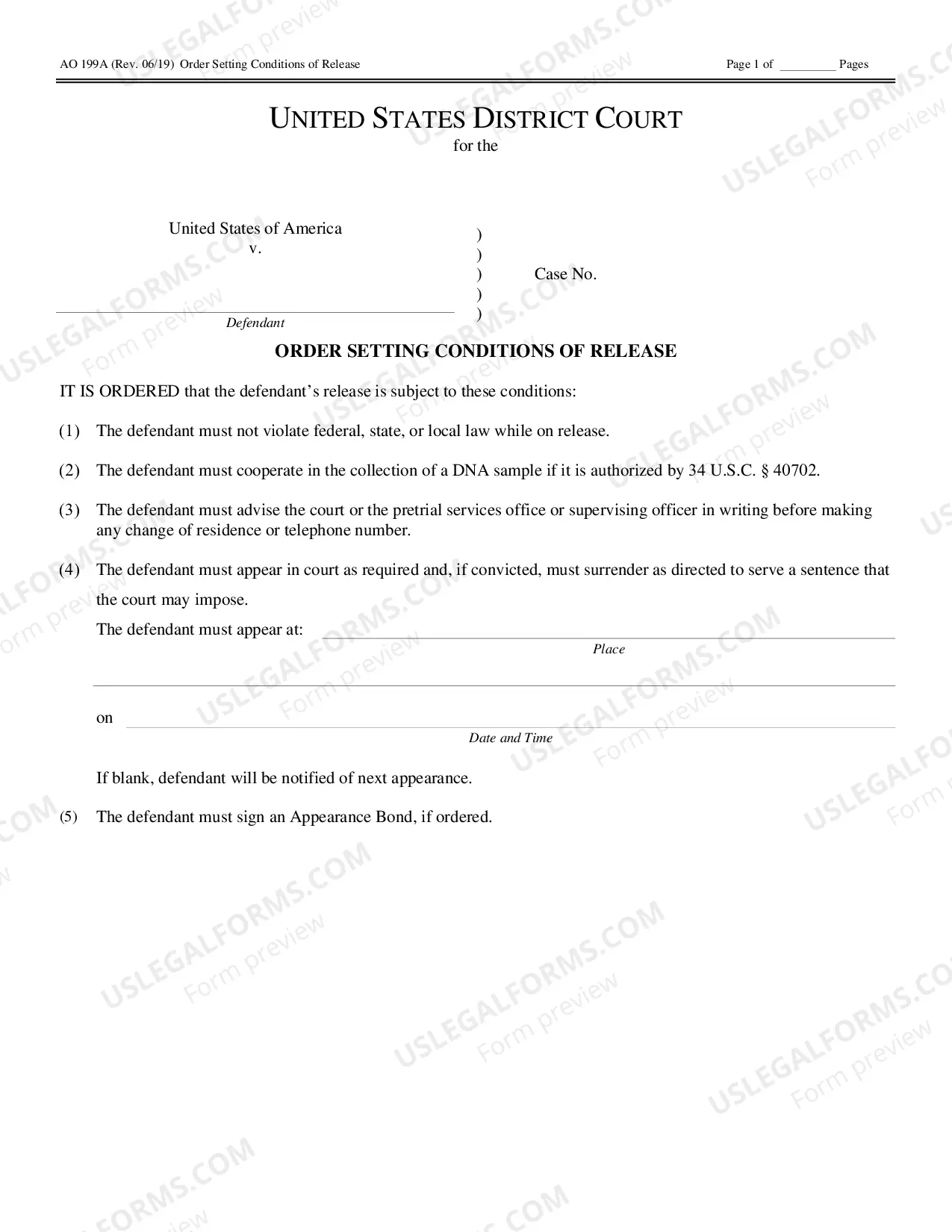
The Order Setting Bond is a legal document used after a defendant files a Motion to Set Bond following criminal charges. This form outlines the bond amount set by the court and establishes conditions for the defendant's release until trial. It differs from other legal forms related to bail as it specifically addresses court findings regarding the bond amount based on the circumstances surrounding the charges.
Form components explained
- Identification of the defendant and the crime charged.
- Stipulation of the bond amount as agreed upon by the District Attorney and the Sheriff's Department.
- Details about the defendant's community ties and family situation.
- Judicial order granting the motion to set bond.
- Signatures of the Circuit Judge and the Assistant District Attorney.
When this form is needed
This form is used when a defendant has been charged with a crime and seeks to have a bond set. It is applicable in scenarios where the defendant may want to secure their release from custody while awaiting trial. The Order Setting Bond confirms the agreement between legal authorities regarding the terms of release, providing legal clarity for both the defendant and the court system.
Who this form is for
- Defendants charged with a crime who wish to request a bond.
- Legal representatives or attorneys filing for a bond on behalf of their clients.
- District Attorneys involved in the case who need to agree to bond conditions.
How to prepare this document
- Fill in the name of the county where the charges are filed.
- Specify the crime for which the defendant is charged.
- Enter the agreed bond amount and detail any significant circumstances about the defendant.
- Date the order and obtain necessary signatures from the Circuit Judge and Assistant District Attorney.
Does this document require notarization?
Notarization is generally not required for this form. However, certain states or situations might demand it. You can complete notarization online through US Legal Forms, powered by Notarize, using a verified video call available anytime.
Get your form ready online
Our built-in tools help you complete, sign, share, and store your documents in one place.
Make edits, fill in missing information, and update formatting in US Legal Forms—just like you would in MS Word.
Download a copy, print it, send it by email, or mail it via USPS—whatever works best for your next step.
Sign and collect signatures with our SignNow integration. Send to multiple recipients, set reminders, and more. Go Premium to unlock E-Sign.
If this form requires notarization, complete it online through a secure video call—no need to meet a notary in person or wait for an appointment.
We protect your documents and personal data by following strict security and privacy standards.

Make edits, fill in missing information, and update formatting in US Legal Forms—just like you would in MS Word.

Download a copy, print it, send it by email, or mail it via USPS—whatever works best for your next step.

Sign and collect signatures with our SignNow integration. Send to multiple recipients, set reminders, and more. Go Premium to unlock E-Sign.

If this form requires notarization, complete it online through a secure video call—no need to meet a notary in person or wait for an appointment.

We protect your documents and personal data by following strict security and privacy standards.
Common mistakes to avoid
- Failing to provide accurate information regarding the bond amount.
- Not including relevant details about the defendant's ties to the community.
- Incomplete signatures by the required parties.
Why use this form online
- Convenience of immediate access to the form for faster processing.
- Editability allows users to input specific information easily.
- Reliable templates created by licensed attorneys ensure legal accuracy.
Looking for another form?

Form popularity
FAQ
Crucial info about trying to get out of custody.Bail is cash, a bond, or property that an arrested person gives to a court to ensure that he or she will appear in court when ordered to do so. If the defendant doesn't show up, the court may keep the bail and issue a warrant for the defendant's arrest.
A bail bond is an agreement by a criminal defendant to appear for trial or pay a sum of money set by the court. The bail bond is cosigned by a bail bondsman, who charges the defendant a fee in return for guaranteeing the payment. The bail bond is a type of surety bond.
A bail bond is a form of bail payment provided on a defendant's behalf by a bail bond agent.When defendants use a bail bond agent, they pay the agent a fee and the agent acts as a surety, telling the court that they (the bond agents) will pay the full bond amount should the defendant fail to appear at court.
A bond is much like a check that you give to a friend, asking him or her not to cash it until you say it's okay to do so. Generally, the purchase price of the bond is about 10% of the value. Therefore, if your bail is set at $5000, you can expect to pay about $500 in order to purchase a bail bond.
In California, a bail bond generally costs 10%, which is mandated by law and set by the California Department of Insurance. The bail fee, or premium, is a non-refundable percentage of the total amount of the bail. Simply, if the bail amount is $10,000, the bail bond fee will be $1,000.
Bail is the money a defendant must pay in order to get out of jail. A bond is posted on a defendant's behalf, usually by a bail bond company, to secure his or her release.If the defendant fails to appear or violates the conditions of the release, he or she might forfeit the amount paid.
After the initial court appearance when the bail is set, the bail will usually be posted and the defendant will be released from jail. At that initial court arraignment, the court will set another follow-up date for a conference or for a hearing.
If bail is set at $10,000, then the defendant can pay that amount to the court in exchange for being released from prison. If the accused doesn't hold up their end of the bargain and misses even one court date, they will immediately forfeit the $10,000 and a warrant will be issued for their arrest.
If bail bond is $10,000 how much do you pay for the premium, or main fee? The premium is typically 10-15% in most states. This is the base fee that every bail bonds company will require you to pay. For a $10,000 bail bond, this means $1,000 to $1,500 in costs that you need to pay.