Insurance Organizer
What this document covers
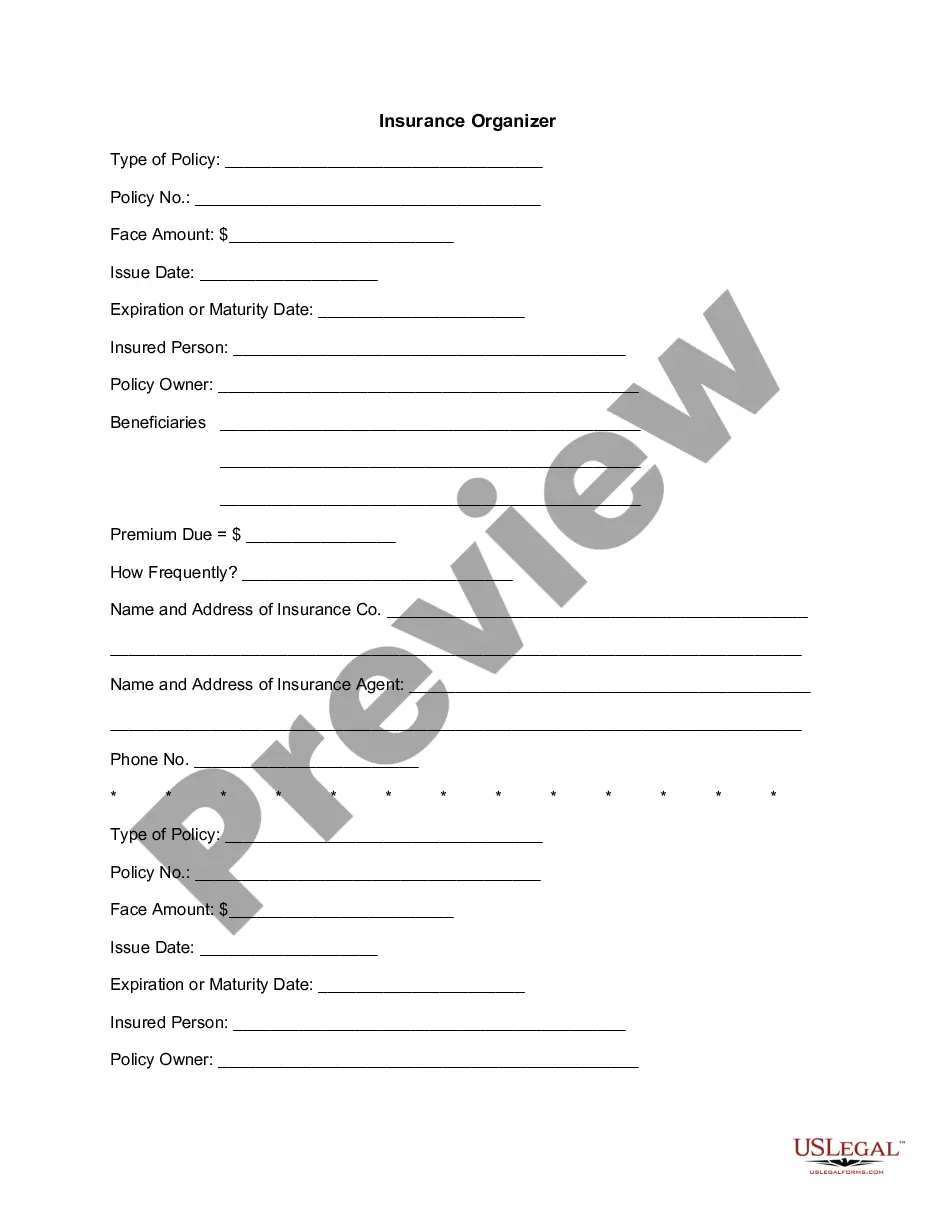
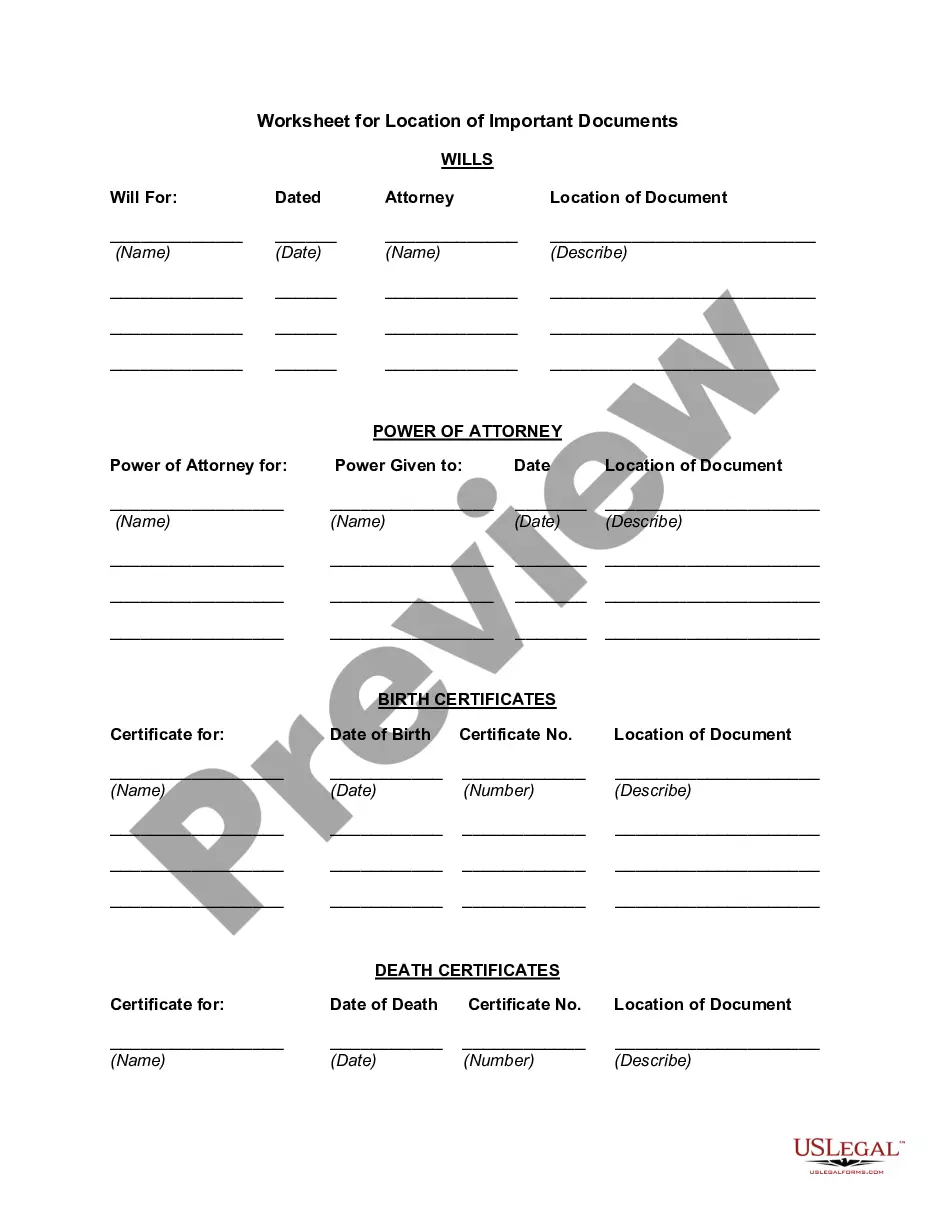
The Insurance Organizer is a valuable document that helps individuals keep track of their insurance policies. This form allows users to organize vital details about various insurance policies, making it easier to manage and review their coverage. Unlike informal notes or spreadsheets, this organized template provides a systematic approach to recording important insurance information, ensuring that nothing is overlooked when it comes to policy management.
What’s included in this form
- Type of Policy: Identifies the specific insurance coverage.
- Policy Number: The unique identifier for the insurance policy.
- Face Amount: The total amount payable in the event of a claim.
- Issue Date: When the policy was issued.
- Expiration or Maturity Date: The end date of the insurance coverage.
- Insured Person: The individual who is covered by the policy.
- Policy Owner: The person or entity that owns the insurance policy.
- Beneficiaries: Individuals or entities entitled to receive benefits from the policy.
- Premium Due: The amount owed for the insurance coverage.
- Frequency of Payment: How often the premium is due (monthly, annually, etc.).
- Name and Address of Insurance Company: Contact information for the insurer.
- Name and Address of Insurance Agent: Contact information for the agent overseeing the policy.


When to use this form
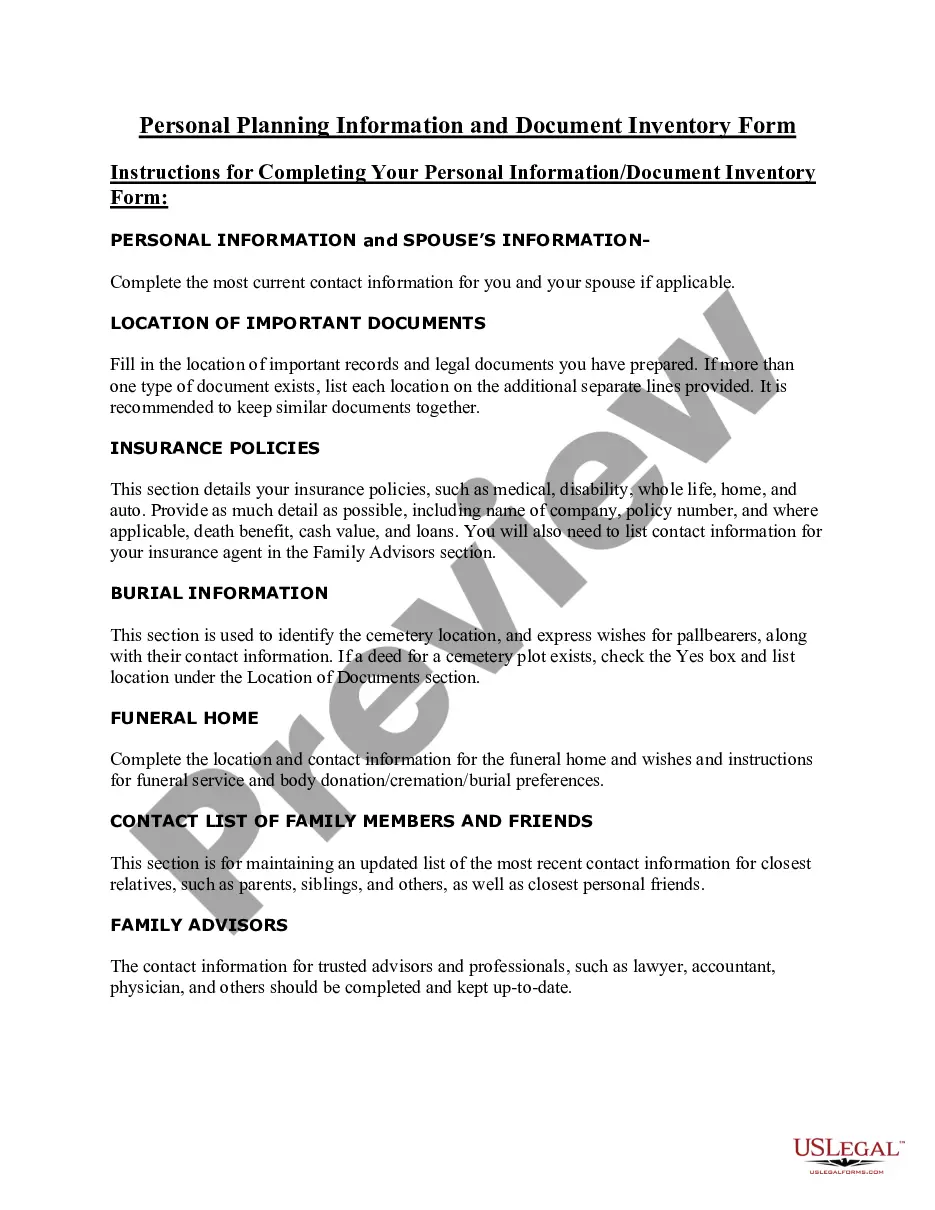
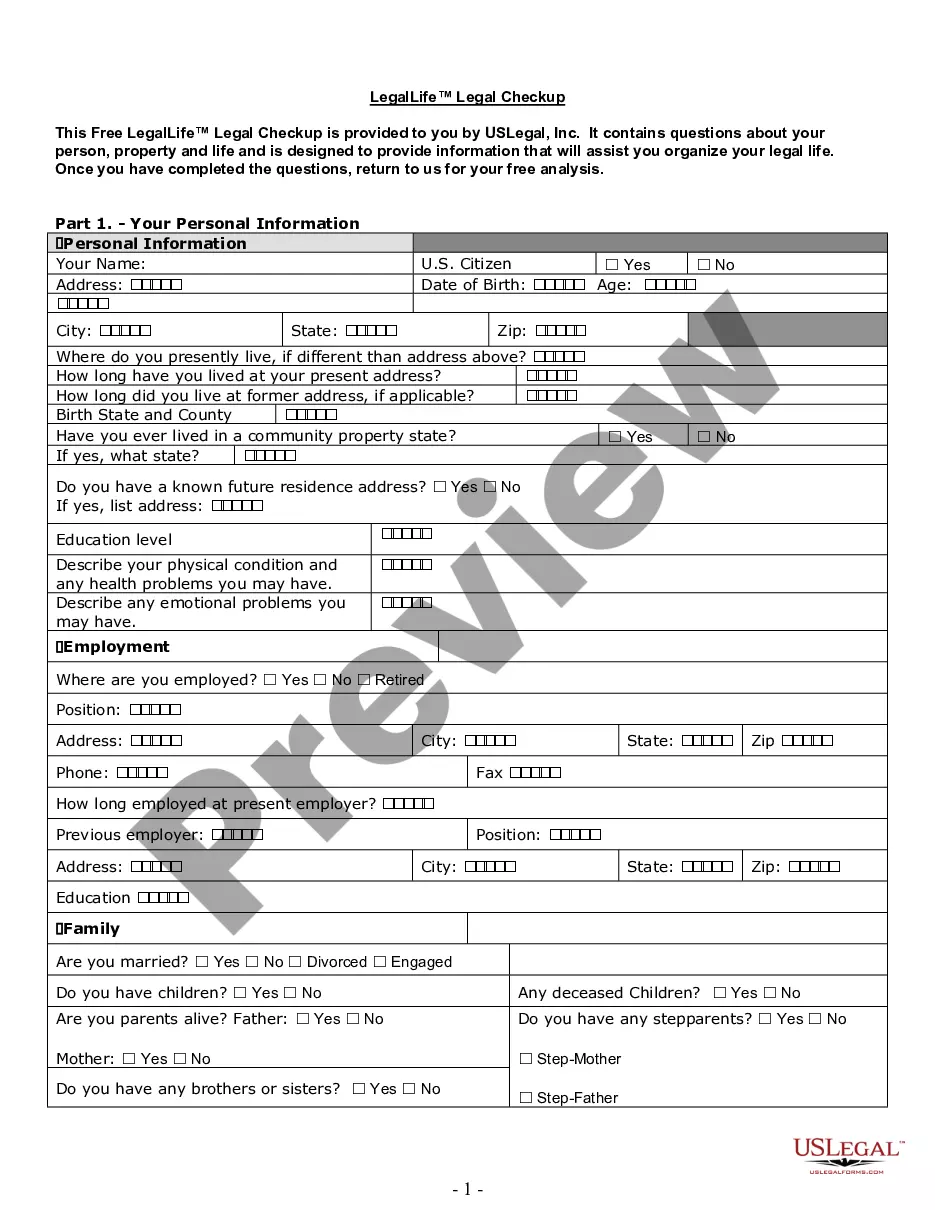
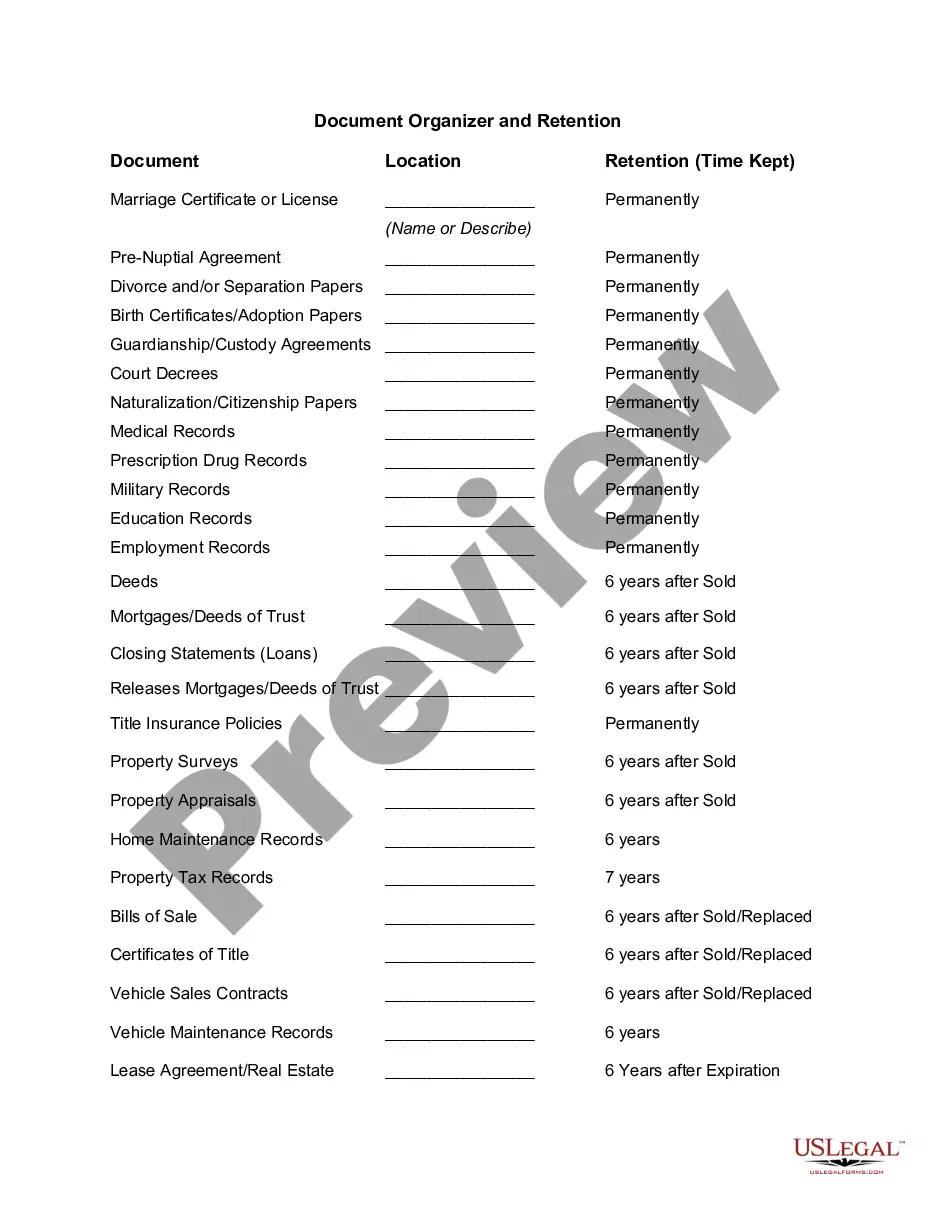
This form is essential for anyone who holds multiple insurance policies and wishes to keep their information organized. It is particularly useful during times of transition, such as moving to a new residence, reviewing coverage to ensure adequate protection, or when preparing for estate planning. Additionally, having all relevant policy information readily available can simplify the claims process or assist in discussions with insurance agents.
Intended users of this form
- Individuals with multiple insurance policies (e.g., life, health, auto, home).
- Families looking to organize their insurance coverage for estate planning.
- People who need a clear overview of their insurance obligations and coverage.
- Insurance agents seeking to help clients maintain detailed policy records.
How to complete this form
- Identify each insurance policy and its type, such as life, auto, or health.
- Fill in the policy number for easy reference.
- Record the face amount, issue date, and expiration or maturity date accurately.
- Document the insured person, policy owner, and beneficiaries to clarify coverage details.
- Note the premium amount and how often it is due.
- Enter the name and address of the insurance company and agent for future correspondence.
Does this document require notarization?
This form does not typically require notarization unless specified by local law. However, having it notarized could provide an additional layer of verification and security if you decide to use it in legal contexts.
Get your form ready online
Our built-in tools help you complete, sign, share, and store your documents in one place.
Make edits, fill in missing information, and update formatting in US Legal Forms—just like you would in MS Word.
Download a copy, print it, send it by email, or mail it via USPS—whatever works best for your next step.
Sign and collect signatures with our SignNow integration. Send to multiple recipients, set reminders, and more. Go Premium to unlock E-Sign.
If this form requires notarization, complete it online through a secure video call—no need to meet a notary in person or wait for an appointment.
We protect your documents and personal data by following strict security and privacy standards.

Make edits, fill in missing information, and update formatting in US Legal Forms—just like you would in MS Word.

Download a copy, print it, send it by email, or mail it via USPS—whatever works best for your next step.

Sign and collect signatures with our SignNow integration. Send to multiple recipients, set reminders, and more. Go Premium to unlock E-Sign.

If this form requires notarization, complete it online through a secure video call—no need to meet a notary in person or wait for an appointment.

We protect your documents and personal data by following strict security and privacy standards.
Avoid these common issues
- Failing to update beneficiary information following life changes.
- Neglecting to record premium payment frequency accurately.
- Not maintaining an updated contact for the insurance agent.
- Overlooking policy expiration dates, leading to lapses in coverage.
Benefits of completing this form online
- Convenience of accessing and updating your insurance information anytime.
- Editability, allowing you to adjust your entries as your insurance situation changes.
- Reliability of having a structured format to ensure no details are missed.
Looking for another form?



Form popularity
FAQ
Expect to pay between $80 and $140 an hour, though some organizers offer packages, such as a closet clean-out for $250 or a garage sorting for $350. If you're already relatively organized, a small kitchen tidying session might run you $200; a full-house effort for a downsizing senior might cost more than $1,000.
Personal Organizer Rates On average, professional organizers charge $501 for a job. Depending on the project, most homeowners pay between $253 and $793. Hourly costs are typically between $55 and $100.
Expect to pay between $80 and $140 an hour, though some organizers offer packages, such as a closet clean-out for $250 or a garage sorting for $350. If you're already relatively organized, a small kitchen tidying session might run you $200; a full-house effort for a downsizing senior might cost more than $1,000.
Education Requirements. You must have a minimum of a high school diploma or equivalent. Paid Work Experience. You must be able to provide documentation of 1,500 hours of paid work experience as a professional organizer within five years prior to applying. Code of Ethics. Pass CPO Exam.
While there is no set salary across the board, most professional organizers can expect to earn anywhere from $35 to $100 per hour, with $35 being on the very low end of the scale and $100 more likely only in larger, more metropolitan areas.
While there is specialized demand for organizers who are trained to manage the extreme circumstances presented by hoarders, the clients of most professionals in the field continue to be those who simply need to find order amid their hectic schedules.
Comprehensive General Liability Coverage. Care, Custody, and Control Coverage. Professional Errors and Omissions Liability Protection. Business Contents or Property Coverage. Non-Owned and Hired Auto Liability Protection.
If you do decide to hire a professional organizer, then it's important that you find one that works in a way you appreciate. After all, if you can't keep the place organized once they leave, then it's definitely not worth the cost.
Professional organizers are not household cleaners. Though they may offer hands-on organizing, their job is to organize your clutter, not clean your home.