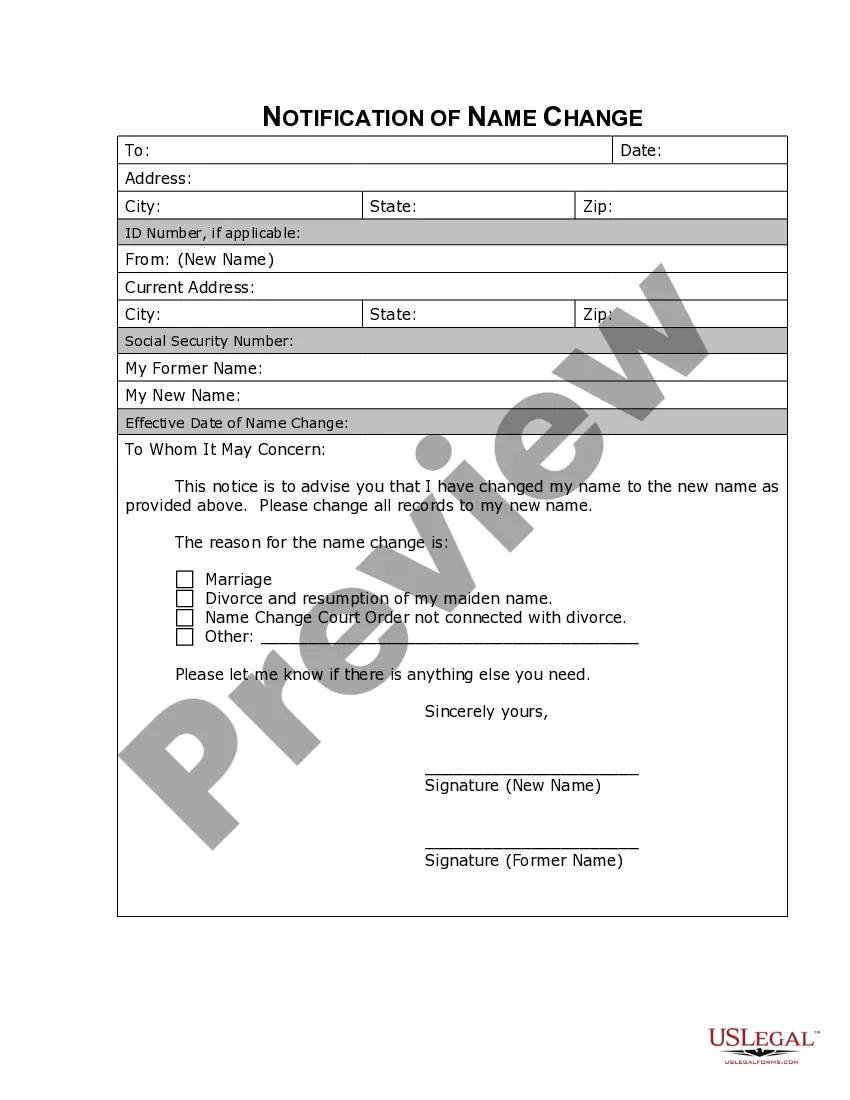
Personal Planning Information and Document Inventory Worksheets - A Legal Life Document
About this form
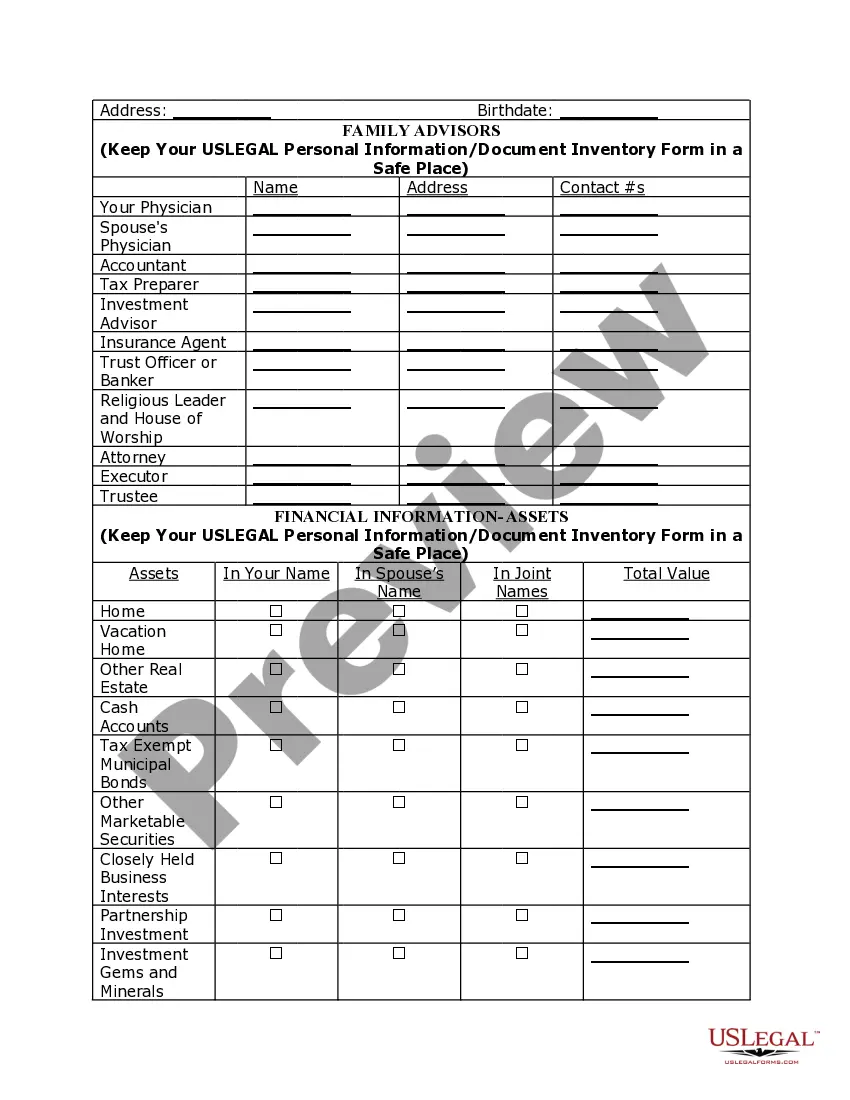
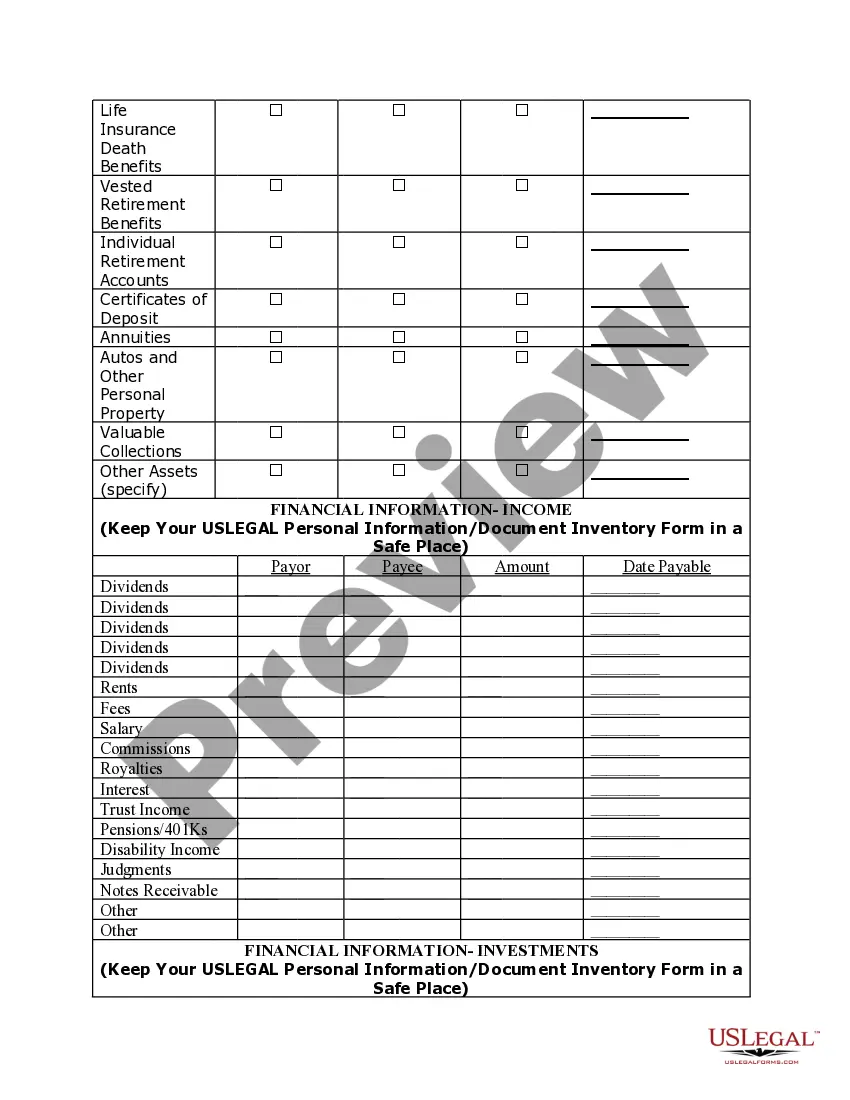
The Personal Planning Information and Document Inventory Worksheets is a comprehensive legal document designed to help individuals organize essential information and important documents. This form serves as a valuable tool for personal planning, distinctly focusing on documenting various aspects of your life, such as financial assets, insurance policies, and important contact information, all in one place. Unlike other forms that may focus solely on legal wills or powers of attorney, this form emphasizes the broader scope of personal responsibility and readiness.
Key parts of this document
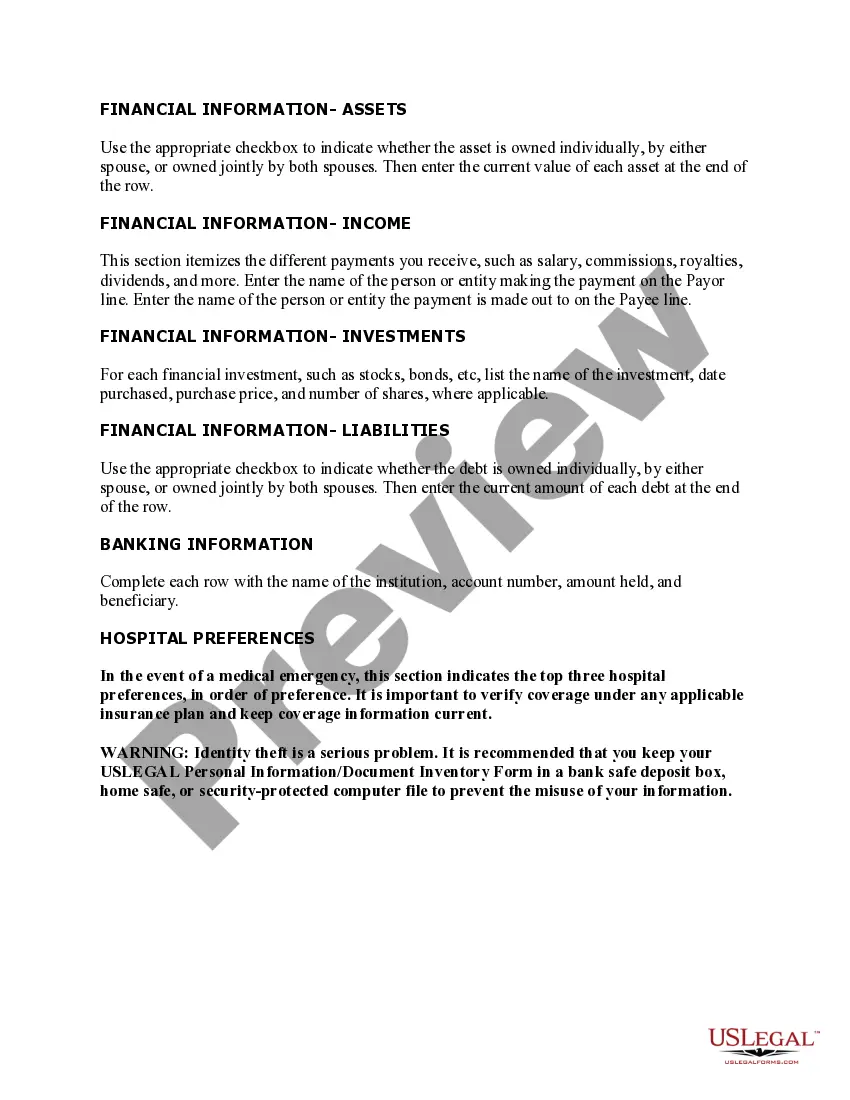
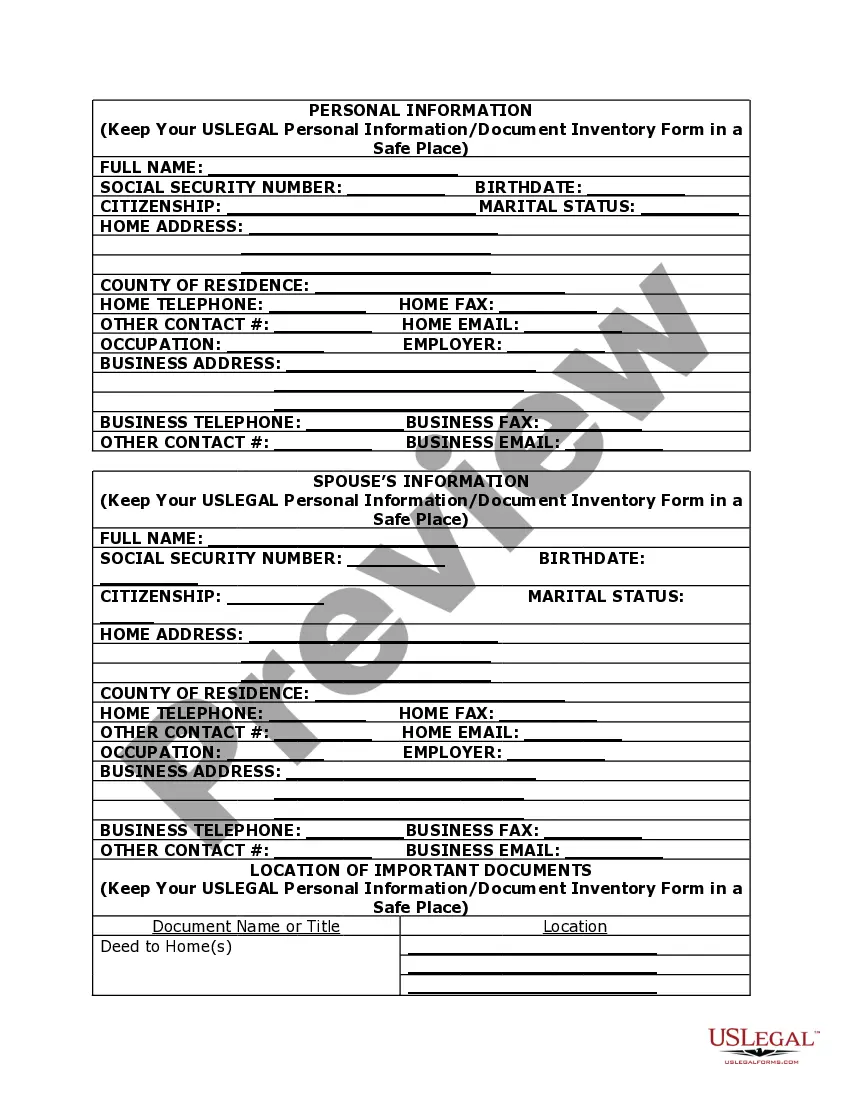
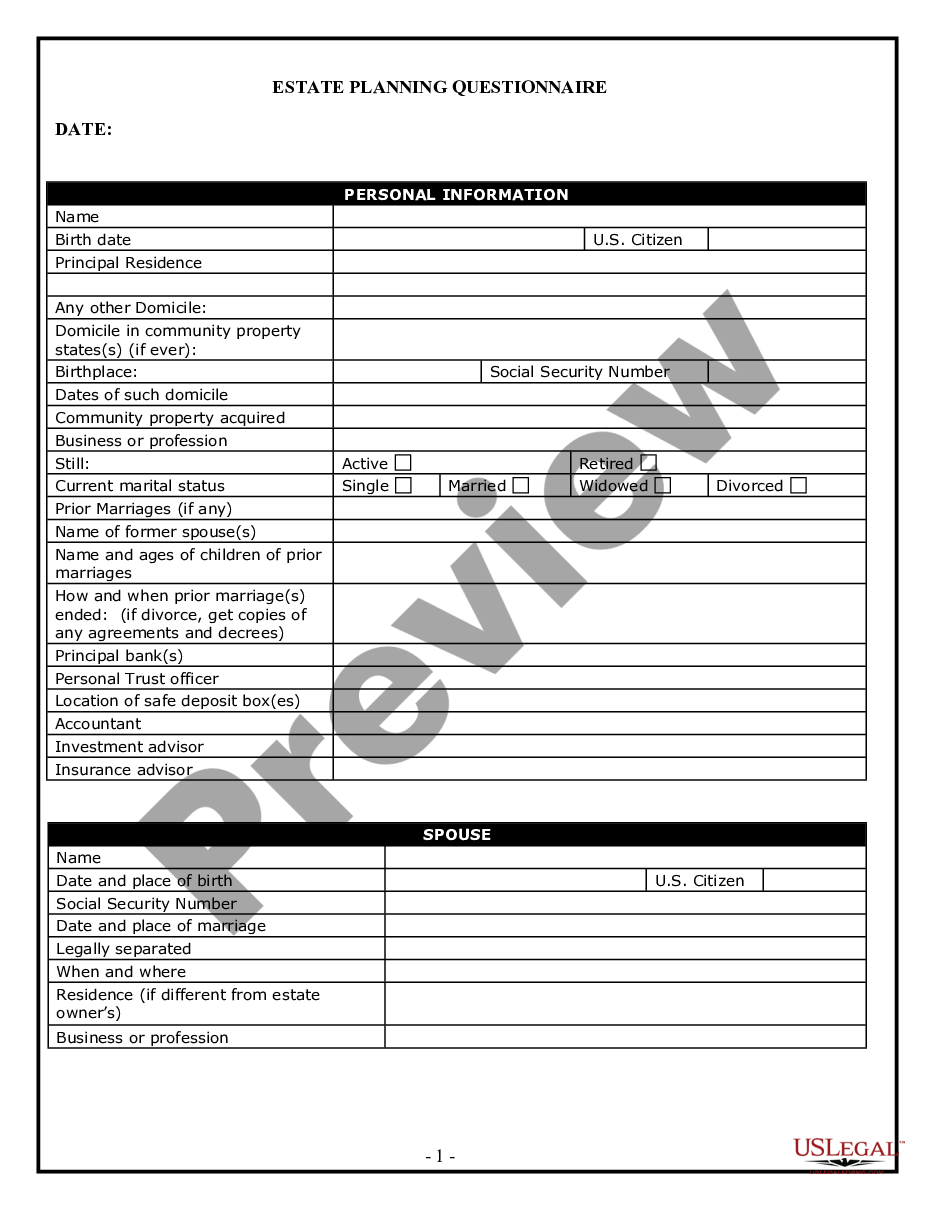
- Personal and spouse information: Collects current contact information for you and your spouse.
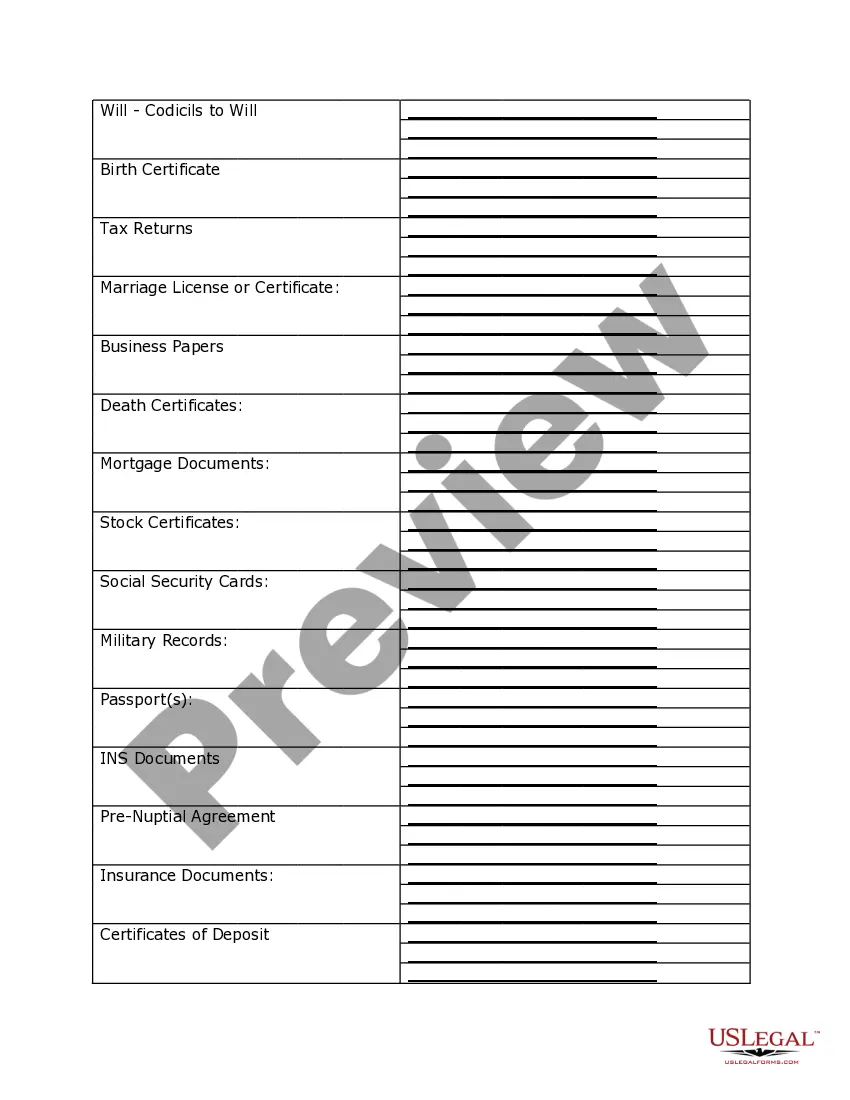
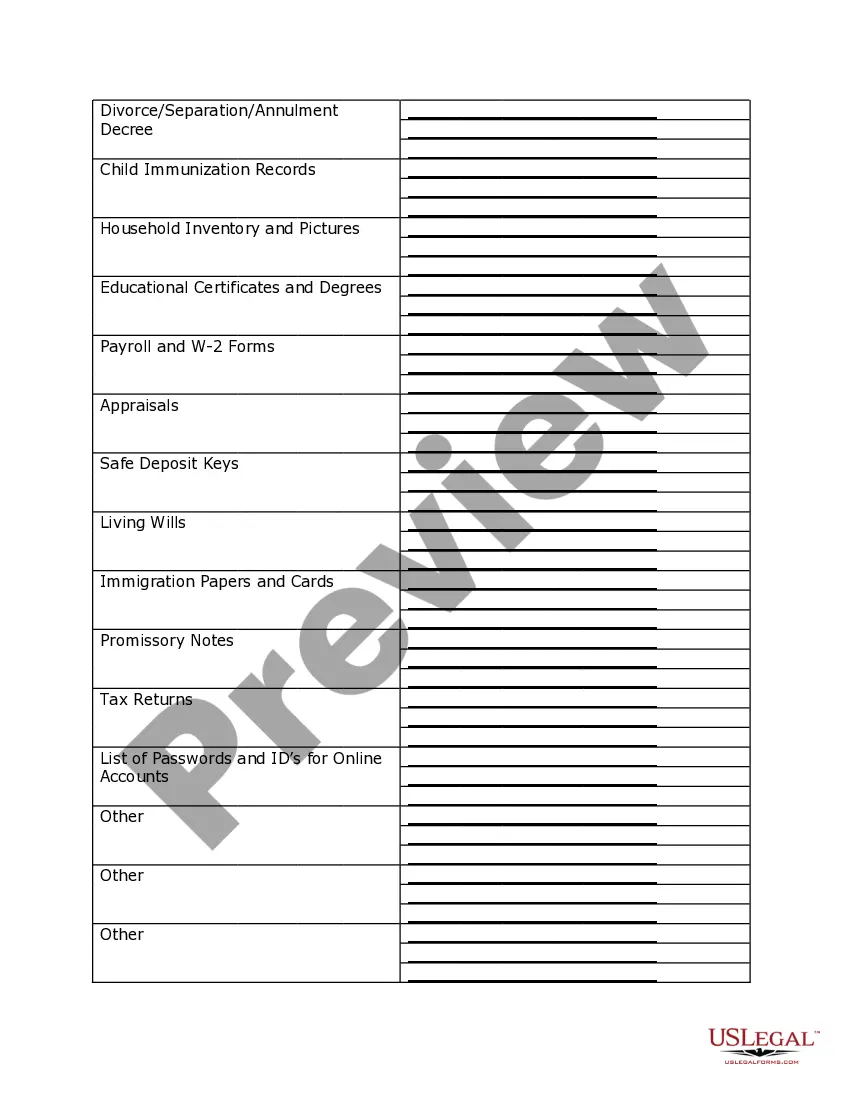
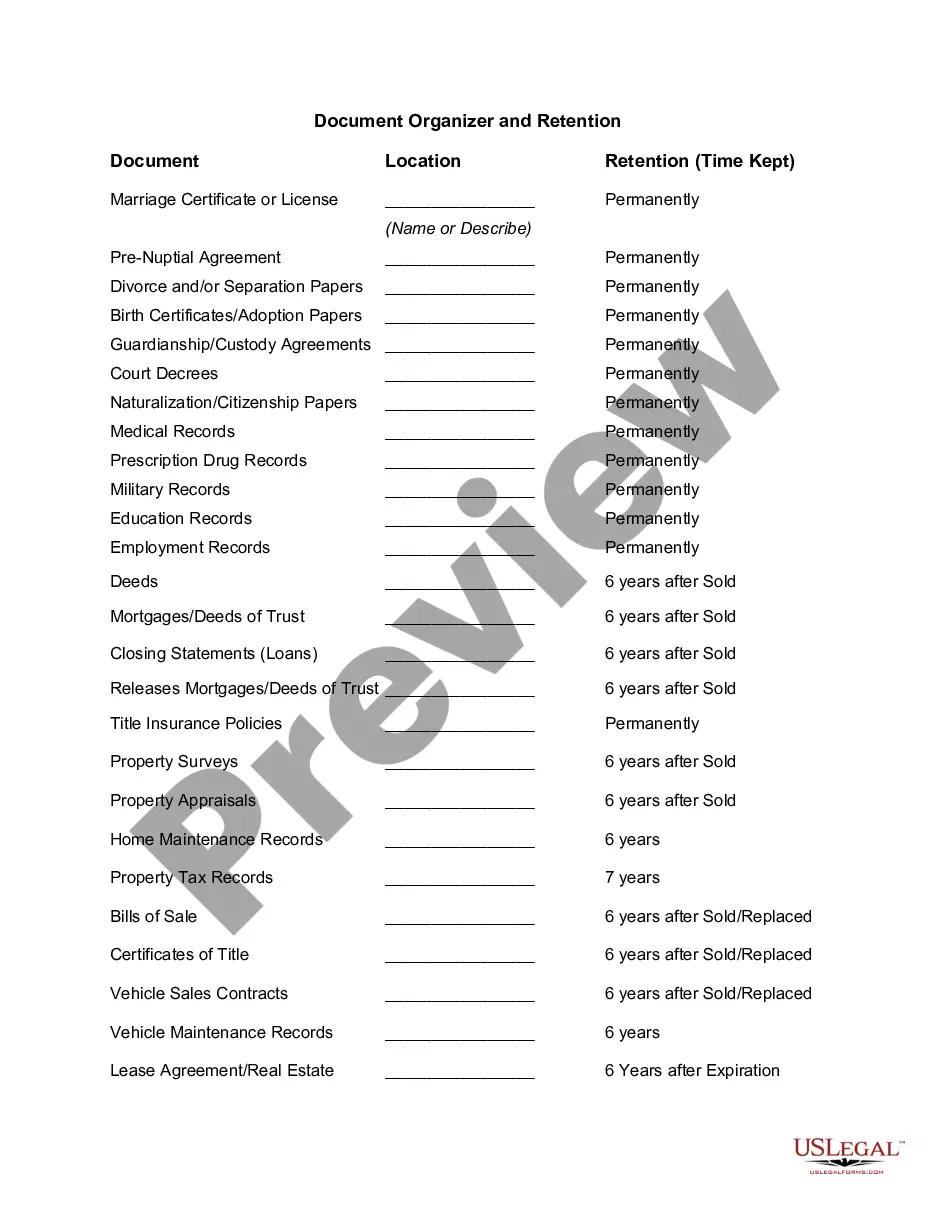
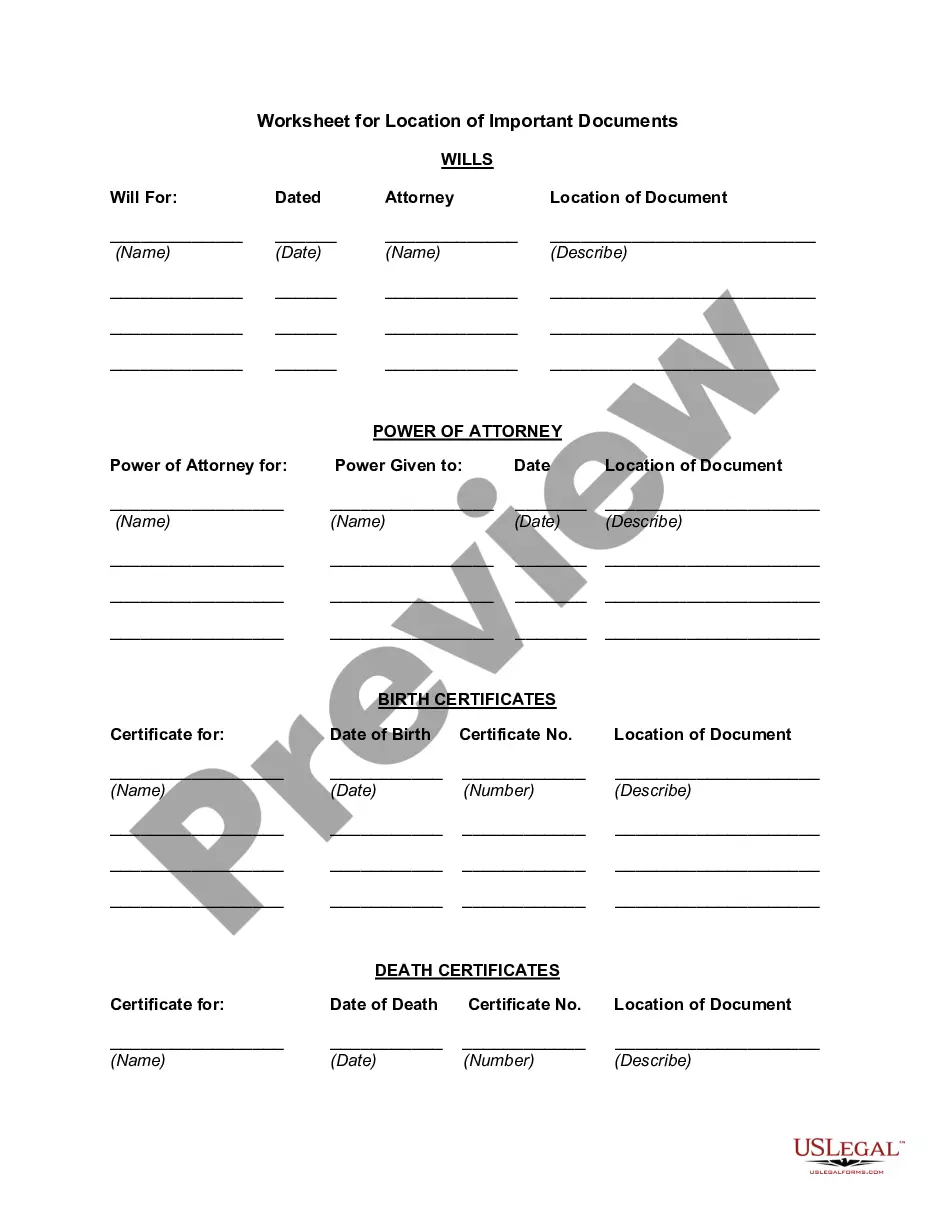
- Location of important documents: Lists where essential records and legal documents are stored.
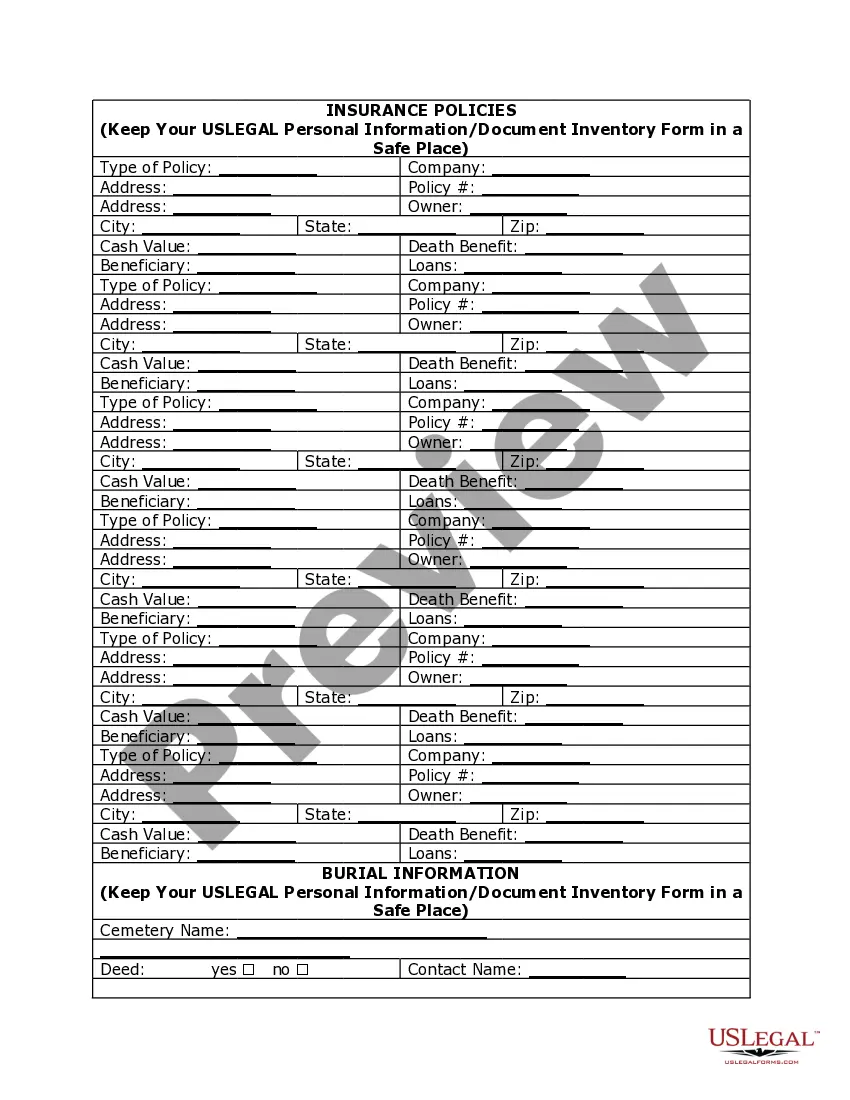
- Insurance policies: Details various insurance plans, including contact information for agents.
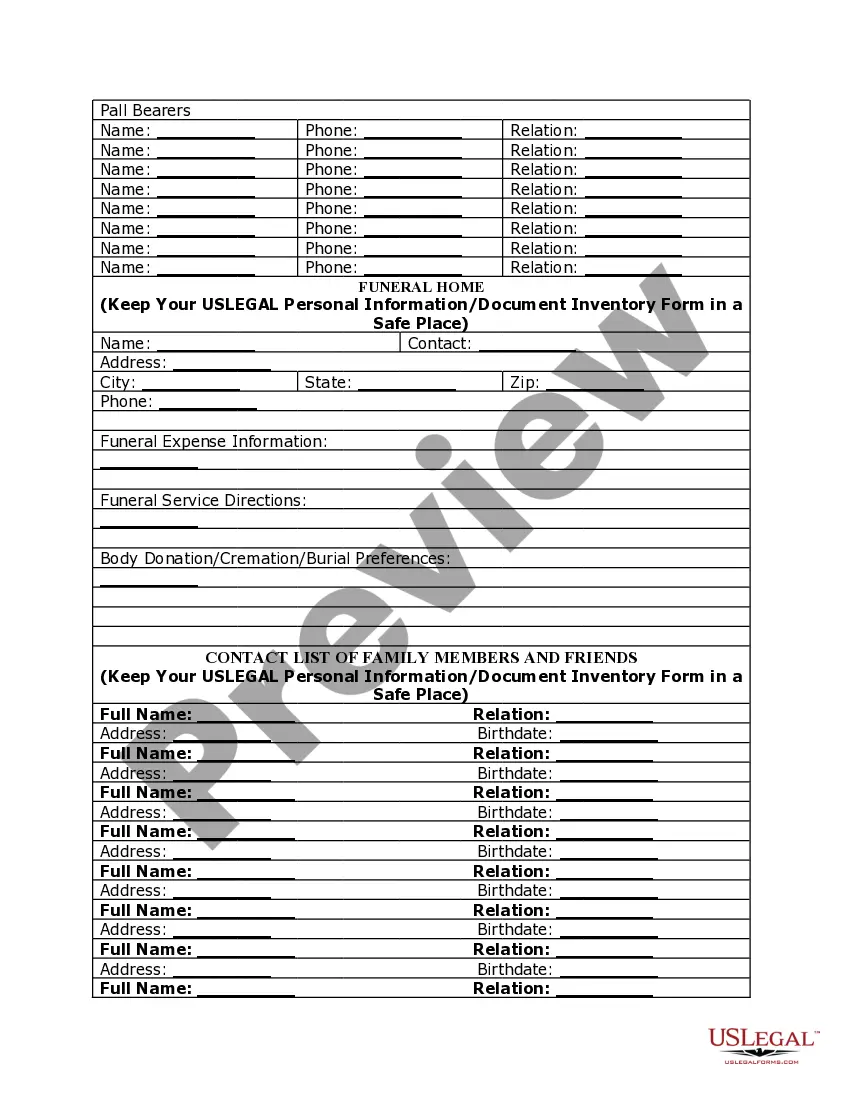
- Burial and funeral preferences: Provides space to document wishes regarding burial and funeral arrangements.
- Family contact information: Maintains an updated roster of relatives and close friends.
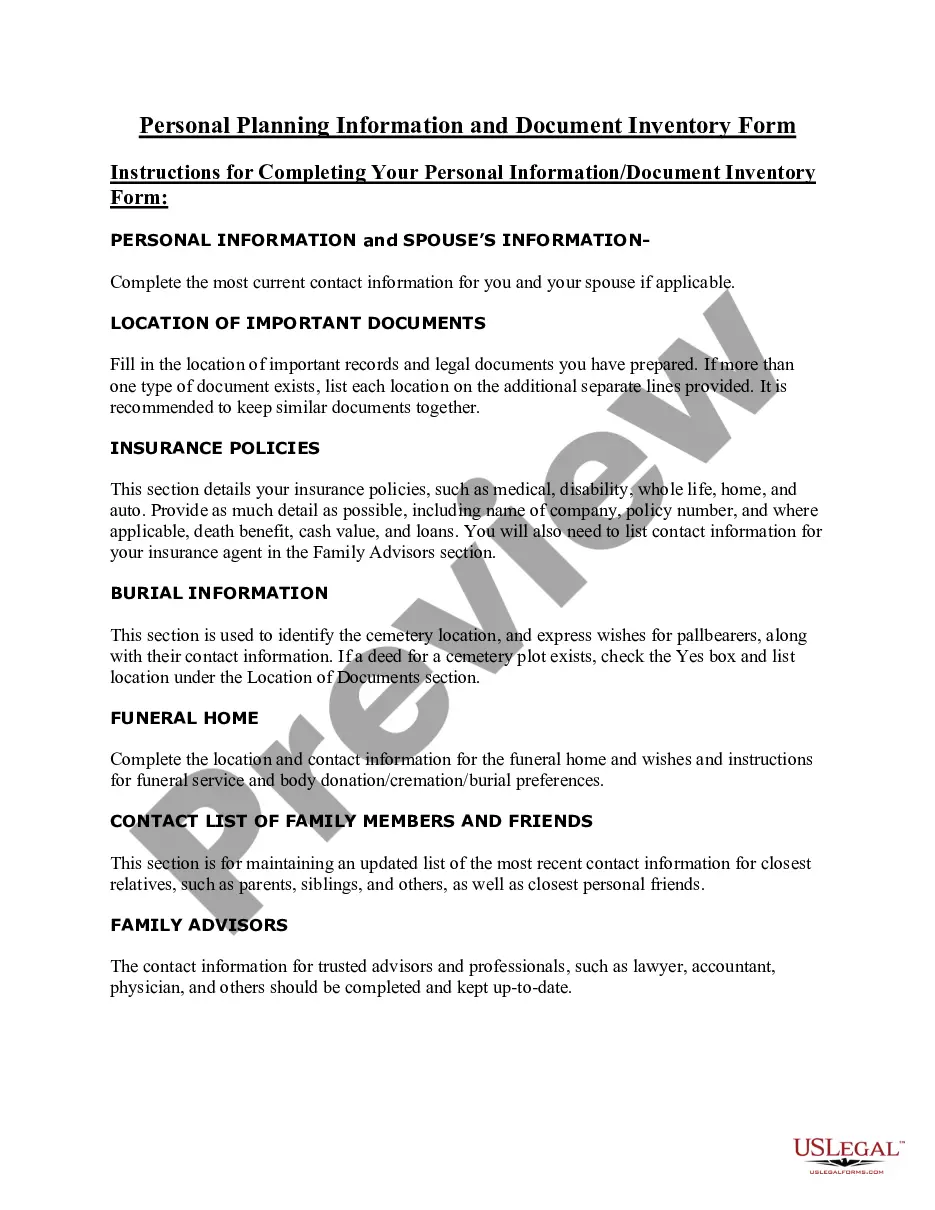
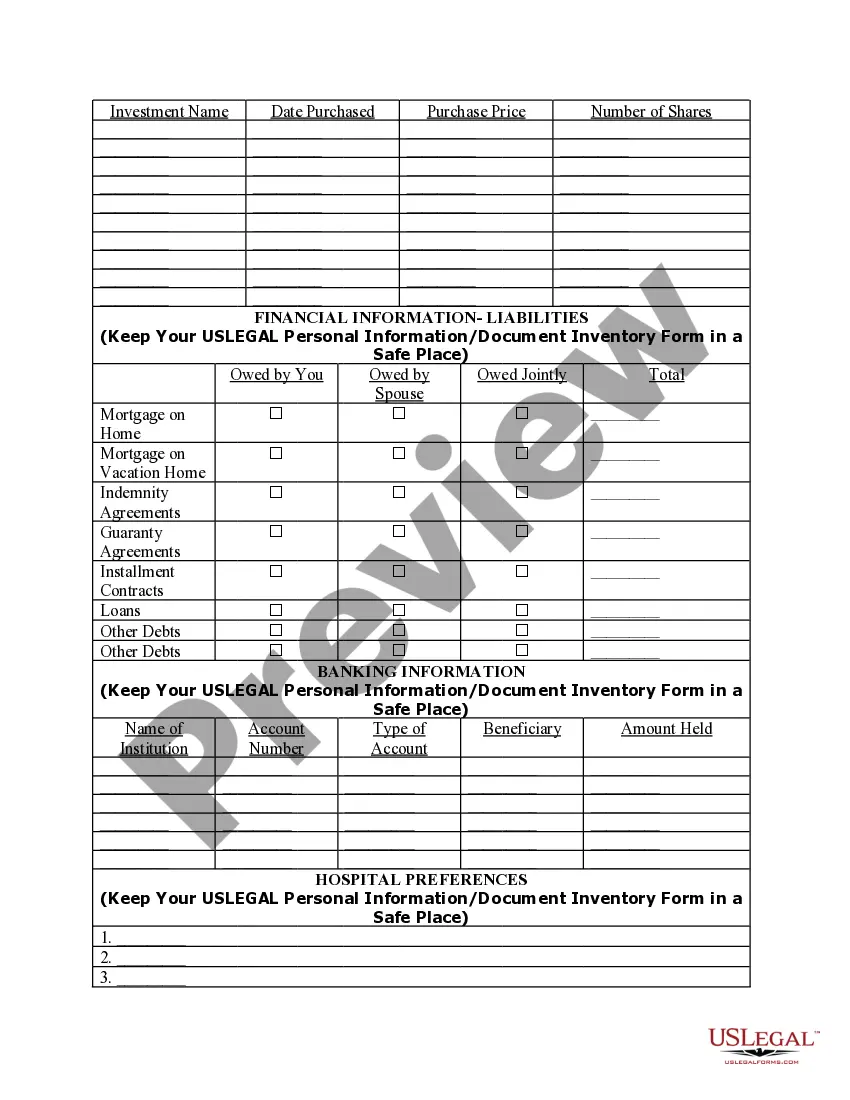
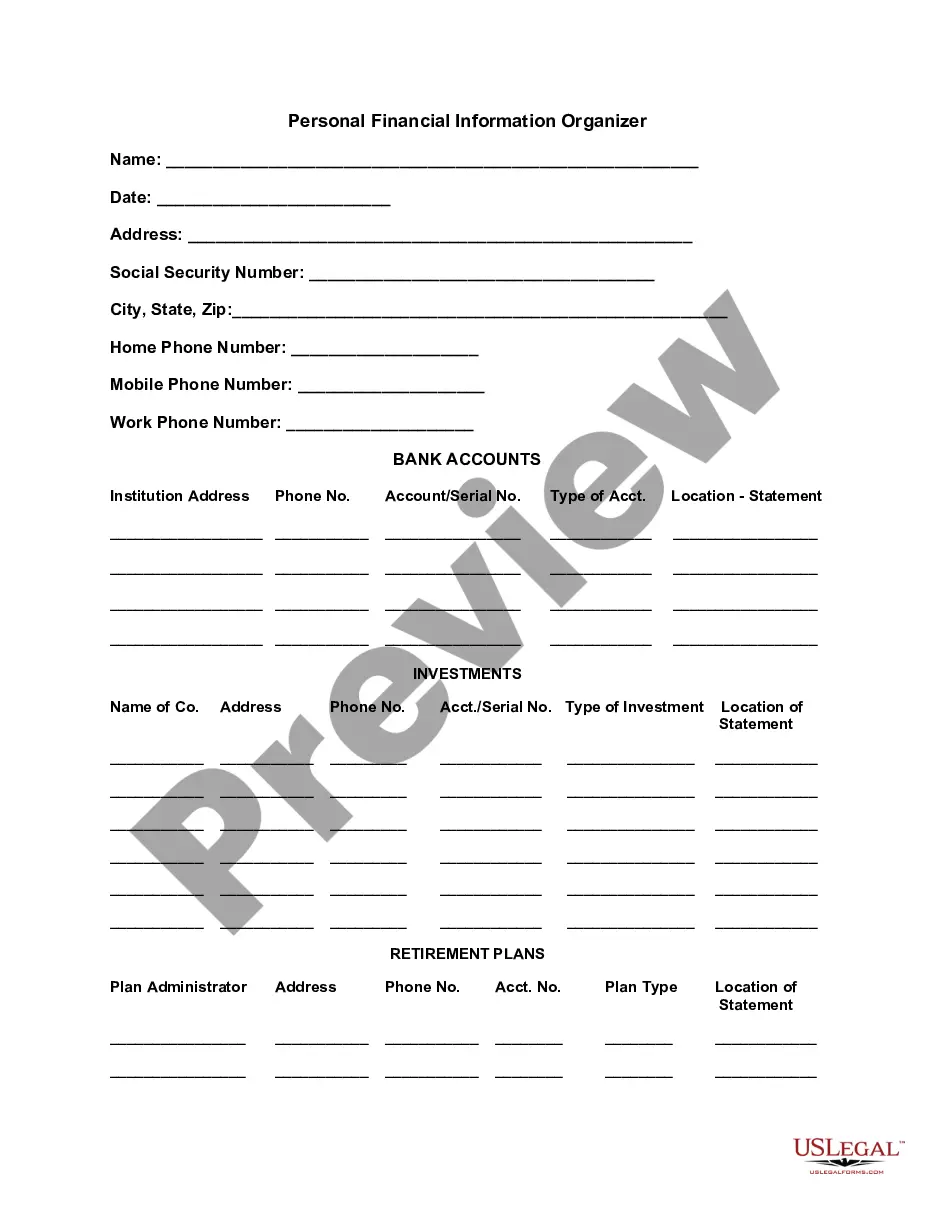
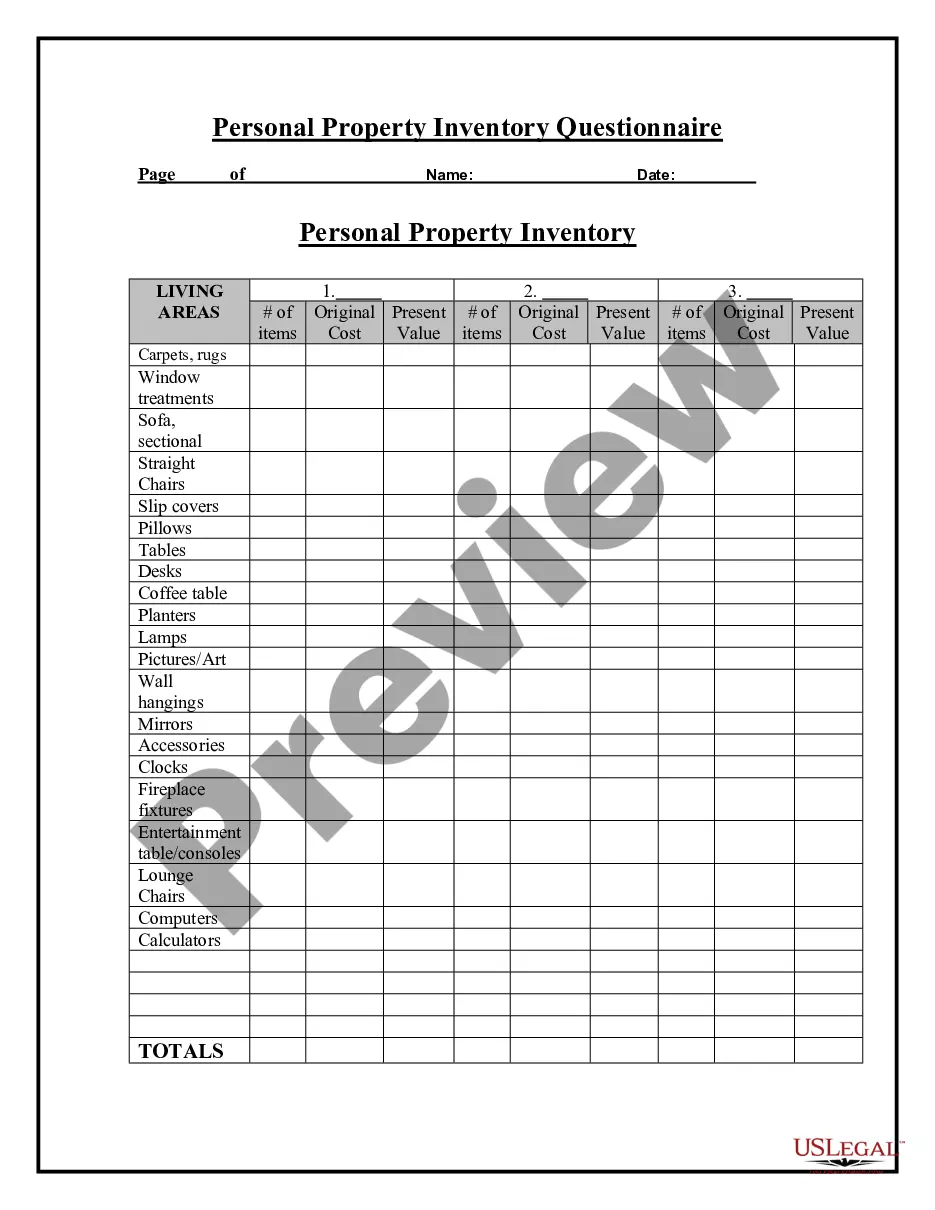
- Financial inventory: Includes assets, income, investments, and liabilities.
- Hospital preferences: Lists preferred hospitals for medical emergencies.

Common use cases
This form is recommended for anyone looking to manage their personal and financial information effectively. It is particularly useful for individuals preparing for life changes, such as marriage or retirement, or those wanting to ensure their loved ones have access to critical information in case of emergencies or during health issues. This form can also serve as a beneficial reference for family members in organizing your affairs after your passing.
Who needs this form
- Individuals preparing for future planning, including financial and medical documentation.
- Spouses who wish to keep joint information organized.
- Parents wanting to document family healthcare and financial contacts.
- Anyone concerned about ensuring their personal affairs are appropriately managed and accessible.
How to prepare this document
- Start by filling in your personal information and that of your spouse, if applicable.
- Document the locations of important legal and financial records.
- List all insurance policies, including detailed information for each.
- Complete the sections for burial and funeral preferences with clear instructions.
- Maintain an up-to-date contact list for family members and trusted advisors.
- Organize financial information, including assets, income, investments, and liabilities.
Notarization guidance
This form does not typically require notarization unless specified by local law. However, keeping a copy in a safe place is recommended to secure sensitive information.
Get your form ready online
Our built-in tools help you complete, sign, share, and store your documents in one place.
Make edits, fill in missing information, and update formatting in US Legal Forms—just like you would in MS Word.
Download a copy, print it, send it by email, or mail it via USPS—whatever works best for your next step.
Sign and collect signatures with our SignNow integration. Send to multiple recipients, set reminders, and more. Go Premium to unlock E-Sign.
If this form requires notarization, complete it online through a secure video call—no need to meet a notary in person or wait for an appointment.
We protect your documents and personal data by following strict security and privacy standards.

Make edits, fill in missing information, and update formatting in US Legal Forms—just like you would in MS Word.

Download a copy, print it, send it by email, or mail it via USPS—whatever works best for your next step.

Sign and collect signatures with our SignNow integration. Send to multiple recipients, set reminders, and more. Go Premium to unlock E-Sign.

If this form requires notarization, complete it online through a secure video call—no need to meet a notary in person or wait for an appointment.

We protect your documents and personal data by following strict security and privacy standards.
Avoid these common issues
- Omitting important documents from the location section.
- Not updating contact information regularly.
- Failing to specify preferences for burial or funeral arrangements.
- Listing financial information without verifying its current accuracy.
Why complete this form online
- Convenient access to templates that can be downloaded anytime.
- Editable format allows for updates and additions as life circumstances change.
- Structured guidance helps ensure essential information is not overlooked.
- Secure storage options available to protect sensitive information.
Summary of main points
- The Personal Planning Information and Document Inventory Worksheets help organize essential personal information.
- It is suitable for individuals and families preparing for the future or managing crises.
- Regular updates are crucial to keep the document relevant.
- Utilizing this form can significantly reduce stress during emergencies by providing immediate access to vital data.
Looking for another form?

Form popularity
FAQ
Legal identification documents. Social Security cards. Birth certificates. Tax documents. Tax returns. W-2s and 1099 forms. Property records. Vehicle registration and titles. Medical records. Wills, powers of attorney or living will. Finance records. Pay stubs.
Guardianship Documents. Health Care Power of Attorney. Financial Power of Attorney. Living Will. Last Will and Testament. U.S. Legal Services Can Help!
A will. Also known as: a last will and testament. A living will. Also known as: an advance directive. Durable health care power of attorney. It appoints: a health care proxy. Durable financial power of attorney. It appoints: an attorney-in-fact or agent.
As my colleagues have stated the most important documents to have in addition to a will are: 1) a medical power of attorney; 2) a durable power of attorney; 3) an advanced health care directive; and 4) a HIPAA release.
Will. Revocable Trust. Financial Power of Attorney. Durable Power of Attorney for Healthcare.
It isn't illegal to write a contract without an attorney.Two parties can agree between themselves and create their own contract. Contract law, however, requires that all contracts must contain certain elements to be valid and enforceable.
A will. Also known as: a last will and testament. A living will. Also known as: an advance directive. Durable health care power of attorney. It appoints: a health care proxy. Durable financial power of attorney. It appoints: an attorney-in-fact or agent.