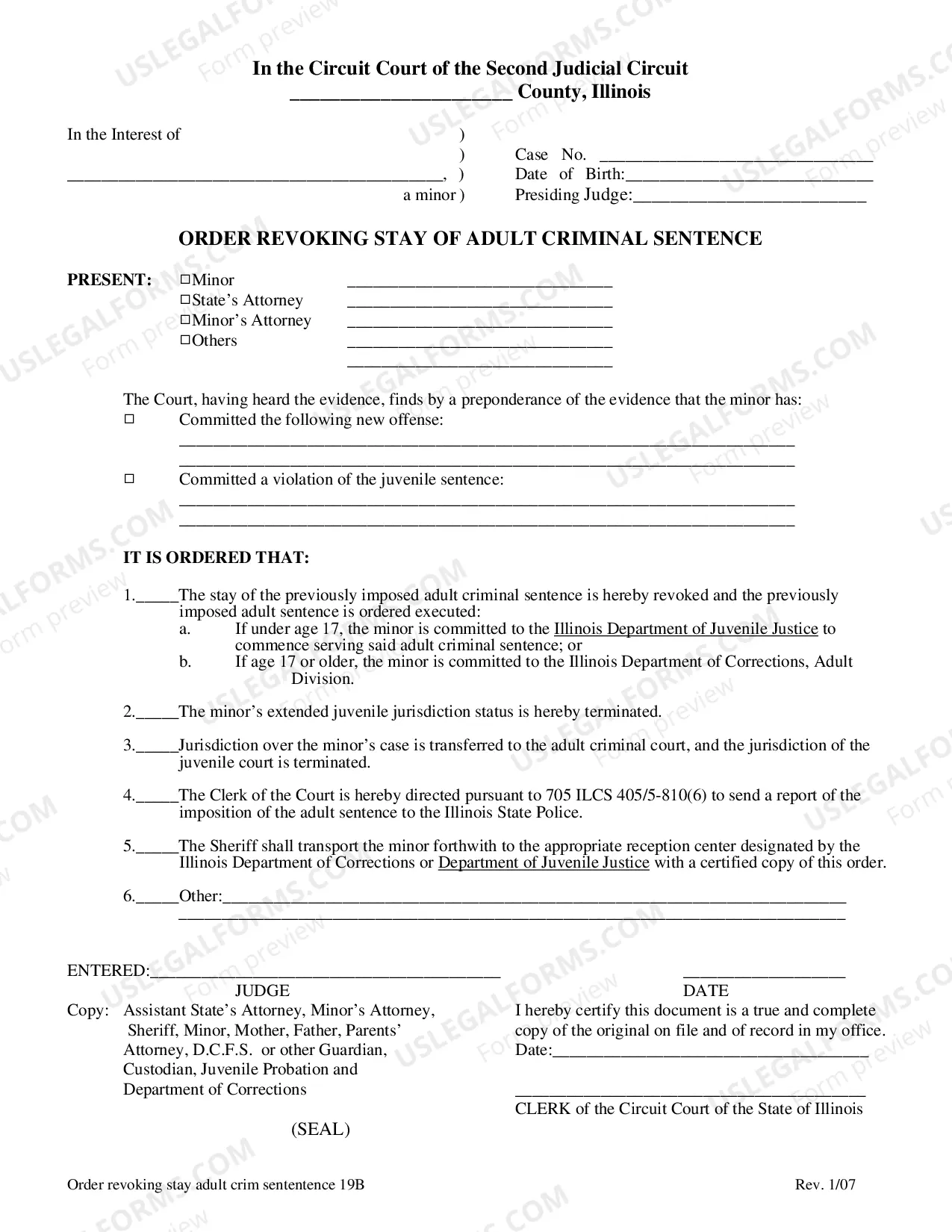
Personal Financial Information Organizer
About this form
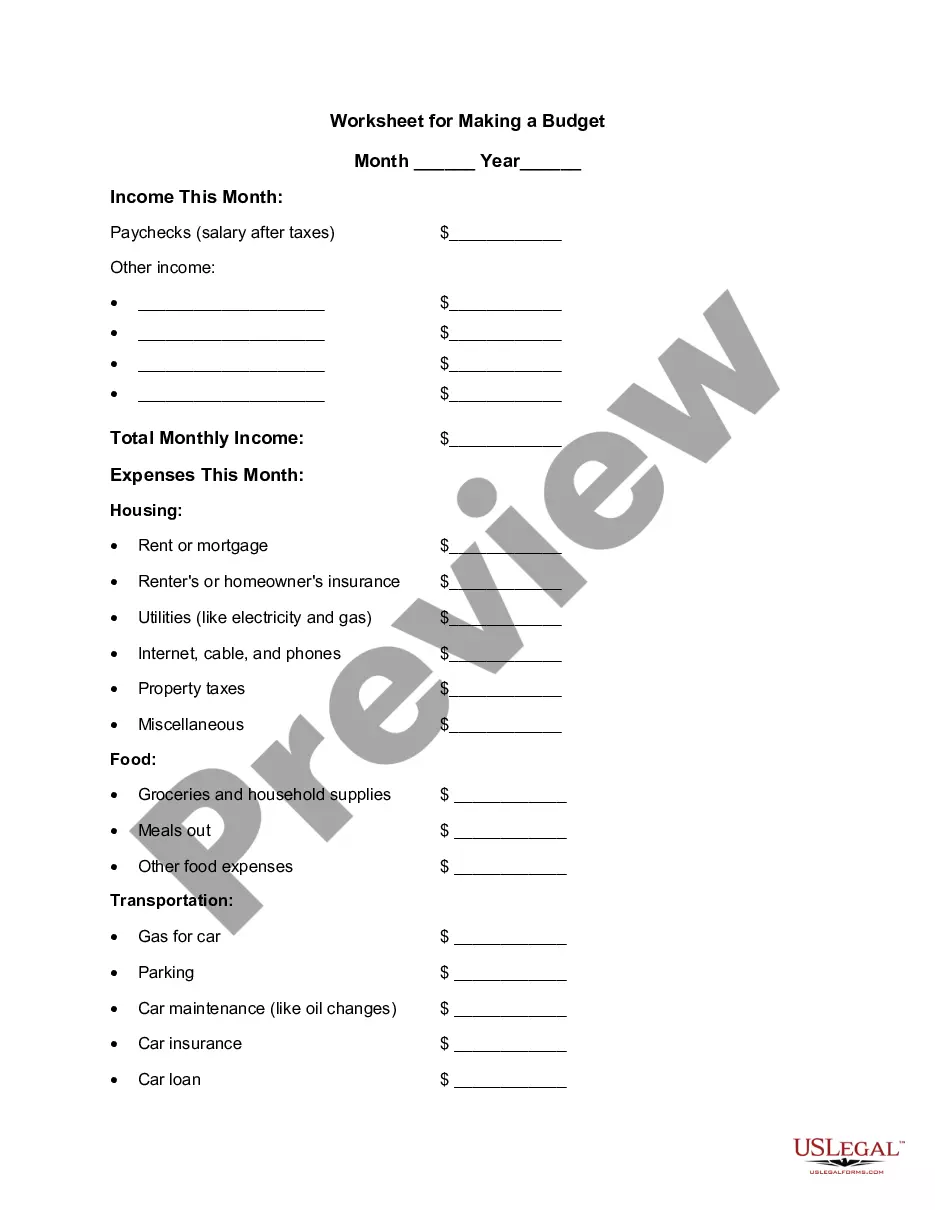
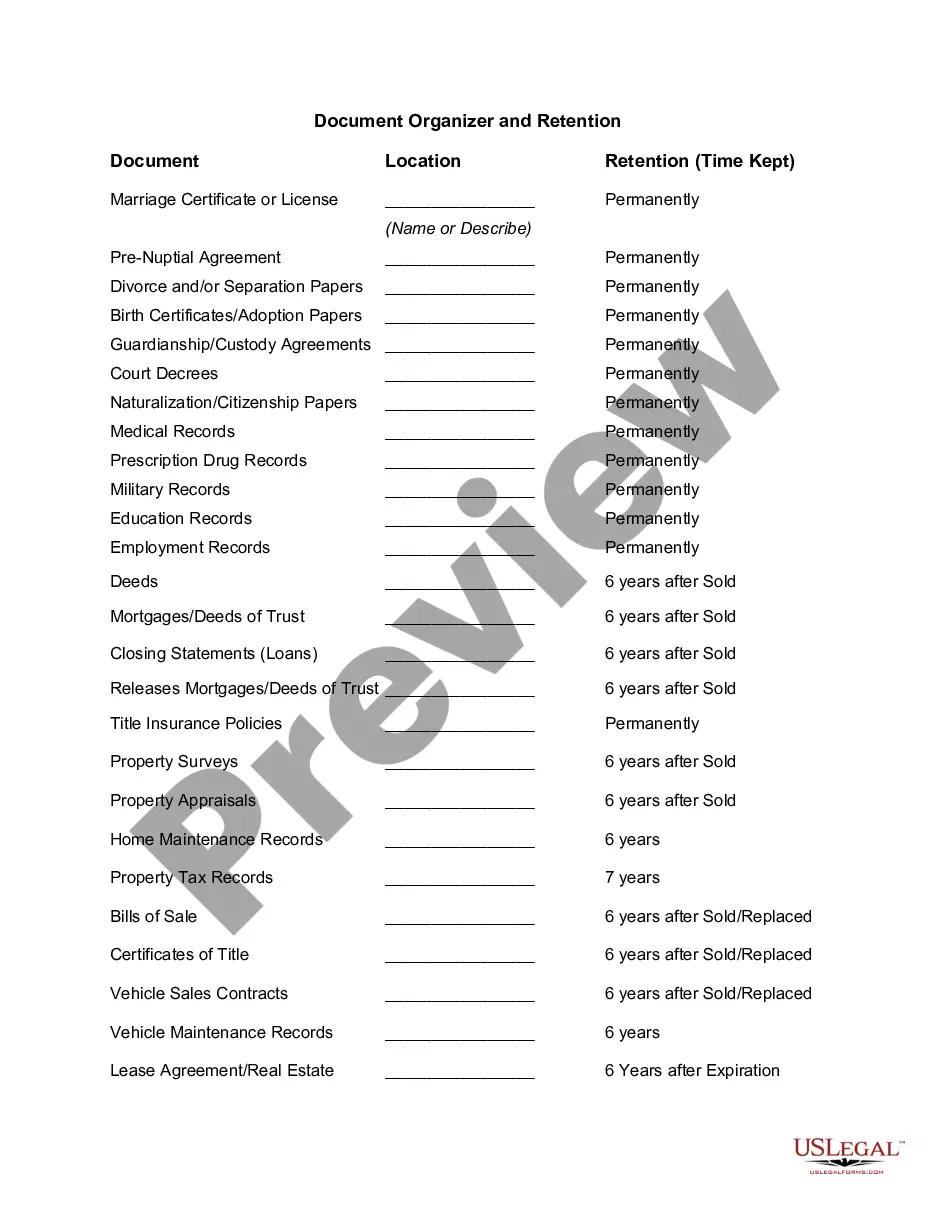
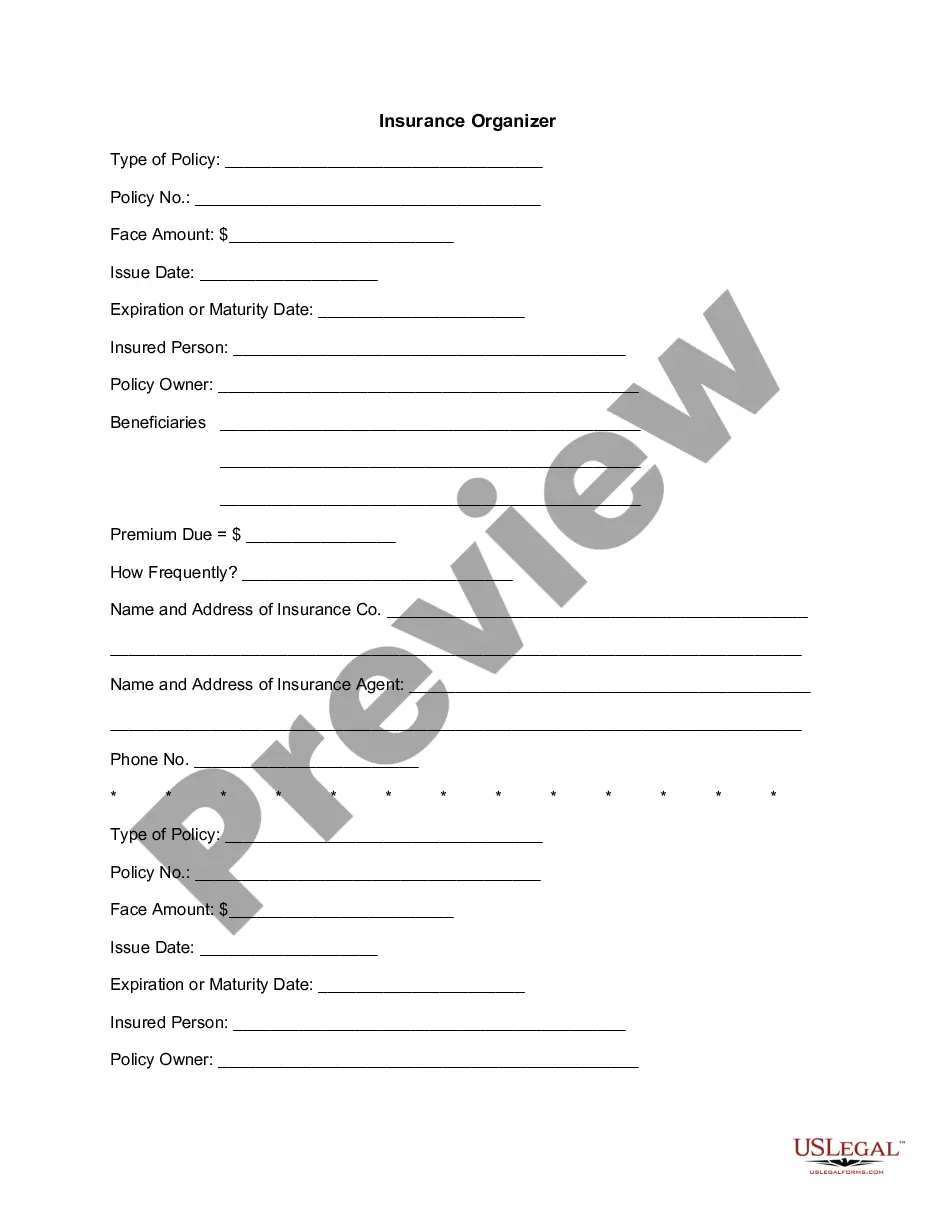
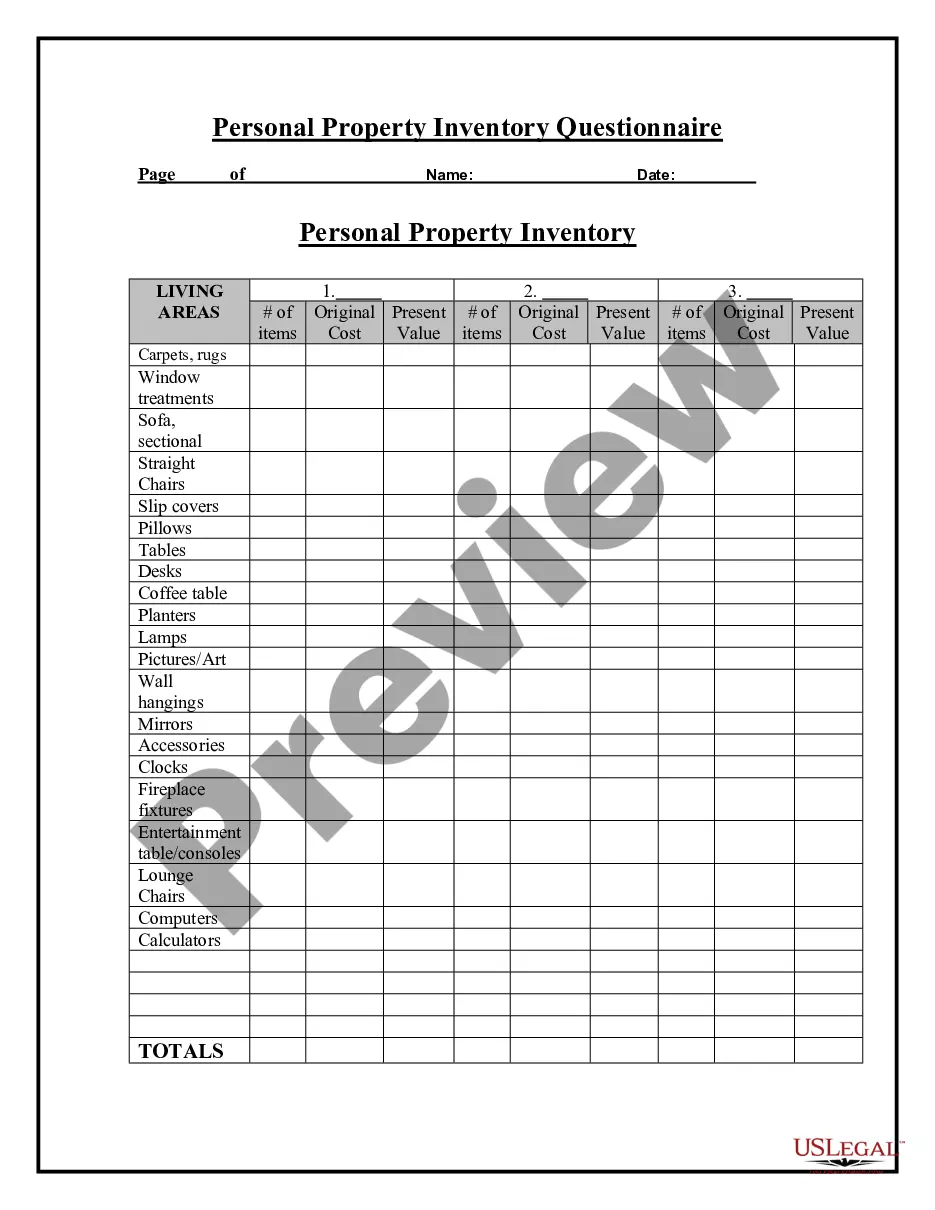
The Personal Financial Information Organizer is a comprehensive document designed to collect and organize your financial details. This form assists you in consolidating information related to bank accounts, investments, retirement plans, credit card accounts, and professional advisors. Unlike other financial documents that may focus on a single aspect of your finances, this organizer compiles all pertinent information into one easy-to-use form, helping streamline financial management and planning.
Key components of this form
- Personal information section, including name, address, and contact details.
- Bank accounts section for detailing financial institutions and account types.
- Investments section to capture various investment accounts and their details.
- Retirement plans section for listing relevant plan information and contacts.
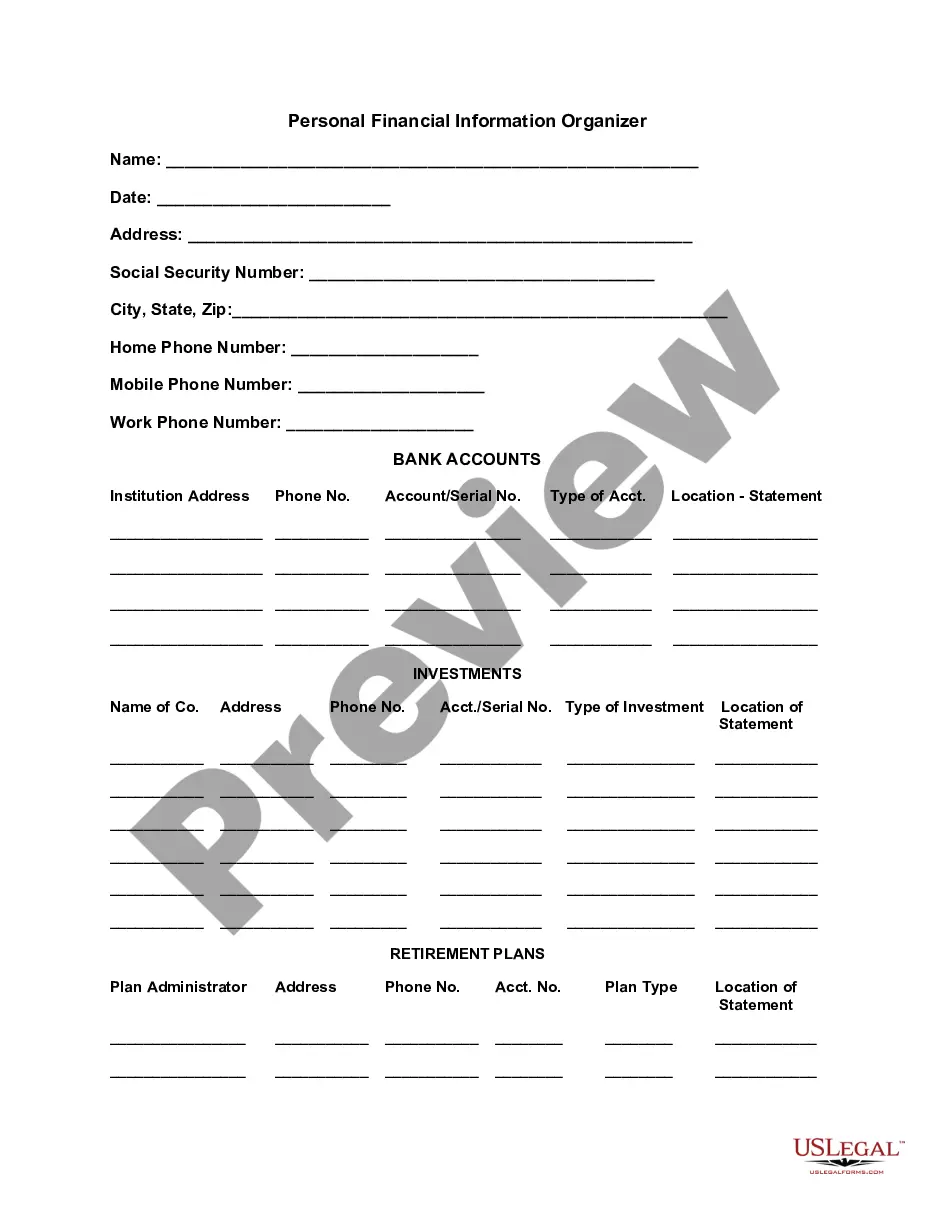
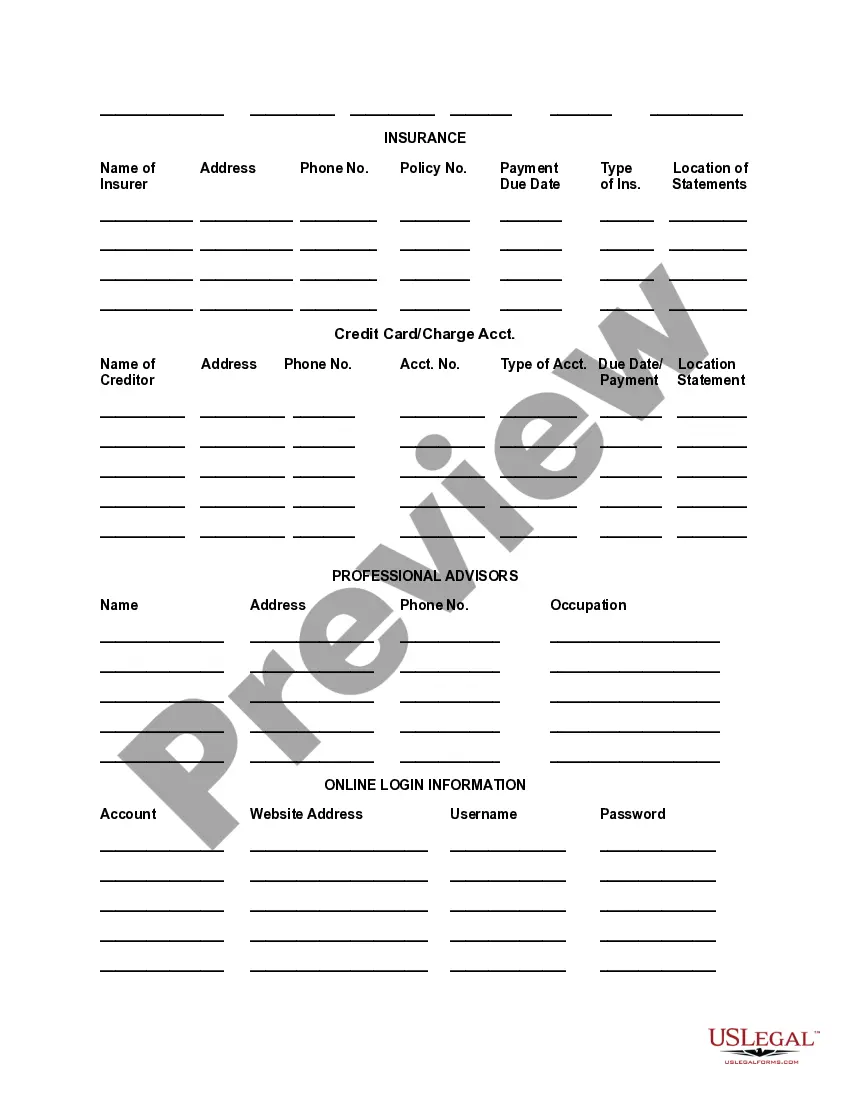
- Insurance section for organizing policy information and providers.
- Professional advisors section for recording contacts in finance and law.
- Online login information section for important account credentials.
- Miscellaneous section for other relevant financial details.

Common use cases
This form is useful in various situations, such as preparing for financial planning meetings, estate planning, or consolidating your financial information for easier access. It is also beneficial when organizing your assets for retirement or preparing documentation for financial institutions. If you are managing your finances or wish to share your financial status with a professional advisor, this organizer can streamline that communication.
Who should use this form
This form is intended for individuals or families looking to organize their financial information. It is suitable for:
- Individuals managing personal finances.
- Caregivers assisting elderly family members.
- Financial planners and advisors needing detailed client information.
- Anyone preparing for estate planning or legal matters related to finances.
Instructions for completing this form
- Fill in your personal information at the top of the form.
- List all bank accounts with corresponding details including contact information for each institution.
- Document any investments and their relevant details in the investments section.
- Provide information for retirement plans and insurance policies, ensuring all details are accurate.
- Include contact information for your professional advisors to keep all resources centralized.
- Complete the online login information section to securely document your credentials.
Notarization requirements for this form
This form does not typically require notarization unless specified by local law. However, securing certain documents or agreements related to estate planning may have specific requirements that could necessitate notarization.
Get your form ready online
Our built-in tools help you complete, sign, share, and store your documents in one place.
Make edits, fill in missing information, and update formatting in US Legal Forms—just like you would in MS Word.
Download a copy, print it, send it by email, or mail it via USPS—whatever works best for your next step.
Sign and collect signatures with our SignNow integration. Send to multiple recipients, set reminders, and more. Go Premium to unlock E-Sign.
If this form requires notarization, complete it online through a secure video call—no need to meet a notary in person or wait for an appointment.
We protect your documents and personal data by following strict security and privacy standards.

Make edits, fill in missing information, and update formatting in US Legal Forms—just like you would in MS Word.

Download a copy, print it, send it by email, or mail it via USPS—whatever works best for your next step.

Sign and collect signatures with our SignNow integration. Send to multiple recipients, set reminders, and more. Go Premium to unlock E-Sign.

If this form requires notarization, complete it online through a secure video call—no need to meet a notary in person or wait for an appointment.

We protect your documents and personal data by following strict security and privacy standards.
Typical mistakes to avoid
- Leaving sections incomplete or omitting important details.
- Failing to update information regularly, which can lead to inaccuracies.
- Not securing sensitive details, especially online login information, leading to potential breaches.
Why use this form online
- Convenient access to download your form at any time.
- Editable fields allow for easy updates as your financial situation changes.
- Reliable formats ensure information is organized and easy to read.
Quick recap
- The Personal Financial Information Organizer helps streamline your financial details.
- It is applicable for personal use, caregiving, and professional planning.
- Regular updates are crucial to maintain accuracy in your financial records.
Looking for another form?
Form popularity
FAQ
See What You Have. Set Up Your Filing System. Reconcile And File Receipts. Protect Your Investment Papers. Properly Store Your Bank Documents. Take Care Of Any Credit Card Issues.
Reorder and Recycle Instead, sort papers by type and organize each subject in lidded file boxes or stackable plastic bins. To keep things organized, designate an hour each month to sort through the containers. Toss expired coupons and archive last month's bills and receipts in a separate file.
Go paperless with bank statements and bills. Pixabay/stevepb. Purge your paper. Shred personal documents. Recycle your stacks of magazines and newspapers. Create a filing system. Put a recycling bag or bin near your front door. Create a Take Action station for papers that need to be dealt with. Store coupons in a binder.
Hang magazine holders or wire files on the wall to organize mail and other documents in an efficient manner. Using your airspace helps to keep important papers visible and top-of-mind. Label the hanging files to make organization fast and simple. Or use your wall space to create a message center.
See: 10 Smart Ways to Improve Your Budget. Have a place for your bills. Open all bills. See: 11 Expenses Destroying Your Budget. Set up regular times to pay bills. Consider using an online service.
Get your legal affairs in order now. Make a list of your assets and liabilities. Check the title of your assets and beneficiary designations. Make a list of your computer passwords and logins. Make a list of the important people to contact on the Day After. Write down your wishes. Make a Day After folder.
Set up the right bank accounts. The right bank accounts are critical to your financial success. Take stock of your current financial situation. Make a plan for your money. Set money goals. Check-in with your finances every day. Manage your expenses. Take a look at your income. Start paying down debt.
Getting Started. Eliminate mail clutter by creating an organized mail center in your home. Step 1: Designate an Area. Step 2: Stock It With Supplies. Step 3: Create a System. Step 4: Label the Categories. Step 5: Use the System. Step 6: Make It Routine.
Step 1: Set Up a Filing System For Your Personal Finance. Step 2: Create a Budget with the Help of a Budget Calculator, and Stick to It. Step 3: Set Up Money Reminders or Automate Bill Payments. Step 4: Balance Your Payments with Your Paydays. Step 5: Evaluate and Pay Off Your Debt. Step 6: Start Saving Money.