Motion to Release on Earned Probation
What this document covers
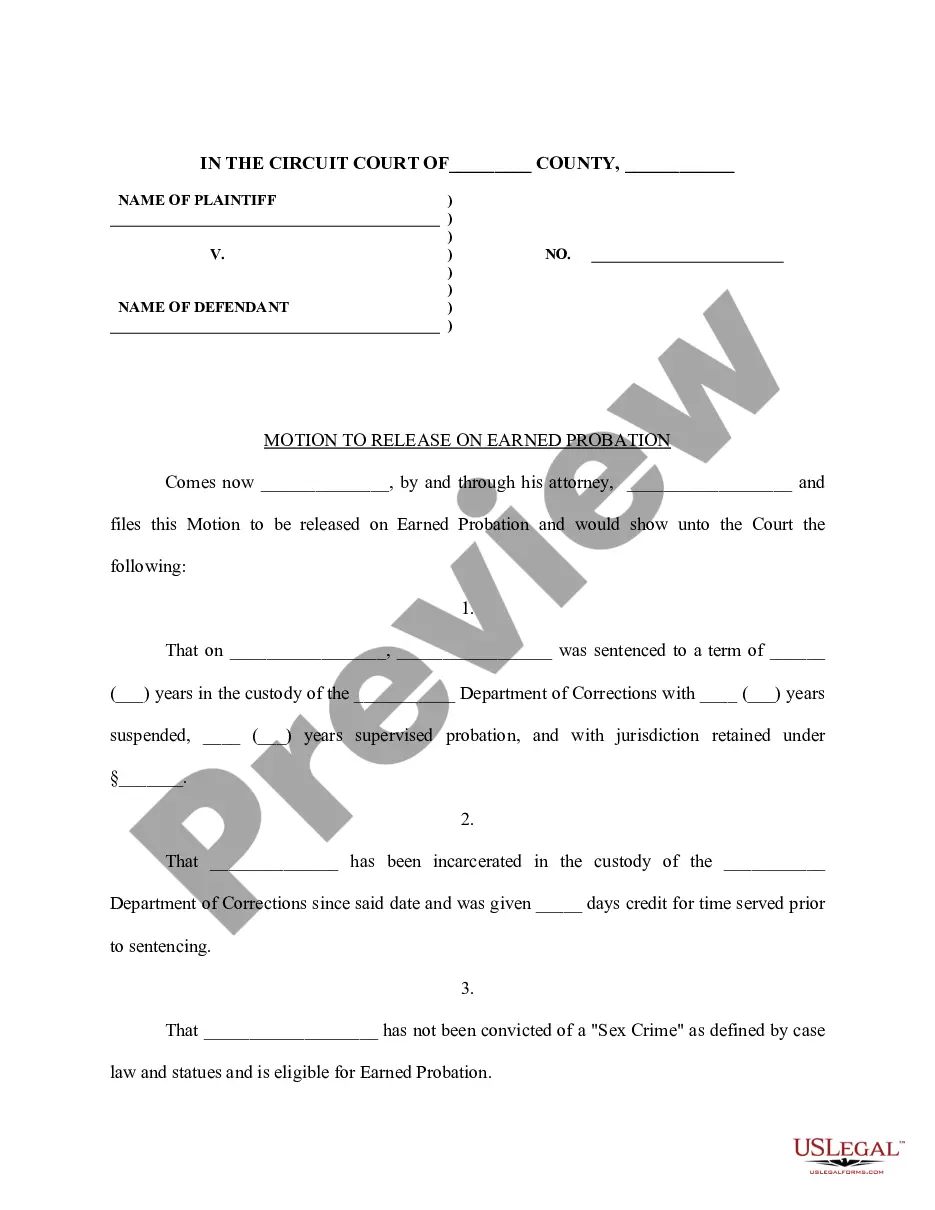
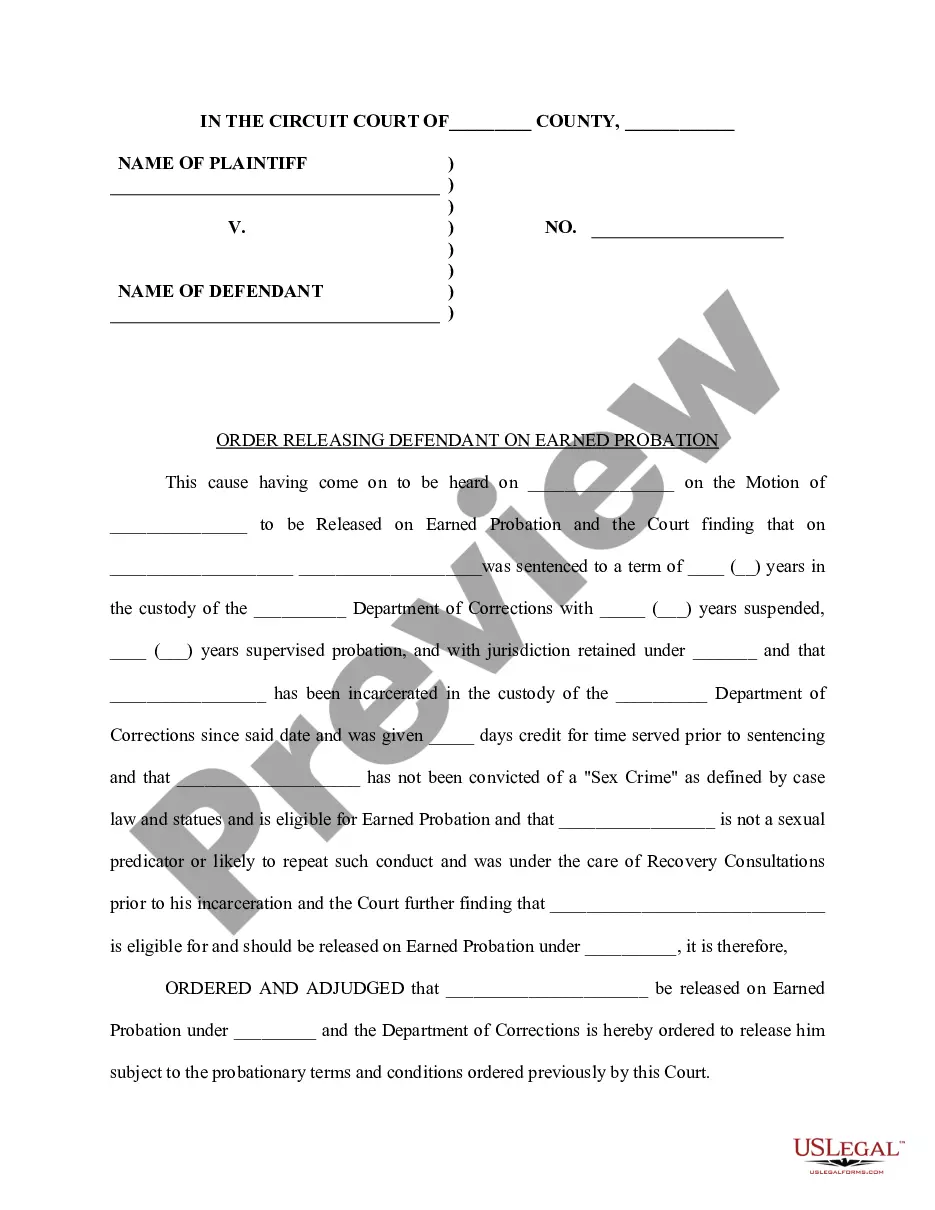
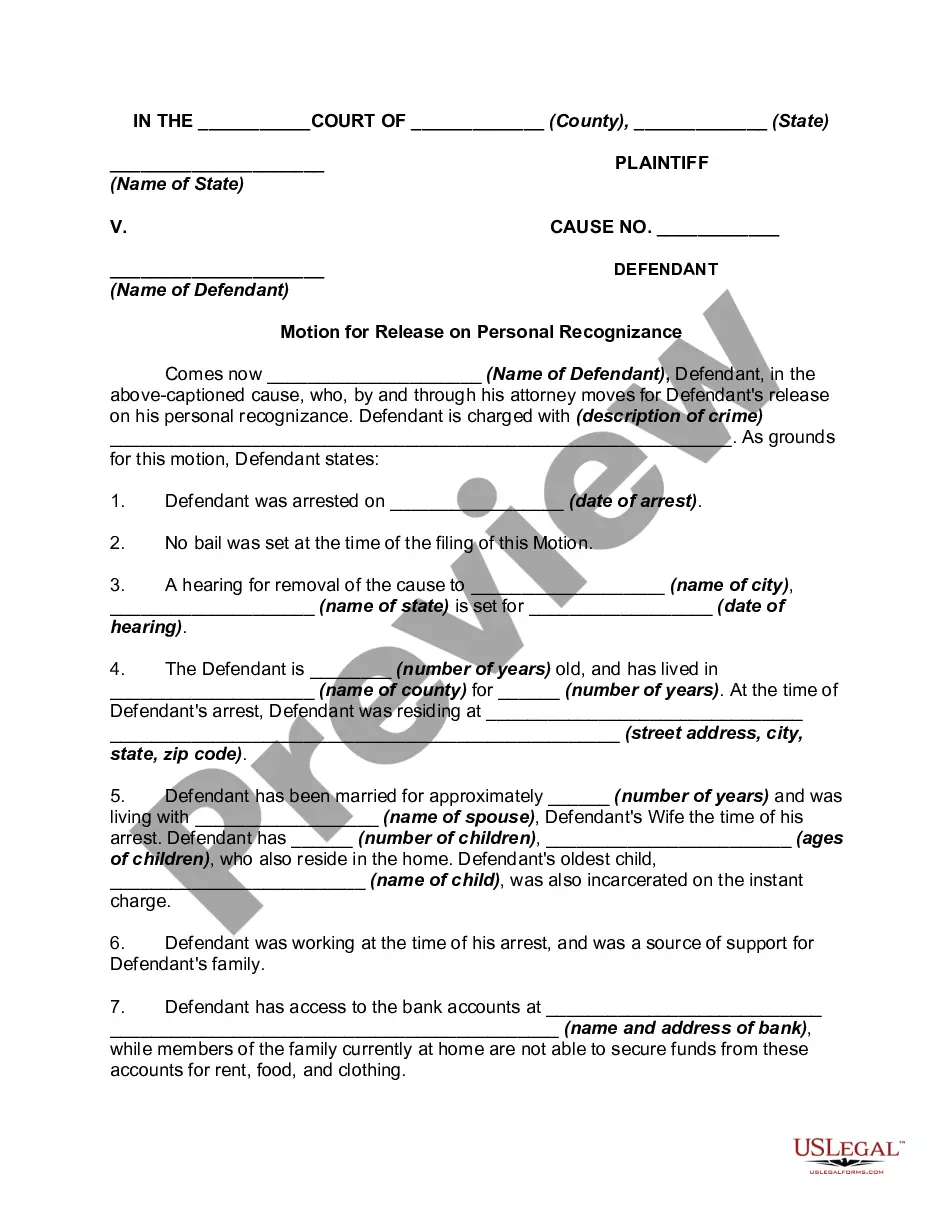
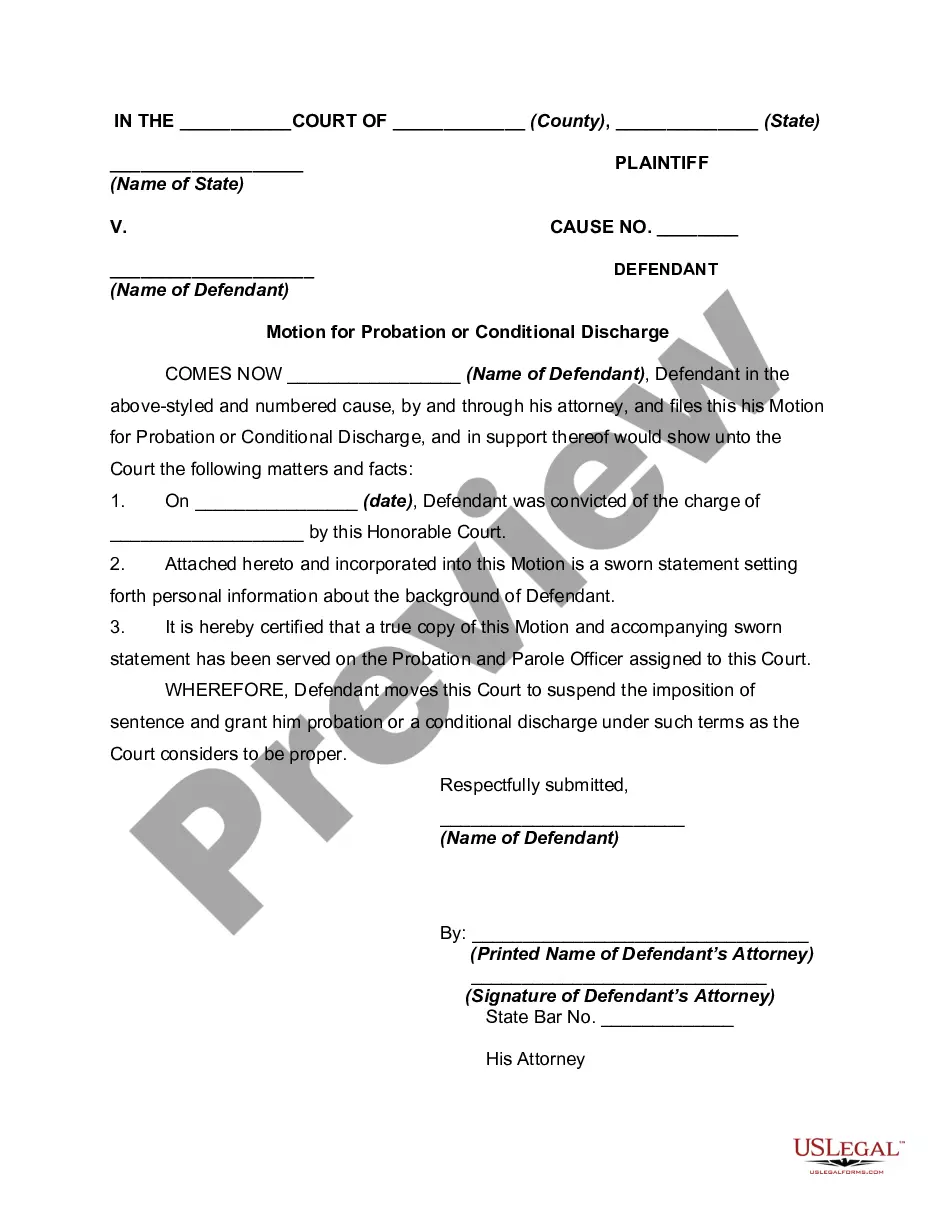
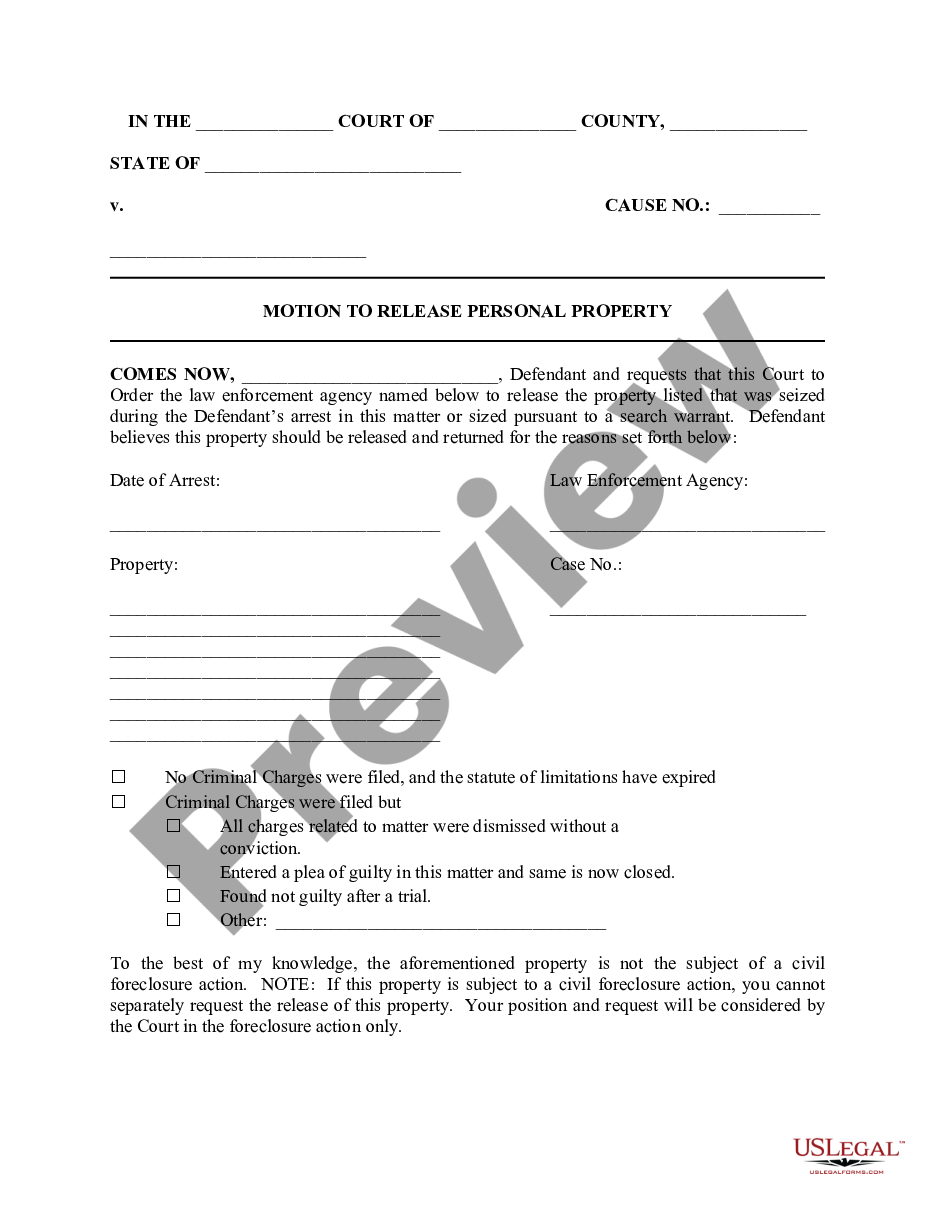
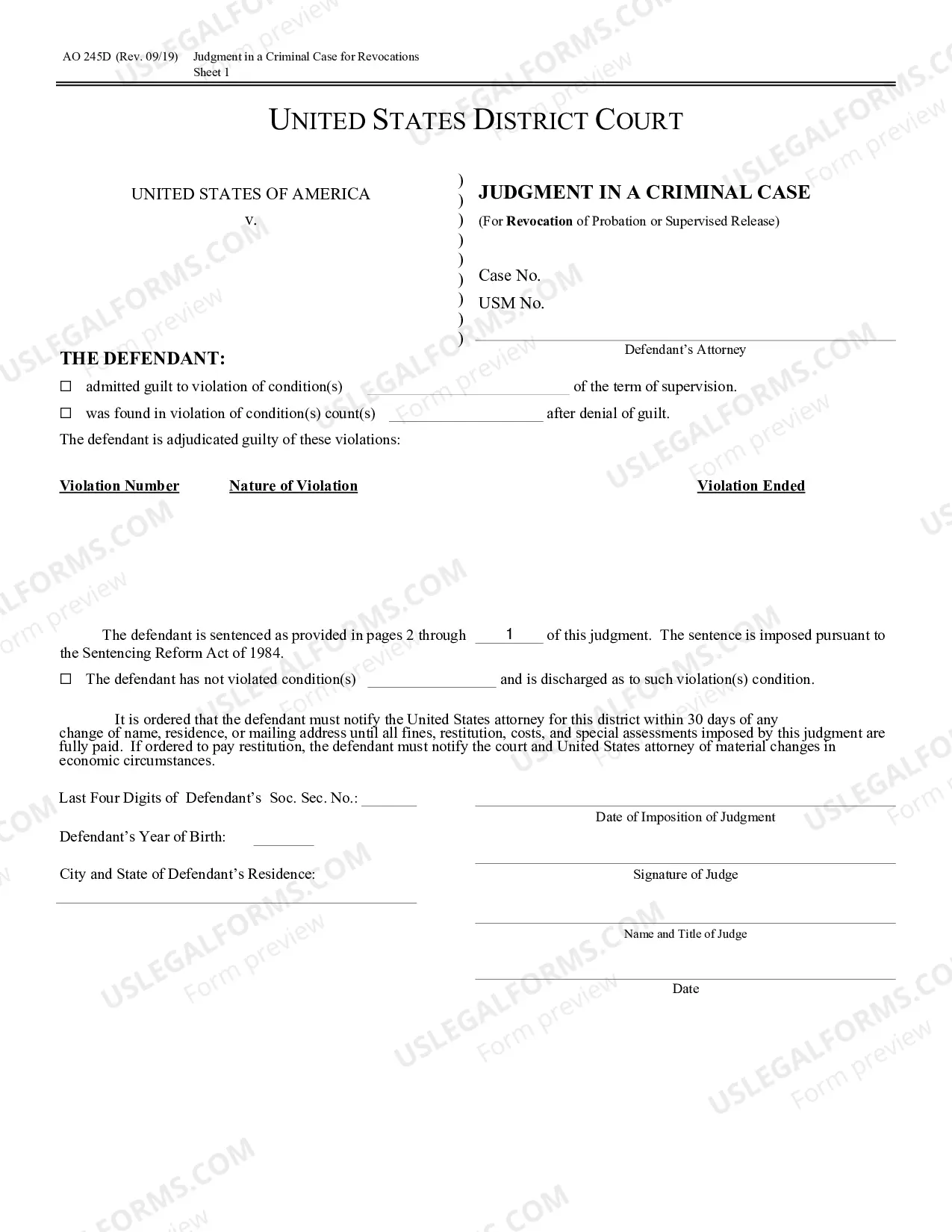
The Motion to Release on Earned Probation is a legal document that allows a defendant to request release into probation after serving their prison sentence. This motion is essential for individuals who have completed their incarceration and wish to transition smoothly into their probationary period. It differs from other legal forms in that it specifically addresses the conditions for earned probation eligibility, where certain requirements must be met to qualify for this less restrictive supervision.
Key components of this form
- Defendant's sentencing details, including the duration and specifics of the probation terms.
- Statement of time served and any credits for time already spent in custody.
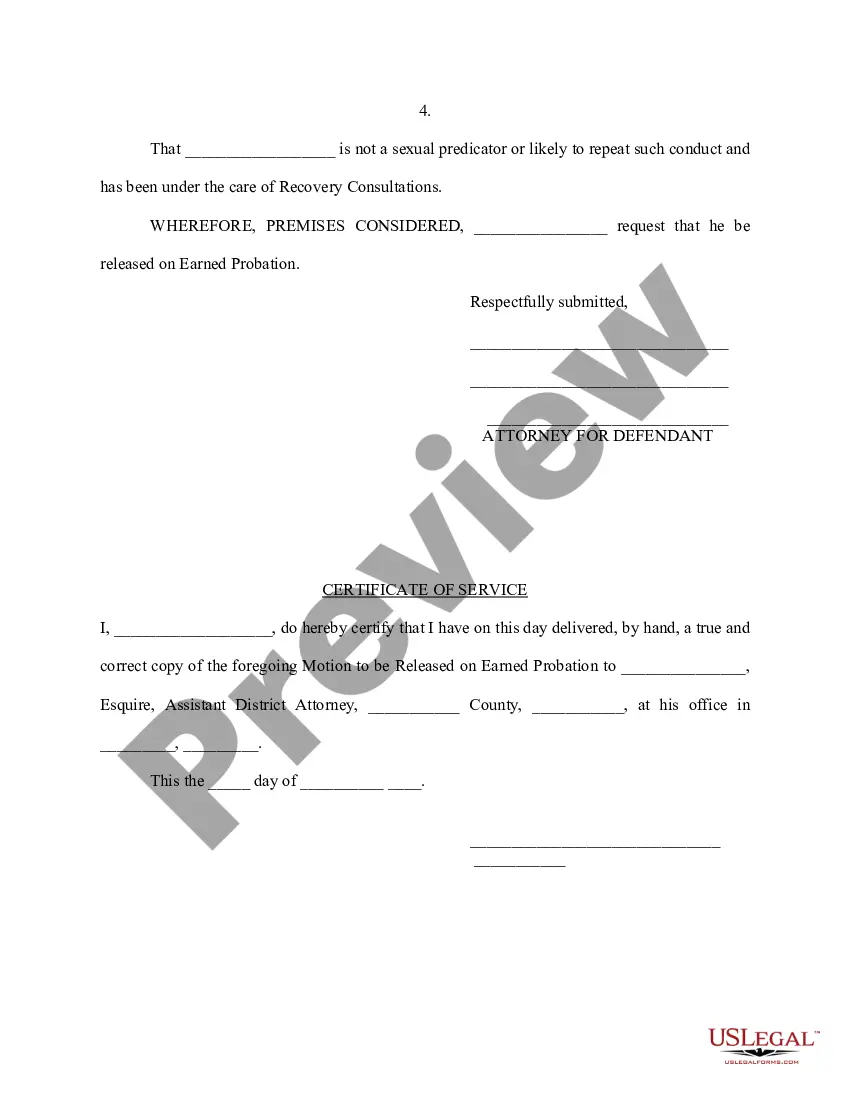
- Verification of non-conviction for sex crimes, ensuring eligibility for earned probation.
- Provision for recovery care, if applicable, supporting rehabilitation claims.
Situations where this form applies
This form should be used when a defendant has served their sentence and seeks to begin earning probation. It is particularly relevant in situations where they meet the criteria for earned probation, such as not having been convicted of certain offenses and demonstrating rehabilitation efforts during their incarceration. Filing this motion is crucial to initiate the probationary process and establish the terms of supervised release.
Intended users of this form
Individuals eligible to file using the Motion to Release on Earned Probation include:
- Defendants who have completed their sentence in custody.
- Individuals who qualify for probation under their sentencing terms.
- Those who have not been convicted of sex crimes and are assessed to be safe for community release.
Steps to complete this form
- Fill in the date and your name as the defendant in the appropriate sections.
- Specify the details of the original sentence, including duration and terms of probation.
- Provide information regarding time served and any credits applicable prior to sentencing.
- Confirm your compliance with eligibility requirements, including lack of sex crime convictions.
- Sign the form and include the attorney's details as needed.
Does this document require notarization?
Notarization is not commonly needed for this form. However, certain documents or local rules may make it necessary. Our notarization service, powered by Notarize, allows you to finalize it securely online anytime, day or night.
Get your form ready online
Our built-in tools help you complete, sign, share, and store your documents in one place.
Make edits, fill in missing information, and update formatting in US Legal Forms—just like you would in MS Word.
Download a copy, print it, send it by email, or mail it via USPS—whatever works best for your next step.
Sign and collect signatures with our SignNow integration. Send to multiple recipients, set reminders, and more. Go Premium to unlock E-Sign.
If this form requires notarization, complete it online through a secure video call—no need to meet a notary in person or wait for an appointment.
We protect your documents and personal data by following strict security and privacy standards.

Make edits, fill in missing information, and update formatting in US Legal Forms—just like you would in MS Word.

Download a copy, print it, send it by email, or mail it via USPS—whatever works best for your next step.

Sign and collect signatures with our SignNow integration. Send to multiple recipients, set reminders, and more. Go Premium to unlock E-Sign.

If this form requires notarization, complete it online through a secure video call—no need to meet a notary in person or wait for an appointment.

We protect your documents and personal data by following strict security and privacy standards.
Avoid these common issues
- Failing to provide complete or accurate sentencing details.
- Omitting signatures or required certifications.
- Not confirming eligibility criteria, such as conviction records.
Benefits of completing this form online
- Convenient access to downloadable templates at any time.
- Editable format allows for easy personalization and completion.
- Reliability of attorney-drafted forms designed to meet legal standards.
What to keep in mind
- The Motion to Release on Earned Probation is essential for transitioning from incarceration to probation.
- Eligibility depends on completing the sentence without certain convictions.
- Completing this form accurately is critical to support your request for earned probation.
Looking for another form?

Form popularity
FAQ
The Motion to Release on Earned Probation is a legal document that lets a defendant request transition from imprisonment to probation after serving the sentence. It should be used by individuals who have completed incarceration and wish to enter an earned probation arrangement, aligning their release with the court’s probation terms.
When filing, include the defendant’s sentencing details, a statement of time served and any credits earned, verification of non-conviction for sex crimes, and a provision for recovery care if applicable. These components document earned probation eligibility and support the requested transition to supervised release.
In discussions about this motion, stick to truthful, evidence-backed statements aligned with the form’s purpose. Do not misstate time served or credits, and avoid unfounded claims about rehabilitation that can’t be documented with recovery care or other evidence supporting the earned probation claim.
This motion is intended for defendants who have completed custody and qualify for probation under their sentencing terms, and who have not been convicted of sex crimes. If someone does not meet these criteria or would not be considered safe for community release, the earned probation motion may not be appropriate.
There isn’t a universal maximum; the length of probation is set by the court as part of the sentence and probation terms. This motion focuses on transitioning to earned probation after time served and does not by itself change the duration of probation.
The Motion to Release on Earned Probation is designed to transition a defendant from custody to probation only after earned-eligibility criteria are met, and it requires documenting time served, credits, and non-conviction verifications, plus any recovery-care provisions. A standard probation release may not require these earned-eligibility specifics.