Sample Letter for Demand - Reimbursement of Accrued Vacation after Termination
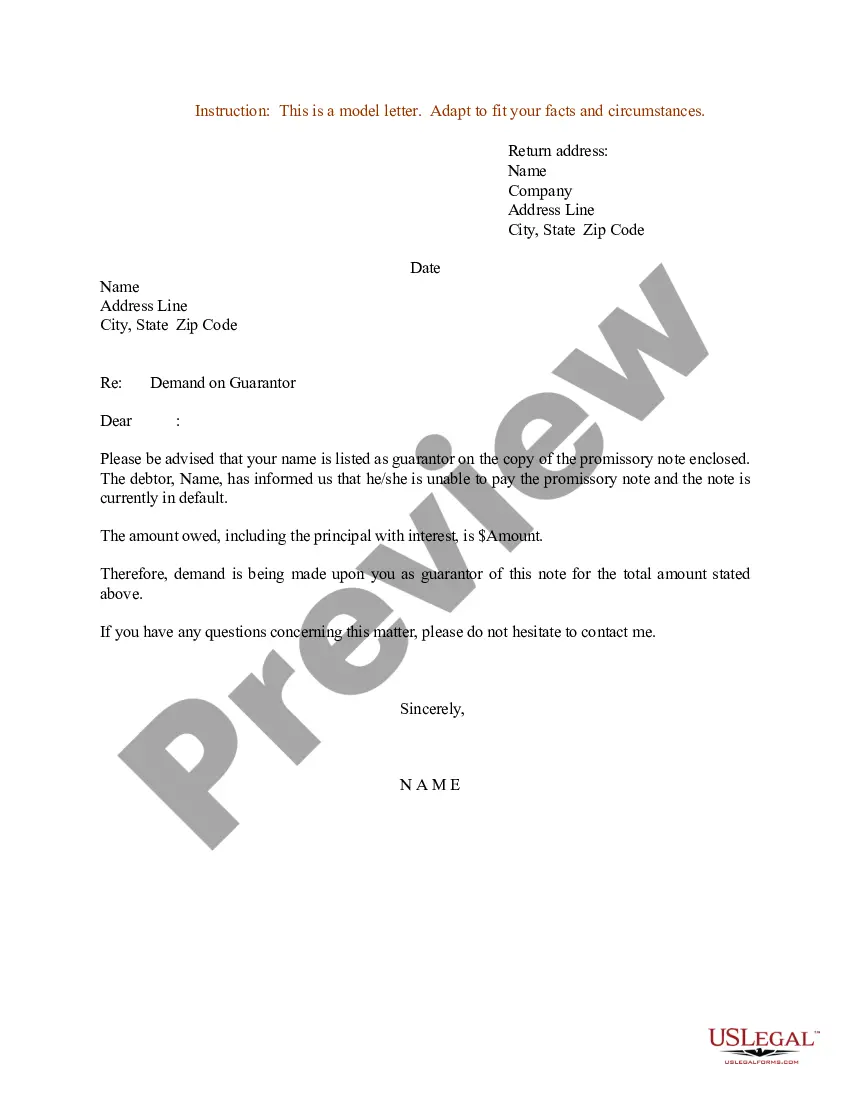
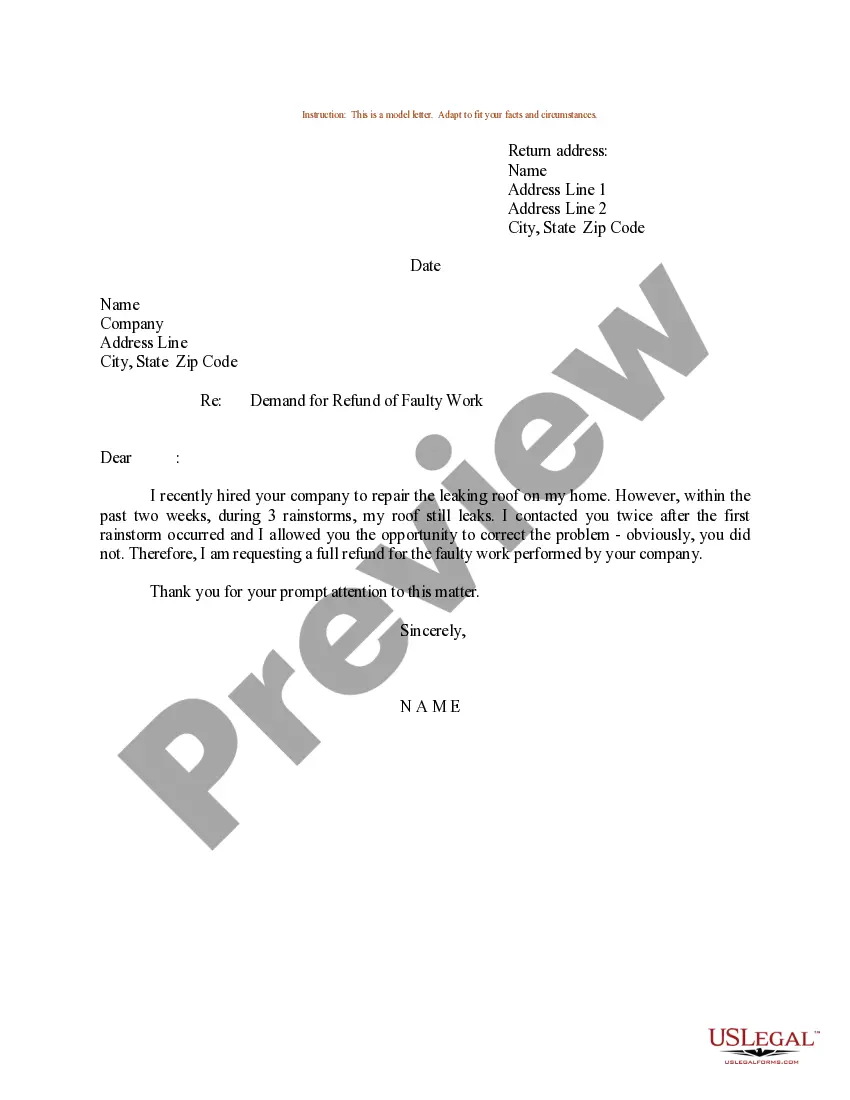
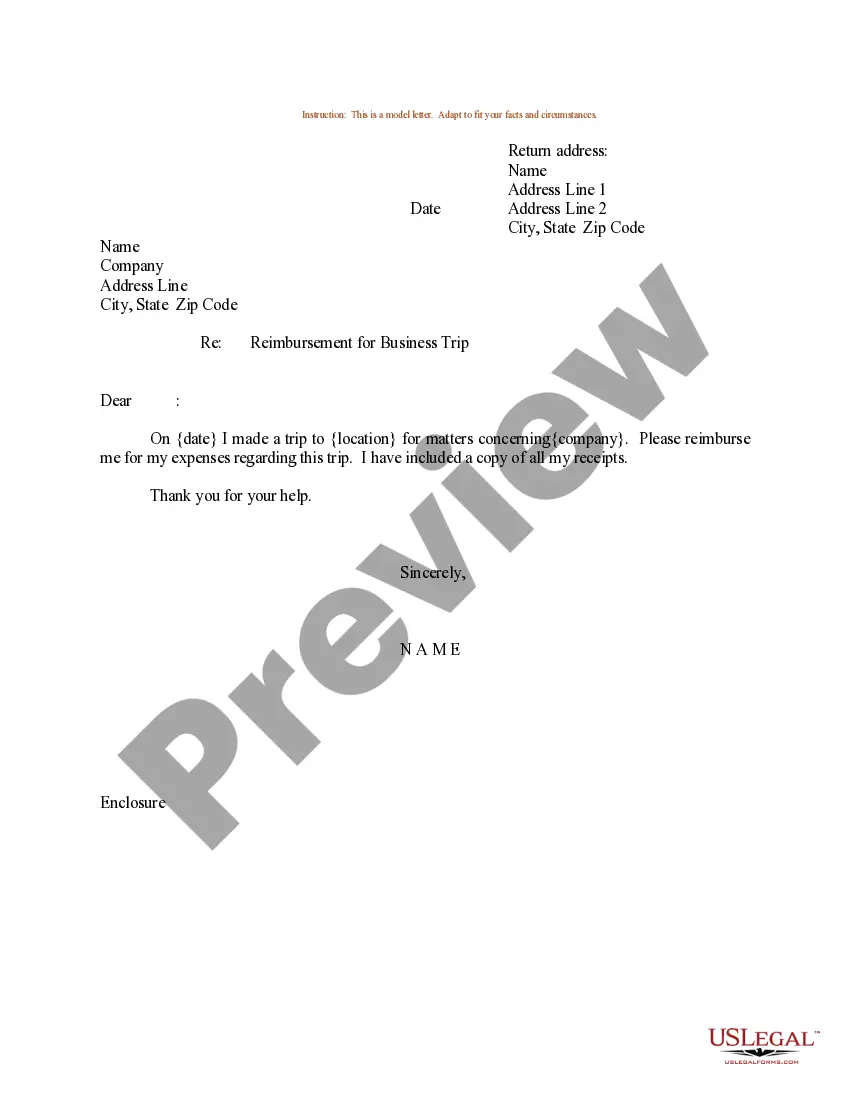
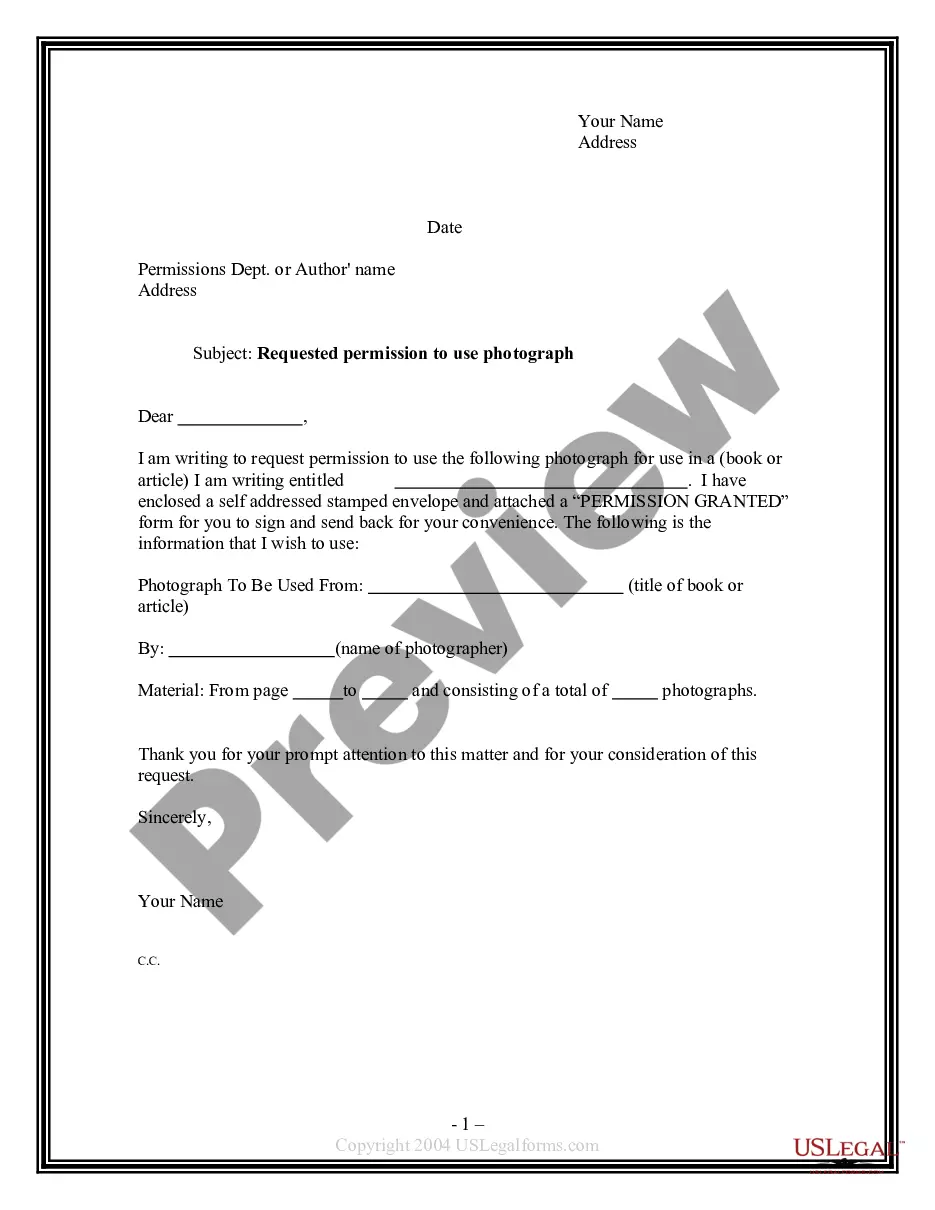
About this form
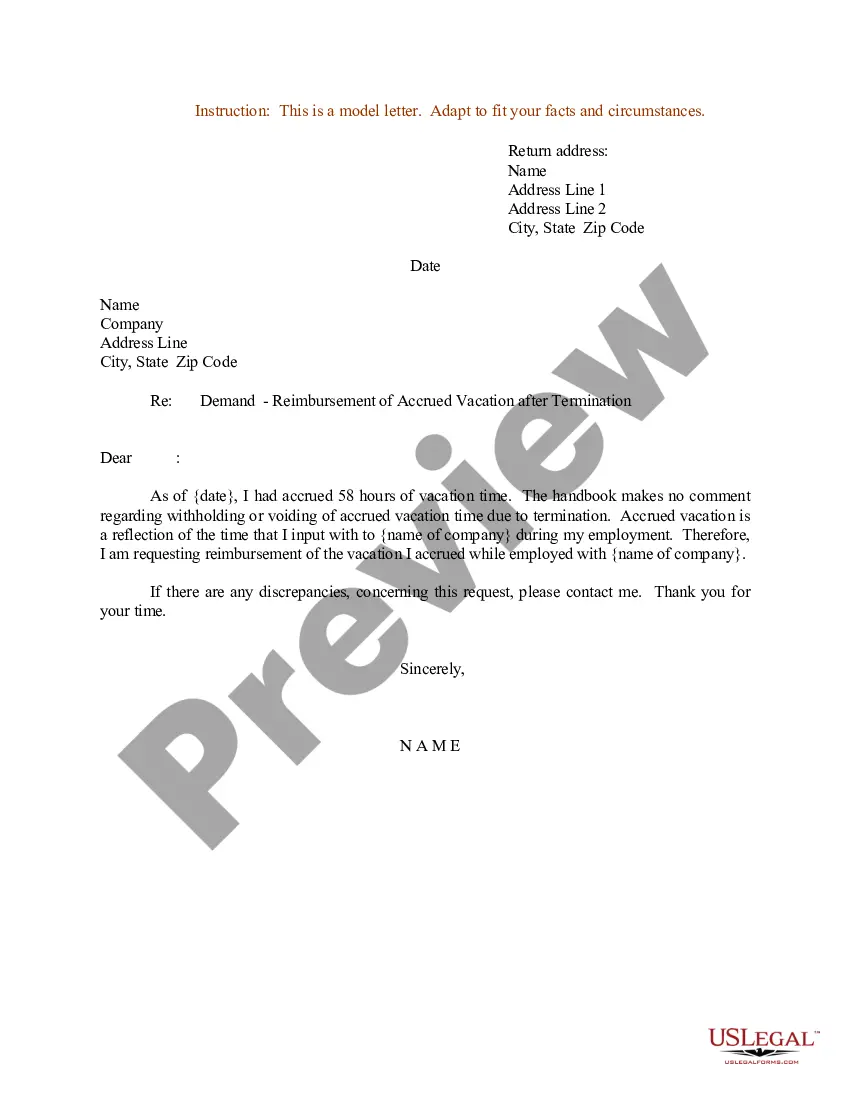
This form is a sample letter for demand regarding the reimbursement of accrued vacation after termination. It serves as a formal request from an employee to their former employer, seeking payment for any unused vacation days according to company policy or state law. This letter is essential for ensuring that terminated employees receive the benefits they are entitled to, differentiating it from general complaint letters or other employment-related communication.
Form components explained
- Return address: Includes the sender's name and contact details.
- Date: The date the letter is composed.
- Recipient address: The name and address of the employer.
- Subject line: Clearly states the purpose of the letter.
- Request details: A section specifying the demand for reimbursement of accrued vacation.
- Closing remarks: A polite request for further contact regarding discrepancies.
Common use cases
This form should be used when an employee has been terminated and has outstanding accrued vacation days that need to be reimbursed. It is applicable in scenarios such as voluntary resignation, layoffs, or termination for cause, where entitlement to unused vacation pay is in question. Using this letter helps legally assert the employee's rights and provides clarity in the reimbursement process.
Intended users of this form
- Former employees who have accrued unused vacation time upon termination.
- Individuals seeking to formally request payment for their accrued benefits.
- Employees in states where vacation payout is mandated by law or company policy.
Instructions for completing this form
- Identify the sender: Enter your name and address at the top of the letter.
- Add the date: Input the current date when the letter is written.
- Include the recipient's details: Write the employer's name and address below the date.
- State the subject: Clearly indicate the purpose of the letter regarding accrued vacation reimbursement.
- Detail the demand: Specify the amount of accrued vacation expected to be reimbursed, if applicable.
- Sign off politely: Thank the recipient and include your signature at the bottom.
Notarization guidance
This form does not typically require notarization unless specified by local law. It is important to verify if your state has any specific requirements regarding notarized letters for employment-related claims.
Get your form ready online
Our built-in tools help you complete, sign, share, and store your documents in one place.
Make edits, fill in missing information, and update formatting in US Legal Forms—just like you would in MS Word.
Download a copy, print it, send it by email, or mail it via USPS—whatever works best for your next step.
Sign and collect signatures with our SignNow integration. Send to multiple recipients, set reminders, and more. Go Premium to unlock E-Sign.
If this form requires notarization, complete it online through a secure video call—no need to meet a notary in person or wait for an appointment.
We protect your documents and personal data by following strict security and privacy standards.

Make edits, fill in missing information, and update formatting in US Legal Forms—just like you would in MS Word.

Download a copy, print it, send it by email, or mail it via USPS—whatever works best for your next step.

Sign and collect signatures with our SignNow integration. Send to multiple recipients, set reminders, and more. Go Premium to unlock E-Sign.

If this form requires notarization, complete it online through a secure video call—no need to meet a notary in person or wait for an appointment.

We protect your documents and personal data by following strict security and privacy standards.
Common mistakes
- Failing to provide accurate contact information.
- Not including specific details about the accrued vacation time.
- Using informal language instead of a professional tone.
- Omitting the closing remarks that encourage follow-up.
Why use this form online
- Easy access to a clear and professional template.
- Editable format allows for personal customization to meet individual needs.
- Convenience of immediate download without waiting for physical delivery.
Quick recap
- This form is designed to formally request the reimbursement of unused vacation pay after job termination.
- Ensure the letter is addressed correctly and contains all necessary information.
- Keep a record of this correspondence for potential future follow-up.
- Understand your stateâs laws regarding vacation pay to effectively support your request.
Looking for another form?
Form popularity
FAQ
If an employee is terminated or quits with a negative paid time off balance, you might be able to deduct the salary that was advanced from their final paycheck. The key word here is might, as it depends on your state laws.Federal law, however, allows the advanced pay to be deducted.
Under California law, unless otherwise stipulated by a collective bargaining agreement, whenever the employment relationship ends, for any reason whatsoever, and the employee has not used all of his or her earned and accrued vacation, the employer must pay the employee at his or her final rate of pay for all of his or
There are two typical ways an employee can pay back their negative PTO balance. The first is to keep working for the employer until they accrue enough PTO to cover what they've used.However, the employee must agree in writing to a set wage deduction before the negative balance can be paid back.
If the company's policy has been, and/or was stated to you before you "borrowed" PTO time (or is in the employee handbook) that a negative PTO balance has to be repaid, it would have to be repaid--that is perfectly legal.
California requires that employers pay terminated employees for accrued vacation time in their final paycheck. Under California law, vacation pay is considered a form of wages if an employer chooses to offer it to employees.
24 statesAlaska, Arizona, California, Colorado, Illinois, Indiana, Kentucky, Louisiana, Maine, Maryland, Massachusetts, Minnesota, Nebraska, New Hampshire, New York, North Carolina, North Dakota, Ohio, Oklahoma, Pennsylvania, Rhode Island (after one year of employment), Tennessee, West Virginia, and Wyomingand the
When an employee quits or is fired or laid off, all accrued, unused vacation time must be included in the employee's final paycheck. According to California law, PTO and vacation are wages that have been earned by, but not yet paid to, the employee. Once you earn vacation or PTO, it cannot be taken away.
Some states like California, Nebraska, and Montana prohibit employers from implementing use it or lose it. However, there are more states that allow the policy than those with restrictions. (Look up your state's vacation leave law here.)
If an employee has unused accrued PTO when they quit, are fired, or otherwise separate from the company, they may be entitled to be paid for that time.If you have a policy, employment contract or a practice of doing so, you're required to pay accrued PTO to every employee who leaves the company.