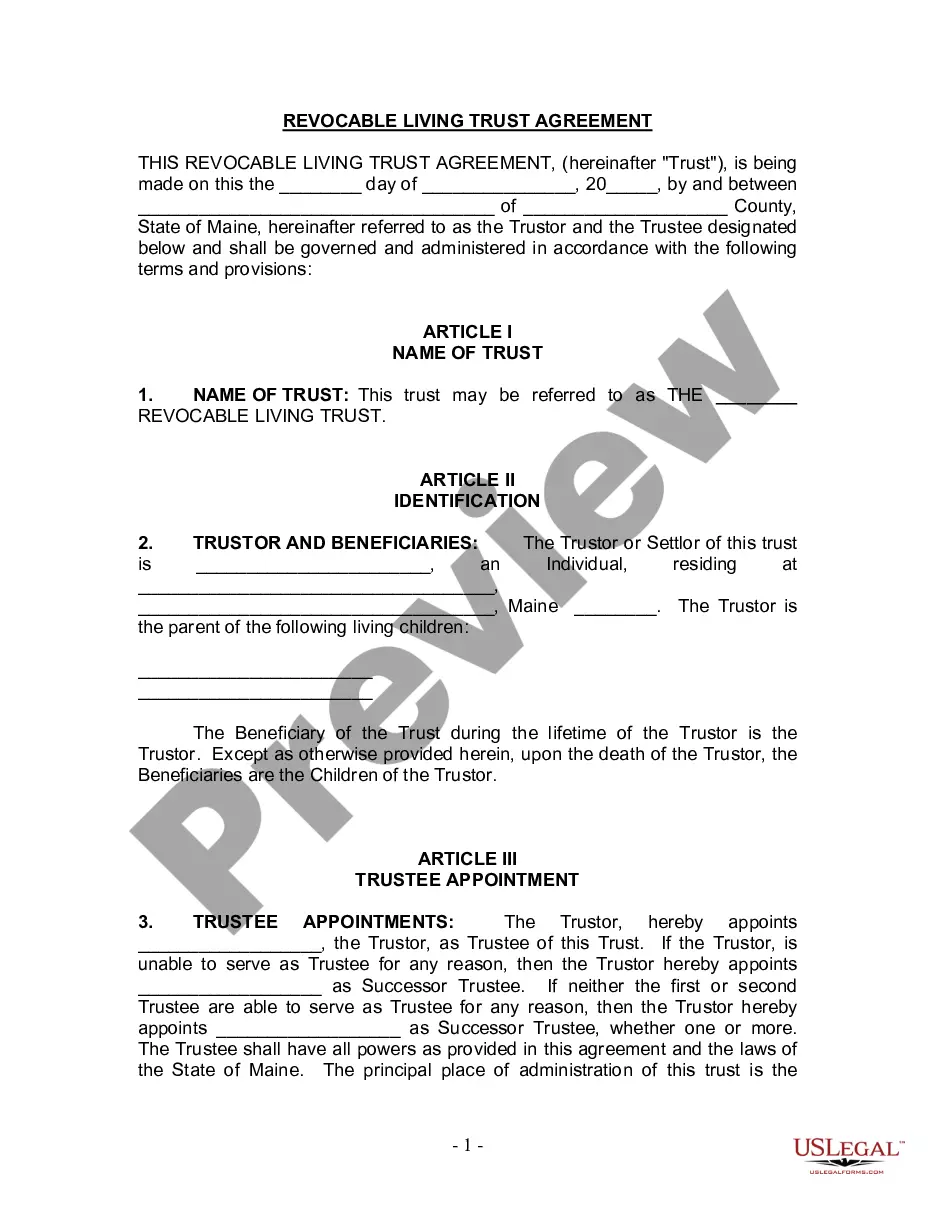
False Statements in Connection With Explosive Materials
Overview of this form
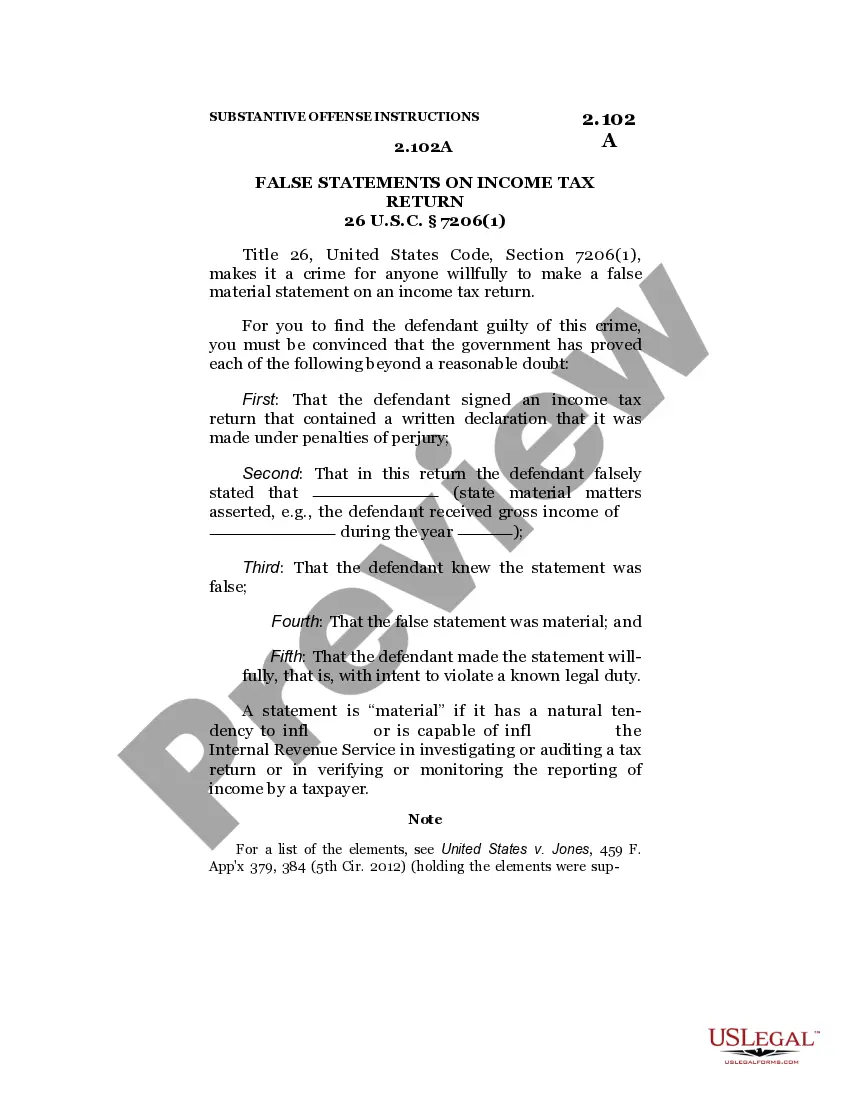
The False Statements in Connection With Explosive Materials form is a legal document detailing the requirements and prohibitions under 18 U.S.C. 842(a)(2). This form is essential for understanding the legal ramifications of knowingly making false statements when obtaining explosive materials. It differs from similar forms by specifically focusing on false statements related to explosives and their licensing, emphasizing the need for honesty in transactions involving potentially dangerous materials.
Key parts of this document
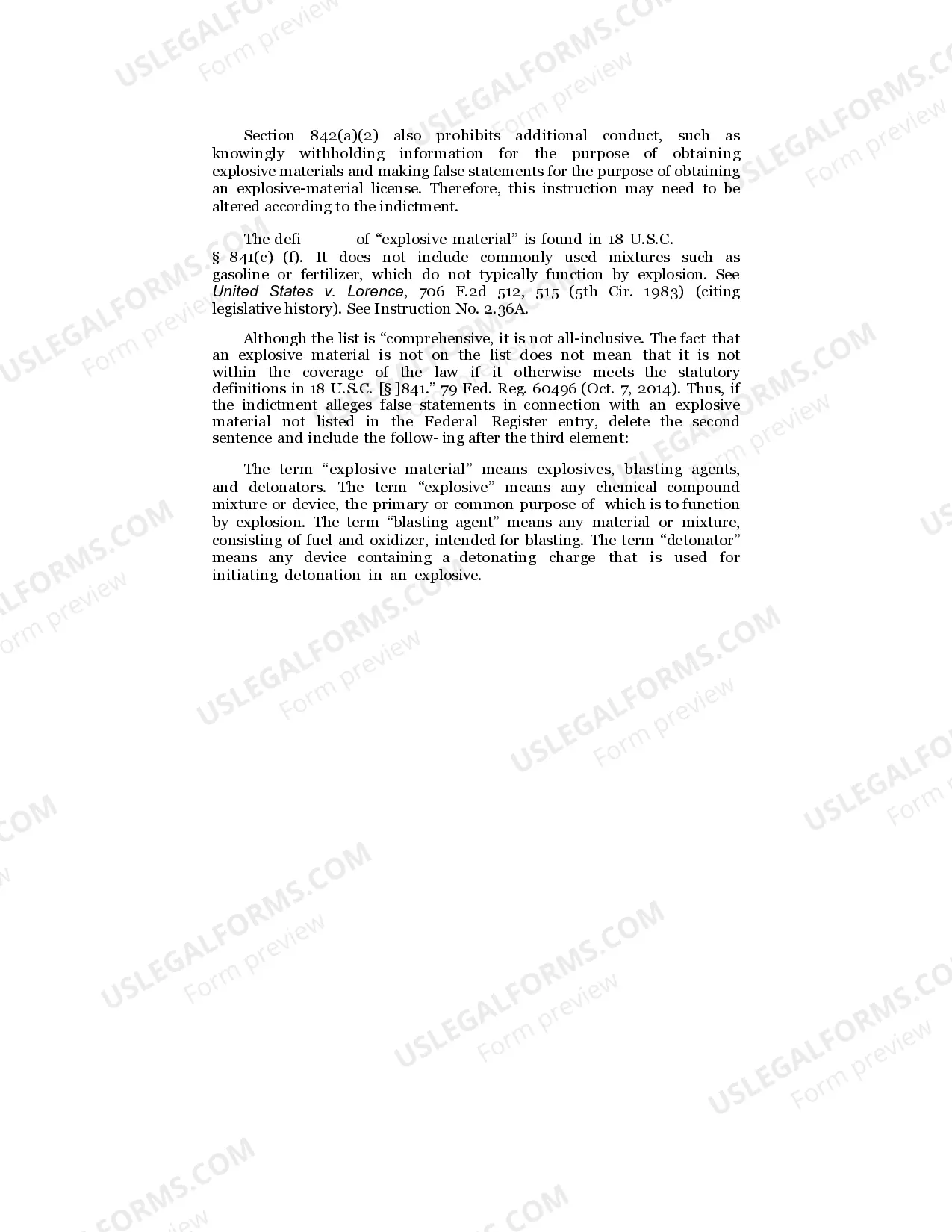
- Definition of explosive materials and examples.
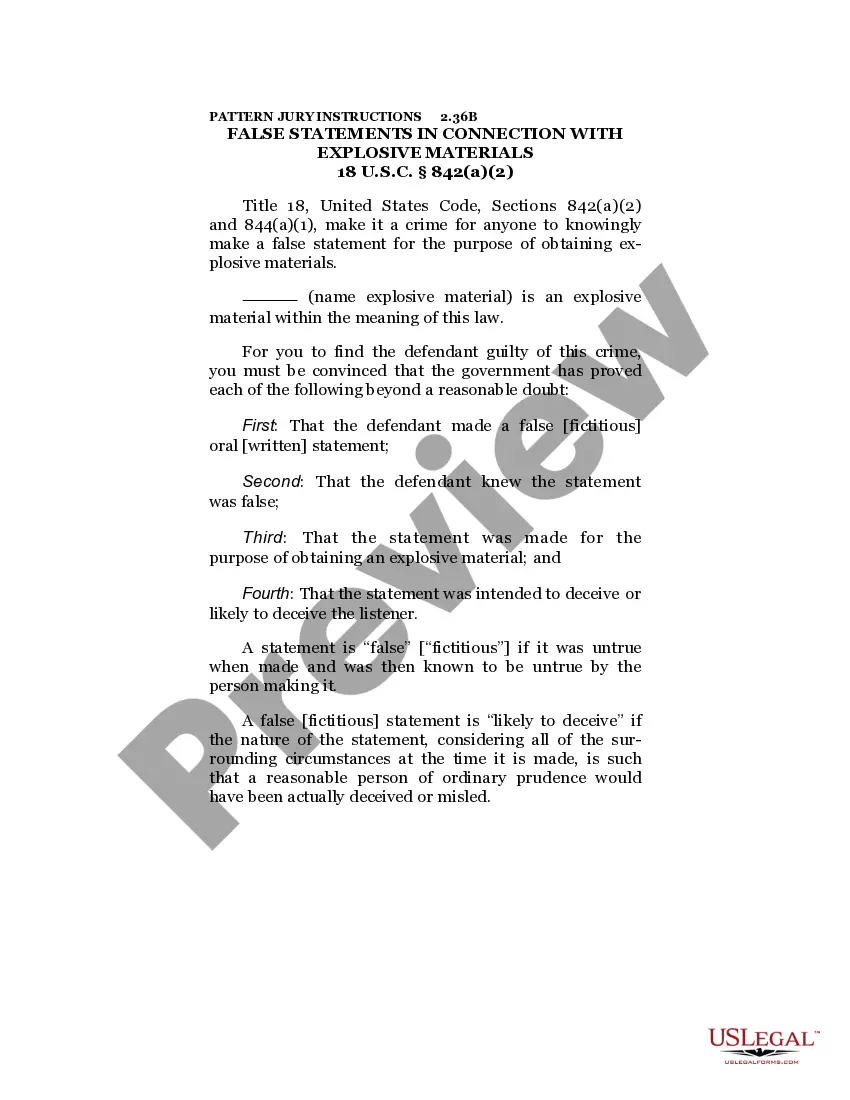
- Elements of the offense, including the requirements for proving a false statement.
- Clarifications about withholding information and applicability of the law.
- Necessity of intent to deceive when making statements.
- Definitions of key terms such as explosive, blasting agent, and detonator.
When this form is needed
This form should be used in situations where an individual or entity is applying for explosive materials or licenses. It is particularly important if there is a potential for submitting false statements or omitting essential facts regarding the materials sought. This form might also be necessary in cases where legal proceedings arise from fraudulent applications related to explosives.
Who can use this document
Individuals or organizations that may need to prove compliance with laws regarding explosives should use this form. The intended audience includes:
- Manufacturers and distributors of explosive materials.
- Contractors involved in demolition or construction using explosives.
- Individuals applying for explosive materials licenses.
- Legal professionals advising clients on compliance with federal explosive laws.
How to complete this form
- Identify the parties involved in the transaction.
- Clearly state the type of explosive material being sought.
- Provide a detailed description of the intended use for the explosive material.
- Affirm that all statements made are true and not misleading.
- Sign and date the form to certify accuracy and intent.
Notarization requirements for this form
Notarization is generally not required for this form. However, certain states or situations might demand it. You can complete notarization online through US Legal Forms, powered by Notarize, using a verified video call available anytime.
Get your form ready online
Our built-in tools help you complete, sign, share, and store your documents in one place.
Make edits, fill in missing information, and update formatting in US Legal Forms—just like you would in MS Word.
Download a copy, print it, send it by email, or mail it via USPS—whatever works best for your next step.
Sign and collect signatures with our SignNow integration. Send to multiple recipients, set reminders, and more. Go Premium to unlock E-Sign.
If this form requires notarization, complete it online through a secure video call—no need to meet a notary in person or wait for an appointment.
We protect your documents and personal data by following strict security and privacy standards.

Make edits, fill in missing information, and update formatting in US Legal Forms—just like you would in MS Word.

Download a copy, print it, send it by email, or mail it via USPS—whatever works best for your next step.

Sign and collect signatures with our SignNow integration. Send to multiple recipients, set reminders, and more. Go Premium to unlock E-Sign.

If this form requires notarization, complete it online through a secure video call—no need to meet a notary in person or wait for an appointment.

We protect your documents and personal data by following strict security and privacy standards.
Mistakes to watch out for
- Failing to provide complete information about the explosive material.
- Omitting key details that could lead to misrepresentation.
- Not understanding the legal definitions of terms used in the form.
- Submitting the form without verifying the accuracy of statements made.
Benefits of completing this form online
- Convenience of immediate access to legal requirements and instructions.
- Editability allows users to input necessary information without hassle.
- Reduced risk of errors due to guided completion processes.
- Access to up-to-date legal forms crafted by licensed attorneys.
Legal use & context
- This form is used to establish the legal grounds for prosecuting false statements relating to explosives.
- It serves as a protective measure for individuals and agencies involved in handling explosive materials.
- Compliance with the form helps to prevent legal repercussions associated with fraudulent applications.
What to keep in mind
- Accurate representation of information regarding explosives is critical.
- The form outlines specific legal criteria for proving false statements.
- It is applicable nationally under federal law without state variations.
- Completing the form correctly can prevent legal issues and ensure compliance.
Looking for another form?

Form popularity
FAQ
(b) in the case of any special category explosive substance, with rigorous imprisonment for life, or with rigorous imprisonment for a term which may extend to ten years, and shall also be liable to fine.
Chemical Explosives are often used in Blasting and Excavation processes. They are used in military operations to make bombs, rockets, grenades and missiles. Fireworks and fireworks items are also made from them.
Uses of Explosives They are used extensively in underground mining and surface hard rock quarrying operations. They are also used frequently in the construction industry for the development of new roads, excavation of ground for the foundations of buildings or basement areas and in demolition work.
Destructive devices include explosive, incendiary or poison gas bombs, grenades, rockets, missiles, mines, and similar devices. Molotov cocktails, or glass bottles filled with gasoline that ignite their fuse when broken, are destructive devices and thus illegal to possess under federal law.
(a) prohibit, either absolutely or subject to conditions, the manufacture, possession or importation of any explosive which is of so dangerous a character that, in the opinion of the Central Government, it is expedient for the public safety to issue the notification.
List of Explosive Materials A. Acetylides of heavy metals. Aluminum containing polymeric propellant.B. Baratol. Baronol.C. Calcium nitrate explosive mixture.D. DATB diaminotrinitrobenzeneE. EDDN ethylene diamine dinitrateF. Flash powder.G. Gelatinized nitrocellolose.H. Heavy metal azides.
This Act restricted the availability of explosives to prohibited persons, strengthened licensing and permitting requirements and aided in the fight against terrorism.
3. Punishment for causing explosion likely to endanger life or property.