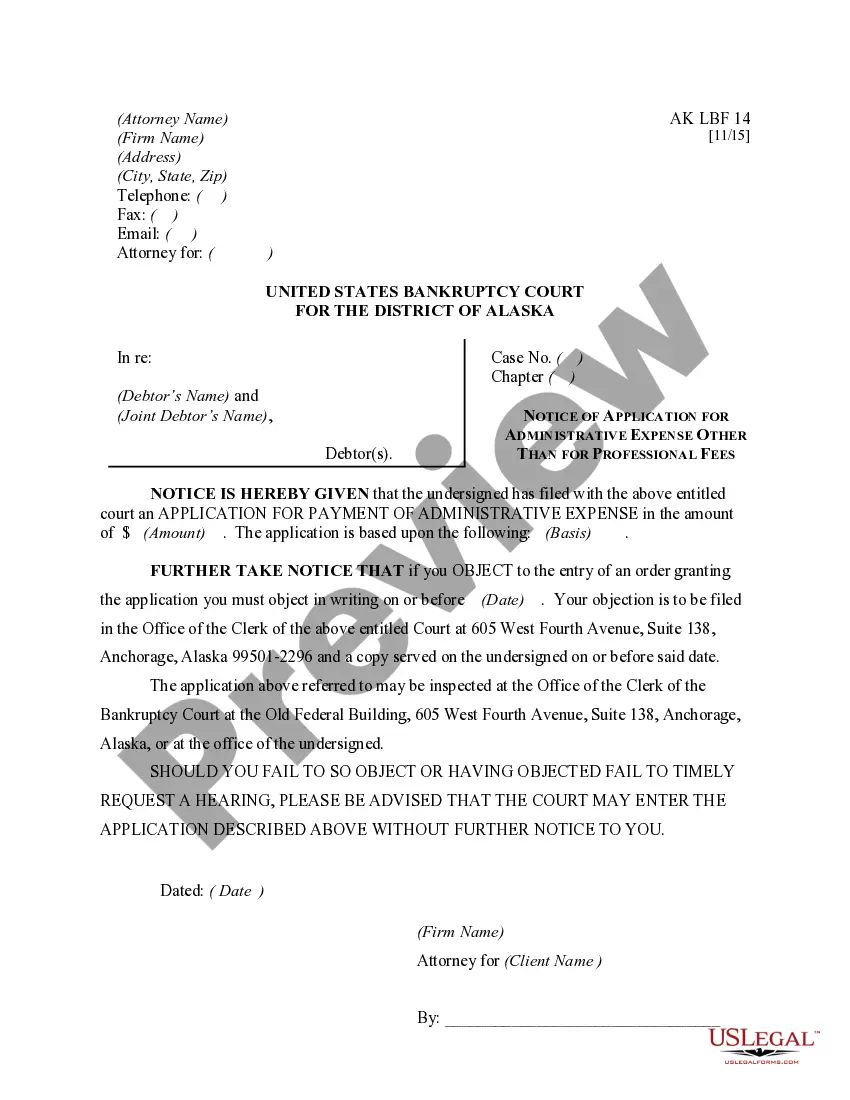
Employment Verification Letter for Current Employee
What is this form?
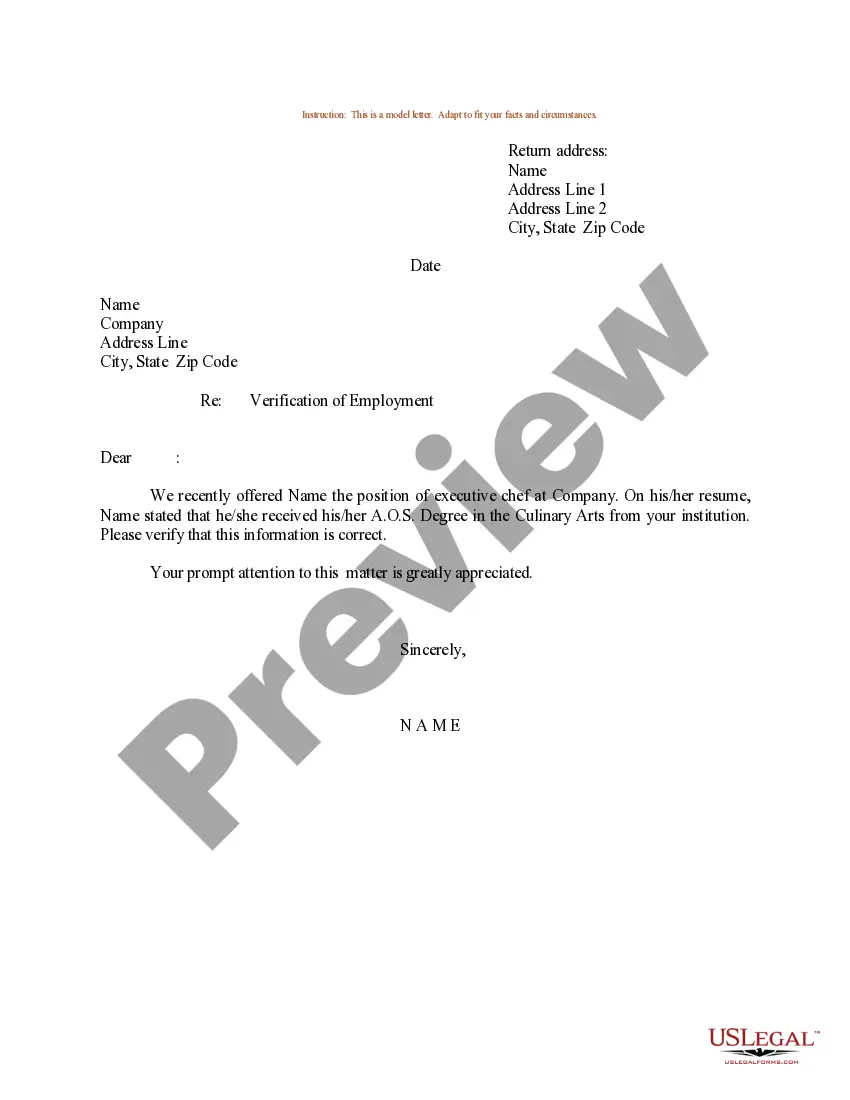
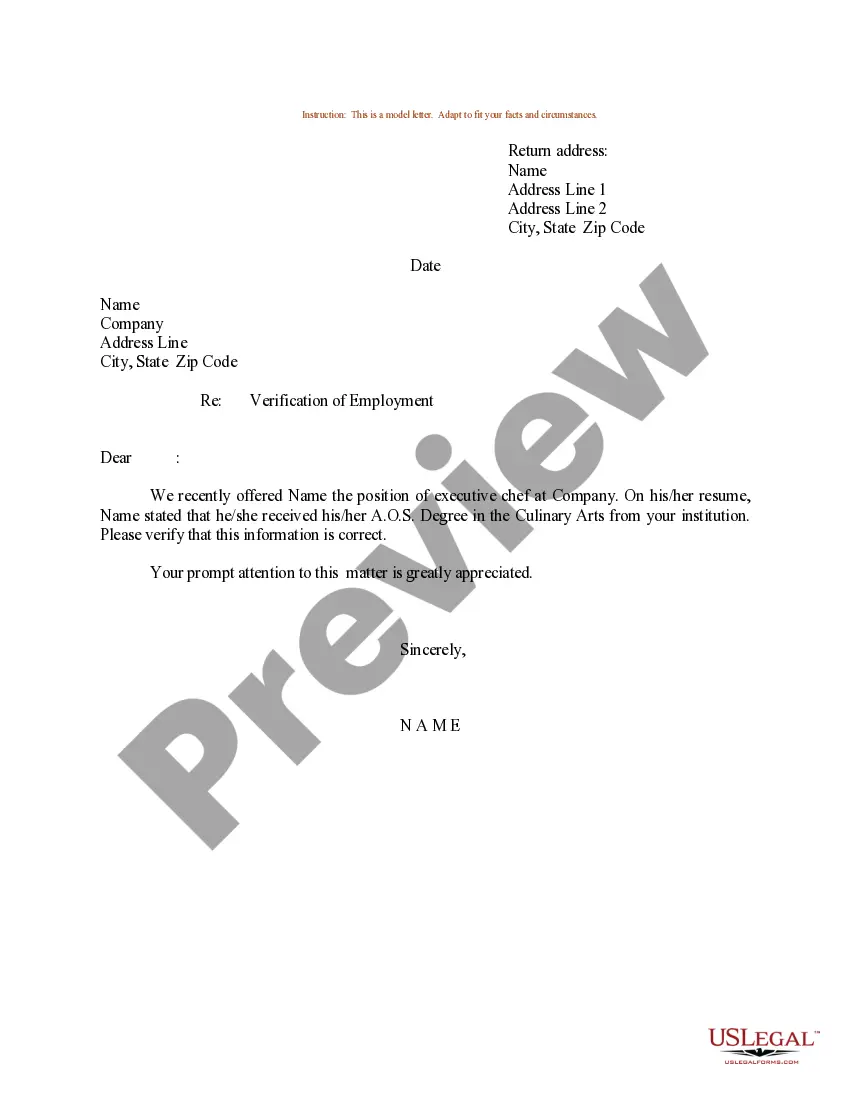
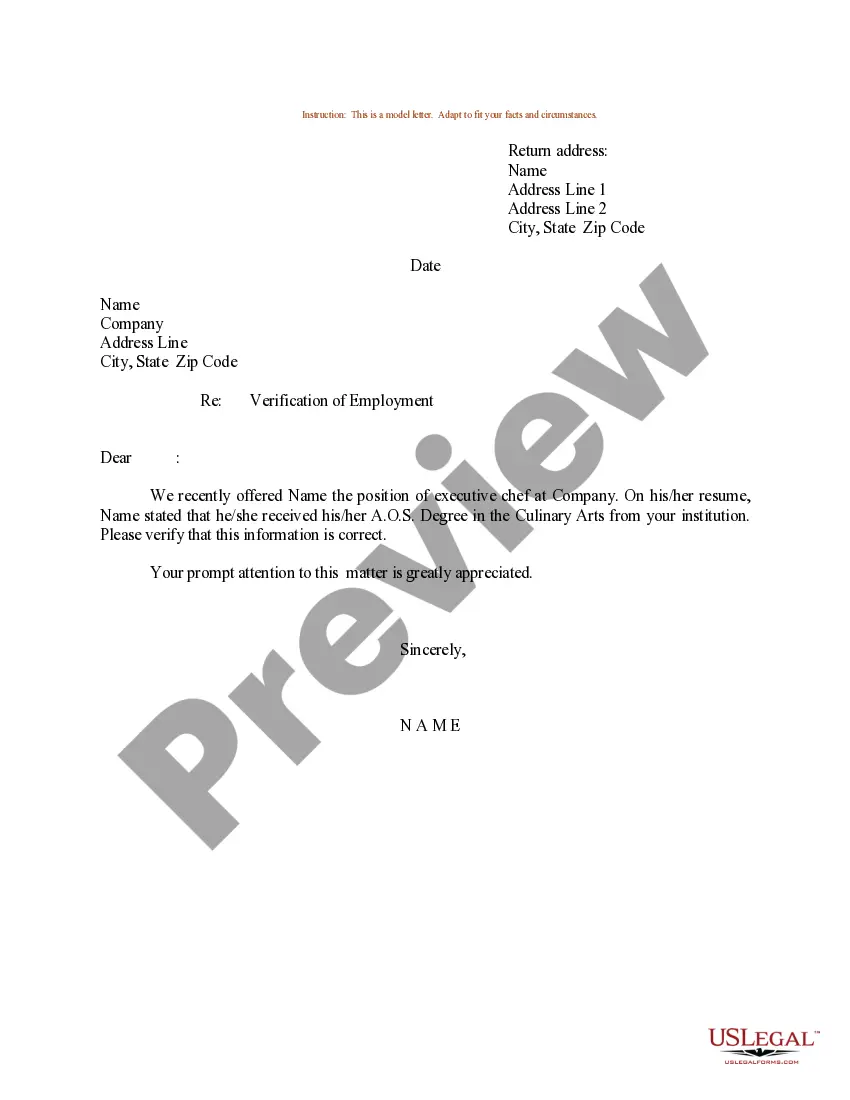
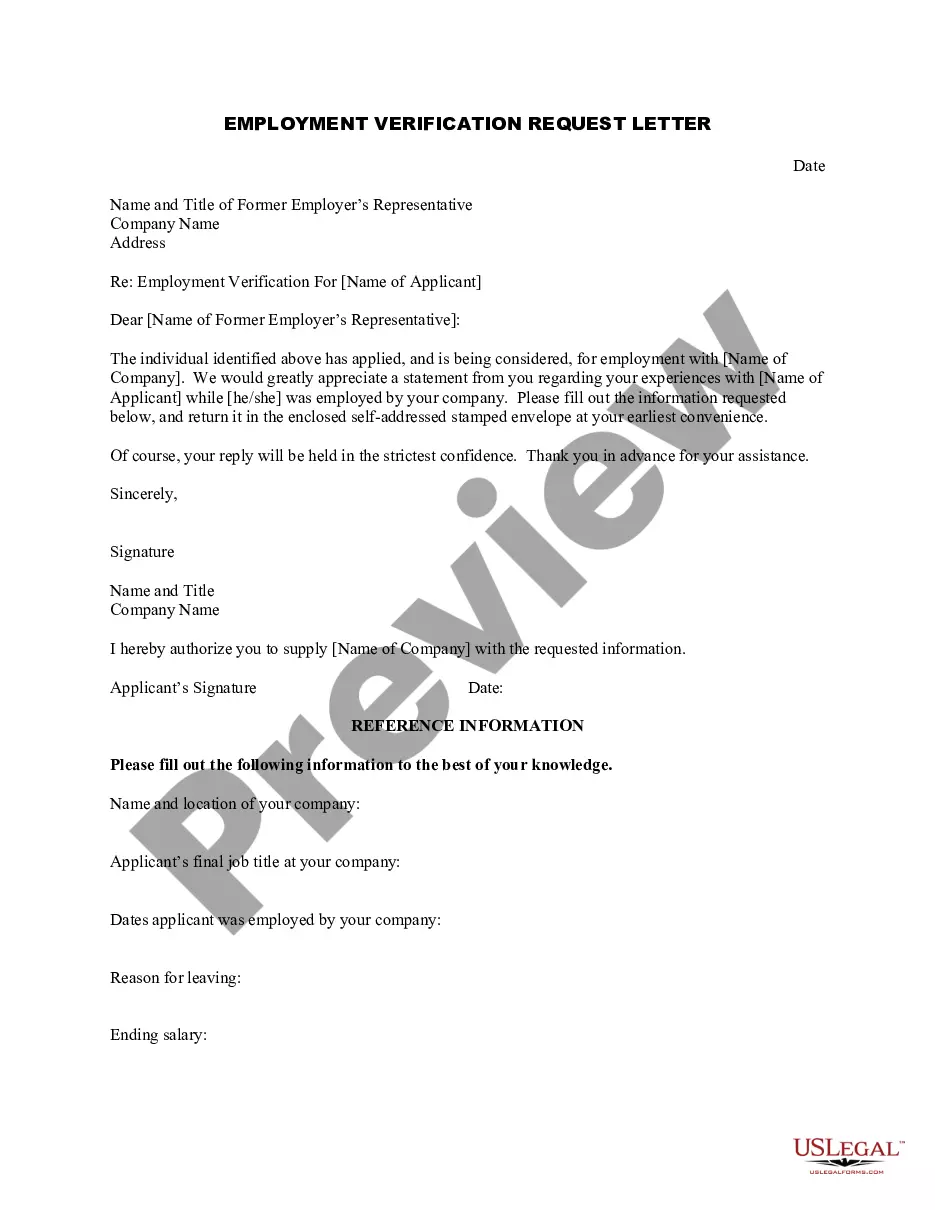
The Employment Verification Letter for Current Employee is a document used by employers to confirm an employee's job status, including their position and duration of employment. This form is distinct from other employment documents as it specifically provides verification for current employees, typically requested by financial institutions, landlords, or other entities requiring proof of employment.
Form components explained
- Return address: Includes the address of the employer issuing the letter.
- Date: The date when the letter is written.
- Recipient information: Name and address of the person or entity receiving the letter.
- Subject line: Clearly states that the letter is for the verification of employment.
- Body: A concise statement verifying the employee's position and work status.
- Signature line: The name and title of the person signing the letter.

When to use this document
This form is useful when a current employee is required to provide proof of their employment for various reasons. Common scenarios include applying for a loan, renting an apartment, or verifying employment for any background checks conducted by third parties. The Employment Verification Letter serves as a formal and credible document that communicates the employee's job status accurately.
Who should use this form
This form is intended for:
- Employers looking to provide proof of employment for their current employees.
- Employees who need to request confirmation of their employment status for personal or professional purposes.
- Human resources departments responsible for generating employment verification documentation.
How to complete this form
- Enter the return address of the employer at the top of the letter.
- Insert the current date.
- Add the recipient's name and address below the date.
- Write a concise body verifying the employee's name, position, and employment duration.
- Sign the letter, including the name and title of the person authorized to validate the employment.
Does this document require notarization?
This form does not typically require notarization unless specified by local law. However, having a notarized letter can enhance its credibility in some situations.
Get your form ready online
Our built-in tools help you complete, sign, share, and store your documents in one place.
Make edits, fill in missing information, and update formatting in US Legal Forms—just like you would in MS Word.
Download a copy, print it, send it by email, or mail it via USPS—whatever works best for your next step.
Sign and collect signatures with our SignNow integration. Send to multiple recipients, set reminders, and more. Go Premium to unlock E-Sign.
If this form requires notarization, complete it online through a secure video call—no need to meet a notary in person or wait for an appointment.
We protect your documents and personal data by following strict security and privacy standards.

Make edits, fill in missing information, and update formatting in US Legal Forms—just like you would in MS Word.

Download a copy, print it, send it by email, or mail it via USPS—whatever works best for your next step.

Sign and collect signatures with our SignNow integration. Send to multiple recipients, set reminders, and more. Go Premium to unlock E-Sign.

If this form requires notarization, complete it online through a secure video call—no need to meet a notary in person or wait for an appointment.

We protect your documents and personal data by following strict security and privacy standards.
Avoid these common issues
- Not including the current date, which is crucial for verification purposes.
- Failing to address the letter correctly, which may result in misdelivery.
- Providing inaccurate information about the employee's position or employment dates.
- Omitting a signature or not including the name of the verifier, undermining the form's credibility.
Advantages of online completion
- Convenience: Obtain the letter quickly without the need for in-person visits.
- Editable format: The Word format allows for easy modifications to suit specific needs.
- Reliability: Form templates are drafted by licensed attorneys, ensuring quality and legal compliance.
Looking for another form?
Form popularity
FAQ
Follow business letter format. Use standard business letter format when writing your letter. Keep it concise. Include all requested information. Provide your contact information. Edit and proofread before you send.
Be brief and straightforward, providing only the information requested or required. Information such as company names, job and course titles etc, should be formally noted. Offer to provide further information if required. Sign the letter to further verify the information.
An employment verification letter confirms the current or former employee's employment status. The employment verification letter is a response to a request for information from a potential employer, government agency, or bank, for example.The potential employer may verify dates of employment and salary.
Ask your supervisor or manager. Contact Human Resources. Get a template from the company or organization requesting the letter. Use an employment verification service.
A letter of verification can be used to verify an employee's employment. They are commonly used when applying for a bank loan or trying a rent an apartment. They are informal, simple, and straight to the point. They usually include the duration of time the employee has been employed in their current position.
Most employment verification letters include the person's name, their department in the company (sometimes you need to include their specific job title), and the amount of time they have been employed. Check with your employee if any additional information needs to be shared.
Employer address. Name and address of the company requesting verification. Employee name. Employment dates. Employee job title. Employee job description. Employee current salary. Reason for termination.
Employment history verification involves contacting each workplace listed in a candidate's resume to confirm that the applicant was in fact employed there, to check what the applicant's job title(s) were during their work tenure, and the dates of the applicant's employment there.