Sample Letter for Check Representing Balance of the Conservatorship
Understanding this form
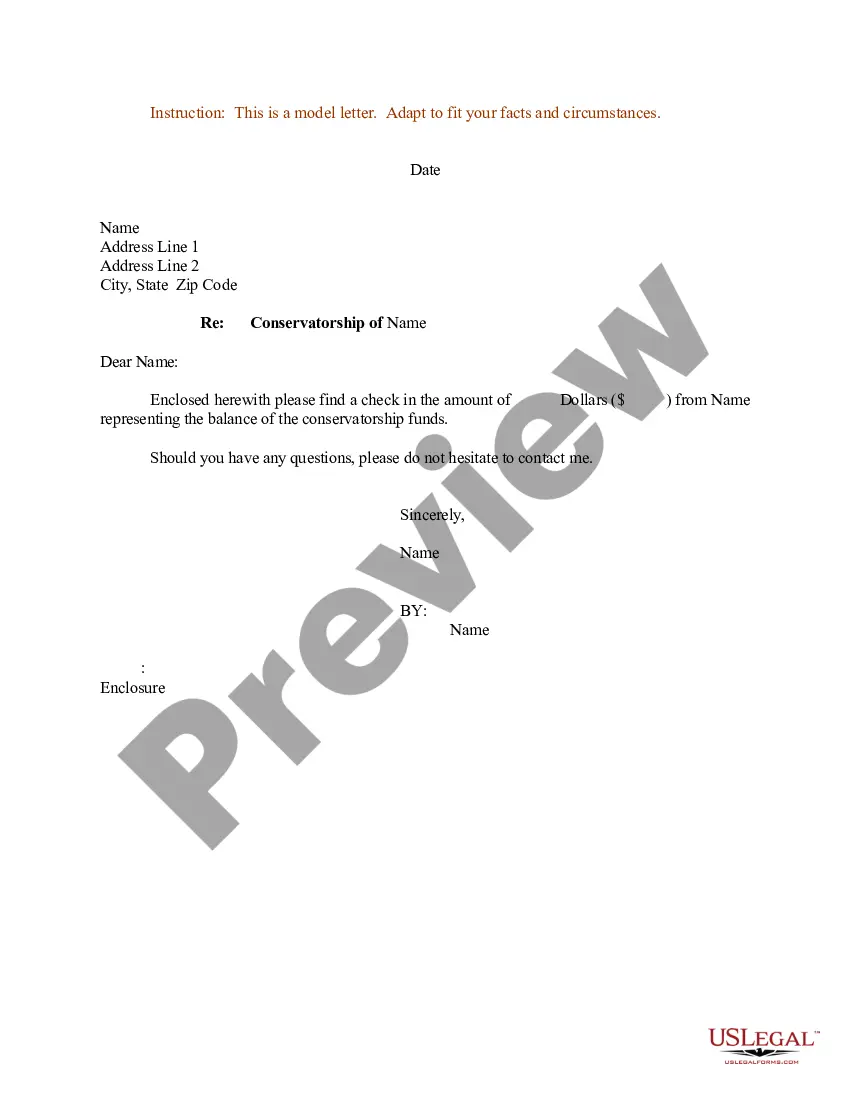
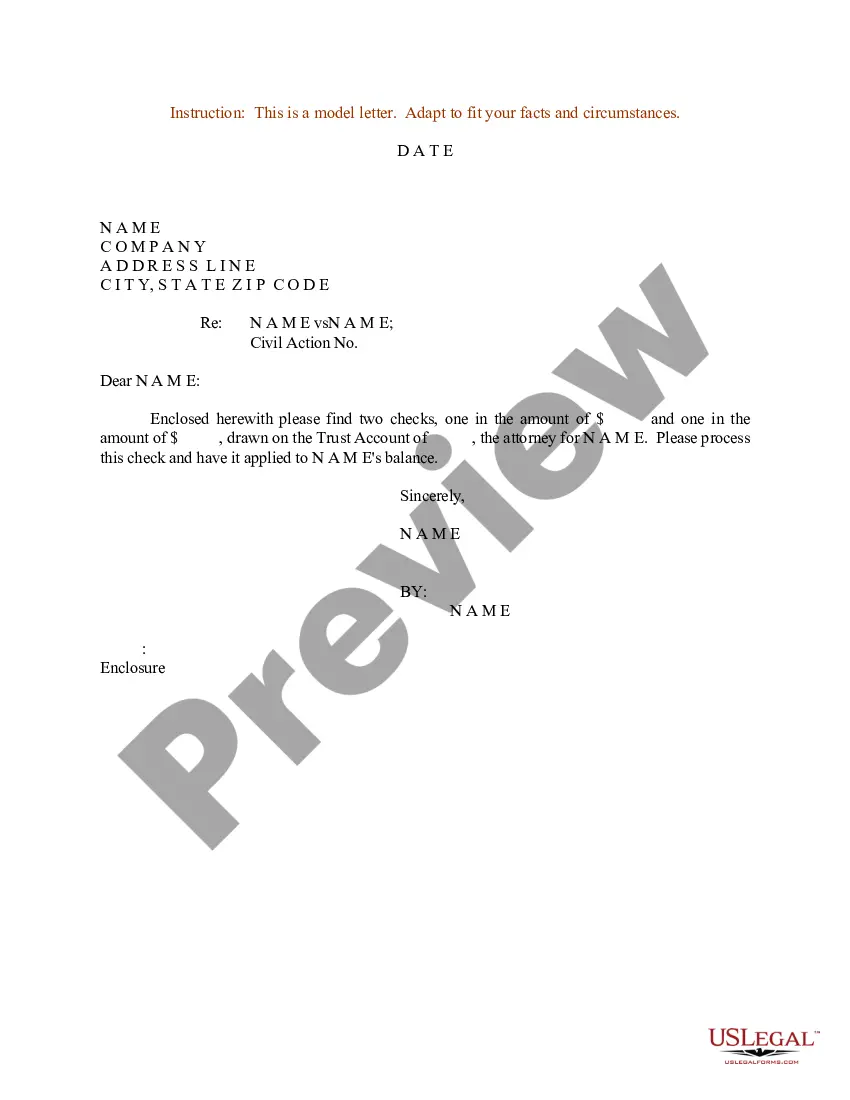
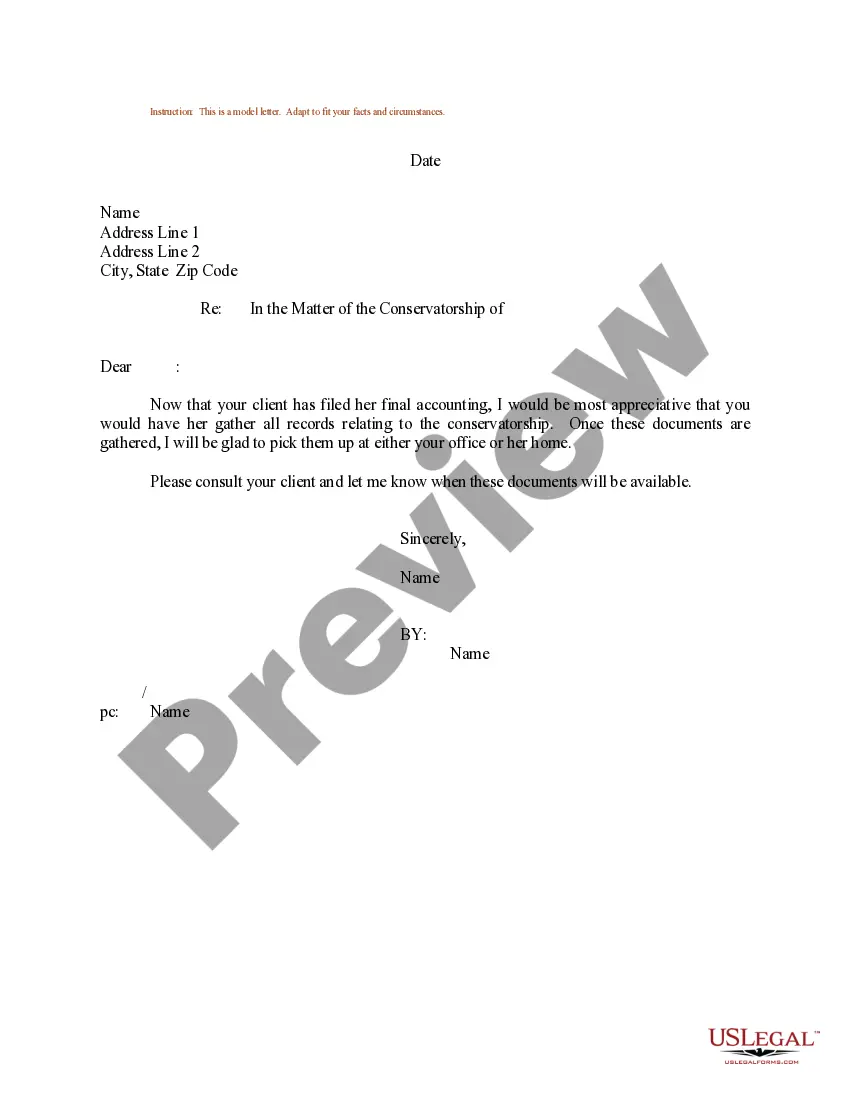
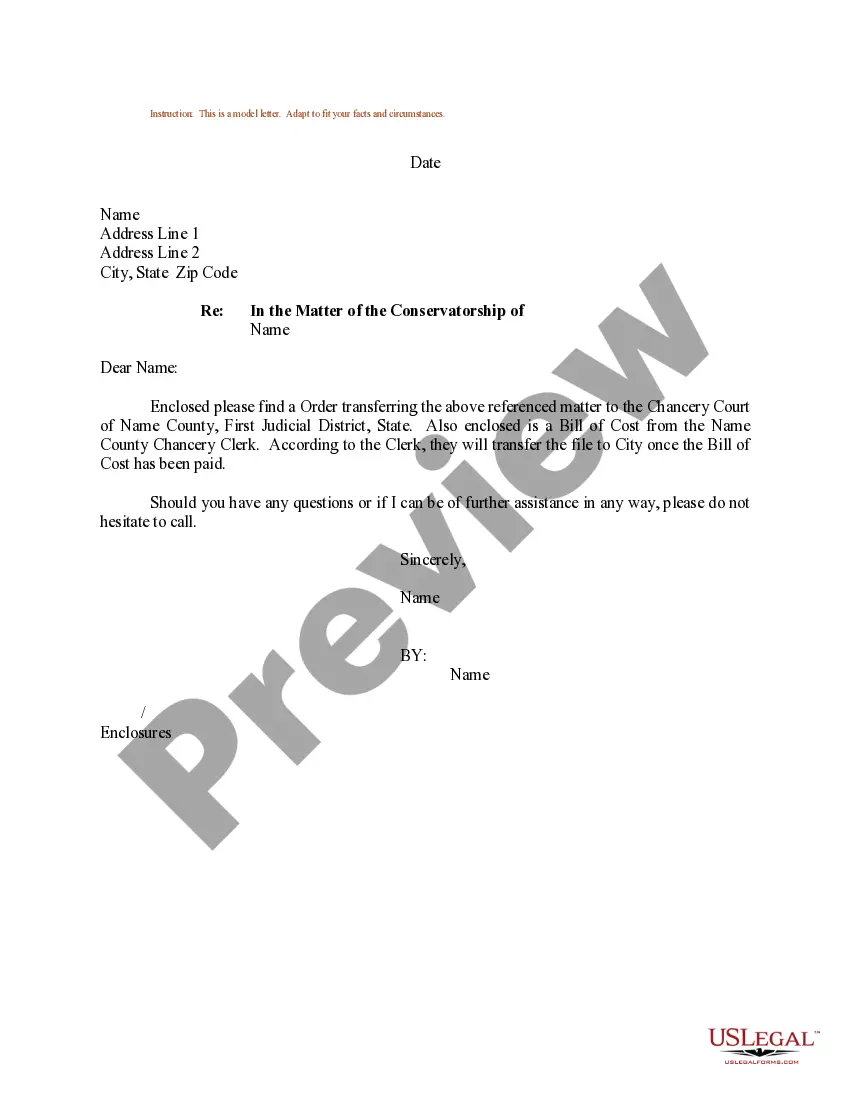
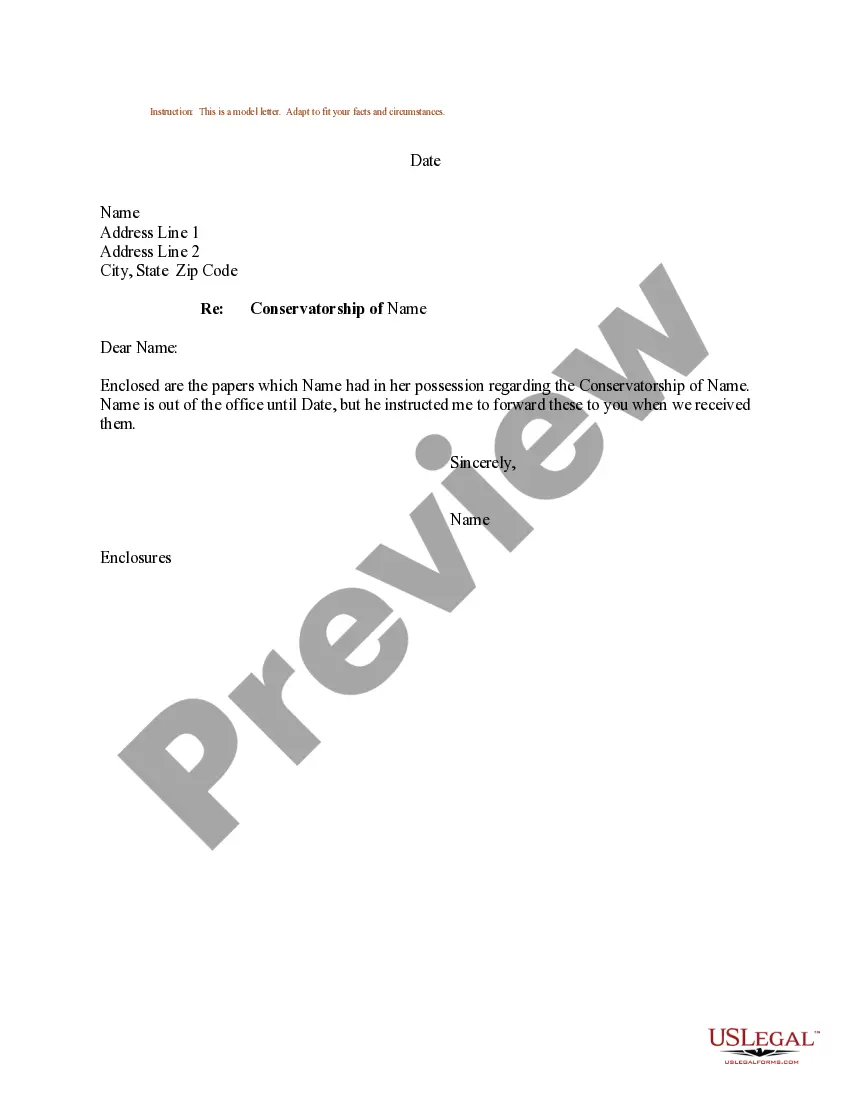
This form is a sample letter for a check representing the balance of a conservatorship. It is designed to help conservators communicate effectively with beneficiaries or relevant parties regarding financial details. Unlike generic letters, this form provides a structured approach that ensures all necessary information is included, which can help avoid misunderstandings or disputes regarding conservatorship funds.
What’s included in this form
- Date of the letter
- Recipient's name and address
- Reference to the conservatorship case
- Details of the check and the balance being communicated
- Polite closing statement

Situations where this form applies
This form should be used when a conservator needs to inform a beneficiary or a financial institution about the balance left in the conservatorship. It's useful for providing transparency in financial dealings and can be necessary when closing or transferring funds associated with the conservatorship.
Who needs this form
- Conservators managing a conservatorship
- Beneficiaries requiring updates on the conservatorship funds
- Attorneys representing conservatorships
Steps to complete this form
- Enter the current date at the top of the letter
- Fill in the recipient's name and complete address
- State the conservatorship case details clearly
- Include the specifics of the check, including the amount
- Conclude with a respectful closing and your signature
Notarization requirements for this form
This form usually doesn’t need to be notarized. However, local laws or specific transactions may require it. Our online notarization service, powered by Notarize, lets you complete it remotely through a secure video session, available 24/7.
Get your form ready online
Our built-in tools help you complete, sign, share, and store your documents in one place.
Make edits, fill in missing information, and update formatting in US Legal Forms—just like you would in MS Word.
Download a copy, print it, send it by email, or mail it via USPS—whatever works best for your next step.
Sign and collect signatures with our SignNow integration. Send to multiple recipients, set reminders, and more. Go Premium to unlock E-Sign.
If this form requires notarization, complete it online through a secure video call—no need to meet a notary in person or wait for an appointment.
We protect your documents and personal data by following strict security and privacy standards.

Make edits, fill in missing information, and update formatting in US Legal Forms—just like you would in MS Word.

Download a copy, print it, send it by email, or mail it via USPS—whatever works best for your next step.

Sign and collect signatures with our SignNow integration. Send to multiple recipients, set reminders, and more. Go Premium to unlock E-Sign.

If this form requires notarization, complete it online through a secure video call—no need to meet a notary in person or wait for an appointment.

We protect your documents and personal data by following strict security and privacy standards.
Mistakes to watch out for
- Failing to provide accurate financial details
- Neglecting to reference the conservatorship case number
- Using an outdated address for the recipient
Advantages of online completion
- Convenient access to a professionally drafted letter
- Easy to download and edit to fit specific circumstances
- Reliable format that meets legal standards for communication
Looking for another form?



Form popularity
FAQ
Conservator fees range from $50 an hour to $135 an hour or more. Trustee and other professional asset manager fees for high-value estates typically run from 1 to 1.5% of the asset value annually.
The conservator has the power to collect all the conservatee's assets, pay bills, make investments, etc. The conservator must seek court supervision for major transactions, such as purchase or sale of property, borrowing money, or gifting of assets.
Yes, a conservatorship can be contested in any state. Sometimes, the simplest way to contest a conservatorship is to object to the petition for conservatorship to stop the conservatorship in the first place, or to file a competing petition for conservatorship.
Conservator Responsibilities In rare cases, conservatorships can last much longer than state laws mandate (generally 18 or 21 years of age). The conservator uses the ward's finances to pay the bills, including medical and personal bills. They also make sure income taxes are filed and paid as needed.
No. The conservator is not liable for the acts or debts of the incapacitated solely by becoming a conservator. However, the conservator can become responsible and liable if he or she grossly mismanages or steals the incapacitated's assets.
You Need the Attorney to File a Petition For Conservatorship. During the application process for the conservatorship, someone must file a petition for conservatorship with the court clerk.When you hire a conservatorship lawyer, they can file the petition for conservatorship for you.
A Conservator is entitled to reasonable compensation and reimbursement of expenses from the Conservatorship Estate for acts on behalf of the Protected Person for the duration of the Conservatorship.
Temporary Conservatorships A temporary conservator is usually appointed for a fixed time period, usually 30 to 60 days.