Mailing Threatening Communications
About this form
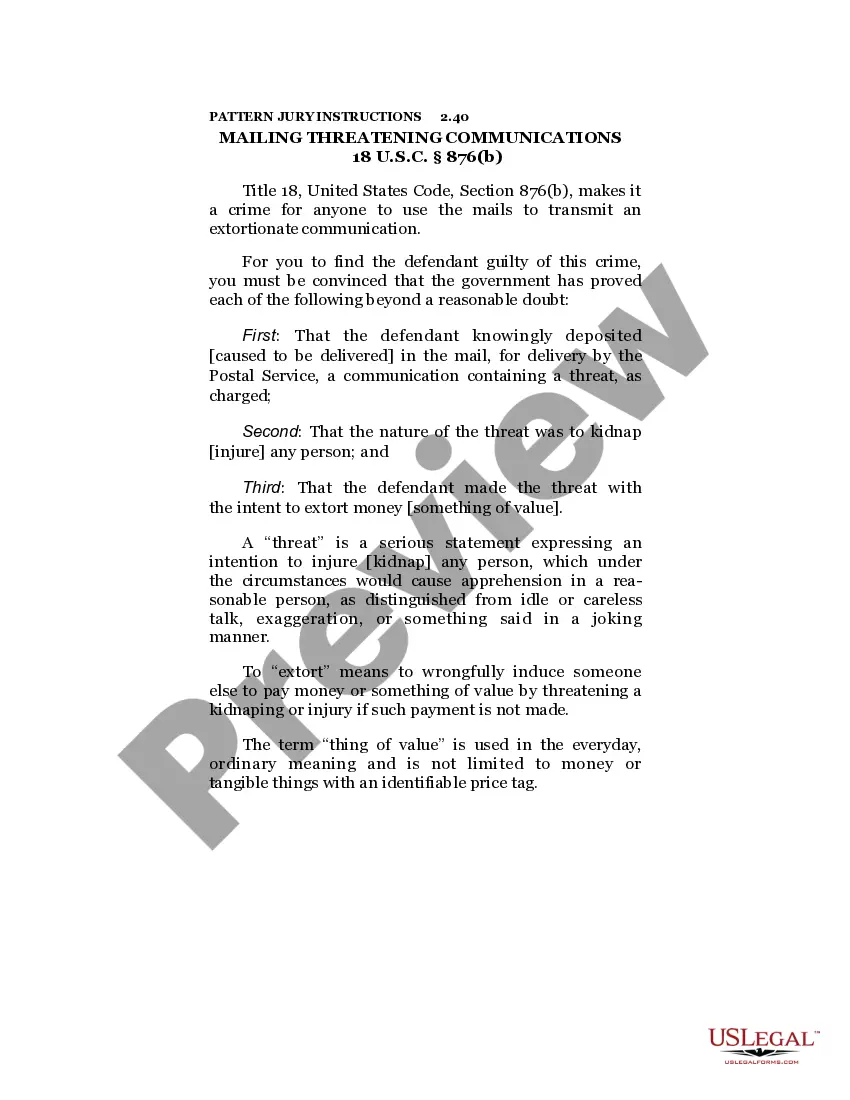
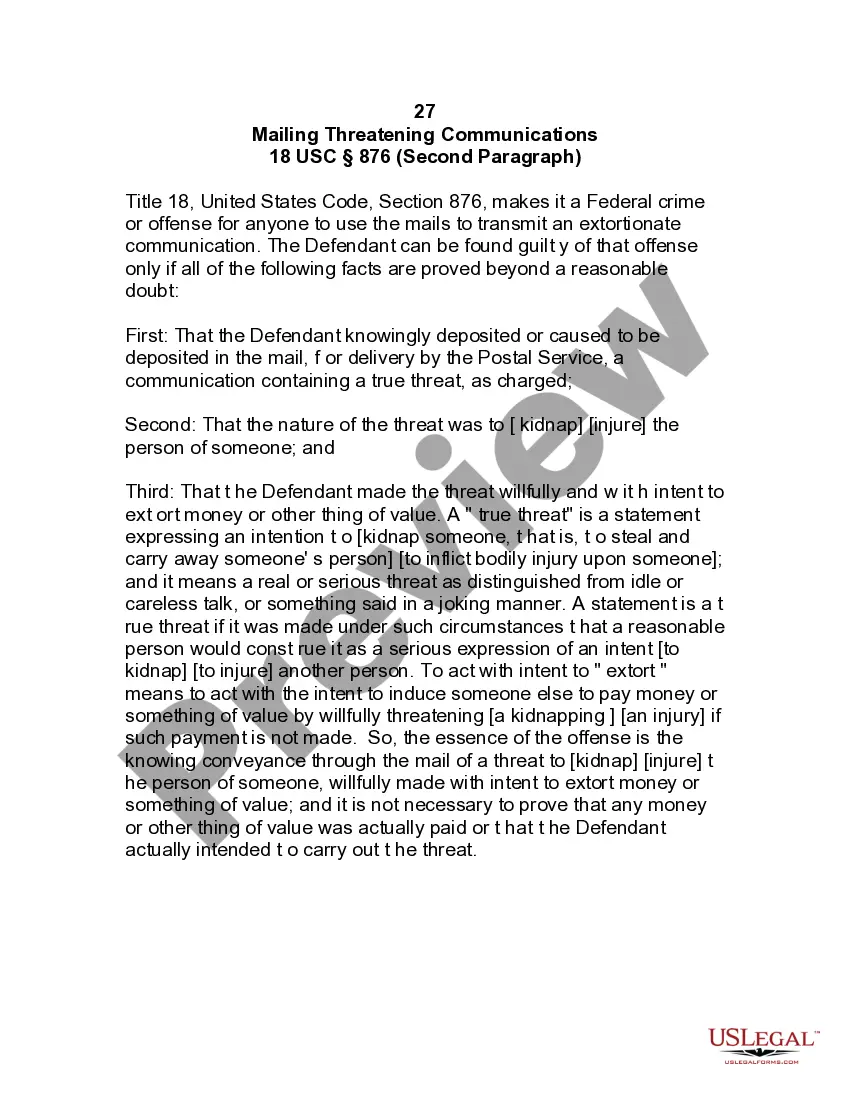
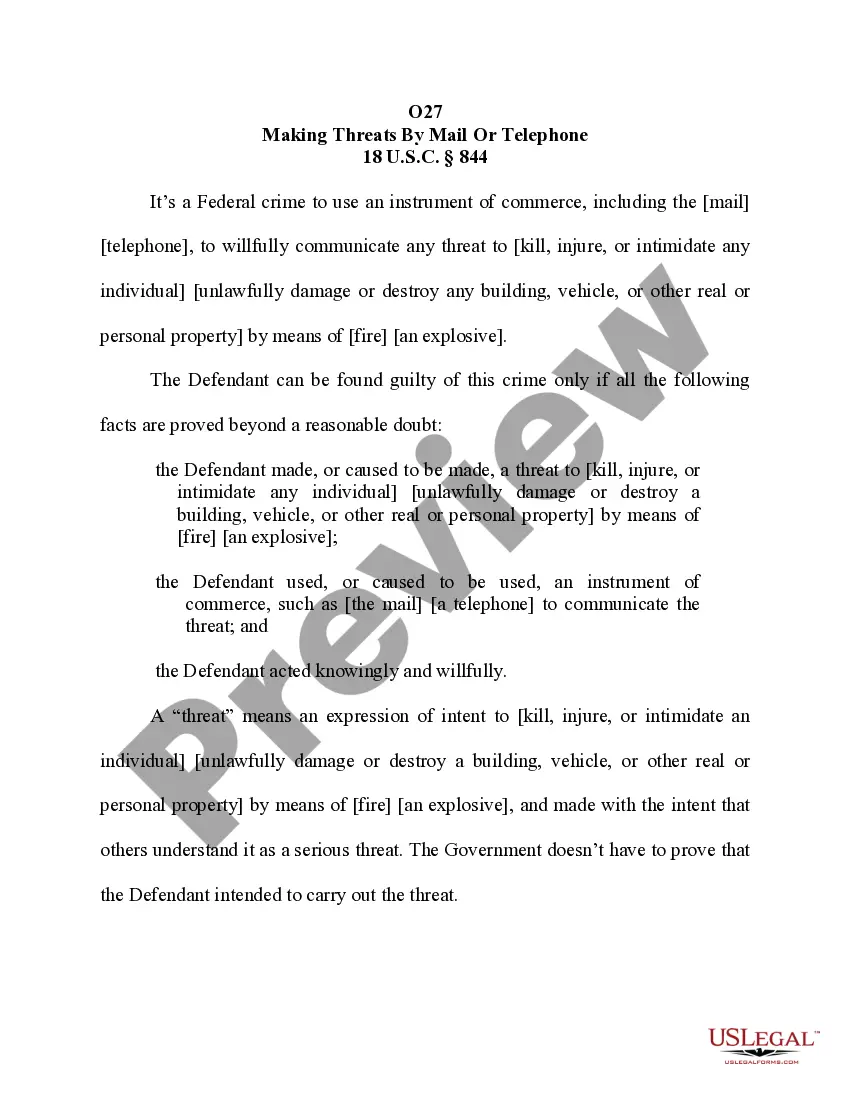
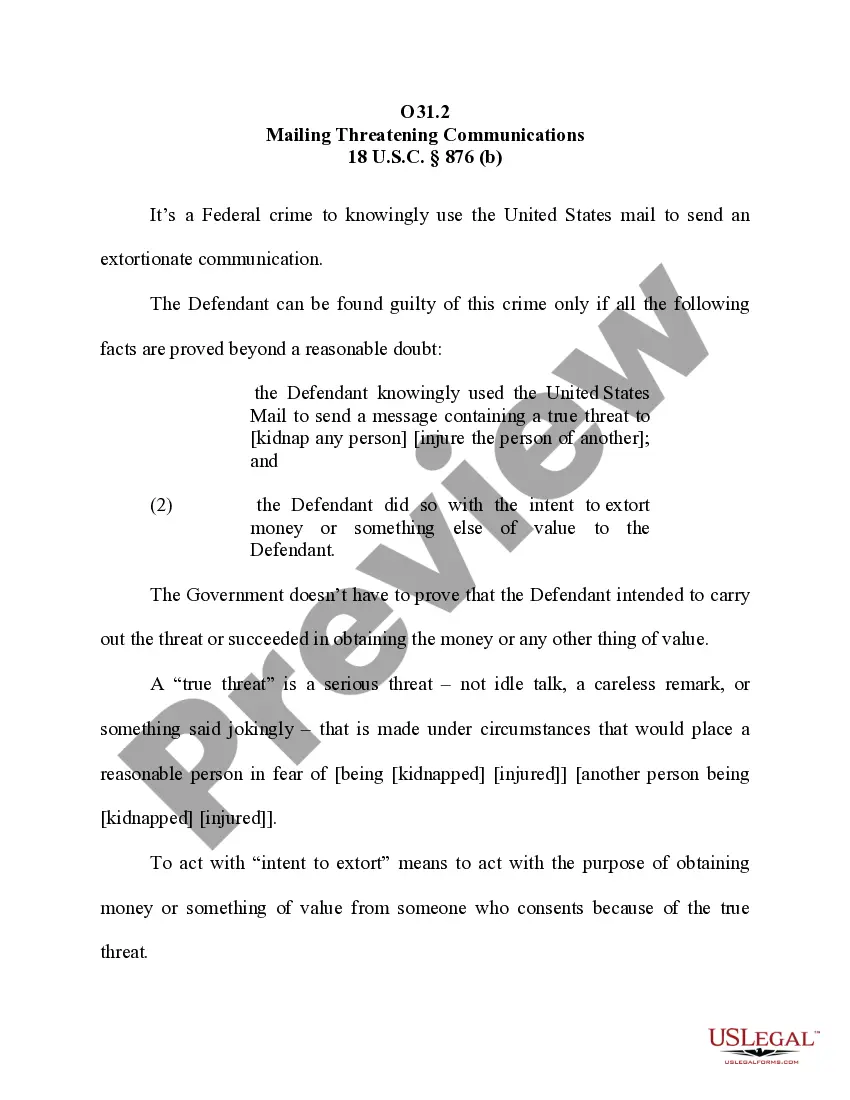
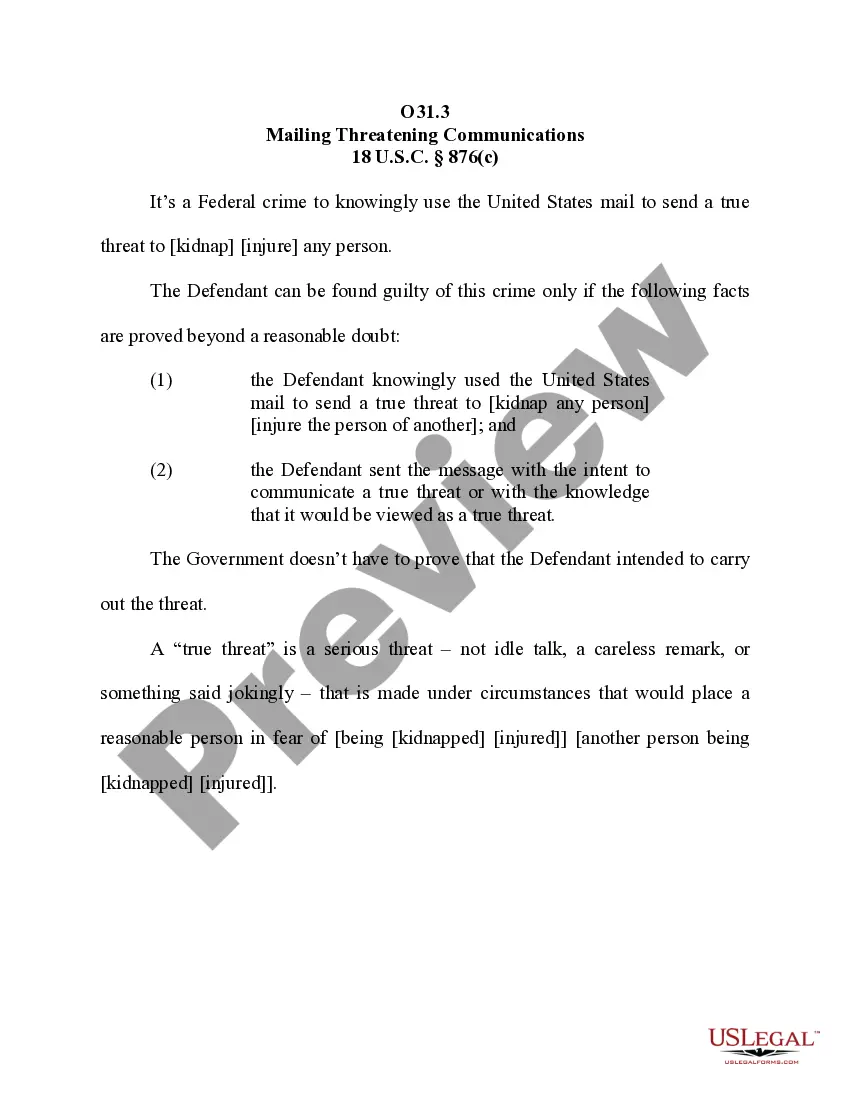
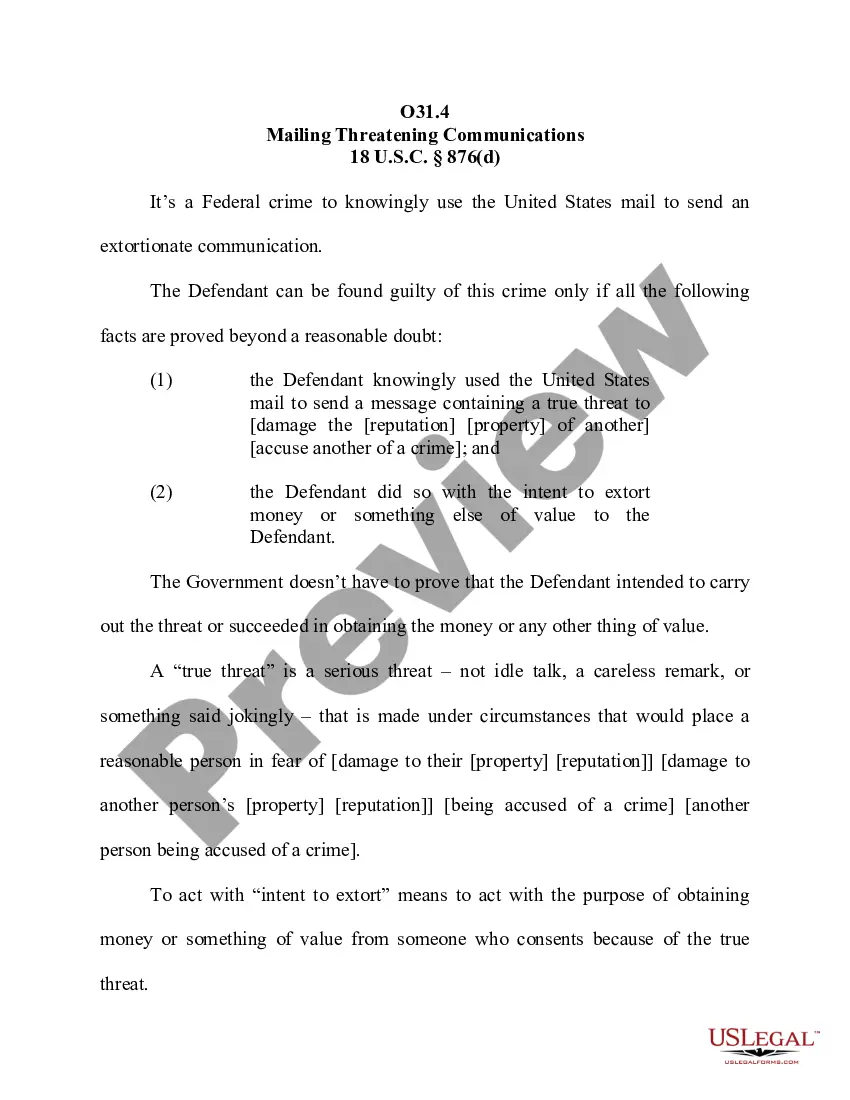
The Mailing Threatening Communications form is a legal template used to address the unlawful transmission of threatening communications through the mail, as defined by 18 U.S.C. 876(b). This form is specifically designed to document threats made with the intent to extort money or valuables from another person, differentiating it from other forms of communication that may not carry the same legal implications. It is essential for individuals who are either victims of such threats or are involved in legal proceedings related to extortion to understand its significance and applications.
What’s included in this form
- Identification of the defendant and their actions related to the communication.
- Details of the threatening communication, including the nature of the threat.
- Intent to extort money or a thing of value from the recipient.
- Criteria defining what constitutes a âthreatâ under the law.
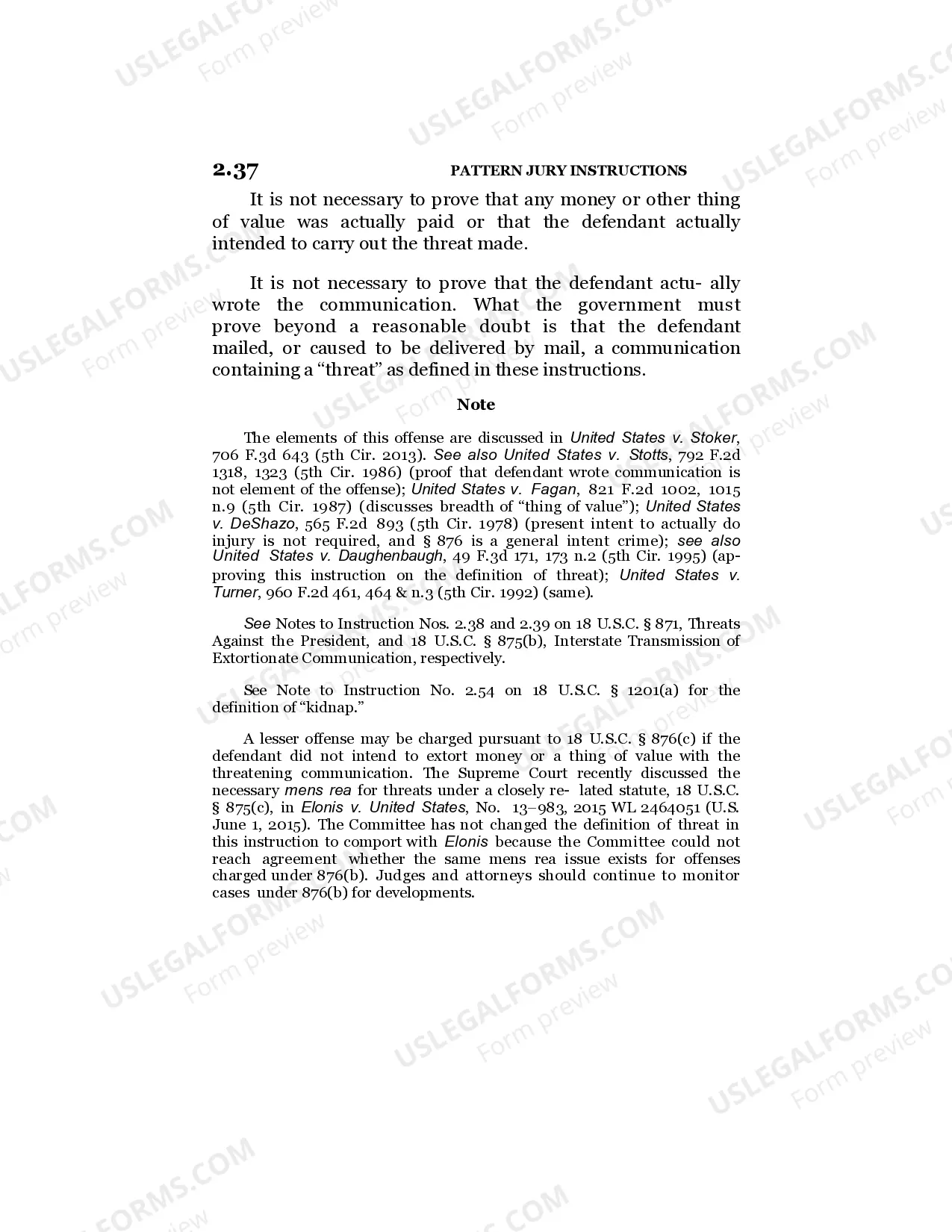
- Explanation of the requirement for proving intent without needing to establish actual payment or execution of the threat.
Situations where this form applies
This form should be used in situations where an individual has received a threat via mail that is intended to extort money or other valuables. It is pertinent when pursuing legal action against a defendant accused of sending such communications, or when there is a need to document the nature of the threat for law enforcement or legal proceedings.
Who this form is for
- Victims of extortionate communications who want to report or document the threat.
- Lawyers representing clients involved in legal disputes surrounding threatening communications.
- Individuals seeking to understand their rights and remedies regarding threats made through the postal system.
Completing this form step by step
- Fill in the name and address of the defendant who mailed the threatening communication.
- Describe the content of the threatening communication and the nature of the threat.
- Specify the intent behind the communication, particularly the intent to extort money or valuables.
- Provide any evidence or supporting details that substantiate the claim, such as dates and circumstances.
- Review the completed form for accuracy and clarity before submission.
Does this form need to be notarized?
This form does not typically require notarization unless specified by local law. It is advisable to check with legal counsel on specific requirements that may apply in your jurisdiction.
Get your form ready online
Our built-in tools help you complete, sign, share, and store your documents in one place.
Make edits, fill in missing information, and update formatting in US Legal Forms—just like you would in MS Word.
Download a copy, print it, send it by email, or mail it via USPS—whatever works best for your next step.
Sign and collect signatures with our SignNow integration. Send to multiple recipients, set reminders, and more. Go Premium to unlock E-Sign.
If this form requires notarization, complete it online through a secure video call—no need to meet a notary in person or wait for an appointment.
We protect your documents and personal data by following strict security and privacy standards.

Make edits, fill in missing information, and update formatting in US Legal Forms—just like you would in MS Word.

Download a copy, print it, send it by email, or mail it via USPS—whatever works best for your next step.

Sign and collect signatures with our SignNow integration. Send to multiple recipients, set reminders, and more. Go Premium to unlock E-Sign.

If this form requires notarization, complete it online through a secure video call—no need to meet a notary in person or wait for an appointment.

We protect your documents and personal data by following strict security and privacy standards.
Mistakes to watch out for
- Failing to provide accurate details of the defendant's identity.
- Not clearly defining the nature of the threat, which can weaken the case.
- Omitting critical evidence that supports the claim of extortion.
Why use this form online
- Convenience of accessing and completing the form from any location.
- Immediate download options without waiting for physical copies.
- Editability allows users to tailor the document to their specific circumstances before finalizing.
Legal use & context
- This form is legally recognized in matters concerning threats sent via mail.
- The requirements for proving a case of extortion are clearly outlined under federal law.
- Understanding the nuances of this law can aid individuals in protecting their rights against threatening communications.
Quick recap
- The Mailing Threatening Communications form is essential for addressing threats made through the mail.
- It is crucial to provide detailed and accurate information when completing the form.
- No notarization is generally required, but local laws should be considered.
Looking for another form?
Form popularity
FAQ
Threatening the president of the United States is a federal felony under United States Code Title 18, Section 871. It consists of knowingly and willfully mailing or otherwise making "any threat to take the life of, to kidnap, or to inflict great bodily harm upon the president of the United States".
If you get an unwanted email, there are two ways to report it. Forward unwanted or deceptive messages to: your email provider (like Gmail, Hotmail, or Yahoo). Most email services include buttons to mark messages as junk mail or report spam.
Threatening the government officials of the United States is a felony under federal law. Threatening the president of the United States is a felony under 18 U.S.C. § 871, punishable by up to 5 years of imprisonment, that is investigated by the United States Secret Service.
Furthermore, California online harassment law states that it is illegal to use an electronic device to repeatedly contact someone with the intention to harass or annoy them. A singular message that contains obscene or threatening language is also illegal.
Report the abusive email or message to the host platform. If the message comes from a free messaging service such as Gmail, Hotmail, Facebook, etc. you should be able to report it to the host.
§ 873 Blackmail or Extortion Penalties. Blackmail or extortion under Title 18 of the United States Code, Section 873 is a federal crime punishable by: up to one year in federal prison, a fine, or both imprisonment and a fine.
Harassment. Sending threatening, unsolicited, obnoxious, or sexually explicit messages to others by email is a form of harassment, as is continuing to mail someone who has asked you to stop. You should never send anyone an email message containing things you wouldn't say in person.
If someone is spamming you or sending you threats via email, you can use the email header data to possibly trace the originating IP to get the location of the sender, essentially finding an IP from an email for free.