Mailing Threatening Communications 18 U.S.C. Sec. 876
Understanding this form
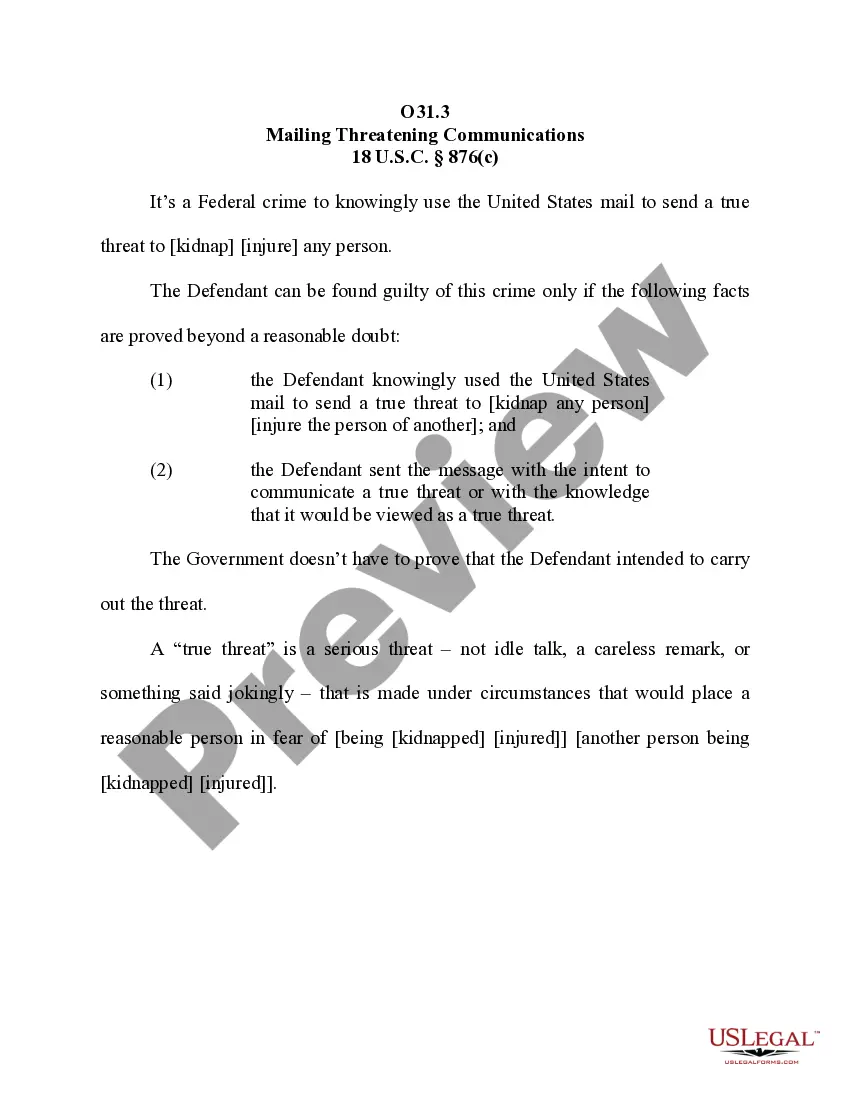
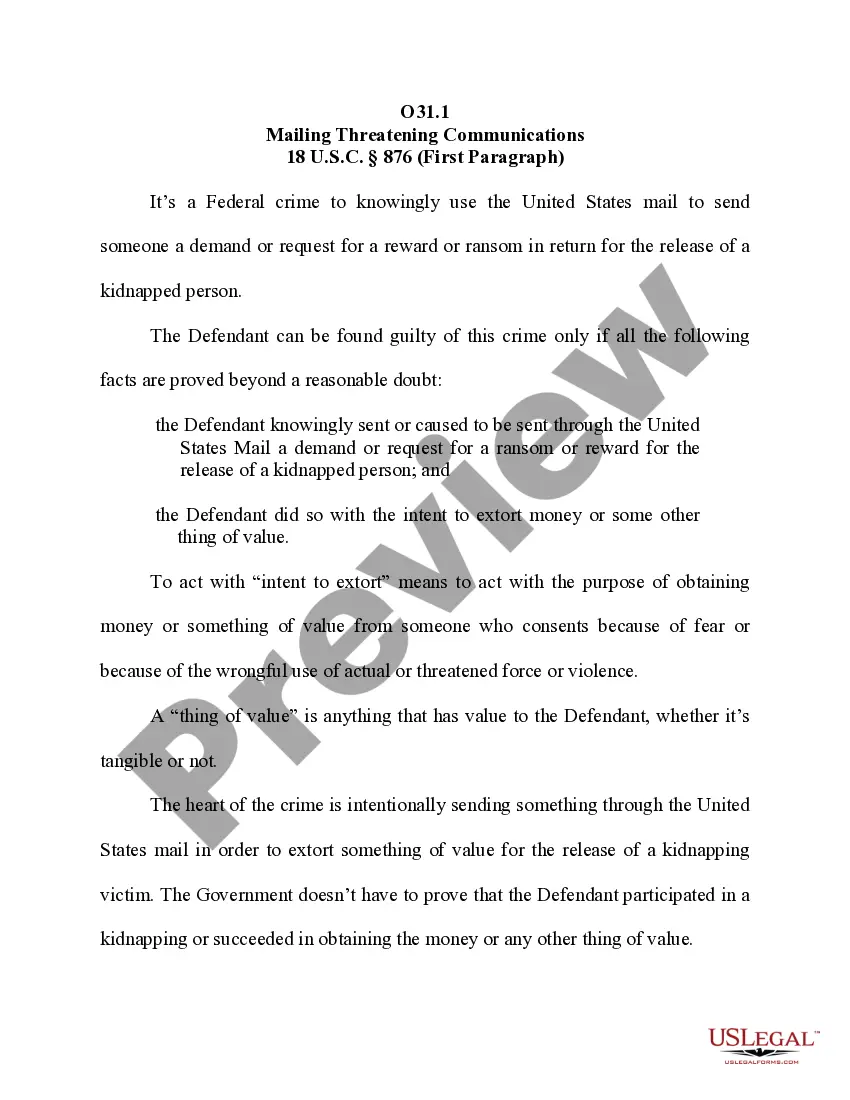
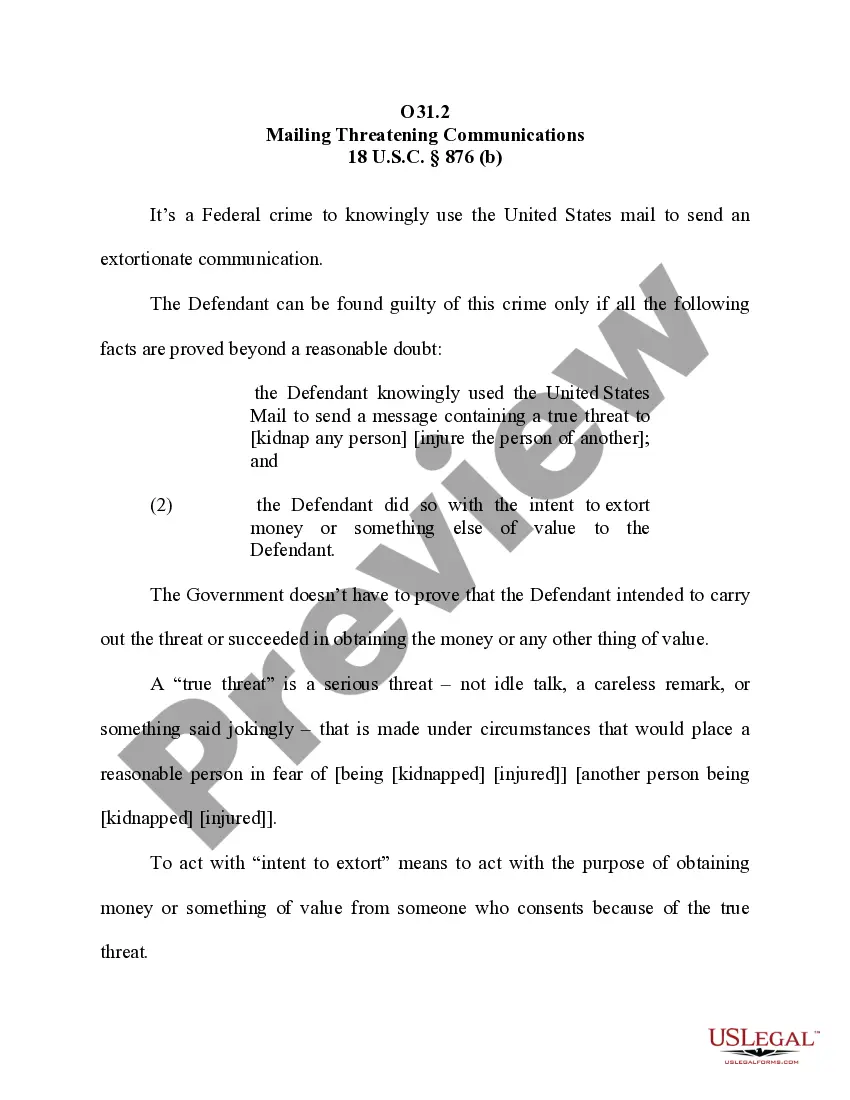
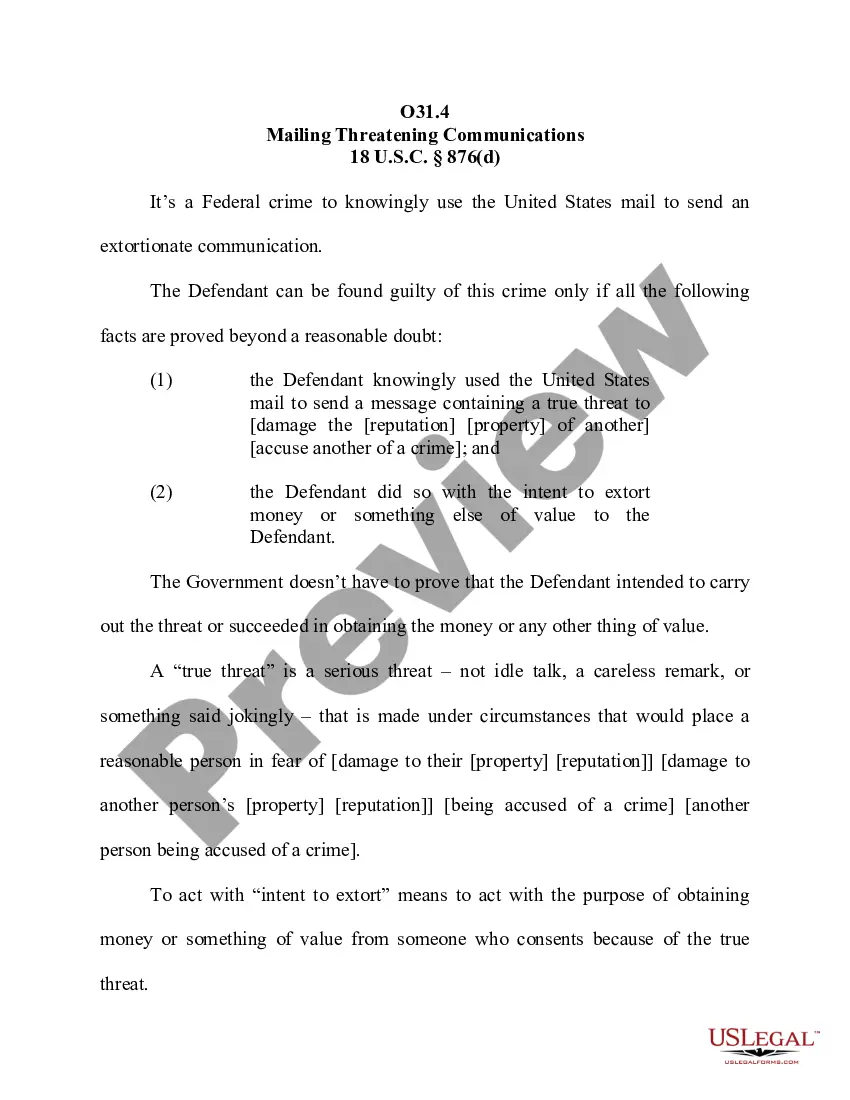
The Mailing Threatening Communications form, under 18 U.S.C. Sec. 876, is a legal document that addresses the crime of sending threats through the United States mail. This form outlines the criteria for what constitutes a "true threat," which is crucial for legal context. Unlike other forms related to threats that may pertain to different mediums or contexts, this specific form focuses solely on communications sent via mail, making it essential for cases involving federal law violations in this area.
Main sections of this form
- Definition of a "true threat" as a serious communication made with the intent to instill fear.
- Criteria that must be met to establish guilt, including intent and use of the mail.
- Clarification that the government does not need to prove the defendant intended to act on the threat.
When this form is needed
This form should be used in situations where an individual is accused of sending a threatening communication through the mail. It is relevant in cases involving federal prosecution for harassment or threats of kidnapping or injury. Legal representatives may use this form to outline the charges and seek a jury instruction specific to the crime of mailing threatening communications.
Who can use this document
- Individuals facing accusations of sending threats through the mail.
- Legal professionals involved in federal casework related to criminal threats.
- Defendants who need to understand the implications of mailing threatening communications.
Steps to complete this form
- Identify the parties involved in the case, including the defendant and any victims.
- Specify the details of the communication that is considered threatening.
- Enter information regarding the intent behind the communication.
- Include any additional relevant circumstances that would demonstrate the nature of the threat.
Notarization requirements for this form
In most cases, this form does not require notarization. However, some jurisdictions or signing circumstances might. US Legal Forms offers online notarization powered by Notarize, accessible 24/7 for a quick, remote process.
Get your form ready online
Our built-in tools help you complete, sign, share, and store your documents in one place.
Make edits, fill in missing information, and update formatting in US Legal Forms—just like you would in MS Word.
Download a copy, print it, send it by email, or mail it via USPS—whatever works best for your next step.
Sign and collect signatures with our SignNow integration. Send to multiple recipients, set reminders, and more. Go Premium to unlock E-Sign.
If this form requires notarization, complete it online through a secure video call—no need to meet a notary in person or wait for an appointment.
We protect your documents and personal data by following strict security and privacy standards.

Make edits, fill in missing information, and update formatting in US Legal Forms—just like you would in MS Word.

Download a copy, print it, send it by email, or mail it via USPS—whatever works best for your next step.

Sign and collect signatures with our SignNow integration. Send to multiple recipients, set reminders, and more. Go Premium to unlock E-Sign.

If this form requires notarization, complete it online through a secure video call—no need to meet a notary in person or wait for an appointment.

We protect your documents and personal data by following strict security and privacy standards.
Avoid these common issues
- Failing to accurately define the nature of the "true threat."
- Not providing sufficient details about the communication sent.
- Neglecting to clarify the intent behind the mailing.
Why complete this form online
- Convenience of downloading and completing the form at your own pace.
- Editability allows users to tailor the document to their specific case needs.
- Reliability in ensuring that the document adheres to legal standards as drafted by licensed attorneys.
Legal use & context
- This form is essential for understanding the legal implications of sending threatening messages through the mail.
- It provides a framework for both prosecution and defense in federal cases concerning threats.
- Utilizing this form ensures that all legal criteria are met when presenting a case involving mailing threats.
Looking for another form?
Form popularity
FAQ
§1701. Whoever knowingly and willfully obstructs or retards the passage of the mail, or any carrier or conveyance carrying the mail, shall be fined under this title or imprisoned not more than six months, or both.
Section 875 of Title 18 prohibits the transmission in interstate or foreign commerce of: (1) any demand or request for ransom or reward for the release of any kidnapped person; (2) a threat to kidnap or injure any person, either with or without the intent to extort; or (3) with intent to extort, a threat to injure the
Whoever, under a threat of informing, or as a consideration for not informing, against any violation of any law of the United States, demands or receives any money or other valuable thing, shall be fined under this title or imprisoned not more than one year, or both.
875(c), which provides that any individual who "transmits in interstate or foreign commerce any communication containing any threat to ? injure the person of another" is guilty of a felony and faces up to five years in prison.
Threatening the government officials of the United States is a felony under federal law. Threatening the president of the United States is a felony under 18 U.S.C.
Threats or Intimidation Against Voters 18 U.S.C. § 241, which makes it unlawful to ?conspire to injure, oppress, threaten, or intimidate any person? exercising a constitutional right, including the right to vote; ? 18 U.S.C.
Whoever transmits in interstate or foreign commerce any communication containing any demand or request for a ransom or reward for the release of any kidnapped person, shall be fined under this title or imprisoned not more than twenty years, or both.