Mailing Threatening Communications 18 U.S.C. Sec. 876 (First Paragraph)
About this form
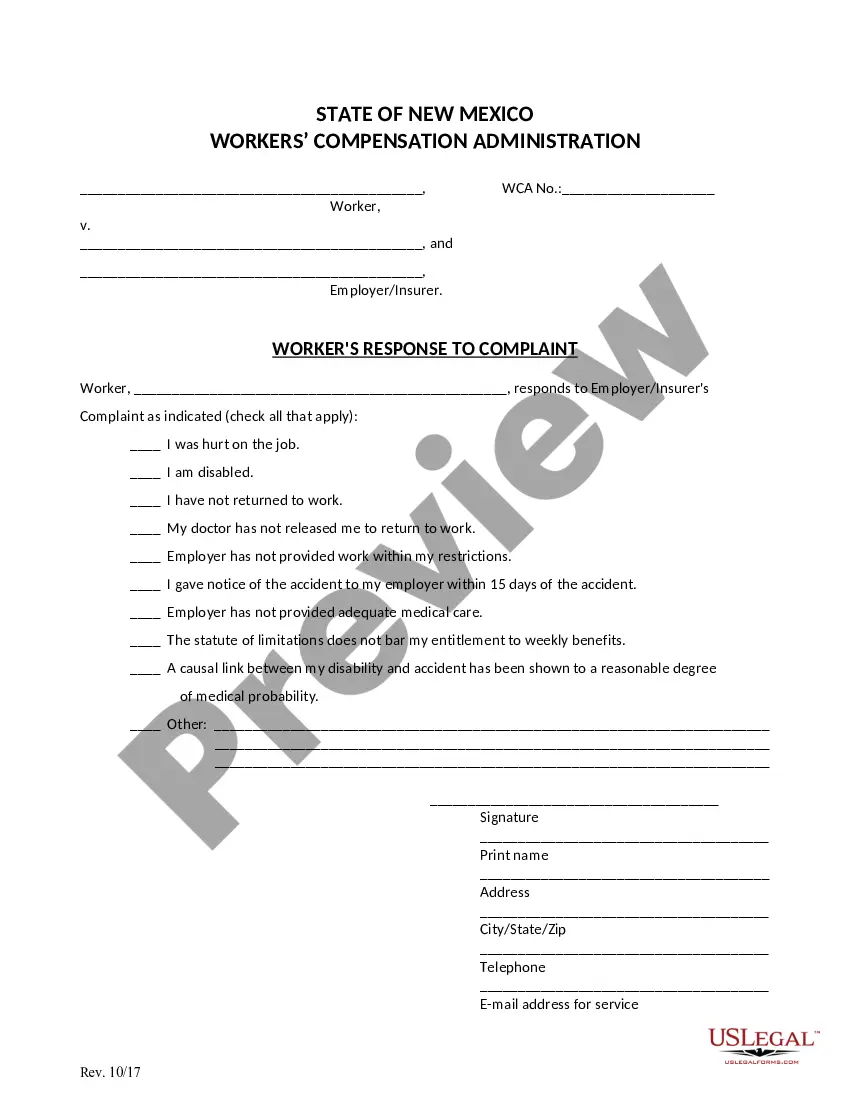
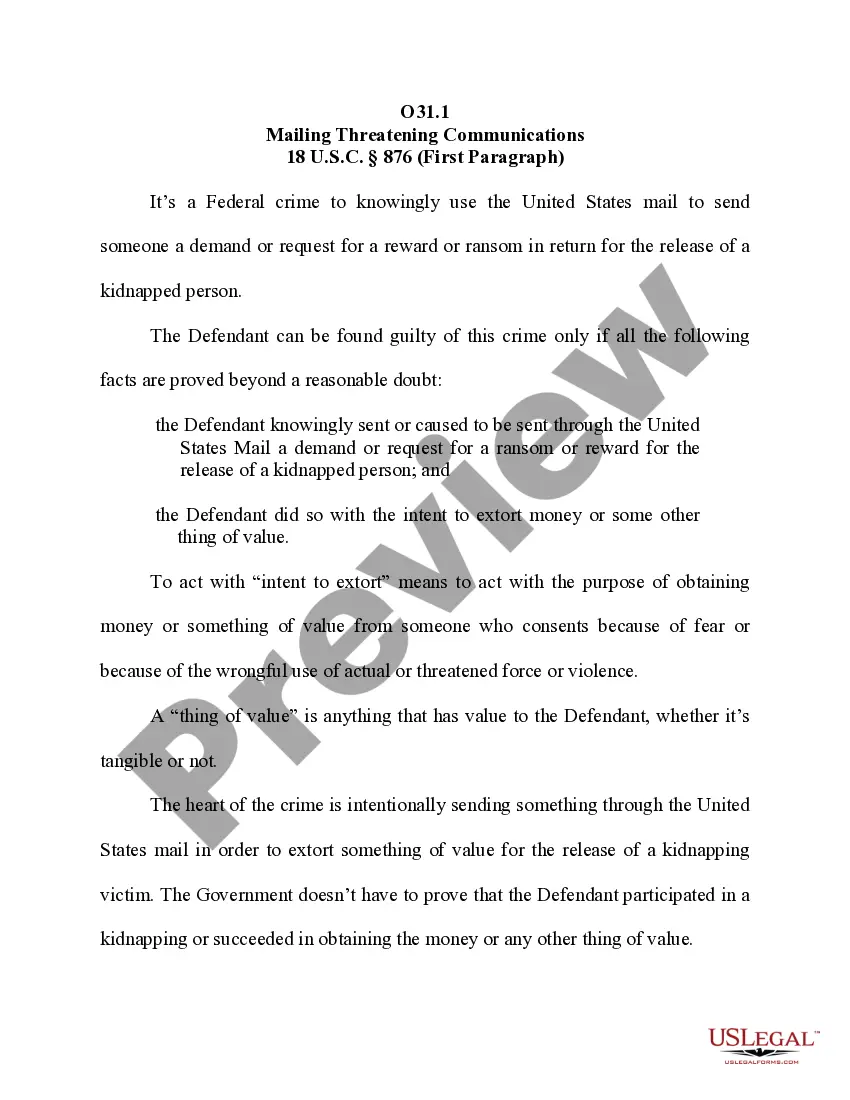
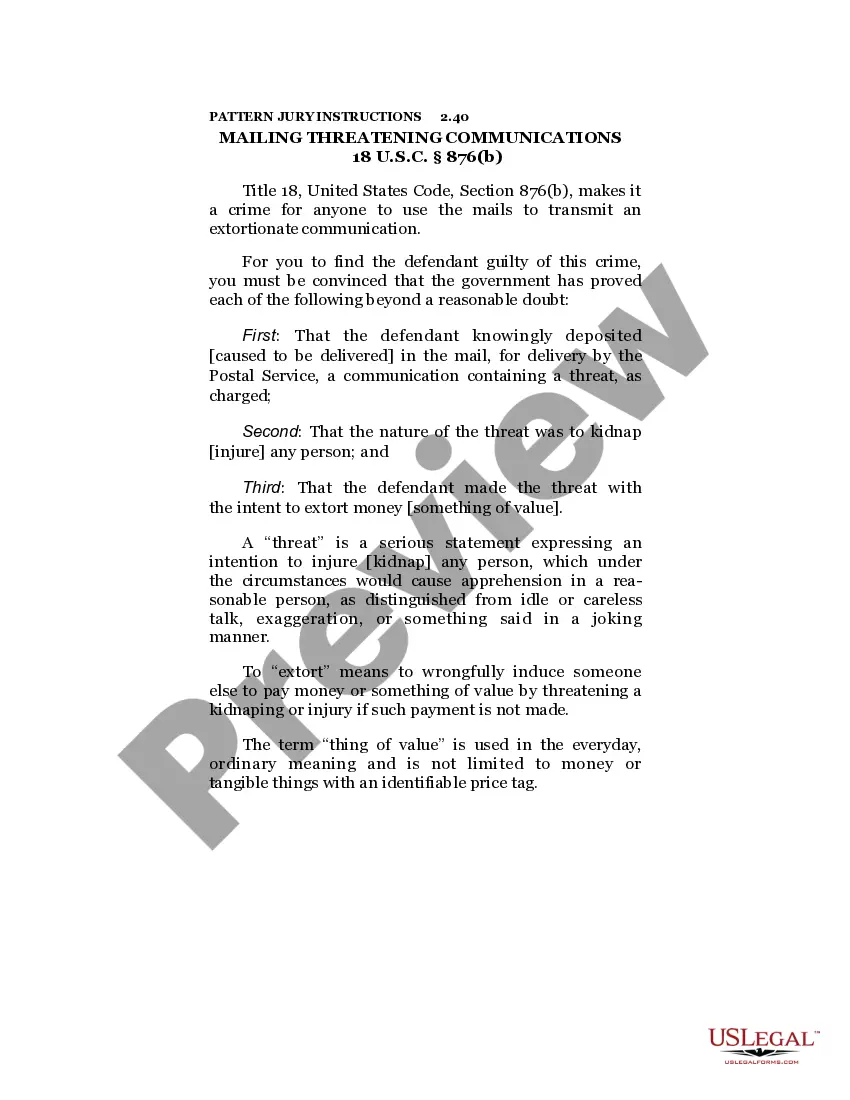
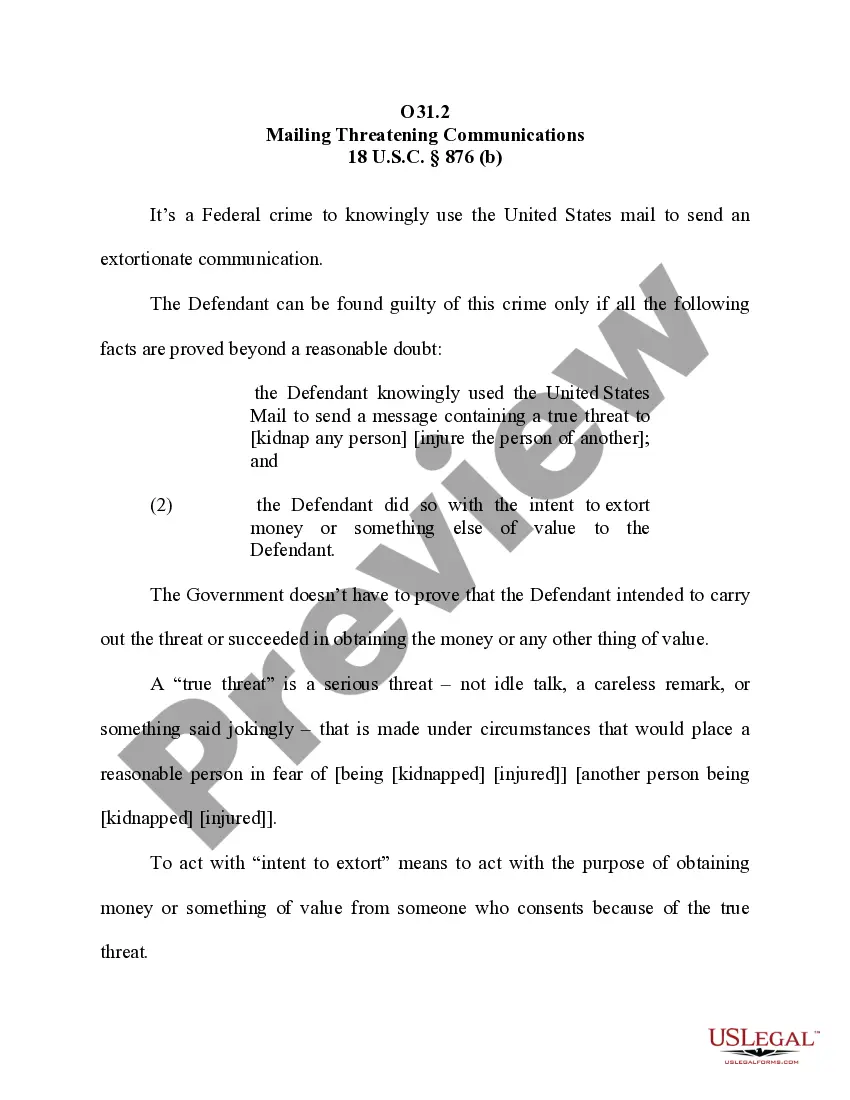
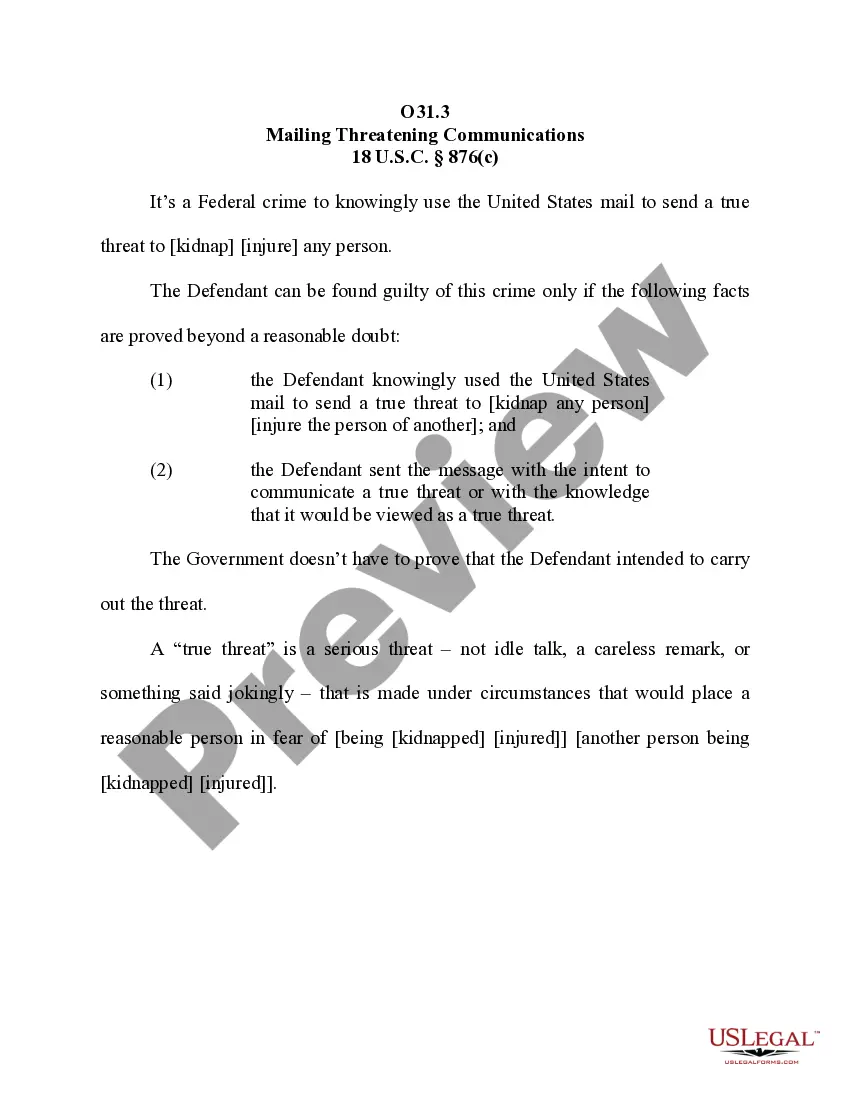
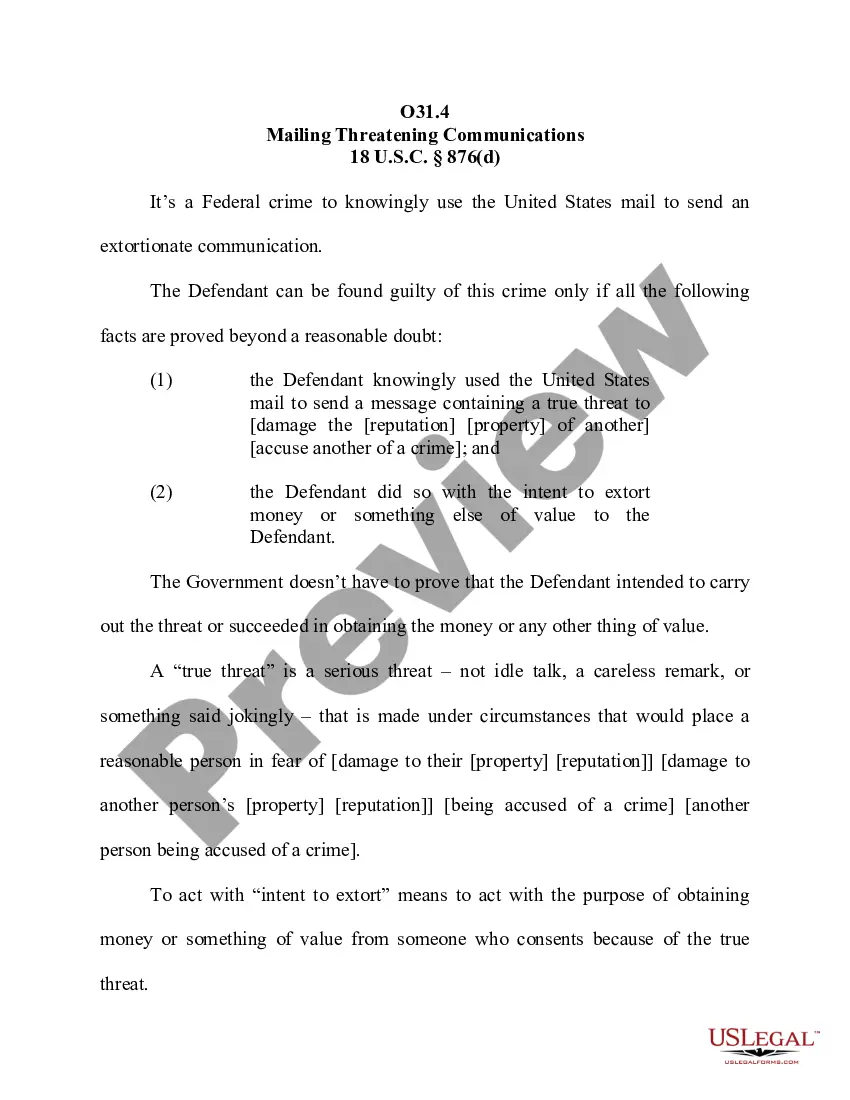
The Mailing Threatening Communications form, pursuant to 18 U.S.C. § 876, is a legal document used to address the crime of sending demands or requests for ransom via the United States Mail. This form is specifically tailored for situations involving extortion related to kidnapping. It helps clarify the legal obligations and consequences surrounding such actions, distinguishing it from other forms that deal with extortion or threats. This form is essential for understanding how mailing threats can lead to federal charges.
Form components explained
- Definition of the crime of mailing threatening communications.
- Criteria for proving guilt beyond a reasonable doubt.
- Explanation of "intent to extort" and what constitutes a "thing of value."
- Clarification that participation in a kidnapping is not necessary for prosecution.
Common use cases
This form should be utilized in cases where an individual has sent a demand for ransom or reward using the United States Postal Service related to a kidnapping situation. It is important for individuals or organizations involved in such cases to understand their rights and obligations, as well as the legal definitions surrounding extortion and threats, ensuring compliance with federal laws.
Who should use this form
- Individuals accused of mailing threatening communications.
- Legal professionals representing clients facing allegations of extortion related to kidnapping.
- Anyone needing to understand the implications of sending ransom requests through the mail.
Instructions for completing this form
- Identify the parties involved in the communication.
- Specify the nature of the demand or request for ransom.
- Clearly state the intent behind the communication.
- Include any evidence or context that supports the allegation.
- Review the form for accuracy and completeness before submission.
Does this form need to be notarized?
This form does not typically require notarization unless specified by local law.
Get your form ready online
Our built-in tools help you complete, sign, share, and store your documents in one place.
Make edits, fill in missing information, and update formatting in US Legal Forms—just like you would in MS Word.
Download a copy, print it, send it by email, or mail it via USPS—whatever works best for your next step.
Sign and collect signatures with our SignNow integration. Send to multiple recipients, set reminders, and more. Go Premium to unlock E-Sign.
If this form requires notarization, complete it online through a secure video call—no need to meet a notary in person or wait for an appointment.
We protect your documents and personal data by following strict security and privacy standards.

Make edits, fill in missing information, and update formatting in US Legal Forms—just like you would in MS Word.

Download a copy, print it, send it by email, or mail it via USPS—whatever works best for your next step.

Sign and collect signatures with our SignNow integration. Send to multiple recipients, set reminders, and more. Go Premium to unlock E-Sign.

If this form requires notarization, complete it online through a secure video call—no need to meet a notary in person or wait for an appointment.

We protect your documents and personal data by following strict security and privacy standards.
Typical mistakes to avoid
- Failing to include all necessary details about the demand.
- Not clearly establishing the intent to extort.
- Overlooking the need for supporting evidence.
Why use this form online
- Convenient access to legal templates tailored for specific scenarios.
- Edit and customize the form to meet your specific needs easily.
- Reliable guidance based on federal laws and legal precedents.
Legal use & context
- The form is designed to comply with federal regulations under Title 18 of the U.S. Code.
- It serves as a critical document in federal cases of extortion.
- Understanding the legal definitions presented in this form can assist in preparing defense strategies or prosecution efforts.
Looking for another form?
Form popularity
FAQ
Threatening the government officials of the United States is a felony under federal law. Threatening the president of the United States is a felony under 18 U.S.C.
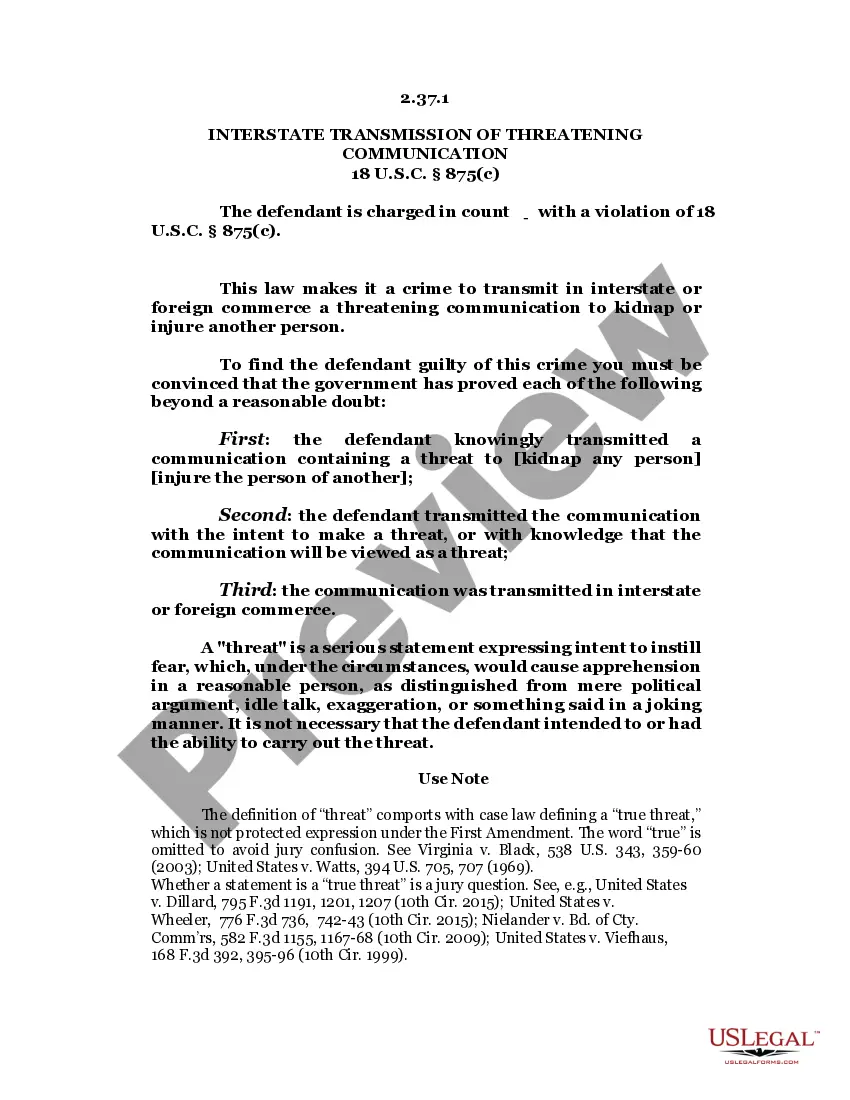
Section 875 of Title 18 prohibits the transmission in interstate or foreign commerce of: (1) any demand or request for ransom or reward for the release of any kidnapped person; (2) a threat to kidnap or injure any person, either with or without the intent to extort; or (3) with intent to extort, a threat to injure the
Furthermore, California online harassment law states that it is illegal to use an electronic device to repeatedly contact someone with the intention to harass or annoy them. A singular message that contains obscene or threatening language is also illegal.
§873. Whoever, under a threat of informing, or as a consideration for not informing, against any violation of any law of the United States, demands or receives any money or other valuable thing, shall be fined under this title or imprisoned not more than one year, or both.
875(c), which provides that any individual who "transmits in interstate or foreign commerce any communication containing any threat to ? injure the person of another" is guilty of a felony and faces up to five years in prison.
Whoever, under a threat of informing, or as a consideration for not informing, against any violation of any law of the United States, demands or receives any money or other valuable thing, shall be fined under this title or imprisoned not more than one year, or both.
Whoever transmits in interstate or foreign commerce any communication containing any demand or request for a ransom or reward for the release of any kidnapped person, shall be fined under this title or imprisoned not more than twenty years, or both.